Strategic leadership
Strategic Implementation
Prepared By
Kindly restrict the use of slides for personal purpose.
Please seek permission to reproduce the same in public forms and presentations.
Manu Melwin Joy
Assistant Professor
Ilahia School of Management Studies
Kerala, India.
Phone – 9744551114
Mail – manu_melwinjoy@yahoo.com
Strategic leadership
• The term strategic
leader is used to
describe the manager
who head the
organization and who
are primarily responsible
for creating and
implementing strategic
change.
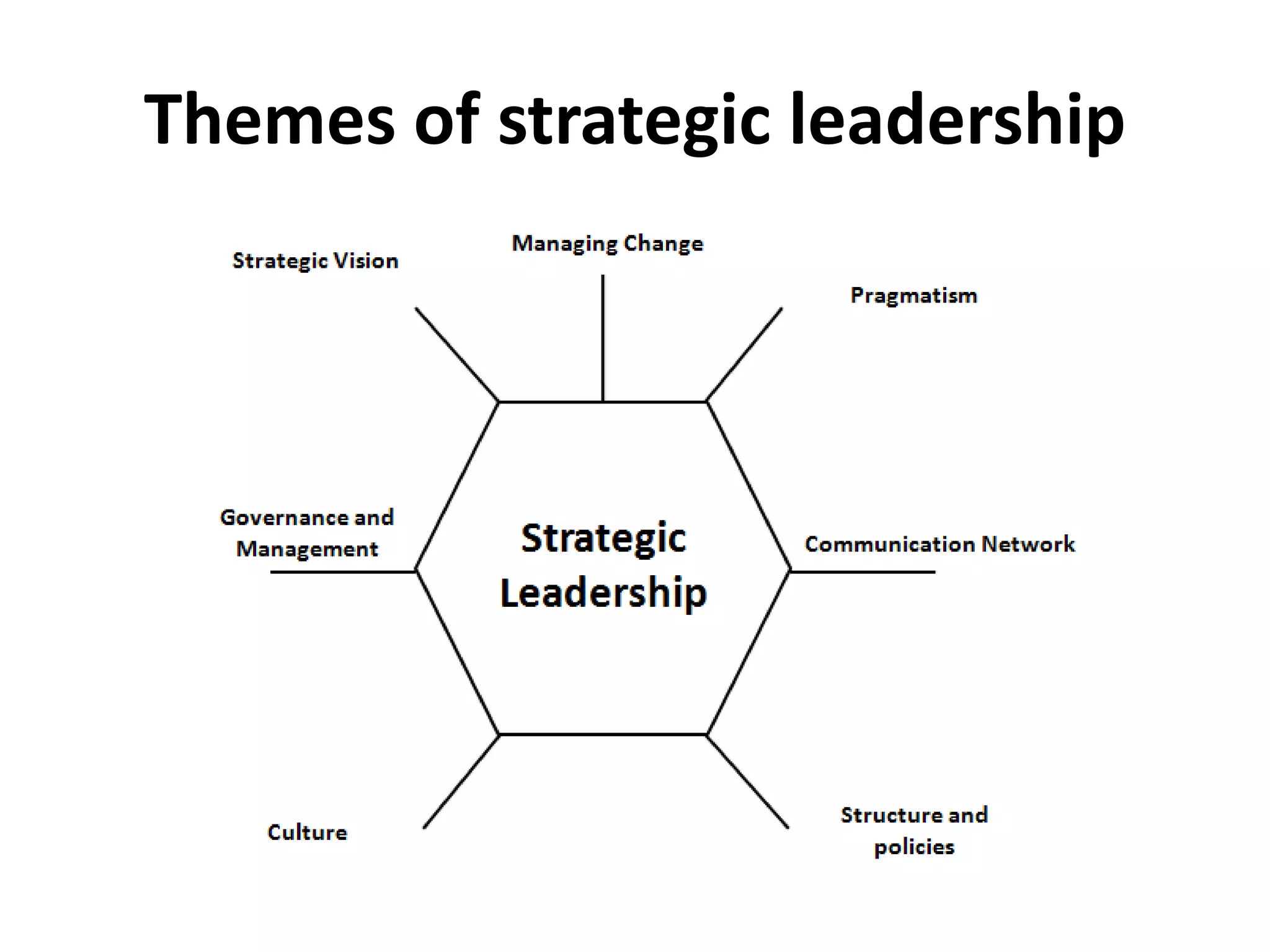
Themes of strategic leadership
Strategic Vision
• A well crafted,
appreciated and
supported mission is at
the heart of a leader’s
strategic vision. It may
reflect his own current
assessment of where the
firm should go or how he
may continue to carry out
the long term plans
established by his
predecessor.
Pragmatism
• Pragmatism is the ability
to make things happen
and achieve positive
results. This can happen
only when leader utilize
resource in an efficient
and effective way.
Structure and policies
• A visionary strategic
leader, as an agent of
change, should lay down
the rules of the game in
concrete terms and
resolve all contentious
issues in a proper way
Communication network
• Both formal and informal
network should be used by
the leader to inform people
about priorities and
strategies and ensure that
these are implemented
expeditiously. Lateral
communication should be
encouraged, in addition to
upward and downward
communication channels,
between various
departments and divisions.
Culture
• A strategic leader can
influence the culture of a
company significantly. In
fact, every company
reflects the character and
personality of its leader.
The beliefs and values of
the leader have a strong
bearing on how
employees behave and
react to situations on a
daily basis.
Managing change
• Effective leaders are
responsible for initiating
necessary changes that
ensure continued
organizational success. To
manage change
effectively, the leader
need to have a clear vision
of the future – where the
organization is heading
together with the means
for creating and reaching
this future.
Governance and Management
• The major responsibilities
of strategic leaders with
respect to corporate
governance are provide
direction in the form of
mission, formulate and
implement changes,
monitor and control
operations, provide
policies and guidelines to
other team members and
achieve results in a
manner acceptable to
society at large.
Strategic leadership -  strategic implementation

Strategic leadership - strategic implementation

  • 1.
  • 2.
    Prepared By Kindly restrictthe use of slides for personal purpose. Please seek permission to reproduce the same in public forms and presentations. Manu Melwin Joy Assistant Professor Ilahia School of Management Studies Kerala, India. Phone – 9744551114 Mail – manu_melwinjoy@yahoo.com
  • 3.
    Strategic leadership • Theterm strategic leader is used to describe the manager who head the organization and who are primarily responsible for creating and implementing strategic change.
  • 4.
  • 5.
    Strategic Vision • Awell crafted, appreciated and supported mission is at the heart of a leader’s strategic vision. It may reflect his own current assessment of where the firm should go or how he may continue to carry out the long term plans established by his predecessor.
  • 6.
    Pragmatism • Pragmatism isthe ability to make things happen and achieve positive results. This can happen only when leader utilize resource in an efficient and effective way.
  • 7.
    Structure and policies •A visionary strategic leader, as an agent of change, should lay down the rules of the game in concrete terms and resolve all contentious issues in a proper way
  • 8.
    Communication network • Bothformal and informal network should be used by the leader to inform people about priorities and strategies and ensure that these are implemented expeditiously. Lateral communication should be encouraged, in addition to upward and downward communication channels, between various departments and divisions.
  • 9.
    Culture • A strategicleader can influence the culture of a company significantly. In fact, every company reflects the character and personality of its leader. The beliefs and values of the leader have a strong bearing on how employees behave and react to situations on a daily basis.
  • 10.
    Managing change • Effectiveleaders are responsible for initiating necessary changes that ensure continued organizational success. To manage change effectively, the leader need to have a clear vision of the future – where the organization is heading together with the means for creating and reaching this future.
  • 11.
    Governance and Management •The major responsibilities of strategic leaders with respect to corporate governance are provide direction in the form of mission, formulate and implement changes, monitor and control operations, provide policies and guidelines to other team members and achieve results in a manner acceptable to society at large.