Anu Bajracharya
Lecturer of strategic management
IB&MS COLLEGE
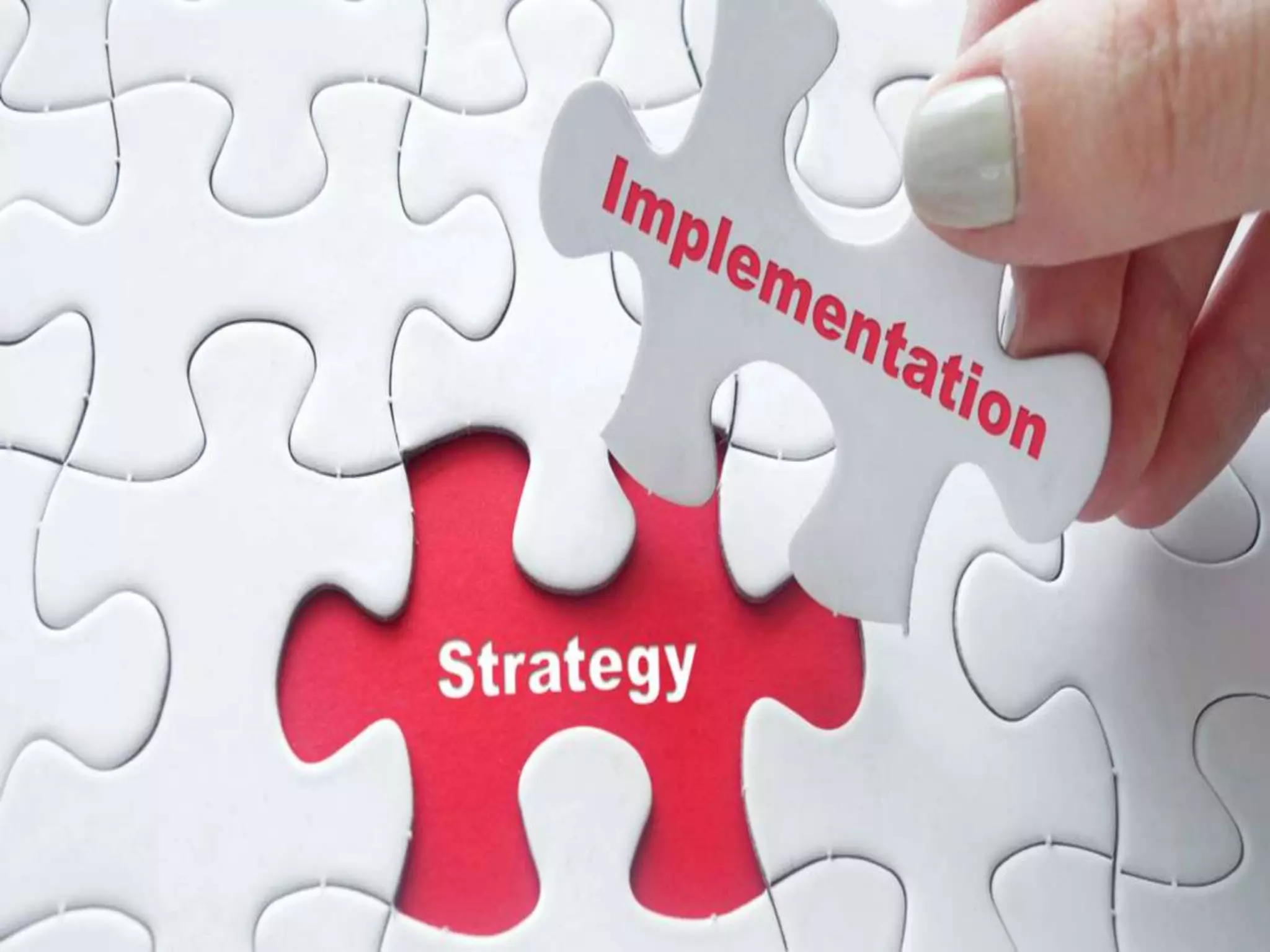
STARTEGY
IMPLEMENTATION
Agenda
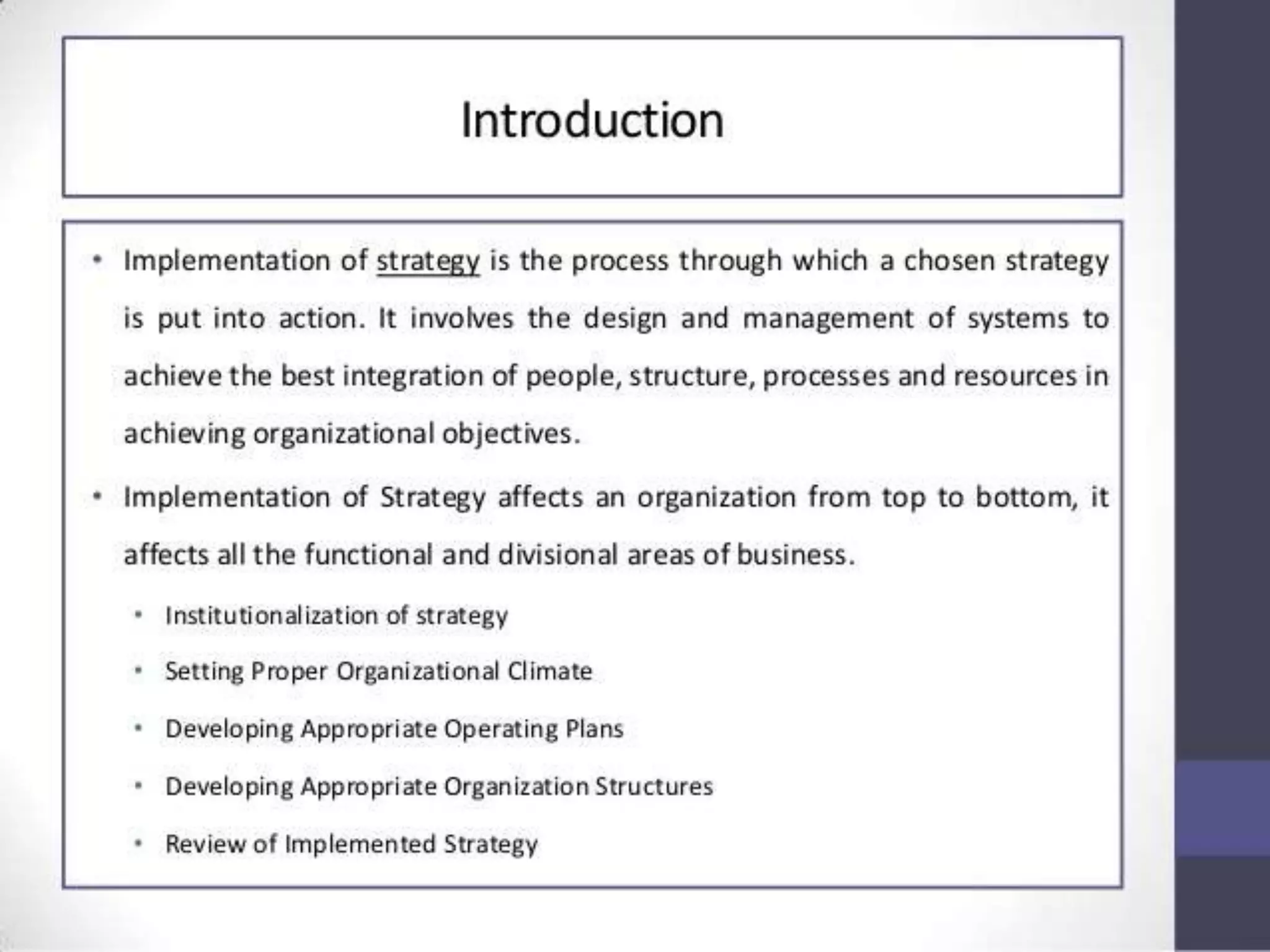
 Meaning & Definition of Strategy
Implementation
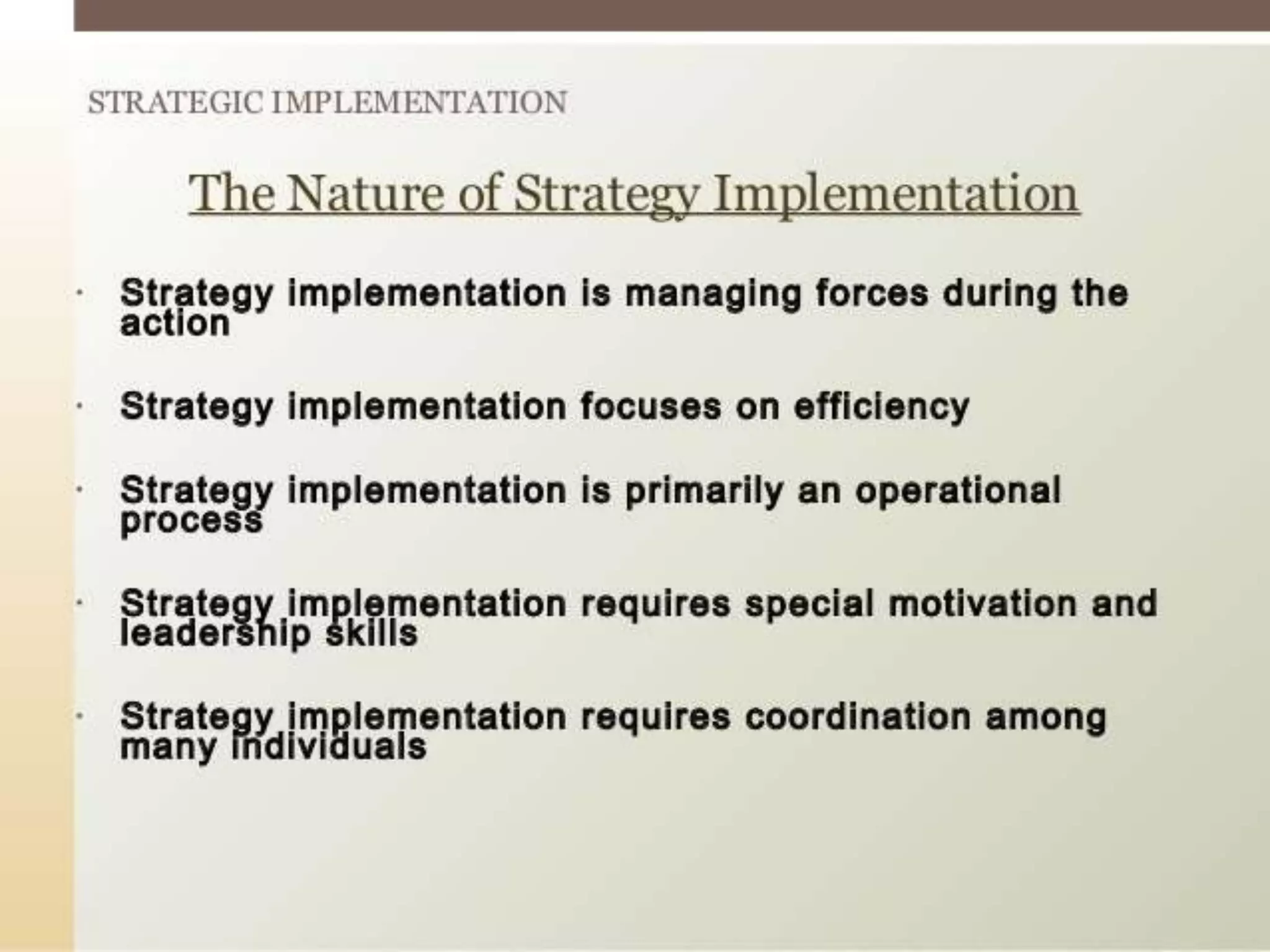
 Nature of Strategy Implementation
 Elements of Strategy Implementation
 Role of Top management in Strategy
Implementation
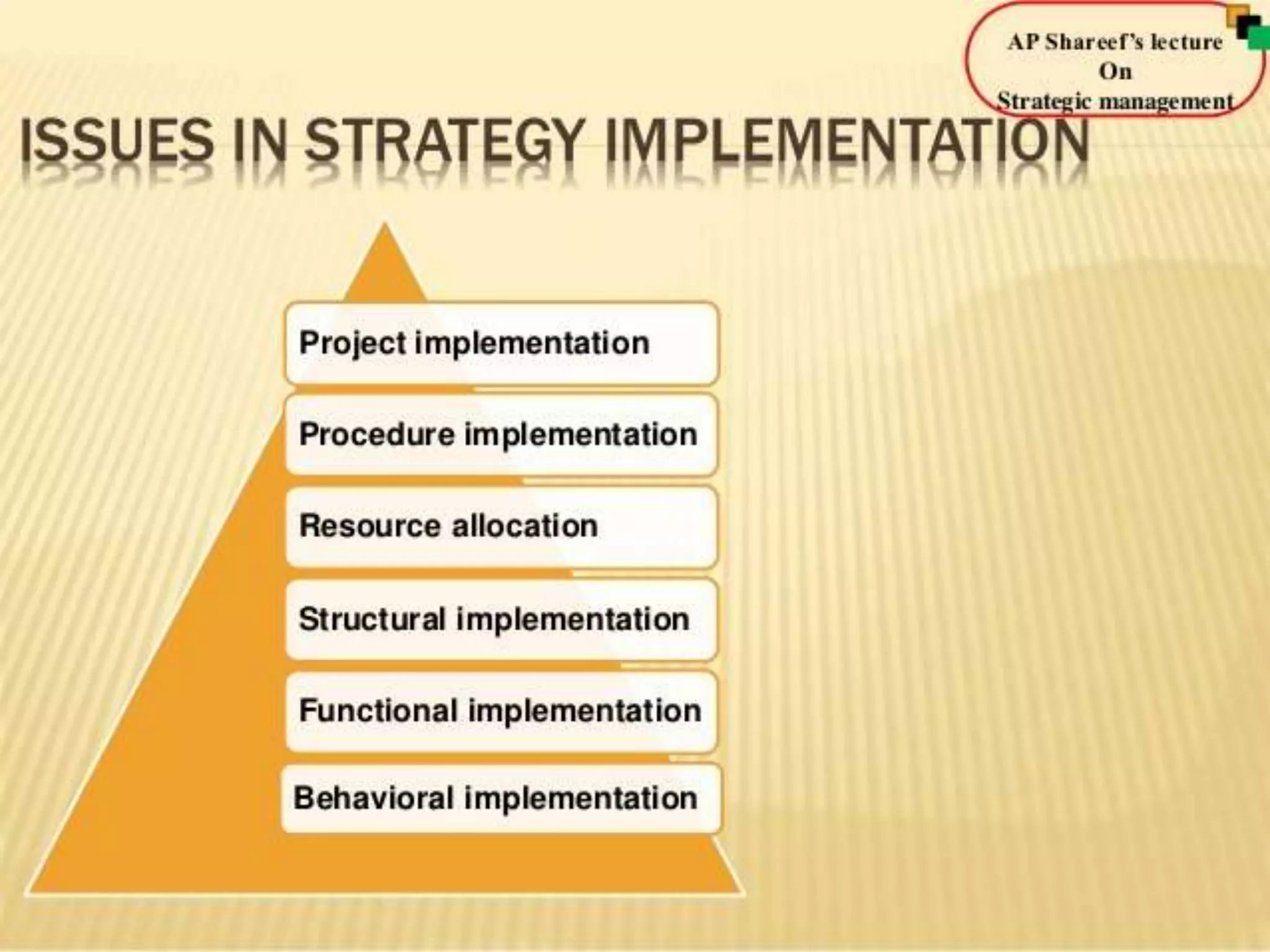
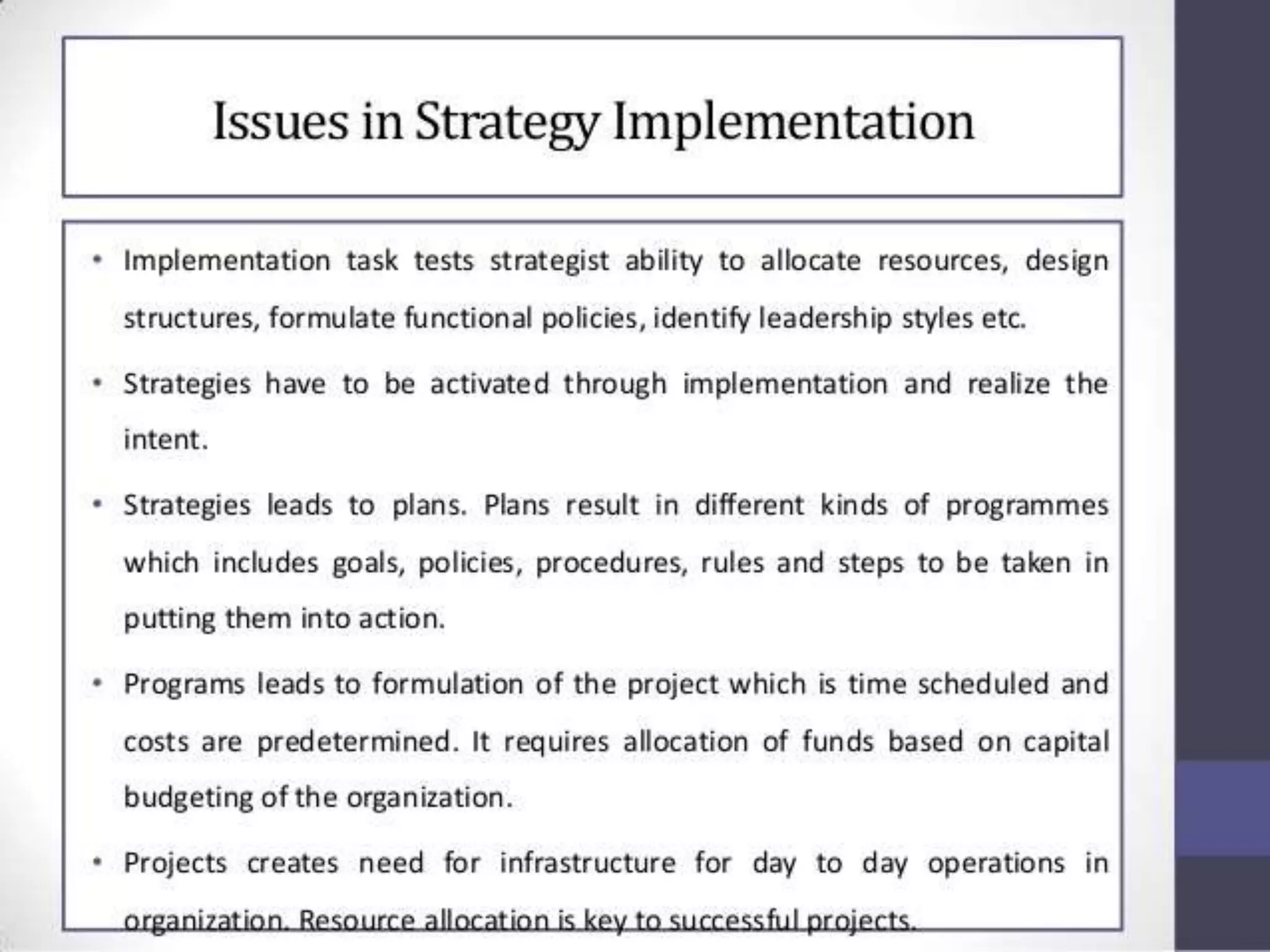
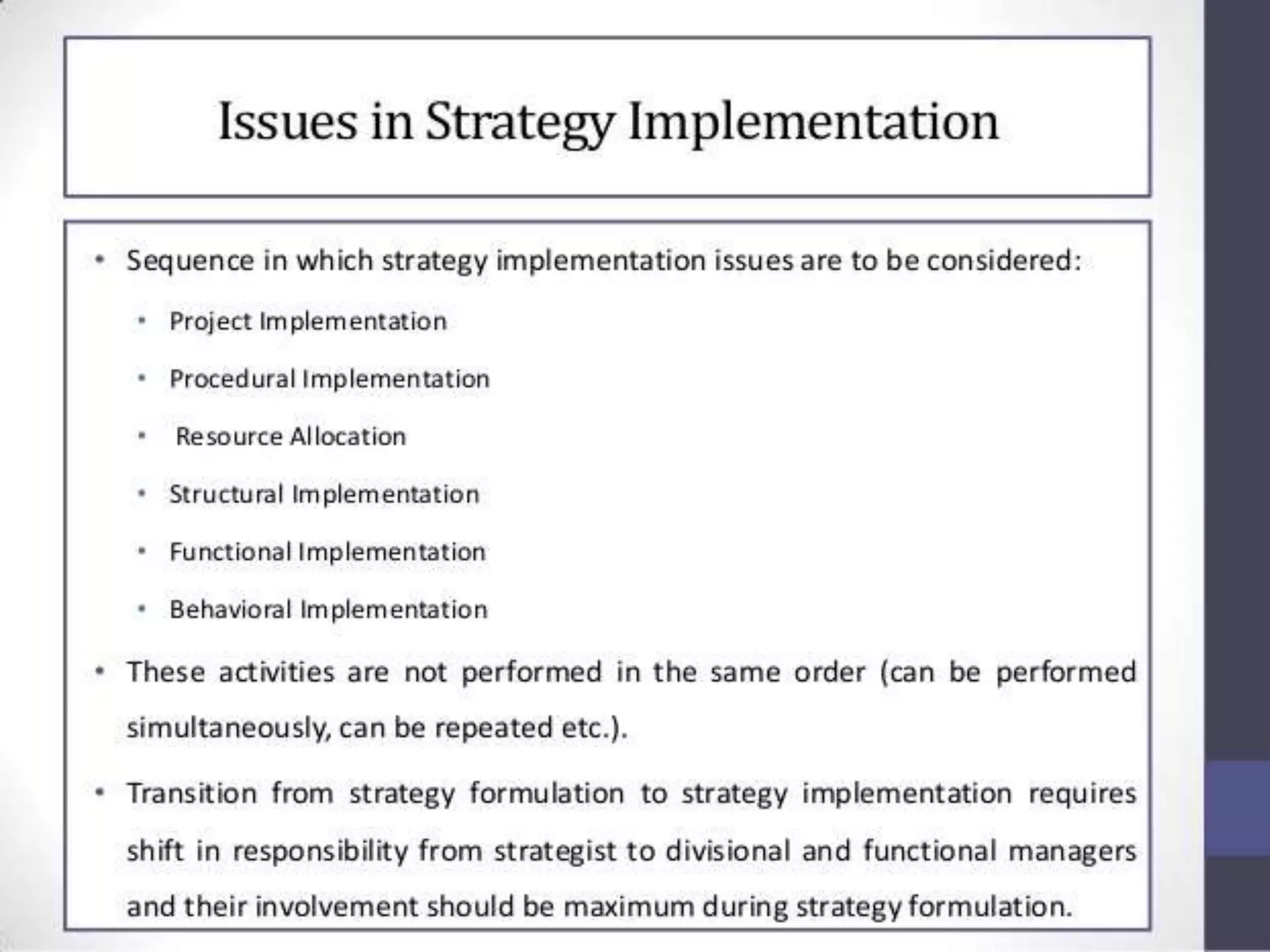
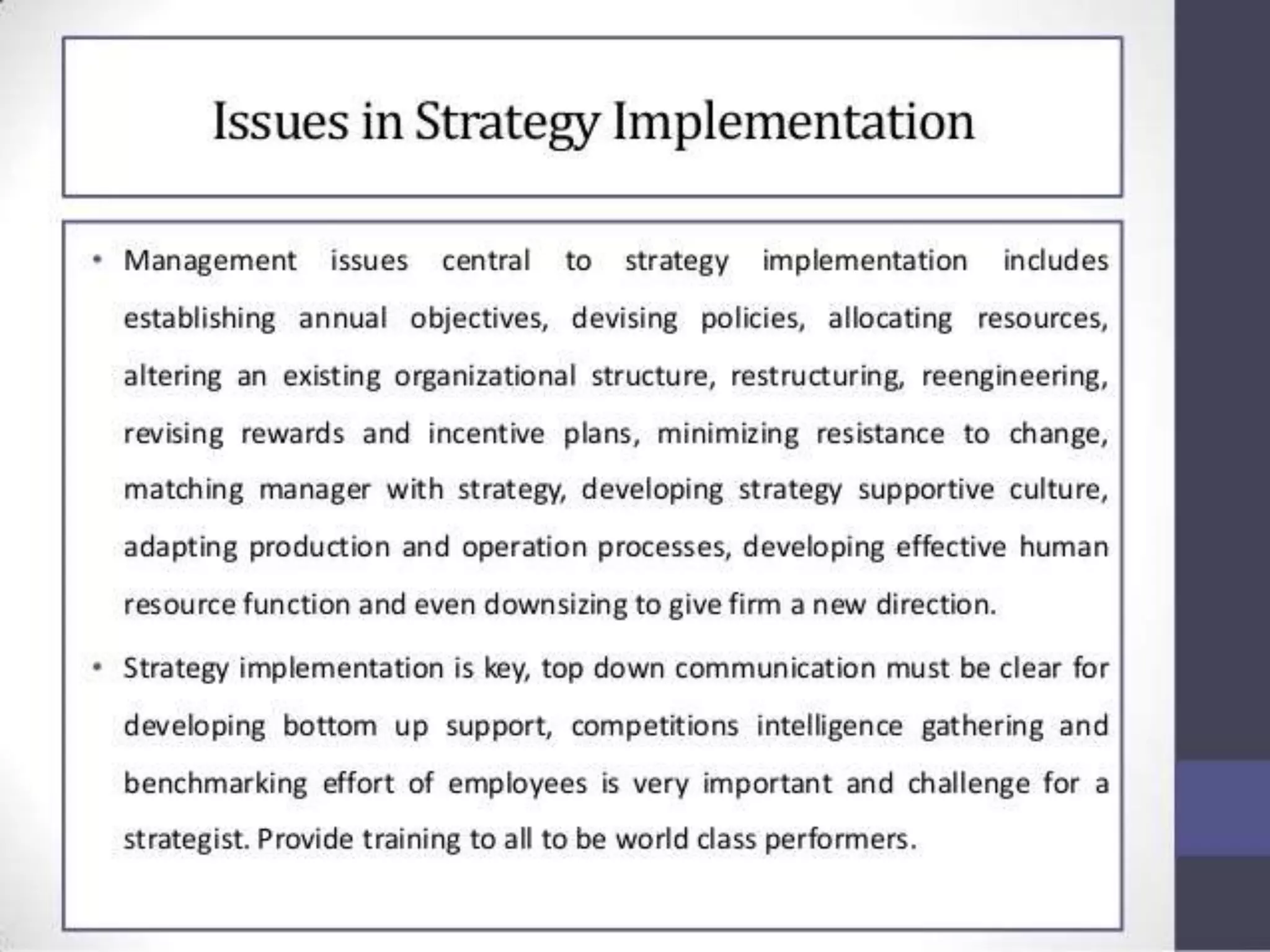
 Issues in Strategy Implementation
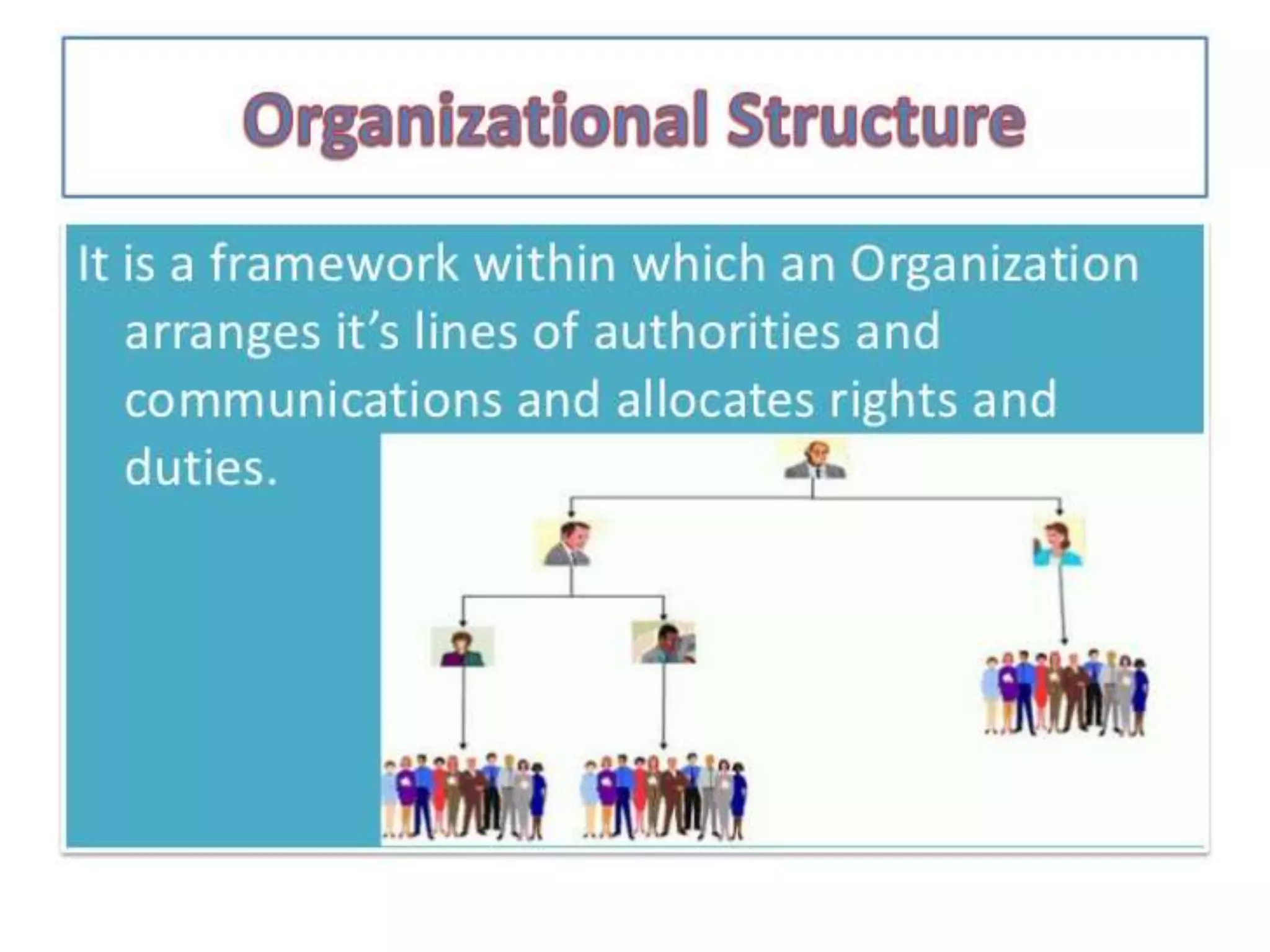
ORGANIZATION STRUCTURE
 Introduction
 Features, Purpose & Importance of
Organization Structure
 Types of Organization Structure
 Matching structure with strategy
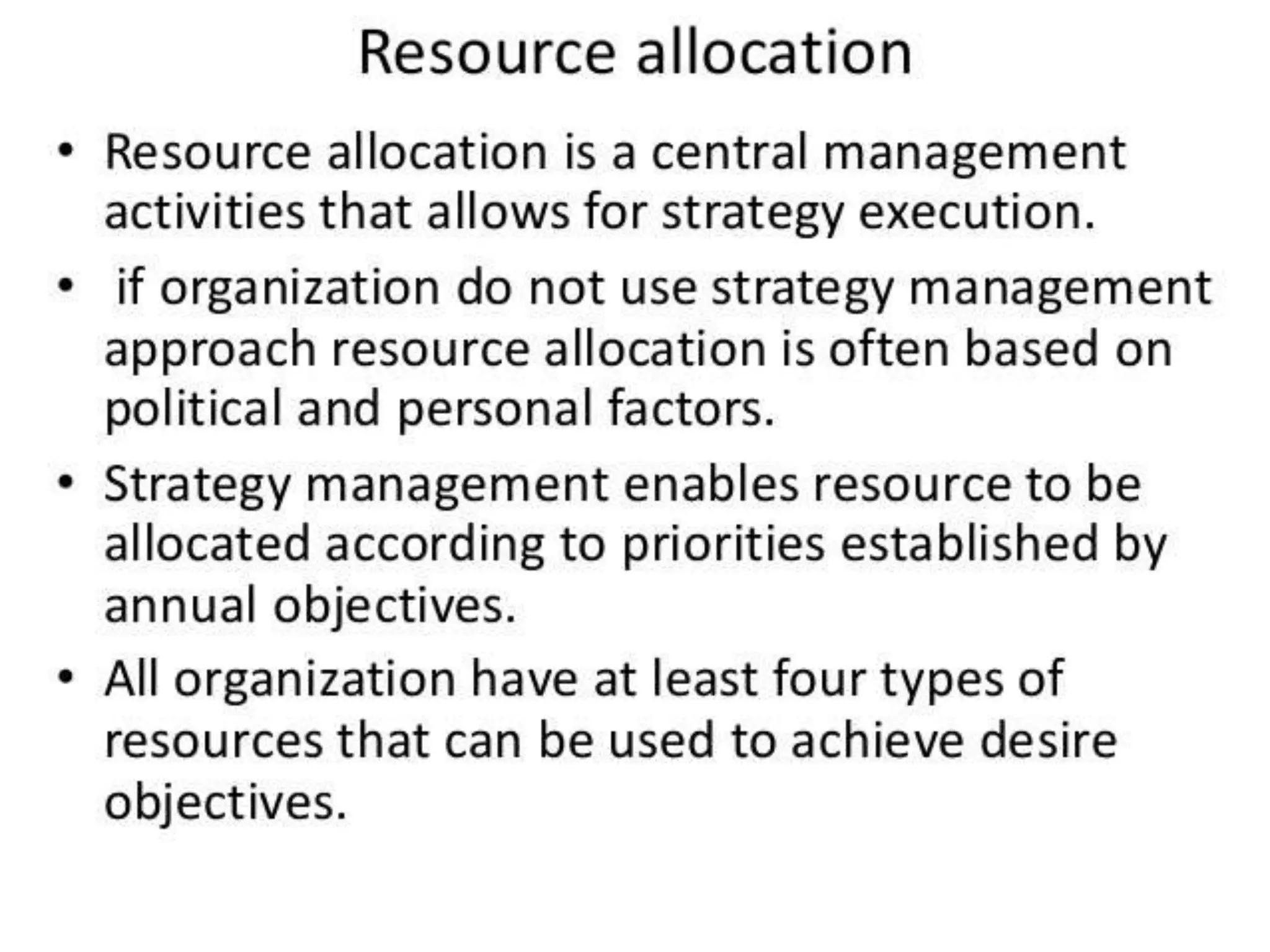
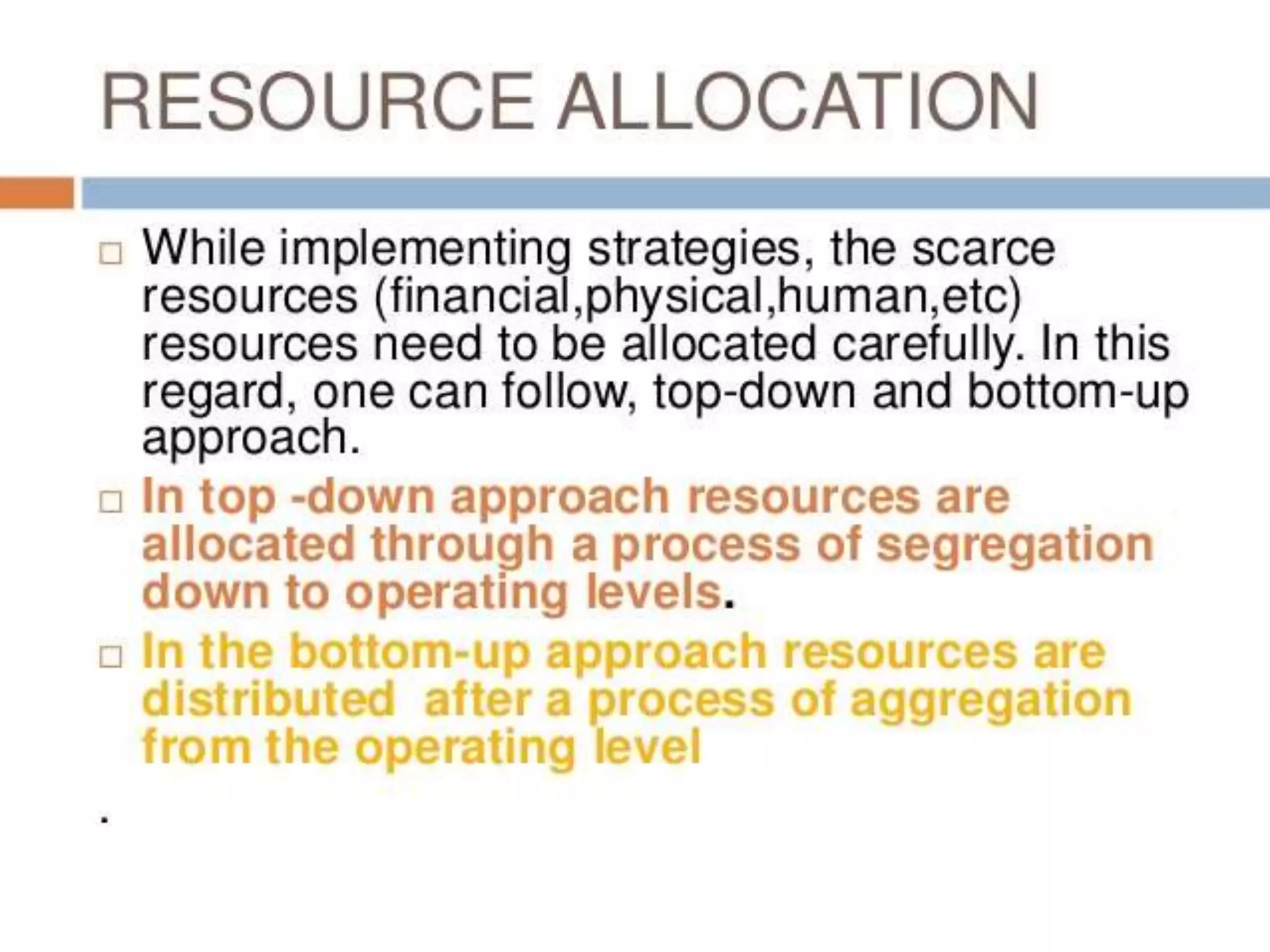
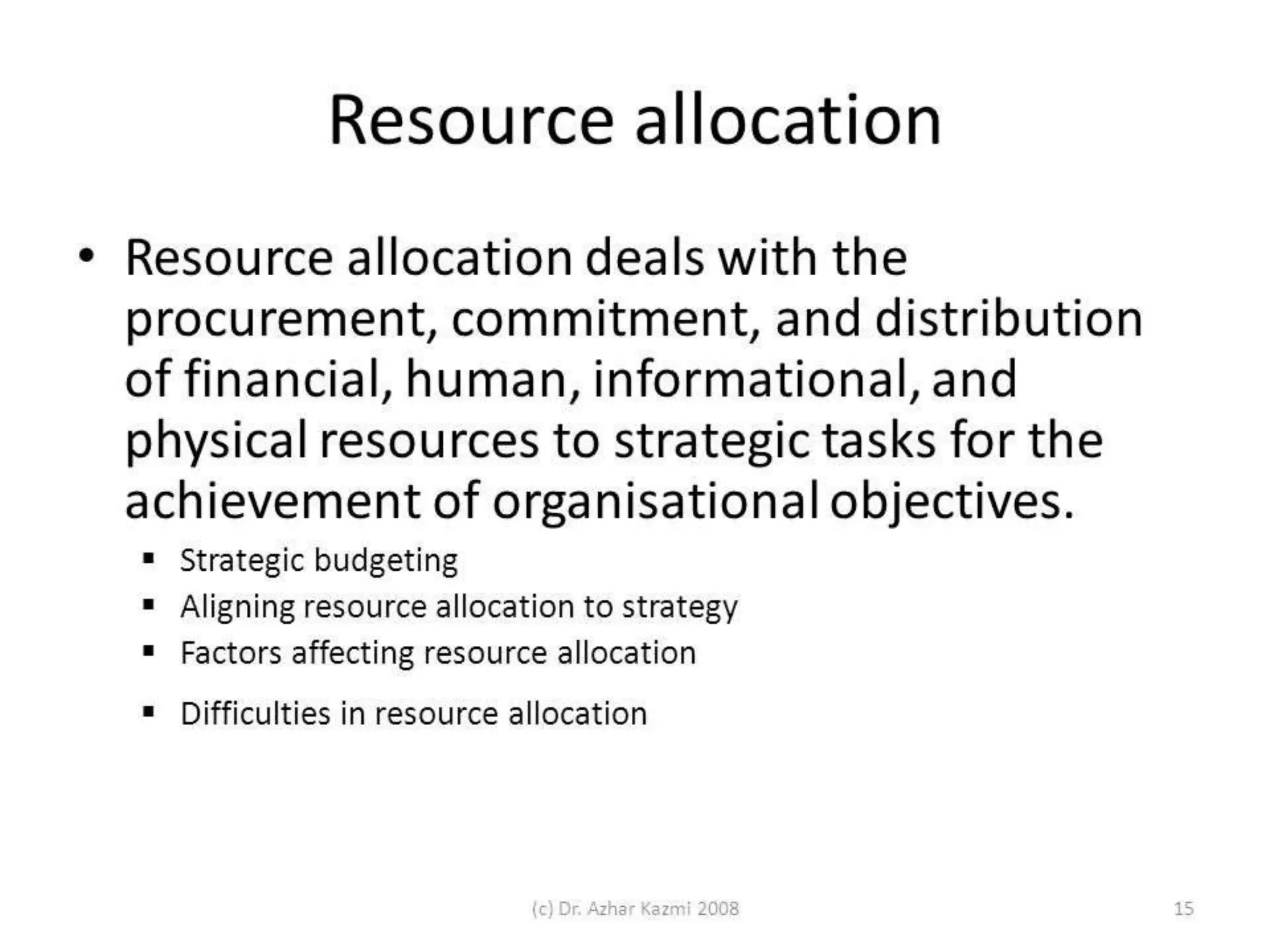
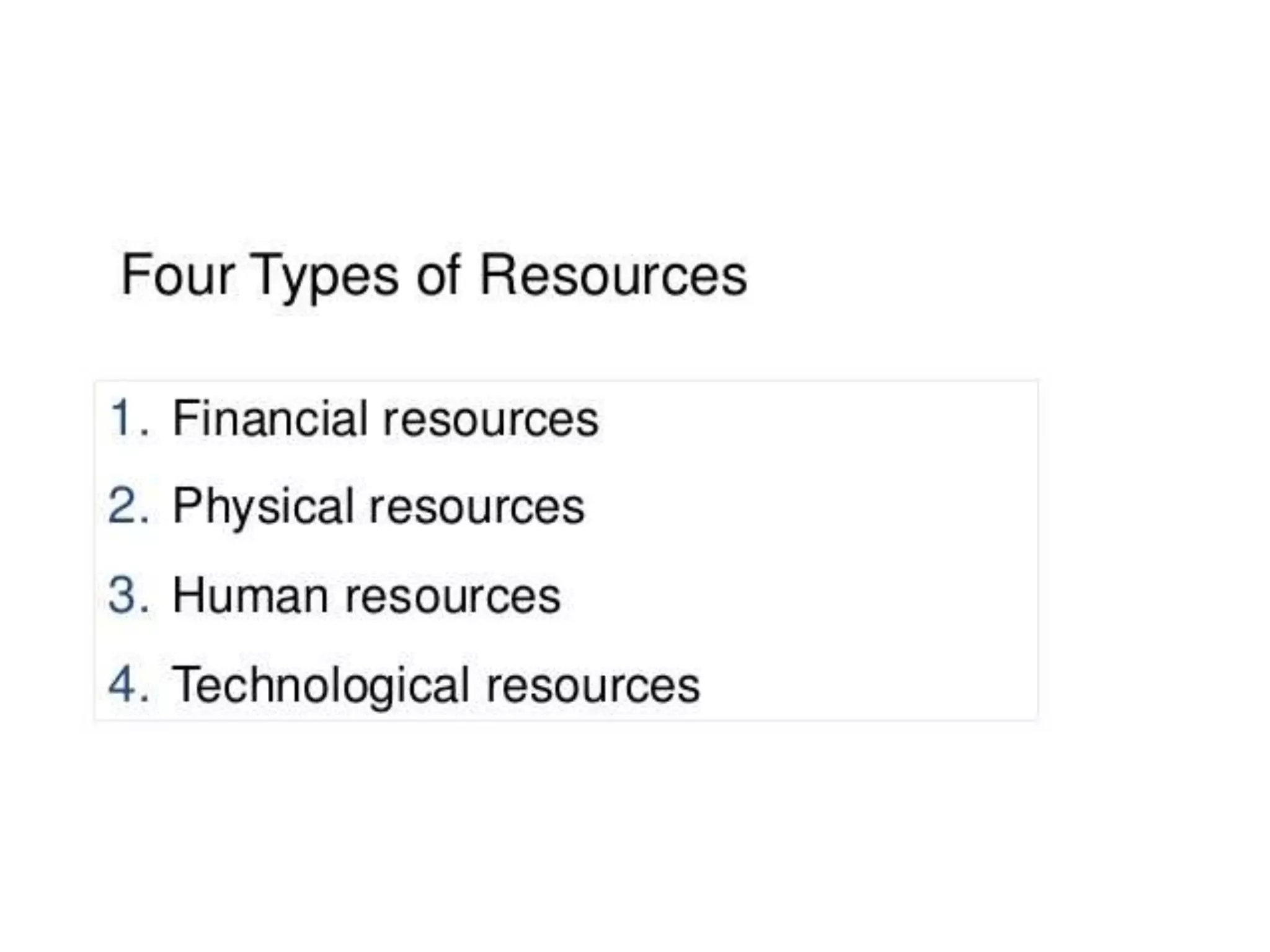
RESOURCE ALLOCATION
 Introduction
 Factors affecting Resource Allocation
 Difficulties in Resource Allocation
STRATGIC EVALUATION &
CONTROLLING SYSTEM
 Introduction
 Strategic Evaluation
 Purpose of Strategic Evaluation
 Nature of Strategic Evaluation
 Importance of Strategic Evaluation
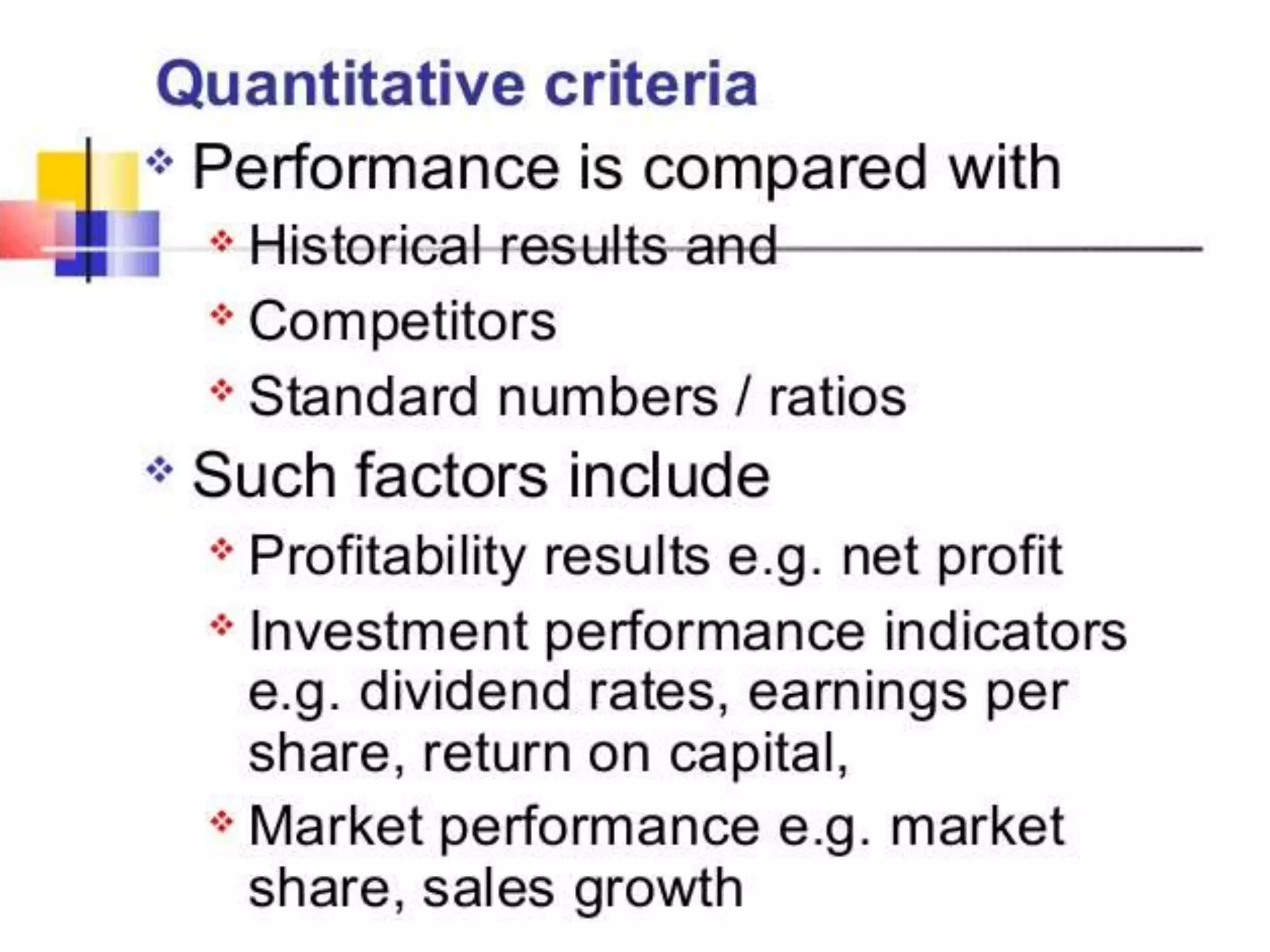
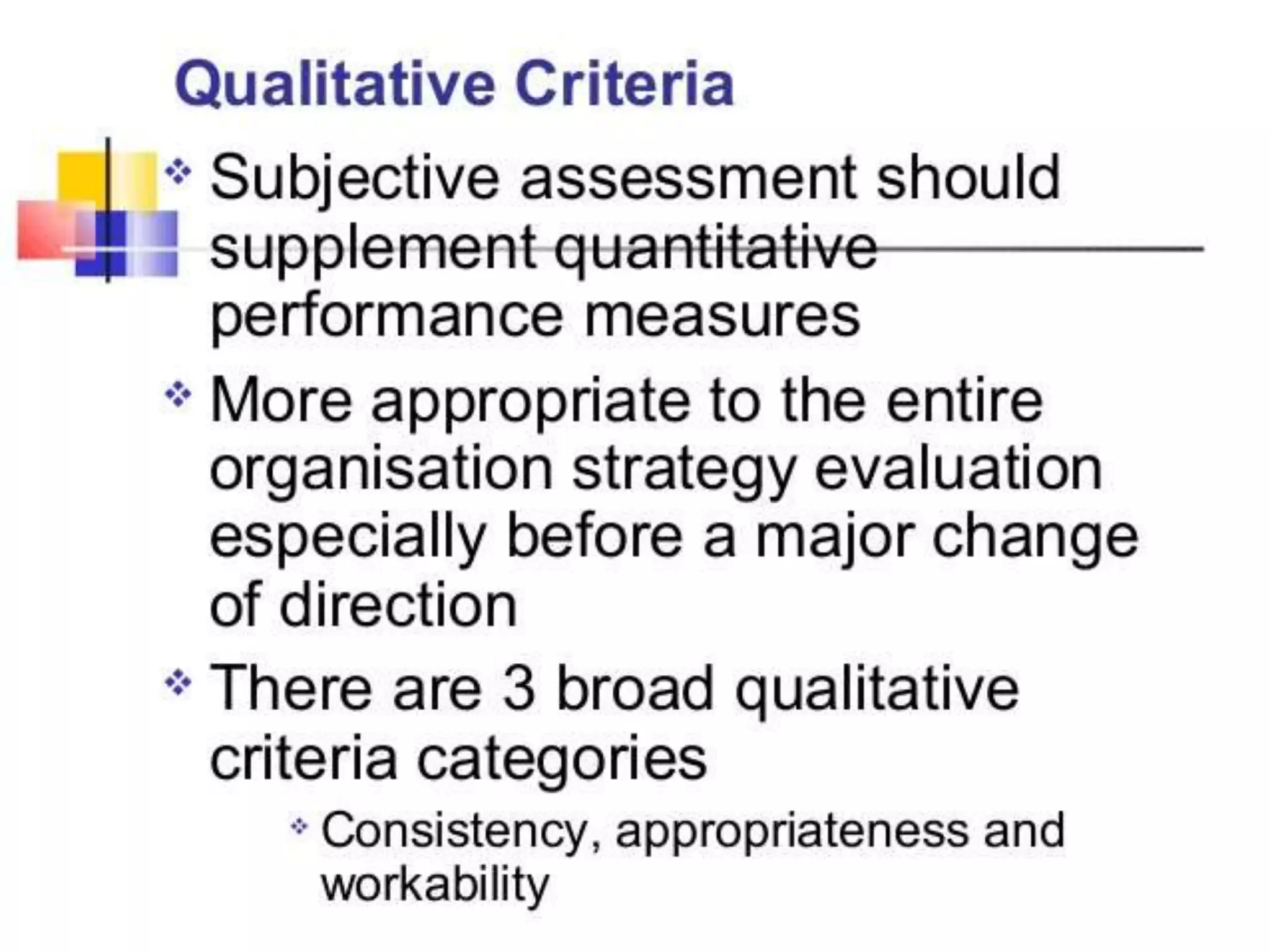
 Criteria for Strategic Evaluation
 Quantitative Factors
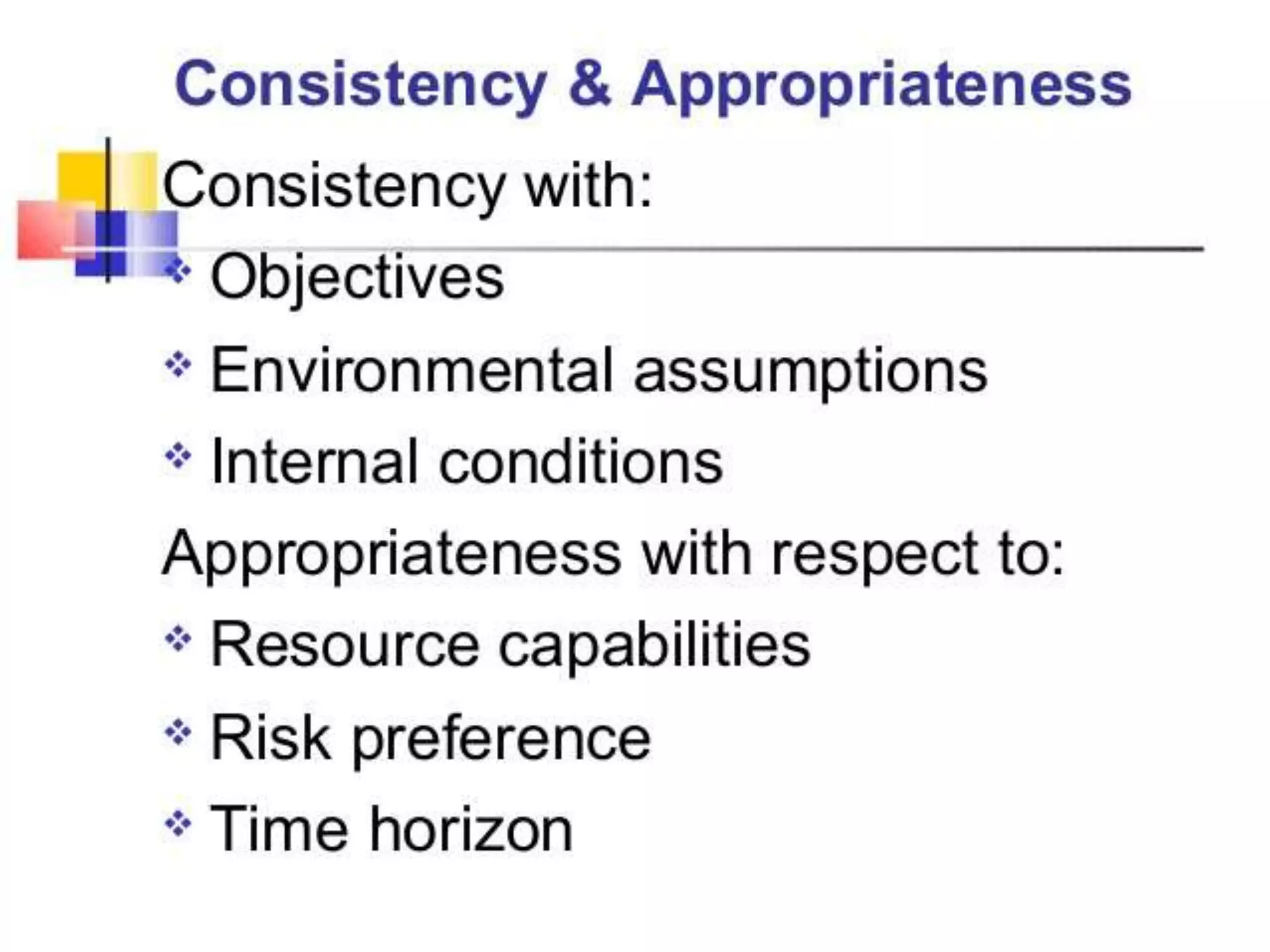
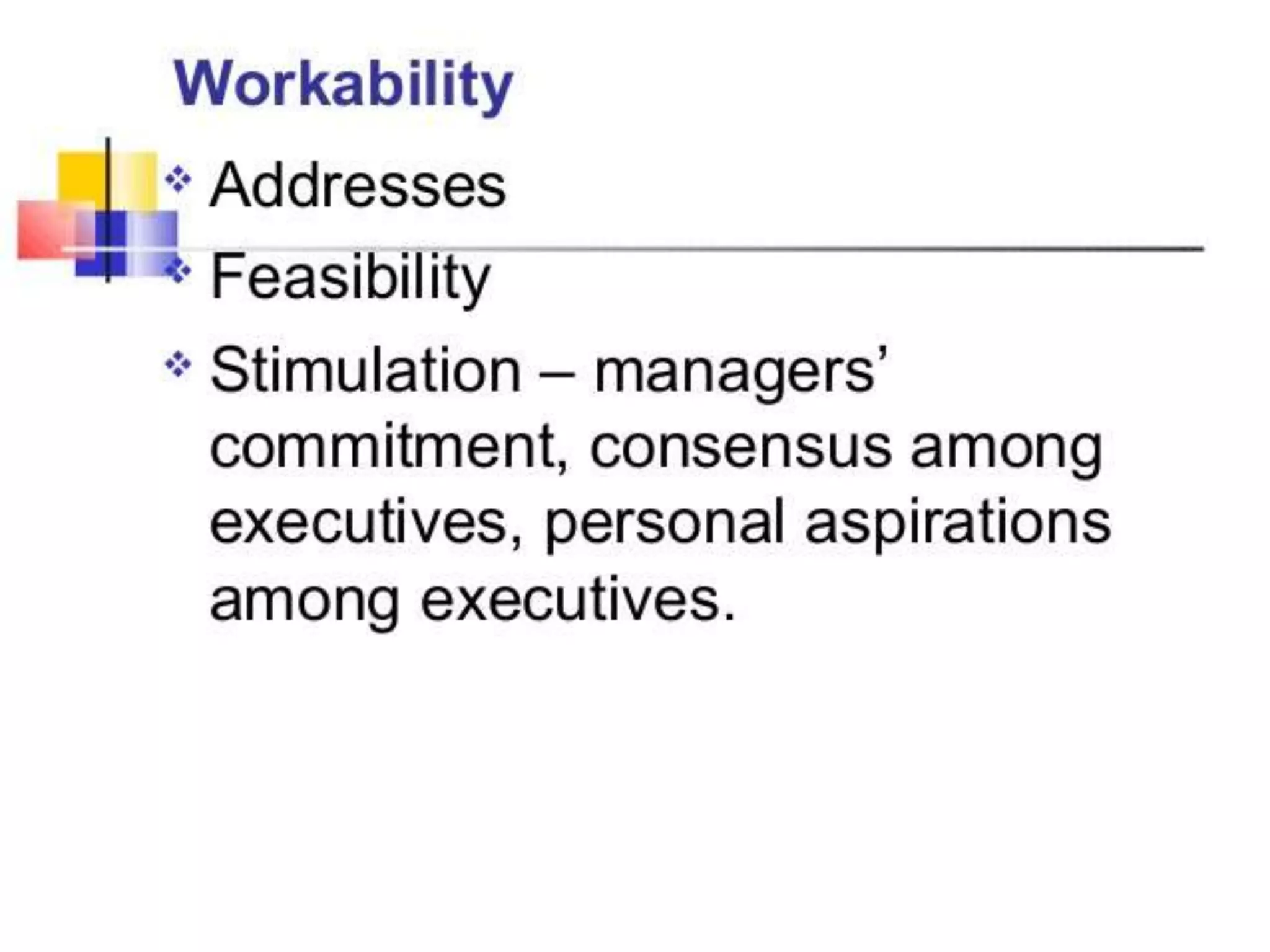
 Qualitative Factors
STRATEGIC CONTROL
 Introduction
 Importance of Strategic Control
 Types of Strategic Control
Nature of Strategic
Implementation
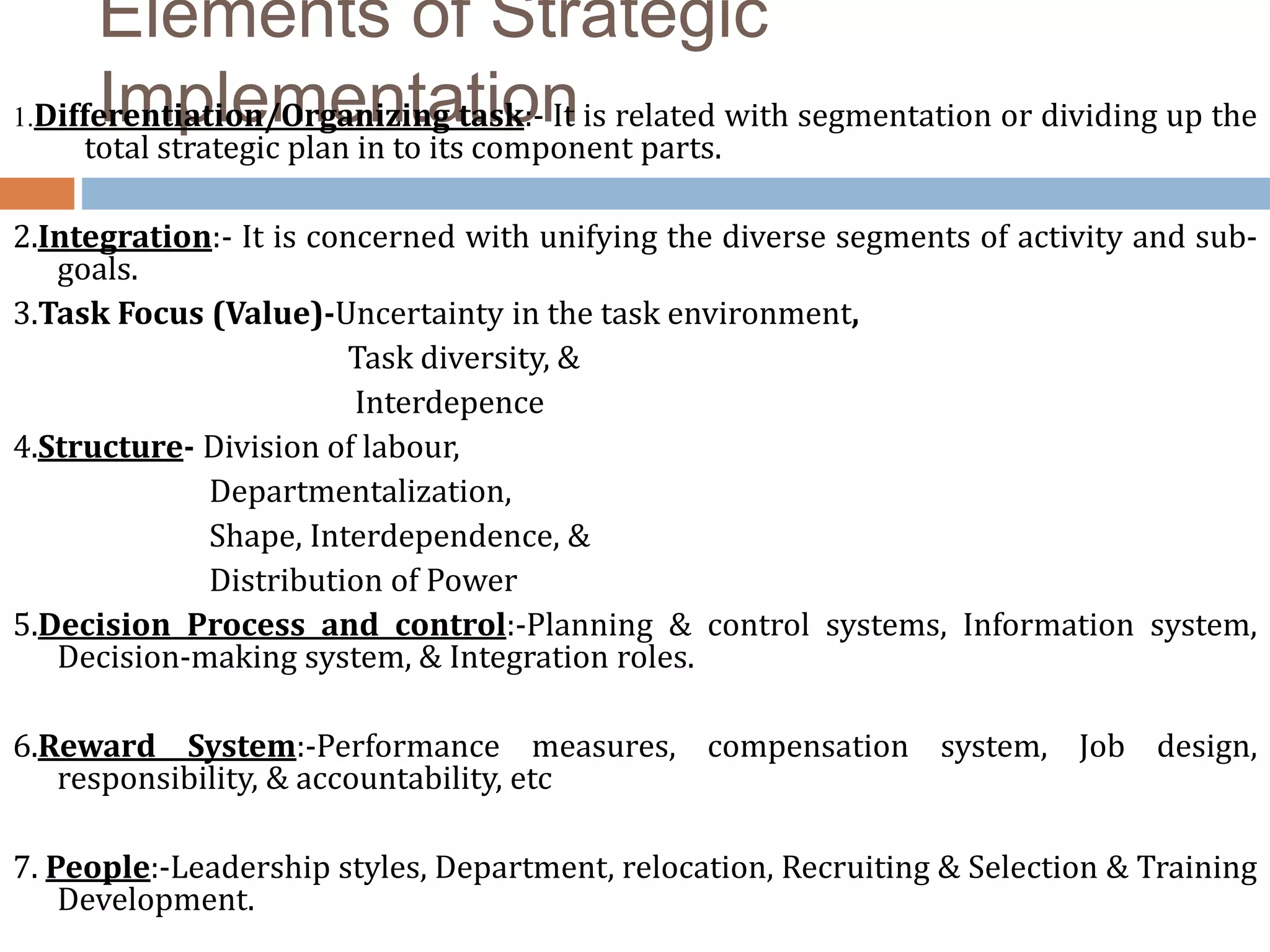
Elements of Strategic
Implementation1.Differentiation/Organizing task:- It is related with segmentation or dividing up the
total strategic plan in to its component parts.
2.Integration:- It is concerned with unifying the diverse segments of activity and sub-
goals.
3.Task Focus (Value)-Uncertainty in the task environment,
Task diversity, &
Interdepence
4.Structure- Division of labour,
Departmentalization,
Shape, Interdependence, &
Distribution of Power
5.Decision Process and control:-Planning & control systems, Information system,
Decision-making system, & Integration roles.
6.Reward System:-Performance measures, compensation system, Job design,
responsibility, & accountability, etc
7. People:-Leadership styles, Department, relocation, Recruiting & Selection & Training
Development.
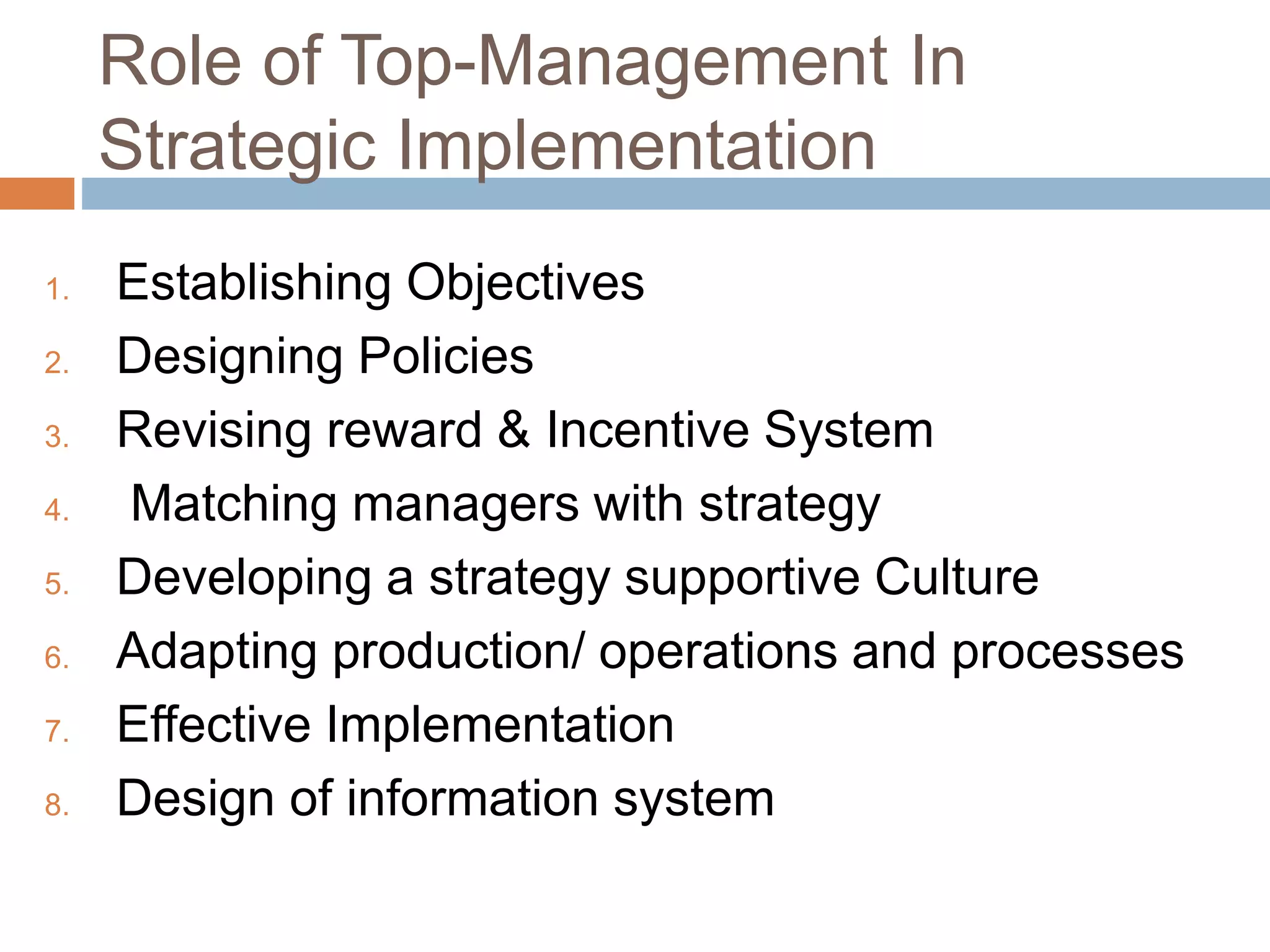
Role of Top-Management In
Strategic Implementation
1. Establishing Objectives
2. Designing Policies
3. Revising reward & Incentive System
4. Matching managers with strategy
5. Developing a strategy supportive Culture
6. Adapting production/ operations and processes
7. Effective Implementation
8. Design of information system
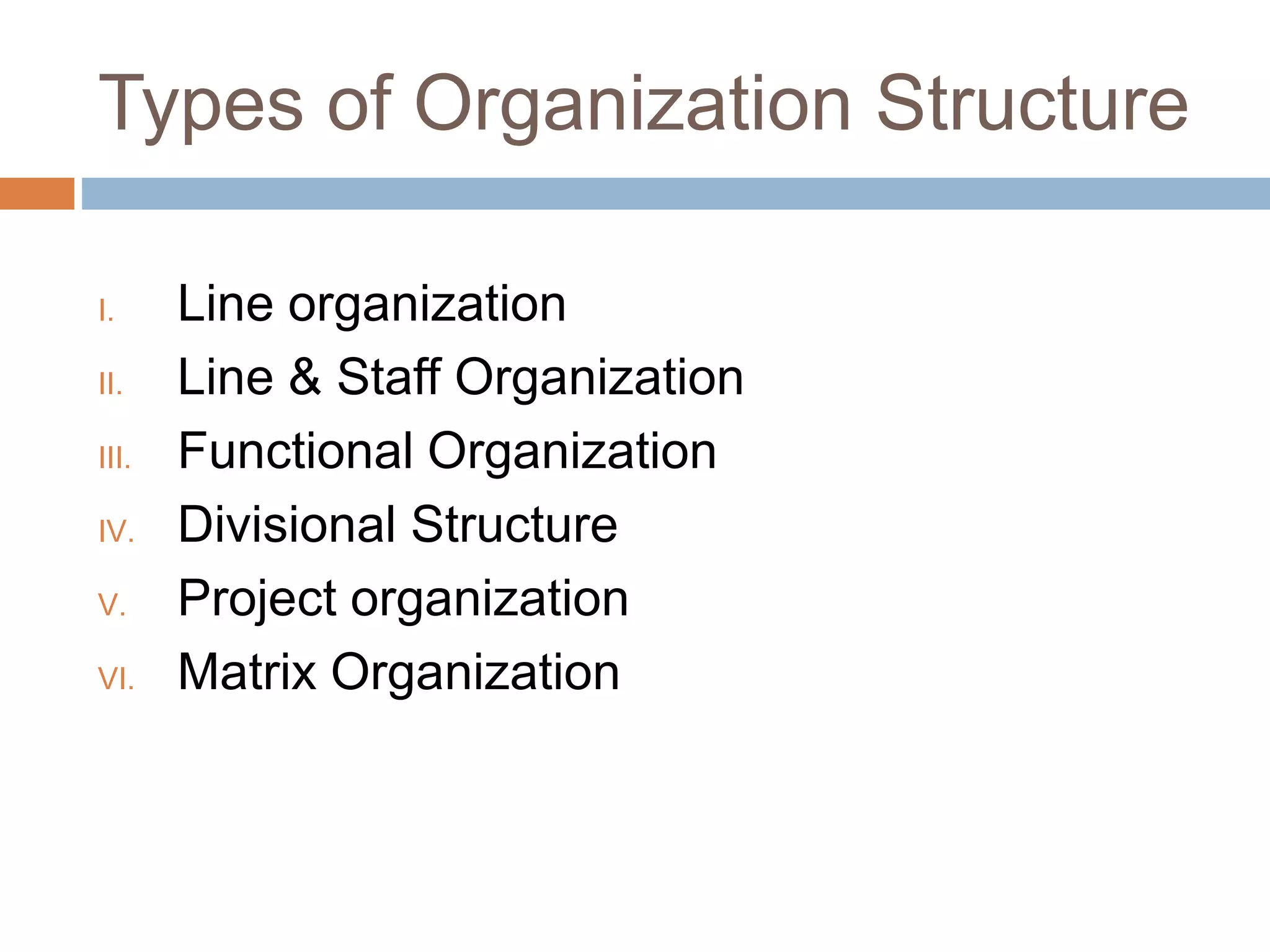
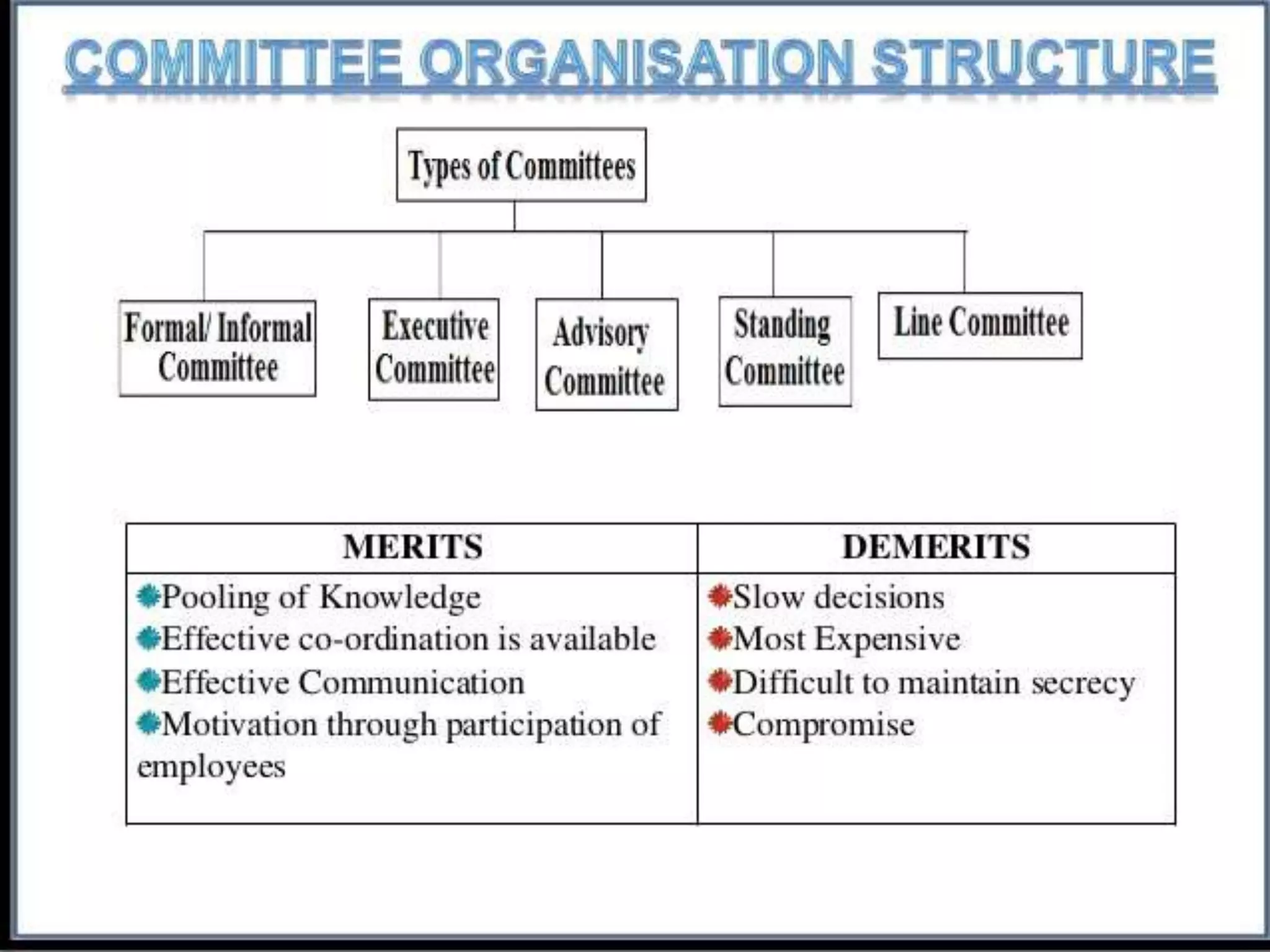
Types of Organization Structure
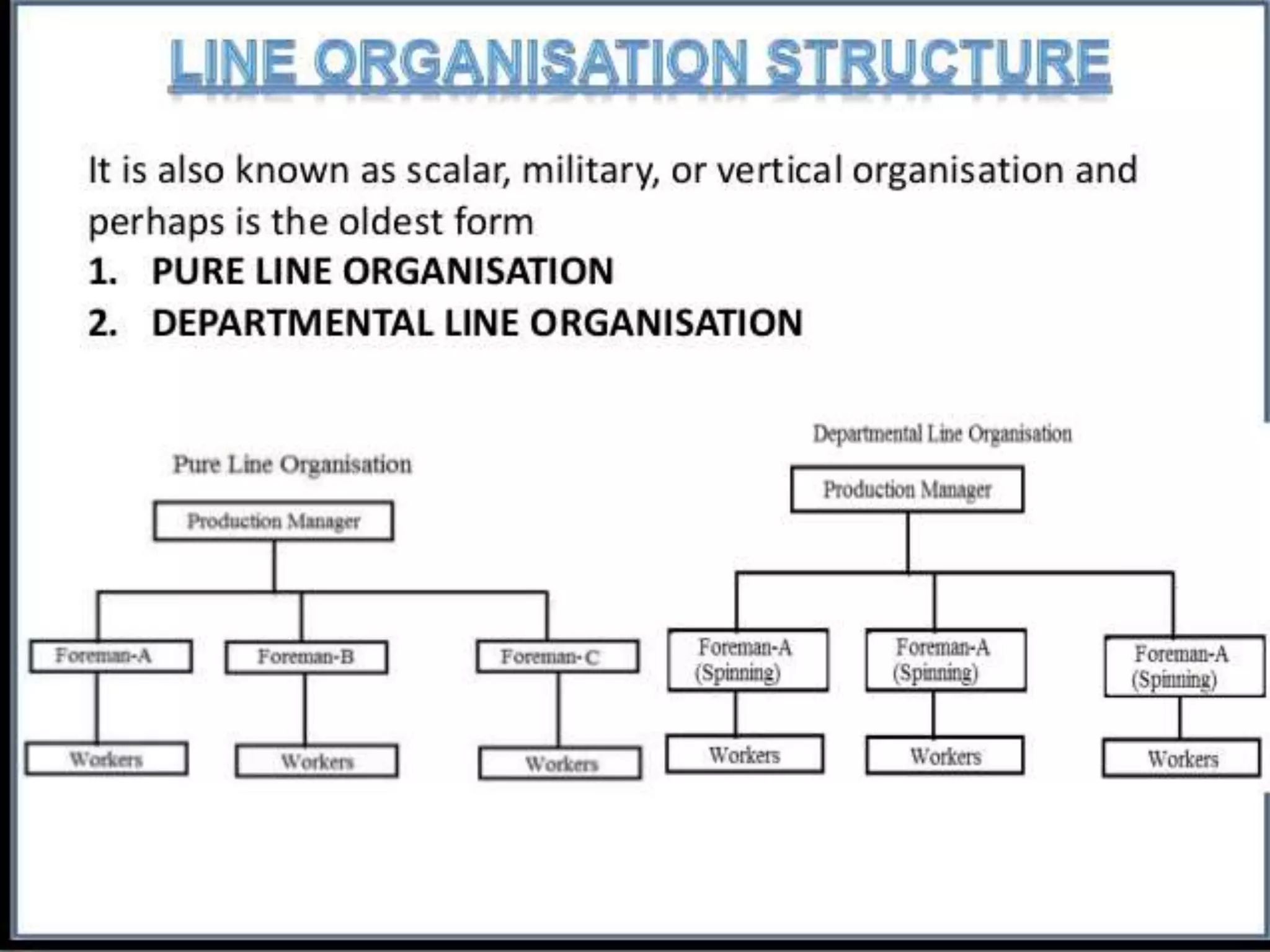
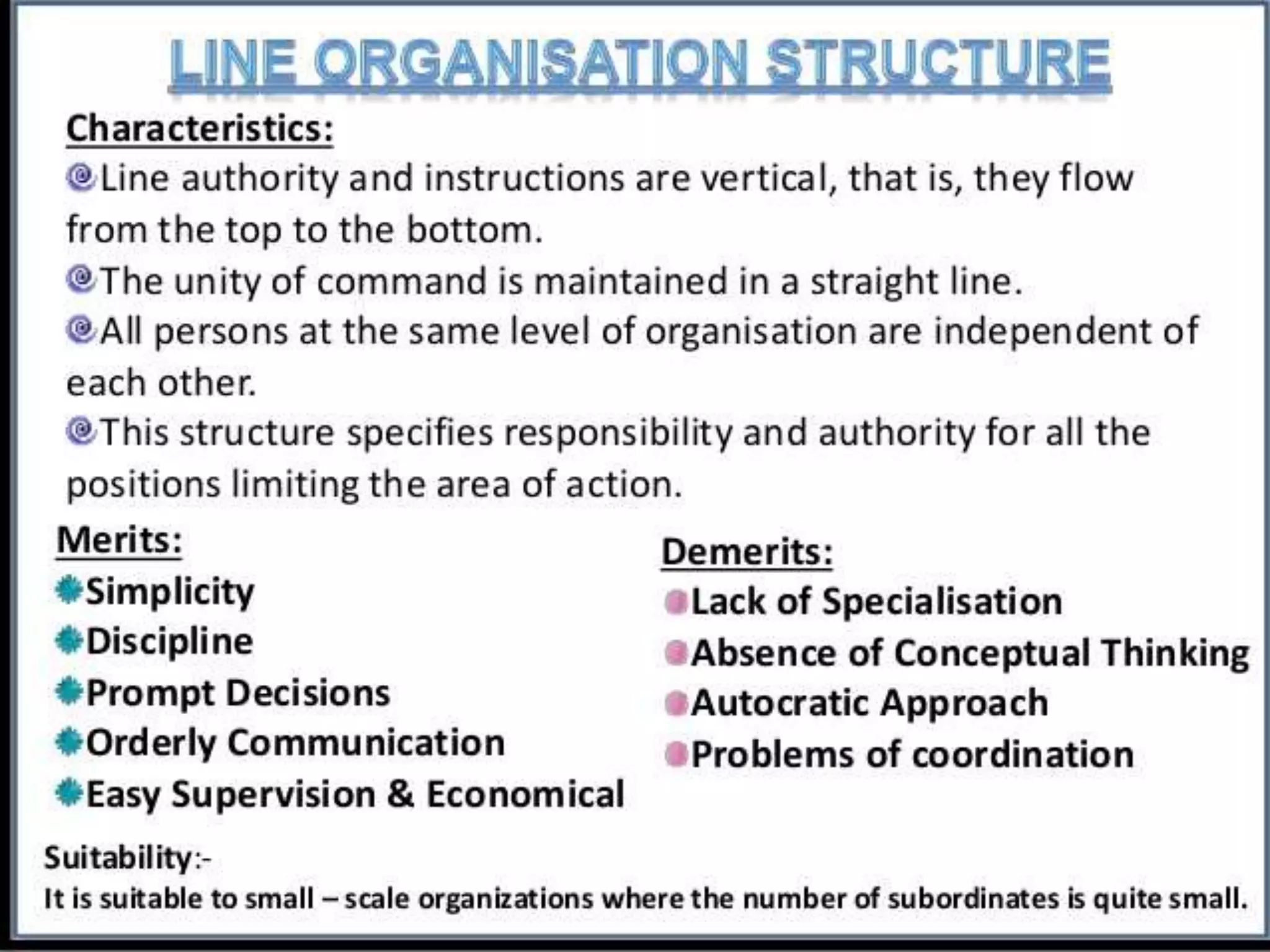
I. Line organization
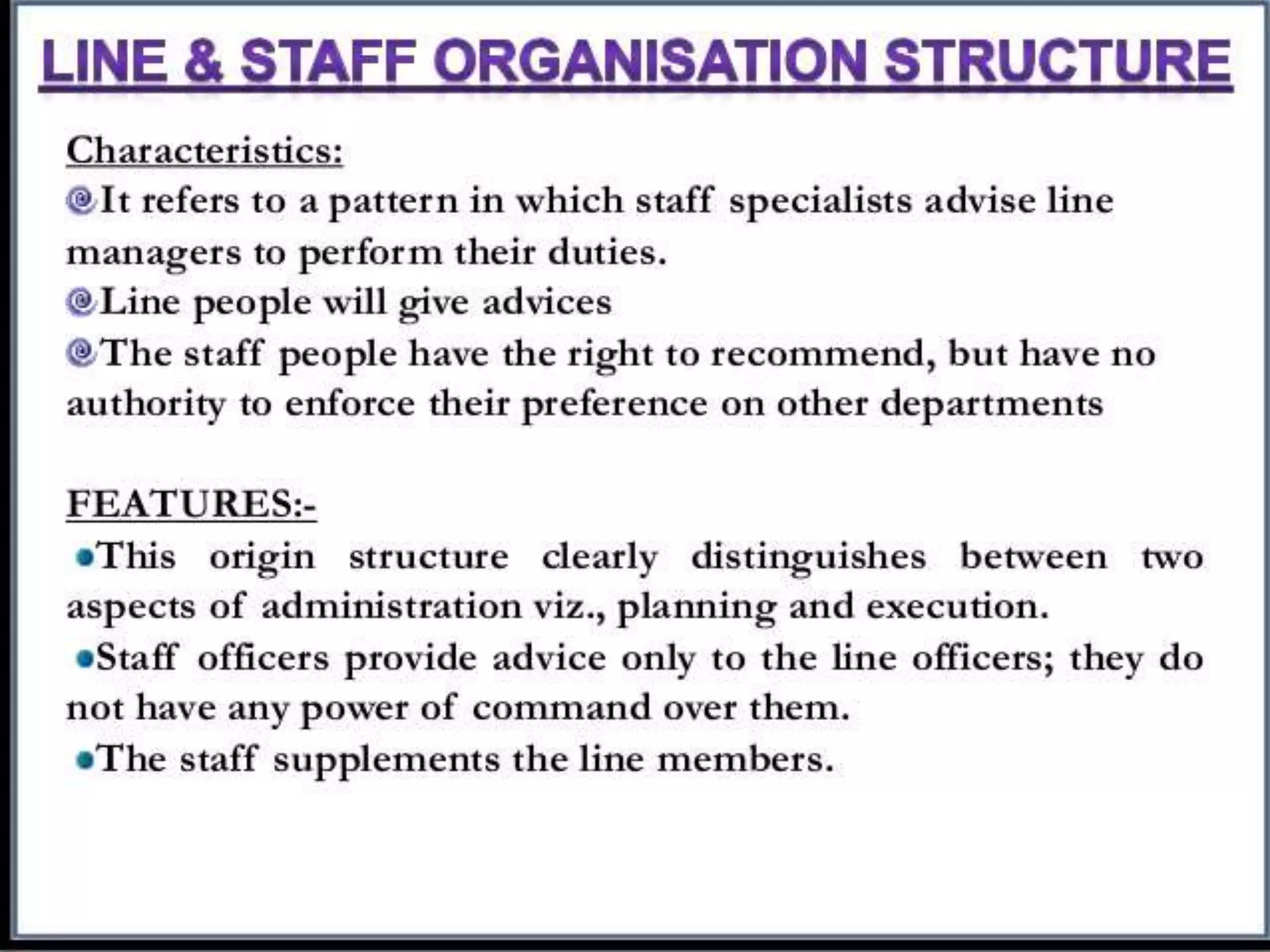
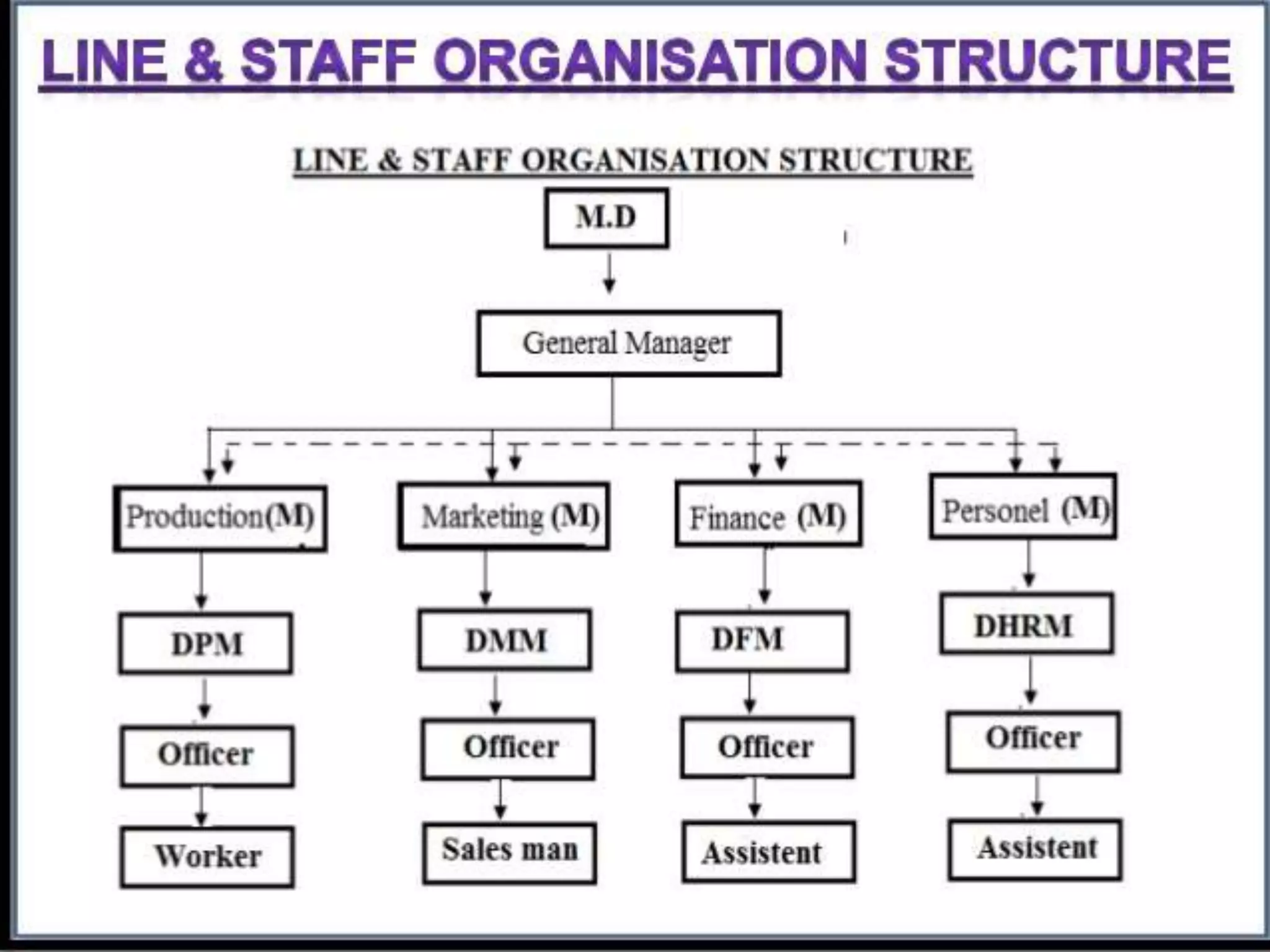
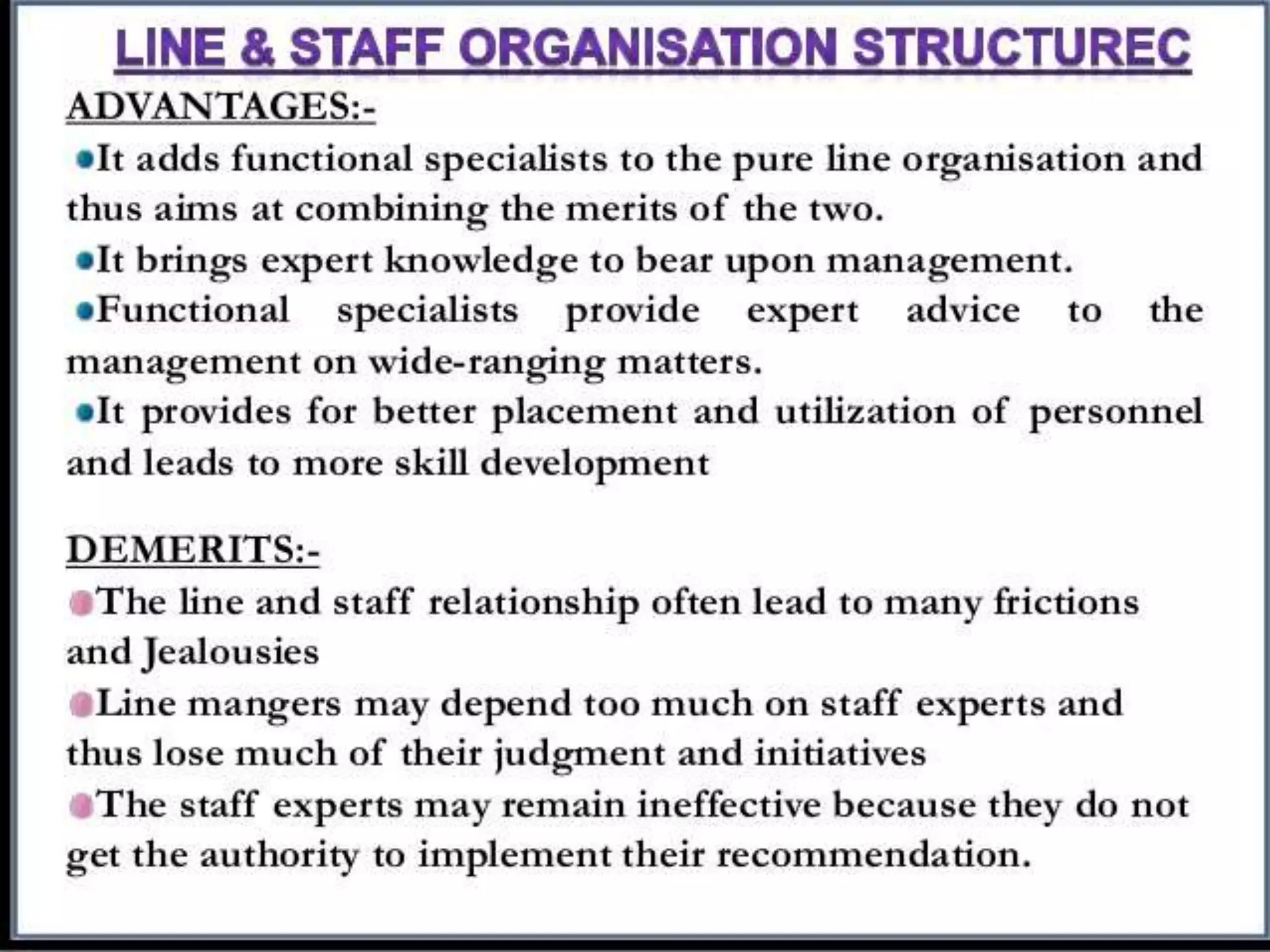
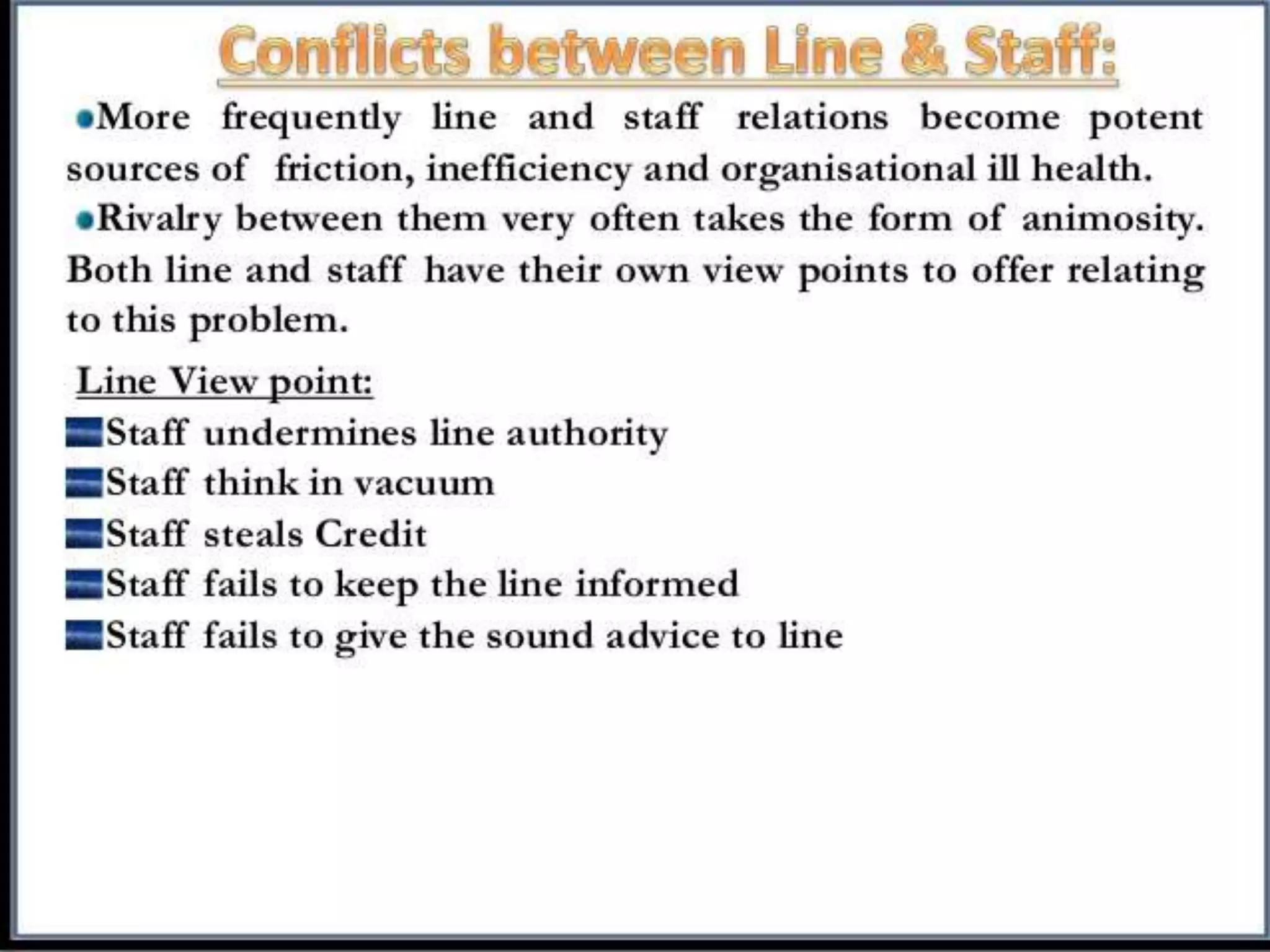
II. Line & Staff Organization
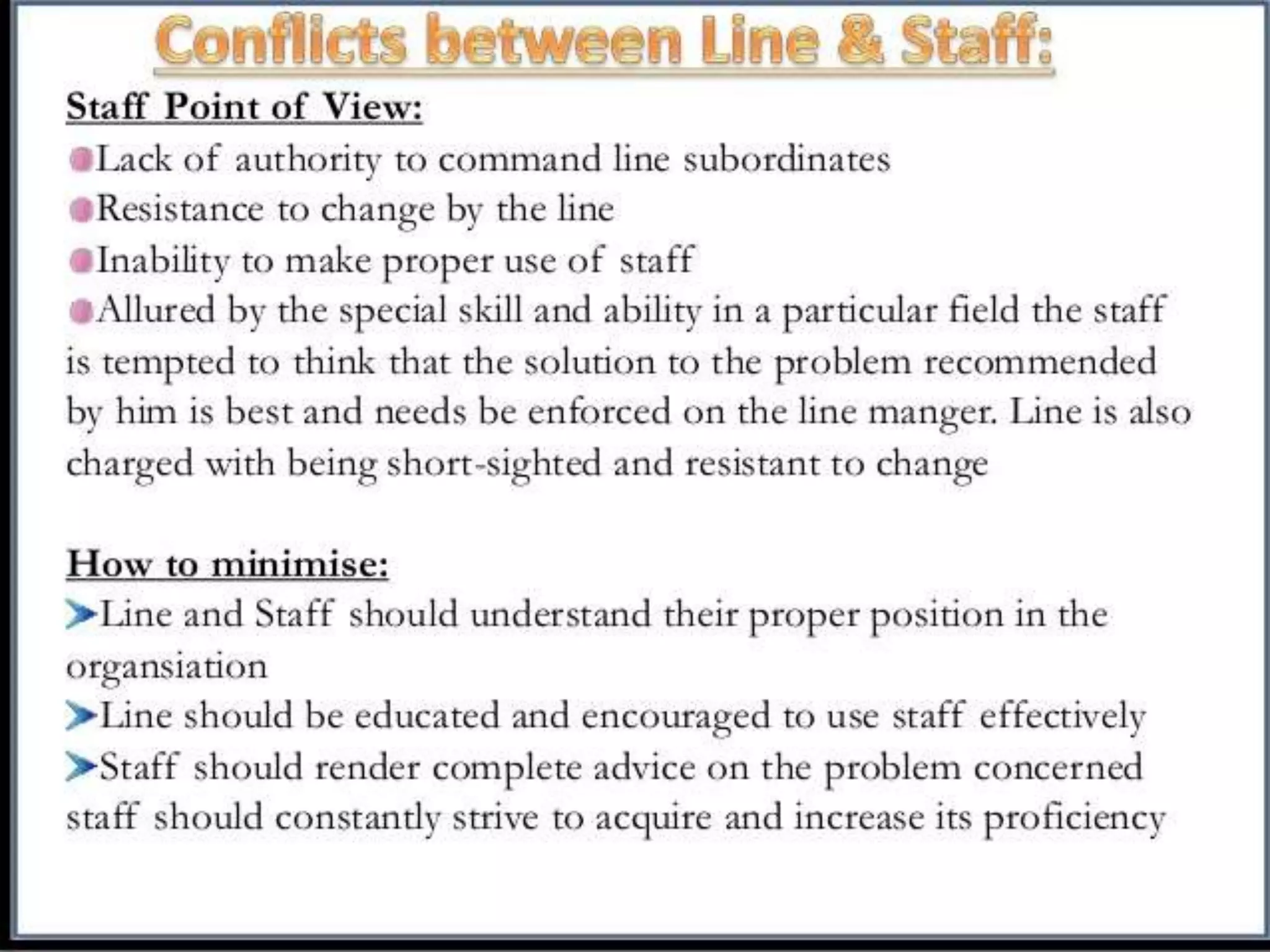
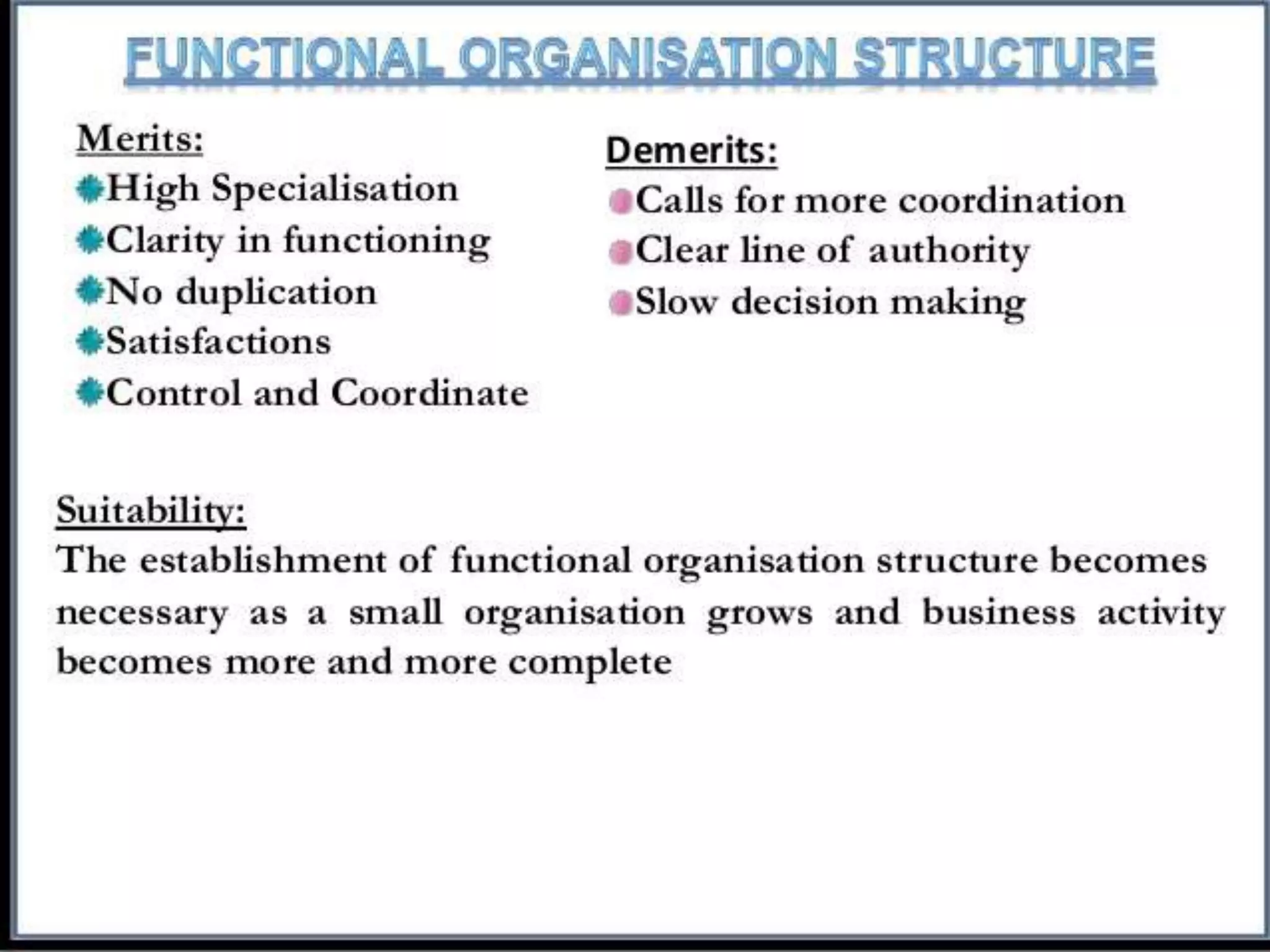
III. Functional Organization
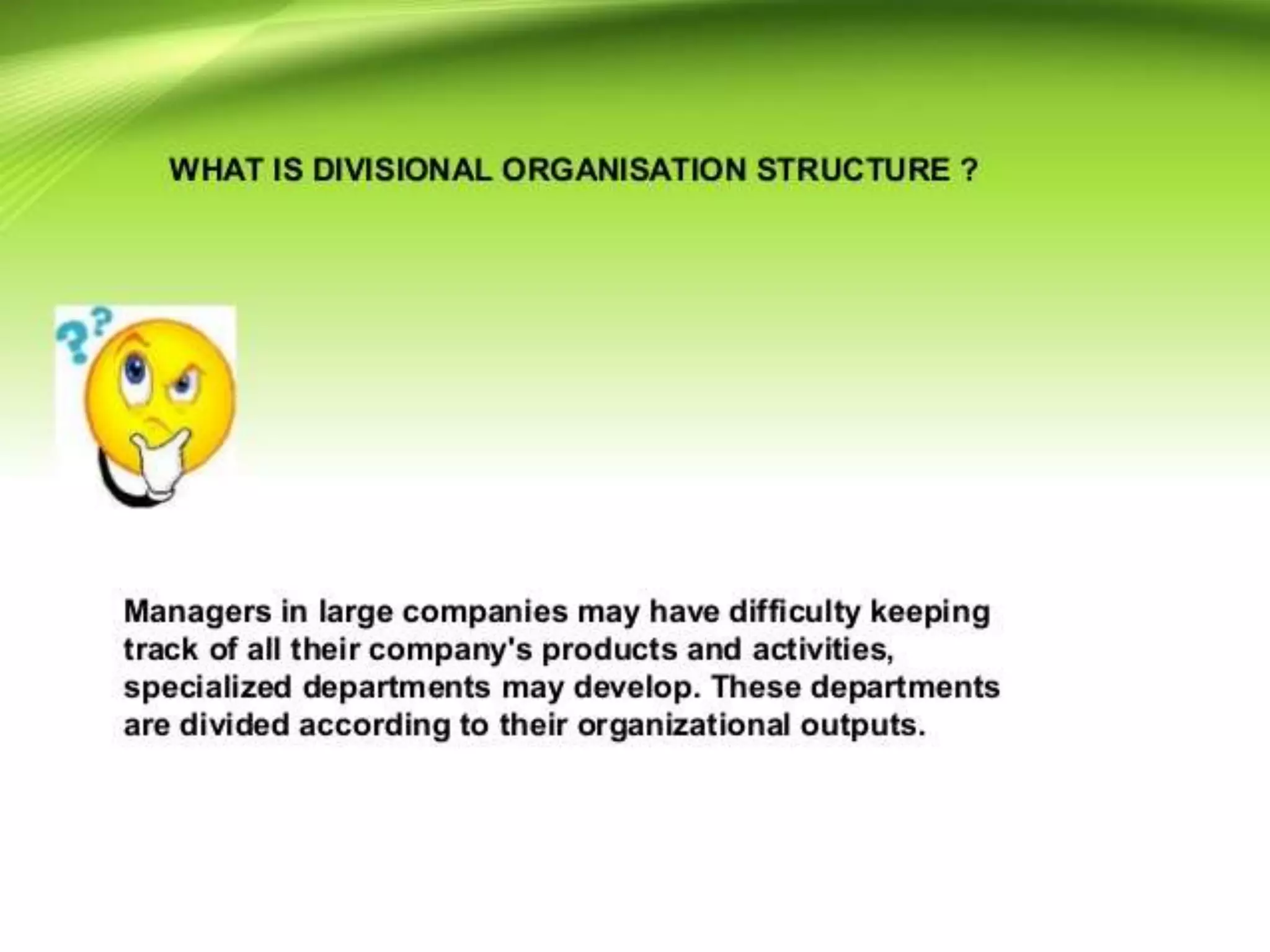
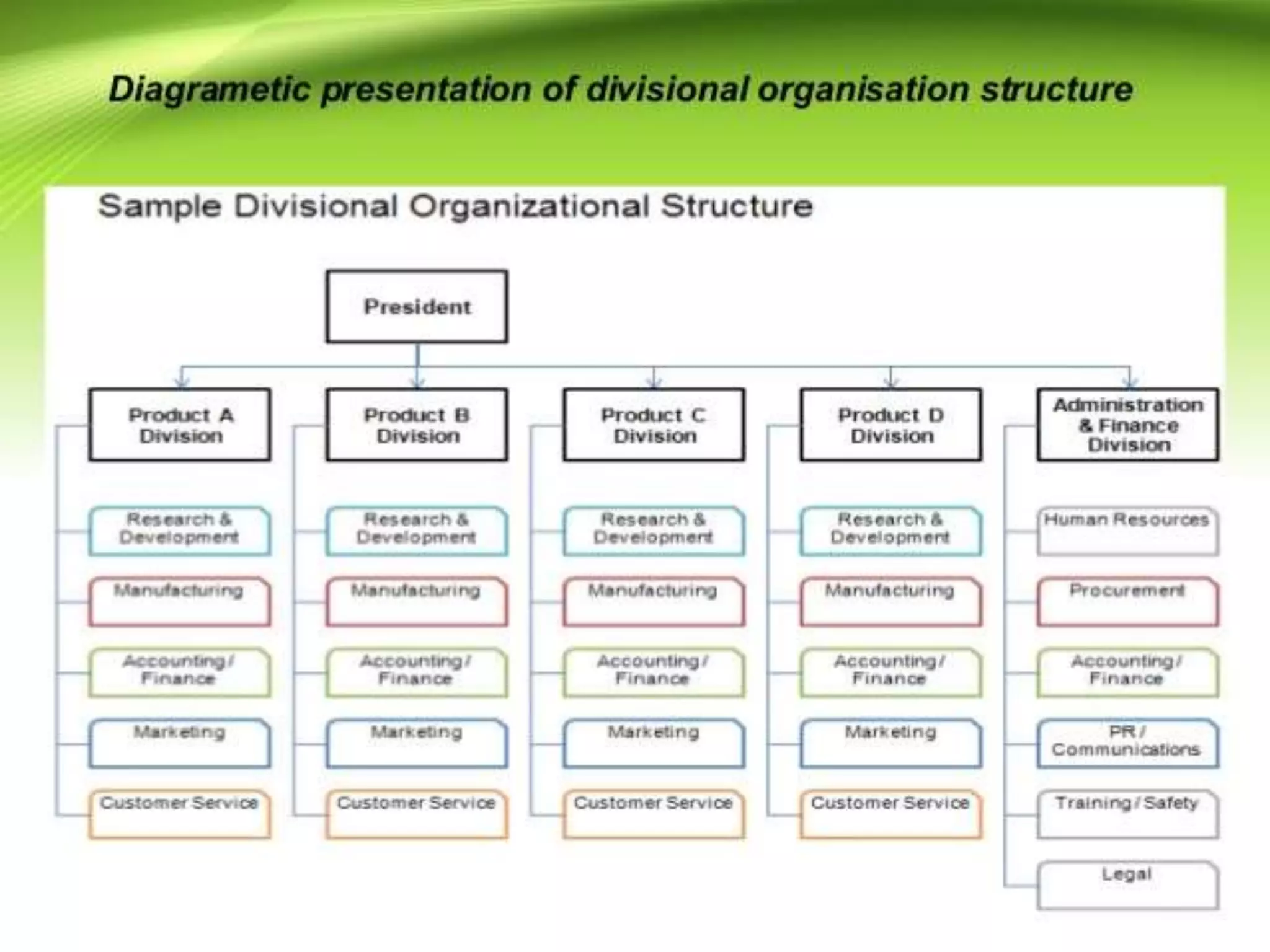
IV. Divisional Structure
V. Project organization
VI. Matrix Organization
Matching Structure with
Strategy
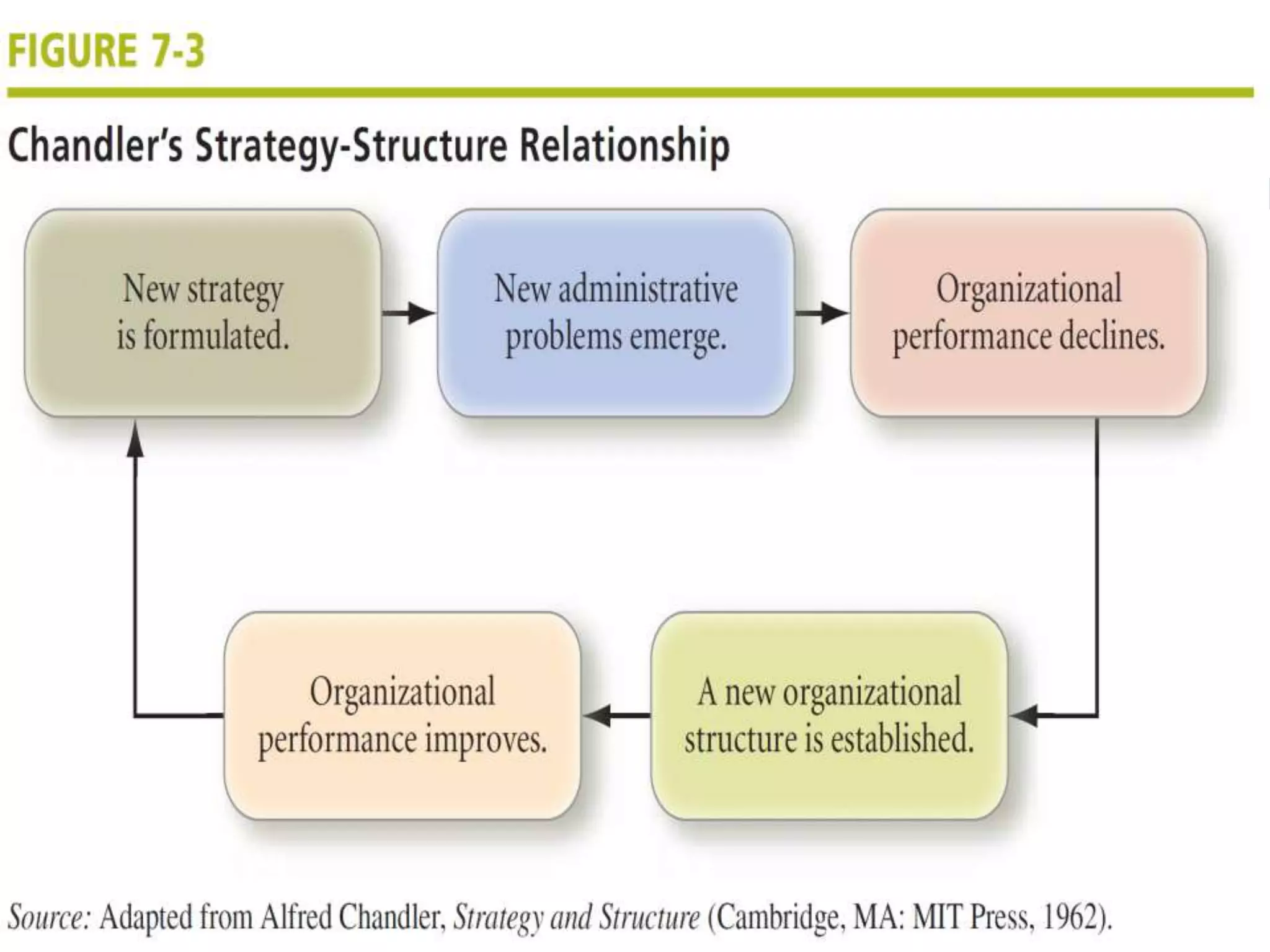
 Strategy gurus like Alfred Chandler and M. E.
Porter argue that structure follows strategy.
 Porter states that corporations can adopt one of
three general (generic) strategies: cost
leadership, differentiation, and focus. And, for
each alternative strategy alternative organization
design/structure exists.
 Chandler, on the other hand, has emphasized
that organization structures follow the growth
strategies of the firms. Alternative structures
exist for alternative growth strategies , viz.,
volume expansion, geographic expansion and
product diversification.
Matching Structure with
Strategy
 Depending upon the strategic choice (along with
some other factors like size of the firm,
technology used, environmental complexities
etc.), a firm may pursue one of the following
structures.
1. Simple/ Entrepreneurial Structure
2. Functional Structure
3. SBU Structure
4. Divisional Structure
5. Matrix Structure
6. Holding Company Structure
7. Network Structure
8. Other Structures
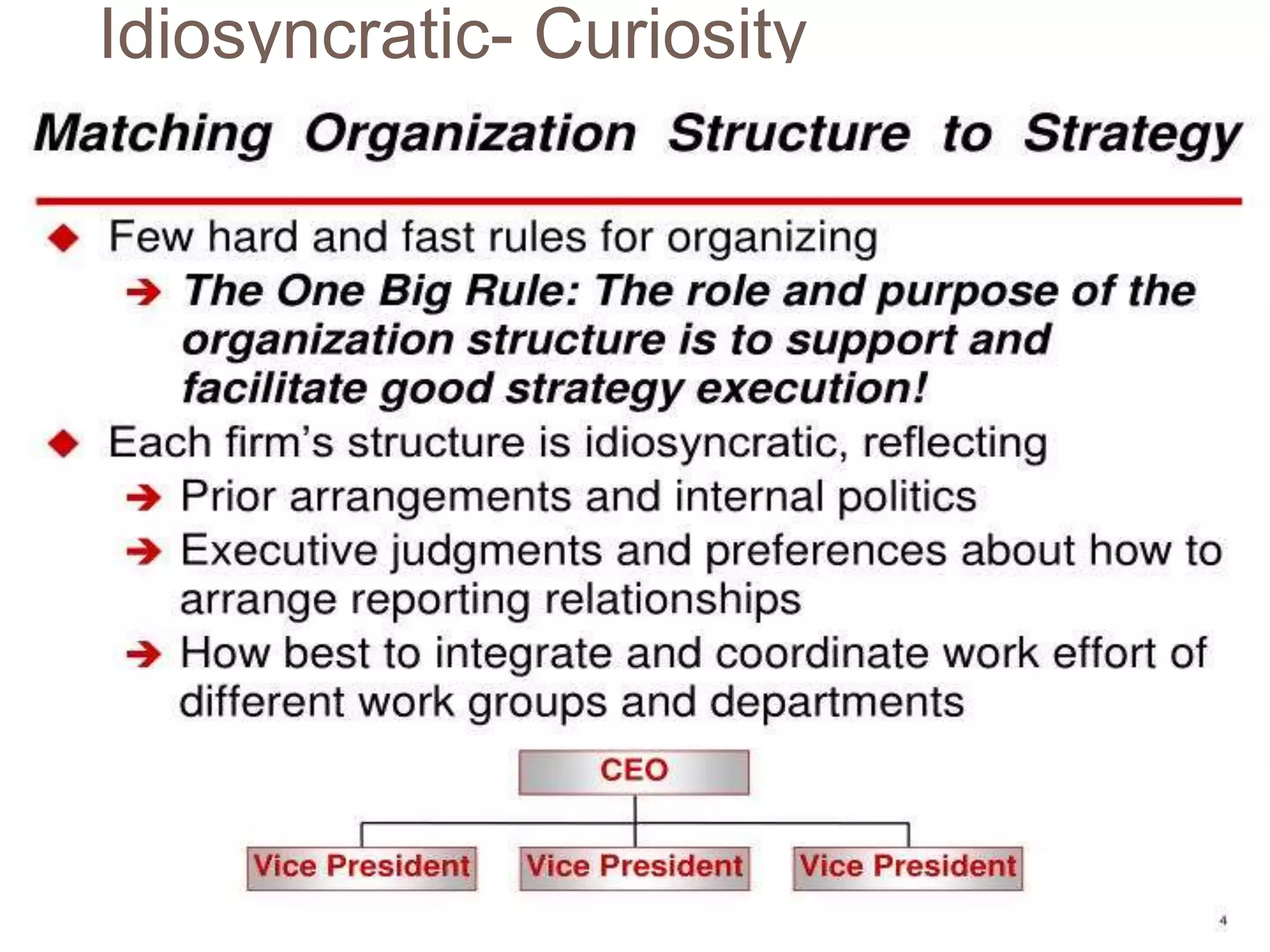
Idiosyncratic- Curiosity
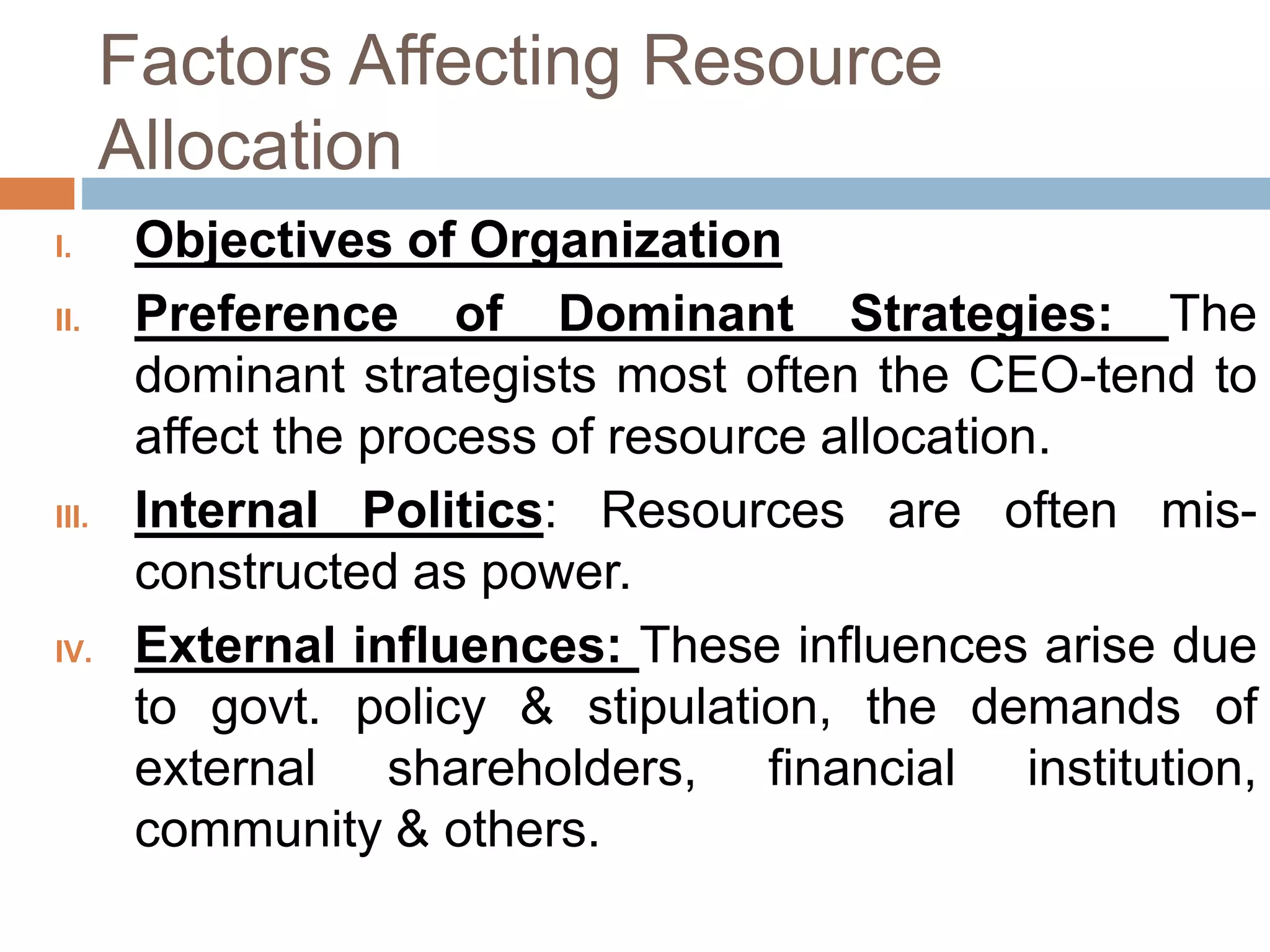
Factors Affecting Resource
Allocation
I. Objectives of Organization
II. Preference of Dominant Strategies: The
dominant strategists most often the CEO-tend to
affect the process of resource allocation.
III. Internal Politics: Resources are often mis-
constructed as power.
IV. External influences: These influences arise due
to govt. policy & stipulation, the demands of
external shareholders, financial institution,
community & others.
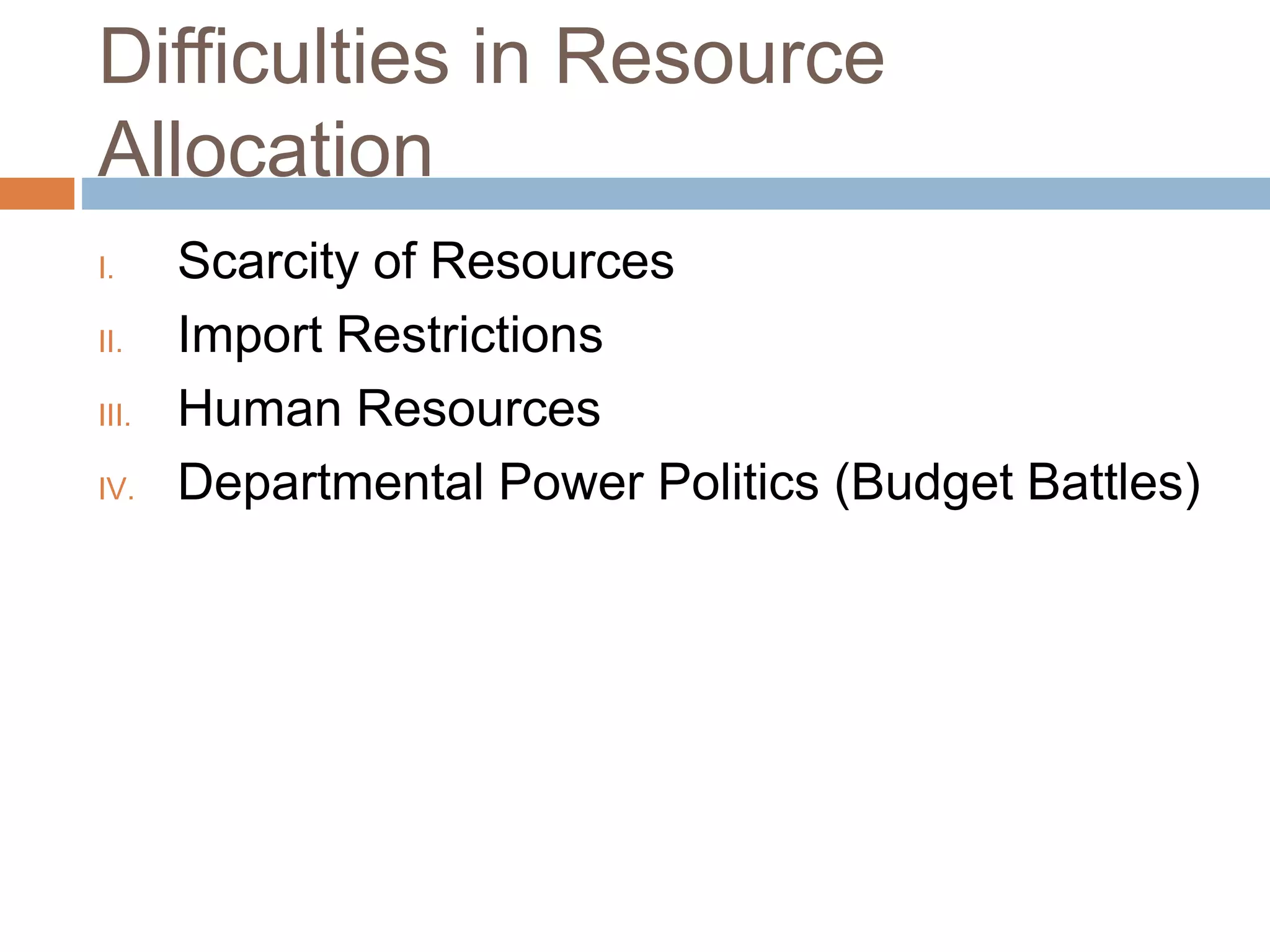
Difficulties in Resource
Allocation
I. Scarcity of Resources
II. Import Restrictions
III. Human Resources
IV. Departmental Power Politics (Budget Battles)
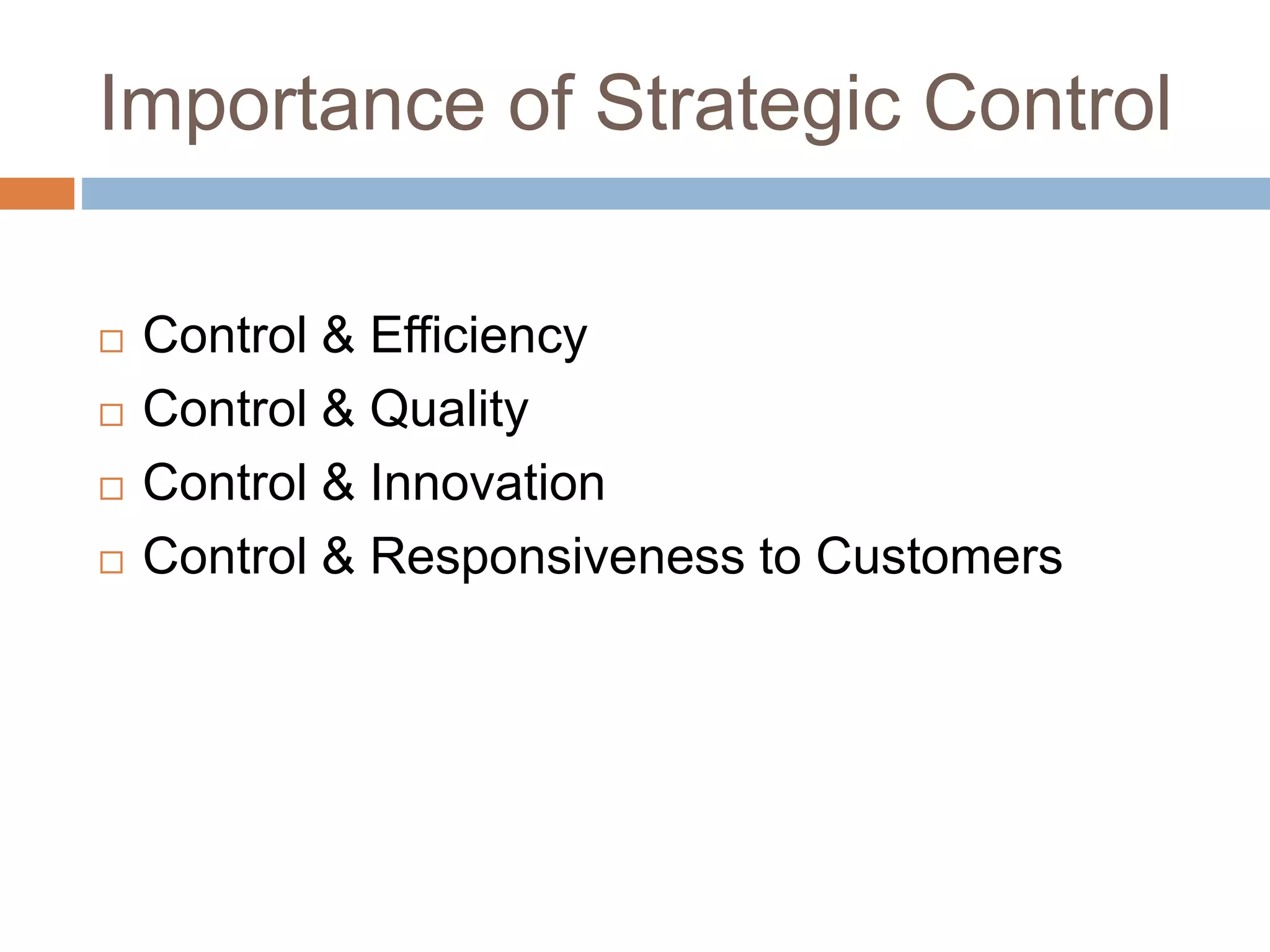
Importance of Strategic Control
 Control & Efficiency
 Control & Quality
 Control & Innovation
 Control & Responsiveness to Customers
Unit 4, Strategy implementation & evaluation

Unit 4, Strategy implementation & evaluation

  • 1.
    Anu Bajracharya Lecturer ofstrategic management IB&MS COLLEGE
  • 2.
    STARTEGY IMPLEMENTATION Agenda  Meaning &Definition of Strategy Implementation  Nature of Strategy Implementation  Elements of Strategy Implementation  Role of Top management in Strategy Implementation  Issues in Strategy Implementation
  • 3.
    ORGANIZATION STRUCTURE  Introduction Features, Purpose & Importance of Organization Structure  Types of Organization Structure  Matching structure with strategy
  • 4.
    RESOURCE ALLOCATION  Introduction Factors affecting Resource Allocation  Difficulties in Resource Allocation
  • 5.
    STRATGIC EVALUATION & CONTROLLINGSYSTEM  Introduction  Strategic Evaluation  Purpose of Strategic Evaluation  Nature of Strategic Evaluation  Importance of Strategic Evaluation  Criteria for Strategic Evaluation  Quantitative Factors  Qualitative Factors
  • 6.
    STRATEGIC CONTROL  Introduction Importance of Strategic Control  Types of Strategic Control
  • 13.
  • 14.
    Elements of Strategic Implementation1.Differentiation/Organizingtask:- It is related with segmentation or dividing up the total strategic plan in to its component parts. 2.Integration:- It is concerned with unifying the diverse segments of activity and sub- goals. 3.Task Focus (Value)-Uncertainty in the task environment, Task diversity, & Interdepence 4.Structure- Division of labour, Departmentalization, Shape, Interdependence, & Distribution of Power 5.Decision Process and control:-Planning & control systems, Information system, Decision-making system, & Integration roles. 6.Reward System:-Performance measures, compensation system, Job design, responsibility, & accountability, etc 7. People:-Leadership styles, Department, relocation, Recruiting & Selection & Training Development.
  • 15.
    Role of Top-ManagementIn Strategic Implementation 1. Establishing Objectives 2. Designing Policies 3. Revising reward & Incentive System 4. Matching managers with strategy 5. Developing a strategy supportive Culture 6. Adapting production/ operations and processes 7. Effective Implementation 8. Design of information system
  • 30.
    Types of OrganizationStructure I. Line organization II. Line & Staff Organization III. Functional Organization IV. Divisional Structure V. Project organization VI. Matrix Organization
  • 52.
    Matching Structure with Strategy Strategy gurus like Alfred Chandler and M. E. Porter argue that structure follows strategy.  Porter states that corporations can adopt one of three general (generic) strategies: cost leadership, differentiation, and focus. And, for each alternative strategy alternative organization design/structure exists.  Chandler, on the other hand, has emphasized that organization structures follow the growth strategies of the firms. Alternative structures exist for alternative growth strategies , viz., volume expansion, geographic expansion and product diversification.
  • 53.
    Matching Structure with Strategy Depending upon the strategic choice (along with some other factors like size of the firm, technology used, environmental complexities etc.), a firm may pursue one of the following structures. 1. Simple/ Entrepreneurial Structure 2. Functional Structure 3. SBU Structure 4. Divisional Structure 5. Matrix Structure 6. Holding Company Structure 7. Network Structure 8. Other Structures
  • 55.
  • 60.
    Factors Affecting Resource Allocation I.Objectives of Organization II. Preference of Dominant Strategies: The dominant strategists most often the CEO-tend to affect the process of resource allocation. III. Internal Politics: Resources are often mis- constructed as power. IV. External influences: These influences arise due to govt. policy & stipulation, the demands of external shareholders, financial institution, community & others.
  • 61.
    Difficulties in Resource Allocation I.Scarcity of Resources II. Import Restrictions III. Human Resources IV. Departmental Power Politics (Budget Battles)
  • 80.
    Importance of StrategicControl  Control & Efficiency  Control & Quality  Control & Innovation  Control & Responsiveness to Customers