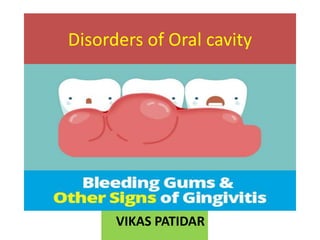
Disorders of Oral cavity
VIKAS PATIDAR
Cavity’s in the body
ORAL CAVITY
Oral cavity consist of
1. Lips
2. Gums
3. Tongue
4. Salivary glands
5. teeth
Stomatitis
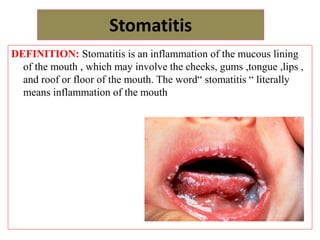
DEFINITION: Stomatitis is an inflammation of the mucous lining
of the mouth , which may involve the cheeks, gums ,tongue ,lips ,
and roof or floor of the mouth. The word“ stomatitis “ literally
means inflammation of the mouth
CAUSES
1. Chemotherapy
2. Radiotherapy
3. Loose-fitting dental prosthetics
4. Trauma
5. Poor dental hygiene
6. Smoking
7. Dehydration
8. Medication
9. Burns
Sign & symptoms
1. Pain or discomfort in the mouth.
2. The presence of open sores or ulcers in the mouth.
3. Fever ,sometimes as high as 101– 104°F .
4. Irritability and restlessness
5. Blisters in the mouth
6. Swollen gums , which may be irritated and bleed.
7. Drooling.
8. Dysphagia.
9. Foul-smelling breath.
Management of Stomatitis
1. Medical management :- bismuth salicylate , sucralfate,
antacids
• Water –Soluble lubricants from mouth and lips
• Topical analgesics, such as benzamine hydrochloride
• Topical anesthetics, such as lidocaine viscous
• Oral or parenteral analgesics, including opioids if
needed, for pain not controlled with above
2. Other management :-
• Antiseptic mouth wash
• Avoid excessive brushing
• Denture hygiene measures
GINGIVITIS
DEFINITION
Gingivitis is a non-destructive type of periodontal
disease, but untreated gingivitis can progress
to periodontitis.
TYPES OF GINGIVITIS
1. Dental plaque-induced gingival disease :- This can be caused by plaque, systemic factors,
medications, or malnutrition.
2. Non-plaque induced gingival lesions:- This can be caused by a specific bacterium, virus, or
fungus. It might also be caused by genetic factors, systemic conditions.
Causes
1. Accumulation of bacterial plaque
2. Some diseases like diabetes , HIV
3. Drugs
4. Smoking
5. Ages
6. Poor diet
7. Family history
Symptoms
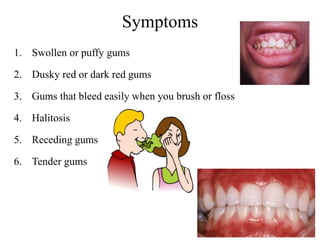
1. Swollen or puffy gums
2. Dusky red or dark red gums
3. Gums that bleed easily when you brush or floss
4. Halitosis
5. Receding gums
6. Tender gums
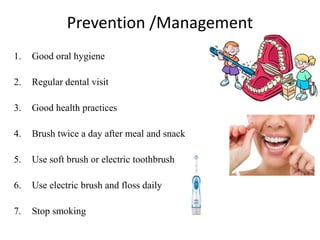
Prevention /Management
1. Good oral hygiene
2. Regular dental visit
3. Good health practices
4. Brush twice a day after meal and snack
5. Use soft brush or electric toothbrush
6. Use electric brush and floss daily
7. Stop smoking
1. Abscess
2. Peri-odontitis can lead to loss of teeth
3. Recurrent gingivitis
4. Ulceration of gums
Introduction
Glossitis is a condition in which the tongue is
swollen and changes color. Finger-like
projections on the surface of the tongue (called
papillae) are lost, causing the tongue to appear
smooth.
DEFINITION
Glossitis refers to inflammation of the tongue.
Cause change in Size, shape, color, taste,
movement
Types
According to their severity its divided into 2 types
1. ACUTE:- Acute glossitis is characterized by swollen papillae occurs
1. CHRONIC :- Chronic inflammation not of the substance of the tongue,
but of the mucous covering of that organ
Other types
Causes
1. Primary causes
• Bacterial /viral infection
• Mechanical irritation from dentures
• Tobacco, hot food, alcohol, burns
• Allergy to toothpaste, mouthwash
2. Secondary causes
• Iron deficiency anemia
• Pernicious anemia
• Vitamin B deficiency
• Syphilis
• Ulcer
• HIV /TB
Symptoms
1. Tongue swelling
2. Difficulty in talking ,swallowing, taste, chewing
3. Pain
4. Fatigue
5. Weight loss
6. Sore throat
Diagnosis
1. History
2. Examination
3. Blood test
4. Oral swab
Treatment
1. Good oral hygiene is essential
2. Steroids may be used to reduce the inflammation.
3. An oral suspension of Prednisolone may be used in
mild cases
4. Antibiotics, antifungal
5. Proper nutrition
6. Avoid irritant like tobacco, hot, spicy food, alcohol
Complication
1. Discomfort
2. Airway obstruction
3. Dysphagia
4. Dysphonia
5. Recurrent oral infection
6. Abscess
7. Oral cancer
stomatitis, gingivitis, glositis

stomatitis, gingivitis, glositis

  • 1.
    Disorders of Oralcavity VIKAS PATIDAR
  • 2.
  • 3.
    ORAL CAVITY Oral cavityconsist of 1. Lips 2. Gums 3. Tongue 4. Salivary glands 5. teeth
  • 4.
    Stomatitis DEFINITION: Stomatitis isan inflammation of the mucous lining of the mouth , which may involve the cheeks, gums ,tongue ,lips , and roof or floor of the mouth. The word“ stomatitis “ literally means inflammation of the mouth
  • 6.
    CAUSES 1. Chemotherapy 2. Radiotherapy 3.Loose-fitting dental prosthetics 4. Trauma 5. Poor dental hygiene 6. Smoking 7. Dehydration 8. Medication 9. Burns
  • 7.
    Sign & symptoms 1.Pain or discomfort in the mouth. 2. The presence of open sores or ulcers in the mouth. 3. Fever ,sometimes as high as 101– 104°F . 4. Irritability and restlessness 5. Blisters in the mouth 6. Swollen gums , which may be irritated and bleed. 7. Drooling. 8. Dysphagia. 9. Foul-smelling breath.
  • 8.
    Management of Stomatitis 1.Medical management :- bismuth salicylate , sucralfate, antacids • Water –Soluble lubricants from mouth and lips • Topical analgesics, such as benzamine hydrochloride • Topical anesthetics, such as lidocaine viscous • Oral or parenteral analgesics, including opioids if needed, for pain not controlled with above 2. Other management :- • Antiseptic mouth wash • Avoid excessive brushing • Denture hygiene measures
  • 10.
  • 11.
    DEFINITION Gingivitis is anon-destructive type of periodontal disease, but untreated gingivitis can progress to periodontitis.
  • 12.
    TYPES OF GINGIVITIS 1.Dental plaque-induced gingival disease :- This can be caused by plaque, systemic factors, medications, or malnutrition. 2. Non-plaque induced gingival lesions:- This can be caused by a specific bacterium, virus, or fungus. It might also be caused by genetic factors, systemic conditions.
  • 13.
    Causes 1. Accumulation ofbacterial plaque 2. Some diseases like diabetes , HIV 3. Drugs 4. Smoking 5. Ages 6. Poor diet 7. Family history
  • 14.
    Symptoms 1. Swollen orpuffy gums 2. Dusky red or dark red gums 3. Gums that bleed easily when you brush or floss 4. Halitosis 5. Receding gums 6. Tender gums
  • 15.
    Prevention /Management 1. Goodoral hygiene 2. Regular dental visit 3. Good health practices 4. Brush twice a day after meal and snack 5. Use soft brush or electric toothbrush 6. Use electric brush and floss daily 7. Stop smoking
  • 17.
    1. Abscess 2. Peri-odontitiscan lead to loss of teeth 3. Recurrent gingivitis 4. Ulceration of gums
  • 19.
    Introduction Glossitis is acondition in which the tongue is swollen and changes color. Finger-like projections on the surface of the tongue (called papillae) are lost, causing the tongue to appear smooth.
  • 20.
    DEFINITION Glossitis refers toinflammation of the tongue. Cause change in Size, shape, color, taste, movement
  • 21.
    Types According to theirseverity its divided into 2 types 1. ACUTE:- Acute glossitis is characterized by swollen papillae occurs 1. CHRONIC :- Chronic inflammation not of the substance of the tongue, but of the mucous covering of that organ
  • 22.
  • 23.
    Causes 1. Primary causes •Bacterial /viral infection • Mechanical irritation from dentures • Tobacco, hot food, alcohol, burns • Allergy to toothpaste, mouthwash
  • 24.
    2. Secondary causes •Iron deficiency anemia • Pernicious anemia • Vitamin B deficiency • Syphilis • Ulcer • HIV /TB
  • 25.
    Symptoms 1. Tongue swelling 2.Difficulty in talking ,swallowing, taste, chewing 3. Pain 4. Fatigue 5. Weight loss 6. Sore throat
  • 26.
  • 27.
    Treatment 1. Good oralhygiene is essential 2. Steroids may be used to reduce the inflammation. 3. An oral suspension of Prednisolone may be used in mild cases 4. Antibiotics, antifungal 5. Proper nutrition 6. Avoid irritant like tobacco, hot, spicy food, alcohol
  • 28.
    Complication 1. Discomfort 2. Airwayobstruction 3. Dysphagia 4. Dysphonia 5. Recurrent oral infection 6. Abscess 7. Oral cancer