DEFINITION
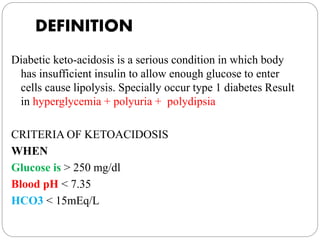
Diabetic keto-acidosis is a serious condition in which body
has insufficient insulin to allow enough glucose to enter
cells cause lipolysis. Specially occur type 1 diabetes Result
in hyperglycemia + polyuria + polydipsia
CRITERIA OF KETOACIDOSIS
WHEN
Glucose is > 250 mg/dl
Blood pH < 7.35
HCO3 < 15mEq/L
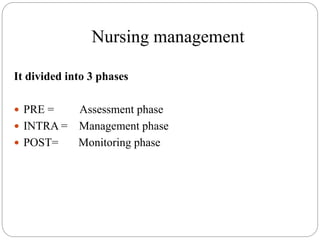
Nursing management
It divided into 3 phases
๏‚— PRE = Assessment phase
๏‚— INTRA = Management phase
๏‚— POST= Monitoring phase
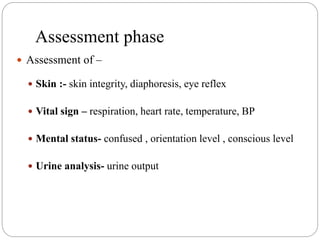
Assessment phase
๏‚— Assessment of โ€“
๏‚— Skin :- skin integrity, diaphoresis, eye reflex
๏‚— Vital sign โ€“ respiration, heart rate, temperature, BP
๏‚— Mental status- confused , orientation level , conscious level
๏‚— Urine analysis- urine output
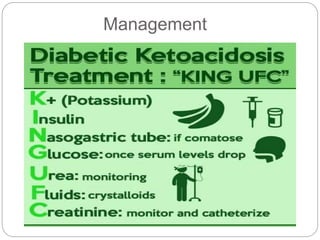
Management
First 24 hours
1. Managing diabetic ketoacidosis (DKA) in an intensive
care unit during the first 24-48 hours always is advisable.
๏‚— Correction of fluid loss
๏ฑ Administer 1-3 L fluid in first hours
๏ฑ Administer 1 L liter in second hours
๏ฑ Administer 1 L fluid in following 2hours
๏ฑ Administer 1L every 4hours, depending on the degree of
dehydration
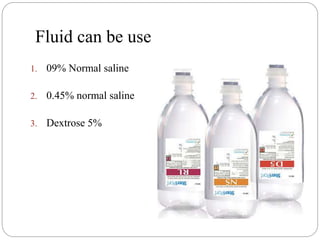
Fluid can be use
1. 09% Normal saline
2. 0.45% normal saline
3. Dextrose 5%
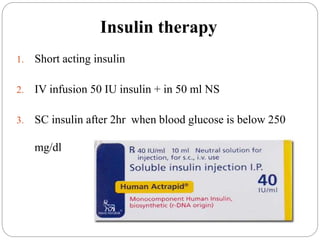
Insulin therapy
1. Short acting insulin
2. IV infusion 50 IU insulin + in 50 ml NS
3. SC insulin after 2hr when blood glucose is below 250
mg/dl
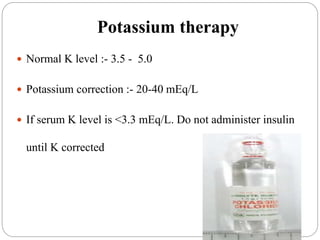
Potassium therapy
๏‚— Normal K level :- 3.5 - 5.0
๏‚— Potassium correction :- 20-40 mEq/L
๏‚— If serum K level is <3.3 mEq/L. Do not administer insulin
until K corrected
Monitoring phase
Monitor
๏‚— Vital sign
๏‚— Input/ output
๏‚— Physical assessment
๏‚— Blood values โ€“ pH, K, Na , HCO3, glucose
๏‚— Repeat urine analysis for ketones & glucose
๏‚— Mental stats after therapy
๏‚— Change position is very important
๏‚— Educate patient & family member about cause of these event
๏‚— Educate family member about diet & regular insulin at home
๏‚— Recording all the event of the patient mention above
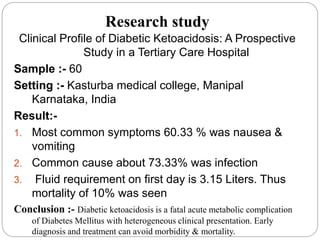
Research study
Clinical Profile of Diabetic Ketoacidosis: A Prospective
Study in a Tertiary Care Hospital
Sample :- 60
Setting :- Kasturba medical college, Manipal
Karnataka, India
Result:-
1. Most common symptoms 60.33 % was nausea &
vomiting
2. Common cause about 73.33% was infection
3. Fluid requirement on first day is 3.15 Liters. Thus
mortality of 10% was seen
Conclusion :- Diabetic ketoacidosis is a fatal acute metabolic complication
of Diabetes Mellitus with heterogeneous clinical presentation. Early
diagnosis and treatment can avoid morbidity & mortality.
1. Write the nursing care of patient with diabetic foot &
meal plan
Date of submission :- 18-07-2018
Dka

Dka

  • 2.
    DEFINITION Diabetic keto-acidosis isa serious condition in which body has insufficient insulin to allow enough glucose to enter cells cause lipolysis. Specially occur type 1 diabetes Result in hyperglycemia + polyuria + polydipsia CRITERIA OF KETOACIDOSIS WHEN Glucose is > 250 mg/dl Blood pH < 7.35 HCO3 < 15mEq/L
  • 5.
    Nursing management It dividedinto 3 phases ๏‚— PRE = Assessment phase ๏‚— INTRA = Management phase ๏‚— POST= Monitoring phase
  • 6.
    Assessment phase ๏‚— Assessmentof โ€“ ๏‚— Skin :- skin integrity, diaphoresis, eye reflex ๏‚— Vital sign โ€“ respiration, heart rate, temperature, BP ๏‚— Mental status- confused , orientation level , conscious level ๏‚— Urine analysis- urine output
  • 7.
  • 8.
    First 24 hours 1.Managing diabetic ketoacidosis (DKA) in an intensive care unit during the first 24-48 hours always is advisable. ๏‚— Correction of fluid loss ๏ฑ Administer 1-3 L fluid in first hours ๏ฑ Administer 1 L liter in second hours ๏ฑ Administer 1 L fluid in following 2hours ๏ฑ Administer 1L every 4hours, depending on the degree of dehydration
  • 9.
    Fluid can beuse 1. 09% Normal saline 2. 0.45% normal saline 3. Dextrose 5%
  • 10.
    Insulin therapy 1. Shortacting insulin 2. IV infusion 50 IU insulin + in 50 ml NS 3. SC insulin after 2hr when blood glucose is below 250 mg/dl
  • 11.
    Potassium therapy ๏‚— NormalK level :- 3.5 - 5.0 ๏‚— Potassium correction :- 20-40 mEq/L ๏‚— If serum K level is <3.3 mEq/L. Do not administer insulin until K corrected
  • 12.
    Monitoring phase Monitor ๏‚— Vitalsign ๏‚— Input/ output ๏‚— Physical assessment ๏‚— Blood values โ€“ pH, K, Na , HCO3, glucose ๏‚— Repeat urine analysis for ketones & glucose ๏‚— Mental stats after therapy ๏‚— Change position is very important ๏‚— Educate patient & family member about cause of these event ๏‚— Educate family member about diet & regular insulin at home ๏‚— Recording all the event of the patient mention above
  • 15.
    Research study Clinical Profileof Diabetic Ketoacidosis: A Prospective Study in a Tertiary Care Hospital Sample :- 60 Setting :- Kasturba medical college, Manipal Karnataka, India Result:- 1. Most common symptoms 60.33 % was nausea & vomiting 2. Common cause about 73.33% was infection 3. Fluid requirement on first day is 3.15 Liters. Thus mortality of 10% was seen Conclusion :- Diabetic ketoacidosis is a fatal acute metabolic complication of Diabetes Mellitus with heterogeneous clinical presentation. Early diagnosis and treatment can avoid morbidity & mortality.
  • 16.
    1. Write thenursing care of patient with diabetic foot & meal plan Date of submission :- 18-07-2018