Steroid hormonesSteroid hormones
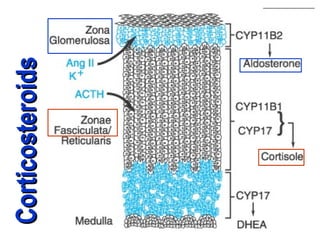
CorticosteroidsCorticosteroids
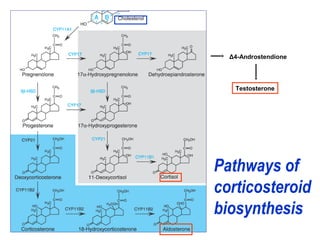
Pathways of
corticosteroid
biosynthesis
Δ4-Androstendione
Testosterone
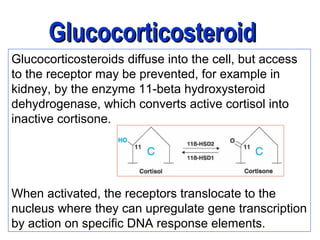
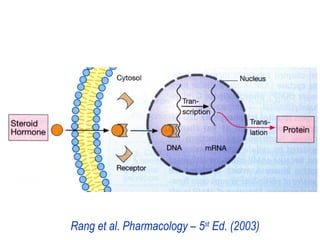
Glucocorticosteroids diffuse into the cell, but access
to the receptor may be prevented, for example in
kidney, by the enzyme 11-beta hydroxysteroid
dehydrogenase, which converts active cortisol into
inactive cortisone.
When activated, the receptors translocate to the
nucleus where they can upregulate gene transcription
by action on specific DNA response elements.
GlucocorticosteroidGlucocorticosteroid
Sponsored
Medical Lecture Notes – All Subjects
USMLE Exam (America) – Practice
Rang et al. Pharmacology – 5st
Ed. (2003)
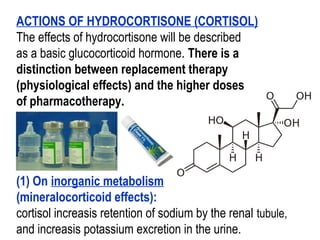
ACTIONS OF HYDROCORTISONE (CORTISOL)
The effects of hydrocortisone will be described
as a basic glucocorticoid hormone. There is a
distinction between replacement therapy
(physiological effects) and the higher doses
of pharmacotherapy.
(1) On inorganic metabolism
(mineralocorticoid effects):
cortisol increasis retention of sodium by the renal tubule,
and increasis potassium excretion in the urine.
(2) On organic metabolism (glucocorticoid effects):
• Carbohydrate metabolism: gluconeogenesis is
increased and peripheral glucose utilization
(transport across cell membranes) may be
decreased (insulin antagonism) so that
hyperglycaemia and sometimes glycosuria
result. Latent diabetes becomes overt.
• Protein metabolism: anabolism (conversion of
amino acids to protein) is decreased but
catabolism continues unabated or even faster, so
that there is a negative nitrogen balance with
muscle wasting. Osteoporosis (reduction of bone
protein matrix) occurs, growth slows in children,
the skin atrophies and this, with increased
capillary fragility, causes bruising and striae.
Healing of peptic ulcers or of wounds is delayed.
• Fat deposition: this is increased on shoulders, face,
and abdomen.
• Inflammatory response is depressed;
corticosteroids can be a source of danger in
infections by limiting useful protective inflammation.
Neutrophil and macrophage function are depressed,
including the release of chemical mediators and the
effects of these on capillaries.
Glucocrticosterods have antiexudative andGlucocrticosterods have antiexudative and
antiproliferative effects.antiproliferative effects.
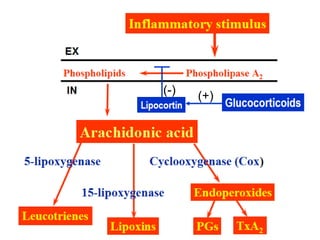
The anti-inflammatory actions of glucocorticoids are
mediated by stimulation of synthesis of lipocortin, which
inhibits pathways for production of eicosanoids
(prostaglandins, leukotrienes, lipoxins), and
platelet activating factor too. These mediators
would normally contribute to increased vascular
permeability and subsequent changes including
oedema, leucocyte migration, fibrin deposition.
(+)(-)
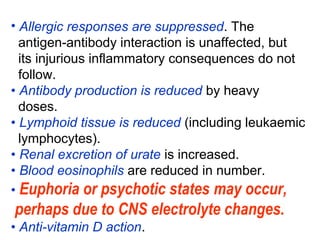
• Allergic responses are suppressed. The
antigen-antibody interaction is unaffected, but
its injurious inflammatory consequences do not
follow.
• Antibody production is reduced by heavy
doses.
• Lymphoid tissue is reduced (including leukaemic
lymphocytes).
• Renal excretion of urate is increased.
• Blood eosinophils are reduced in number.
• Euphoria or psychotic states may occur,
perhaps due to CNS electrolyte changes.
• Anti-vitamin D action.
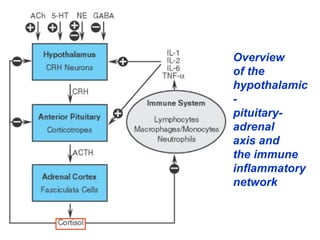
Overview
of the
hypothalamic
-
pituitary-
adrenal
axis and
the immune
inflammatory
network
• Reduction of hypercalcaemia chiefly where this
is due to excessive absorption of calcium
from the gut (sarcoidosis, vitamin D
intoxication).
• Urinary calcium excretion is increased and renal
stones may form.
• Growth reduction where new cells are being
added (growth in children), but not where they
are replacing cells as in adult tissues.
• Suppression of hypothalamic/pituitary/adrenocor-
tical feedback system (with delayed recovery)
occurs with chronic use, so that abrupt withdrawal
leaves the patient in a state of adrenocortical
insufficiency.
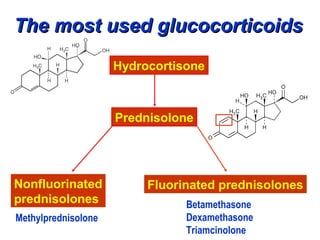
Hydrocortisone
Prednisolone
Nonfluorinated
prednisolones
Fluorinated prednisolones
Methylprednisolone
Betamethasone
Dexamethasone
Triamcinolone
The most used glucocorticoidsThe most used glucocorticoids
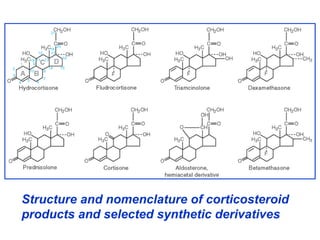
Structure and nomenclature of corticosteroid
products and selected synthetic derivatives
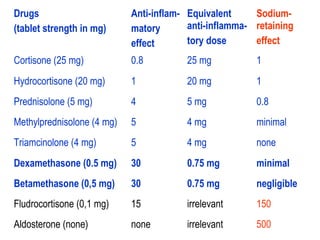
Drugs
(tablet strength in mg)
Anti-inflam-
matory
effect
Equivalent
anti-inflamma-
tory dose
Sodium-
retaining
effect
Cortisone (25 mg) 0.8 25 mg 1
Hydrocortisone (20 mg) 1 20 mg 1
Prednisolone (5 mg) 4 5 mg 0.8
Methylprednisolone (4 mg) 5 4 mg minimal
Triamcinolone (4 mg) 5 4 mg none
Dexamethasone (0.5 mg) 30 0.75 mg minimal
Betamethasone (0,5 mg) 30 0.75 mg negligible
Fludrocortisone (0,1 mg) 15 irrelevant 150
Aldosterone (none) none irrelevant 500
Hydrocortisone (cortisol) is the principal naturally
occurring steroid; it is taken orally; a soluble salt
can be given i.v. for rapid effect in emergency
(whether due to deficiency, allergy, or inflammatory
disease). A suspension (Hydrocortisone Acetate)
can be given intra-articularly.
Prednisone is a prodrug, i.e. it is converted into
prednisolone in the liver.
Prednisolone is predominantly anti-inflammatory
glucocorticoid, biologically active, and has little
sodium-retaining activity; it is the standard choice
for anti-inflammatory pharmacotherapy, orally or i.m.
Fluorinated glucocorticosteroidsFluorinated glucocorticosteroids
Triamcinolone has virtually no sodium retaining
(mineralocorticoid) effect but has the disadvantage
that muscle wasting may occasionally be severe
and anorexia and mental depression may be more
common at high dose.
DexamethasoneDexamethasone and Betamethasoneand Betamethasone are similar,
powerful predominantly anti-inflammatory steroids.
They are longer-acting than prednisolone and are
used for therapeutic adrenocortical suppression.
Replacement glucocorticoid therapy
• Acute adrenal insufficiency
• Chronic adrenal insufficiency (Addison's disease)
• Congenital adrenal hyperplasia
(adrenogenital syndrome)
Glucocorticoid pharmacotherapy
for non endocrine diseases
Steroids are powerful drugs. They may cause
dramatic improvement in many severe diseases
as well as produce equally severe adverse effects
if not properly used.
The use of steroidsThe use of steroids in non endocrine disease is
empirical and palliative, but may be life-saving.
The following general principles must be observed
(Tripathi, 2003):
• Single dose (even excessive) is not harmful.
• Short courses (even high dose) are not likely to
be harmful in the absence of contraindications.
•Long-term use is potentially hazardous.
• No abrupt withdrawal after a corticoid has been
given for more than 2 to 3 weeks: may
precipitate adrenal insufficiency.
1. Rheumatoid arthritis: corticoids are one of the
last resort drugs.
2. Osteoarthritis. Intra-articular injection of steroid is
rare, but may be used to control an acute exacer-
bation. Repeated injections may cause joint
destruction.
3. Rheumatic fever. Corticoids are used only in
severe cases with myocarditis and CHF.
4. Collagen diseases: systemic lupus erythematosus,
polyarteritis nodosa, dermatomyositis, nephrotic
syndrome, glomerulonephritis.
5. Severe allergic reactions
6. Autoimmune diseases: autoimmune haemolytic
anaemia, thrombocytopenia, active chronic hepatitis
7. Bronchial asthma
8. Eye diseases (as eye drops or ointment) in
allergic conjunctivitis, iritis, iridocyclitis, keratitis.
9. Skin diseases: Topical glucocorticosteroids
are used in many exematous skin diseases
10.Intestinal diseases: ulcerative colitis, Crohn’s
disease, coeliac disease
11.Cerebral oedema due to tumours, tubercular
meningitis, etc.
12.Malignancies: acute lymphatic leukemia,
Hodgkin’s disease and other lymphomas
13.Organ transplantations and skin allograft
14.To test adrenal-pituitary axis, etc.
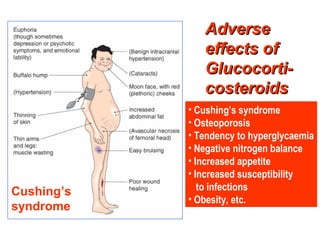
• Cushing’s syndrome
• Osteoporosis
• Tendency to hyperglycaemia
• Negative nitrogen balance
• Increased appetite
• Increased susceptibility
to infections
• Obesity, etc.
AdverseAdverse
effects ofeffects of
Glucocorti-Glucocorti-
costeroidscosteroids
Cushing’s
syndrome
Contraindications
•Peptic ulcer
•Diabetes mellitus
•Hypertension
•Pregnancy (risk foetal defects)
•Tuberculosis, mycoses, virosis
(including Herpes simplex keratitis),
and other infections
•Osteoporosis
•Psychosis
•Epilepsy
•Chronic heart failure
•Renal failure
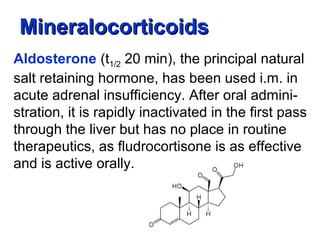
MineralocorticoidsMineralocorticoids
Aldosterone (t1/2 20 min), the principal natural
salt retaining hormone, has been used i.m. in
acute adrenal insufficiency. After oral admini-
stration, it is rapidly inactivated in the first pass
through the liver but has no place in routine
therapeutics, as fludrocortisone is as effective
and is active orally.
FludrocortisoneFludrocortisone has a very great sodium-retaining
effect in relation to its anti-inflammatory action
and only at high doses the nonelectrolyte effects need
to be considered. It is used to replace aldosterone
where the adrenal cortex is destroyed (Addison's
disease). Fludrocortisone is also the drug of choice
in most patients with autonomic neuropathy, in
whom volume expansion is easier to achieve than a
sustained increase in vasoconstrictor tone. Much
higher doses of fludrocortisone (0.5 to 1 mg) are
required when the cause of hypotension is a salt-
losing syndrome of renal origin, e.g. following an
episode of interstitial nephritis.
• Androgens and antiandrogens
• Estrogens and antiestrogens
• Progestins and antiprogestins
• Hormonal contraceptives
Sex (gonadal)Sex (gonadal)
hormoneshormones
and antagonistsand antagonists

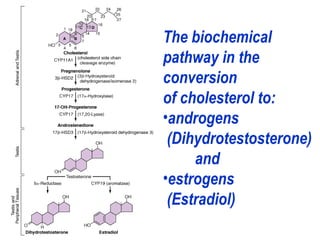
The biochemical
pathway in the
conversion
of cholesterol to:
•androgens
(Dihydrotestosterone)
and
•estrogens
(Estradiol)
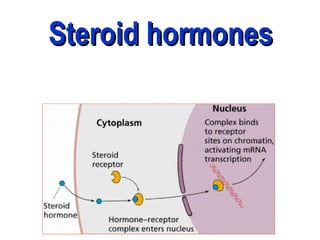
Mechanism of action
Steroid hormone receptors for gonadal and
adrenocortical steroids are complex proteins
inside the target cell. They penetrate into the cell
and bind to a receptor. Complex steroid/receptor
translocates into the cell nucleus, which
is the principal site of action and where
RNA/protein synthesis occurs.
Compounds that occupy the receptor without
causing translocation into the nucleus act as
antagonists, e.g. spironolactone to aldosterone,
cyproterone to androgens, clomiphene to estrogens.
Pharmacokinetics
Steroid sex hormones are well absorbed through
the skin. Most are subject to extensive hepatic
metabolic inactivation (so much that oral
administration is ineffective or requires very large
doses). There is some enterohepatic recirculation,
especially of estrogen, and this may be interrupted
by severe diarrhoea to cause loss of efficacy. There
are some nonsteroid analogues that are more slowly
metabolized. Sustained-release (depot) preparations
are used. The hormones in the blood extensively
bind to sex-hormone-binding globulin. The plasma
half live relates to the duration of cellular action, which
is implied in the recommended dosage schedules.
AndrogensAndrogens
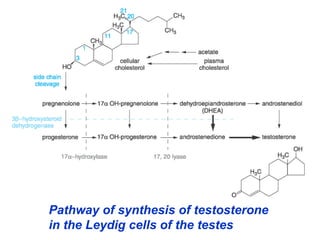
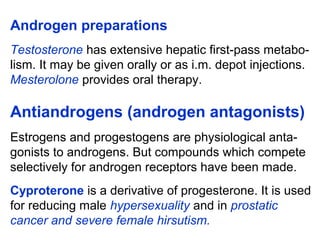
Testosterone is the natural androgen secreted
by the interstitial cells of the testis; it is necessary for
normal spermatogenesis, for the development of
the male secondary sex characteristics, and for the
growth, at puberty, of the sexual apparatus. It is
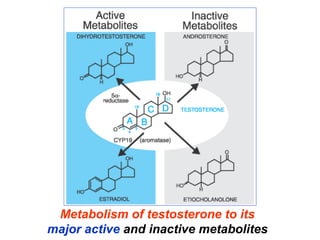
converted by hydroxylation to the active
dihydrotestosterone.
Protein anabolism especially in skeletal muscles
is increased by androgens. Growth of bone is
promoted, but the rate of closure of the epiphyses is
also hastened, causing short stature in cases of
precocious puberty or of androgen overdose in the
course of treating hypogonadal children.
Pathway of synthesis of testosterone
in the Leydig cells of the testes
Metabolism of testosterone to its
major active and inactive metabolites
Androgen
metabolism
and actions.
SHBG – sex
hormone-
binding globulin
Indications for androgen therapy
Testicular failure. It may be primary or secondary
(due to lack of pituitary gonadotrophins). In either
case replacement with androgens is often necessary.
Unfortunately, the sterility is not remedied,
although loss of libido and of secondary sex charac-
teristics can be greatly improved.
If androgen is given to a boy with delayed puberty,
a growth spurt and sexual development will occur.
Androgens are now little used in metastatic breast
cancer because of their virilising effects.
Androgen preparations
Testosterone has extensive hepatic first-pass metabo-
lism. It may be given orally or as i.m. depot injections.
Mesterolone provides oral therapy.
Antiandrogens (androgen antagonists)
Estrogens and progestogens are physiological anta-
gonists to androgens. But compounds which compete
selectively for androgen receptors have been made.
Cyproterone is a derivative of progesterone. It is used
for reducing male hypersexuality and in prostatic
cancer and severe female hirsutism.
A formulation of cyproterone plus ethinylestradiol
(Diane®
) is offered for the treatment of severe female
hirsutism as well as for severe acne in women;
this preparation acts as an oral contraceptive too.
Cyproterone causes hepatomas in rats.
It is unsuitable for male contraception.
Flutamide and bicalutamide are nonsteroidal antian-
drogens for use in conjunction with the gonadorelins
(e.g. goserelin) in the treatment of prostatic cancer.
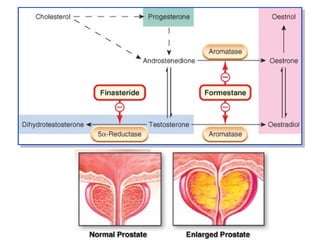
Finasteride inhibits conversion of testosterone to
dihydrotestosterone. It has antiandrogen activity in
tissues where dihydrotestosterone is the principal
androgen: this makes it a useful drug in the
treatment of benign prostatic hyperplasia.
Spironolactone also has antiandrogen activity and
may help hirsutism in women. Androgen secretion
may be diminished by continued use of a gonadorelin
(LH-RH) analogue.
Ketoconazole (antifungal drug) inhibits
androgen synthesis and may be
used in prostatic cancer.
Anabolic steroidsAnabolic steroids
Androgens are effective protein anabolic agents, but
their clinical use for this purpose is limited by virilisa-
tion of women. Attempts made to separate anabolic
from androgenic action have been partially success-
ful. All anabolic steroids have also androgenic effects.
Anabolic steroids (Nandrolone) may no longer be used
in osteoporosis. They benefit some patients with aplastic
anaemia. Hereditary angioedema may be prevented.
Anabolic steroids can prevent the calcium and
nitrogen loss in the urine that occurs in patients
bedridden for a long time and they have therefore
been used in the treatment of some severe fractures.
The use of anabolic steroids in conditions of general
wasting despite nutritional support may be justifiable
in extreme debilitating disease, such as severe ulce-
rative colitis, and after major surgery. In the later stages
of malignant disease they may make the patient feel
and look less wretched. Their general use as tonics is
scandalous, as is their use in sport.
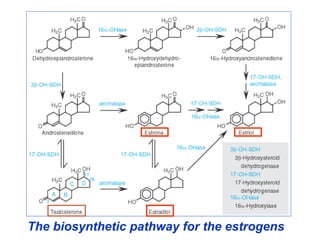
EstrogensEstrogens
Estrone and estradiol are both natural estrogens.
Estrogens are responsible for the normal
development of the female genital tract, of the
breast, and of the female secondary sex character-
istics. The pubertal growth spurt is less marked in
females than in males, probably because estro-
gens have less protein anabolic action than do
androgens, although they are as effective in
promoting closure of epiphyses.
The biosynthetic pathway for the estrogens
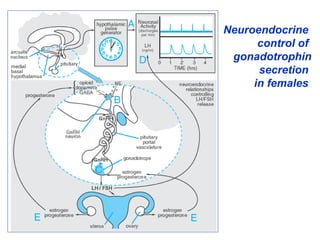
Neuroendocrine
control of
gonadotrophin
secretion
in females
Blood estrogen concentrations must be above a
critical level for the maintenance of both prolife-
rative and (together with progesterone) secretory
phases of the uterine endometrium. If the estro-
gen level falls too low, uterine bleeding follows.
Estrogens are necessary for the maintenance
of normal pregnancy and for the accompanying
breast hyperplasia. The vagina is more sensitive
to estrogens than is the endometrium.
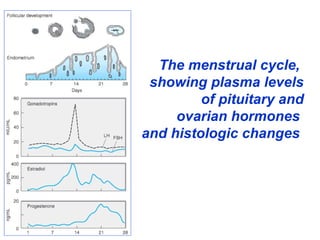
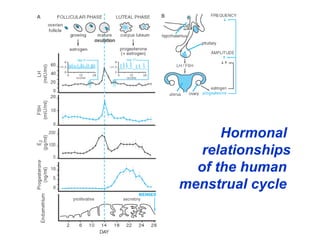
The menstrual cycle,
showing plasma levels
of pituitary and
ovarian hormones
and histologic changes
Hormonal
relationships
of the human
menstrual cycle
Estrogen preparations
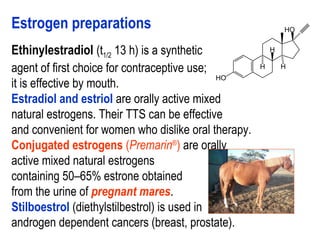
Ethinylestradiol (t1/2 13 h) is a synthetic
agent of first choice for contraceptive use;
it is effective by mouth.
Estradiol and estriol are orally active mixed
natural estrogens. Their TTS can be effective
and convenient for women who dislike oral therapy.
Conjugated estrogens (Premarin®
) are orally
active mixed natural estrogens
containing 50–65% estrone obtained
from the urine of pregnant mares.
Stilboestrol (diethylstilbestrol) is used in
androgen dependent cancers (breast, prostate).
Replacement therapy in hypoestrogenaemia. This
term refers to decreased estrogen production due
to ovarian disease, or to hypothalamic/pituitary
disease (hypogonadotropic hypogonadism). Treat-
ment is by cyclic estrogen (conjugated estrogens
or ethinylestradiol for 21 days) plus a progestogen,
medroxyprogesterone for the last 10 to 14 days of
estrogen treatment.
An alternative treatment is the oral contraceptive.
Unless the cause of the hypoovarian state is
primary ovarian failure, treatment should be
stopped after every third cycle to see if spontaneous
menstruation will occur.
Postmenopausal hormone replacement therapy
(HRT). It is the use of estrogen treatment to reverse
or prevent problems due to the loss of ovarian
hormone secretion after the menopause, whether
physiological or induced. The tissues sensitive to
estrogen include brain, bone, skin, cardiovascular
and genitourinary system. The two aims of HRT are:
(1) To reduce the everyday symptoms of estrogen
loss: hot flushes, insomnia, lethargy and
depression, vaginal dryness.
(2) To prevent the long-term complications asso-
ciated with estrogen deficiency: osteoporotic
fractures and coronary heart disease.
All types of HRT (estrogen with or without
progestogen) are effective in reducing the hot flushes
experienced by more than 50% of postmenopausal
women. The benefit is highest during the first year of
treatment when 80% of women report a reduced
likelihood of flushes. The other major value from
HRT is the relief of vaginal dryness. Vaginal admini-
stration (as a cream, ring, pessary, or tablet) is the
most effective route for treatment of these symptoms.
There are three types of regimen used for HRT:
(1) Women without uterus take continuous
estrogen alone.
2) Women require estrogen combined with
progestogen to prevent endometrial proliferation.
a) In the “sequential” regimen, women take estrogen
without a break, and add a progestogen from appro-
imately the 14th
to 28th
day of each cycle. The first
ourse is started on the 1st
day of menstruation (if
present), and 28-day cycles of treatment follow
hereafter without interval.
b) In the “continuous” regimen, appropriate only for
women who have been amenorrhoeic for more than
one year, fixed dose combinations of estrogen and
progestogen are taken without a break.
A popular alternative to estrogen therapy is the
drug Tibolone (Livial®
), which is a synthetic steroid
with weak estrogenic, progestogenic, and andro-
genic properties. It is administered as a daily oral
dose of 2.5 mg to suppress vasomotor symptoms
and to prevent postmenopausal osteoporosis. The
main adverse effect is vaginal bleeding, which
needs investigation if persistent.
Vasomotor menopausal symptoms may
occasionally be helped by low doses of clonidine.
Adverse effects of HRT
The most common reasons for withdrawal are
irregular or withdrawal bleeding and breast pain.
The more serious complications are venous
thromboembolism and cancer of the endometrium
or breast. These risks are small.
The risk of gallstones may be
increased up to 2-fold. The effect of estrogens on the
lipid balance is favourable, but the addition of a proge-
stin (gestodene or desogestrel) reverses the balance.
Estrogen pharmacoterapy –
indications:
• Contraception
• Menstrual disorders
• Senile vaginitis
• Inhibition of lactation (but no longer)
• Androgen-dependent carcinoma (prostate cancer)
• To reduce sexual urge in men
• Epistaxis in recurrent cases (e.g. teleangiectasia)
NB: Atrophic rhinitis as well as acne may benefit.
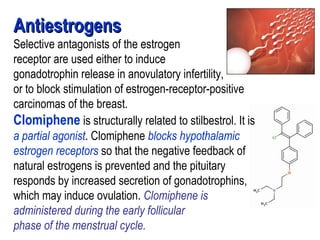
AntiestrogensAntiestrogens
Selective antagonists of the estrogen
receptor are used either to induce
gonadotrophin release in anovulatory infertility,
or to block stimulation of estrogen-receptor-positive
carcinomas of the breast.
Clomiphene is structurally related to stilbestrol. It is
a partial agonist. Clomiphene blocks hypothalamic
estrogen receptors so that the negative feedback of
natural estrogens is prevented and the pituitary
responds by increased secretion of gonadotrophins,
which may induce ovulation. Clomiphene is
administered during the early follicular
phase of the menstrual cycle.
Tamoxifen is a nonsteroid competitive estrogen
antagonist on target organs. Although available for
anovulatory infertility (20 mg daily on days 2, 3, 4
and 5 of the cycle) its main use now is in the
treatment of estrogen-dependent breast cancer.
Treatment with tamoxifen delays the growth of
metastases and increases survival; if tolerated it
should be continued for 5 years.
Tamoxifen is also the hormonal treatment of
choice in women with estrogen-receptor-positive
metastatic breast cancer. Approximately 60% of
such patients respond to initial hormonal
manipulation, whereas less than 10% of
estrogen-receptor-negative tumours respond.
Progesterone andProgesterone and
progestins (progestogens)progestins (progestogens)
Progesterone (t1/2 5 min) is produced by the
corpus luteum and converts the uterine epithelium
from the proliferative to the secretory phase. It is
necessary for successful implantation of the ovum,
and is essential throughout pregnancy in the last
two-thirds of which it is secreted in large amounts
by the placenta. It acts particularly on tissues that
are sensitized by estrogens. Some synthetic
progestogens are less selective, having varying
estrogenic and androgenic activity, and these
may inhibit ovulation, though not very reliably.
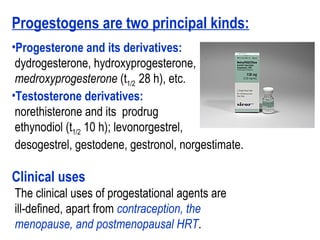
Progestogens are two principal kinds:
•Progesterone and its derivatives:
dydrogesterone, hydroxyprogesterone,
medroxyprogesterone (t1/2 28 h), etc.
•Testosterone derivatives:
norethisterone and its prodrug
ethynodiol (t1/2 10 h); levonorgestrel,
desogestrel, gestodene, gestronol, norgestimate.
Clinical uses
The clinical uses of progestational agents are
ill-defined, apart from contraception, the
menopause, and postmenopausal HRT.
Other possible uses include
• menstrual disorders, e.g. menorrhagia,
endometriosis, dysmenorrhoea, and
premenstrual syndrome (with doubtful efficacy)
• breast and endometrial cancer.
Application of the available progestogens
(some used only in combined formulations) include:
• oral: norethisterone, dydrogesterone, gestodene,
desogestrel, levonorgestrel, medroxyprogesterone
• suppositories or pessaries: progesterone
• injectable: progesterone, hydroxyprogesterone,
medroxyprogesterone.
Adverse effects of prolonged use of progestins
include virilisation, raised blood pressure, and adverse
trend in blood lipids. Gestodene, desogestrel, and
norgestimate may have less affinity for androgen
receptors and therefore less unfavourable effect on
blood lipids; however the first two of these may
have a higher risk of thrombosis.
Antiprogestogens
Mifepristone is a pure competitive antagonist at
progesterone and glucocorticoid receptors. Clinical
trials of oral use in hospital outpatients have shown
it to be safe and effective in terminating pregnancy.
Other progesterone derivatives
Danazol is a derivative of the progestogen – ethisterone,
a modified testosterone. It has partial agonist androgen activity
and is described as an “impeded” androgen; it has little progestogen
activity. It is a relatively selective inhibitor of pituitary
gonadotrophin secretion (LH, FSH) affecting the surge
in the mid-menstrual cycle more than basal secretion.
This reduces ovarian function, which leads to atrophic
changes in the endometrium. In males it reduces sperma-
togenesis. Androgenic unwanted effects occur in
women (acne, hirsutism, and rarely, enlargement of
the clitoris).
It is chiefly used for: endometriosis, mastitis, gynaecomastia,
precocious puberty, menorrhagia, and hereditary angioedemahereditary angioedema.
Hormonal contraceptionHormonal contraception
in women comprises:in women comprises:
Progestogen alone, e.g. Levonorgestrel
(Escapelle®
, Postinor®
)
Estrogens alone are not completely reliable.
At the necessary dose, they can also cause
thromboembolism and endometrial cancer.
An appropriate dose of estrogen + progestogen
gives excellent reliability with good menstrual cycle
control.
Combined hormonal contraceptives are conveni-
ently started on the first day of the cycle (first day of
menstruation) and continued for 21 days (this is
immediately effective, inhibiting the first ovulation).
It is followed by a period of 7 days when no pill is
taken, and during which bleeding usually occurs.
Thereafter, regardless of bleeding, a new 21-day
course is begun, and so on, i.e. active tablets are
taken daily for 3 weeks out of 4.
For easy compliance, some combined pills are
packaged so that the woman takes one tablet every
day without interruption (21 active then 7 dummy).
The pill should be taken about the same time (to
within 12 hours) every day to establish a routine.
The monthly bleeds that occur 1–2 days after the
cessation of active hormone administration are
hormone withdrawal bleeds not natural men-
struation. They are not an essential feature of oral
contraception, but women are accustomed to mon-
thly bleeds and they provide monthly reassurance
of the absence of pregnancy.
Numerous field trials have shown that progestin-
estrogen combinations, if taken precisely
as directed, are the most reliable reversible
contraceptives known.
Combined oral contraceptives are defined as 1st
, 2nd
or 3rd
generation by the progestogen component
1st
generation progestogens
containing a fixed amount of an estrogen and a
progestin in each active tablet are termed “mono-
phasic”. Other pills employ variable ratios between
estrogen and progestin, in 2 (biphasic) or 3
(triphasic) periods within the menstrual cycle. The
dose of progestin is low at the beginning and
higher at the end, the estrogen remaining either
constant or rising slightly in mid-cycle.
The objective is to achieve effective contraception
with minimal distortion of natural hormonal rhythms.
The advantages claimed for these techniques are
diminished adverse metabolic changes, e.g. blood
lipids, and a particularly reliable monthly bleeding
pattern without loss of contraceptive efficacy.
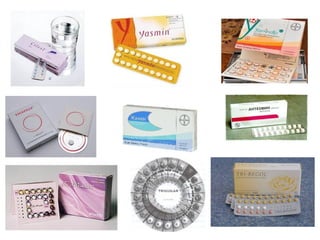
• Monophasic contraceptivesMonophasic contraceptives
CilestCilest®®
, Jeanine, Jeanine®®
, Yasmine, Yasmine®®
, Yasminelle, Yasminelle®®
• Biphasic contraceptives:Biphasic contraceptives: AnteovinAnteovin®®
•Triphasic contraceptivesTriphasic contraceptives
Tri-MinuletTri-Minulet®®
, Triquilar, Triquilar®®
, Tri-Regol, Tri-Regol®®
It is now appreciated that the earlier preparations
had much more estrogen than was necessary for
efficacy. It seems probable that 20 mcg estrogen is
about the limit below which serious loss of efficacy
can be expected.
Indeed in patients whose hepatic enzymes are likely
to be induced, e.g. those taking antiepileptic or some
antirheumatic drugs, it is advisable to use a
preparation containing 50 mcg or more of estrogen
to avoid loss of efficacy due to increased estrogen
metabolism (elimination of breakthrough bleeding is
a guide to adequacy of dose).
Subsequent fertility
After stopping the pill, fertility that is normal for the
age the woman has now reached is restored,
although conception may be delayed for a few
months longer in younger and as much as
a year in older users.
Effect on an existing pregnancy
Although progestogens can masculinise the female
fetus, the doses for contraception are so low that
risk of harming an undiagnosed pregnancy is
extremely low, probably less than 1 in 1000 (the
background incidence of birth defects is 1–2%).
Carcinoma of the breast and cervix may be
unaffected or very slightly increased in incidence;
hepatoma (very rare) is increased. The risk to life
seems to be less than that of moderate smoking (10
cigarettes/day). Carcinoma of the ovary and the
endometrium are substantially reduced. Total
insidence of cancer is unaltered.
Effect on menstruation (it is not true menstrua-
tion) is generally to regularise it, and often to
diminish blood loss, but amenorrhoea can occur.
In some women “breakthrough” intermenstrual
bleeding occurs, especially at the outset, but this
seldom persists for more than a few cycles. Premen-
strual tension and dysmenorrhoea are much reduced.
Libido is greatly subjected to psychosocial influences,
and removal of fear of pregnancy may permit
enthusiasm for the first time. It is likely that direct
pharmacological effect (reduction) is rare. There is
evidence that the normal increase in female-initiated
sexual activity at the time of ovulation is suppressed.
Cardiovascular complications
Incidence of venous thromboembolism is increased in
pill users. It is lowest in the 20–35 mcg pill and rises
progressively with the 50 and 100 mcg preparations.
The small increase in hypertension, cerebrovascular
event, and acute myocardial infarction is principally
confined to smokers.
Increased arterial disease also appears to be
associated with the type of progestogen in the
combined pill.
The “3rd
generation” pills appear to carry
a higher risk of venous thrombosis, but may
have a lower risk of arterial thrombosis because
their lower androgen activity leads to slightly higher
HDL levels than older pills.
The progestogen-only pill does not significantly
affect coagulation.
Major surgery (in patients taking estrogen-
progestogen contraceptives and postmenopausal
hormone replacement therapy). Because of the
added risk of venous thromboembolism (surgery
causes a fall in antithrombin) it has been advised
that these oral contraceptives should be withdrawn,
if practicable, 4 weeks before all lower limb
operations or any major elective surgery (and
started again at the first menstruation to occur more
than 2 weeks after surgery). But increase in clotting
factors may persist for many weeks and there is also
the risk of pregnancy to be considered (plainly,
alternative contraception should be used). An
alternative is to use low molecular weight heparin.
Hepatic function may be impaired as may drug-
metabolizing capacity. Gallbladder disease and
vascular hepatocellular adenomas occur (rare).
Cervical ectropion (erosion) incidence is double
(it is a harmless condition).
Crohn's disease is more frequent.
Decreased glucose tolerance occurs, perhaps due
to a peripheral effect reducing the action of insulin.
Plasma lipoproteins may be adversely affected;
least where the progestogen is desogestrel or low
dose norethisterone.
Plasma proteins
Estrogens cause an increase
in proteins, particularly the globulins that bind
hydrocortisone, thyroxine, and iron. As a result, the
total plasma concentration of the bound substances
is increased, though the concentration of free and
active substance remains normal. This can be
misleading in diagnostic tests, e.g. of thyroid
function. This effect on plasma proteins passes off
about 6 weeks after cessation of the estrogen.
Absolute contraindications forAbsolute contraindications for
use of contraceptives include:use of contraceptives include:
• A personal history of thromboembolic venous,
arterial, or cardiac disease or severe or multiple
risk factors for these.
• Transient cerebral ischaemic attacks without
headache.
• Infective hepatitis, until 3 months after liver
function tests have become normal, and other
liver diseases including disturbances of hepatic
excretion, e.g. cholestatic jaundice.
• Migraine, if there is a typical aura, focal features,
or if it is severe and lasts > 72 hours despite
treatment, or is treated with an ergot derivative
(use with caution is acceptable if there is no aura,
focal features, or if it is controlled with a 5-HT1-
receptor agonist)
• Carcinoma of the breast or of the genital tract,
past or present.
• Other conditions including:
systemic lupus erythematosus,
porphyria,
undiagnosed vaginal bleeding.
Relative contraindications or uses of hormo-Relative contraindications or uses of hormo-
nal conraceptives with caution, include:nal conraceptives with caution, include:
•Family history of venous thromboembolism or
arterial disease
•Diabetes mellitus which may become more
difficult to control
•Hypertension (if blood pressure exceeds 160/100 mm)
•Smoking > 40 cigarettes per day (15 cigarettes/day
enhances the risks of circulatory disease (x 3)
•Age over 35 years (avoid if > 50 years)
•Obesity (avoid if body mass index >39 kg/m2
•Long-term immobility
•Breast feeding (until weaning or for 6 months
after birth).

Steroid hormones

  • 1.
  • 2.
  • 3.
  • 4.
    Glucocorticosteroids diffuse intothe cell, but access to the receptor may be prevented, for example in kidney, by the enzyme 11-beta hydroxysteroid dehydrogenase, which converts active cortisol into inactive cortisone. When activated, the receptors translocate to the nucleus where they can upregulate gene transcription by action on specific DNA response elements. GlucocorticosteroidGlucocorticosteroid
  • 5.
    Sponsored Medical Lecture Notes– All Subjects USMLE Exam (America) – Practice
  • 6.
    Rang et al.Pharmacology – 5st Ed. (2003)
  • 7.
    ACTIONS OF HYDROCORTISONE(CORTISOL) The effects of hydrocortisone will be described as a basic glucocorticoid hormone. There is a distinction between replacement therapy (physiological effects) and the higher doses of pharmacotherapy. (1) On inorganic metabolism (mineralocorticoid effects): cortisol increasis retention of sodium by the renal tubule, and increasis potassium excretion in the urine.
  • 8.
    (2) On organicmetabolism (glucocorticoid effects): • Carbohydrate metabolism: gluconeogenesis is increased and peripheral glucose utilization (transport across cell membranes) may be decreased (insulin antagonism) so that hyperglycaemia and sometimes glycosuria result. Latent diabetes becomes overt. • Protein metabolism: anabolism (conversion of amino acids to protein) is decreased but catabolism continues unabated or even faster, so that there is a negative nitrogen balance with muscle wasting. Osteoporosis (reduction of bone protein matrix) occurs, growth slows in children, the skin atrophies and this, with increased capillary fragility, causes bruising and striae.
  • 9.
    Healing of pepticulcers or of wounds is delayed. • Fat deposition: this is increased on shoulders, face, and abdomen. • Inflammatory response is depressed; corticosteroids can be a source of danger in infections by limiting useful protective inflammation. Neutrophil and macrophage function are depressed, including the release of chemical mediators and the effects of these on capillaries. Glucocrticosterods have antiexudative andGlucocrticosterods have antiexudative and antiproliferative effects.antiproliferative effects.
  • 10.
    The anti-inflammatory actionsof glucocorticoids are mediated by stimulation of synthesis of lipocortin, which inhibits pathways for production of eicosanoids (prostaglandins, leukotrienes, lipoxins), and platelet activating factor too. These mediators would normally contribute to increased vascular permeability and subsequent changes including oedema, leucocyte migration, fibrin deposition.
  • 11.
  • 12.
    • Allergic responsesare suppressed. The antigen-antibody interaction is unaffected, but its injurious inflammatory consequences do not follow. • Antibody production is reduced by heavy doses. • Lymphoid tissue is reduced (including leukaemic lymphocytes). • Renal excretion of urate is increased. • Blood eosinophils are reduced in number. • Euphoria or psychotic states may occur, perhaps due to CNS electrolyte changes. • Anti-vitamin D action.
  • 13.
  • 14.
    • Reduction ofhypercalcaemia chiefly where this is due to excessive absorption of calcium from the gut (sarcoidosis, vitamin D intoxication). • Urinary calcium excretion is increased and renal stones may form. • Growth reduction where new cells are being added (growth in children), but not where they are replacing cells as in adult tissues. • Suppression of hypothalamic/pituitary/adrenocor- tical feedback system (with delayed recovery) occurs with chronic use, so that abrupt withdrawal leaves the patient in a state of adrenocortical insufficiency.
  • 15.
  • 16.
    Structure and nomenclatureof corticosteroid products and selected synthetic derivatives
  • 17.
    Drugs (tablet strength inmg) Anti-inflam- matory effect Equivalent anti-inflamma- tory dose Sodium- retaining effect Cortisone (25 mg) 0.8 25 mg 1 Hydrocortisone (20 mg) 1 20 mg 1 Prednisolone (5 mg) 4 5 mg 0.8 Methylprednisolone (4 mg) 5 4 mg minimal Triamcinolone (4 mg) 5 4 mg none Dexamethasone (0.5 mg) 30 0.75 mg minimal Betamethasone (0,5 mg) 30 0.75 mg negligible Fludrocortisone (0,1 mg) 15 irrelevant 150 Aldosterone (none) none irrelevant 500
  • 18.
    Hydrocortisone (cortisol) isthe principal naturally occurring steroid; it is taken orally; a soluble salt can be given i.v. for rapid effect in emergency (whether due to deficiency, allergy, or inflammatory disease). A suspension (Hydrocortisone Acetate) can be given intra-articularly. Prednisone is a prodrug, i.e. it is converted into prednisolone in the liver. Prednisolone is predominantly anti-inflammatory glucocorticoid, biologically active, and has little sodium-retaining activity; it is the standard choice for anti-inflammatory pharmacotherapy, orally or i.m.
  • 19.
    Fluorinated glucocorticosteroidsFluorinated glucocorticosteroids Triamcinolonehas virtually no sodium retaining (mineralocorticoid) effect but has the disadvantage that muscle wasting may occasionally be severe and anorexia and mental depression may be more common at high dose. DexamethasoneDexamethasone and Betamethasoneand Betamethasone are similar, powerful predominantly anti-inflammatory steroids. They are longer-acting than prednisolone and are used for therapeutic adrenocortical suppression.
  • 20.
    Replacement glucocorticoid therapy •Acute adrenal insufficiency • Chronic adrenal insufficiency (Addison's disease) • Congenital adrenal hyperplasia (adrenogenital syndrome) Glucocorticoid pharmacotherapy for non endocrine diseases Steroids are powerful drugs. They may cause dramatic improvement in many severe diseases as well as produce equally severe adverse effects if not properly used.
  • 21.
    The use ofsteroidsThe use of steroids in non endocrine disease is empirical and palliative, but may be life-saving. The following general principles must be observed (Tripathi, 2003): • Single dose (even excessive) is not harmful. • Short courses (even high dose) are not likely to be harmful in the absence of contraindications. •Long-term use is potentially hazardous. • No abrupt withdrawal after a corticoid has been given for more than 2 to 3 weeks: may precipitate adrenal insufficiency.
  • 22.
    1. Rheumatoid arthritis:corticoids are one of the last resort drugs. 2. Osteoarthritis. Intra-articular injection of steroid is rare, but may be used to control an acute exacer- bation. Repeated injections may cause joint destruction. 3. Rheumatic fever. Corticoids are used only in severe cases with myocarditis and CHF. 4. Collagen diseases: systemic lupus erythematosus, polyarteritis nodosa, dermatomyositis, nephrotic syndrome, glomerulonephritis. 5. Severe allergic reactions 6. Autoimmune diseases: autoimmune haemolytic anaemia, thrombocytopenia, active chronic hepatitis
  • 23.
    7. Bronchial asthma 8.Eye diseases (as eye drops or ointment) in allergic conjunctivitis, iritis, iridocyclitis, keratitis. 9. Skin diseases: Topical glucocorticosteroids are used in many exematous skin diseases 10.Intestinal diseases: ulcerative colitis, Crohn’s disease, coeliac disease 11.Cerebral oedema due to tumours, tubercular meningitis, etc. 12.Malignancies: acute lymphatic leukemia, Hodgkin’s disease and other lymphomas 13.Organ transplantations and skin allograft 14.To test adrenal-pituitary axis, etc.
  • 24.
    • Cushing’s syndrome •Osteoporosis • Tendency to hyperglycaemia • Negative nitrogen balance • Increased appetite • Increased susceptibility to infections • Obesity, etc. AdverseAdverse effects ofeffects of Glucocorti-Glucocorti- costeroidscosteroids Cushing’s syndrome
  • 25.
    Contraindications •Peptic ulcer •Diabetes mellitus •Hypertension •Pregnancy(risk foetal defects) •Tuberculosis, mycoses, virosis (including Herpes simplex keratitis), and other infections •Osteoporosis •Psychosis •Epilepsy •Chronic heart failure •Renal failure
  • 26.
    MineralocorticoidsMineralocorticoids Aldosterone (t1/2 20min), the principal natural salt retaining hormone, has been used i.m. in acute adrenal insufficiency. After oral admini- stration, it is rapidly inactivated in the first pass through the liver but has no place in routine therapeutics, as fludrocortisone is as effective and is active orally.
  • 27.
    FludrocortisoneFludrocortisone has avery great sodium-retaining effect in relation to its anti-inflammatory action and only at high doses the nonelectrolyte effects need to be considered. It is used to replace aldosterone where the adrenal cortex is destroyed (Addison's disease). Fludrocortisone is also the drug of choice in most patients with autonomic neuropathy, in whom volume expansion is easier to achieve than a sustained increase in vasoconstrictor tone. Much higher doses of fludrocortisone (0.5 to 1 mg) are required when the cause of hypotension is a salt- losing syndrome of renal origin, e.g. following an episode of interstitial nephritis.
  • 28.
    • Androgens andantiandrogens • Estrogens and antiestrogens • Progestins and antiprogestins • Hormonal contraceptives Sex (gonadal)Sex (gonadal) hormoneshormones and antagonistsand antagonists 
  • 29.
    The biochemical pathway inthe conversion of cholesterol to: •androgens (Dihydrotestosterone) and •estrogens (Estradiol)
  • 30.
    Mechanism of action Steroidhormone receptors for gonadal and adrenocortical steroids are complex proteins inside the target cell. They penetrate into the cell and bind to a receptor. Complex steroid/receptor translocates into the cell nucleus, which is the principal site of action and where RNA/protein synthesis occurs. Compounds that occupy the receptor without causing translocation into the nucleus act as antagonists, e.g. spironolactone to aldosterone, cyproterone to androgens, clomiphene to estrogens.
  • 31.
    Pharmacokinetics Steroid sex hormonesare well absorbed through the skin. Most are subject to extensive hepatic metabolic inactivation (so much that oral administration is ineffective or requires very large doses). There is some enterohepatic recirculation, especially of estrogen, and this may be interrupted by severe diarrhoea to cause loss of efficacy. There are some nonsteroid analogues that are more slowly metabolized. Sustained-release (depot) preparations are used. The hormones in the blood extensively bind to sex-hormone-binding globulin. The plasma half live relates to the duration of cellular action, which is implied in the recommended dosage schedules.
  • 32.
    AndrogensAndrogens Testosterone is thenatural androgen secreted by the interstitial cells of the testis; it is necessary for normal spermatogenesis, for the development of the male secondary sex characteristics, and for the growth, at puberty, of the sexual apparatus. It is converted by hydroxylation to the active dihydrotestosterone. Protein anabolism especially in skeletal muscles is increased by androgens. Growth of bone is promoted, but the rate of closure of the epiphyses is also hastened, causing short stature in cases of precocious puberty or of androgen overdose in the course of treating hypogonadal children.
  • 33.
    Pathway of synthesisof testosterone in the Leydig cells of the testes
  • 34.
    Metabolism of testosteroneto its major active and inactive metabolites
  • 35.
    Androgen metabolism and actions. SHBG –sex hormone- binding globulin
  • 36.
    Indications for androgentherapy Testicular failure. It may be primary or secondary (due to lack of pituitary gonadotrophins). In either case replacement with androgens is often necessary. Unfortunately, the sterility is not remedied, although loss of libido and of secondary sex charac- teristics can be greatly improved. If androgen is given to a boy with delayed puberty, a growth spurt and sexual development will occur. Androgens are now little used in metastatic breast cancer because of their virilising effects.
  • 37.
    Androgen preparations Testosterone hasextensive hepatic first-pass metabo- lism. It may be given orally or as i.m. depot injections. Mesterolone provides oral therapy. Antiandrogens (androgen antagonists) Estrogens and progestogens are physiological anta- gonists to androgens. But compounds which compete selectively for androgen receptors have been made. Cyproterone is a derivative of progesterone. It is used for reducing male hypersexuality and in prostatic cancer and severe female hirsutism.
  • 38.
    A formulation ofcyproterone plus ethinylestradiol (Diane® ) is offered for the treatment of severe female hirsutism as well as for severe acne in women; this preparation acts as an oral contraceptive too. Cyproterone causes hepatomas in rats. It is unsuitable for male contraception. Flutamide and bicalutamide are nonsteroidal antian- drogens for use in conjunction with the gonadorelins (e.g. goserelin) in the treatment of prostatic cancer. Finasteride inhibits conversion of testosterone to dihydrotestosterone. It has antiandrogen activity in tissues where dihydrotestosterone is the principal androgen: this makes it a useful drug in the treatment of benign prostatic hyperplasia.
  • 40.
    Spironolactone also hasantiandrogen activity and may help hirsutism in women. Androgen secretion may be diminished by continued use of a gonadorelin (LH-RH) analogue. Ketoconazole (antifungal drug) inhibits androgen synthesis and may be used in prostatic cancer. Anabolic steroidsAnabolic steroids Androgens are effective protein anabolic agents, but their clinical use for this purpose is limited by virilisa- tion of women. Attempts made to separate anabolic from androgenic action have been partially success- ful. All anabolic steroids have also androgenic effects.
  • 41.
    Anabolic steroids (Nandrolone)may no longer be used in osteoporosis. They benefit some patients with aplastic anaemia. Hereditary angioedema may be prevented. Anabolic steroids can prevent the calcium and nitrogen loss in the urine that occurs in patients bedridden for a long time and they have therefore been used in the treatment of some severe fractures. The use of anabolic steroids in conditions of general wasting despite nutritional support may be justifiable in extreme debilitating disease, such as severe ulce- rative colitis, and after major surgery. In the later stages of malignant disease they may make the patient feel and look less wretched. Their general use as tonics is scandalous, as is their use in sport.
  • 42.
    EstrogensEstrogens Estrone and estradiolare both natural estrogens. Estrogens are responsible for the normal development of the female genital tract, of the breast, and of the female secondary sex character- istics. The pubertal growth spurt is less marked in females than in males, probably because estro- gens have less protein anabolic action than do androgens, although they are as effective in promoting closure of epiphyses.
  • 43.
    The biosynthetic pathwayfor the estrogens
  • 44.
  • 45.
    Blood estrogen concentrationsmust be above a critical level for the maintenance of both prolife- rative and (together with progesterone) secretory phases of the uterine endometrium. If the estro- gen level falls too low, uterine bleeding follows. Estrogens are necessary for the maintenance of normal pregnancy and for the accompanying breast hyperplasia. The vagina is more sensitive to estrogens than is the endometrium.
  • 46.
    The menstrual cycle, showingplasma levels of pituitary and ovarian hormones and histologic changes
  • 47.
  • 48.
    Estrogen preparations Ethinylestradiol (t1/213 h) is a synthetic agent of first choice for contraceptive use; it is effective by mouth. Estradiol and estriol are orally active mixed natural estrogens. Their TTS can be effective and convenient for women who dislike oral therapy. Conjugated estrogens (Premarin® ) are orally active mixed natural estrogens containing 50–65% estrone obtained from the urine of pregnant mares. Stilboestrol (diethylstilbestrol) is used in androgen dependent cancers (breast, prostate).
  • 49.
    Replacement therapy inhypoestrogenaemia. This term refers to decreased estrogen production due to ovarian disease, or to hypothalamic/pituitary disease (hypogonadotropic hypogonadism). Treat- ment is by cyclic estrogen (conjugated estrogens or ethinylestradiol for 21 days) plus a progestogen, medroxyprogesterone for the last 10 to 14 days of estrogen treatment. An alternative treatment is the oral contraceptive. Unless the cause of the hypoovarian state is primary ovarian failure, treatment should be stopped after every third cycle to see if spontaneous menstruation will occur.
  • 50.
    Postmenopausal hormone replacementtherapy (HRT). It is the use of estrogen treatment to reverse or prevent problems due to the loss of ovarian hormone secretion after the menopause, whether physiological or induced. The tissues sensitive to estrogen include brain, bone, skin, cardiovascular and genitourinary system. The two aims of HRT are: (1) To reduce the everyday symptoms of estrogen loss: hot flushes, insomnia, lethargy and depression, vaginal dryness. (2) To prevent the long-term complications asso- ciated with estrogen deficiency: osteoporotic fractures and coronary heart disease.
  • 51.
    All types ofHRT (estrogen with or without progestogen) are effective in reducing the hot flushes experienced by more than 50% of postmenopausal women. The benefit is highest during the first year of treatment when 80% of women report a reduced likelihood of flushes. The other major value from HRT is the relief of vaginal dryness. Vaginal admini- stration (as a cream, ring, pessary, or tablet) is the most effective route for treatment of these symptoms. There are three types of regimen used for HRT: (1) Women without uterus take continuous estrogen alone.
  • 52.
    2) Women requireestrogen combined with progestogen to prevent endometrial proliferation. a) In the “sequential” regimen, women take estrogen without a break, and add a progestogen from appro- imately the 14th to 28th day of each cycle. The first ourse is started on the 1st day of menstruation (if present), and 28-day cycles of treatment follow hereafter without interval. b) In the “continuous” regimen, appropriate only for women who have been amenorrhoeic for more than one year, fixed dose combinations of estrogen and progestogen are taken without a break.
  • 53.
    A popular alternativeto estrogen therapy is the drug Tibolone (Livial® ), which is a synthetic steroid with weak estrogenic, progestogenic, and andro- genic properties. It is administered as a daily oral dose of 2.5 mg to suppress vasomotor symptoms and to prevent postmenopausal osteoporosis. The main adverse effect is vaginal bleeding, which needs investigation if persistent. Vasomotor menopausal symptoms may occasionally be helped by low doses of clonidine.
  • 54.
    Adverse effects ofHRT The most common reasons for withdrawal are irregular or withdrawal bleeding and breast pain. The more serious complications are venous thromboembolism and cancer of the endometrium or breast. These risks are small. The risk of gallstones may be increased up to 2-fold. The effect of estrogens on the lipid balance is favourable, but the addition of a proge- stin (gestodene or desogestrel) reverses the balance.
  • 55.
    Estrogen pharmacoterapy – indications: •Contraception • Menstrual disorders • Senile vaginitis • Inhibition of lactation (but no longer) • Androgen-dependent carcinoma (prostate cancer) • To reduce sexual urge in men • Epistaxis in recurrent cases (e.g. teleangiectasia) NB: Atrophic rhinitis as well as acne may benefit.
  • 56.
    AntiestrogensAntiestrogens Selective antagonists ofthe estrogen receptor are used either to induce gonadotrophin release in anovulatory infertility, or to block stimulation of estrogen-receptor-positive carcinomas of the breast. Clomiphene is structurally related to stilbestrol. It is a partial agonist. Clomiphene blocks hypothalamic estrogen receptors so that the negative feedback of natural estrogens is prevented and the pituitary responds by increased secretion of gonadotrophins, which may induce ovulation. Clomiphene is administered during the early follicular phase of the menstrual cycle.
  • 57.
    Tamoxifen is anonsteroid competitive estrogen antagonist on target organs. Although available for anovulatory infertility (20 mg daily on days 2, 3, 4 and 5 of the cycle) its main use now is in the treatment of estrogen-dependent breast cancer. Treatment with tamoxifen delays the growth of metastases and increases survival; if tolerated it should be continued for 5 years. Tamoxifen is also the hormonal treatment of choice in women with estrogen-receptor-positive metastatic breast cancer. Approximately 60% of such patients respond to initial hormonal manipulation, whereas less than 10% of estrogen-receptor-negative tumours respond.
  • 58.
    Progesterone andProgesterone and progestins(progestogens)progestins (progestogens) Progesterone (t1/2 5 min) is produced by the corpus luteum and converts the uterine epithelium from the proliferative to the secretory phase. It is necessary for successful implantation of the ovum, and is essential throughout pregnancy in the last two-thirds of which it is secreted in large amounts by the placenta. It acts particularly on tissues that are sensitized by estrogens. Some synthetic progestogens are less selective, having varying estrogenic and androgenic activity, and these may inhibit ovulation, though not very reliably.
  • 59.
    Progestogens are twoprincipal kinds: •Progesterone and its derivatives: dydrogesterone, hydroxyprogesterone, medroxyprogesterone (t1/2 28 h), etc. •Testosterone derivatives: norethisterone and its prodrug ethynodiol (t1/2 10 h); levonorgestrel, desogestrel, gestodene, gestronol, norgestimate. Clinical uses The clinical uses of progestational agents are ill-defined, apart from contraception, the menopause, and postmenopausal HRT.
  • 60.
    Other possible usesinclude • menstrual disorders, e.g. menorrhagia, endometriosis, dysmenorrhoea, and premenstrual syndrome (with doubtful efficacy) • breast and endometrial cancer. Application of the available progestogens (some used only in combined formulations) include: • oral: norethisterone, dydrogesterone, gestodene, desogestrel, levonorgestrel, medroxyprogesterone • suppositories or pessaries: progesterone • injectable: progesterone, hydroxyprogesterone, medroxyprogesterone.
  • 61.
    Adverse effects ofprolonged use of progestins include virilisation, raised blood pressure, and adverse trend in blood lipids. Gestodene, desogestrel, and norgestimate may have less affinity for androgen receptors and therefore less unfavourable effect on blood lipids; however the first two of these may have a higher risk of thrombosis. Antiprogestogens Mifepristone is a pure competitive antagonist at progesterone and glucocorticoid receptors. Clinical trials of oral use in hospital outpatients have shown it to be safe and effective in terminating pregnancy.
  • 62.
    Other progesterone derivatives Danazolis a derivative of the progestogen – ethisterone, a modified testosterone. It has partial agonist androgen activity and is described as an “impeded” androgen; it has little progestogen activity. It is a relatively selective inhibitor of pituitary gonadotrophin secretion (LH, FSH) affecting the surge in the mid-menstrual cycle more than basal secretion. This reduces ovarian function, which leads to atrophic changes in the endometrium. In males it reduces sperma- togenesis. Androgenic unwanted effects occur in women (acne, hirsutism, and rarely, enlargement of the clitoris). It is chiefly used for: endometriosis, mastitis, gynaecomastia, precocious puberty, menorrhagia, and hereditary angioedemahereditary angioedema.
  • 63.
    Hormonal contraceptionHormonal contraception inwomen comprises:in women comprises: Progestogen alone, e.g. Levonorgestrel (Escapelle® , Postinor® ) Estrogens alone are not completely reliable. At the necessary dose, they can also cause thromboembolism and endometrial cancer. An appropriate dose of estrogen + progestogen gives excellent reliability with good menstrual cycle control.
  • 64.
    Combined hormonal contraceptivesare conveni- ently started on the first day of the cycle (first day of menstruation) and continued for 21 days (this is immediately effective, inhibiting the first ovulation). It is followed by a period of 7 days when no pill is taken, and during which bleeding usually occurs. Thereafter, regardless of bleeding, a new 21-day course is begun, and so on, i.e. active tablets are taken daily for 3 weeks out of 4. For easy compliance, some combined pills are packaged so that the woman takes one tablet every day without interruption (21 active then 7 dummy).
  • 65.
    The pill shouldbe taken about the same time (to within 12 hours) every day to establish a routine. The monthly bleeds that occur 1–2 days after the cessation of active hormone administration are hormone withdrawal bleeds not natural men- struation. They are not an essential feature of oral contraception, but women are accustomed to mon- thly bleeds and they provide monthly reassurance of the absence of pregnancy. Numerous field trials have shown that progestin- estrogen combinations, if taken precisely as directed, are the most reliable reversible contraceptives known.
  • 66.
    Combined oral contraceptivesare defined as 1st , 2nd or 3rd generation by the progestogen component 1st generation progestogens containing a fixed amount of an estrogen and a progestin in each active tablet are termed “mono- phasic”. Other pills employ variable ratios between estrogen and progestin, in 2 (biphasic) or 3 (triphasic) periods within the menstrual cycle. The dose of progestin is low at the beginning and higher at the end, the estrogen remaining either constant or rising slightly in mid-cycle.
  • 67.
    The objective isto achieve effective contraception with minimal distortion of natural hormonal rhythms. The advantages claimed for these techniques are diminished adverse metabolic changes, e.g. blood lipids, and a particularly reliable monthly bleeding pattern without loss of contraceptive efficacy. • Monophasic contraceptivesMonophasic contraceptives CilestCilest®® , Jeanine, Jeanine®® , Yasmine, Yasmine®® , Yasminelle, Yasminelle®® • Biphasic contraceptives:Biphasic contraceptives: AnteovinAnteovin®® •Triphasic contraceptivesTriphasic contraceptives Tri-MinuletTri-Minulet®® , Triquilar, Triquilar®® , Tri-Regol, Tri-Regol®®
  • 69.
    It is nowappreciated that the earlier preparations had much more estrogen than was necessary for efficacy. It seems probable that 20 mcg estrogen is about the limit below which serious loss of efficacy can be expected. Indeed in patients whose hepatic enzymes are likely to be induced, e.g. those taking antiepileptic or some antirheumatic drugs, it is advisable to use a preparation containing 50 mcg or more of estrogen to avoid loss of efficacy due to increased estrogen metabolism (elimination of breakthrough bleeding is a guide to adequacy of dose).
  • 70.
    Subsequent fertility After stoppingthe pill, fertility that is normal for the age the woman has now reached is restored, although conception may be delayed for a few months longer in younger and as much as a year in older users. Effect on an existing pregnancy Although progestogens can masculinise the female fetus, the doses for contraception are so low that risk of harming an undiagnosed pregnancy is extremely low, probably less than 1 in 1000 (the background incidence of birth defects is 1–2%).
  • 71.
    Carcinoma of thebreast and cervix may be unaffected or very slightly increased in incidence; hepatoma (very rare) is increased. The risk to life seems to be less than that of moderate smoking (10 cigarettes/day). Carcinoma of the ovary and the endometrium are substantially reduced. Total insidence of cancer is unaltered. Effect on menstruation (it is not true menstrua- tion) is generally to regularise it, and often to diminish blood loss, but amenorrhoea can occur. In some women “breakthrough” intermenstrual bleeding occurs, especially at the outset, but this seldom persists for more than a few cycles. Premen- strual tension and dysmenorrhoea are much reduced.
  • 72.
    Libido is greatlysubjected to psychosocial influences, and removal of fear of pregnancy may permit enthusiasm for the first time. It is likely that direct pharmacological effect (reduction) is rare. There is evidence that the normal increase in female-initiated sexual activity at the time of ovulation is suppressed. Cardiovascular complications Incidence of venous thromboembolism is increased in pill users. It is lowest in the 20–35 mcg pill and rises progressively with the 50 and 100 mcg preparations.
  • 73.
    The small increasein hypertension, cerebrovascular event, and acute myocardial infarction is principally confined to smokers. Increased arterial disease also appears to be associated with the type of progestogen in the combined pill. The “3rd generation” pills appear to carry a higher risk of venous thrombosis, but may have a lower risk of arterial thrombosis because their lower androgen activity leads to slightly higher HDL levels than older pills. The progestogen-only pill does not significantly affect coagulation.
  • 74.
    Major surgery (inpatients taking estrogen- progestogen contraceptives and postmenopausal hormone replacement therapy). Because of the added risk of venous thromboembolism (surgery causes a fall in antithrombin) it has been advised that these oral contraceptives should be withdrawn, if practicable, 4 weeks before all lower limb operations or any major elective surgery (and started again at the first menstruation to occur more than 2 weeks after surgery). But increase in clotting factors may persist for many weeks and there is also the risk of pregnancy to be considered (plainly, alternative contraception should be used). An alternative is to use low molecular weight heparin.
  • 75.
    Hepatic function maybe impaired as may drug- metabolizing capacity. Gallbladder disease and vascular hepatocellular adenomas occur (rare). Cervical ectropion (erosion) incidence is double (it is a harmless condition). Crohn's disease is more frequent. Decreased glucose tolerance occurs, perhaps due to a peripheral effect reducing the action of insulin. Plasma lipoproteins may be adversely affected; least where the progestogen is desogestrel or low dose norethisterone.
  • 76.
    Plasma proteins Estrogens causean increase in proteins, particularly the globulins that bind hydrocortisone, thyroxine, and iron. As a result, the total plasma concentration of the bound substances is increased, though the concentration of free and active substance remains normal. This can be misleading in diagnostic tests, e.g. of thyroid function. This effect on plasma proteins passes off about 6 weeks after cessation of the estrogen.
  • 77.
    Absolute contraindications forAbsolutecontraindications for use of contraceptives include:use of contraceptives include: • A personal history of thromboembolic venous, arterial, or cardiac disease or severe or multiple risk factors for these. • Transient cerebral ischaemic attacks without headache. • Infective hepatitis, until 3 months after liver function tests have become normal, and other liver diseases including disturbances of hepatic excretion, e.g. cholestatic jaundice.
  • 78.
    • Migraine, ifthere is a typical aura, focal features, or if it is severe and lasts > 72 hours despite treatment, or is treated with an ergot derivative (use with caution is acceptable if there is no aura, focal features, or if it is controlled with a 5-HT1- receptor agonist) • Carcinoma of the breast or of the genital tract, past or present. • Other conditions including: systemic lupus erythematosus, porphyria, undiagnosed vaginal bleeding.
  • 79.
    Relative contraindications oruses of hormo-Relative contraindications or uses of hormo- nal conraceptives with caution, include:nal conraceptives with caution, include: •Family history of venous thromboembolism or arterial disease •Diabetes mellitus which may become more difficult to control •Hypertension (if blood pressure exceeds 160/100 mm) •Smoking > 40 cigarettes per day (15 cigarettes/day enhances the risks of circulatory disease (x 3) •Age over 35 years (avoid if > 50 years) •Obesity (avoid if body mass index >39 kg/m2 •Long-term immobility •Breast feeding (until weaning or for 6 months after birth).