Gonadal function and dysfunction Dr Thomas Fox Endocrine SpR  Derriford Hospital
Introduction Male gonadal function Male hypogonadism Secondary Primary Hypogonadism in the aging male Treatment of hypogonadism Monitoring of those on testosteroned therapy
 
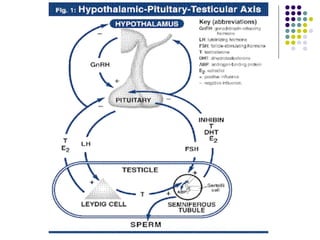
Testes Leydig cells (stimulated by LH) Close to blood supply Interstitial cells Produce testosterone (dihydrotestosterone, DHEA and androstenedione) Seminiferous tubules 90% volume of the testes Setoli cells (stimulated by FSH) – spermatogenesis occurs here and also produce inhibin and in the embryo mullerian inhibiting factor Germ cells
Spermatogenesis can take up to 90 days Testicular size in adults 15-30ml and temperature is 2 o C less than core temperature.
Testosterone Converted to DHT in tissues (more active) Testosterone is also converted to oestradiol in adipose tissue by aromatase enzyme Actions Male sexual differentiation Maintains male secondary sexual characteristics  Regulation of GnRH secretion Spermatogenesis Normal male sexual function and behaviour Maintenance of bone mineral density
Male Hypogonadism Variety of manifestations Failure of puberty Infertility “Male menopause/andropause” Erectile dysfunction Primary hypogonadism Secondary hypogonadism
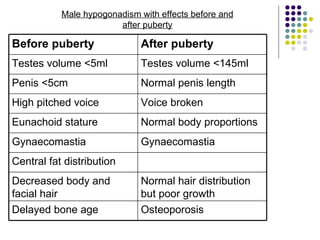
Male hypogonadism with effects before and after puberty Normal body proportions Eunachoid stature Osteoporosis Delayed bone age Normal hair distribution but poor growth Decreased body and facial hair Central fat distribution Gynaecomastia Gynaecomastia Voice broken High pitched voice Normal penis length Penis <5cm Testes volume <145ml Testes volume <5ml After puberty Before puberty
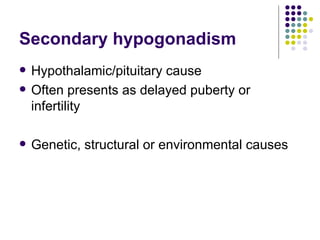
Secondary hypogonadism Hypothalamic/pituitary cause Often presents as delayed puberty or infertility  Genetic, structural or environmental causes
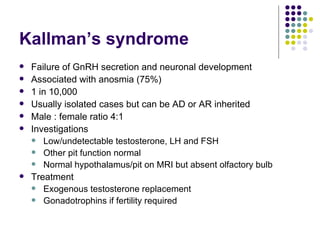
Kallman’s syndrome Failure of GnRH secretion and neuronal development Associated with anosmia (75%) 1 in 10,000 Usually isolated cases but can be AD or AR inherited Male : female ratio 4:1 Investigations Low/undetectable testosterone, LH and FSH Other pit function normal Normal hypothalamus/pit on MRI but absent olfactory bulb Treatment Exogenous testosterone replacement Gonadotrophins if fertility required
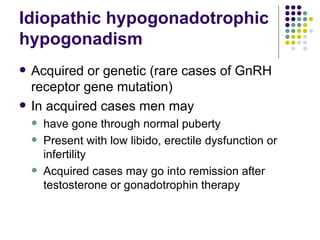
Idiopathic hypogonadotrophic hypogonadism Acquired or genetic (rare cases of GnRH receptor gene mutation) In acquired cases men may  have gone through normal puberty Present with low libido, erectile dysfunction or infertility Acquired cases may go into remission after testosterone or gonadotrophin therapy
Miscellaneous causes of secondary hypogonadism Stress Systemic illness Structural Any pit tumour esp prolactinomas Associated with other hormonal deficiencies  Drugs Anabolic steroids Cocaine and opiates Any drugs causing hyperprolactinaemia  Haemochromatosis Endocrine – Cushings, prolactinoma Prader-Willi syndrome – 15q mutation – obesity, hypog/hypog and mental retardation Laurence-Monn-Biedl syndrome – obesity, RP hypog/hypog, polydactyly and mental retardation
Primary hypogonadism Genetic Klinefelter’s syndrome XX males Noonan’s syndrome (46XY) Acquired Trauma Orchitis Cryptorchism Post chemotherapy/radiotherapy Chronic illness Drugs- opiates, alcohol, sulfasalazine, colchicine
Opiates and hypogonadism Opiates of all kinds cause reduced release of GnRH, LH, testosterone, free testosterone  This is dose related Correlates to reduction in libido and subjective erectile dysfunction No literature on testosterone replacement in this group Hypogonadism in men consuming sustained-action oral opioids.  Daniell HW. J Pain. 2002 Oct;3(5):377-84.


Klinefelter’s syndrome First described by Harry Klinefelter 1942 1:500 men affected Extra X chromosome causes primary hypogonadism with testosterone deficiency Clinically Reduced testicular volume Tall eunachoid stature Reduced body hair Gynaecomastia Intellectual dysfunction in 40% 20 time increased risk of carcinoma of breast
Investigations Low testosterone Elevated LH/FSH Azospermia Diagnosed on karyotyping 47XXY or 46XY/47XXY mosaic
Management Counselling Klinefelter’s Syndrome Association UK http://www.ksa-uk.co.uk Androgen replacement therapy
Noonan Syndrome Autosomal dominant disorder (variable penetrance) Normal karyotyptype Phenotype that of Turners syndrome Low set ears Right sided congenital heart defects (left-sided in Turners) Epicanthic folds Short stature Webbed neck Cryptorchism (50% of males) Primary hypogonadism Can affect  either  sex
XX males 1 in 10,000 births These patients have a translocation of part of the Y chromosome with the X chromosome Phenotype is similar to Klinefelters May al so have short stature and hypospadias
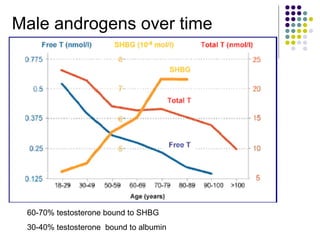
Hypogonadism in the aging male Increasing interest in this area What is the evidence for Decline in androgen production? Clinical manifestations of androgen deficiency? Accuracy of testing? Clinical benefit of androgen replacement?
Male androgens over time 60-70% testosterone bound to SHBG 30-40% testosterone  bound to albumin
How to assess testosterone Diurnal variation Measure 9am testosterone on 2 occasions Commercially available assays inaccurate at lower end of range Testosterone reduced in –  Chronic renal, cardiac, respiratory or hepatic disease.  Also reduced in Obesity  Pts on thiazides, opiates, psychotropic medications and amiodarone Also need to measure, free testosterone LH and FSH
In a recent small 8-week study 50% (8/16) pts with mean age 69 years were both eugonadal and hypogonadal at some point in the study In a third of men with testosterone <6.9 there are no symptoms of  hypogonadism ?due to slow decline ? due to non-specific symptoms 20% men >60 years have serum testosterone below the lower limit of normal for young me Symptoms of hypogonadism are very non-specific Do they all have testosterone deficiency?
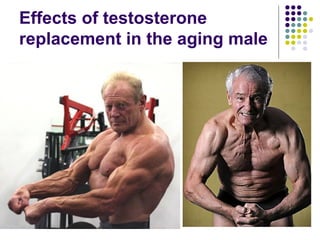
Effects of testosterone replacement in the aging male
Effects of testosterone replacement Increased muscle mass 1-2kg Reduced fat mass 1.5-2.5kg BUT no study has shown improvement in physical function Bone mineral density Improved well-being Improved libido Limited evidence for effect on erectile dysfunction No  outcome studies  of morbidity or mortality, fracture risk, risk of falls
Risks of androgen replacement in the aging male Long term risk of androgen replacement in men may include Cardiovascular disease Prostatic hypertrophy (and carcinoma?) Polycythaemia Dyslipidaemia Sleep apnoea
When to treat? Those with 2 low 9am testosterone measurements WITH symptoms that could be attributable to androgen deficiency Trial period to monitor effects of treatment No real guidance provided by NICE or Society for Endocrinology
Testosterone replacement therapy Various choices Transdermal patches Intrinsa  300mcg/24hrs, patch changed twice weekly (ÂŁ26.91 for 8 patches) Transdermal gel Ie  Testim  gel 50mg/5g (30 tube pack ÂŁ32) Intramuscular depots Nedido  1g/4ml 10-14 weekly (ÂŁ76) Sustanon  250 2-3 weekly intervals (ÂŁ2.50 per 1ml amp) (Hepatic metabolism when administered orally)
Monitoring No BES guidelines 2002 AACE Testosterone monitoring Regular prostate examination Regular questions RE symptoms of prostatism PSA 6 monthly for 18 months then yearly Stop testosterone if PSA rises or prostatic symptoms develop FBC/haematocrit
hCG therapy hCG therapy hCG binds to Leydig cells LH receptor Given peripubertally in hypogonadotrophic hypogonadism to stimulate puberty Stimulates testosterone production, testicular growth and spermatogenesis 2-3 weekly im injections Also given tio hypo/hypog males wanting to father children
Human menopausal gonadotrophin therapy Required for those who have developed hypogonadotrophic hypogonadism post-pubertally for spermatogenesis if hCG alone fails
GnRH therapy Given as a pulsatile subcutaneous pump to induce puberty and spermatogenesis in hypogonadotrophic hypogonadism
Summary Differential diagnosis of secondary hypogonadism Difficulties of managing primary hypogonadism in aging male Opiates and obesity as a cause of hypogonadism Need for surveillance of those on androgen replacement therapy
http://www.endo-society.org/guidelines/final/upload/Androgens_in_Women_CG.pdf http://jcem.endojournals.org/cgi/content/full/86/6/2380 AMERICAN ASSOCIATION OF CLINICAL ENDOCRINOLOGISTS MEDICAL GUIDELINES FOR CLINICAL PRACTICE FOR THE EVALUATION AND TREATMENT OF HYPOGONADISM IN ADULT MALE PATIENTS—2002 UPDATE  http://www.aace.com/pub/pdf/guidelines/hypogonadism.pdf

Gonadal function and dysfunction

  • 1.
    Gonadal function anddysfunction Dr Thomas Fox Endocrine SpR Derriford Hospital
  • 2.
    Introduction Male gonadalfunction Male hypogonadism Secondary Primary Hypogonadism in the aging male Treatment of hypogonadism Monitoring of those on testosteroned therapy
  • 3.
  • 4.
    Testes Leydig cells(stimulated by LH) Close to blood supply Interstitial cells Produce testosterone (dihydrotestosterone, DHEA and androstenedione) Seminiferous tubules 90% volume of the testes Setoli cells (stimulated by FSH) – spermatogenesis occurs here and also produce inhibin and in the embryo mullerian inhibiting factor Germ cells
  • 5.
    Spermatogenesis can takeup to 90 days Testicular size in adults 15-30ml and temperature is 2 o C less than core temperature.
  • 6.
    Testosterone Converted toDHT in tissues (more active) Testosterone is also converted to oestradiol in adipose tissue by aromatase enzyme Actions Male sexual differentiation Maintains male secondary sexual characteristics Regulation of GnRH secretion Spermatogenesis Normal male sexual function and behaviour Maintenance of bone mineral density
  • 7.
    Male Hypogonadism Varietyof manifestations Failure of puberty Infertility “Male menopause/andropause” Erectile dysfunction Primary hypogonadism Secondary hypogonadism
  • 8.
    Male hypogonadism witheffects before and after puberty Normal body proportions Eunachoid stature Osteoporosis Delayed bone age Normal hair distribution but poor growth Decreased body and facial hair Central fat distribution Gynaecomastia Gynaecomastia Voice broken High pitched voice Normal penis length Penis <5cm Testes volume <145ml Testes volume <5ml After puberty Before puberty
  • 9.
    Secondary hypogonadism Hypothalamic/pituitarycause Often presents as delayed puberty or infertility Genetic, structural or environmental causes
  • 10.
    Kallman’s syndrome Failureof GnRH secretion and neuronal development Associated with anosmia (75%) 1 in 10,000 Usually isolated cases but can be AD or AR inherited Male : female ratio 4:1 Investigations Low/undetectable testosterone, LH and FSH Other pit function normal Normal hypothalamus/pit on MRI but absent olfactory bulb Treatment Exogenous testosterone replacement Gonadotrophins if fertility required
  • 11.
    Idiopathic hypogonadotrophic hypogonadismAcquired or genetic (rare cases of GnRH receptor gene mutation) In acquired cases men may have gone through normal puberty Present with low libido, erectile dysfunction or infertility Acquired cases may go into remission after testosterone or gonadotrophin therapy
  • 12.
    Miscellaneous causes ofsecondary hypogonadism Stress Systemic illness Structural Any pit tumour esp prolactinomas Associated with other hormonal deficiencies Drugs Anabolic steroids Cocaine and opiates Any drugs causing hyperprolactinaemia Haemochromatosis Endocrine – Cushings, prolactinoma Prader-Willi syndrome – 15q mutation – obesity, hypog/hypog and mental retardation Laurence-Monn-Biedl syndrome – obesity, RP hypog/hypog, polydactyly and mental retardation
  • 13.
    Primary hypogonadism GeneticKlinefelter’s syndrome XX males Noonan’s syndrome (46XY) Acquired Trauma Orchitis Cryptorchism Post chemotherapy/radiotherapy Chronic illness Drugs- opiates, alcohol, sulfasalazine, colchicine
  • 14.
    Opiates and hypogonadismOpiates of all kinds cause reduced release of GnRH, LH, testosterone, free testosterone This is dose related Correlates to reduction in libido and subjective erectile dysfunction No literature on testosterone replacement in this group Hypogonadism in men consuming sustained-action oral opioids. Daniell HW. J Pain. 2002 Oct;3(5):377-84.
  • 15.
  • 16.
  • 17.
  • 18.
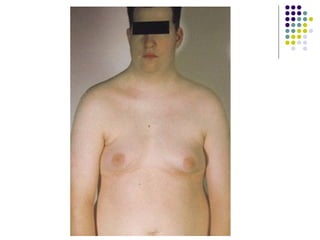
    Klinefelter’s syndrome Firstdescribed by Harry Klinefelter 1942 1:500 men affected Extra X chromosome causes primary hypogonadism with testosterone deficiency Clinically Reduced testicular volume Tall eunachoid stature Reduced body hair Gynaecomastia Intellectual dysfunction in 40% 20 time increased risk of carcinoma of breast
  • 19.
    Investigations Low testosteroneElevated LH/FSH Azospermia Diagnosed on karyotyping 47XXY or 46XY/47XXY mosaic
  • 20.
    Management Counselling Klinefelter’sSyndrome Association UK http://www.ksa-uk.co.uk Androgen replacement therapy
  • 21.
    Noonan Syndrome Autosomaldominant disorder (variable penetrance) Normal karyotyptype Phenotype that of Turners syndrome Low set ears Right sided congenital heart defects (left-sided in Turners) Epicanthic folds Short stature Webbed neck Cryptorchism (50% of males) Primary hypogonadism Can affect either sex
  • 22.
    XX males 1in 10,000 births These patients have a translocation of part of the Y chromosome with the X chromosome Phenotype is similar to Klinefelters May al so have short stature and hypospadias
  • 23.
    Hypogonadism in theaging male Increasing interest in this area What is the evidence for Decline in androgen production? Clinical manifestations of androgen deficiency? Accuracy of testing? Clinical benefit of androgen replacement?
  • 24.
    Male androgens overtime 60-70% testosterone bound to SHBG 30-40% testosterone bound to albumin
  • 25.
    How to assesstestosterone Diurnal variation Measure 9am testosterone on 2 occasions Commercially available assays inaccurate at lower end of range Testosterone reduced in – Chronic renal, cardiac, respiratory or hepatic disease. Also reduced in Obesity Pts on thiazides, opiates, psychotropic medications and amiodarone Also need to measure, free testosterone LH and FSH
  • 26.
    In a recentsmall 8-week study 50% (8/16) pts with mean age 69 years were both eugonadal and hypogonadal at some point in the study In a third of men with testosterone <6.9 there are no symptoms of hypogonadism ?due to slow decline ? due to non-specific symptoms 20% men >60 years have serum testosterone below the lower limit of normal for young me Symptoms of hypogonadism are very non-specific Do they all have testosterone deficiency?
  • 27.
    Effects of testosteronereplacement in the aging male
  • 28.
    Effects of testosteronereplacement Increased muscle mass 1-2kg Reduced fat mass 1.5-2.5kg BUT no study has shown improvement in physical function Bone mineral density Improved well-being Improved libido Limited evidence for effect on erectile dysfunction No outcome studies of morbidity or mortality, fracture risk, risk of falls
  • 29.
    Risks of androgenreplacement in the aging male Long term risk of androgen replacement in men may include Cardiovascular disease Prostatic hypertrophy (and carcinoma?) Polycythaemia Dyslipidaemia Sleep apnoea
  • 30.
    When to treat?Those with 2 low 9am testosterone measurements WITH symptoms that could be attributable to androgen deficiency Trial period to monitor effects of treatment No real guidance provided by NICE or Society for Endocrinology
  • 31.
    Testosterone replacement therapyVarious choices Transdermal patches Intrinsa 300mcg/24hrs, patch changed twice weekly (ÂŁ26.91 for 8 patches) Transdermal gel Ie Testim gel 50mg/5g (30 tube pack ÂŁ32) Intramuscular depots Nedido 1g/4ml 10-14 weekly (ÂŁ76) Sustanon 250 2-3 weekly intervals (ÂŁ2.50 per 1ml amp) (Hepatic metabolism when administered orally)
  • 32.
    Monitoring No BESguidelines 2002 AACE Testosterone monitoring Regular prostate examination Regular questions RE symptoms of prostatism PSA 6 monthly for 18 months then yearly Stop testosterone if PSA rises or prostatic symptoms develop FBC/haematocrit
  • 33.
    hCG therapy hCGtherapy hCG binds to Leydig cells LH receptor Given peripubertally in hypogonadotrophic hypogonadism to stimulate puberty Stimulates testosterone production, testicular growth and spermatogenesis 2-3 weekly im injections Also given tio hypo/hypog males wanting to father children
  • 34.
    Human menopausal gonadotrophintherapy Required for those who have developed hypogonadotrophic hypogonadism post-pubertally for spermatogenesis if hCG alone fails
  • 35.
    GnRH therapy Givenas a pulsatile subcutaneous pump to induce puberty and spermatogenesis in hypogonadotrophic hypogonadism
  • 36.
    Summary Differential diagnosisof secondary hypogonadism Difficulties of managing primary hypogonadism in aging male Opiates and obesity as a cause of hypogonadism Need for surveillance of those on androgen replacement therapy
  • 37.
    http://www.endo-society.org/guidelines/final/upload/Androgens_in_Women_CG.pdf http://jcem.endojournals.org/cgi/content/full/86/6/2380 AMERICANASSOCIATION OF CLINICAL ENDOCRINOLOGISTS MEDICAL GUIDELINES FOR CLINICAL PRACTICE FOR THE EVALUATION AND TREATMENT OF HYPOGONADISM IN ADULT MALE PATIENTS—2002 UPDATE http://www.aace.com/pub/pdf/guidelines/hypogonadism.pdf