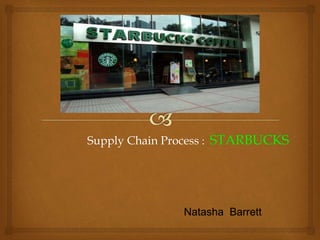
Supply Chain Process : STARBUCKS 
Natasha Barrett
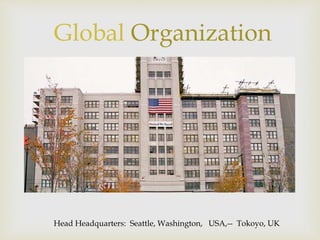
Global Organization 
 
Head Headquarters: Seattle, Washington, USA,-- Tokoyo, UK
About Starbucks 
 
Starbucks is the world’s # 1 specialty coffee retailer. 
It was founded in 1971 by three partners who met as students at the 
University of San Francisco. 
There are 20,891 locations in 62 countries. 
In 2012 the reported net income was $ 1.38 billion US 
Starbuck’s 1st logo :
Philosophy 
 
 Provide a great work environment and treat each other with respect 
and dignity 
 Embrace diversity as an essential component in the way we do 
business 
 Apply the highest standards of excellence to purchasing, roasting and 
fresh delivery of our coffee 
 Develop enthusiastically satisfied customers all the time 
 Contribute positively to our communities and our environment 
 Recognize that profitability is essential to our future success
Supplier Code Of Conduct 
 
 Demonstrating commitment to the welfare, economic 
improvement and sustainability of the people and places that 
produce our products and services 
 Adherence to local laws and international standards regarding 
human rights, workplace safety, and worker compensation and 
treatment 
 Meeting or exceeding national laws and international standards for 
environmental protection, and minimizing negative environmental 
impacts of suppliers’ operations 
 Commitment to measuring, monitoring, reporting and verification 
of compliance to this code 
 Pursuing continuous improvement of these social and 
environmental principles
Ethical Sourcing 
 
 Buy and serve high – quality coffee that grown and ethically traded 
 Farms and mills are evaluated by third party verification organizations 
using a comprehensive scorecard of more than 200 indicators 
 Coffee and farmer Equity (C.A.F.E.) Practices helps to evaluate and 
reward producers of high-quality, socially responsible and sustainably 
grown coffee 
 C.A.F.E. Improves coffee production, conserving and restoring 
natural habitat, and facilitating farmer access to forest carbon markers
Supplier Diversity Program 
 
 Focus on building and prospering communities. 
 Actively seek a diverse business base to do business with. 
 Supplier opportunities goes beyond logistics, distribution and co-packing. 
 Develop and maintain supplier relationship 
To learn more visit: 
www.starbucks.com/responsibilty/diversity/supplier.
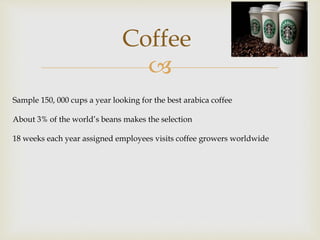
Coffee 
 
Sample 150, 000 cups a year looking for the best arabica coffee 
About 3% of the world’s beans makes the selection 
18 weeks each year assigned employees visits coffee growers worldwide
Starbucks Supply Chain 
 
 Plan 
 Source 
 Make 
 Deliver 
GOAL : REDUCE COST AND IMPROVE EFFICIENCIES.
See The Big Picture 
 
Its imperative to understand the total cost of each operation within the 
supply chain. In addition, to monitor and control all supply chain 
activities. 
 Understand prices of purchase 
 Analysis the breakdown of all ingredients 
 Develop various cost models
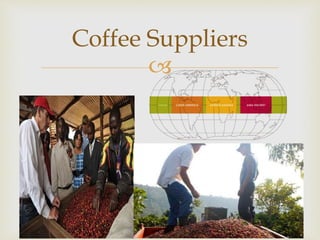
Coffee Suppliers 

Transporting the Beans 
 
Huge quantities of coffee beans are selected and shipped to the various 
distribution centers. 
 9 regional distribution centers 
 48 central distributions 
 6 green coffee warehouses
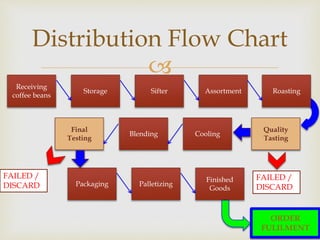
Distribution Flow Chart 
 
Receiving 
coffee beans 
Roasting 
ORDER 
FULILMENT 
Storage Sifter Assortment 
Blending Cooling 
Quality 
Tasting 
Final 
Testing 
FAILED / 
DISCARD 
FAILED / 
Finished 
Goods 
Packaging Palletizing DISCARD
Sustainability is Smart 
Business 
 
 Energy renewable and conservation 
 Building greener stores 
 Recycling and reducing waste
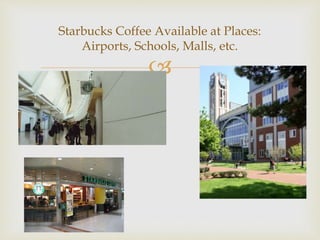
Starbucks Coffee Available at Places: 
Airports, Schools, Malls, etc. 

 
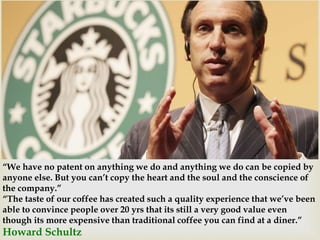
“We have no patent on anything we do and anything we do can be copied by 
anyone else. But you can’t copy the heart and the soul and the conscience of 
the company.” 
“The taste of our coffee has created such a quality experience that we’ve been 
able to convince people over 20 yrs that its still a very good value even 
though its more expensive than traditional coffee you can find at a diner.” 
Howard Schultz
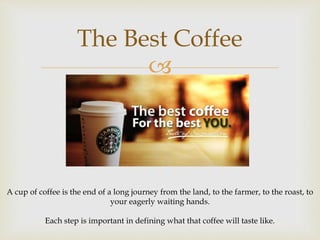
The Best Coffee 
 
A cup of coffee is the end of a long journey from the land, to the farmer, to the roast, to 
your eagerly waiting hands. 
Each step is important in defining what that coffee will taste like.

Starbucks Supply Chain

  • 1.
    Supply Chain Process: STARBUCKS Natasha Barrett
  • 2.
    Global Organization  Head Headquarters: Seattle, Washington, USA,-- Tokoyo, UK
  • 3.
    About Starbucks  Starbucks is the world’s # 1 specialty coffee retailer. It was founded in 1971 by three partners who met as students at the University of San Francisco. There are 20,891 locations in 62 countries. In 2012 the reported net income was $ 1.38 billion US Starbuck’s 1st logo :
  • 4.
    Philosophy  Provide a great work environment and treat each other with respect and dignity  Embrace diversity as an essential component in the way we do business  Apply the highest standards of excellence to purchasing, roasting and fresh delivery of our coffee  Develop enthusiastically satisfied customers all the time  Contribute positively to our communities and our environment  Recognize that profitability is essential to our future success
  • 5.
    Supplier Code OfConduct   Demonstrating commitment to the welfare, economic improvement and sustainability of the people and places that produce our products and services  Adherence to local laws and international standards regarding human rights, workplace safety, and worker compensation and treatment  Meeting or exceeding national laws and international standards for environmental protection, and minimizing negative environmental impacts of suppliers’ operations  Commitment to measuring, monitoring, reporting and verification of compliance to this code  Pursuing continuous improvement of these social and environmental principles
  • 6.
    Ethical Sourcing   Buy and serve high – quality coffee that grown and ethically traded  Farms and mills are evaluated by third party verification organizations using a comprehensive scorecard of more than 200 indicators  Coffee and farmer Equity (C.A.F.E.) Practices helps to evaluate and reward producers of high-quality, socially responsible and sustainably grown coffee  C.A.F.E. Improves coffee production, conserving and restoring natural habitat, and facilitating farmer access to forest carbon markers
  • 7.
    Supplier Diversity Program   Focus on building and prospering communities.  Actively seek a diverse business base to do business with.  Supplier opportunities goes beyond logistics, distribution and co-packing.  Develop and maintain supplier relationship To learn more visit: www.starbucks.com/responsibilty/diversity/supplier.
  • 8.
    Coffee  Sample150, 000 cups a year looking for the best arabica coffee About 3% of the world’s beans makes the selection 18 weeks each year assigned employees visits coffee growers worldwide
  • 9.
    Starbucks Supply Chain   Plan  Source  Make  Deliver GOAL : REDUCE COST AND IMPROVE EFFICIENCIES.
  • 10.
    See The BigPicture  Its imperative to understand the total cost of each operation within the supply chain. In addition, to monitor and control all supply chain activities.  Understand prices of purchase  Analysis the breakdown of all ingredients  Develop various cost models
  • 11.
  • 12.
    Transporting the Beans  Huge quantities of coffee beans are selected and shipped to the various distribution centers.  9 regional distribution centers  48 central distributions  6 green coffee warehouses
  • 13.
    Distribution Flow Chart  Receiving coffee beans Roasting ORDER FULILMENT Storage Sifter Assortment Blending Cooling Quality Tasting Final Testing FAILED / DISCARD FAILED / Finished Goods Packaging Palletizing DISCARD
  • 14.
    Sustainability is Smart Business   Energy renewable and conservation  Building greener stores  Recycling and reducing waste
  • 15.
    Starbucks Coffee Availableat Places: Airports, Schools, Malls, etc. 
  • 16.
     “We haveno patent on anything we do and anything we do can be copied by anyone else. But you can’t copy the heart and the soul and the conscience of the company.” “The taste of our coffee has created such a quality experience that we’ve been able to convince people over 20 yrs that its still a very good value even though its more expensive than traditional coffee you can find at a diner.” Howard Schultz
  • 17.
    The Best Coffee  A cup of coffee is the end of a long journey from the land, to the farmer, to the roast, to your eagerly waiting hands. Each step is important in defining what that coffee will taste like.