INSTRUCTOR:
Min Carter, Ph.D.
GROUP MEMBERS: Nguyen Binh Ly Phuong
Quach Thanh Nguyen Uyen
Le Anh
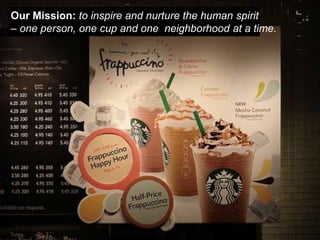
Our Mission: to inspire and nurture the human spirit
– one person, one cup and one neighborhood at a time.
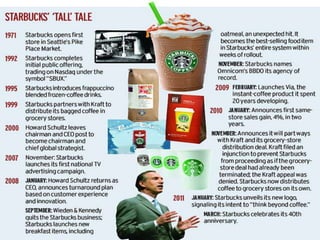
TV ADVERTISING
CAMPAIN
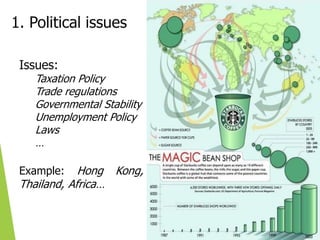
Issues:
Taxation Policy
Trade regulations
Governmental Stability
Unemployment Policy
Laws
…
Example: Hong Kong,
Thailand, Africa…
1. Political issues
2. Economical issues
Inflation rate - 10%
Growth in spending power – Average Income
Rate of people in a pensionable age
Boom
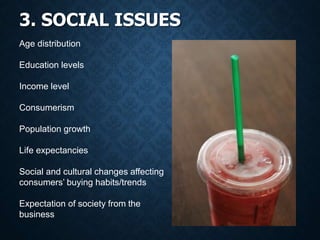
3. SOCIAL ISSUES
Age distribution
Education levels
Income level
Consumerism
Population growth
Life expectancies
Social and cultural changes affecting
consumers’ buying habits/trends
Expectation of society from the
business
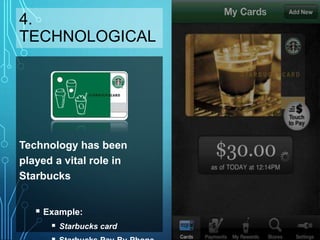
4.
TECHNOLOGICAL
Technology has been
played a vital role in
Starbucks
 Example:
 Starbucks card
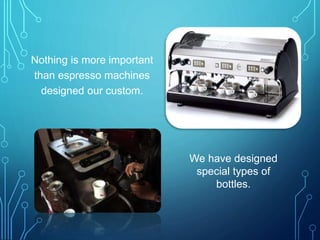
Nothing is more important
than espresso machines
designed our custom.
We have designed
special types of
bottles.
5. Environmental issues
 Recycling: Recycling in Stores, Reusable
cups, Greener Cups. Composting of coffee
ground.
 Energy: reduce energy consumption by
25% by 2010. Purchase renewable
energy equivalent to 50% of the
electricity used by 2010
 Water: continue to include water-saving
technology in our equipment
specifications and going to reduce water
consumption by 25% by 2015
Environmental issues (2)
 Green Building: create a system to
certify retail stores and store
prototypes. Beginning in December
2010, build all new, company-owned
stores to achieve LEED® certification
 Climate Change: implementing a climate
change strategy since 2004, focusing on
renewable energy, energy conservation,
and collaboration and advocacy. ensure
a long-term supply of high-quality
coffee through responsible coffee
purchasing practices and by investing in
farmers and their communities.
Source: Starbucks USA Homepage
 Employment law: working time, age, minimum wage
rate, etc.
 Health and safety regulations
- Ex: Starbucks spend more on health insurance — $300 million
surmount its coffee bill
 Consumer protection:
- Ex: Starbucks pay $225.000 to settle Consumer Protection
case for gift card violations. (Santa Rosa, CA , 2009)
- Ex: Stored-valued card: this is a prepaid card offer by
Starbucks.
6. Legal issues
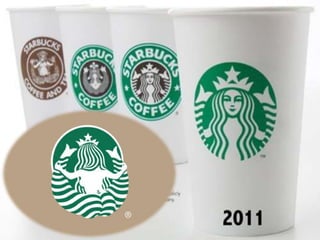
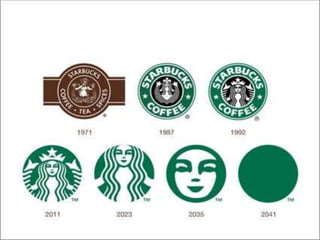
NAME AND LOGO OF STARBUCKS GET
INSPIRATION FROM:
CARTOON NOVEL
COMIC NOTHING
NOVEL
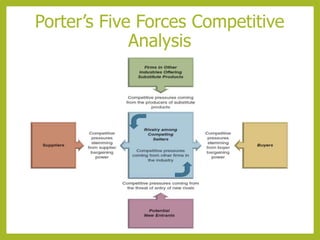
Porter’s Five Forces Competitive
Analysis
Porter’s five forces
competitive analysis
•Suppliers: Moderate
 Starbucks has various options
when choosing their supplier.
 Starbucks decided to change
its suppliers because of the
increasing of price.
 Disaster or issues associated
with coffee producers being
treated unfairly by multinational
companies
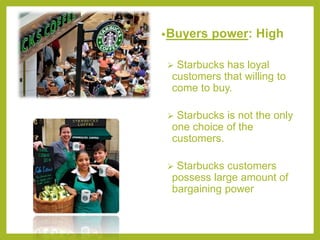
•Buyers power: High
 Starbucks has loyal
customers that willing to
come to buy.
 Starbucks is not the only
one choice of the
customers.
 Starbucks customers
possess large amount of
bargaining power
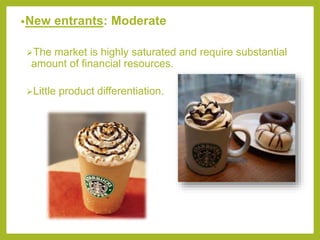
•New entrants: Moderate
The market is highly saturated and require substantial
amount of financial resources.
Little product differentiation.
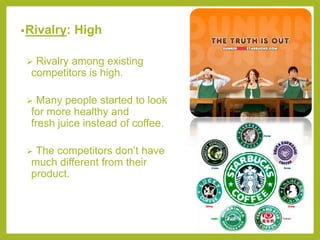
•Rivalry: High
 Rivalry among existing
competitors is high.
 Many people started to look
for more healthy and
fresh juice instead of coffee.
 The competitors don’t have
much different from their
product.
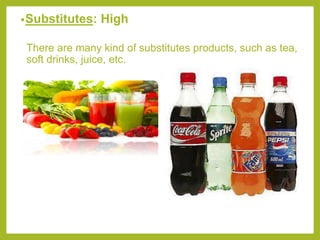
•Substitutes: High
There are many kind of substitutes products, such as tea,
soft drinks, juice, etc.
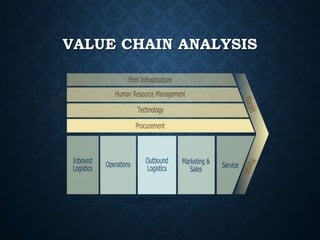
VALUE CHAIN ANALYSIS
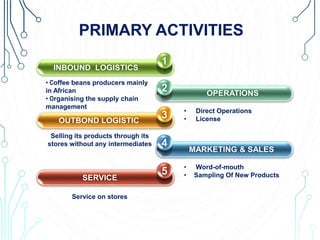
PRIMARY ACTIVITIES
• Coffee beans producers mainly
in African
• Organising the supply chain
management
Selling its products through its
stores without any intermediates
• Direct Operations
• License
• Word-of-mouth
• Sampling Of New Products
INBOUND LOGISTICS
1
OPERATIONS
2
OUTBOND LOGISTIC
3
MARKETING & SALES
4
SERVICE
5
Service on stores
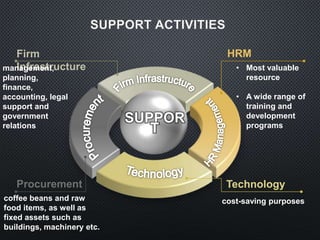
SUPPOR
T
Procurement
coffee beans and raw
food items, as well as
fixed assets such as
buildings, machinery etc.
Firm
Infrastructuremanagement,
planning,
finance,
accounting, legal
support and
government
relations
HRM
• Most valuable
resource
• A wide range of
training and
development
programs
Technology
cost-saving purposes
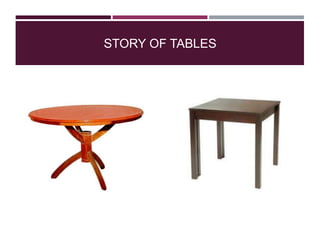
STORY OF TABLES
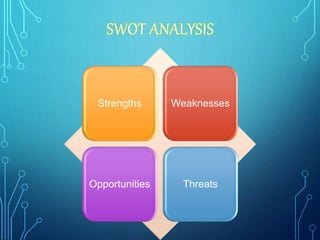
Strengths Weaknesses
Opportunities Threats
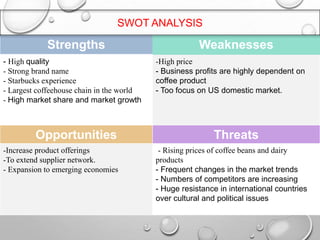
Strengths Weaknesses
- High quality
- Strong brand name
- Starbucks experience
- Largest coffeehouse chain in the world
- High market share and market growth
-High price
- Business profits are highly dependent on
coffee product
- Too focus on US domestic market.
Opportunities Threats
-Increase product offerings
-To extend supplier network.
- Expansion to emerging economies
- Rising prices of coffee beans and dairy
products
- Frequent changes in the market trends
- Numbers of competitors are increasing
- Huge resistance in international countries
over cultural and political issues
SWOT ANALYSIS
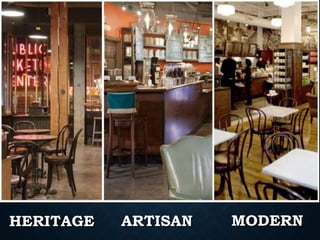
THERE ARE ____ MAIN THEME(S)
TO DECORATED IN STORES ?
1 2
3 4
ARTISAN MODERNHERITAGE
STARBUCKS - STRATEGIC MANAGEMENT

STARBUCKS - STRATEGIC MANAGEMENT

  • 1.
    INSTRUCTOR: Min Carter, Ph.D. GROUPMEMBERS: Nguyen Binh Ly Phuong Quach Thanh Nguyen Uyen Le Anh
  • 3.
    Our Mission: toinspire and nurture the human spirit – one person, one cup and one neighborhood at a time.
  • 5.
  • 7.
    Issues: Taxation Policy Trade regulations GovernmentalStability Unemployment Policy Laws … Example: Hong Kong, Thailand, Africa… 1. Political issues
  • 8.
    2. Economical issues Inflationrate - 10% Growth in spending power – Average Income Rate of people in a pensionable age Boom
  • 9.
    3. SOCIAL ISSUES Agedistribution Education levels Income level Consumerism Population growth Life expectancies Social and cultural changes affecting consumers’ buying habits/trends Expectation of society from the business
  • 12.
    4. TECHNOLOGICAL Technology has been playeda vital role in Starbucks  Example:  Starbucks card
  • 13.
    Nothing is moreimportant than espresso machines designed our custom. We have designed special types of bottles.
  • 14.
    5. Environmental issues Recycling: Recycling in Stores, Reusable cups, Greener Cups. Composting of coffee ground.  Energy: reduce energy consumption by 25% by 2010. Purchase renewable energy equivalent to 50% of the electricity used by 2010  Water: continue to include water-saving technology in our equipment specifications and going to reduce water consumption by 25% by 2015
  • 15.
    Environmental issues (2) Green Building: create a system to certify retail stores and store prototypes. Beginning in December 2010, build all new, company-owned stores to achieve LEED® certification  Climate Change: implementing a climate change strategy since 2004, focusing on renewable energy, energy conservation, and collaboration and advocacy. ensure a long-term supply of high-quality coffee through responsible coffee purchasing practices and by investing in farmers and their communities. Source: Starbucks USA Homepage
  • 16.
     Employment law:working time, age, minimum wage rate, etc.  Health and safety regulations - Ex: Starbucks spend more on health insurance — $300 million surmount its coffee bill  Consumer protection: - Ex: Starbucks pay $225.000 to settle Consumer Protection case for gift card violations. (Santa Rosa, CA , 2009) - Ex: Stored-valued card: this is a prepaid card offer by Starbucks. 6. Legal issues
  • 17.
    NAME AND LOGOOF STARBUCKS GET INSPIRATION FROM: CARTOON NOVEL COMIC NOTHING
  • 18.
  • 19.
    Porter’s Five ForcesCompetitive Analysis
  • 20.
    Porter’s five forces competitiveanalysis •Suppliers: Moderate  Starbucks has various options when choosing their supplier.  Starbucks decided to change its suppliers because of the increasing of price.  Disaster or issues associated with coffee producers being treated unfairly by multinational companies
  • 21.
    •Buyers power: High Starbucks has loyal customers that willing to come to buy.  Starbucks is not the only one choice of the customers.  Starbucks customers possess large amount of bargaining power
  • 22.
    •New entrants: Moderate Themarket is highly saturated and require substantial amount of financial resources. Little product differentiation.
  • 23.
    •Rivalry: High  Rivalryamong existing competitors is high.  Many people started to look for more healthy and fresh juice instead of coffee.  The competitors don’t have much different from their product.
  • 24.
    •Substitutes: High There aremany kind of substitutes products, such as tea, soft drinks, juice, etc.
  • 25.
  • 26.
    PRIMARY ACTIVITIES • Coffeebeans producers mainly in African • Organising the supply chain management Selling its products through its stores without any intermediates • Direct Operations • License • Word-of-mouth • Sampling Of New Products INBOUND LOGISTICS 1 OPERATIONS 2 OUTBOND LOGISTIC 3 MARKETING & SALES 4 SERVICE 5 Service on stores
  • 27.
    SUPPOR T Procurement coffee beans andraw food items, as well as fixed assets such as buildings, machinery etc. Firm Infrastructuremanagement, planning, finance, accounting, legal support and government relations HRM • Most valuable resource • A wide range of training and development programs Technology cost-saving purposes
  • 28.
  • 29.
  • 30.
    Strengths Weaknesses - Highquality - Strong brand name - Starbucks experience - Largest coffeehouse chain in the world - High market share and market growth -High price - Business profits are highly dependent on coffee product - Too focus on US domestic market. Opportunities Threats -Increase product offerings -To extend supplier network. - Expansion to emerging economies - Rising prices of coffee beans and dairy products - Frequent changes in the market trends - Numbers of competitors are increasing - Huge resistance in international countries over cultural and political issues SWOT ANALYSIS
  • 31.
    THERE ARE ____MAIN THEME(S) TO DECORATED IN STORES ? 1 2 3 4
  • 32.