
















THE
STORY……
Starbucks is a
phenomenal success
story. It started life as a
Seattle coffee bean
roaster and retailer in
1971, and now has
more than 20,000
outlets.
BEST
MARKETING
STRATEGIES
Getting personal with
customers
The staff always ask
your name – which they
write on your cup.
A lot of regular
customers actually
loved the fact that the
staff at their local
Starbucks remembered
their names.
Adding value
Starbucks provides
access to free WIFI
allowing customers to
have a coffee, and maybe
a cake, whilst cracking on
with work. That little bit of
extra value beyond the fare
of coffees and cakes keeps
people going back again
and again.
Great word of mouth
Word-of-mouth recommendations
are a cornerstone of Starbucks’
marketing strategy,
particularly when new stores are
launched. The process of building
up a customer base of loyal fans
helps Starbucks spend very little
amount for advertising.
Clusters of coffee shops
A part of Starbucks’ marketing
strategy is to hit a new territory hard
and open a few coffee shops there –
often in very relatively close proximity
to one another.
This is very clever, because it creates
the impression in consumers’ minds
that “they’re everywhere”.
Great offers
The offers are usually focused
around new products and done in
a very engaging but understated
way, which often makes a
customer feel like they’re in on
something that not everyone else
knows about.
Social Media
One of the earliest adopters of
the use of social media for
marketing and social
commerce, Starbucks has
certainly taken a leadership
position. Their social media
strategy is built around their
company web site and 6
additional social platforms,
including Twitter, Facebook,
Pinterest, YouTube, and My
Starbucks Ideas.
Market segmentation
The company has stayed
with the upper-scale of the
coffee market, competing on
comfort rather than
convenience, which are the
case with its closest
competitors, McDonald’s
and Dunkin Donuts.1
Customer relationships
Instead of solely
focusing efforts on
accumulating new
customers, it cultivates
its current relationships.
This ensures more
fans/followers in the
long run.
Customer engagement
They believe in letting
customer engagement
and conversation
occur as naturally as
possible. They listen
carefully, observe, and
apply new ideas from
what they learn.
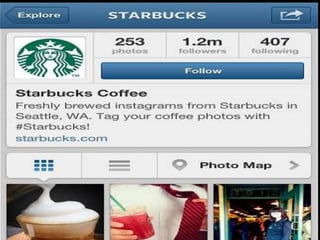
Experience customization
Starbucks provides its unique
experience through programs
such as
My Starbucks Rewards,
personalized “SIGNATURE”
drinks, and localized store
experiences. Their social sites,
in particular Pinterest and
Instagram, encourage users to
share their Starbucks
moments’ whether it be the
return of a favourite holiday
drink or just an artsy coffee
cup shot.
Adaptation and
Innovation
Starbuck’s business
crowdsourcing, via its
My Starbucks Idea
website, has been a huge
success.
Starbucks has clearly
embraced the digital
realm.
Starbucks reflects a mission
Its mission is “to inspire and
nurture the human spirit, one
person, one cup, and one
neighbourhood at a time.”
Starbucks case study

Starbucks case study

  • 3.
  • 4.
    Starbucks is a phenomenalsuccess story. It started life as a Seattle coffee bean roaster and retailer in 1971, and now has more than 20,000 outlets.
  • 5.
  • 6.
    Getting personal with customers Thestaff always ask your name – which they write on your cup. A lot of regular customers actually loved the fact that the staff at their local Starbucks remembered their names.
  • 8.
    Adding value Starbucks provides accessto free WIFI allowing customers to have a coffee, and maybe a cake, whilst cracking on with work. That little bit of extra value beyond the fare of coffees and cakes keeps people going back again and again.
  • 9.
    Great word ofmouth Word-of-mouth recommendations are a cornerstone of Starbucks’ marketing strategy, particularly when new stores are launched. The process of building up a customer base of loyal fans helps Starbucks spend very little amount for advertising.
  • 11.
    Clusters of coffeeshops A part of Starbucks’ marketing strategy is to hit a new territory hard and open a few coffee shops there – often in very relatively close proximity to one another. This is very clever, because it creates the impression in consumers’ minds that “they’re everywhere”.
  • 13.
    Great offers The offersare usually focused around new products and done in a very engaging but understated way, which often makes a customer feel like they’re in on something that not everyone else knows about.
  • 18.
    Social Media One ofthe earliest adopters of the use of social media for marketing and social commerce, Starbucks has certainly taken a leadership position. Their social media strategy is built around their company web site and 6 additional social platforms, including Twitter, Facebook, Pinterest, YouTube, and My Starbucks Ideas.
  • 20.
    Market segmentation The companyhas stayed with the upper-scale of the coffee market, competing on comfort rather than convenience, which are the case with its closest competitors, McDonald’s and Dunkin Donuts.1
  • 23.
    Customer relationships Instead ofsolely focusing efforts on accumulating new customers, it cultivates its current relationships. This ensures more fans/followers in the long run.
  • 25.
    Customer engagement They believein letting customer engagement and conversation occur as naturally as possible. They listen carefully, observe, and apply new ideas from what they learn.
  • 27.
    Experience customization Starbucks providesits unique experience through programs such as My Starbucks Rewards, personalized “SIGNATURE” drinks, and localized store experiences. Their social sites, in particular Pinterest and Instagram, encourage users to share their Starbucks moments’ whether it be the return of a favourite holiday drink or just an artsy coffee cup shot.
  • 30.
    Adaptation and Innovation Starbuck’s business crowdsourcing,via its My Starbucks Idea website, has been a huge success. Starbucks has clearly embraced the digital realm.
  • 32.
    Starbucks reflects amission Its mission is “to inspire and nurture the human spirit, one person, one cup, and one neighbourhood at a time.”