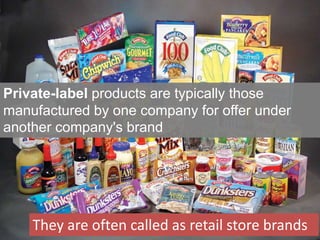




































Private-label products are typically those
manufactured by one company for offer under
another company's brand
They are often called as retail store brands
India represents the least-developed retail
market in Southeast Asia
Modern trade penetration is 5%, compared to
more than 50% for most Southeast Asian
markets
But
India is one of the most successful private-label markets
in the region
Private label grew 27% between 2012 and 2014
What’s driving this growth?
New generation of shoppers is less brand-loyal and
more open to trying new products.
Private label caters to a segment that wants to
participate in the modern trade experience but is
not as brand savvy
Shoppers are looking to trim their shopping bills
and find greater value for money,
This is a key reason why private label can be
successful in India.
And while private label has gained traction
and will continue to grow, what should
brand managers do??
7 golden tips for national
brand managers
Invest in brand equities
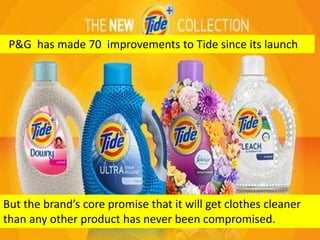
But the brand’s core promise that it will get clothes cleaner
than any other product has never been compromised.
P&G has made 70 improvements to Tide since its launch
Innovate
.
wisely
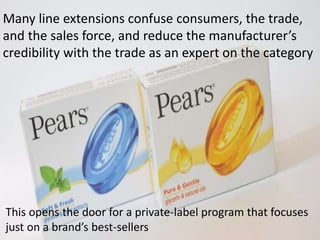
Many line extensions confuse consumers, the trade,
and the sales force, and reduce the manufacturer’s
credibility with the trade as an expert on the category
This opens the door for a private-label program that focuses
just on a brand’s best-sellers
Oreo came up with a line extension of orange
Oreo marketed it through constant advertising
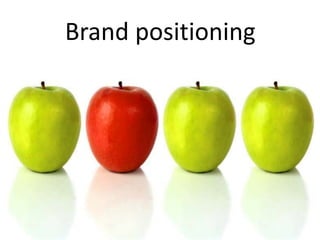
Brand positioning
It is very difficult to change the image of a brand as
human mind is not ready to accept the change in the
views they have already formed about particular thing
and then form a new image so quickly, but this is where
the role of the successful and intellectual marketers
comes
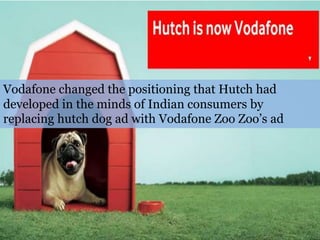
Vodafone changed the positioning that Hutch had
developed in the minds of Indian consumers by
replacing hutch dog ad with Vodafone Zoo Zoo’s ad
Even most trusted brand of India TATA’s had to
undergo a makeover to appeal to the younger
and more knowledgeable generation
Use fighting brands sparingly
Fighting brands must be price positioned between
private labels and the national brands they aim to
defend
Build trade relationships
Manufacturers must leverage their knowledge
to create a win-win proposition for their trade
accounts
Loan retailers an accountant to educate them about
private-label profitability
Explain that the shopper who buys a national
brand rather than the private label in the same
category spends more per supermarket visit
National-brand manufacturers can suggest and pay
for tests that compare the sales and profitability of a
store’s current shelf-space allocation plan
Manage the price spread
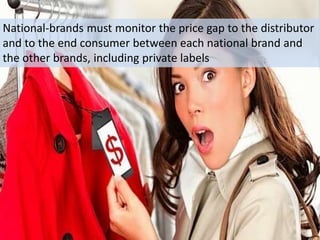
National-brands must monitor the price gap to the distributor
and to the end consumer between each national brand and
the other brands, including private labels
Exploit sales-promotion tactics.
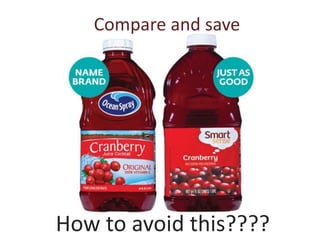
Compare and save
How to avoid this????
Brands must reward
retailers for
increasing sales
volume
Distribute coupons to households in areas
where retailers are aggressively providing
private-label products
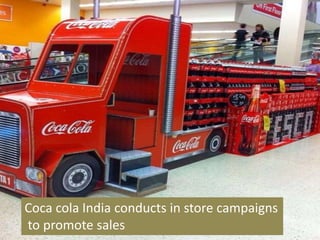
Coca cola India conducts in store campaigns
to promote sales
.
Manage each category
Low private-label penetration categories
such as candy and baby food
Managers must understand and sustain the barriers
to entry—such as frequent technological
improvements within a category, intense competition
among national brands
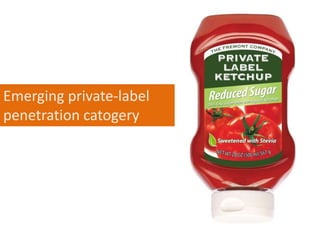
Emerging private-label
penetration catogery
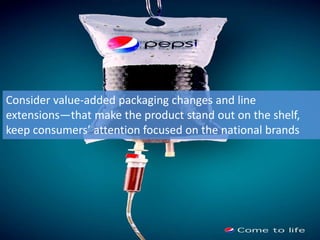
Consider value-added packaging changes and line
extensions—that make the product stand out on the shelf,
keep consumers’ attention focused on the national brands
Well-established private-label penetration
. The emphasis must be on lowering the costs in the
supply chain—through minimum orders, direct
shipment discounts and more efficient trade deals ;
save money for reinvestment in the brand
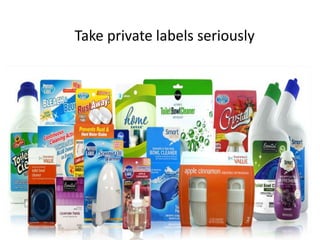
Take private labels seriously
Every national-brand marketing plan should
include a section on how to limit the
encroachment of private labels.
National-brands should bring legal actions
against copycat private labelers who use the
same packaging shapes and colors as the
national brands
India is the world's biggest market for
biscuits with a market share of 22 per cent
in volumes
But the competition is
very high from national
brands and private
labels
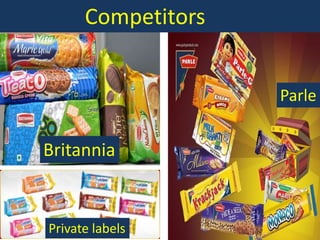
Competitors
Britannia
Parle
Private labels
The way to target Indian consumer's
stomach is through competitive pricing,
high volumes and strong distribution,
especially in rural areas.
The focus was to target the top 10 million households
which account for 70 per cent of cream biscuit
consumption
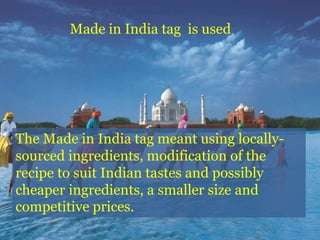
The Made in India tag meant using locally-
sourced ingredients, modification of the
recipe to suit Indian tastes and possibly
cheaper ingredients, a smaller size and
competitive prices.
Made in India tag is used
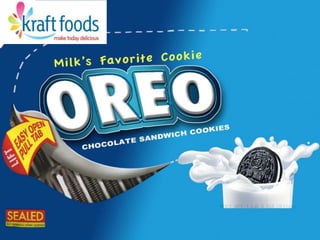
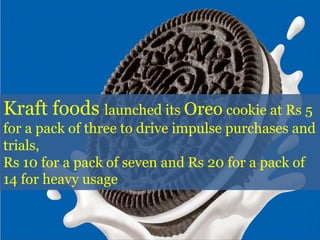
Kraft foods launched its Oreo cookie at Rs 5
for a pack of three to drive impulse purchases and
trials,
Rs 10 for a pack of seven and Rs 20 for a pack of
14 for heavy usage
Oreo has very careful marketed its line extensions by
constant advertising
The company focused on using the togetherness
concept to sell Oreos in India, with television forming
the main medium of communication although other
media are also being tapped
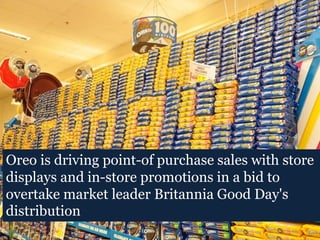
Oreo is driving point-of purchase sales with store
displays and in-store promotions in a bid to
overtake market leader Britannia Good Day's
distribution
Now Oreo India is growing into an Rs
500 crore brand with a market share of
35 percent.
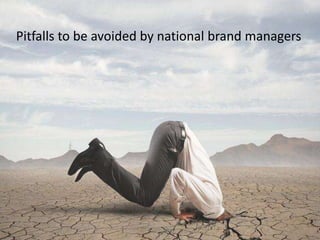
Pitfalls to be avoided by national brand managers
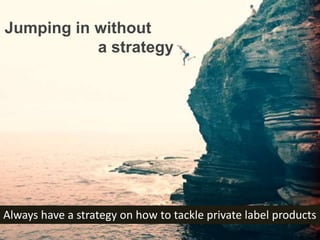
Jumping in without
a strategy
Always have a strategy on how to tackle private label products
DO not have an aggressive strategy against
private label products
Do not expect immediate results for any strategy
Concentrate on quantity and not quality
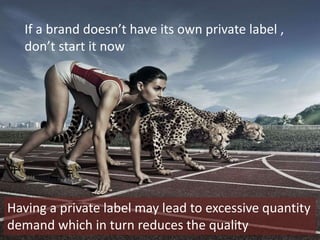
If a brand doesn’t have its own private label ,
don’t start it now
Having a private label may lead to excessive quantity
demand which in turn reduces the quality
Make sure that line extensions doesn’t lack originality
This mistakes by national brand managers can show
a way for private label managers to find the success
Success story of a private label
It is a shirt brand which has grown from
private label to private brand
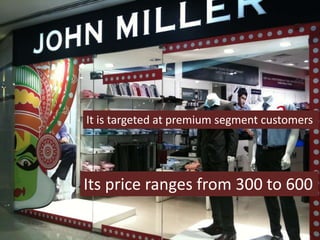
It is targeted at premium segment customers
Its price ranges from 300 to 600
But john miller’s low price ,high quality and
constant innovation gives it a good market
share in India
Competition from Peter England
and john players is very high
"These slides were created by by Sai Kiran Nagabhyru as part
of an internship done under the guidance of Prof. Sameer
Mathur (www.IIMInternship.com)"
-Sai Kiran Nagabhyru

Brands vs Private labels

  • 2.
    Private-label products aretypically those manufactured by one company for offer under another company's brand They are often called as retail store brands
  • 3.
    India represents theleast-developed retail market in Southeast Asia Modern trade penetration is 5%, compared to more than 50% for most Southeast Asian markets
  • 4.
  • 5.
    India is oneof the most successful private-label markets in the region Private label grew 27% between 2012 and 2014
  • 6.
  • 7.
    New generation ofshoppers is less brand-loyal and more open to trying new products.
  • 8.
    Private label catersto a segment that wants to participate in the modern trade experience but is not as brand savvy Shoppers are looking to trim their shopping bills and find greater value for money,
  • 9.
    This is akey reason why private label can be successful in India.
  • 10.
    And while privatelabel has gained traction and will continue to grow, what should brand managers do??
  • 11.
    7 golden tipsfor national brand managers
  • 13.
  • 14.
    But the brand’score promise that it will get clothes cleaner than any other product has never been compromised. P&G has made 70 improvements to Tide since its launch
  • 16.
  • 17.
    Many line extensionsconfuse consumers, the trade, and the sales force, and reduce the manufacturer’s credibility with the trade as an expert on the category This opens the door for a private-label program that focuses just on a brand’s best-sellers
  • 18.
    Oreo came upwith a line extension of orange Oreo marketed it through constant advertising
  • 20.
  • 21.
    It is verydifficult to change the image of a brand as human mind is not ready to accept the change in the views they have already formed about particular thing and then form a new image so quickly, but this is where the role of the successful and intellectual marketers comes
  • 22.
    Vodafone changed thepositioning that Hutch had developed in the minds of Indian consumers by replacing hutch dog ad with Vodafone Zoo Zoo’s ad
  • 23.
    Even most trustedbrand of India TATA’s had to undergo a makeover to appeal to the younger and more knowledgeable generation
  • 24.
  • 25.
    Fighting brands mustbe price positioned between private labels and the national brands they aim to defend
  • 27.
  • 28.
    Manufacturers must leveragetheir knowledge to create a win-win proposition for their trade accounts
  • 30.
    Loan retailers anaccountant to educate them about private-label profitability
  • 31.
    Explain that theshopper who buys a national brand rather than the private label in the same category spends more per supermarket visit
  • 32.
    National-brand manufacturers cansuggest and pay for tests that compare the sales and profitability of a store’s current shelf-space allocation plan
  • 34.
  • 35.
    National-brands must monitorthe price gap to the distributor and to the end consumer between each national brand and the other brands, including private labels
  • 37.
  • 38.
    Compare and save Howto avoid this????
  • 39.
    Brands must reward retailersfor increasing sales volume Distribute coupons to households in areas where retailers are aggressively providing private-label products
  • 40.
    Coca cola Indiaconducts in store campaigns to promote sales
  • 42.
  • 43.
    Low private-label penetrationcategories such as candy and baby food
  • 44.
    Managers must understandand sustain the barriers to entry—such as frequent technological improvements within a category, intense competition among national brands
  • 45.
  • 46.
    Consider value-added packagingchanges and line extensions—that make the product stand out on the shelf, keep consumers’ attention focused on the national brands
  • 47.
  • 48.
    . The emphasismust be on lowering the costs in the supply chain—through minimum orders, direct shipment discounts and more efficient trade deals ; save money for reinvestment in the brand
  • 50.
  • 51.
    Every national-brand marketingplan should include a section on how to limit the encroachment of private labels.
  • 52.
    National-brands should bringlegal actions against copycat private labelers who use the same packaging shapes and colors as the national brands
  • 55.
    India is theworld's biggest market for biscuits with a market share of 22 per cent in volumes
  • 56.
    But the competitionis very high from national brands and private labels
  • 57.
  • 58.
    The way totarget Indian consumer's stomach is through competitive pricing, high volumes and strong distribution, especially in rural areas.
  • 59.
    The focus wasto target the top 10 million households which account for 70 per cent of cream biscuit consumption
  • 60.
    The Made inIndia tag meant using locally- sourced ingredients, modification of the recipe to suit Indian tastes and possibly cheaper ingredients, a smaller size and competitive prices. Made in India tag is used
  • 61.
    Kraft foods launchedits Oreo cookie at Rs 5 for a pack of three to drive impulse purchases and trials, Rs 10 for a pack of seven and Rs 20 for a pack of 14 for heavy usage
  • 62.
    Oreo has verycareful marketed its line extensions by constant advertising
  • 63.
    The company focusedon using the togetherness concept to sell Oreos in India, with television forming the main medium of communication although other media are also being tapped
  • 64.
    Oreo is drivingpoint-of purchase sales with store displays and in-store promotions in a bid to overtake market leader Britannia Good Day's distribution
  • 65.
    Now Oreo Indiais growing into an Rs 500 crore brand with a market share of 35 percent.
  • 66.
    Pitfalls to beavoided by national brand managers
  • 67.
    Jumping in without astrategy Always have a strategy on how to tackle private label products
  • 68.
    DO not havean aggressive strategy against private label products Do not expect immediate results for any strategy
  • 69.
    Concentrate on quantityand not quality
  • 70.
    If a branddoesn’t have its own private label , don’t start it now Having a private label may lead to excessive quantity demand which in turn reduces the quality
  • 71.
    Make sure thatline extensions doesn’t lack originality
  • 72.
    This mistakes bynational brand managers can show a way for private label managers to find the success
  • 73.
    Success story ofa private label
  • 74.
    It is ashirt brand which has grown from private label to private brand
  • 75.
    It is targetedat premium segment customers Its price ranges from 300 to 600
  • 76.
    But john miller’slow price ,high quality and constant innovation gives it a good market share in India Competition from Peter England and john players is very high
  • 78.
    "These slides werecreated by by Sai Kiran Nagabhyru as part of an internship done under the guidance of Prof. Sameer Mathur (www.IIMInternship.com)" -Sai Kiran Nagabhyru