• Standard costing – Definition
• Variance Analysis
• Material variances with verification
• Labour Variances with verification
STANDARD COSTING
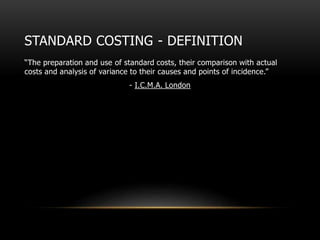
STANDARD COSTING - DEFINITION
“The preparation and use of standard costs, their comparison with actual
costs and analysis of variance to their causes and points of incidence.”
- I.C.M.A. London
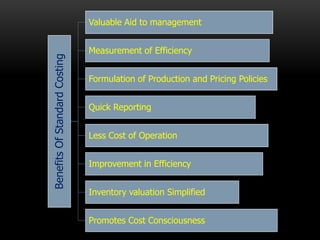
BenefitsOfStandardCosting
Valuable Aid to management
Measurement of Efficiency
Formulation of Production and Pricing Policies
Quick Reporting
Less Cost of Operation
Improvement in Efficiency
Inventory valuation Simplified
Promotes Cost Consciousness
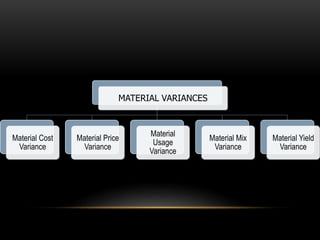
MATERIAL VARIANCES
Material Cost
Variance
Material Price
Variance
Material
Usage
Variance
Material Mix
Variance
Material Yield
Variance
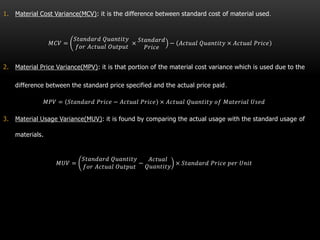
1. Material Cost Variance(MCV): it is the difference between standard cost of material used.
𝑀𝐶𝑉 =
𝑆𝑡𝑎𝑛𝑑𝑎𝑟𝑑 𝑄𝑢𝑎𝑛𝑡𝑖𝑡𝑦
𝑓𝑜𝑟 𝐴𝑐𝑡𝑢𝑎𝑙 𝑂𝑢𝑡𝑝𝑢𝑡
×
𝑆𝑡𝑎𝑛𝑑𝑎𝑟𝑑
𝑃𝑟𝑖𝑐𝑒
− 𝐴𝑐𝑡𝑢𝑎𝑙 𝑄𝑢𝑎𝑛𝑡𝑖𝑡𝑦 × 𝐴𝑐𝑡𝑢𝑎𝑙 𝑃𝑟𝑖𝑐𝑒
2. Material Price Variance(MPV): it is that portion of the material cost variance which is used due to the
difference between the standard price specified and the actual price paid.
𝑀𝑃𝑉 = 𝑆𝑡𝑎𝑛𝑑𝑎𝑟𝑑 𝑃𝑟𝑖𝑐𝑒 − 𝐴𝑐𝑡𝑢𝑎𝑙 𝑃𝑟𝑖𝑐𝑒 × 𝐴𝑐𝑡𝑢𝑎𝑙 𝑄𝑢𝑎𝑛𝑡𝑖𝑡𝑦 𝑜𝑓 𝑀𝑎𝑡𝑒𝑟𝑖𝑎𝑙 𝑈𝑠𝑒𝑑
3. Material Usage Variance(MUV): it is found by comparing the actual usage with the standard usage of
materials.
𝑀𝑈𝑉 =
𝑆𝑡𝑎𝑛𝑑𝑎𝑟𝑑 𝑄𝑢𝑎𝑛𝑡𝑖𝑡𝑦
𝑓𝑜𝑟 𝐴𝑐𝑡𝑢𝑎𝑙 𝑂𝑢𝑡𝑝𝑢𝑡
−
𝐴𝑐𝑡𝑢𝑎𝑙
𝑄𝑢𝑎𝑛𝑡𝑖𝑡𝑦
× 𝑆𝑡𝑎𝑛𝑑𝑎𝑟𝑑 𝑃𝑟𝑖𝑐𝑒 𝑝𝑒𝑟 𝑈𝑛𝑖𝑡
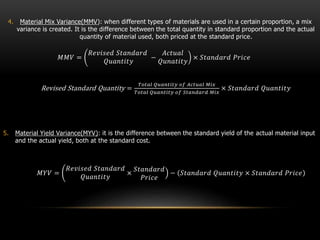
4. Material Mix Variance(MMV): when different types of materials are used in a certain proportion, a mix
variance is created. It is the difference between the total quantity in standard proportion and the actual
quantity of material used, both priced at the standard price.
𝑀𝑀𝑉 =
𝑅𝑒𝑣𝑖𝑠𝑒𝑑 𝑆𝑡𝑎𝑛𝑑𝑎𝑟𝑑
𝑄𝑢𝑎𝑛𝑡𝑖𝑡𝑦
−
𝐴𝑐𝑡𝑢𝑎𝑙
𝑄𝑢𝑛𝑎𝑡𝑖𝑡𝑦
× 𝑆𝑡𝑎𝑛𝑑𝑎𝑟𝑑 𝑃𝑟𝑖𝑐𝑒
Revised Standard Quantity =
𝑇𝑜𝑡𝑎𝑙 𝑄𝑢𝑎𝑛𝑡𝑖𝑡𝑦 𝑜𝑓 𝐴𝑐𝑡𝑢𝑎𝑙 𝑀𝑖𝑥
𝑇𝑜𝑡𝑎𝑙 𝑄𝑢𝑎𝑛𝑡𝑖𝑡𝑦 𝑜𝑓 𝑆𝑡𝑎𝑛𝑑𝑎𝑟𝑑 𝑀𝑖𝑥
× 𝑆𝑡𝑎𝑛𝑑𝑎𝑟𝑑 𝑄𝑢𝑎𝑛𝑡𝑖𝑡𝑦
5. Material Yield Variance(MYV): it is the difference between the standard yield of the actual material input
and the actual yield, both at the standard cost.
𝑀𝑌𝑉 =
𝑅𝑒𝑣𝑖𝑠𝑒𝑑 𝑆𝑡𝑎𝑛𝑑𝑎𝑟𝑑
𝑄𝑢𝑎𝑛𝑡𝑖𝑡𝑦
×
𝑆𝑡𝑎𝑛𝑑𝑎𝑟𝑑
𝑃𝑟𝑖𝑐𝑒
− 𝑆𝑡𝑎𝑛𝑑𝑎𝑟𝑑 𝑄𝑢𝑎𝑛𝑡𝑖𝑡𝑦 × 𝑆𝑡𝑎𝑛𝑑𝑎𝑟𝑑 𝑃𝑟𝑖𝑐𝑒
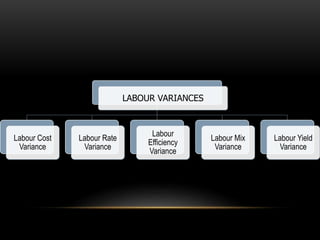
LABOUR VARIANCES
Labour Cost
Variance
Labour Rate
Variance
Labour
Efficiency
Variance
Labour Mix
Variance
Labour Yield
Variance
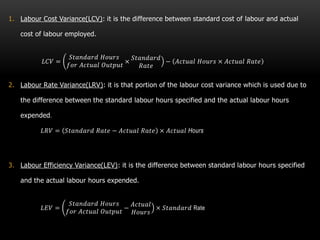
1. Labour Cost Variance(LCV): it is the difference between standard cost of labour and actual
cost of labour employed.
𝐿𝐶𝑉 =
𝑆𝑡𝑎𝑛𝑑𝑎𝑟𝑑 𝐻𝑜𝑢𝑟𝑠
𝑓𝑜𝑟 𝐴𝑐𝑡𝑢𝑎𝑙 𝑂𝑢𝑡𝑝𝑢𝑡
×
𝑆𝑡𝑎𝑛𝑑𝑎𝑟𝑑
𝑅𝑎𝑡𝑒
− 𝐴𝑐𝑡𝑢𝑎𝑙 𝐻𝑜𝑢𝑟𝑠 × 𝐴𝑐𝑡𝑢𝑎𝑙 𝑅𝑎𝑡𝑒
2. Labour Rate Variance(LRV): it is that portion of the labour cost variance which is used due to
the difference between the standard labour hours specified and the actual labour hours
expended.
𝐿𝑅𝑉 = 𝑆𝑡𝑎𝑛𝑑𝑎𝑟𝑑 𝑅𝑎𝑡𝑒 − 𝐴𝑐𝑡𝑢𝑎𝑙 𝑅𝑎𝑡𝑒 × 𝐴𝑐𝑡𝑢𝑎𝑙 Hours
3. Labour Efficiency Variance(LEV): it is the difference between standard labour hours specified
and the actual labour hours expended.
𝐿𝐸𝑉 =
𝑆𝑡𝑎𝑛𝑑𝑎𝑟𝑑 𝐻𝑜𝑢𝑟𝑠
𝑓𝑜𝑟 𝐴𝑐𝑡𝑢𝑎𝑙 𝑂𝑢𝑡𝑝𝑢𝑡
−
𝐴𝑐𝑡𝑢𝑎𝑙
𝐻𝑜𝑢𝑟𝑠
× 𝑆𝑡𝑎𝑛𝑑𝑎𝑟𝑑 Rate
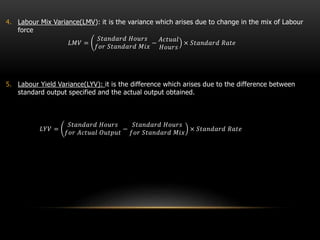
4. Labour Mix Variance(LMV): it is the variance which arises due to change in the mix of Labour
force
𝐿𝑀𝑉 =
𝑆𝑡𝑎𝑛𝑑𝑎𝑟𝑑 𝐻𝑜𝑢𝑟𝑠
𝑓𝑜𝑟 𝑆𝑡𝑎𝑛𝑑𝑎𝑟𝑑 𝑀𝑖𝑥
−
𝐴𝑐𝑡𝑢𝑎𝑙
𝐻𝑜𝑢𝑟𝑠
× 𝑆𝑡𝑎𝑛𝑑𝑎𝑟𝑑 𝑅𝑎𝑡𝑒
5. Labour Yield Variance(LYV): it is the difference which arises due to the difference between
standard output specified and the actual output obtained.
𝐿𝑌𝑉 =
𝑆𝑡𝑎𝑛𝑑𝑎𝑟𝑑 𝐻𝑜𝑢𝑟𝑠
𝑓𝑜𝑟 𝐴𝑐𝑡𝑢𝑎𝑙 𝑂𝑢𝑡𝑝𝑢𝑡
−
𝑆𝑡𝑎𝑛𝑑𝑎𝑟𝑑 𝐻𝑜𝑢𝑟𝑠
𝑓𝑜𝑟 𝑆𝑡𝑎𝑛𝑑𝑎𝑟𝑑 𝑀𝑖𝑥
× 𝑆𝑡𝑎𝑛𝑑𝑎𝑟𝑑 𝑅𝑎𝑡𝑒
Standard Costing

Standard Costing

  • 1.
    • Standard costing– Definition • Variance Analysis • Material variances with verification • Labour Variances with verification STANDARD COSTING
  • 2.
    STANDARD COSTING -DEFINITION “The preparation and use of standard costs, their comparison with actual costs and analysis of variance to their causes and points of incidence.” - I.C.M.A. London
  • 3.
    BenefitsOfStandardCosting Valuable Aid tomanagement Measurement of Efficiency Formulation of Production and Pricing Policies Quick Reporting Less Cost of Operation Improvement in Efficiency Inventory valuation Simplified Promotes Cost Consciousness
  • 4.
    MATERIAL VARIANCES Material Cost Variance MaterialPrice Variance Material Usage Variance Material Mix Variance Material Yield Variance
  • 5.
    1. Material CostVariance(MCV): it is the difference between standard cost of material used. 𝑀𝐶𝑉 = 𝑆𝑡𝑎𝑛𝑑𝑎𝑟𝑑 𝑄𝑢𝑎𝑛𝑡𝑖𝑡𝑦 𝑓𝑜𝑟 𝐴𝑐𝑡𝑢𝑎𝑙 𝑂𝑢𝑡𝑝𝑢𝑡 × 𝑆𝑡𝑎𝑛𝑑𝑎𝑟𝑑 𝑃𝑟𝑖𝑐𝑒 − 𝐴𝑐𝑡𝑢𝑎𝑙 𝑄𝑢𝑎𝑛𝑡𝑖𝑡𝑦 × 𝐴𝑐𝑡𝑢𝑎𝑙 𝑃𝑟𝑖𝑐𝑒 2. Material Price Variance(MPV): it is that portion of the material cost variance which is used due to the difference between the standard price specified and the actual price paid. 𝑀𝑃𝑉 = 𝑆𝑡𝑎𝑛𝑑𝑎𝑟𝑑 𝑃𝑟𝑖𝑐𝑒 − 𝐴𝑐𝑡𝑢𝑎𝑙 𝑃𝑟𝑖𝑐𝑒 × 𝐴𝑐𝑡𝑢𝑎𝑙 𝑄𝑢𝑎𝑛𝑡𝑖𝑡𝑦 𝑜𝑓 𝑀𝑎𝑡𝑒𝑟𝑖𝑎𝑙 𝑈𝑠𝑒𝑑 3. Material Usage Variance(MUV): it is found by comparing the actual usage with the standard usage of materials. 𝑀𝑈𝑉 = 𝑆𝑡𝑎𝑛𝑑𝑎𝑟𝑑 𝑄𝑢𝑎𝑛𝑡𝑖𝑡𝑦 𝑓𝑜𝑟 𝐴𝑐𝑡𝑢𝑎𝑙 𝑂𝑢𝑡𝑝𝑢𝑡 − 𝐴𝑐𝑡𝑢𝑎𝑙 𝑄𝑢𝑎𝑛𝑡𝑖𝑡𝑦 × 𝑆𝑡𝑎𝑛𝑑𝑎𝑟𝑑 𝑃𝑟𝑖𝑐𝑒 𝑝𝑒𝑟 𝑈𝑛𝑖𝑡
  • 6.
    4. Material MixVariance(MMV): when different types of materials are used in a certain proportion, a mix variance is created. It is the difference between the total quantity in standard proportion and the actual quantity of material used, both priced at the standard price. 𝑀𝑀𝑉 = 𝑅𝑒𝑣𝑖𝑠𝑒𝑑 𝑆𝑡𝑎𝑛𝑑𝑎𝑟𝑑 𝑄𝑢𝑎𝑛𝑡𝑖𝑡𝑦 − 𝐴𝑐𝑡𝑢𝑎𝑙 𝑄𝑢𝑛𝑎𝑡𝑖𝑡𝑦 × 𝑆𝑡𝑎𝑛𝑑𝑎𝑟𝑑 𝑃𝑟𝑖𝑐𝑒 Revised Standard Quantity = 𝑇𝑜𝑡𝑎𝑙 𝑄𝑢𝑎𝑛𝑡𝑖𝑡𝑦 𝑜𝑓 𝐴𝑐𝑡𝑢𝑎𝑙 𝑀𝑖𝑥 𝑇𝑜𝑡𝑎𝑙 𝑄𝑢𝑎𝑛𝑡𝑖𝑡𝑦 𝑜𝑓 𝑆𝑡𝑎𝑛𝑑𝑎𝑟𝑑 𝑀𝑖𝑥 × 𝑆𝑡𝑎𝑛𝑑𝑎𝑟𝑑 𝑄𝑢𝑎𝑛𝑡𝑖𝑡𝑦 5. Material Yield Variance(MYV): it is the difference between the standard yield of the actual material input and the actual yield, both at the standard cost. 𝑀𝑌𝑉 = 𝑅𝑒𝑣𝑖𝑠𝑒𝑑 𝑆𝑡𝑎𝑛𝑑𝑎𝑟𝑑 𝑄𝑢𝑎𝑛𝑡𝑖𝑡𝑦 × 𝑆𝑡𝑎𝑛𝑑𝑎𝑟𝑑 𝑃𝑟𝑖𝑐𝑒 − 𝑆𝑡𝑎𝑛𝑑𝑎𝑟𝑑 𝑄𝑢𝑎𝑛𝑡𝑖𝑡𝑦 × 𝑆𝑡𝑎𝑛𝑑𝑎𝑟𝑑 𝑃𝑟𝑖𝑐𝑒
  • 7.
    LABOUR VARIANCES Labour Cost Variance LabourRate Variance Labour Efficiency Variance Labour Mix Variance Labour Yield Variance
  • 8.
    1. Labour CostVariance(LCV): it is the difference between standard cost of labour and actual cost of labour employed. 𝐿𝐶𝑉 = 𝑆𝑡𝑎𝑛𝑑𝑎𝑟𝑑 𝐻𝑜𝑢𝑟𝑠 𝑓𝑜𝑟 𝐴𝑐𝑡𝑢𝑎𝑙 𝑂𝑢𝑡𝑝𝑢𝑡 × 𝑆𝑡𝑎𝑛𝑑𝑎𝑟𝑑 𝑅𝑎𝑡𝑒 − 𝐴𝑐𝑡𝑢𝑎𝑙 𝐻𝑜𝑢𝑟𝑠 × 𝐴𝑐𝑡𝑢𝑎𝑙 𝑅𝑎𝑡𝑒 2. Labour Rate Variance(LRV): it is that portion of the labour cost variance which is used due to the difference between the standard labour hours specified and the actual labour hours expended. 𝐿𝑅𝑉 = 𝑆𝑡𝑎𝑛𝑑𝑎𝑟𝑑 𝑅𝑎𝑡𝑒 − 𝐴𝑐𝑡𝑢𝑎𝑙 𝑅𝑎𝑡𝑒 × 𝐴𝑐𝑡𝑢𝑎𝑙 Hours 3. Labour Efficiency Variance(LEV): it is the difference between standard labour hours specified and the actual labour hours expended. 𝐿𝐸𝑉 = 𝑆𝑡𝑎𝑛𝑑𝑎𝑟𝑑 𝐻𝑜𝑢𝑟𝑠 𝑓𝑜𝑟 𝐴𝑐𝑡𝑢𝑎𝑙 𝑂𝑢𝑡𝑝𝑢𝑡 − 𝐴𝑐𝑡𝑢𝑎𝑙 𝐻𝑜𝑢𝑟𝑠 × 𝑆𝑡𝑎𝑛𝑑𝑎𝑟𝑑 Rate
  • 9.
    4. Labour MixVariance(LMV): it is the variance which arises due to change in the mix of Labour force 𝐿𝑀𝑉 = 𝑆𝑡𝑎𝑛𝑑𝑎𝑟𝑑 𝐻𝑜𝑢𝑟𝑠 𝑓𝑜𝑟 𝑆𝑡𝑎𝑛𝑑𝑎𝑟𝑑 𝑀𝑖𝑥 − 𝐴𝑐𝑡𝑢𝑎𝑙 𝐻𝑜𝑢𝑟𝑠 × 𝑆𝑡𝑎𝑛𝑑𝑎𝑟𝑑 𝑅𝑎𝑡𝑒 5. Labour Yield Variance(LYV): it is the difference which arises due to the difference between standard output specified and the actual output obtained. 𝐿𝑌𝑉 = 𝑆𝑡𝑎𝑛𝑑𝑎𝑟𝑑 𝐻𝑜𝑢𝑟𝑠 𝑓𝑜𝑟 𝐴𝑐𝑡𝑢𝑎𝑙 𝑂𝑢𝑡𝑝𝑢𝑡 − 𝑆𝑡𝑎𝑛𝑑𝑎𝑟𝑑 𝐻𝑜𝑢𝑟𝑠 𝑓𝑜𝑟 𝑆𝑡𝑎𝑛𝑑𝑎𝑟𝑑 𝑀𝑖𝑥 × 𝑆𝑡𝑎𝑛𝑑𝑎𝑟𝑑 𝑅𝑎𝑡𝑒