TOPIC 5: Basic Counseling
Skills
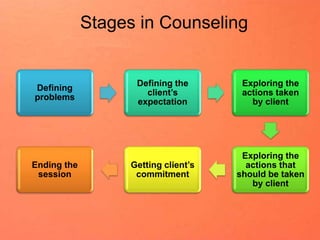
Stages in Counseling
Defining
problems
Defining the
client’s
expectation
Exploring the
actions taken
by client
Exploring the
actions that
should be taken
by client
Getting client’s
commitment
Ending the
session
Stage 1: Defining problems
Guidance teacher must be able to build rapport
with the clients. This is done to create a
conducive environment for better flow of the
session.
• greeting the clients at the door with smile
• welcoming the clients to sit
• starting the session with casual conversation
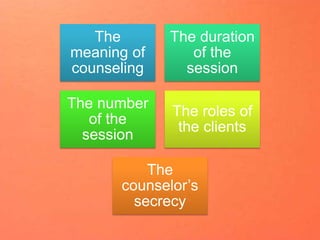
Structuralising the session
Explain about the counseling session so that
the client will have a good understanding of
it.
The
meaning of
counseling
The duration
of the
session
The number
of the
session
The roles of
the clients
The
counselor’s
secrecy
How to define the problems?
• Identify the issues and create opportunity
for the clients to explore the issues in
depth.
• Guidelines:
1) Ask the clients what are the objectives
that they want to achieve by the end of
the session.
2) Encourage the clients to share
3) Let the clients speak
Stage 2: Defining the expectations
of the clients
The guidance teacher/ counselor
should clarify to the clients whether
their expectations can be fulfilled or
vice versa.
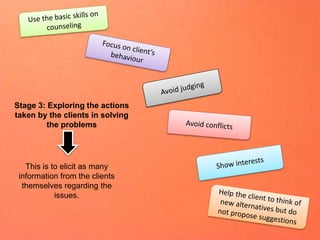
Stage 3: Exploring the actions
taken by the clients in solving
the problems
This is to elicit as many
information from the clients
themselves regarding the
issues.
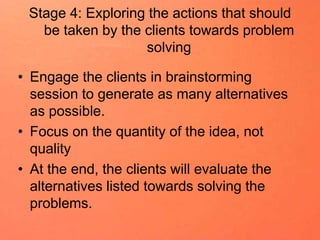
Stage 4: Exploring the actions that should
be taken by the clients towards problem
solving
• Engage the clients in brainstorming
session to generate as many alternatives
as possible.
• Focus on the quantity of the idea, not
quality
• At the end, the clients will evaluate the
alternatives listed towards solving the
problems.
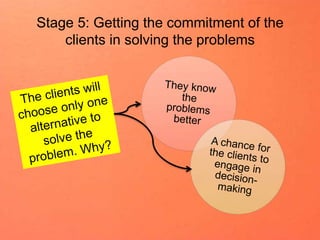
Stage 5: Getting the commitment of the
clients in solving the problems
Stage 6: Ending the session
• summarise the sessions
 the decision of the clients
 alternative chosen
 the clients’ abilities to carry out the
alternative
• plan for further actions (if needed)
Skills in Counseling
Attending and
Listening Skills.
Ways To
Treat
Children
Early Sign Of
Hospitality
Welcome the
children warmly
at the door of
the counseling
room
Make sure the
children feel
comfortable
at their
provided seat.
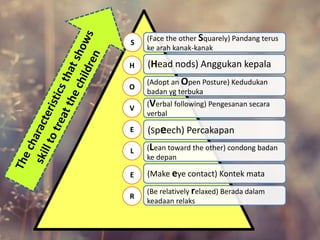
(Face the other Squarely) Pandang terus
ke arah kanak-kanak
(Head nods) Anggukan kepala
(Adopt an Open Posture) Kedudukan
badan yg terbuka
(Verbal following) Pengesanan secara
verbal
(Speech) Percakapan
(Lean toward the other) condong badan
ke depan
(Make eye contact) Kontek mata
(Be relatively relaxed) Berada dalam
keadaan relaks
E
L
E
R
O
V
S
H
• Silence is golden.
• Don’t ever
interrupt the
children’s talking.
• Counselor needs to
listen attentively and
alert to the
children’s problems.
• Listen to the children
with empathy and
accept them
positively without
any conditions.
• Counselor needs to
listen and collect
input from the
children before
giving any
information. Understand
the
children
Not being
judgmental
Use the
silence
Give full
attention
TIPS ON IMPROVING ACTIVE LISTENING
SKILL
Basic
Listening
Skills
Open question
- Usually starts with “What”,
“How”, “Why”, “Where”
- To provide self-exposure to the
pupils
Cloze question
- Starts with “Is it”, “Have you”,
etc
- Intended to gain information
and provide focus on the
discussion.
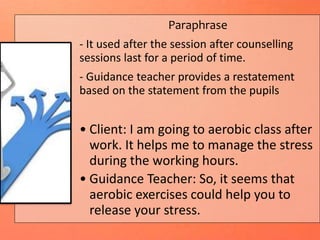
Paraphrase
- It used after the session after counselling
sessions last for a period of time.
- Guidance teacher provides a restatement
based on the statement from the pupils
• Client: I am going to aerobic class after
work. It helps me to manage the stress
during the working hours.
• Guidance Teacher: So, it seems that
aerobic exercises could help you to
release your stress.
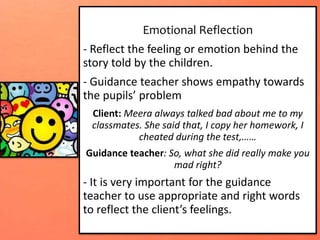
Emotional Reflection
- Reflect the feeling or emotion behind the
story told by the children.
- Guidance teacher shows empathy towards
the pupils’ problem
Client: Meera always talked bad about me to my
classmates. She said that, I copy her homework, I
cheated during the test,……
Guidance teacher: So, what she did really make you
mad right?
- It is very important for the guidance
teacher to use appropriate and right words
to reflect the client’s feelings.
- Making the pupils to
keep talking without
distracting the flow of
their thought.
- Examples: “Yes….” ,
“Hmmm…..” , and many
more.
Minimal
Impulse
- This might happen because of the client’s
slow voice or unclear utterances.
- By asking clarification, it gives out the
message that the guidance teacher is really
interested in the client’s problems.
“I am not really understand. Can you
explain?” or “Can you talk about it again? I
am not very clear.”
Ask for
clarification
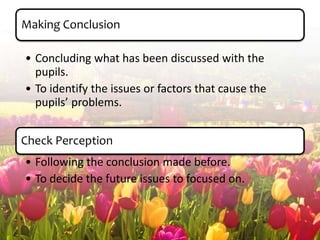
Making Conclusion
• Concluding what has been discussed with the
pupils.
• To identify the issues or factors that cause the
pupils’ problems.
Check Perception
• Following the conclusion made before.
• To decide the future issues to focused on.
Stages in counseling

Stages in counseling

  • 1.
    TOPIC 5: BasicCounseling Skills
  • 2.
    Stages in Counseling Defining problems Definingthe client’s expectation Exploring the actions taken by client Exploring the actions that should be taken by client Getting client’s commitment Ending the session
  • 3.
    Stage 1: Definingproblems Guidance teacher must be able to build rapport with the clients. This is done to create a conducive environment for better flow of the session. • greeting the clients at the door with smile • welcoming the clients to sit • starting the session with casual conversation
  • 4.
    Structuralising the session Explainabout the counseling session so that the client will have a good understanding of it.
  • 5.
    The meaning of counseling The duration ofthe session The number of the session The roles of the clients The counselor’s secrecy
  • 6.
    How to definethe problems? • Identify the issues and create opportunity for the clients to explore the issues in depth. • Guidelines: 1) Ask the clients what are the objectives that they want to achieve by the end of the session. 2) Encourage the clients to share 3) Let the clients speak
  • 7.
    Stage 2: Definingthe expectations of the clients The guidance teacher/ counselor should clarify to the clients whether their expectations can be fulfilled or vice versa.
  • 8.
    Stage 3: Exploringthe actions taken by the clients in solving the problems This is to elicit as many information from the clients themselves regarding the issues.
  • 9.
    Stage 4: Exploringthe actions that should be taken by the clients towards problem solving • Engage the clients in brainstorming session to generate as many alternatives as possible. • Focus on the quantity of the idea, not quality • At the end, the clients will evaluate the alternatives listed towards solving the problems.
  • 10.
    Stage 5: Gettingthe commitment of the clients in solving the problems
  • 11.
    Stage 6: Endingthe session • summarise the sessions  the decision of the clients  alternative chosen  the clients’ abilities to carry out the alternative • plan for further actions (if needed)
  • 12.
  • 13.
  • 14.
  • 15.
    Early Sign Of Hospitality Welcomethe children warmly at the door of the counseling room Make sure the children feel comfortable at their provided seat.
  • 16.
    (Face the otherSquarely) Pandang terus ke arah kanak-kanak (Head nods) Anggukan kepala (Adopt an Open Posture) Kedudukan badan yg terbuka (Verbal following) Pengesanan secara verbal (Speech) Percakapan (Lean toward the other) condong badan ke depan (Make eye contact) Kontek mata (Be relatively relaxed) Berada dalam keadaan relaks E L E R O V S H
  • 17.
    • Silence isgolden. • Don’t ever interrupt the children’s talking. • Counselor needs to listen attentively and alert to the children’s problems. • Listen to the children with empathy and accept them positively without any conditions. • Counselor needs to listen and collect input from the children before giving any information. Understand the children Not being judgmental Use the silence Give full attention TIPS ON IMPROVING ACTIVE LISTENING SKILL
  • 18.
  • 19.
    Open question - Usuallystarts with “What”, “How”, “Why”, “Where” - To provide self-exposure to the pupils Cloze question - Starts with “Is it”, “Have you”, etc - Intended to gain information and provide focus on the discussion.
  • 20.
    Paraphrase - It usedafter the session after counselling sessions last for a period of time. - Guidance teacher provides a restatement based on the statement from the pupils • Client: I am going to aerobic class after work. It helps me to manage the stress during the working hours. • Guidance Teacher: So, it seems that aerobic exercises could help you to release your stress.
  • 21.
    Emotional Reflection - Reflectthe feeling or emotion behind the story told by the children. - Guidance teacher shows empathy towards the pupils’ problem Client: Meera always talked bad about me to my classmates. She said that, I copy her homework, I cheated during the test,…… Guidance teacher: So, what she did really make you mad right? - It is very important for the guidance teacher to use appropriate and right words to reflect the client’s feelings.
  • 23.
    - Making thepupils to keep talking without distracting the flow of their thought. - Examples: “Yes….” , “Hmmm…..” , and many more. Minimal Impulse
  • 24.
    - This mighthappen because of the client’s slow voice or unclear utterances. - By asking clarification, it gives out the message that the guidance teacher is really interested in the client’s problems. “I am not really understand. Can you explain?” or “Can you talk about it again? I am not very clear.” Ask for clarification
  • 25.
    Making Conclusion • Concludingwhat has been discussed with the pupils. • To identify the issues or factors that cause the pupils’ problems. Check Perception • Following the conclusion made before. • To decide the future issues to focused on.