PRESENTED BY
SHIMIL ABRAHAM
15SO10119
 Aim: helping individual to solve their personal
problems
 These problems often include ethical issues
 The counsellors ethical standards and his professional
techniques are inseparable
 Ethics are guidelines that are based on the basic
principles of the counsellor in the code of ethics.
 A moral philosophy of what is right and wrong and
which bring the greatest benefit for most people
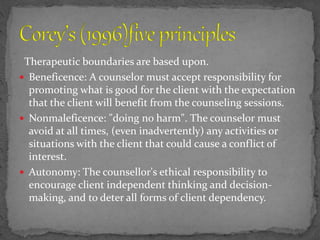
Therapeutic boundaries are based upon.
 Beneficence: A counselor must accept responsibility for
promoting what is good for the client with the expectation
that the client will benefit from the counseling sessions.
 Nonmaleficence: "doing no harm". The counselor must
avoid at all times, (even inadvertently) any activities or
situations with the client that could cause a conflict of
interest.
 Autonomy: The counsellor's ethical responsibility to
encourage client independent thinking and decision-
making, and to deter all forms of client dependency.
 Therapeutic relationships are unbalanced (Who
has more power?)
 Therapeutic relationships are complicated
 Client’s issues/problems are complicated
 The nature of the relationship itself is complicated
 Therapists are human, and humans are fallible.
Ethical guidelines provide guidance and
accountability
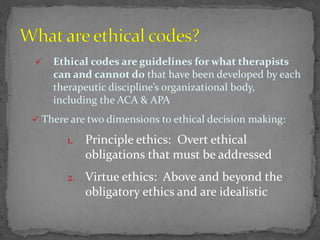
 Ethical codes are guidelines for what therapists
can and cannot do that have been developed by each
therapeutic discipline’s organizational body,
including the ACA & APA
 There are two dimensions to ethical decision making:
1. Principle ethics: Overt ethical
obligations that must be addressed
2. Virtue ethics: Above and beyond the
obligatory ethics and are idealistic
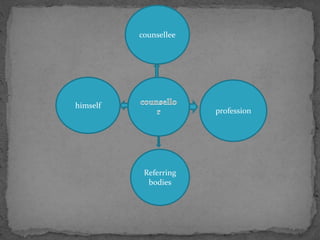
himself
profession
counsellee
Referring
bodies
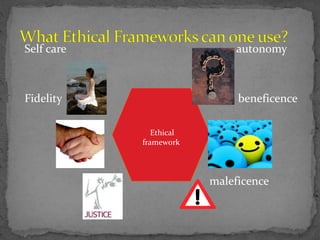
Self care autonomy
Fidelity beneficence
non-
maleficence
Ethical
framework
 First and most important – to safeguard welfare of
client and society
 Define ethical conduct in a profession – to inform
and educate members
 Define Standards of Practice – important in legal
actions
 Create a means by which members are held accountable
for actions –protecting public
 Offer s a way to promote professional growth.
 Schmidt L.D. and Meara 1984 Ethical Professional
and Legal Issues in Counselling Psychology.
Chapter 2 in Brown S.D. and Lent R.W. Handbook
of Counselling Psychology Wiley.
Hope, you all have no questions.

Ethics in counselling

  • 1.
  • 2.
     Aim: helpingindividual to solve their personal problems  These problems often include ethical issues  The counsellors ethical standards and his professional techniques are inseparable
  • 3.
     Ethics areguidelines that are based on the basic principles of the counsellor in the code of ethics.  A moral philosophy of what is right and wrong and which bring the greatest benefit for most people
  • 4.
    Therapeutic boundaries arebased upon.  Beneficence: A counselor must accept responsibility for promoting what is good for the client with the expectation that the client will benefit from the counseling sessions.  Nonmaleficence: "doing no harm". The counselor must avoid at all times, (even inadvertently) any activities or situations with the client that could cause a conflict of interest.  Autonomy: The counsellor's ethical responsibility to encourage client independent thinking and decision- making, and to deter all forms of client dependency.
  • 5.
     Therapeutic relationshipsare unbalanced (Who has more power?)  Therapeutic relationships are complicated  Client’s issues/problems are complicated  The nature of the relationship itself is complicated  Therapists are human, and humans are fallible. Ethical guidelines provide guidance and accountability
  • 6.
     Ethical codesare guidelines for what therapists can and cannot do that have been developed by each therapeutic discipline’s organizational body, including the ACA & APA  There are two dimensions to ethical decision making: 1. Principle ethics: Overt ethical obligations that must be addressed 2. Virtue ethics: Above and beyond the obligatory ethics and are idealistic
  • 7.
  • 8.
    Self care autonomy Fidelitybeneficence non- maleficence Ethical framework
  • 9.
     First andmost important – to safeguard welfare of client and society  Define ethical conduct in a profession – to inform and educate members  Define Standards of Practice – important in legal actions
  • 10.
     Create ameans by which members are held accountable for actions –protecting public  Offer s a way to promote professional growth.
  • 11.
     Schmidt L.D.and Meara 1984 Ethical Professional and Legal Issues in Counselling Psychology. Chapter 2 in Brown S.D. and Lent R.W. Handbook of Counselling Psychology Wiley.
  • 12.
    Hope, you allhave no questions.