WARM UP
  #54
Who was Gandhi?

What was the Salt March?

How did Gandhi’s idea of non-violent protest
 lead to change in India?
Independence of India

SS7H3-The student will analyze continuity
and change in Southern and Eastern Asia
leading to the 21st century.
a.Describe how nationalism led to
independence in India and Vietnam.
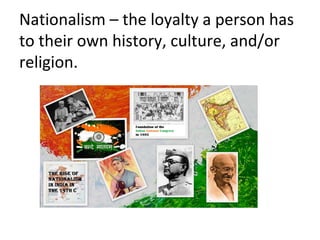
Nationalism – the loyalty a person has
to their own history, culture, and/or
religion.
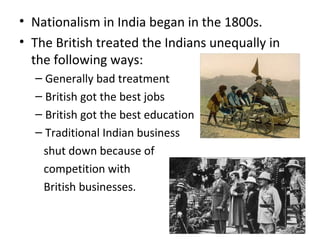
• Nationalism in India began in the 1800s.
• The British treated the Indians unequally in
  the following ways:
  – Generally bad treatment
  – British got the best jobs
  – British got the best education
  – Traditional Indian business
    shut down because of
    competition with
    British businesses.
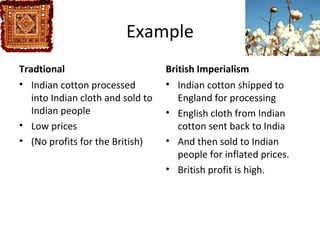
Example
Tradtional                         British Imperialism
• Indian cotton processed          • Indian cotton shipped to
   into Indian cloth and sold to      England for processing
   Indian people                   • English cloth from Indian
• Low prices                          cotton sent back to India
• (No profits for the British)     • And then sold to Indian
                                      people for inflated prices.
                                   • British profit is high.
To whom else might the British
       sell the cloth?
      How does demand fit into the
  inflated prices when the cloth is sold
          to the Indian people?
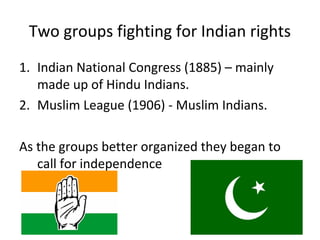
Two groups fighting for Indian rights
1. Indian National Congress (1885) – mainly
   made up of Hindu Indians.
2. Muslim League (1906) - Muslim Indians.

As the groups better organized they began to
   call for independence
During WWI
• Indians fought alongside the British hoping to
  gain control of their government.
• Britain promised that India would work
  toward self government at the end of the war,
  but they broke the promise.
  – (Surprise, Surprise…)
  – With whom else did the British break a promise at
    this same time?
Rowlatt Act
• Indians could be sent to jail for 2 years
  without a trial.
• Protestors of British rule were arrested under
  the Act.
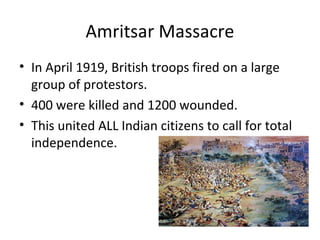
Amritsar Massacre
• In April 1919, British troops fired on a large
  group of protestors.
• 400 were killed and 1200 wounded.
• This united ALL Indian citizens to call for total
  independence.
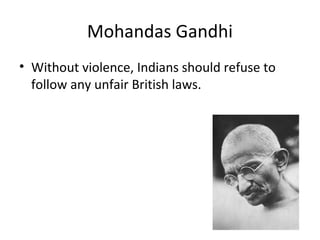
Mohandas Gandhi
• Without violence, Indians should refuse to
  follow any unfair British laws.
Civil Disobedience
• Gandhi’s non-violent refusal to obey an unfair
  law.
  – Boycott British made goods
  – Refuse to attend 2nd class schools
  – Refuse to pay unfair taxes.


• Civil Disobedience began to affect the British
  economy.
• 1935 – Government of India Act, gave some
  self government to India.
• 1939 when WWII began Britain offered to
  make India a dominion but Gandhi and Indian
  National Congress refused. However they said
  they would not take sides.
• The Muslim League supported the British
  because they were worried what
  independence would bring.
• After WWII India was given Independence
• Disputes broke out between Indian Hindus
  and Muslims about how the new country
  should be organized.
• Each group was influenced more by religion
  than by what each had in common.
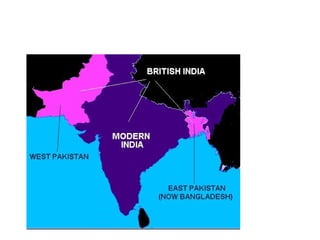
• British colonial leaders decided to divide the
  country between the Hindus and Muslims.
  – Hindu India (largest)
  – East Pakistan
  – West Pakistan
• 1947- millions were forced to leave their
  homes to move where the government had
  ordered.
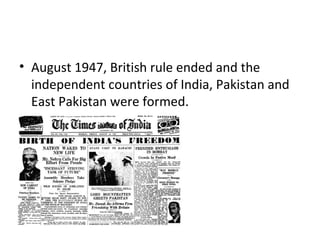
• August 1947, British rule ended and the
  independent countries of India, Pakistan and
  East Pakistan were formed.
Ss7 h3.a independence_of_india

Ss7 h3.a independence_of_india

  • 1.
  • 2.
    Who was Gandhi? Whatwas the Salt March? How did Gandhi’s idea of non-violent protest lead to change in India?
  • 3.
    Independence of India SS7H3-Thestudent will analyze continuity and change in Southern and Eastern Asia leading to the 21st century. a.Describe how nationalism led to independence in India and Vietnam.
  • 4.
    Nationalism – theloyalty a person has to their own history, culture, and/or religion.
  • 5.
    • Nationalism inIndia began in the 1800s. • The British treated the Indians unequally in the following ways: – Generally bad treatment – British got the best jobs – British got the best education – Traditional Indian business shut down because of competition with British businesses.
  • 6.
    Example Tradtional British Imperialism • Indian cotton processed • Indian cotton shipped to into Indian cloth and sold to England for processing Indian people • English cloth from Indian • Low prices cotton sent back to India • (No profits for the British) • And then sold to Indian people for inflated prices. • British profit is high.
  • 7.
    To whom elsemight the British sell the cloth? How does demand fit into the inflated prices when the cloth is sold to the Indian people?
  • 8.
    Two groups fightingfor Indian rights 1. Indian National Congress (1885) – mainly made up of Hindu Indians. 2. Muslim League (1906) - Muslim Indians. As the groups better organized they began to call for independence
  • 9.
    During WWI • Indiansfought alongside the British hoping to gain control of their government. • Britain promised that India would work toward self government at the end of the war, but they broke the promise. – (Surprise, Surprise…) – With whom else did the British break a promise at this same time?
  • 10.
    Rowlatt Act • Indianscould be sent to jail for 2 years without a trial. • Protestors of British rule were arrested under the Act.
  • 11.
    Amritsar Massacre • InApril 1919, British troops fired on a large group of protestors. • 400 were killed and 1200 wounded. • This united ALL Indian citizens to call for total independence.
  • 12.
    Mohandas Gandhi • Withoutviolence, Indians should refuse to follow any unfair British laws.
  • 13.
    Civil Disobedience • Gandhi’snon-violent refusal to obey an unfair law. – Boycott British made goods – Refuse to attend 2nd class schools – Refuse to pay unfair taxes. • Civil Disobedience began to affect the British economy.
  • 14.
    • 1935 –Government of India Act, gave some self government to India. • 1939 when WWII began Britain offered to make India a dominion but Gandhi and Indian National Congress refused. However they said they would not take sides. • The Muslim League supported the British because they were worried what independence would bring.
  • 15.
    • After WWIIIndia was given Independence • Disputes broke out between Indian Hindus and Muslims about how the new country should be organized. • Each group was influenced more by religion than by what each had in common.
  • 16.
    • British colonialleaders decided to divide the country between the Hindus and Muslims. – Hindu India (largest) – East Pakistan – West Pakistan • 1947- millions were forced to leave their homes to move where the government had ordered.
  • 17.
    • August 1947,British rule ended and the independent countries of India, Pakistan and East Pakistan were formed.