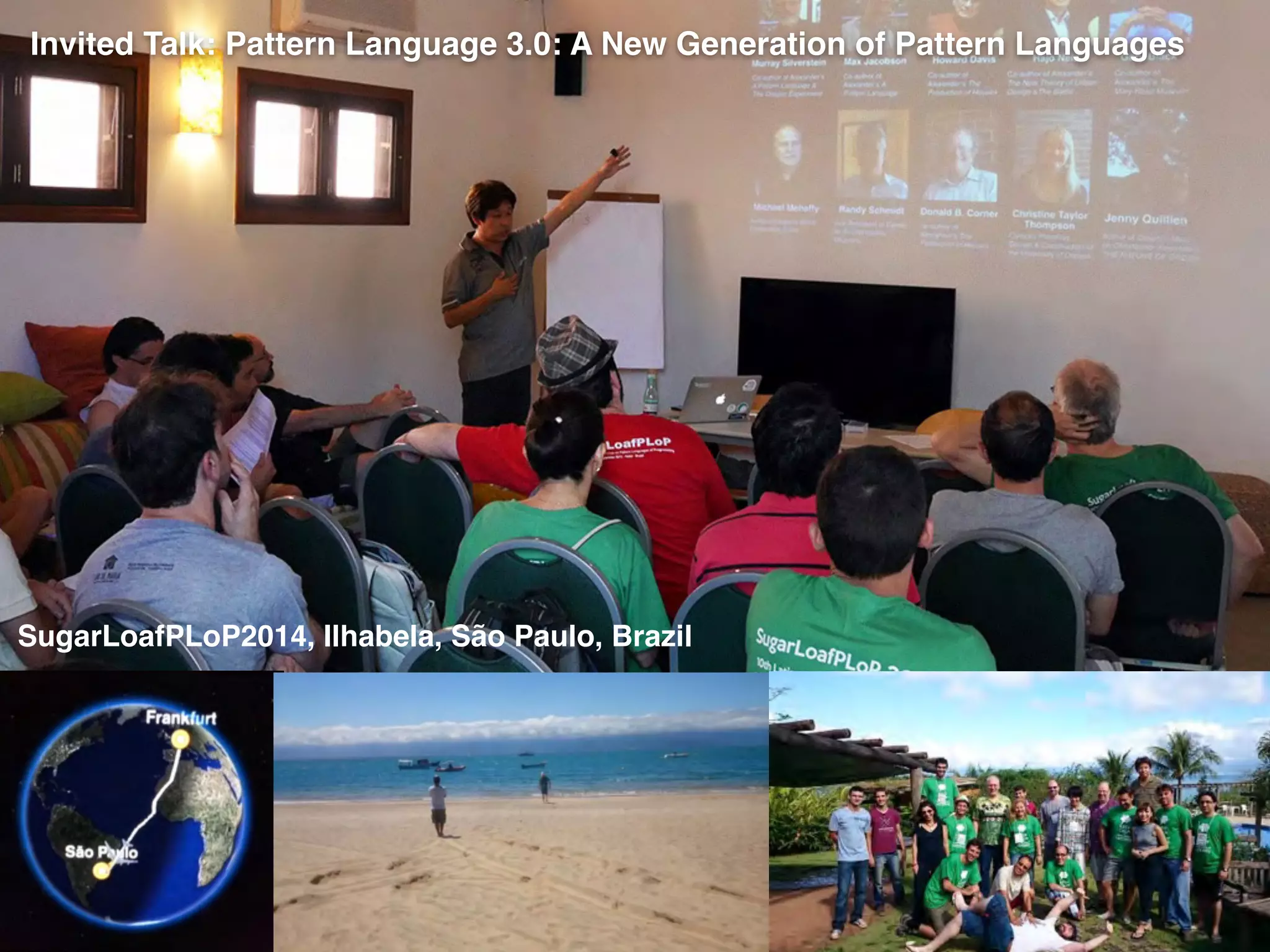
Invited Talk: PatternLanguage 3.0: A New Generation of Pattern Languages
SugarLoafPLoP2014, Ilhabela, São Paulo, Brazil
3.
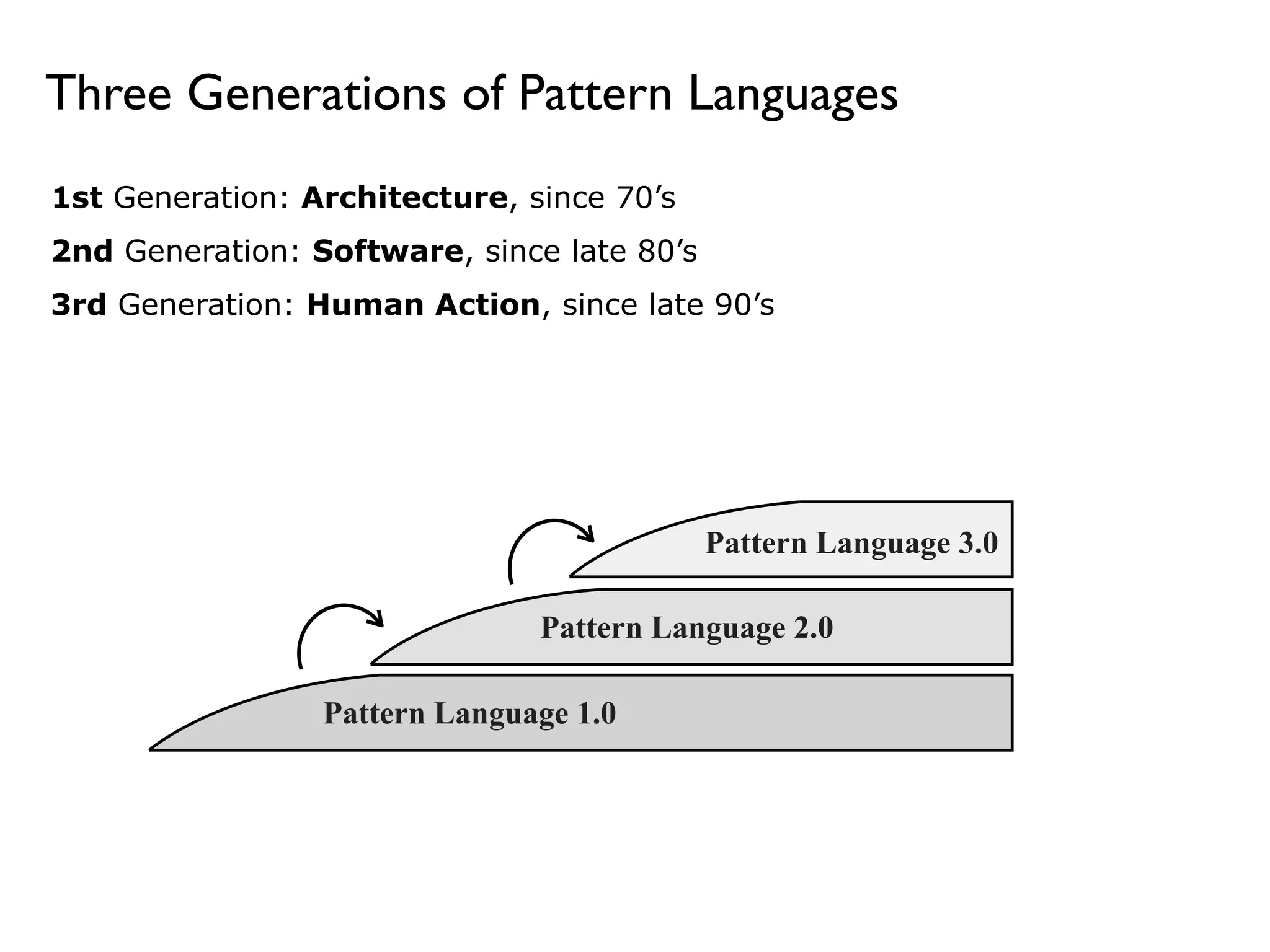
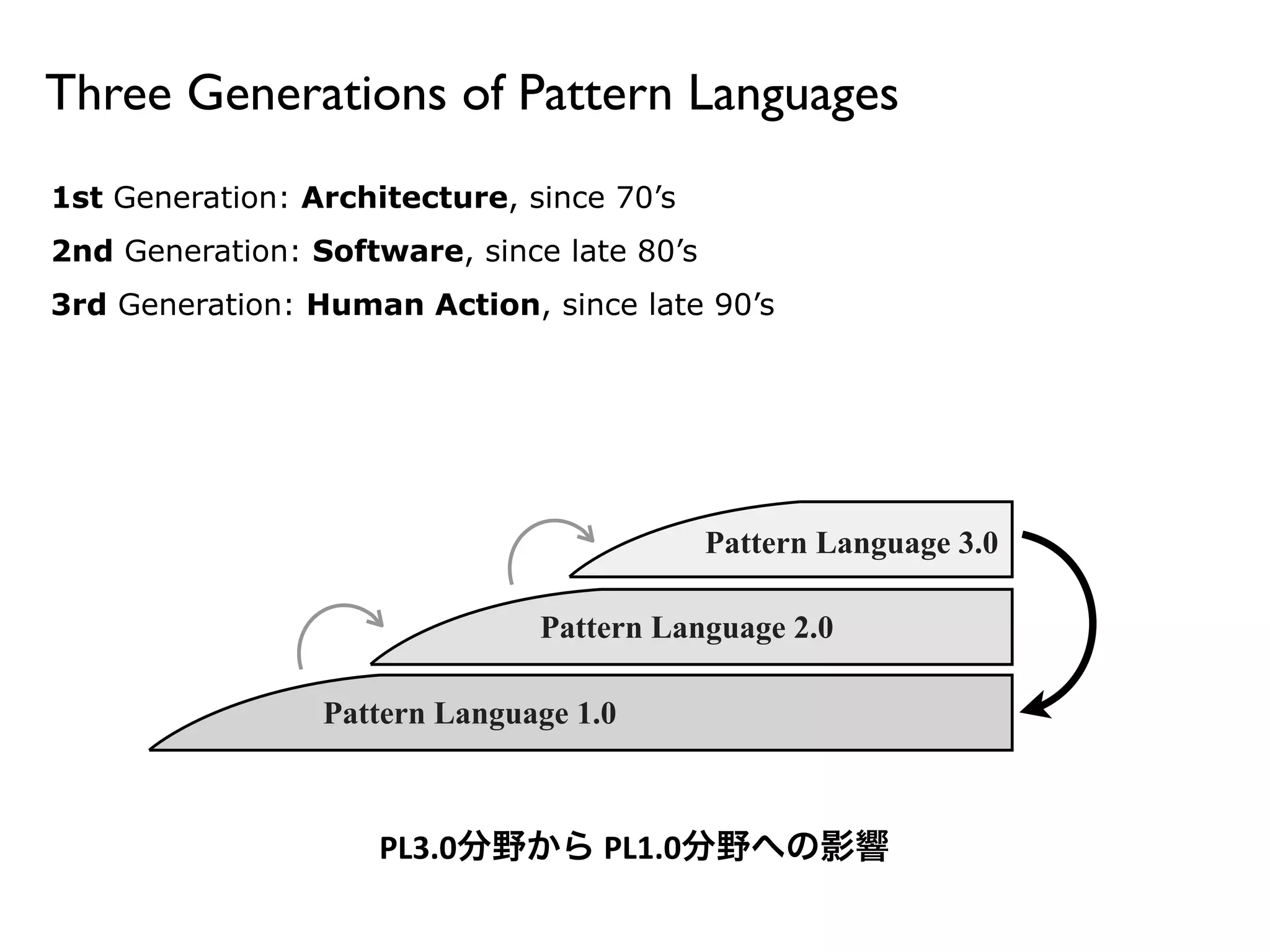
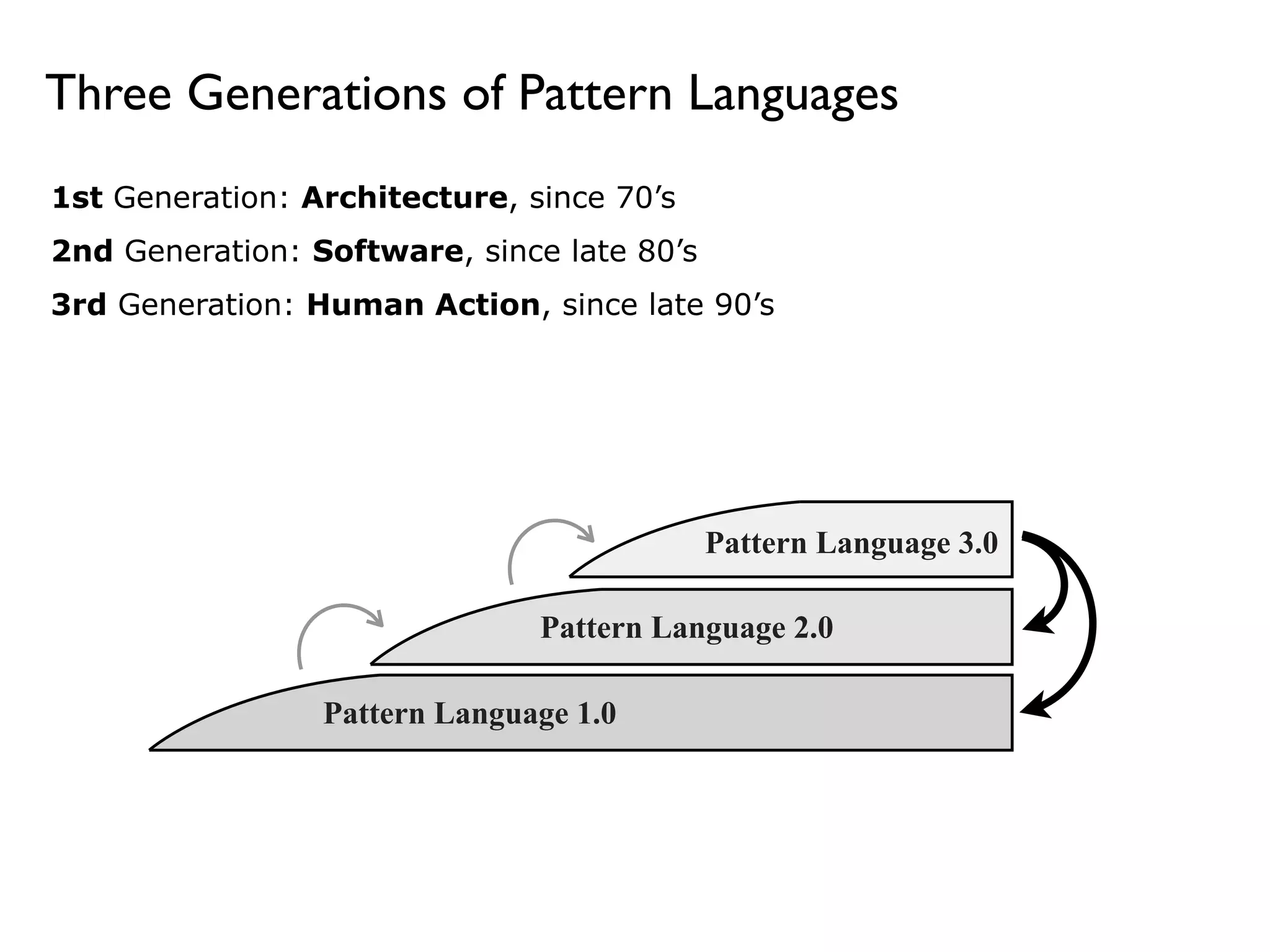
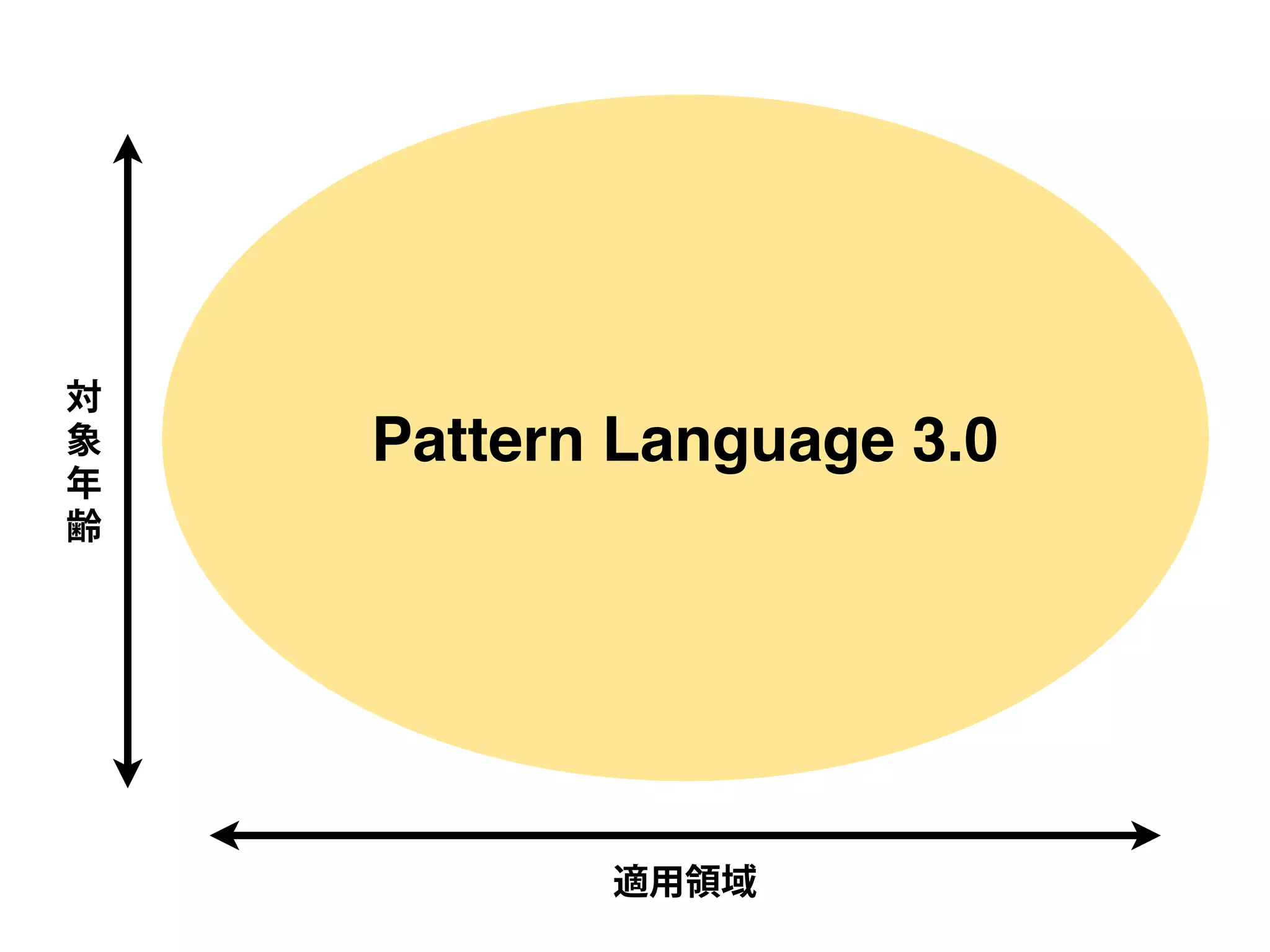
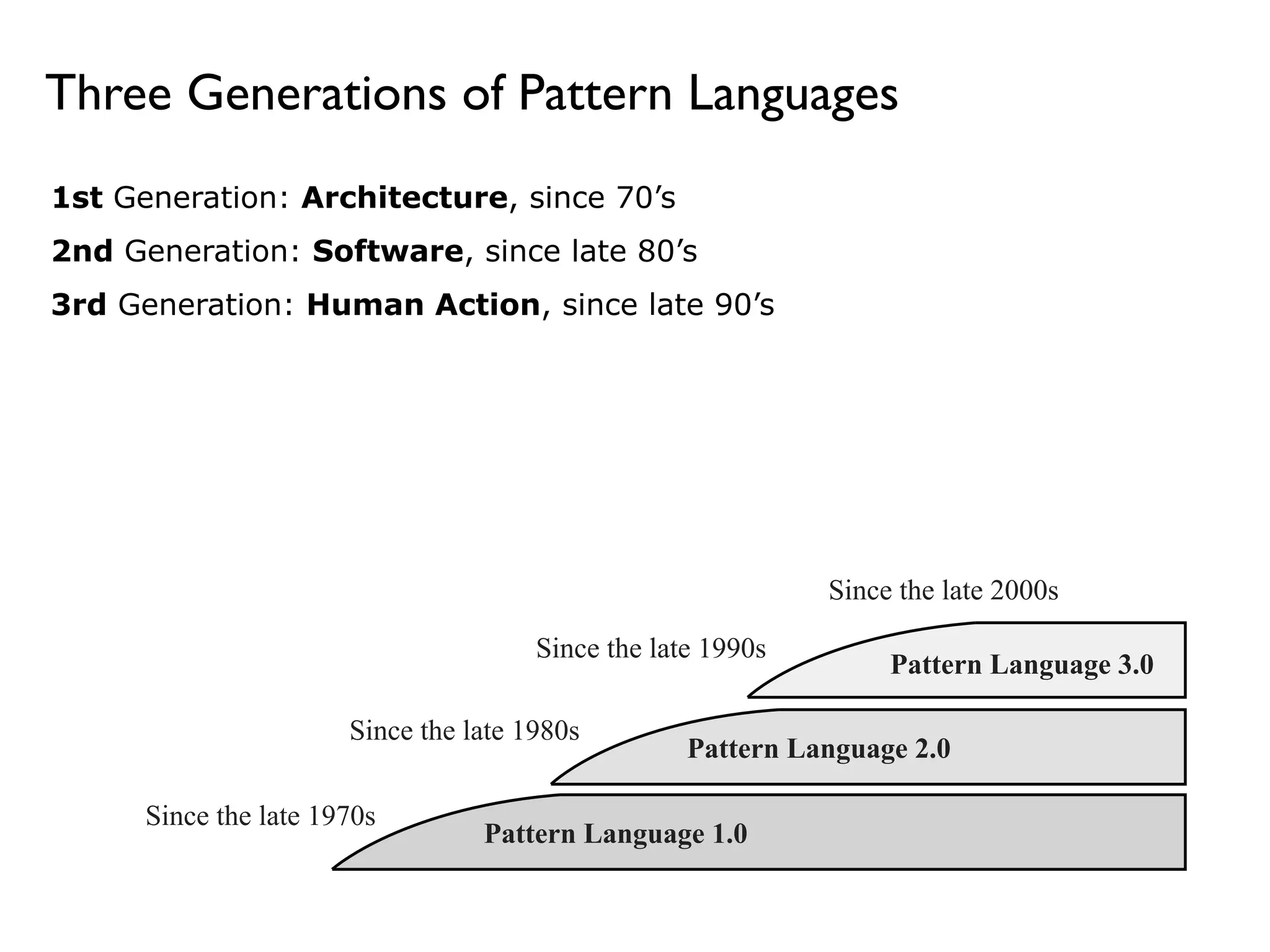
Three Generations ofPattern Languages
Since the late 1990s
Pattern Language 2.0
Since the late 1970s Pattern Language 1.0
Pattern Language 3.0
Since the late 1980s
Since the late 2000s
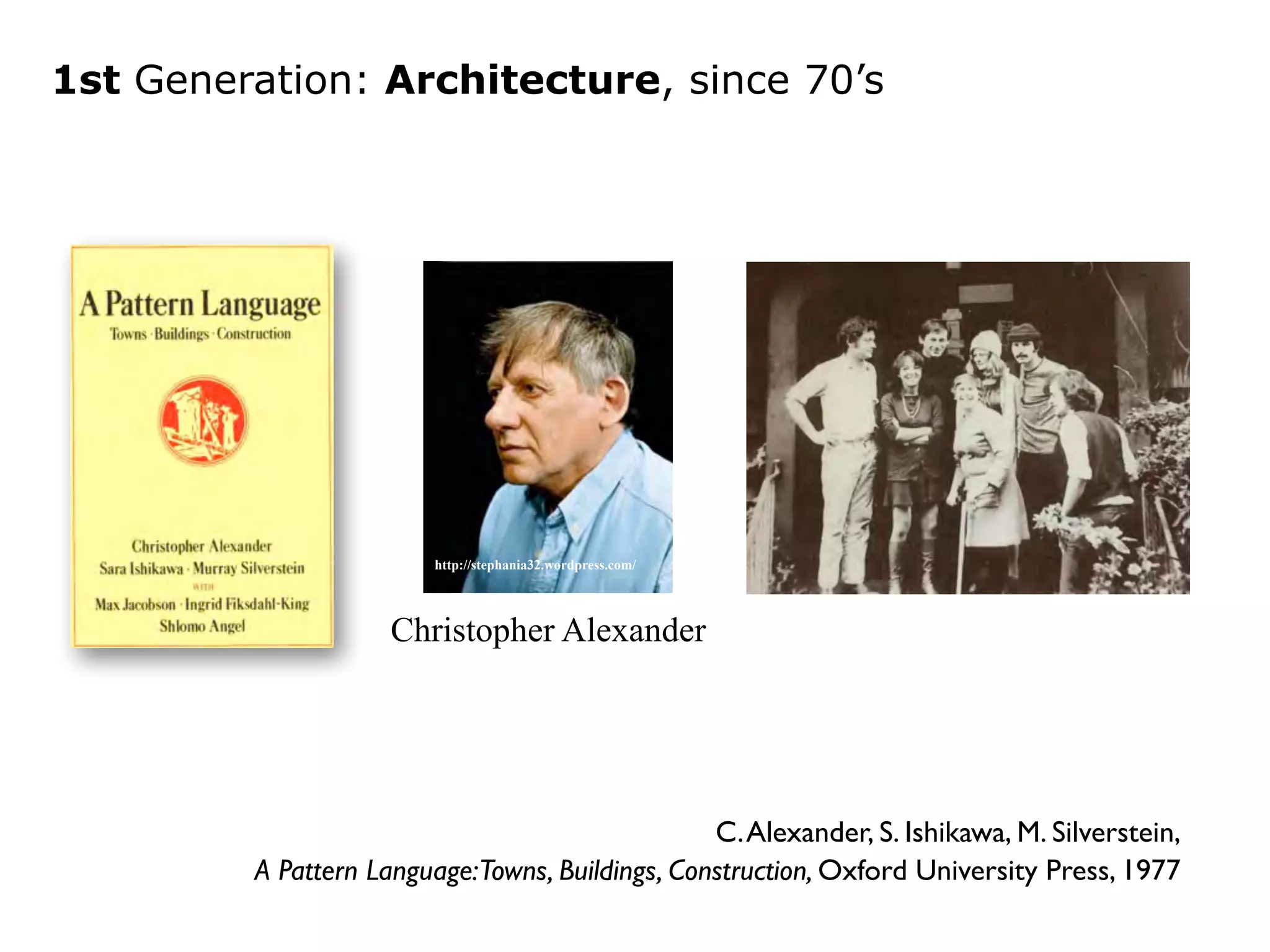
1st Generation: Architecture, since 70’s
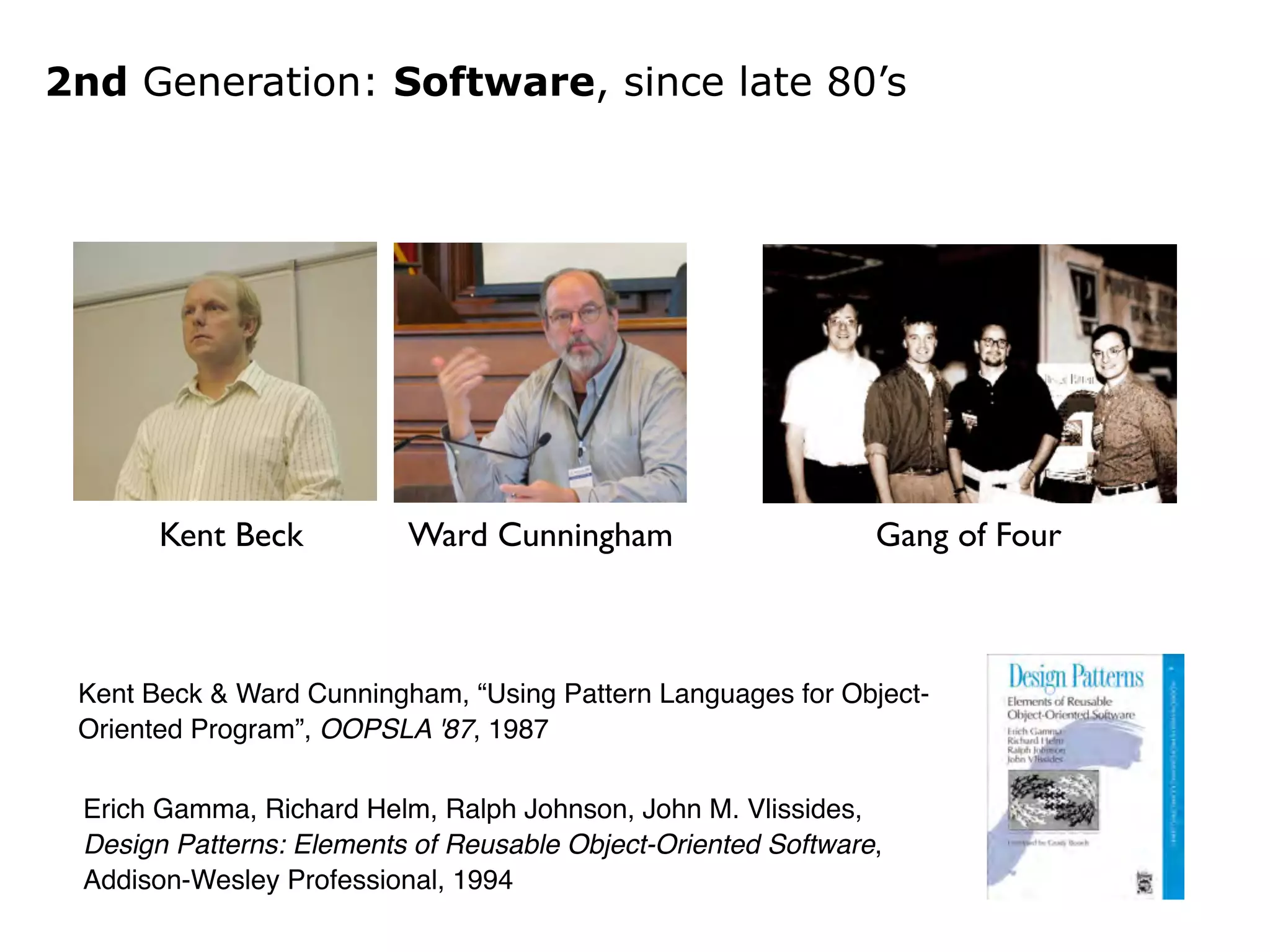
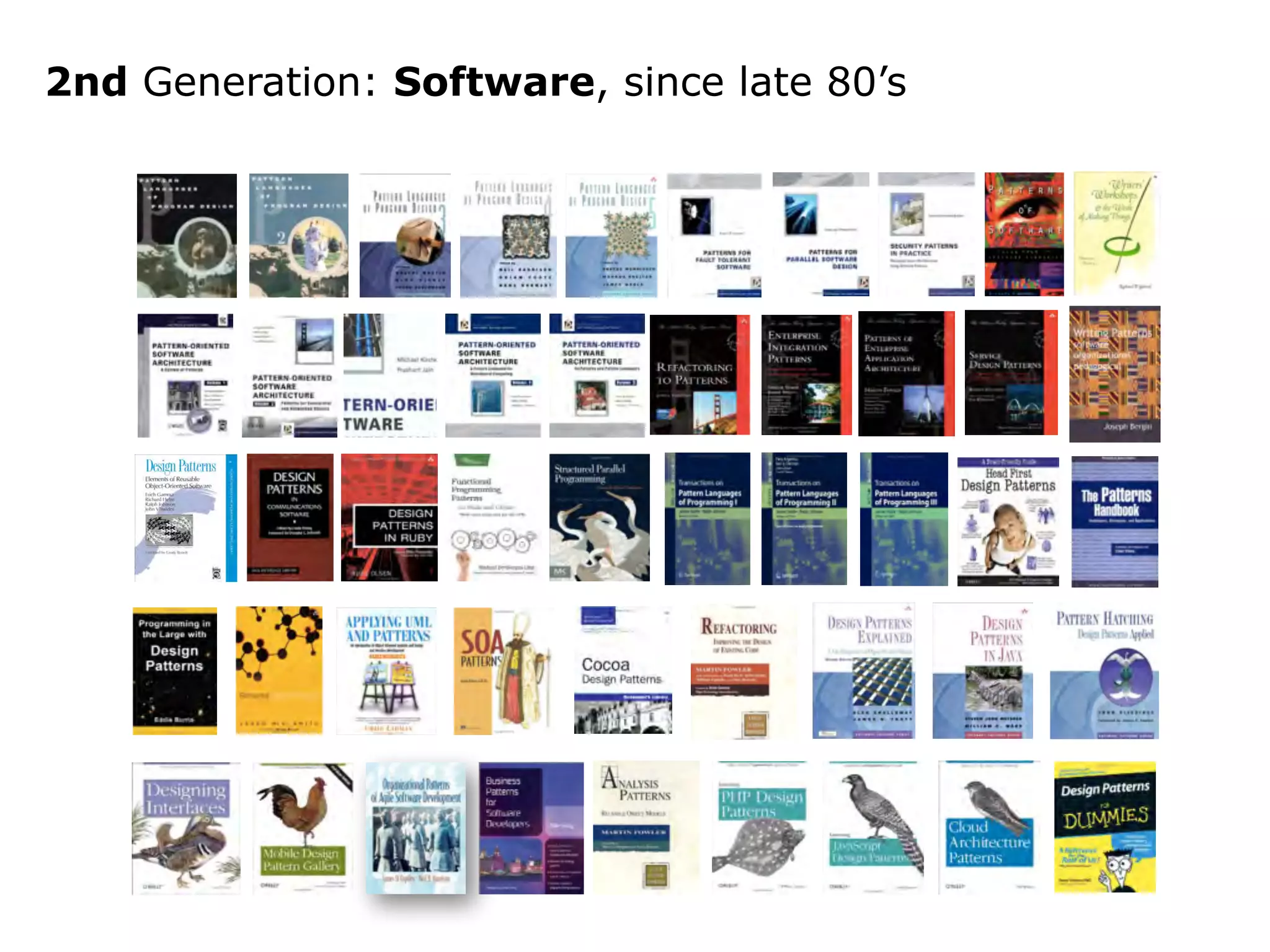
2nd Generation: Software, since late 80’s
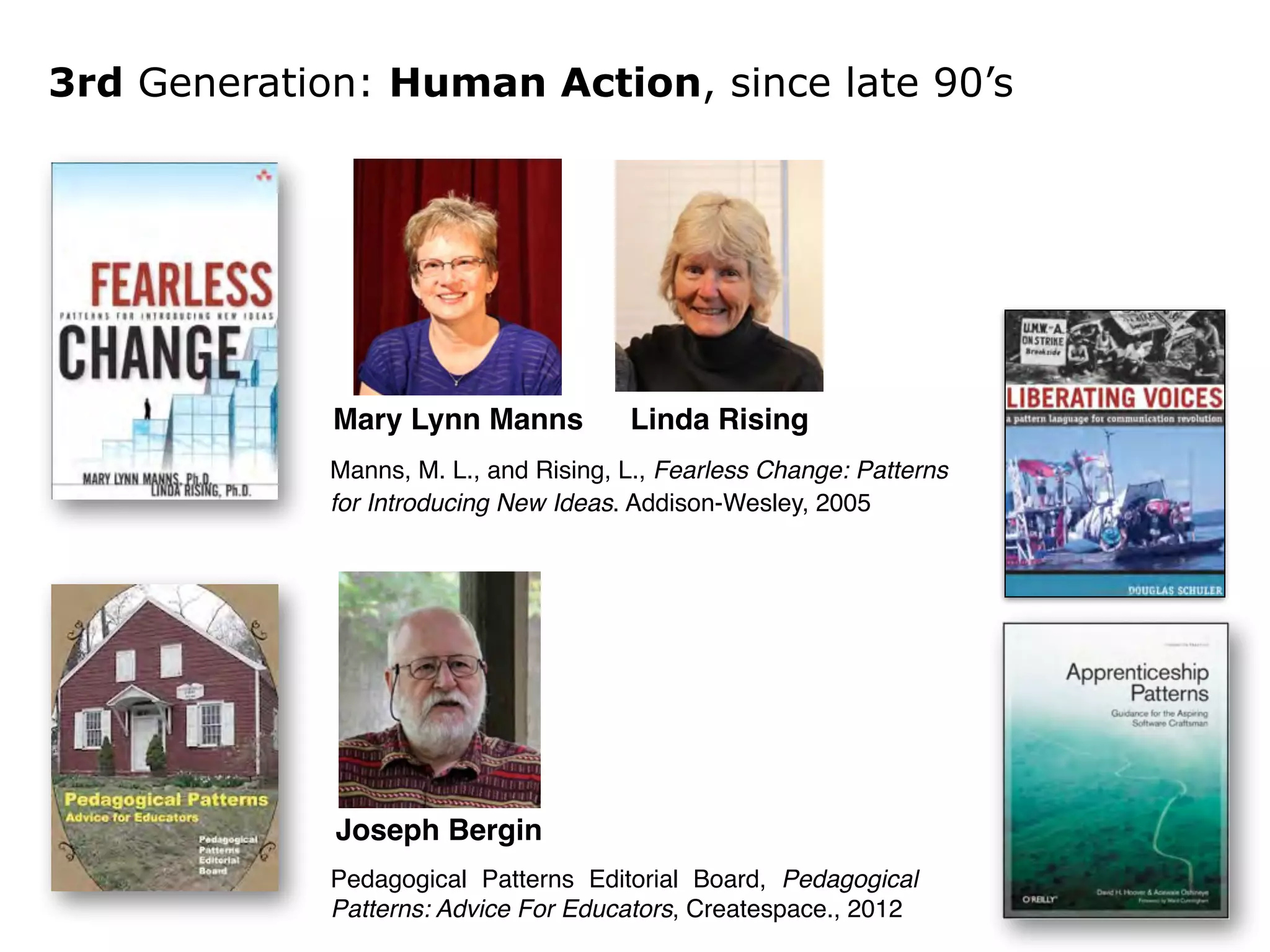
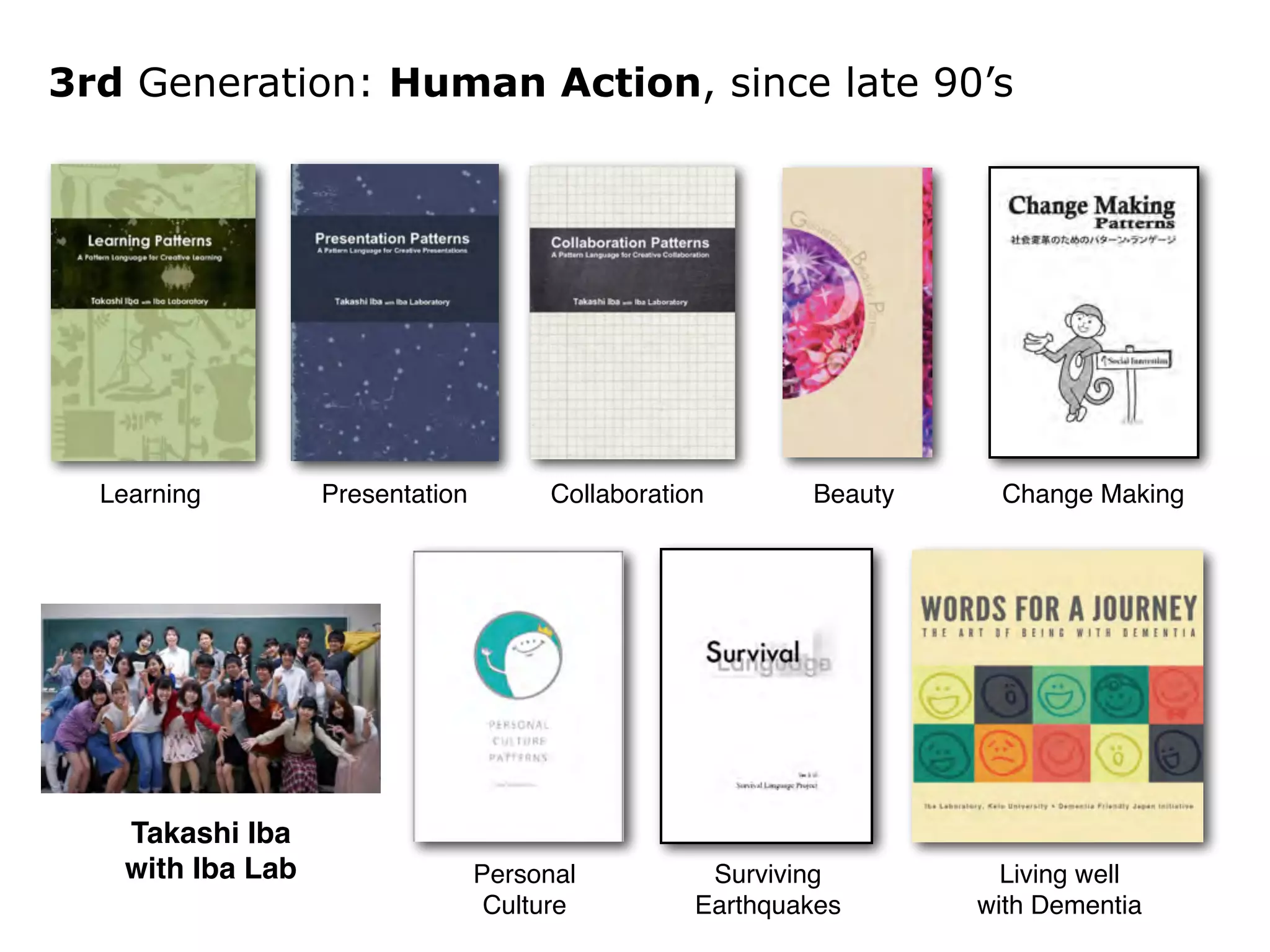
3rd Generation: Human Action, since late 90’s
4.
1st Generation: Architecture,since 70’s
C. Alexander, S. Ishikawa, M. Silverstein,
http://stephania32.wordpress.com/
Christopher Alexander
A Pattern Language: Towns, Buildings, Construction, Oxford University Press, 1977
5.
2nd Generation: Software,since late 80’s
Kent Beck Ward Cunningham
Gang of Four
Kent Beck & Ward Cunningham, “Using Pattern Languages for Object-
Oriented Program”, OOPSLA '87, 1987
Erich Gamma, Richard Helm, Ralph Johnson, John M. Vlissides,!
Design Patterns: Elements of Reusable Object-Oriented Software,!
Addison-Wesley Professional, 1994
3rd Generation: HumanAction, since late 90’s
Mary Lynn Manns Linda Rising
Manns, M. L., and Rising, L., Fearless Change: Patterns
for Introducing New Ideas. Addison-Wesley, 2005
Joseph Bergin
Pedagogical Patterns Editorial Board, Pedagogical
Patterns: Advice For Educators, Createspace., 2012
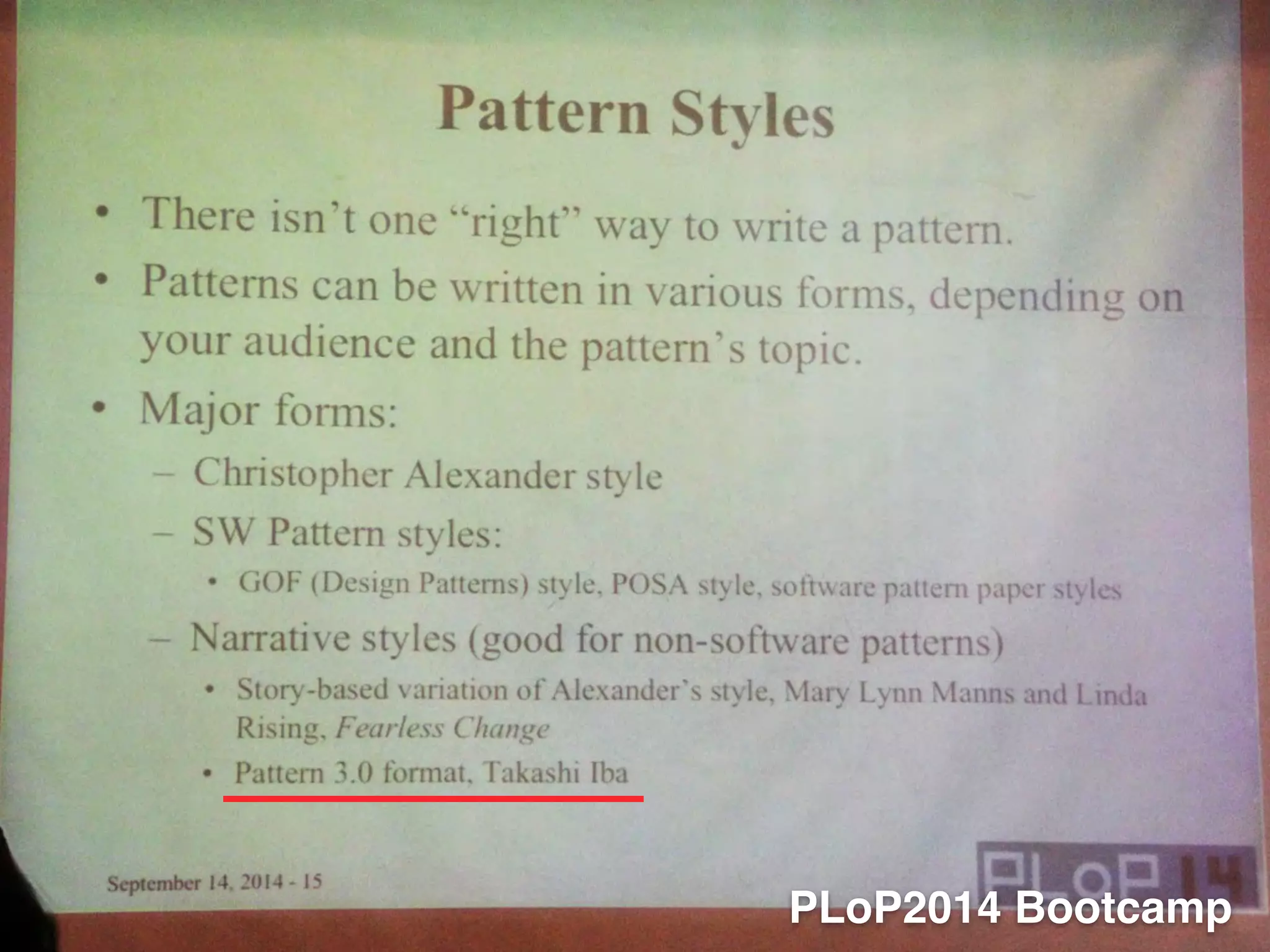
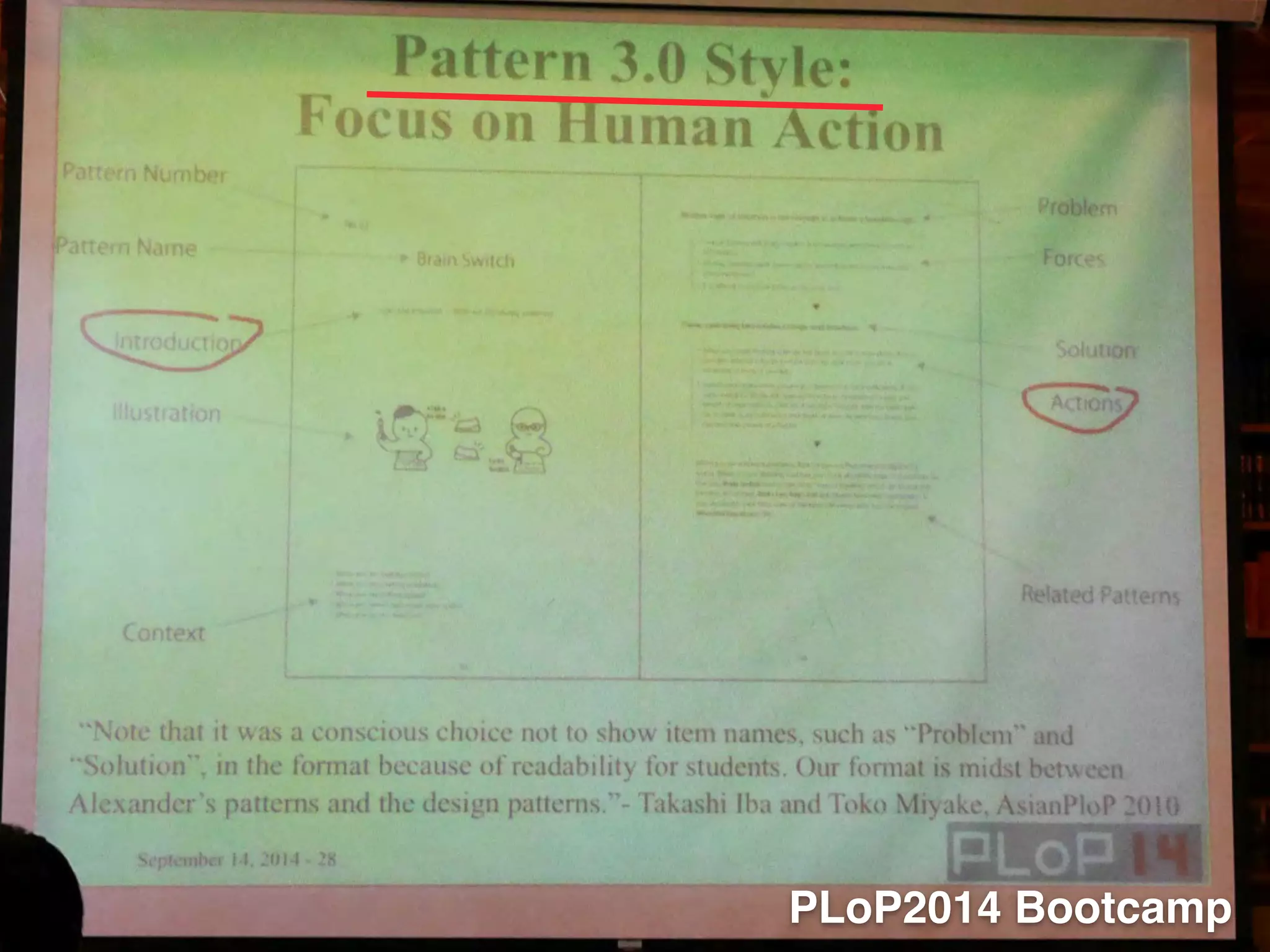
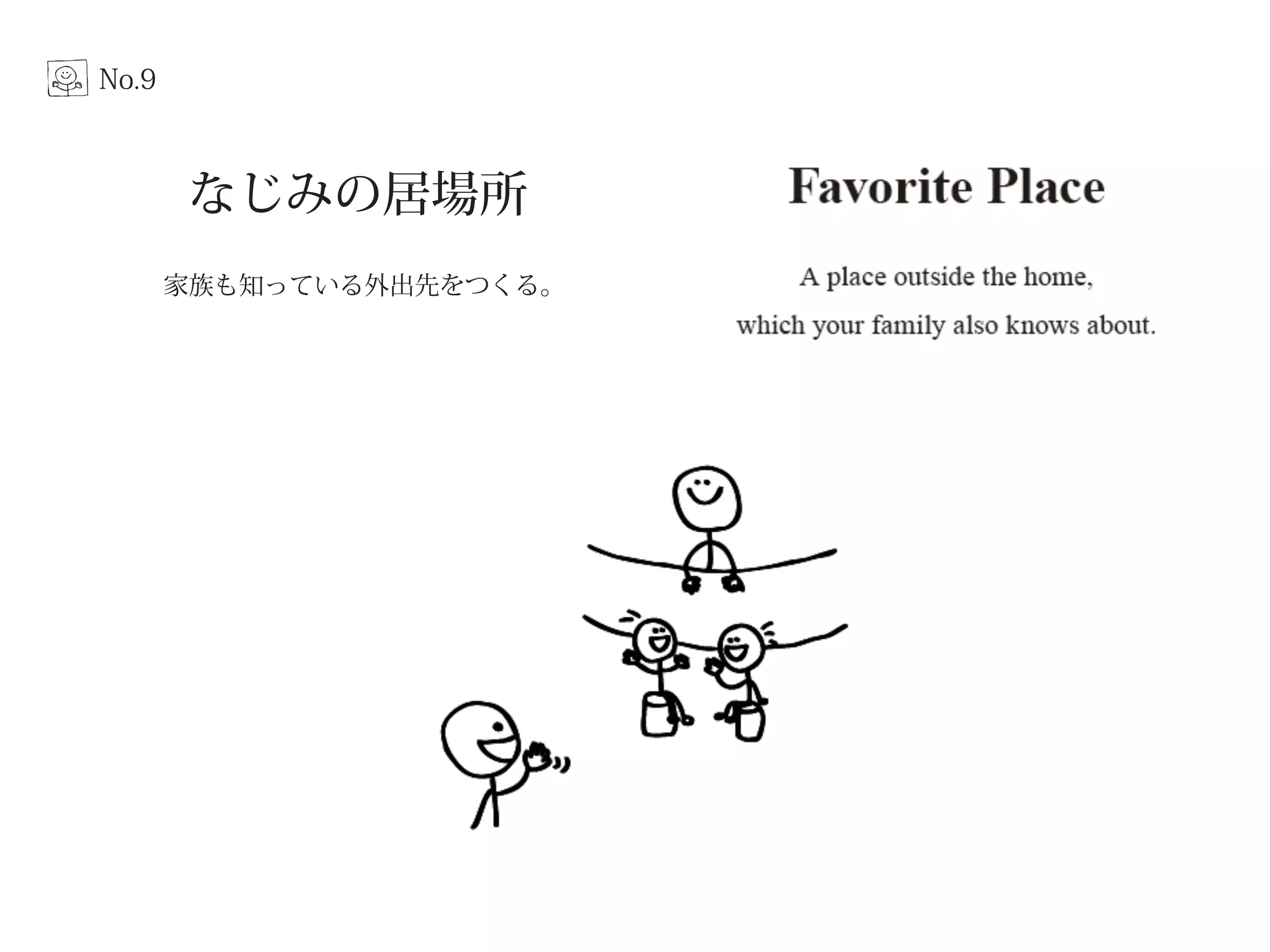
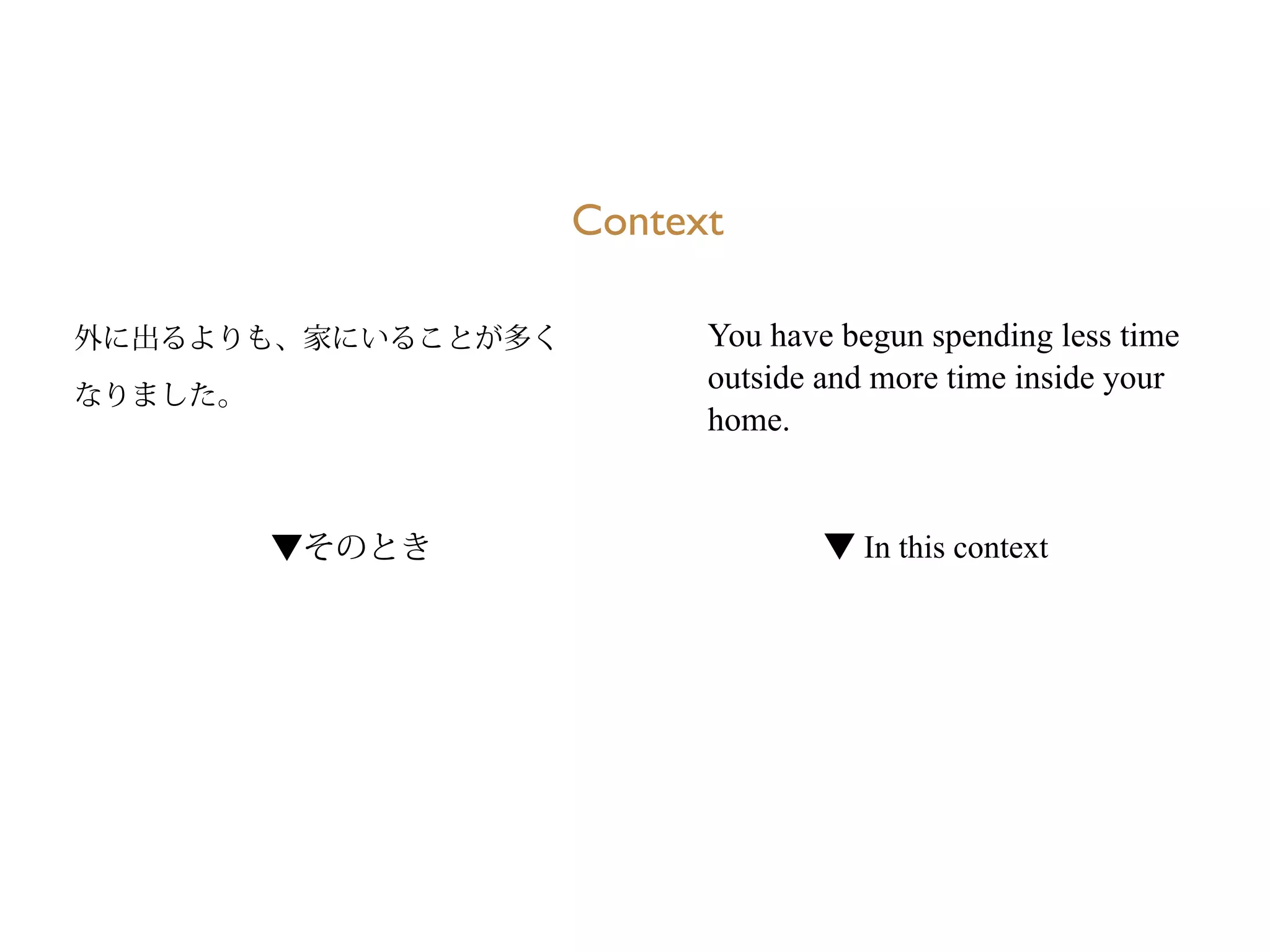
Context
You havebegun spending less time
outside and more time inside your
home.
外に出るよりも、家にいることが多く
なりました。
▼そのとき▼ In this context
15.
▼そのとき▼ In thiscontext
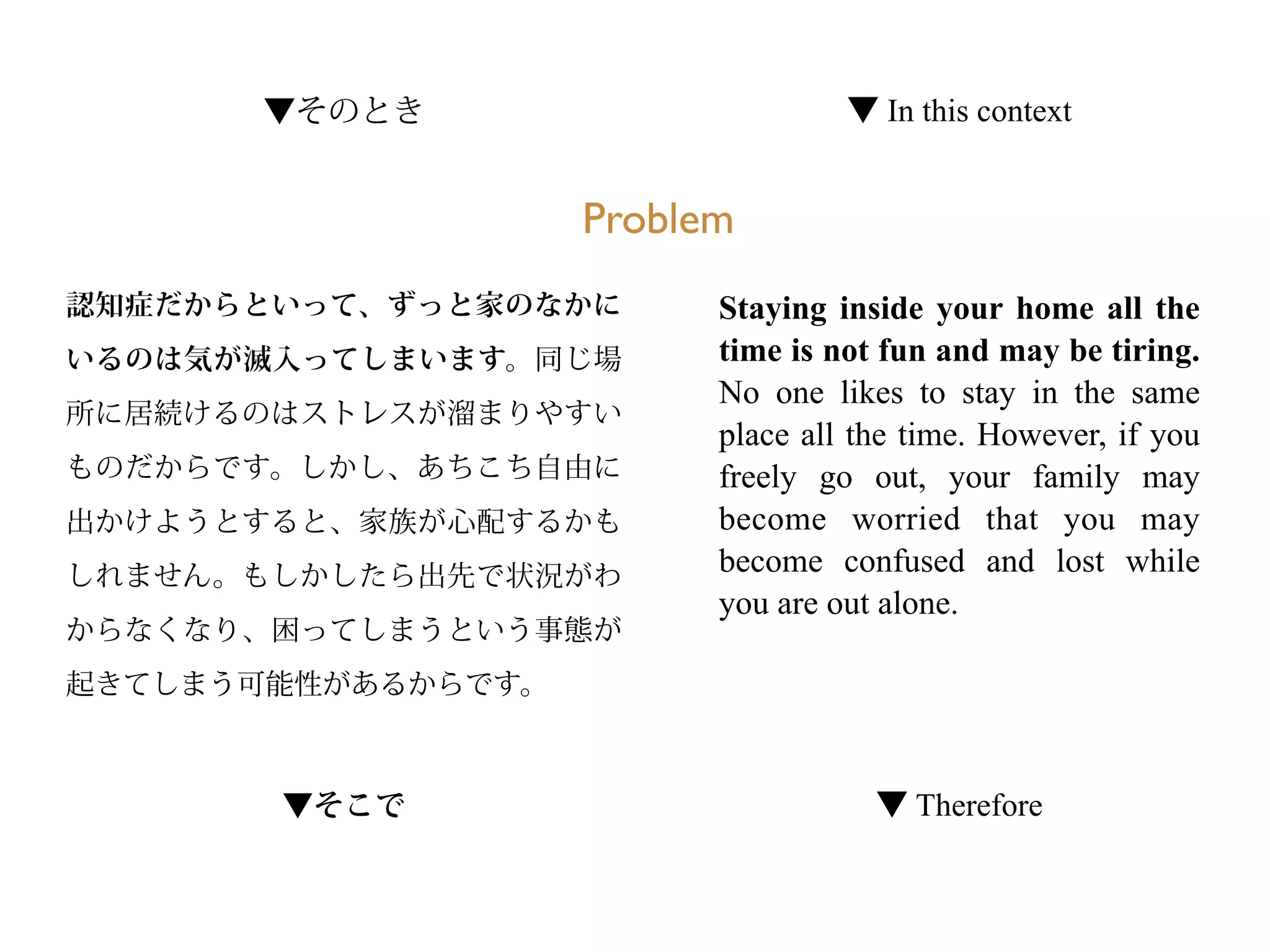
Problem
認知症だからといって、ずっと家のなかに
いるのは気が滅入ってしまいます。同じ場
所に居続けるのはストレスが溜まりやすい
ものだからです。しかし、あちこち自由に
出かけようとすると、家族が心配するかも
しれません。もしかしたら出先で状況がわ
からなくなり、困ってしまうという事態が
起きてしまう可能性があるからです。
Staying inside your home all the
time is not fun and may be tiring.
No one likes to stay in the same
place all the time. However, if you
freely go out, your family may
become worried that you may
become confused and lost while
you are out alone.
▼そこで▼ Therefore
16.
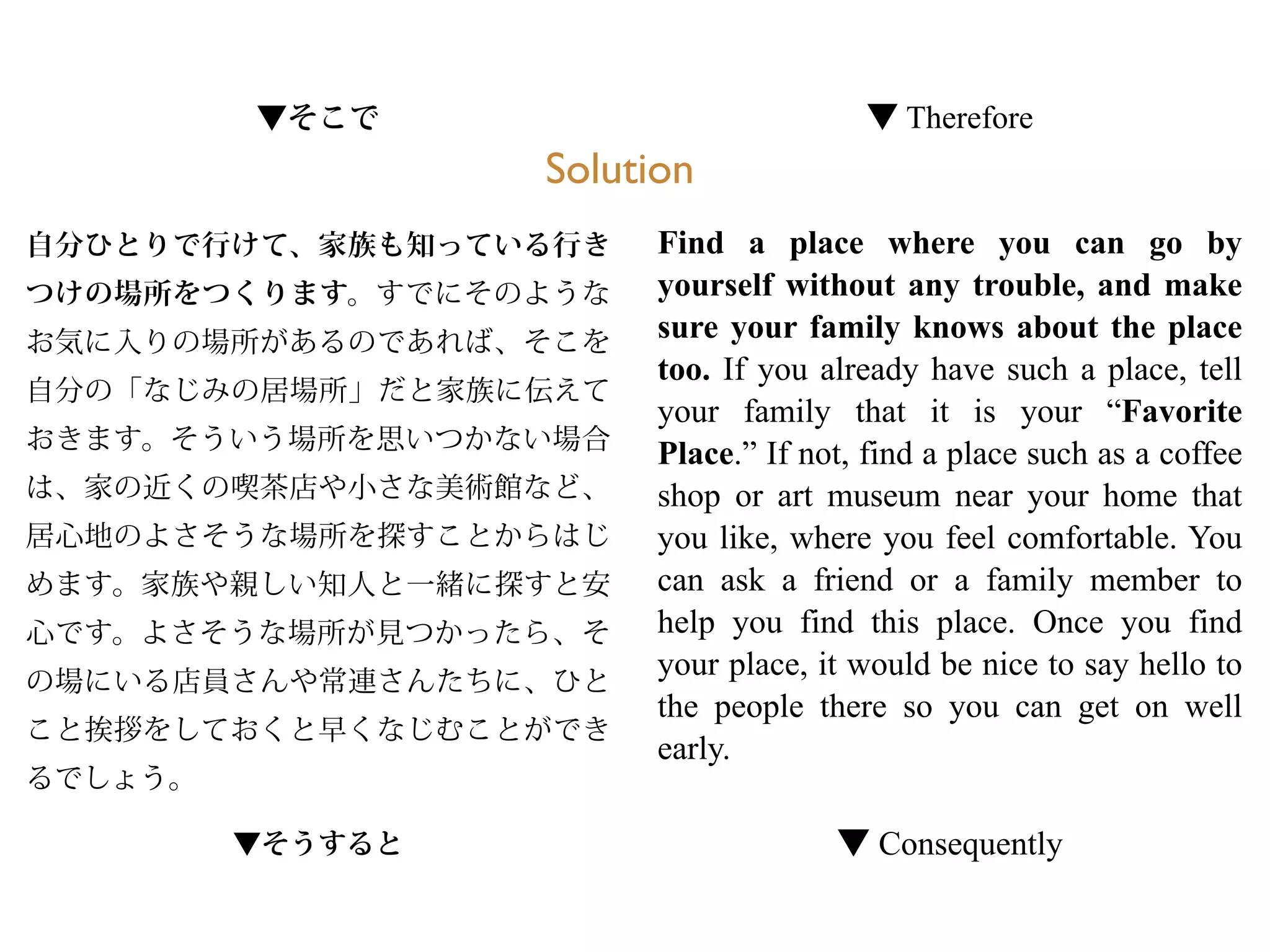
Solution
▼ Therefore
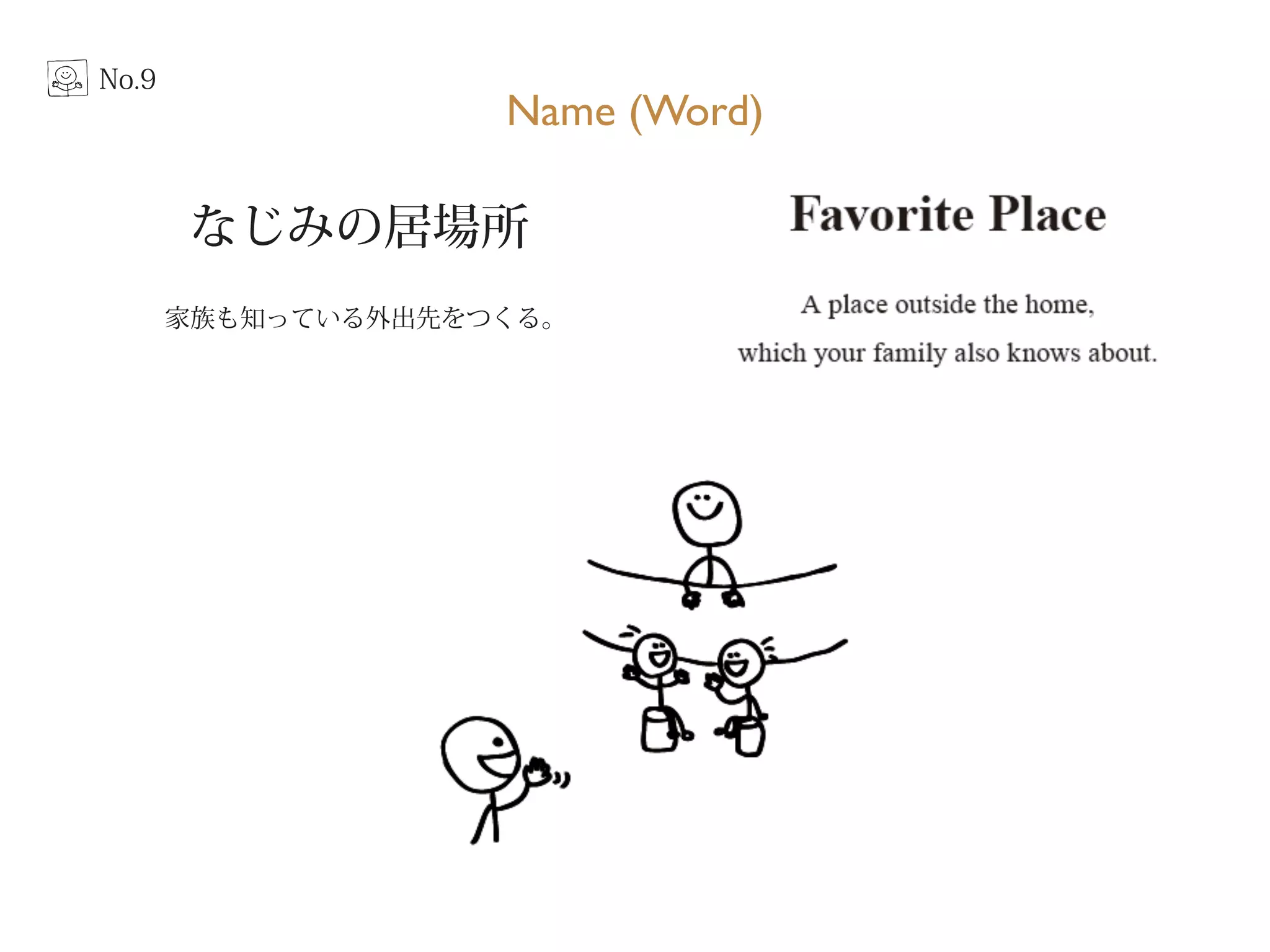
Find a place where you can go by
yourself without any trouble, and make
sure your family knows about the place
too. If you already have such a place, tell
your family that it is your “Favorite
Place.” If not, find a place such as a coffee
shop or art museum near your home that
you like, where you feel comfortable. You
can ask a friend or a family member to
help you find this place. Once you find
your place, it would be nice to say hello to
the people there so you can get on well
early.
▼そこで
自分ひとりで行けて、家族も知っている行き
つけの場所をつくります。すでにそのような
お気に入りの場所があるのであれば、そこを
自分の「なじみの居場所」だと家族に伝えて
おきます。そういう場所を思いつかない場合
は、家の近くの喫茶店や小さな美術館など、
居心地のよさそうな場所を探すことからはじ
めます。家族や親しい知人と一緒に探すと安
心です。よさそうな場所が見つかったら、そ
の場にいる店員さんや常連さんたちに、ひと
こと挨拶をしておくと早くなじむことができ
るでしょう。
▼そうすると▼ Consequently
17.
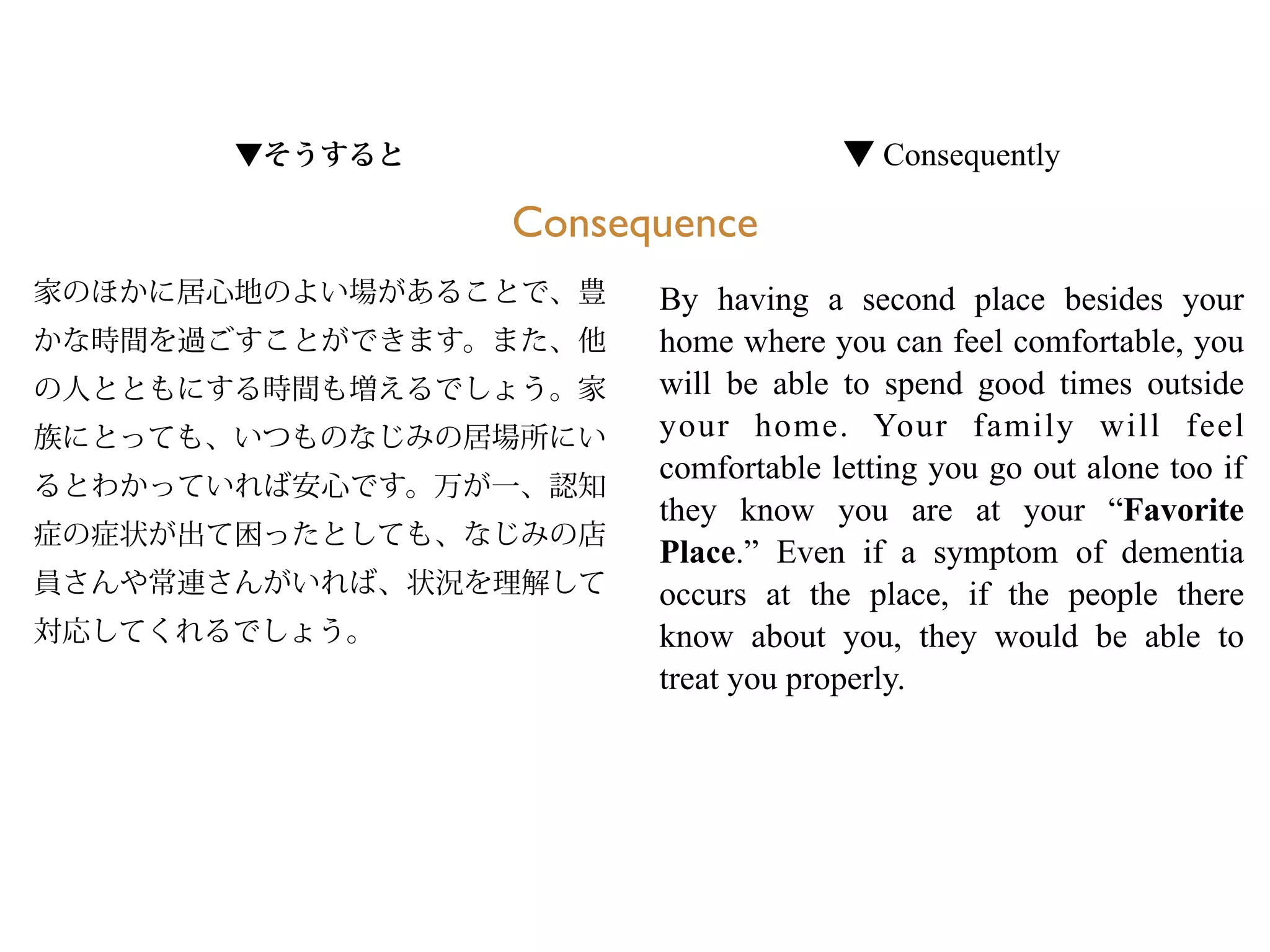
Consequence
▼そうすると
家のほかに居心地のよい場があることで、豊
かな時間を過ごすことができます。また、他
の人とともにする時間も増えるでしょう。家
族にとっても、いつものなじみの居場所にい
るとわかっていれば安心です。万が一、認知
症の症状が出て困ったとしても、なじみの店
員さんや常連さんがいれば、状況を理解して
対応してくれるでしょう。
▼ Consequently
By having a second place besides your
home where you can feel comfortable, you
will be able to spend good times outside
your home. Your family will feel
comfortable letting you go out alone too if
they know you are at your “Favorite
Place.” Even if a symptom of dementia
occurs at the place, if the people there
know about you, they would be able to
treat you properly.
Three Generations ofPattern Languages
1st Generation: Architecture, since 70’s
2nd Generation: Software, since late 80’s
3rd Generation: Human Action, since late 90’s
Pattern Language 2.0
Pattern Language 1.0
Pattern Language 3.0
26.
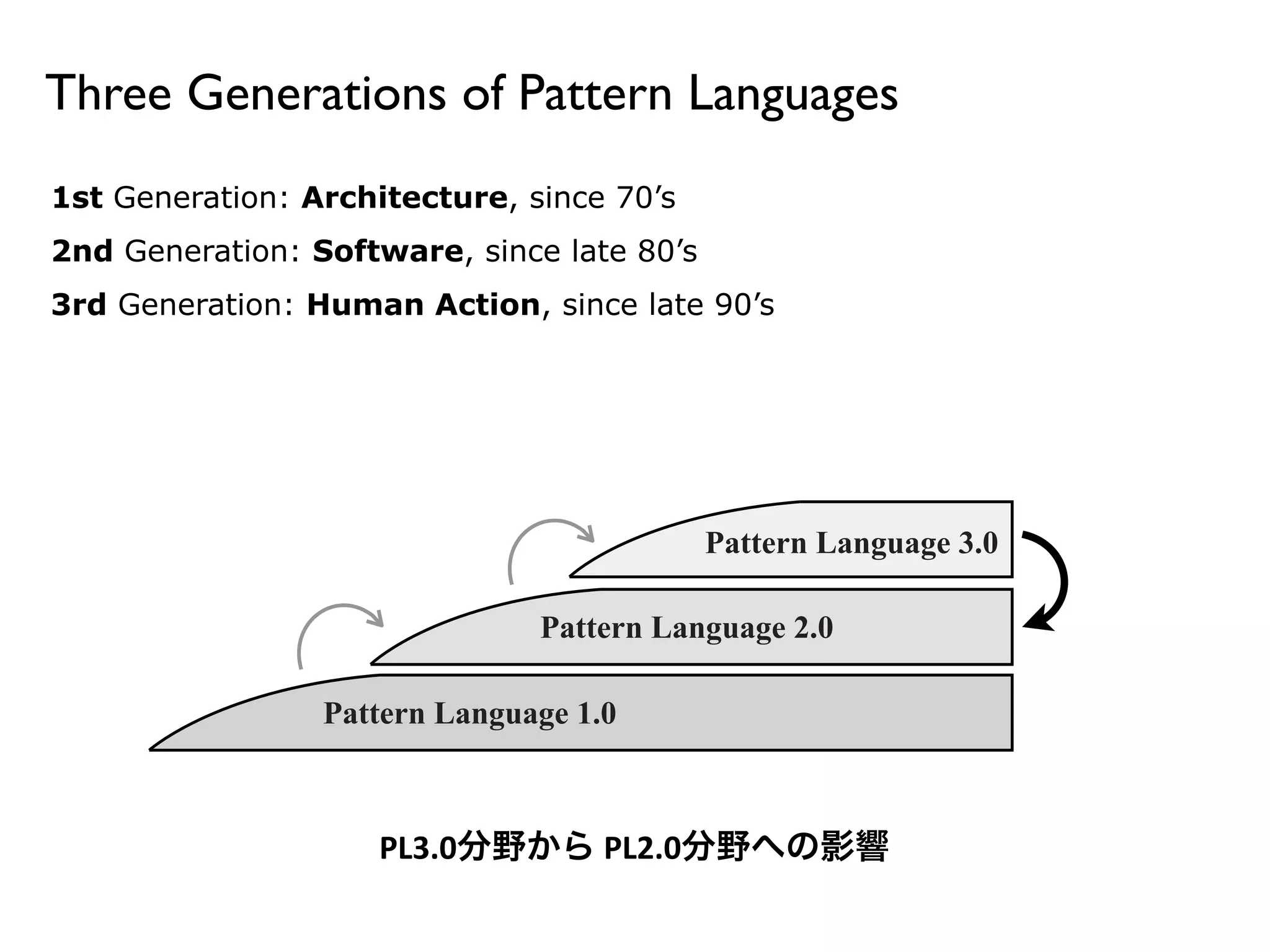
Three Generations ofPattern Languages
1st Generation: Architecture, since 70’s
2nd Generation: Software, since late 80’s
3rd Generation: Human Action, since late 90’s
Pattern Language 2.0
Pattern Language 1.0
Pattern Language 3.0
PL3.0分野から
PL2.0分野への影響
Three Generations ofPattern Languages
1st Generation: Architecture, since 70’s
2nd Generation: Software, since late 80’s
3rd Generation: Human Action, since late 90’s
Pattern Language 2.0
Pattern Language 1.0
Pattern Language 3.0
PL3.0分野から
PL1.0分野への影響
33.
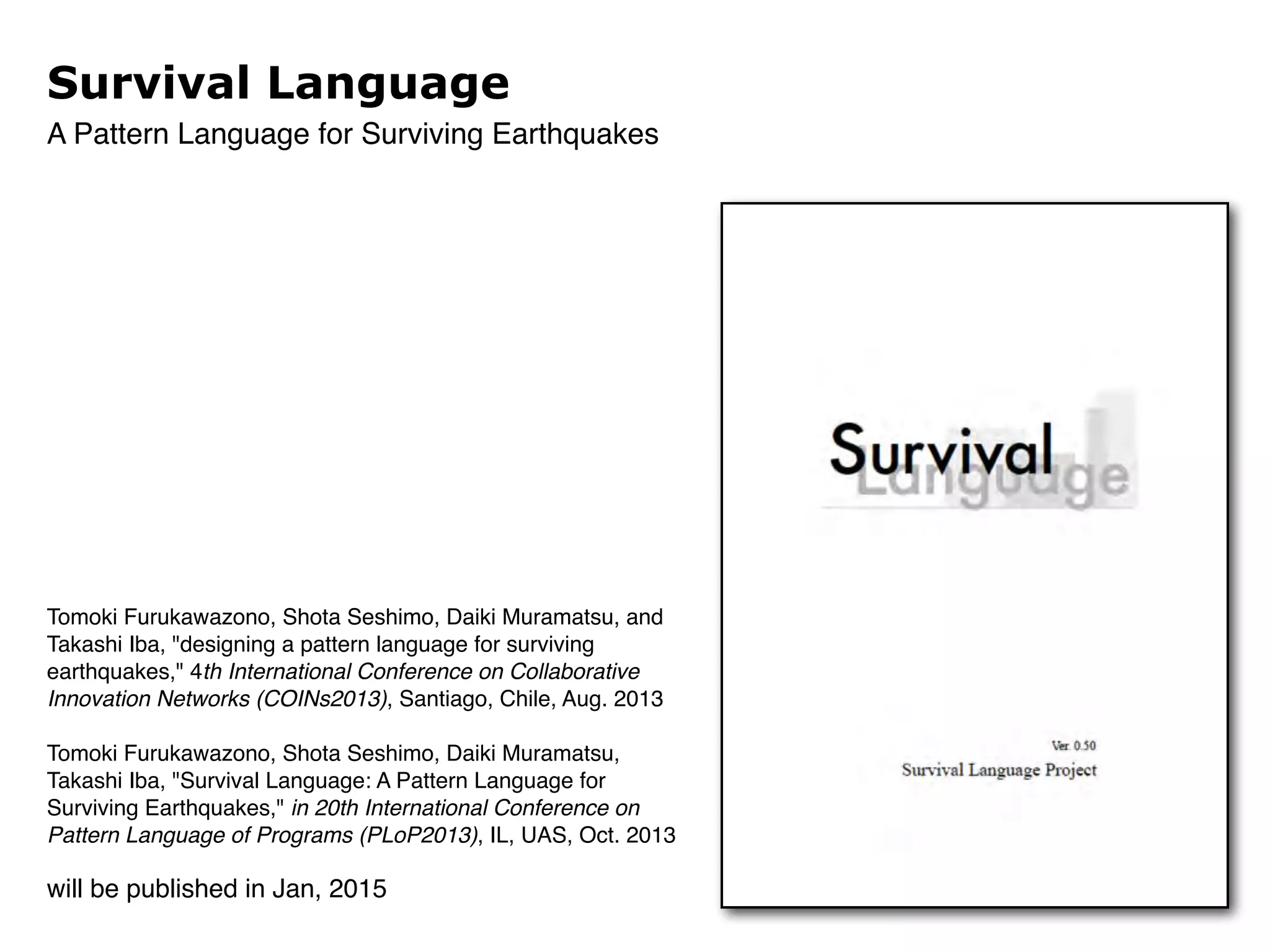
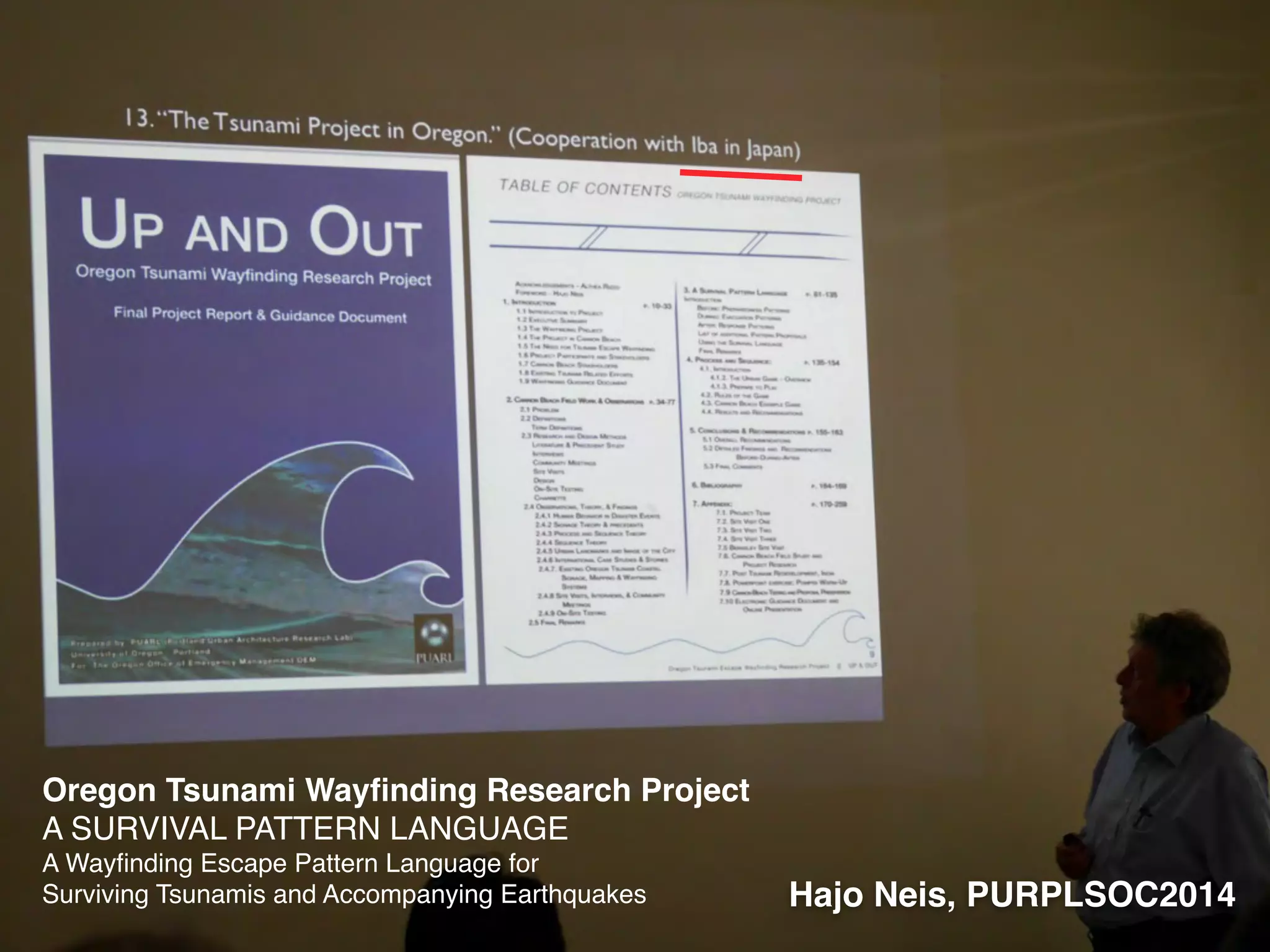
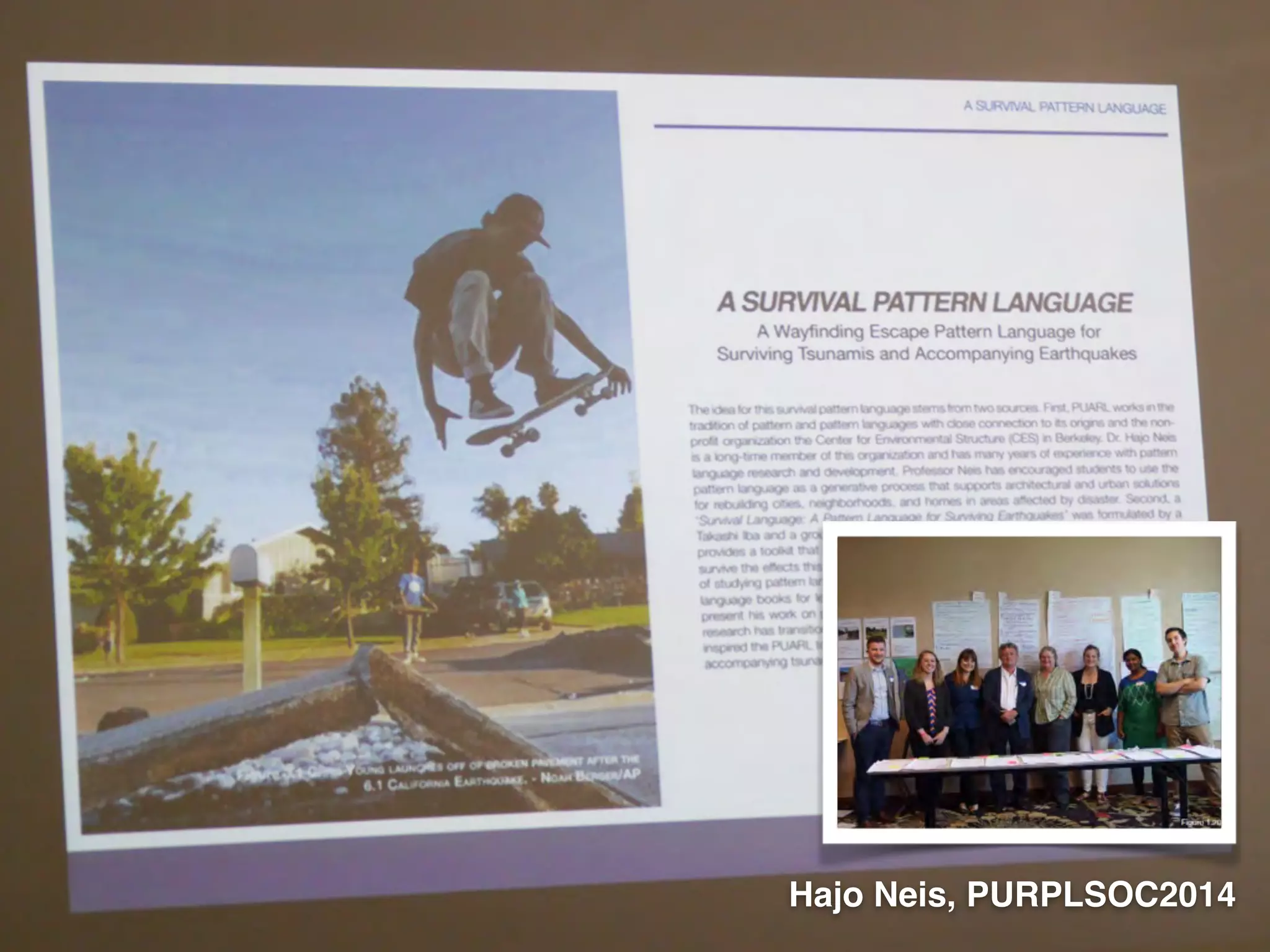
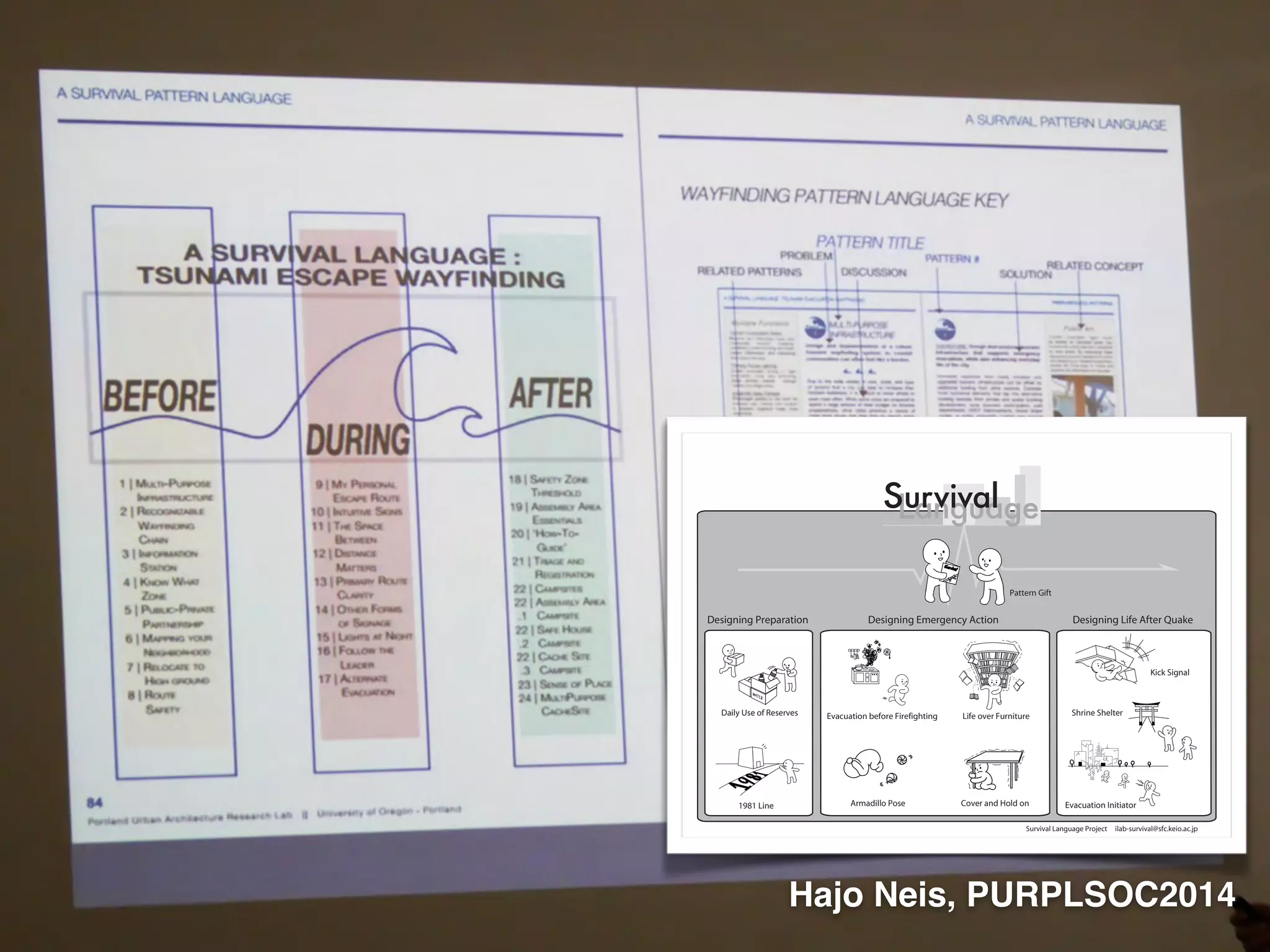
Survival Language
APattern Language for Surviving Earthquakes
Tomoki Furukawazono, Shota Seshimo, Daiki Muramatsu, and
Takashi Iba, "designing a pattern language for surviving
earthquakes," 4th International Conference on Collaborative
Innovation Networks (COINs2013), Santiago, Chile, Aug. 2013!
!
Tomoki Furukawazono, Shota Seshimo, Daiki Muramatsu,
Takashi Iba, "Survival Language: A Pattern Language for
Surviving Earthquakes," in 20th International Conference on
Pattern Language of Programs (PLoP2013), IL, UAS, Oct. 2013
will be published in Jan, 2015
34.
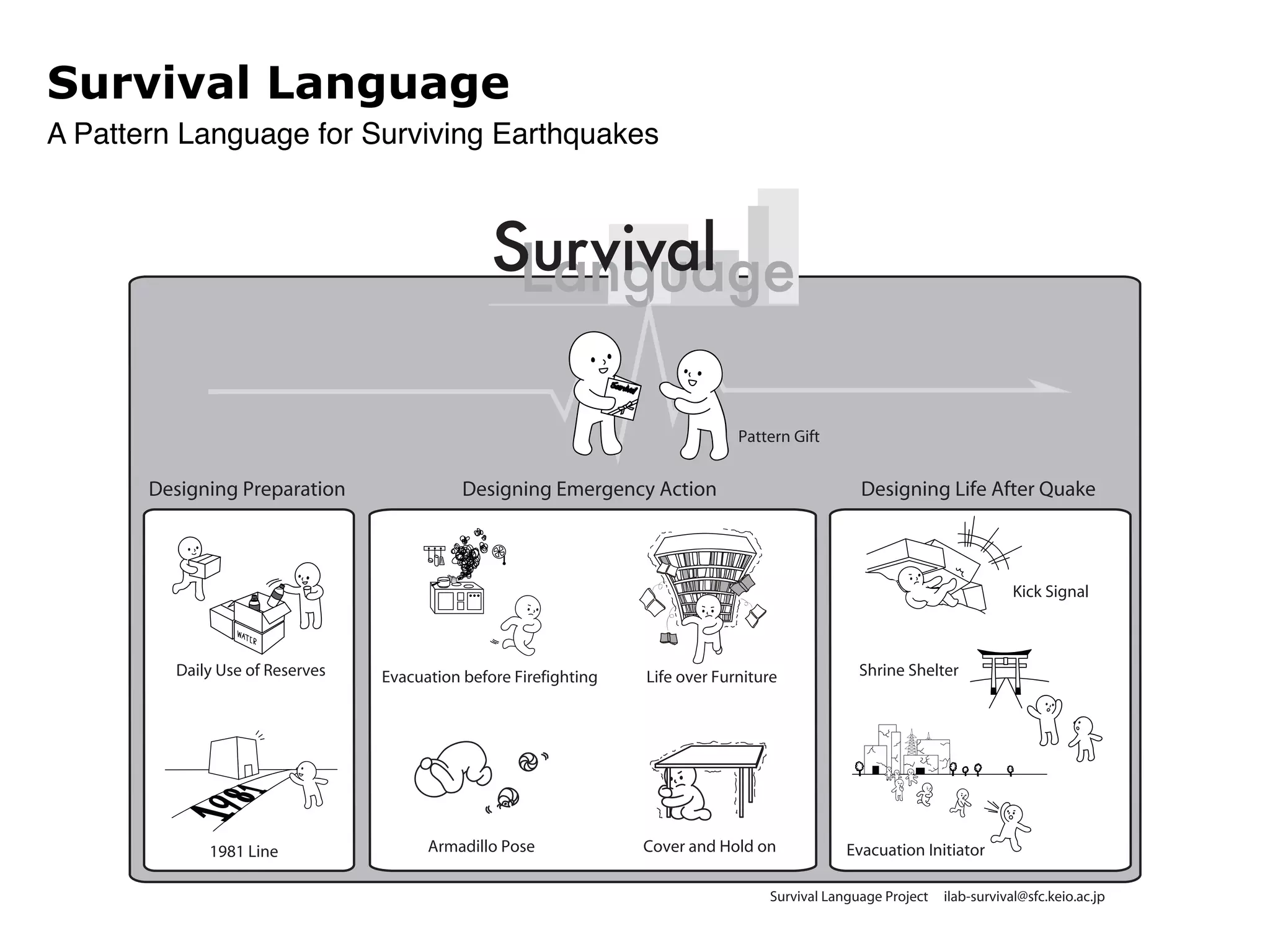
Survival Language
APattern Language for Surviving Earthquakes
Survival
Life over Furniture
Life over Furniture
S ur vival
Designing Preparation Designing Emergency Action Designing Life After Quake
Survival Language Project ilab-survival@sfc.keio.ac.jp
Daily Use of Reserves
1981 Line
Evacuation before Firefighting
Armadillo Pose Cover and Hold on
Kick Signal
Shrine Shelter
Evacuation Initiator
Pattern Gift
35.
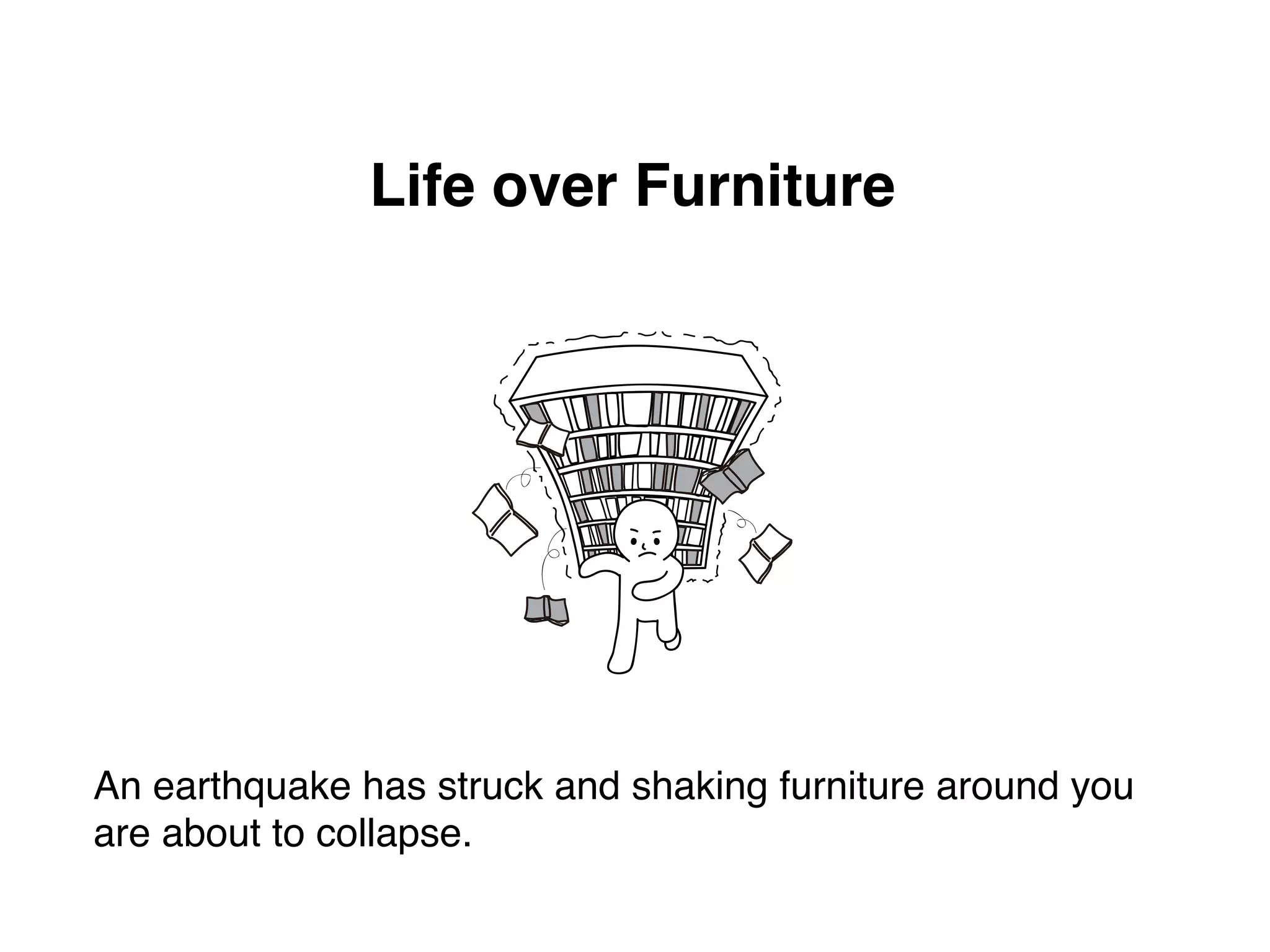
Life over Furniture
An earthquake has struck and shaking furniture around you
are about to collapse.
Survival
Survival
DesigningPreparation Designing Emergency Action Designing Life After Quake
Life over Furniture
Survival Language Project ilab-survival@sfc.keio.ac.jp
Daily Use of Reserves
1981 Line
Evacuation before Firefighting
Armadillo Pose Cover and Hold on
Kick Signal
Shrine Shelter
Evacuation Initiator
Pattern Gift
Hajo Neis, PURPLSOC2014
41.
Three Generations ofPattern Languages
1st Generation: Architecture, since 70’s
2nd Generation: Software, since late 80’s
3rd Generation: Human Action, since late 90’s
Pattern Language 2.0
Pattern Language 1.0
Pattern Language 3.0
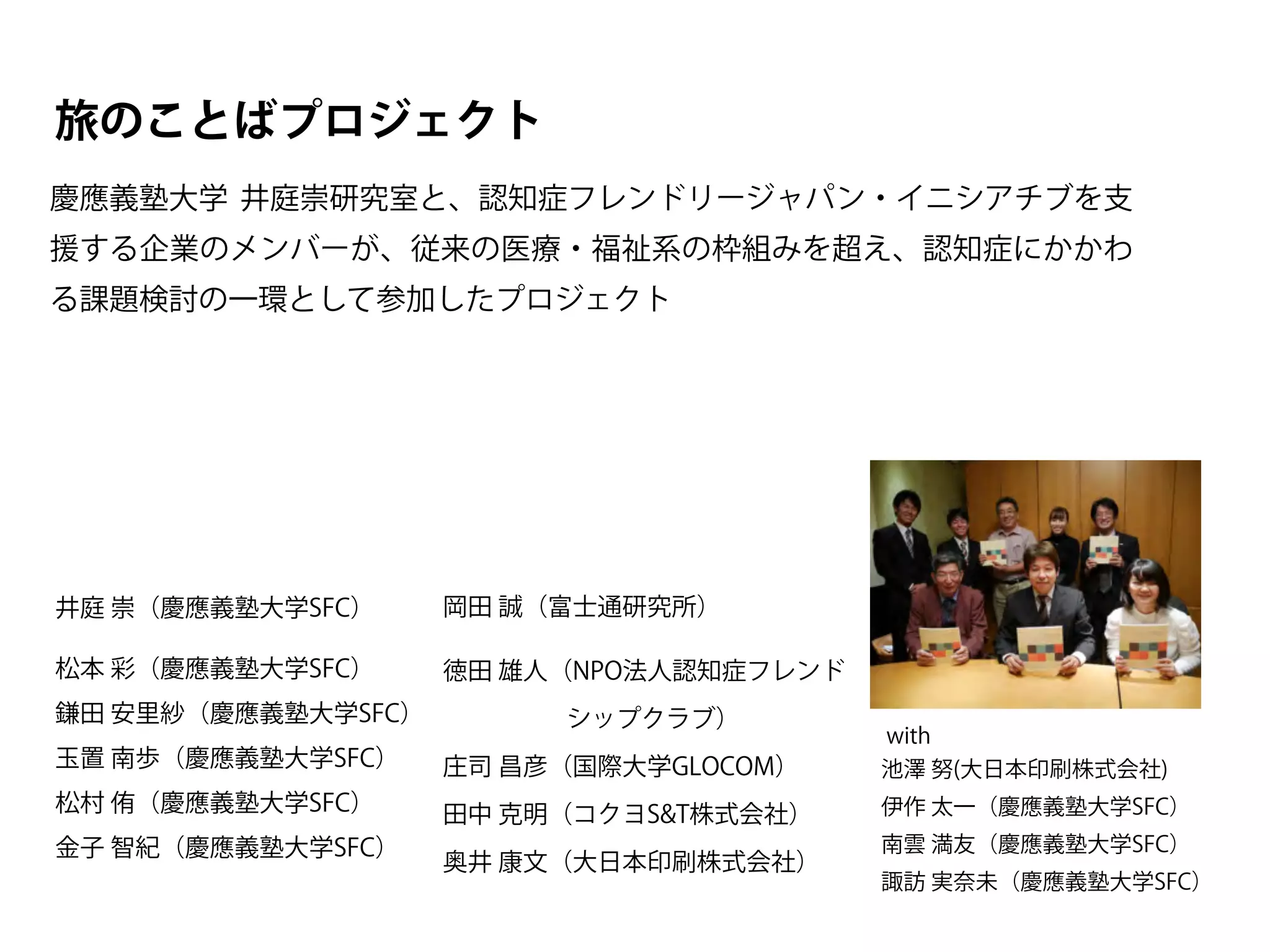
![1 新しい旅
[本人]の旅のことば[家族]の旅のことば[みんな]の旅のことば
2 旅への一歩
3 出発のあいさつ
4 旅の計画
5 旅の仲間
6 できることリスト
7 自分の日課
8 自分をあらわす部屋
9 なじみの居場所
10 よい先輩との出会い
11 流れを変える
12 今を楽しむ
13 自己紹介グッズ
14 自分なりの表現
15 ことばのギフト
16 ともに歩む
17 チームリーダー
18 我が家専門家
19 三種のつながり
20 さりげない告白
21 活躍の機会
22 夢への準備
23 おもしろ化
24 いつものおしゃべり
25 見えている世界
26 自分の時間
27 切り替えの工夫
28 悩みのつぶやき
29 特別な日
30 いろんな世代
31 わくわく実行委員会
32 小さな気づき
33 自分の仕事から
34 その場の助っ人
35 見守りサポーター
36 個人的なつきあい
37 ないまぜのイベント
38 仕事をつくる
39 声を届ける
40 ウォーム・デザイン](https://image.slidesharecdn.com/orffx2014-141125080319-conversion-gate02/75/Pattern-Language-3-0-11-2048.jpg)
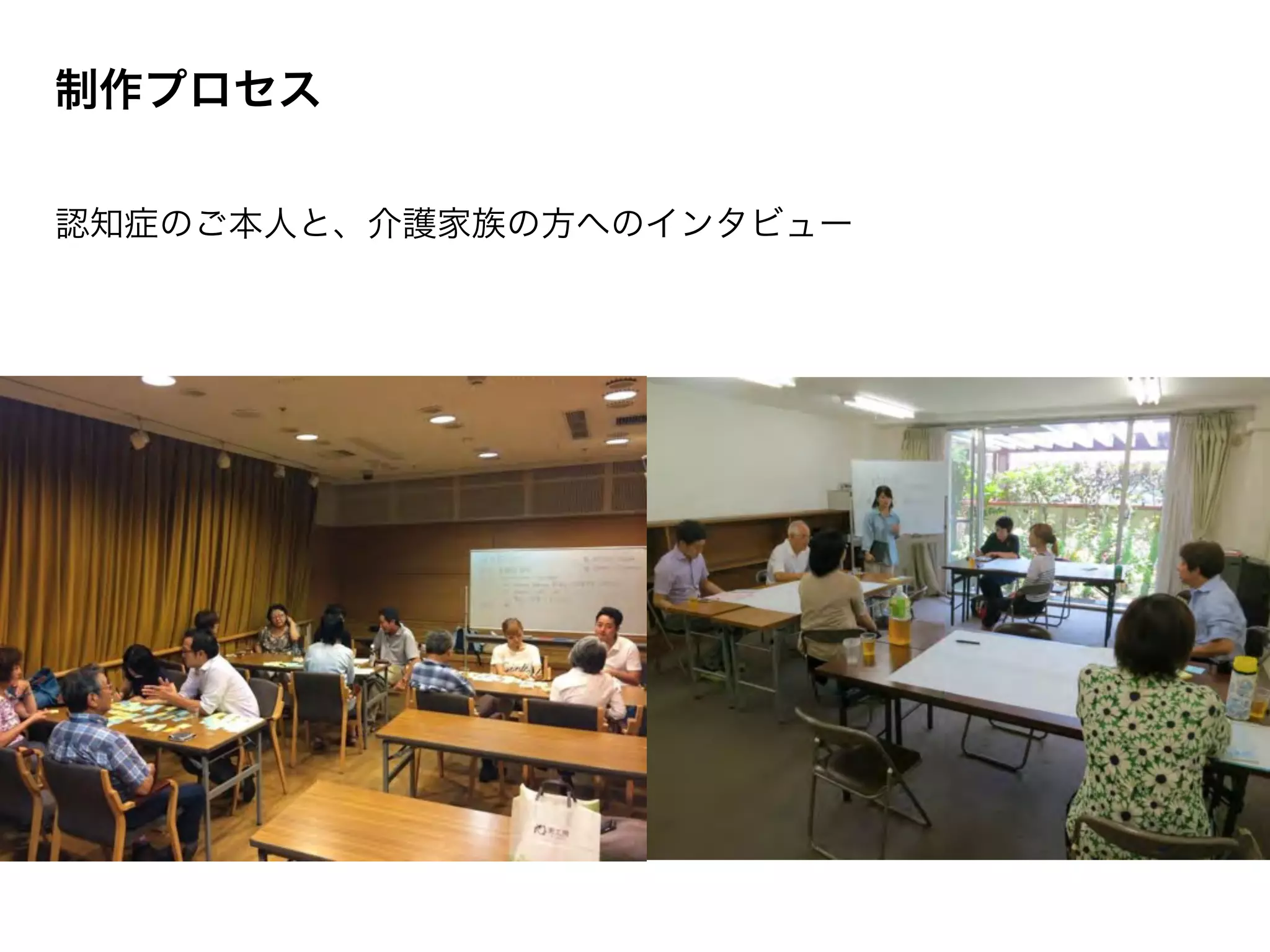
![1 新しい旅
[本人]の旅のことば[家族]の旅のことば[みんな]の旅のことば
2 旅への一歩
3 出発のあいさつ
4 旅の計画
5 旅の仲間
6 できることリスト
7 自分の日課
8 自分をあらわす部屋
9 なじみの居場所
10 よい先輩との出会い
11 流れを変える
12 今を楽しむ
13 自己紹介グッズ
14 自分なりの表現
15 ことばのギフト
16 ともに歩む
17 チームリーダー
18 我が家専門家
19 三種のつながり
20 さりげない告白
21 活躍の機会
22 夢への準備
23 おもしろ化
24 いつものおしゃべり
25 見えている世界
26 自分の時間
27 切り替えの工夫
28 悩みのつぶやき
29 特別な日
30 いろんな世代
31 わくわく実行委員会
32 小さな気づき
33 自分の仕事から
34 その場の助っ人
35 見守りサポーター
36 個人的なつきあい
37 ないまぜのイベント
38 仕事をつくる
39 声を届ける
40 ウォーム・デザイン](https://image.slidesharecdn.com/orffx2014-141125080319-conversion-gate02/75/Pattern-Language-3-0-12-2048.jpg)
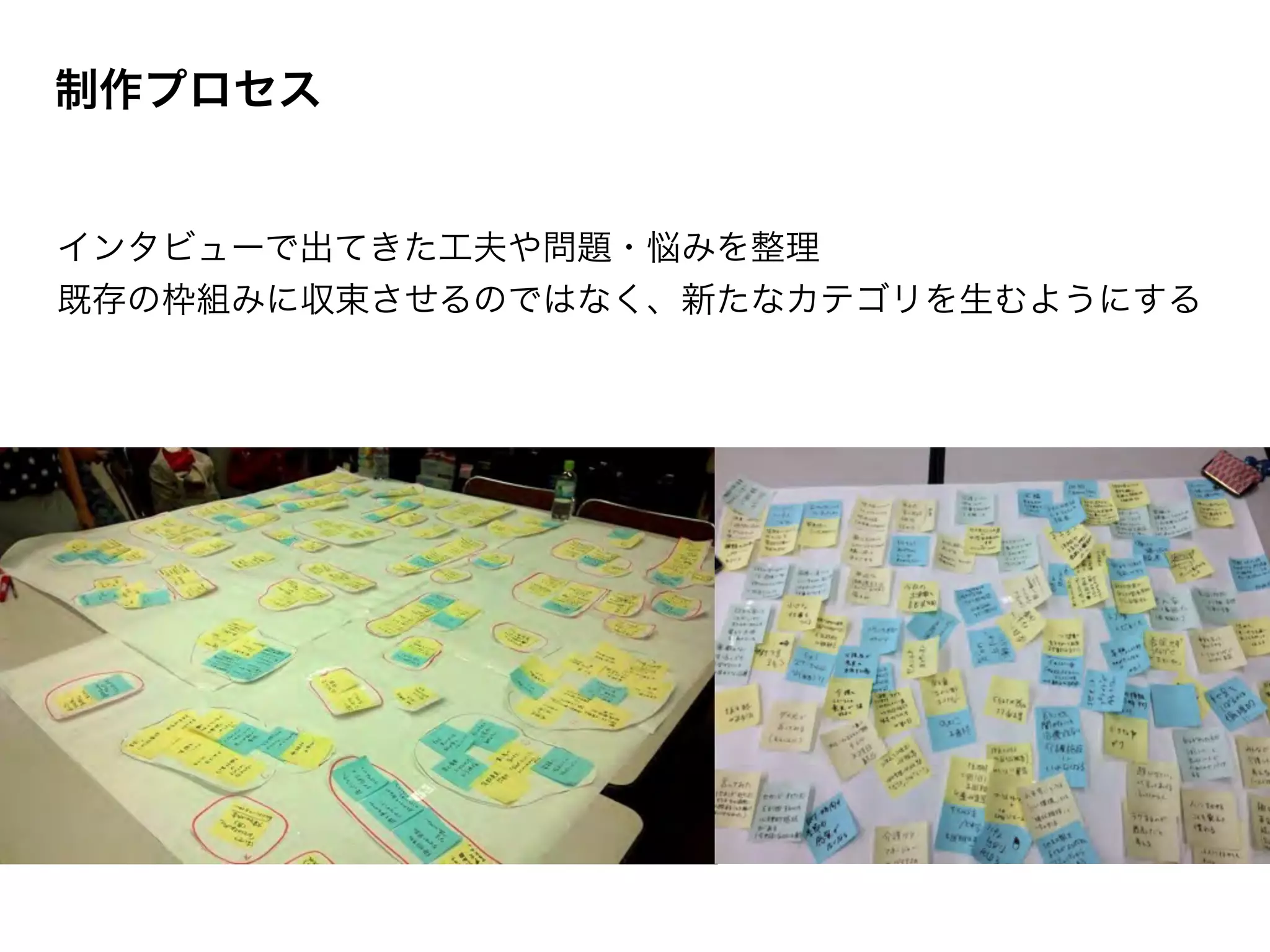
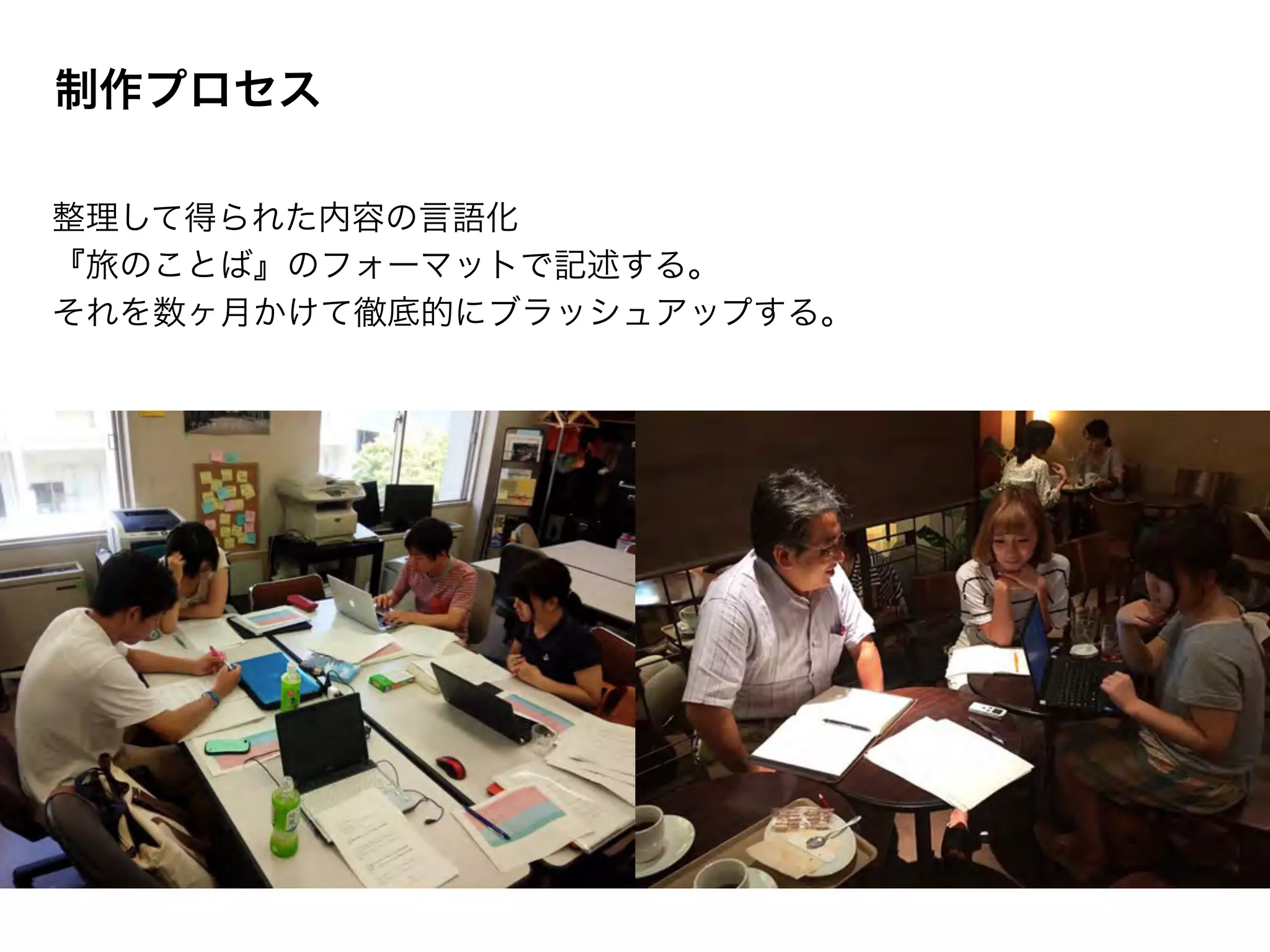
![1 新しい旅
[本人]の旅のことば[家族]の旅のことば[みんな]の旅のことば
2 旅への一歩
3 出発のあいさつ
4 旅の計画
5 旅の仲間
6 できることリスト
7 自分の日課
8 自分をあらわす部屋
9 なじみの居場所
10 よい先輩との出会い
11 流れを変える
12 今を楽しむ
13 自己紹介グッズ
14 自分なりの表現
15 ことばのギフト
16 ともに歩む
17 チームリーダー
18 我が家専門家
19 三種のつながり
20 さりげない告白
21 活躍の機会
22 夢への準備
23 おもしろ化
24 いつものおしゃべり
25 見えている世界
26 自分の時間
27 切り替えの工夫
28 悩みのつぶやき
29 特別な日
30 いろんな世代
31 わくわく実行委員会
32 小さな気づき
33 自分の仕事から
34 その場の助っ人
35 見守りサポーター
36 個人的なつきあい
37 ないまぜのイベント
38 仕事をつくる
39 声を届ける
40 ウォーム・デザイン](https://image.slidesharecdn.com/orffx2014-141125080319-conversion-gate02/75/Pattern-Language-3-0-19-2048.jpg)