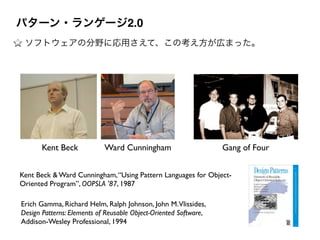
Ward CunninghamKent Beck
KentBeck & Ward Cunningham,“Using Pattern Languages for Object-
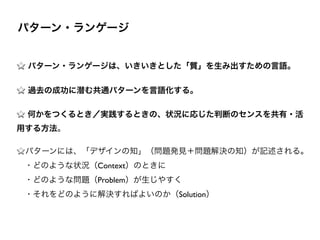
Oriented Program”, OOPSLA '87, 1987
Gang of Four
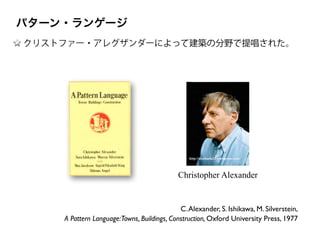
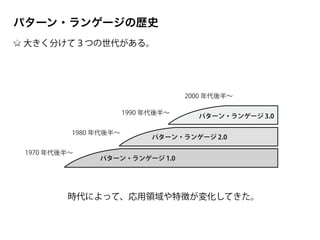
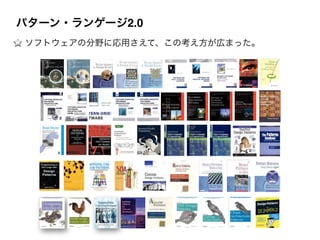
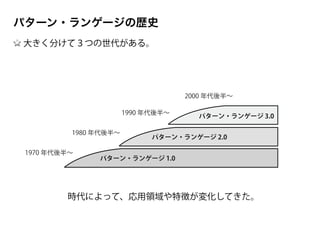
ソフトウェアの分野に応用さえて、この考え方が広まった。
Erich Gamma, Richard Helm, Ralph Johnson, John M.Vlissides,
Design Patterns: Elements of Reusable Object-Oriented Software,
Addison-Wesley Professional, 1994
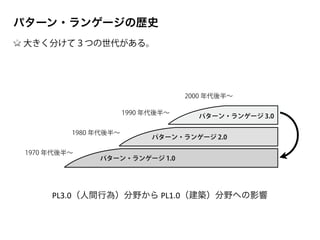
パターン・ランゲージ2.0
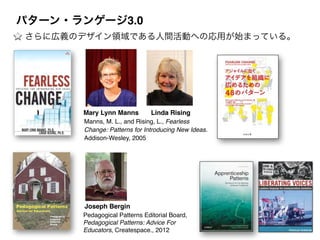
Linda RisingMary LynnManns
Joseph Bergin
Manns, M. L., and Rising, L., Fearless
Change: Patterns for Introducing New Ideas.
Addison-Wesley, 2005
Pedagogical Patterns Editorial Board,
Pedagogical Patterns: Advice For
Educators, Createspace., 2012
さらに広義のデザイン領域である人間活動への応用が始まっている。
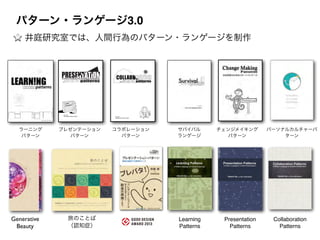
パターン・ランゲージ3.0
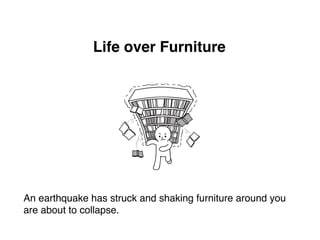
Life over Furniture
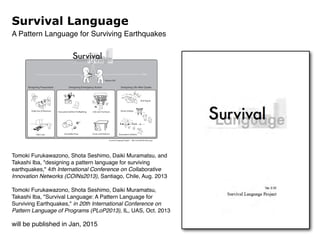
SurvivalLanguage
Tomoki Furukawazono, Shota Seshimo, Daiki Muramatsu, and
Takashi Iba, "designing a pattern language for surviving
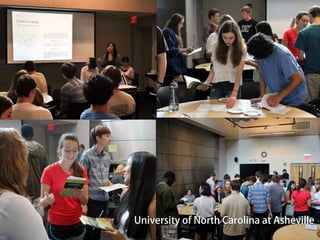
earthquakes," 4th International Conference on Collaborative
Innovation Networks (COINs2013), Santiago, Chile, Aug. 2013!
!
Tomoki Furukawazono, Shota Seshimo, Daiki Muramatsu,
Takashi Iba, "Survival Language: A Pattern Language for
Surviving Earthquakes," in 20th International Conference on
Pattern Language of Programs (PLoP2013), IL, UAS, Oct. 2013
will be published in Jan, 2015
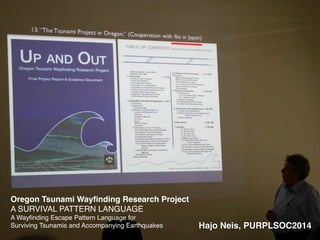
A Pattern Language for Surviving Earthquakes
Survival
S urvival
Designing Preparation Designing Emergency Action Designing Life After Quake
Survival Language Project ilab-survival@sfc.keio.ac.jp
Daily Use of Reserves
1981 Line
Evacuation before Firefighting
Armadillo Pose Cover and Hold on
Life over Furniture
Kick Signal
Shrine Shelter
Evacuation Initiator
Pattern Gift
42.
Life over Furniture
Anearthquake has struck and shaking furniture around you
are about to collapse.
experience
as a whole
experience
asa whole
pattern pattern
pattern
pattern
Pattern Language
as Vocabulary for
Communication
pattern
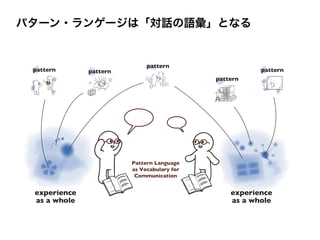
パターン・ランゲージは「対話の語彙」となる
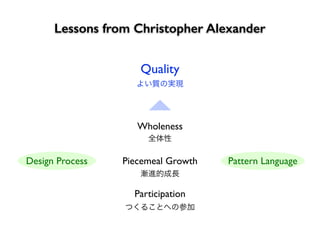
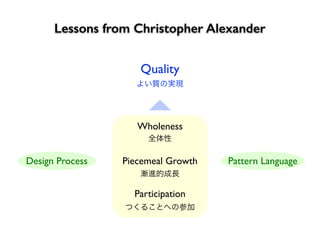
つくることへの参加
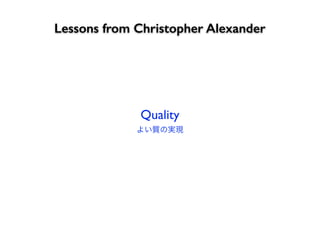
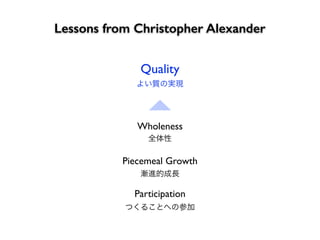
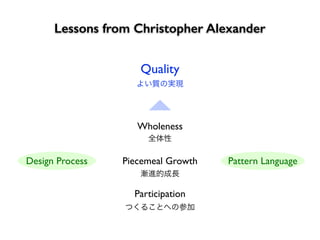
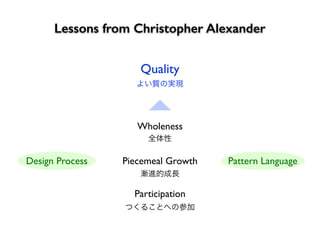
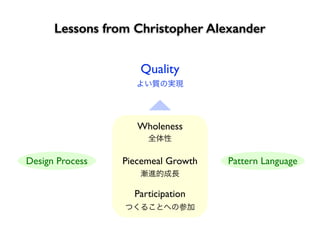
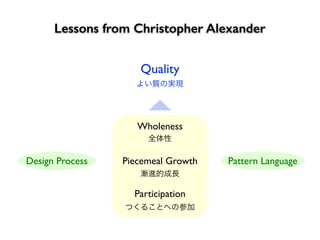
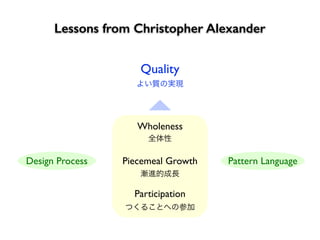
Lessons from ChristopherAlexander
よい質の実現
漸進的成長
全体性
Quality
Wholeness
Piecemeal Growth
Participation
Design Process Pattern Language
61.
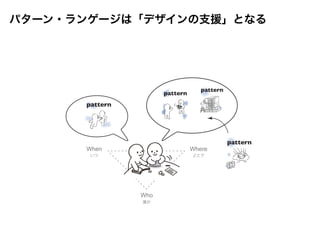
What
Why How
Who
When Where
何を
誰が
なぜ
どこでいつ
どのように
「つくる」ことの
本質的な一部
「つくる」ことの
背景にあたる部分
Who
WhenWhere
誰が
どこでいつ
What
Why How
何を
なぜ
どのように
What
Why How
何を
なぜ
どのように
What
Why
How
何を
なぜ
どのように
What
Why How
何を
なぜ
どのように
What
Why
How
何を
なぜ
どのように
What
Why
How
何を
なぜ
どのように
What
Why
How
何を
なぜ
どのように
What
Why
How
何を
なぜ
どのように
What
Why
How
何を
なぜ
どのように
pattern
pattern
pattern
pattern
pattern
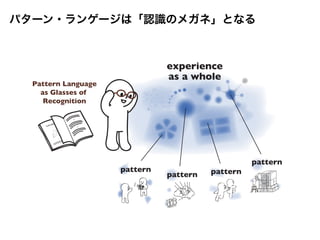
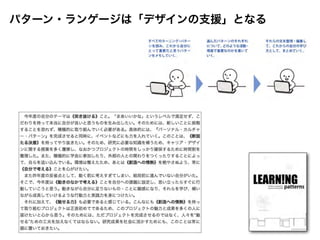
パターン・ランゲージは「デザインの支援」となる
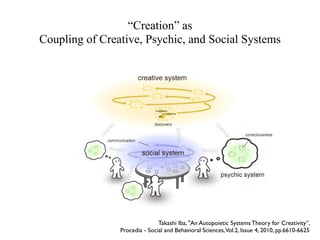
“Creation” as
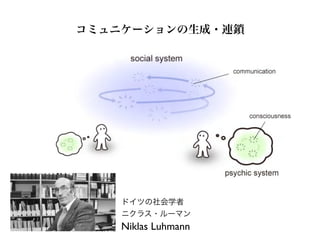
Coupling ofCreative, Psychic, and Social Systems
Takashi Iba, "An Autopoietic Systems Theory for Creativity”,
Procedia - Social and Behavioral Sciences,Vol.2, Issue 4, 2010, pp.6610-6625
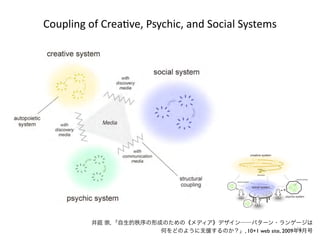
82.
Coupling
of
Crea4ve,
Psychic,
and
Social
Systems
28
井庭 崇, 「自生的秩序の形成のための《メディア》デザイン──パターン・ランゲージは
何をどのように支援するのか?」, 10+1 web site, 2009年9月号
83.
つくることへの参加
Lessons from ChristopherAlexander
よい質の実現
漸進的成長
全体性
Quality
Wholeness
Piecemeal Growth
Participation
Design Process Pattern Language
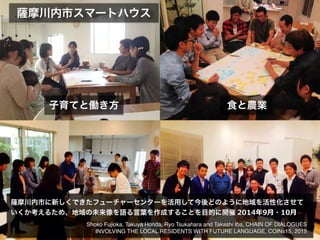
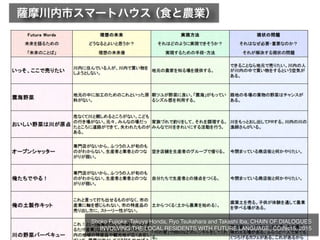
摩川内市スマートハウス(食と農業)
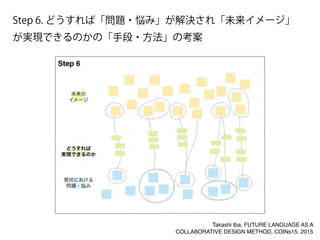
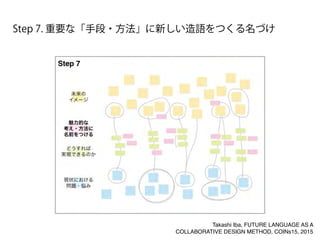
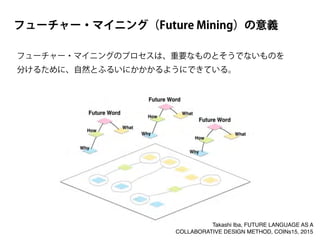
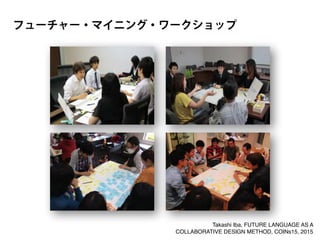
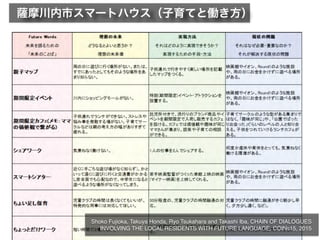
Shoko Fujioka, TakuyaHonda, Ryo Tsukahara and Takashi Iba, CHAIN OF DIALOGUES
INVOLVING THE LOCAL RESIDENTS WITH FUTURE LANGUAGE, COINs15, 2015
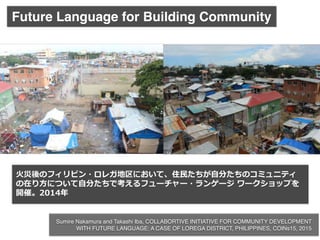
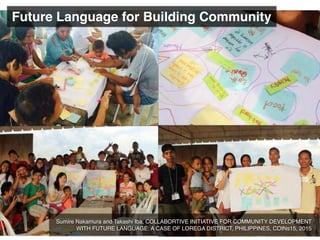
Future Language forBuilding Community
Sumire Nakamura and Takashi Iba, COLLABORTIVE INITIATIVE FOR COMMUNITY DEVELOPMENT
WITH FUTURE LANGUAGE: A CASE OF LOREGA DISTRICT, PHILIPPINES, COINs15, 2015
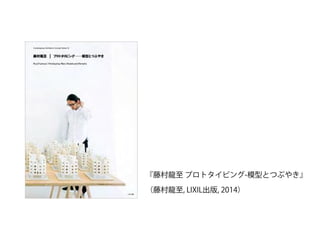
![Takashi Iba
博士(政策・メディア)
慶應義塾大学SFC 総合政策学部 准教授
井庭 崇
創造社会を支える方法・道具をつくる
● 個人・組織・社会が、より創造的になることの支援
● 「パターン・ランゲージ」の研究と実践
パターン・ランゲージ
Reality
リアリティ プラス
Pattern Languages
創造的な未来をつくるための言語
中
埜
博
NakanoHiroshi
江
渡
浩
一
郎
EtoKoichiro
中
西
泰
人
NakanishiYasuto
竹
中
平
蔵
TakenakaHeizō
羽
生
田
栄
一
EiitiHanyuda
井
庭
崇[
編
著
]
IbaTakashi
パ
タ
ー
ン・
ラ
ン
ゲ
ー
ジ
定価(本体 2,400円+税)
創造的な社会へ
応急処置的な社会から、
中埜 博 江渡浩一郎 中西泰人
竹中平蔵 羽生田栄一
井庭 崇
パターン・ランゲージによって、私たちはどのような未来をつくることができるのか?
気鋭の社会学者・井庭崇が、中埜博、江渡浩一郎、中西泰人、竹中平蔵、羽生田栄一
という各界のフロントランナーを迎え、徹底討論。
読者のリアリティに、新たな知をプラスする
[
編
著
]
パ
タ
ー
ン・
ラ
ン
ゲ
ー
ジ
!!](https://image.slidesharecdn.com/201501fujimuralixil-150128052543-conversion-gate01/85/LIXIL-2-320.jpg)

![1 新しい旅
2 旅への一歩
3 出発のあいさつ
4 旅の計画
5 旅の仲間
6 できることリスト
7 自分の日課
8 自分をあらわす部屋
9 なじみの居場所
10 よい先輩との出会い
11 流れを変える
12 今を楽しむ
13 自己紹介グッズ
14 自分なりの表現
15 ことばのギフト
16 ともに歩む
17 チームリーダー
18 我が家専門家
19 三種のつながり
20 さりげない告白
21 活躍の機会
22 夢への準備
23 おもしろ化
24 いつものおしゃべり
25 見えている世界
26 自分の時間
27 切り替えの工夫
28 悩みのつぶやき
29 特別な日
30 いろんな世代
31 わくわく実行委員会
32 小さな気づき
33 自分の仕事から
34 その場の助っ人
35 見守りサポーター
36 個人的なつきあい
37 ないまぜのイベント
38 仕事をつくる
39 声を届ける
40 ウォーム・デザイン
[みんな]の旅のことば[家族]の旅のことば[本人]の旅のことば](https://image.slidesharecdn.com/201501fujimuralixil-150128052543-conversion-gate01/85/LIXIL-34-320.jpg)


![パターン・ランゲージ
Reality
リアリティ プラス
Pattern Languages
創造的な未来をつくるための言語
中
埜
博
NakanoHiroshi
江
渡
浩
一
郎
EtoKoichiro
中
西
泰
人
NakanishiYasuto
竹
中
平
蔵
TakenakaHeizō
羽
生
田
栄
一
EiitiHanyuda
井
庭
崇[
編
著
]
IbaTakashi
パ
タ
ー
ン・
ラ
ン
ゲ
ー
ジ
定価(本体 2,400円+税)
創造的な社会へ
応急処置的な社会から、
中埜 博 江渡浩一郎 中西泰人
竹中平蔵 羽生田栄一
井庭 崇
パターン・ランゲージによって、私たちはどのような未来をつくることができるのか?
気鋭の社会学者・井庭崇が、中埜博、江渡浩一郎、中西泰人、竹中平蔵、羽生田栄一
という各界のフロントランナーを迎え、徹底討論。
読者のリアリティに、新たな知をプラスする
[
編
著
]
パ
タ
ー
ン・
ラ
ン
ゲ
ー
ジ
!!
パターン・ランゲージについては… 創造システム理論については…
Books](https://image.slidesharecdn.com/201501fujimuralixil-150128052543-conversion-gate01/85/LIXIL-119-320.jpg)


![[AWSマイスターシリーズ] AWS CLI / AWS Tools for Windows PowerShell](https://cdn.slidesharecdn.com/ss_thumbnails/20140115aws-meister-regenerate-awsclipowershell-140130055421-phpapp01-thumbnail.jpg?width=640&height=640&fit=bounds)


