

LEADERSHIP
Oleksa Stelmakh
Delivery Director, PMP©, SoftServe
April, 2014
INTRO
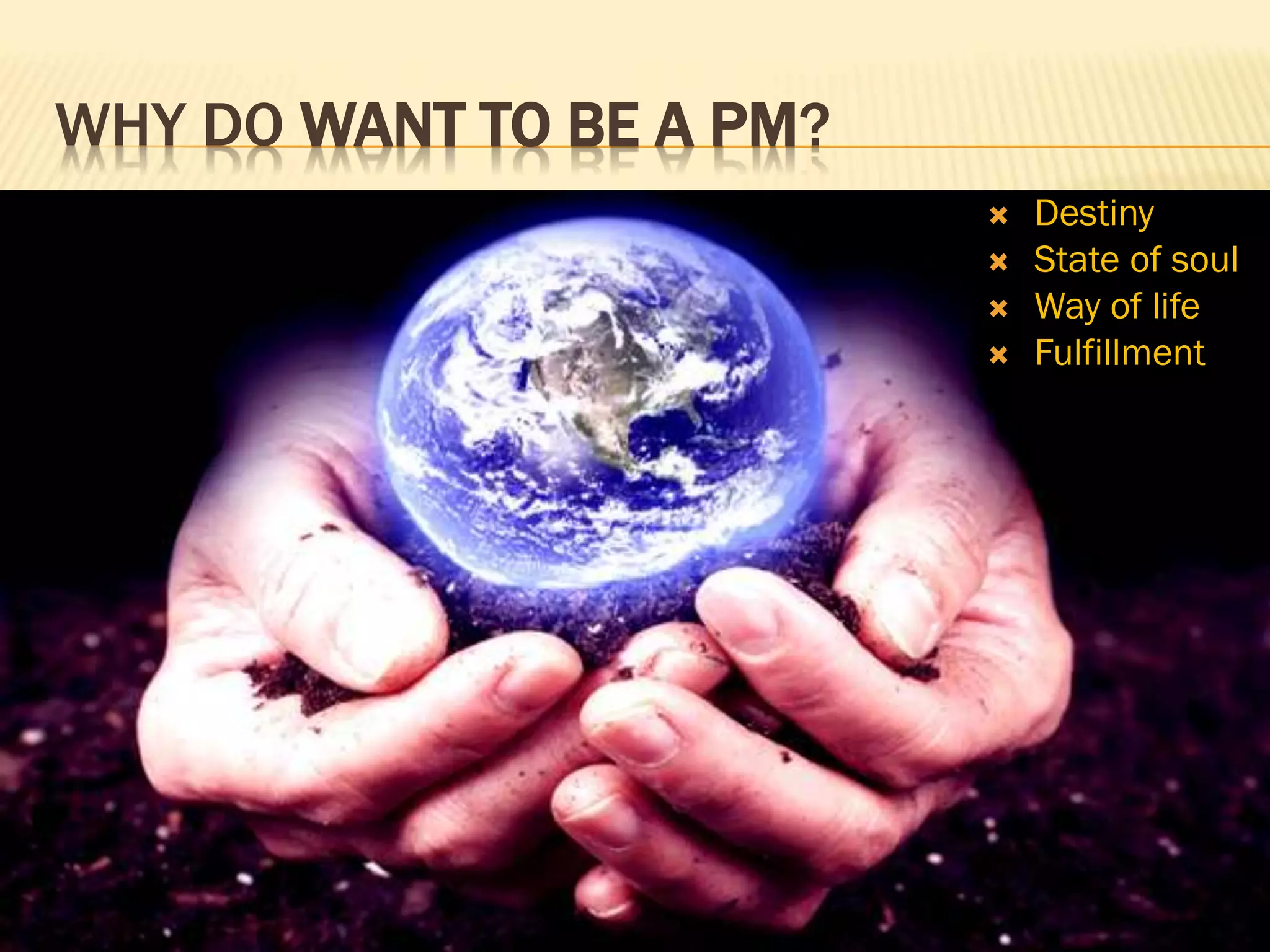
WHY DO WANT TO BE A PM?
 Destiny
 State of soul
 Way of life
 Fulfillment
TYPICAL PROJECT… WHO IS LEADER?
Why Me? Who Else if
not Me?
LEADERSHIP
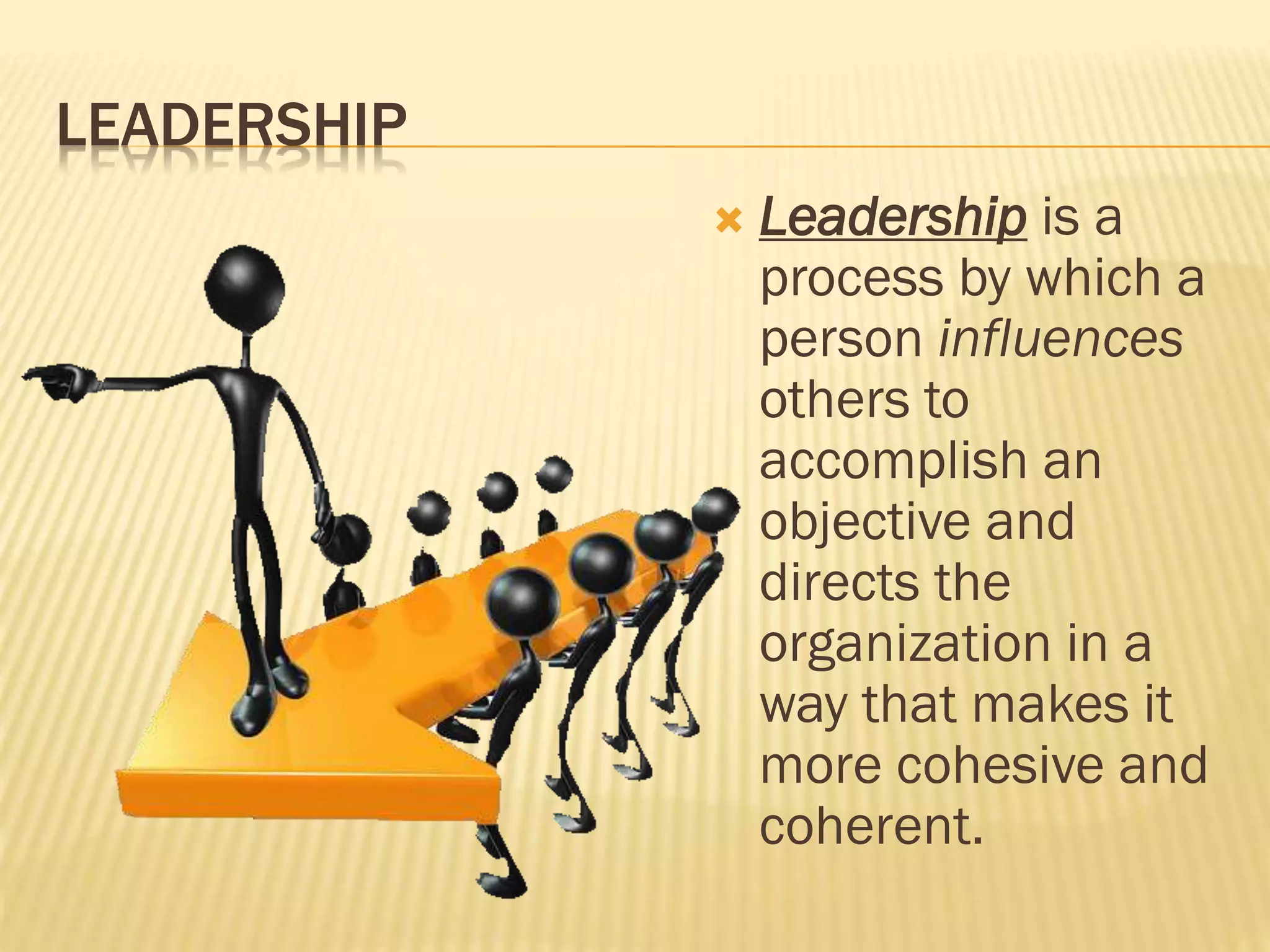
 Leadership is a
process by which a
person influences
others to
accomplish an
objective and
directs the
organization in a
way that makes it
more cohesive and
coherent.
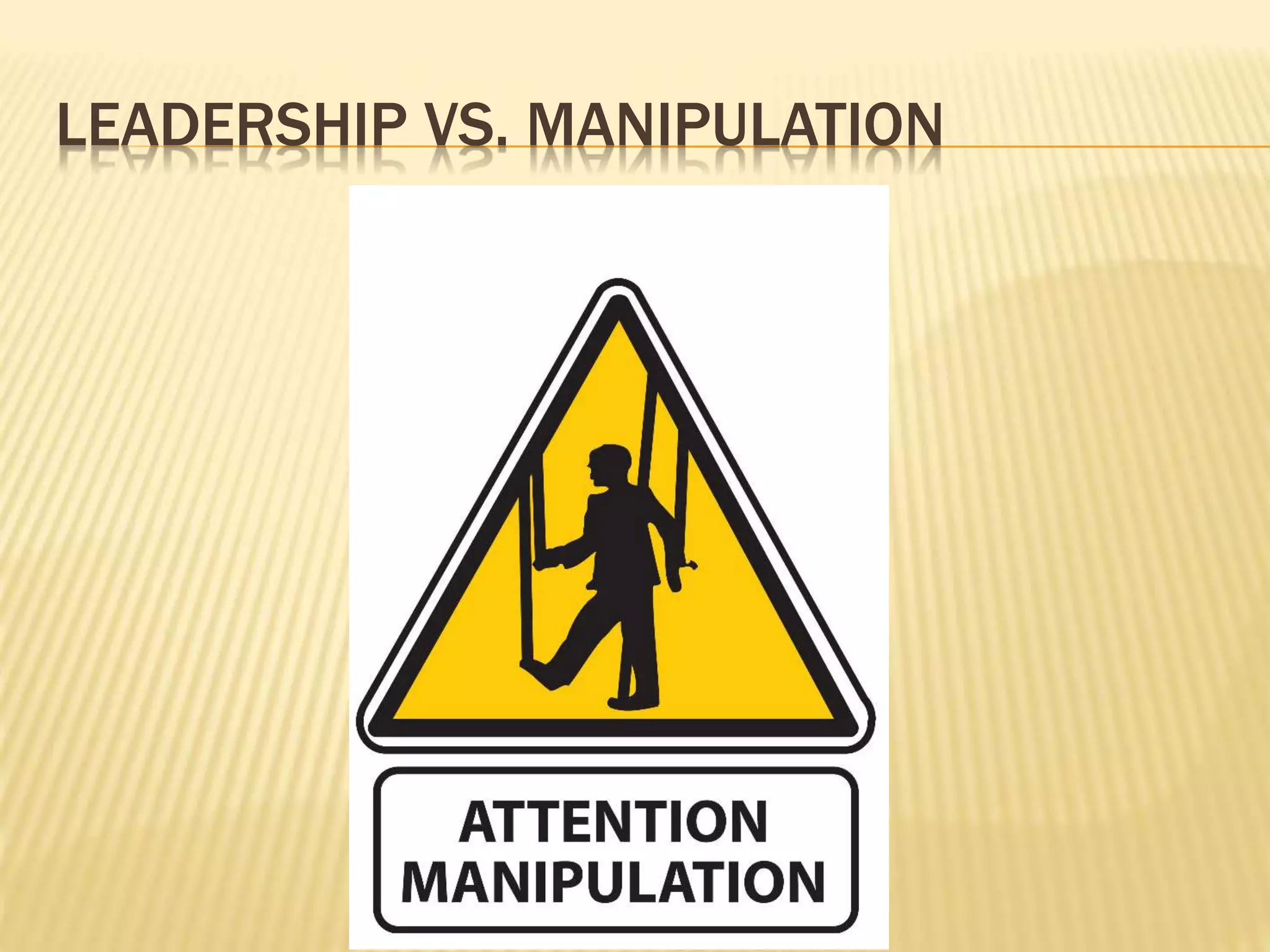
LEADERSHIP VS. MANIPULATION
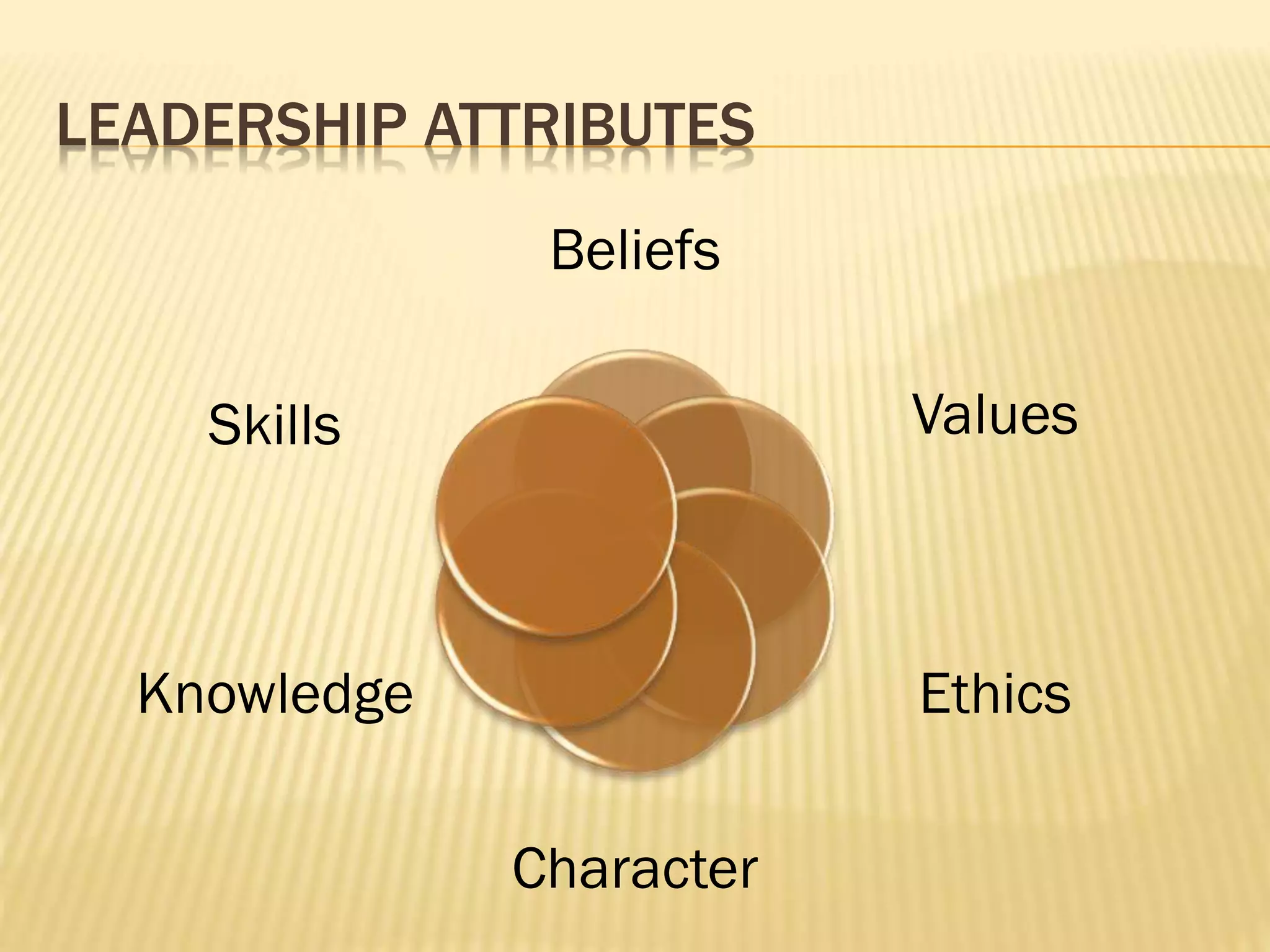
LEADERSHIP ATTRIBUTES
Beliefs
Values
Ethics
Character
Knowledge
Skills
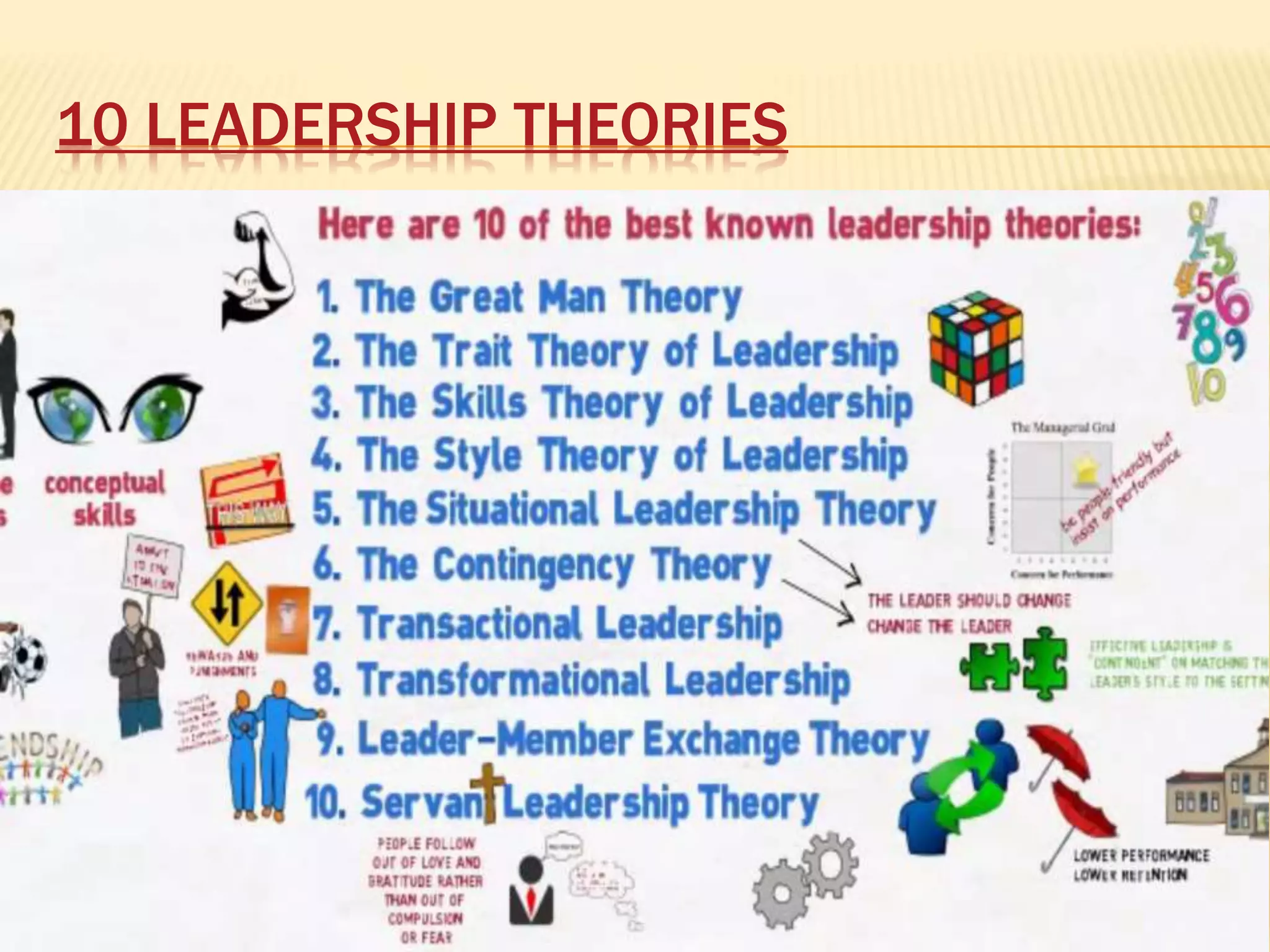
10 LEADERSHIP THEORIES
QUESTION
Which of the following leadership traits is MOST
important for a project manager?
A. Communication
B. Team building
C. Technical expertise
D. Project control
WHAT IS COMMUNICATION?
 Speak to express, not to impress (English
proverb)
 Act
 Feel
 Empathy (Здатність відчувати психологічний стан іншого; співпереживання)
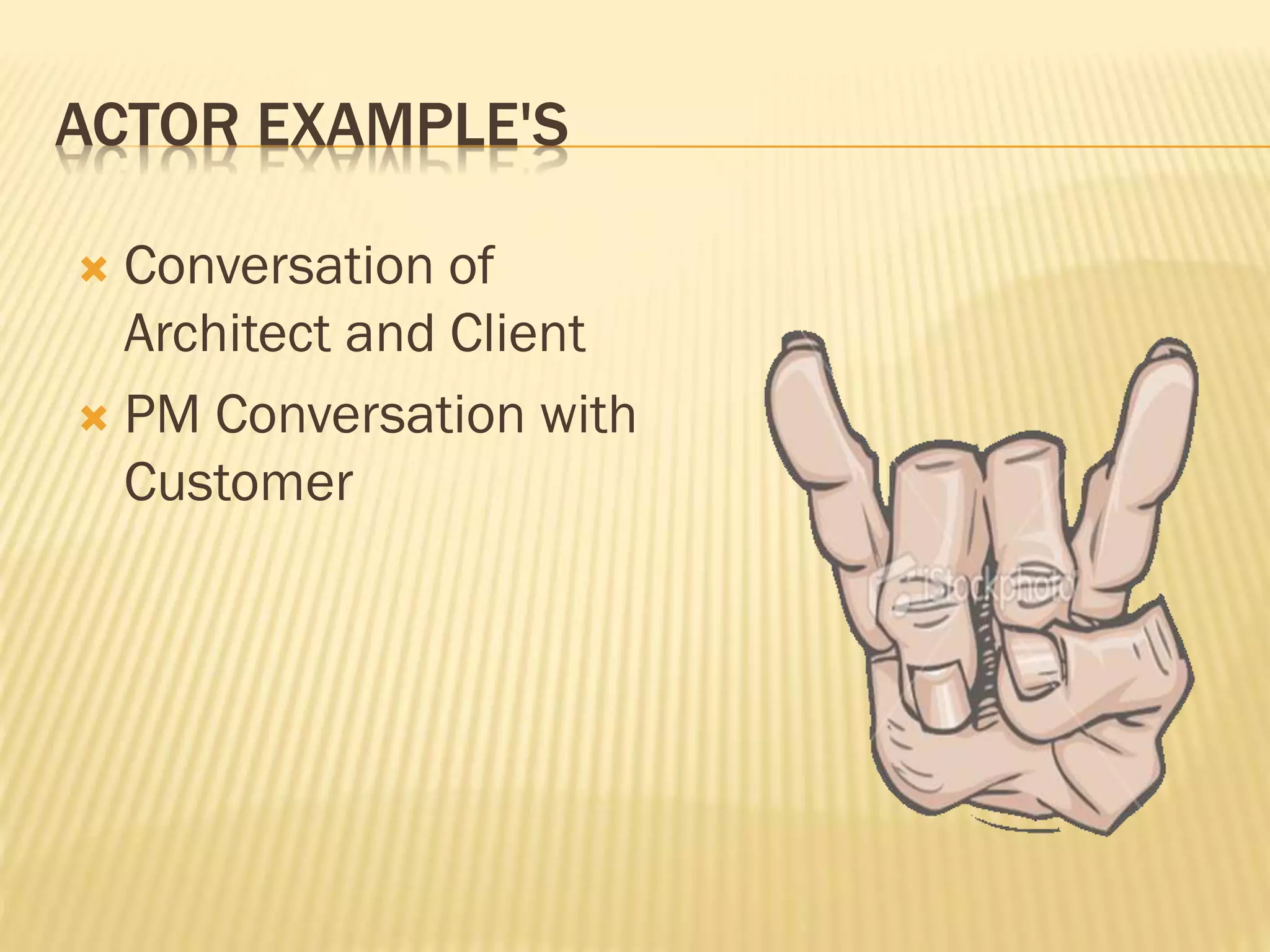
ACTOR EXAMPLE'S
 Conversation of
Architect and Client
 PM Conversation with
Customer
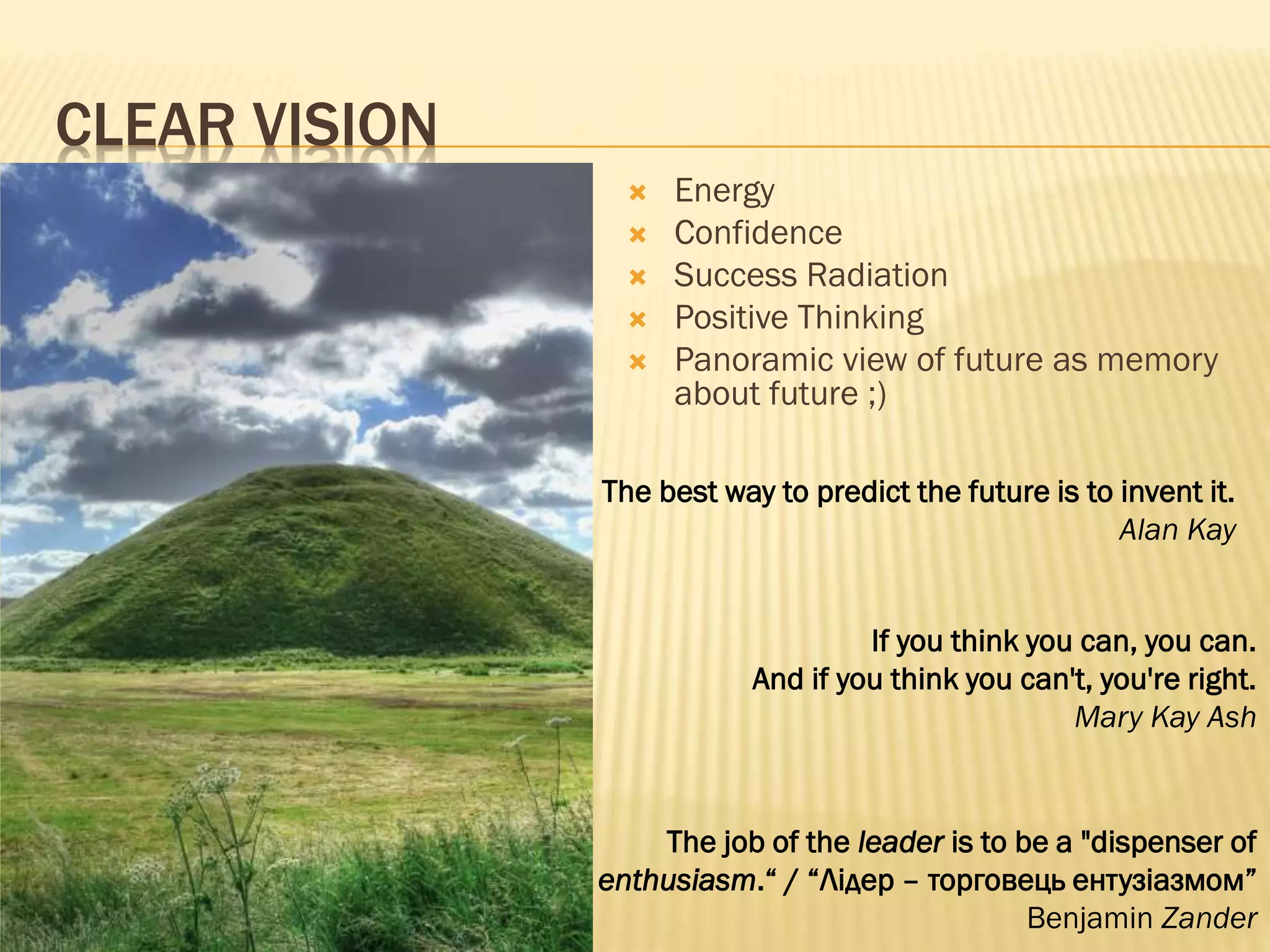
CLEAR VISION
The best way to predict the future is to invent it.
Alan Kay
 Energy
 Confidence
 Success Radiation
 Positive Thinking
 Panoramic view of future as memory
about future ;)
If you think you can, you can.
And if you think you can't, you're right.
Mary Kay Ash
The job of the leader is to be a "dispenser of
enthusiasm.“ / “Лідер – торговець ентузіазмом”
Benjamin Zander
LEADER VS. PERFORMER?
 Clearness
 Order
 Accuracy
 Punctuality
LEADER VS. BOSS
 The power (manager, supervisor, lead) does not
make you a leader, it simply makes you the
boss
 Leadership differs in that it makes the
followers want to achieve high goals, rather
than simply bossing people around.
LEADER VS. MANAGER
Leadership
Management
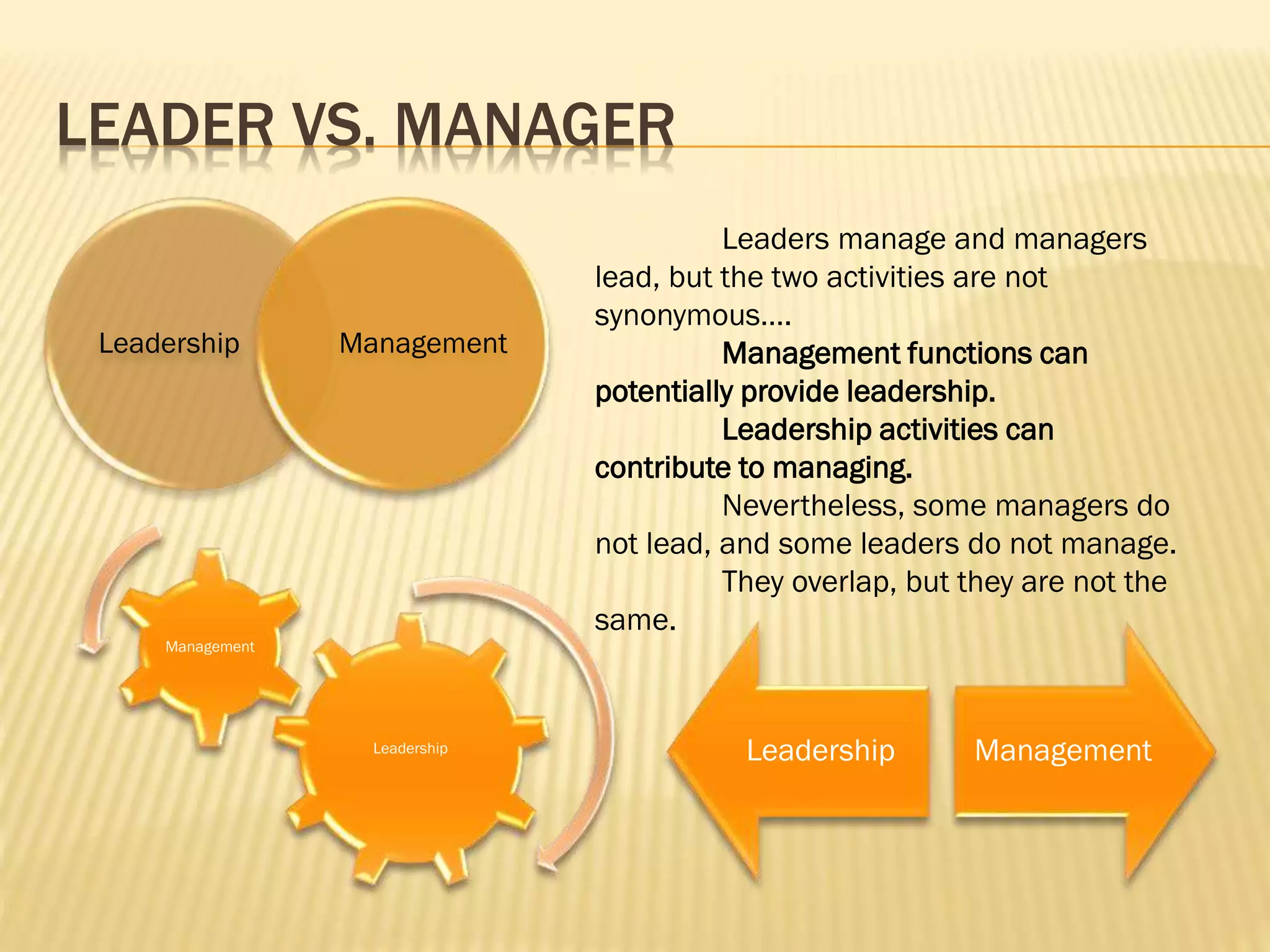
Leaders manage and managers
lead, but the two activities are not
synonymous….
Management functions can
potentially provide leadership.
Leadership activities can
contribute to managing.
Nevertheless, some managers do
not lead, and some leaders do not manage.
They overlap, but they are not the
same.
Leadership Management
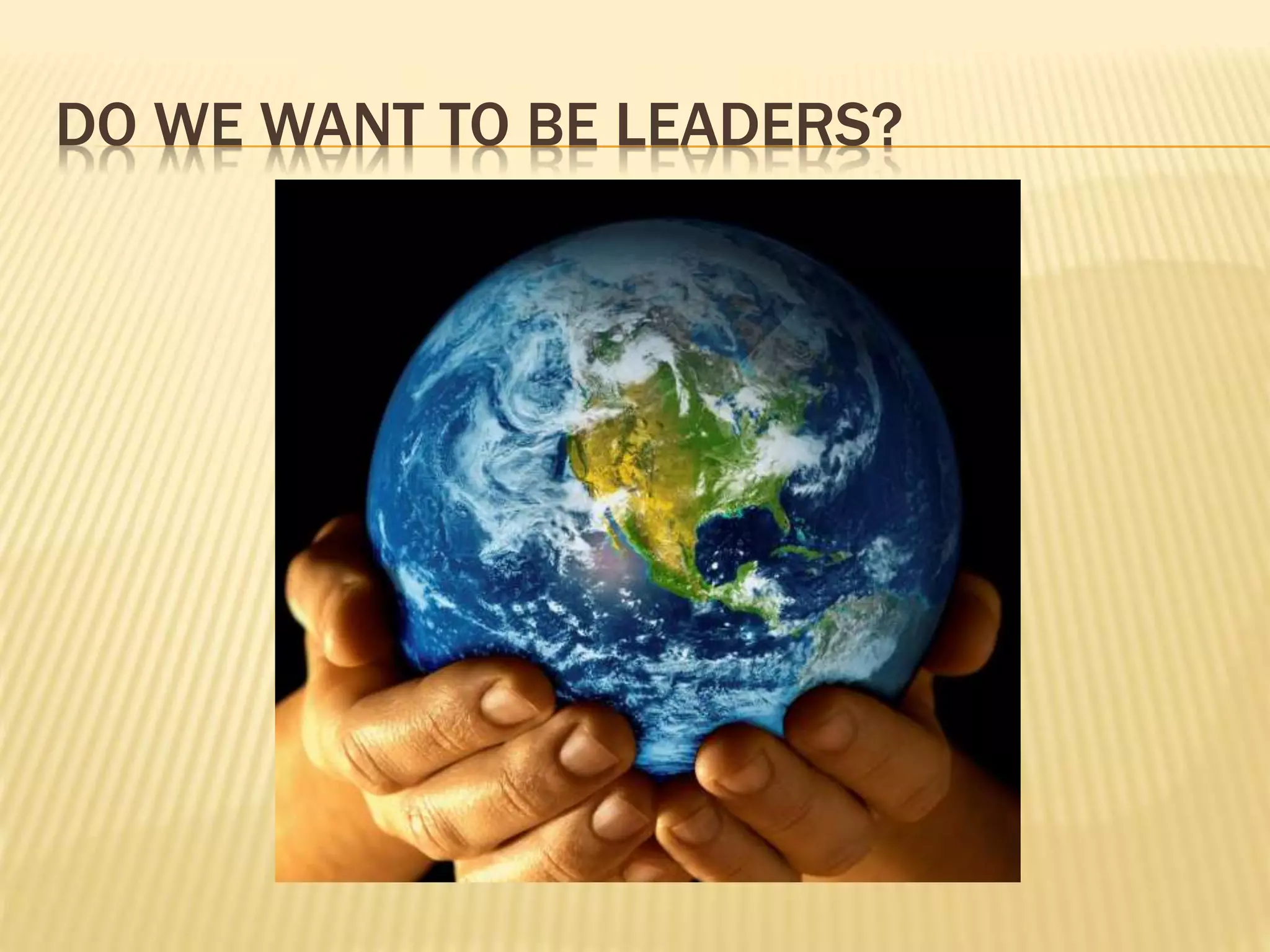
DO WE WANT TO BE LEADERS?
TEST
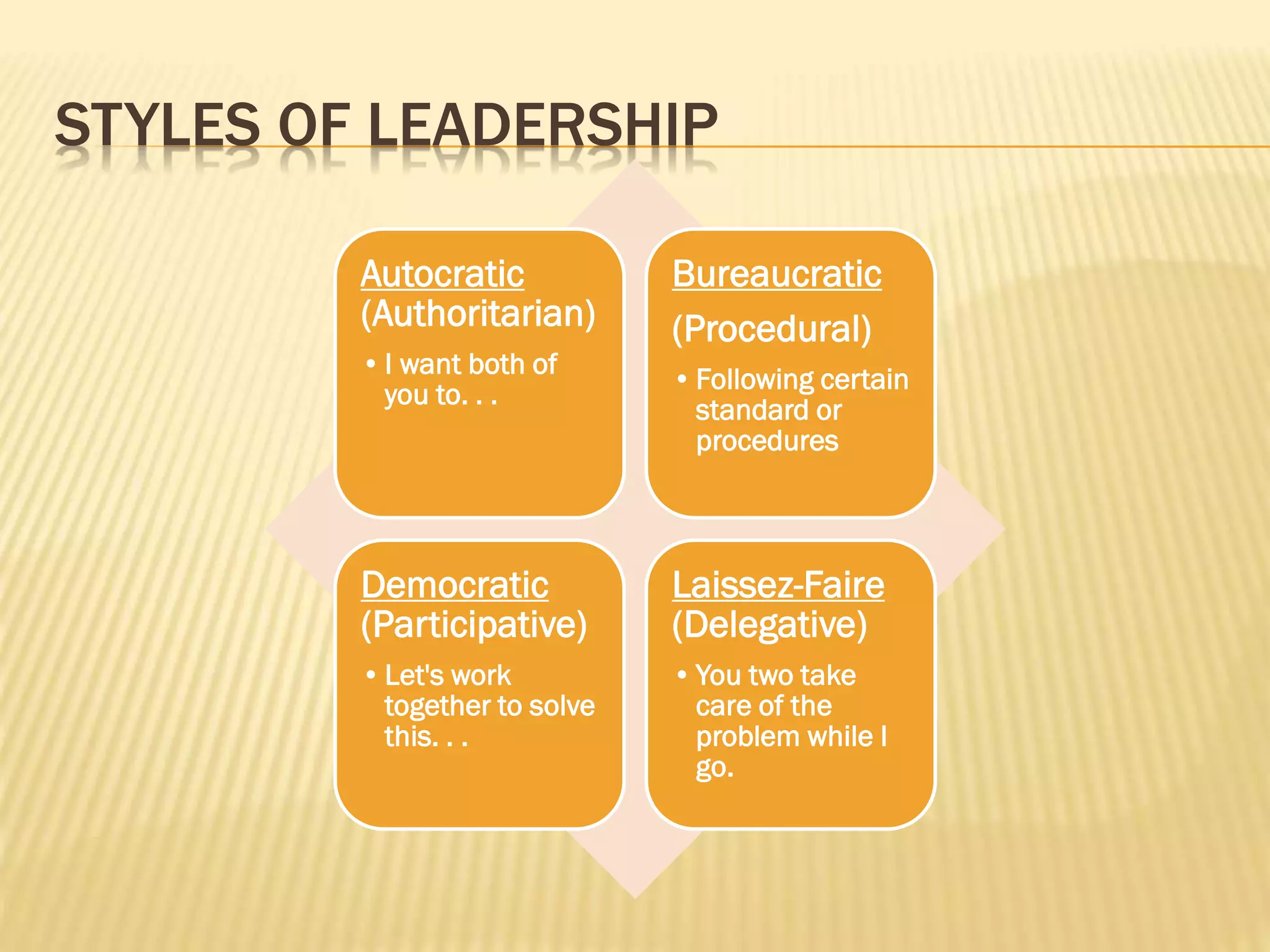
STYLES OF LEADERSHIP
Autocratic
(Authoritarian)
•I want both of
you to. . .
Bureaucratic
(Procedural)
•Following certain
standard or
procedures
Democratic
(Participative)
•Let's work
together to solve
this. . .
Laissez-Faire
(Delegative)
•You two take
care of the
problem while I
go.
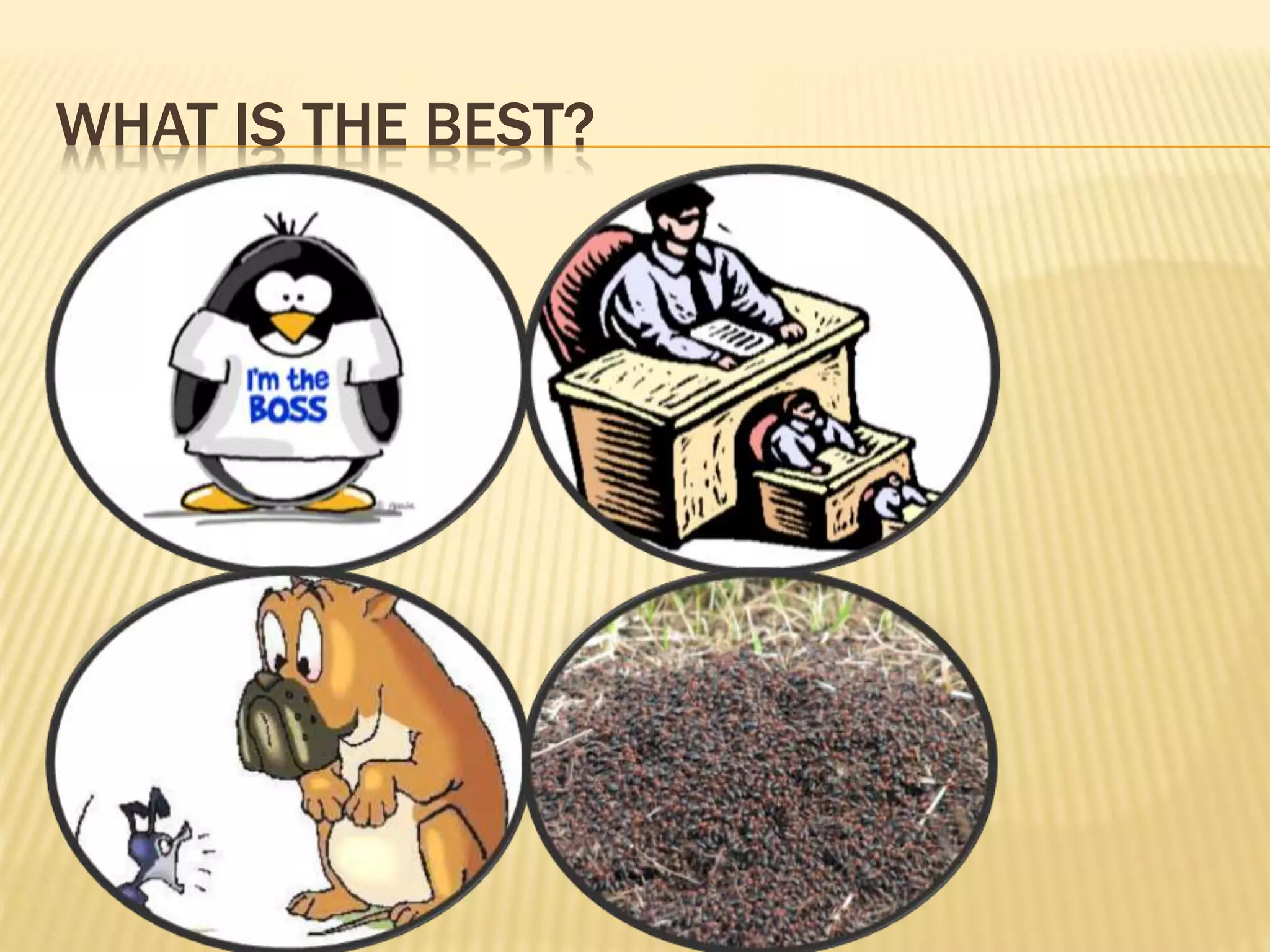
WHAT IS THE BEST?
NEXT STEPS
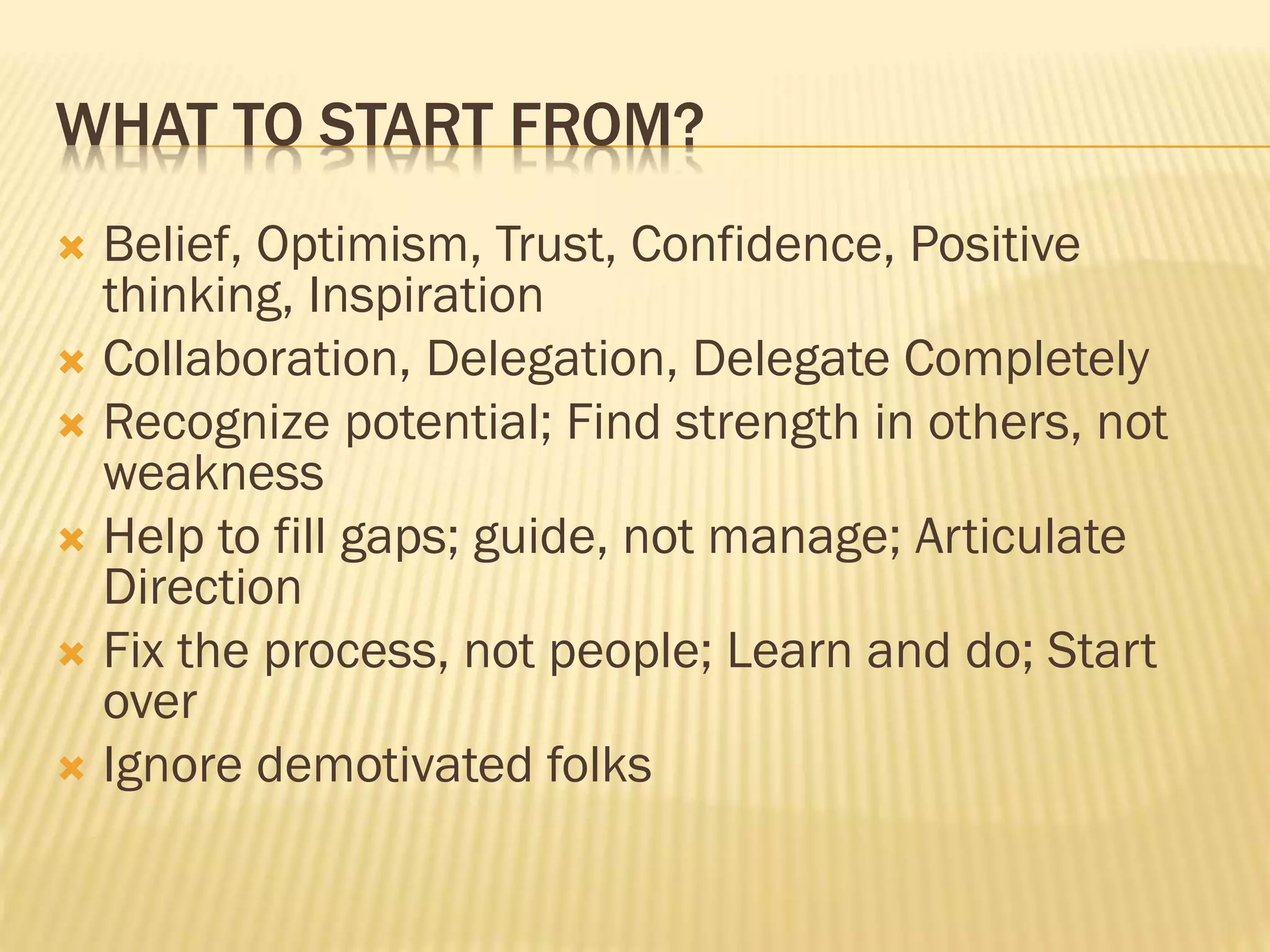
WHAT TO START FROM?
 Belief, Optimism, Trust, Confidence, Positive
thinking, Inspiration
 Collaboration, Delegation, Delegate Completely
 Recognize potential; Find strength in others, not
weakness
 Help to fill gaps; guide, not manage; Articulate
Direction
 Fix the process, not people; Learn and do; Start
over
 Ignore demotivated folks
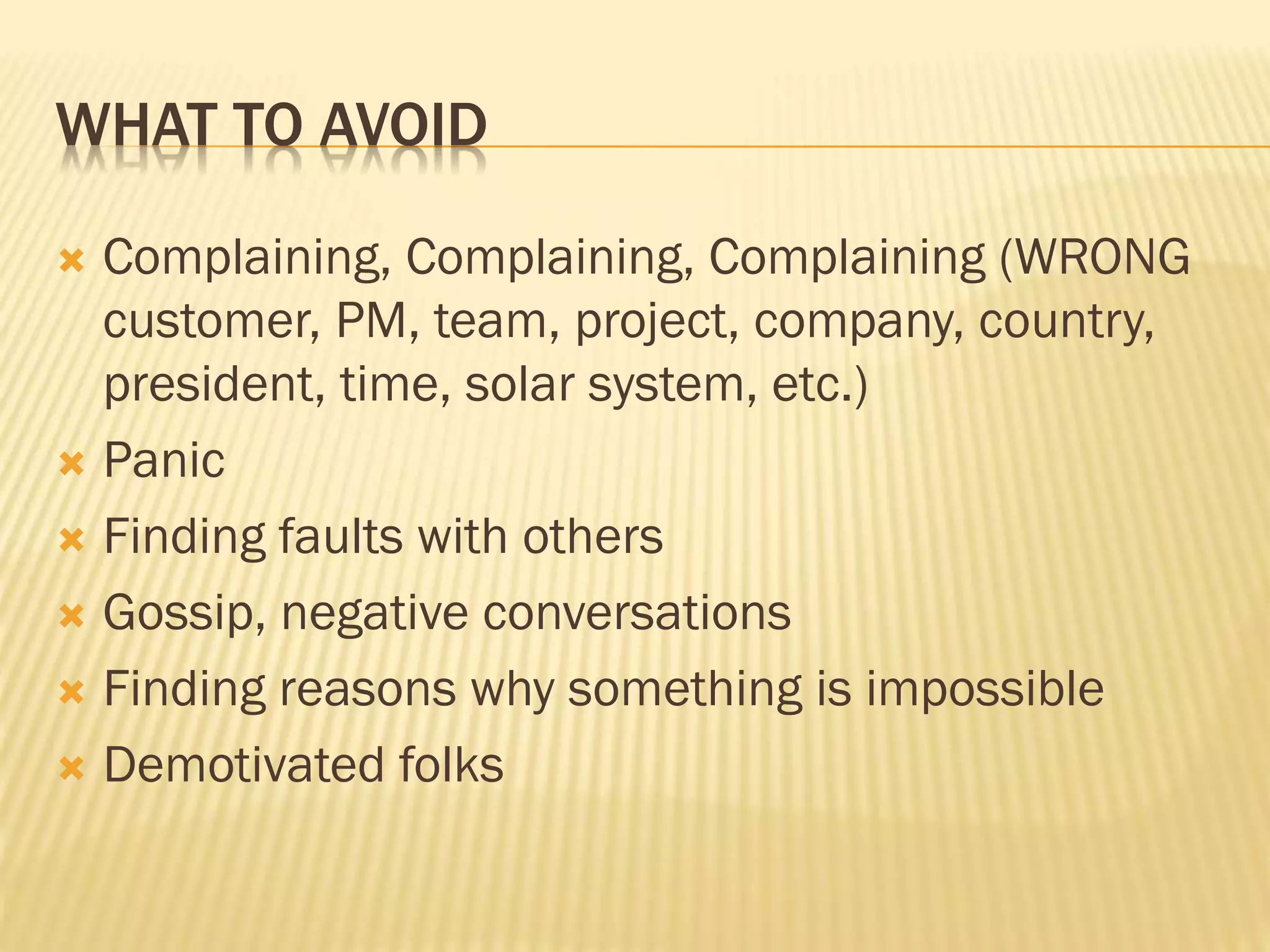
WHAT TO AVOID
 Complaining, Complaining, Complaining (WRONG
customer, PM, team, project, company, country,
president, time, solar system, etc.)
 Panic
 Finding faults with others
 Gossip, negative conversations
 Finding reasons why something is impossible
 Demotivated folks
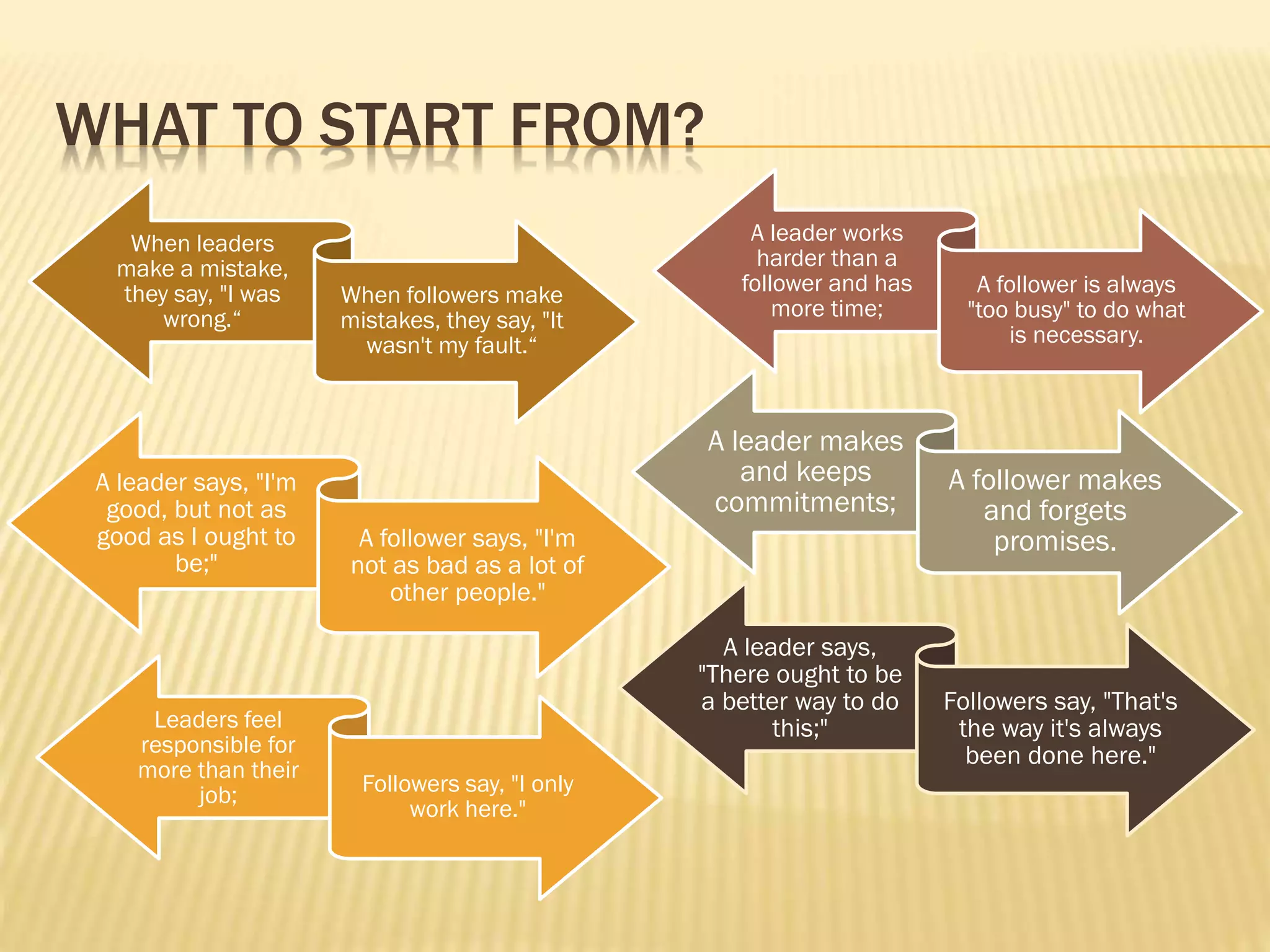
WHAT TO START FROM?
When leaders
make a mistake,
they say, "I was
wrong.“
When followers make
mistakes, they say, "It
wasn't my fault.“
A leader works
harder than a
follower and has
more time;
A follower is always
"too busy" to do what
is necessary.
A leader makes
and keeps
commitments;
A follower makes
and forgets
promises.
A leader says, "I'm
good, but not as
good as I ought to
be;"
A follower says, "I'm
not as bad as a lot of
other people."
Leaders feel
responsible for
more than their
job; Followers say, "I only
work here."
A leader says,
"There ought to be
a better way to do
this;"
Followers say, "That's
the way it's always
been done here."
SUMMARY
THANK YOU

Олекса Стельмах “Лідерство та Роль Проектного Менеджера”

  • 1.
  • 2.
  • 3.
    WHY DO WANTTO BE A PM?  Destiny  State of soul  Way of life  Fulfillment
  • 4.
    TYPICAL PROJECT… WHOIS LEADER? Why Me? Who Else if not Me?
  • 5.
    LEADERSHIP  Leadership isa process by which a person influences others to accomplish an objective and directs the organization in a way that makes it more cohesive and coherent.
  • 6.
  • 7.
  • 9.
  • 10.
    QUESTION Which of thefollowing leadership traits is MOST important for a project manager? A. Communication B. Team building C. Technical expertise D. Project control
  • 11.
    WHAT IS COMMUNICATION? Speak to express, not to impress (English proverb)  Act  Feel  Empathy (Здатність відчувати психологічний стан іншого; співпереживання)
  • 12.
    ACTOR EXAMPLE'S  Conversationof Architect and Client  PM Conversation with Customer
  • 13.
    CLEAR VISION The bestway to predict the future is to invent it. Alan Kay  Energy  Confidence  Success Radiation  Positive Thinking  Panoramic view of future as memory about future ;) If you think you can, you can. And if you think you can't, you're right. Mary Kay Ash The job of the leader is to be a "dispenser of enthusiasm.“ / “Лідер – торговець ентузіазмом” Benjamin Zander
  • 14.
    LEADER VS. PERFORMER? Clearness  Order  Accuracy  Punctuality
  • 15.
    LEADER VS. BOSS The power (manager, supervisor, lead) does not make you a leader, it simply makes you the boss  Leadership differs in that it makes the followers want to achieve high goals, rather than simply bossing people around.
  • 16.
    LEADER VS. MANAGER Leadership Management Leadersmanage and managers lead, but the two activities are not synonymous…. Management functions can potentially provide leadership. Leadership activities can contribute to managing. Nevertheless, some managers do not lead, and some leaders do not manage. They overlap, but they are not the same. Leadership Management Leadership Management
  • 17.
    DO WE WANTTO BE LEADERS?
  • 18.
  • 19.
    STYLES OF LEADERSHIP Autocratic (Authoritarian) •Iwant both of you to. . . Bureaucratic (Procedural) •Following certain standard or procedures Democratic (Participative) •Let's work together to solve this. . . Laissez-Faire (Delegative) •You two take care of the problem while I go.
  • 20.
  • 21.
  • 22.
    WHAT TO STARTFROM?  Belief, Optimism, Trust, Confidence, Positive thinking, Inspiration  Collaboration, Delegation, Delegate Completely  Recognize potential; Find strength in others, not weakness  Help to fill gaps; guide, not manage; Articulate Direction  Fix the process, not people; Learn and do; Start over  Ignore demotivated folks
  • 23.
    WHAT TO AVOID Complaining, Complaining, Complaining (WRONG customer, PM, team, project, company, country, president, time, solar system, etc.)  Panic  Finding faults with others  Gossip, negative conversations  Finding reasons why something is impossible  Demotivated folks
  • 24.
    WHAT TO STARTFROM? When leaders make a mistake, they say, "I was wrong.“ When followers make mistakes, they say, "It wasn't my fault.“ A leader works harder than a follower and has more time; A follower is always "too busy" to do what is necessary. A leader makes and keeps commitments; A follower makes and forgets promises. A leader says, "I'm good, but not as good as I ought to be;" A follower says, "I'm not as bad as a lot of other people." Leaders feel responsible for more than their job; Followers say, "I only work here." A leader says, "There ought to be a better way to do this;" Followers say, "That's the way it's always been done here."
  • 25.
  • 26.