PERFORMANCE
EVALUATION
(SPMS)
By: Mary Ann F. Opetina
STRATEGIC PERFORMANCE
MANAGEMENT SYSTEM (SPMS)
- a mechanism that links employee performance
with organizational performance to enhance the
performance orientation of the compensation
system.
Focuses:
• Organizational Mission
• Vision
• Strategic Goals
a) to concretize the
linkage of organizational
performance IF
(b) to ensure
organizational and
individual effectiveness
(c) to link performance
management with other
HR systems.
SPMS basic elements:
Goals that are aligned to agency
mandate and organizational priorities
System that is outputs/outcomes-
oriented
A team approach to performance
management
SPMS basic elements:
Forms that are user-friendly and shows
alignment of individual and organizational
goals
Information systems that support
monitoring and evaluation
A Communication plan
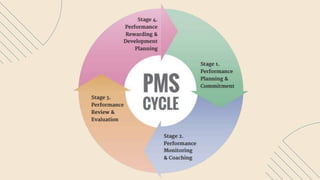
Performance Planning and Commitment
-?is done prior to the start of the performance period
where heads of offices meet with the supervisors and staff
and agree on the outputs that should be accomplished
based on the goals and objectives of the organization.
THE SPMS PROCESS
STAGE 1
Performance Monitoring and Coaching
-??is done regularly during the performance period by
the Heads of Agency, Planning Office, Division and Office
Heads, and the individual.
• The focus ?is creating and enabling environment to
?improve team performance and develop individual
potentials.
THE SPMS PROCESS
STAGE 2
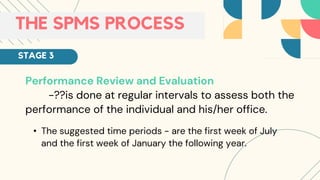
Performance Review and Evaluation
-??is done at regular intervals to assess both the
performance of the individual and his/her office.
• The suggested time periods - are the first week of July
and the first week of January the following year.
THE SPMS PROCESS
STAGE 3
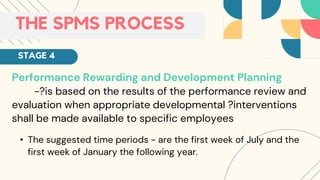
Performance Rewarding and Development Planning
-?is based on the results of the performance review and
evaluation when appropriate developmental ?interventions
shall be made available to specific employees
• The suggested time periods - are the first week of July and the
first week of January the following year.
THE SPMS PROCESS
STAGE 4
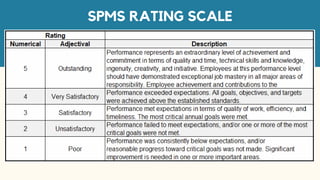
SPMS RATING SCALE
THE GOVERNMENT ISSUANCES
RELATED TO THE SPMS
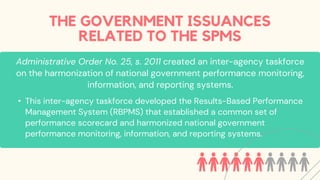
Administrative Order No. 25, s. 2011 created an inter-agency taskforce
on the harmonization of national government performance monitoring,
information, and reporting systems.
• This inter-agency taskforce developed the Results-Based Performance
Management System (RBPMS) that established a common set of
performance scorecard and harmonized national government
performance monitoring, information, and reporting systems.
THE GOVERNMENT ISSUANCES
RELATED TO THE SPMS
Joint CSC-Department of Budget and Management (DBM) Joint Circular
No. 1, s. 2012 provided the rules and regulations on the grant of step
increments due to meritorious performance and length of service.
Executive Order No. 80, s. 2012 directed the adoption of a
performance-based incentive system for government employees.
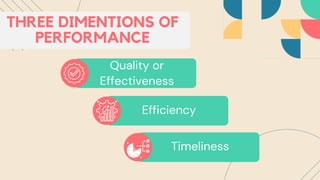
THREE DIMENTIONS OF
PERFORMANCE
Quality or
Effectiveness
Efficiency
Timeliness
“There are only three measurements that tell you nearly everything
you need to know about your organization’s overall performance:
employee engagement, customer satisfaction, and cash flow. It goes
without saying that no company, small or large, can win over the
long run without energized employees who believe in the mission
and understand how to achieve it.” -Jack Welch
THANK YOU

SPMS LECTURE :PERFORMANCE AND EVALUATION

  • 1.
  • 3.
    STRATEGIC PERFORMANCE MANAGEMENT SYSTEM(SPMS) - a mechanism that links employee performance with organizational performance to enhance the performance orientation of the compensation system. Focuses: • Organizational Mission • Vision • Strategic Goals
  • 4.
    a) to concretizethe linkage of organizational performance IF (b) to ensure organizational and individual effectiveness (c) to link performance management with other HR systems.
  • 5.
    SPMS basic elements: Goalsthat are aligned to agency mandate and organizational priorities System that is outputs/outcomes- oriented A team approach to performance management
  • 6.
    SPMS basic elements: Formsthat are user-friendly and shows alignment of individual and organizational goals Information systems that support monitoring and evaluation A Communication plan
  • 8.
    Performance Planning andCommitment -?is done prior to the start of the performance period where heads of offices meet with the supervisors and staff and agree on the outputs that should be accomplished based on the goals and objectives of the organization. THE SPMS PROCESS STAGE 1
  • 9.
    Performance Monitoring andCoaching -??is done regularly during the performance period by the Heads of Agency, Planning Office, Division and Office Heads, and the individual. • The focus ?is creating and enabling environment to ?improve team performance and develop individual potentials. THE SPMS PROCESS STAGE 2
  • 10.
    Performance Review andEvaluation -??is done at regular intervals to assess both the performance of the individual and his/her office. • The suggested time periods - are the first week of July and the first week of January the following year. THE SPMS PROCESS STAGE 3
  • 11.
    Performance Rewarding andDevelopment Planning -?is based on the results of the performance review and evaluation when appropriate developmental ?interventions shall be made available to specific employees • The suggested time periods - are the first week of July and the first week of January the following year. THE SPMS PROCESS STAGE 4
  • 12.
  • 13.
    THE GOVERNMENT ISSUANCES RELATEDTO THE SPMS Administrative Order No. 25, s. 2011 created an inter-agency taskforce on the harmonization of national government performance monitoring, information, and reporting systems. • This inter-agency taskforce developed the Results-Based Performance Management System (RBPMS) that established a common set of performance scorecard and harmonized national government performance monitoring, information, and reporting systems.
  • 14.
    THE GOVERNMENT ISSUANCES RELATEDTO THE SPMS Joint CSC-Department of Budget and Management (DBM) Joint Circular No. 1, s. 2012 provided the rules and regulations on the grant of step increments due to meritorious performance and length of service. Executive Order No. 80, s. 2012 directed the adoption of a performance-based incentive system for government employees.
  • 15.
    THREE DIMENTIONS OF PERFORMANCE Qualityor Effectiveness Efficiency Timeliness
  • 16.
    “There are onlythree measurements that tell you nearly everything you need to know about your organization’s overall performance: employee engagement, customer satisfaction, and cash flow. It goes without saying that no company, small or large, can win over the long run without energized employees who believe in the mission and understand how to achieve it.” -Jack Welch
  • 17.