
{
Strategic Performance
Management System
SPM-Paper 17
By Dr. Anju Chawla
Anju.chawla1@gmail.com
March 27th 2016
Strategic Performance Management –
1. Concept
2. Components
Learning Objective- Understand the relevance of
performance management for strategic decision-
making
TOPIC FOR TODAY
CONCEPT
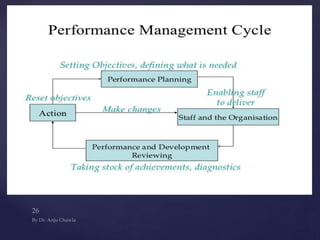
Performance Management is a
1. Continuous Process of
 Identifying
 Measuring
 Developing
the performance of individuals and teams
and
2. Aligning performancewith
Strategic Goals of the organization
Customers have impact on your
STRATEGY & PLANNING
FOOD FOR THOUGHT
{
 Strategic Goals
 Strategic KPIs
On this level you create
your own strategy house
S
T
R
A
T
E
G
Y
{ Strategic Goals are
translated in a road map
with concrete targets
and SMART goals
P
L
A
N
N
I
N
G
Q1
50%
Q2
70%
Q3
76% Q4
88%
GAP
1. This is what is expected of You,
2. This is how we are going to help you in your
development , and
3. This is how You will be judged relative to
compensation.
Putting it straight ,PMS must have answers to
the following for an employee:
{
One important point to note
here is Performance is a
relative concept.
“Mr. A performs better than expected/target
or better than Mr. B”
Since performance can never be judged without
reference to a peer group, it is relative and hence
falls into a distribution curve
Performance Management is NOT Performance Appraisal
It would be like to miss the wood for trees.
Performance
Management
System
Performance
Appraisal
CASE OF Mr. TREHAN,
AGM,SALES, QBBA
FMCG Co.
(Ref. Bell Curve-Jack
Welch)
HERE PMS IS BASED ON THREE PILLARS:
 Setting clear and measurable goals(SMART)
 Implementing concrete actions(Path Goal
Theory)
 Imposing rigorous consequences(Negative
Reinforcement/Punishment)
This implies a clear understanding amongst the
employees that the organization is now truly
performance oriented.
Example of Siemens
1. Performance Planning
2. Performance Appraisal and Reviewing
3. Feedback on the Performance followed by personal
counselling and performance facilitation
4. Rewarding Good Performance
5. Performance Improvement Plans
6. Potential Appraisal
Example to cite- Assistant Professor in a NAAC accredited B-
School
COMPONENT
1. Performance Planning
 Performance planning is the first crucial
component of any performance management
process which forms the basis of performance
appraisals. Performance planning is jointly done
by the appraisee and also the reviewee in the
beginning of a performance session. During this
period, the employees decide upon the targets
and the key performance areas which can be
performed over a year within the performance
budget., which is finalized after a mutual
agreement between the reporting officer and the
employee.
Any effective performance management system
includes the above components:
C
O
M
P
O
N
E
N
T
S
2. Performance Appraisal and Reviewing
The appraisals are normally performed twice in a year in
an organization in the form of mid reviews and annual
reviews which is held in the end of the financial year. In
this process, the appraisee first offers the self filled up
ratings in the self appraisal form and also describes
his/her achievements over a period of time in quantifiable
terms.
After the self appraisal, the final ratings are provided by
the appraiser for the quantifiable and measurable
achievements of the employee being appraised. The entire
process of review seeks an active participation of both the
employee and the appraiser for analyzing the causes of
loopholes in the performance and how it can be
overcome.
Any effective performance management system
includes the above components:
C
O
M
P
O
N
E
N
T
S
3.Feedback on the Performance followed by personal
counselling and performance facilitation
Feedback and counseling is given a lot of importance in the
performance management process. This is the stage in which the
employee acquires awareness from the appraiser about the areas
of improvements and also information on whether the employee
is contributing the expected levels of performance or not.
The employee receives an open and a very transparent feedback
and along with this the training and development needs of the
employee is also identified. The appraiser adopts all the possible
steps to ensure that the employee meets the expected outcomes
for an organization through effective personal counseling and
guidance, mentoring and representing the employee in training
programmes which develop the competencies and improve the
overall productivity.
Any effective performance management system
includes the above components:
C
O
M
P
O
N
E
N
T
S
4.Rewarding Good Performance
This is a very vital component as it will determine
the work motivation of an employee. During this
stage, an employee is publicly recognized for
good performance and is rewarded. This stage is
very sensitive for an employee as this may have a
direct influence on the self esteem and
achievement orientation. Any contributions duly
recognized by an organization helps an employee
in coping up with the failures successfully and
satisfies the need for affection.
Any effective performance management system
includes the above components:
C
O
M
P
O
N
E
N
T
S
5.Performance Improvement Plans-
In this stage, fresh set of goals are established for an
employee and new deadline is provided for
accomplishing those objectives. The employee is
clearly communicated about the areas in which the
employee is expected to improve and a stipulated
deadline is also assigned within which the employee
must show this improvement. This plan is jointly
developed by the appraisee and the appraiser and is
mutually approved.
Any effective performance management system
includes the above components:
C
O
M
P
O
N
E
N
T
S
6.Potential Appraisal: forms a basis for both
lateral and vertical movement of employees. By
implementing competency mapping and various
assessment techniques, potential appraisal is
performed. Potential appraisal provides crucial
inputs for succession planning and job rotation.
Any effective performance management system
includes the above components:
C
O
M
P
O
N
E
N
T
S
To Summarize
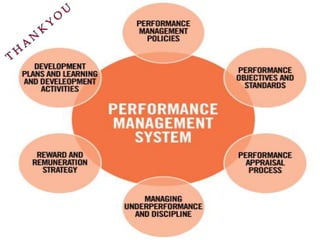
Introduction to Performance Management System

Introduction to Performance Management System

  • 1.
    { Strategic Performance Management System SPM-Paper17 By Dr. Anju Chawla Anju.chawla1@gmail.com March 27th 2016
  • 2.
    Strategic Performance Management– 1. Concept 2. Components Learning Objective- Understand the relevance of performance management for strategic decision- making TOPIC FOR TODAY
  • 3.
  • 4.
    Performance Management isa 1. Continuous Process of  Identifying  Measuring  Developing the performance of individuals and teams and 2. Aligning performancewith Strategic Goals of the organization
  • 7.
    Customers have impacton your STRATEGY & PLANNING FOOD FOR THOUGHT
  • 8.
    {  Strategic Goals Strategic KPIs On this level you create your own strategy house S T R A T E G Y
  • 9.
    { Strategic Goalsare translated in a road map with concrete targets and SMART goals P L A N N I N G Q1 50% Q2 70% Q3 76% Q4 88% GAP
  • 13.
    1. This iswhat is expected of You, 2. This is how we are going to help you in your development , and 3. This is how You will be judged relative to compensation. Putting it straight ,PMS must have answers to the following for an employee:
  • 14.
    { One important pointto note here is Performance is a relative concept. “Mr. A performs better than expected/target or better than Mr. B” Since performance can never be judged without reference to a peer group, it is relative and hence falls into a distribution curve
  • 15.
    Performance Management isNOT Performance Appraisal It would be like to miss the wood for trees. Performance Management System Performance Appraisal
  • 16.
    CASE OF Mr.TREHAN, AGM,SALES, QBBA FMCG Co. (Ref. Bell Curve-Jack Welch)
  • 17.
    HERE PMS ISBASED ON THREE PILLARS:  Setting clear and measurable goals(SMART)  Implementing concrete actions(Path Goal Theory)  Imposing rigorous consequences(Negative Reinforcement/Punishment) This implies a clear understanding amongst the employees that the organization is now truly performance oriented. Example of Siemens
  • 18.
    1. Performance Planning 2.Performance Appraisal and Reviewing 3. Feedback on the Performance followed by personal counselling and performance facilitation 4. Rewarding Good Performance 5. Performance Improvement Plans 6. Potential Appraisal Example to cite- Assistant Professor in a NAAC accredited B- School COMPONENT
  • 19.
    1. Performance Planning Performance planning is the first crucial component of any performance management process which forms the basis of performance appraisals. Performance planning is jointly done by the appraisee and also the reviewee in the beginning of a performance session. During this period, the employees decide upon the targets and the key performance areas which can be performed over a year within the performance budget., which is finalized after a mutual agreement between the reporting officer and the employee. Any effective performance management system includes the above components: C O M P O N E N T S
  • 20.
    2. Performance Appraisaland Reviewing The appraisals are normally performed twice in a year in an organization in the form of mid reviews and annual reviews which is held in the end of the financial year. In this process, the appraisee first offers the self filled up ratings in the self appraisal form and also describes his/her achievements over a period of time in quantifiable terms. After the self appraisal, the final ratings are provided by the appraiser for the quantifiable and measurable achievements of the employee being appraised. The entire process of review seeks an active participation of both the employee and the appraiser for analyzing the causes of loopholes in the performance and how it can be overcome. Any effective performance management system includes the above components: C O M P O N E N T S
  • 21.
    3.Feedback on thePerformance followed by personal counselling and performance facilitation Feedback and counseling is given a lot of importance in the performance management process. This is the stage in which the employee acquires awareness from the appraiser about the areas of improvements and also information on whether the employee is contributing the expected levels of performance or not. The employee receives an open and a very transparent feedback and along with this the training and development needs of the employee is also identified. The appraiser adopts all the possible steps to ensure that the employee meets the expected outcomes for an organization through effective personal counseling and guidance, mentoring and representing the employee in training programmes which develop the competencies and improve the overall productivity. Any effective performance management system includes the above components: C O M P O N E N T S
  • 22.
    4.Rewarding Good Performance Thisis a very vital component as it will determine the work motivation of an employee. During this stage, an employee is publicly recognized for good performance and is rewarded. This stage is very sensitive for an employee as this may have a direct influence on the self esteem and achievement orientation. Any contributions duly recognized by an organization helps an employee in coping up with the failures successfully and satisfies the need for affection. Any effective performance management system includes the above components: C O M P O N E N T S
  • 23.
    5.Performance Improvement Plans- Inthis stage, fresh set of goals are established for an employee and new deadline is provided for accomplishing those objectives. The employee is clearly communicated about the areas in which the employee is expected to improve and a stipulated deadline is also assigned within which the employee must show this improvement. This plan is jointly developed by the appraisee and the appraiser and is mutually approved. Any effective performance management system includes the above components: C O M P O N E N T S
  • 24.
    6.Potential Appraisal: formsa basis for both lateral and vertical movement of employees. By implementing competency mapping and various assessment techniques, potential appraisal is performed. Potential appraisal provides crucial inputs for succession planning and job rotation. Any effective performance management system includes the above components: C O M P O N E N T S
  • 25.