Standard Grade Physical
Education
Speed
What is SPEED?
• It is the ability to cover a distance or
perform a movement in as short a time
as possible.
Some examples:
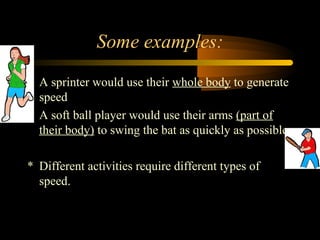
• A sprinter would use their whole body to generate
speed
• A soft ball player would use their arms (part of
their body) to swing the bat as quickly as possible
* Different activities require different types of
speed.
Reaction Time
This is the length of time it takes to respond
to a stimulus. For example:Clip
• A sprinter responds to the sound of a gun.
• A tennis player responds to the action of their
opponent.
The quicker the reaction time the greater the
advantage.
• Reaction time can be improved through practising
the activity itself, eg. A series of sprint starts.
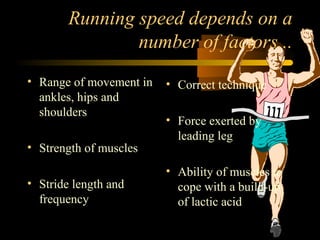
Running speed depends on a
number of factors...
• Range of movement in
ankles, hips and
shoulders
• Strength of muscles
• Stride length and
frequency

• Correct technique
• Force exerted by
leading leg
• Ability of muscles to
cope with a build-up
of lactic acid
How can speed be improved?
• Using strength training methods to
strengthen the leg muscles which will
enable them to contract faster.
• A combination of aerobic and anaerobic
exercises. This increases muscular
endurance and allows muscles to increase
their ability to cope with lactic acid buildup.

Tasks:
1. Describe two situations where speed would
be beneficial in an activity of your choice.
(E.g, Forward beating a defender in hockey)
2. Q50 P21 (Questions in SGPE)

Speed (1)

  • 1.
  • 2.
    What is SPEED? •It is the ability to cover a distance or perform a movement in as short a time as possible.
  • 3.
    Some examples: • Asprinter would use their whole body to generate speed • A soft ball player would use their arms (part of their body) to swing the bat as quickly as possible * Different activities require different types of speed.
  • 4.
    Reaction Time This isthe length of time it takes to respond to a stimulus. For example:Clip • A sprinter responds to the sound of a gun. • A tennis player responds to the action of their opponent. The quicker the reaction time the greater the advantage. • Reaction time can be improved through practising the activity itself, eg. A series of sprint starts.
  • 5.
    Running speed dependson a number of factors... • Range of movement in ankles, hips and shoulders • Strength of muscles • Stride length and frequency • Correct technique • Force exerted by leading leg • Ability of muscles to cope with a build-up of lactic acid
  • 6.
    How can speedbe improved? • Using strength training methods to strengthen the leg muscles which will enable them to contract faster. • A combination of aerobic and anaerobic exercises. This increases muscular endurance and allows muscles to increase their ability to cope with lactic acid buildup.
  • 7.
    Tasks: 1. Describe twosituations where speed would be beneficial in an activity of your choice. (E.g, Forward beating a defender in hockey) 2. Q50 P21 (Questions in SGPE)

Editor's Notes