Immune-mediated Polyneuropathy
L-GBS – Guillian Barre Syndrome
Dr. Dhananjay Gupta
Dept. Of Neurology
Ramaiah Medical College, Bangalore
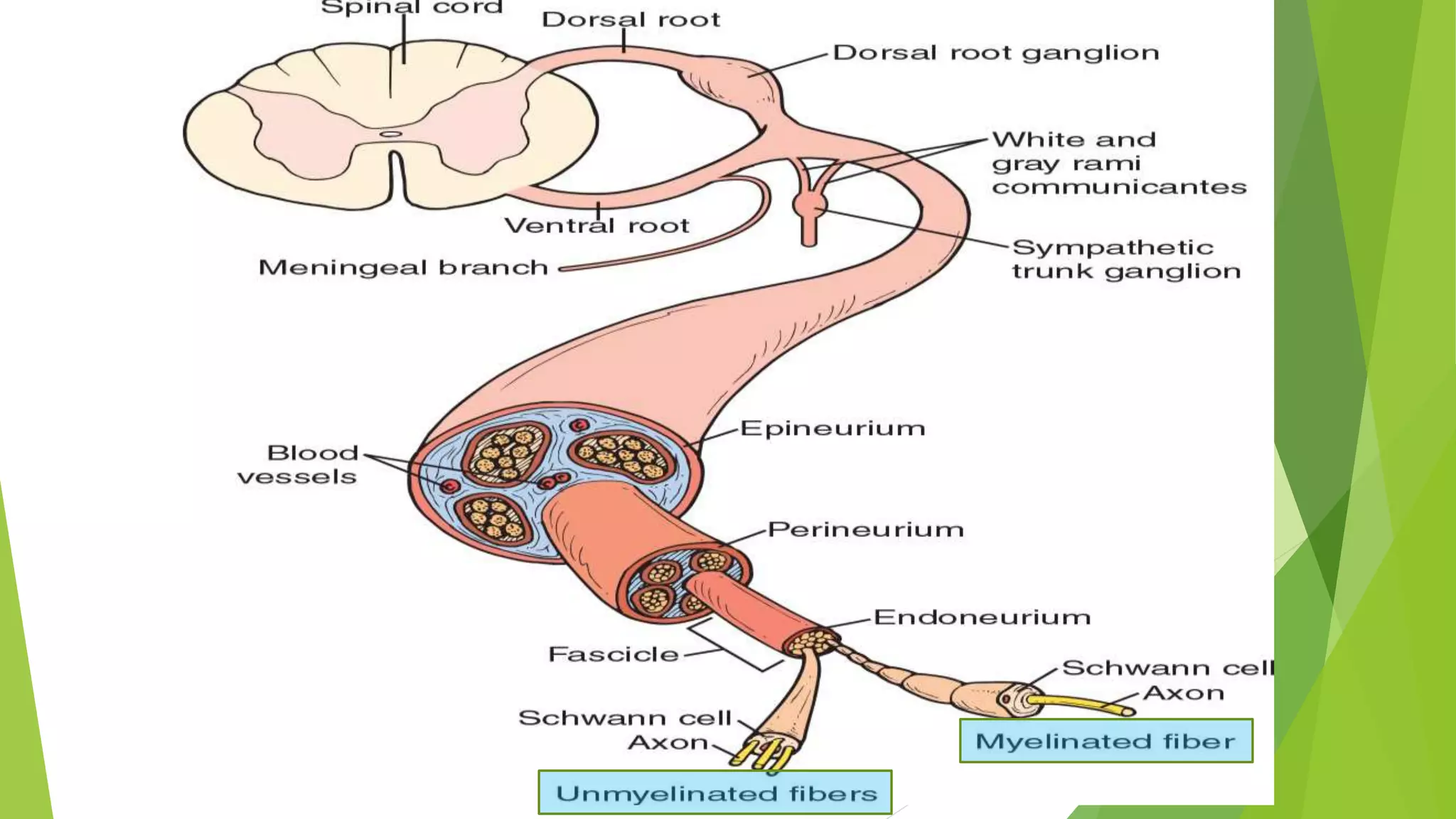
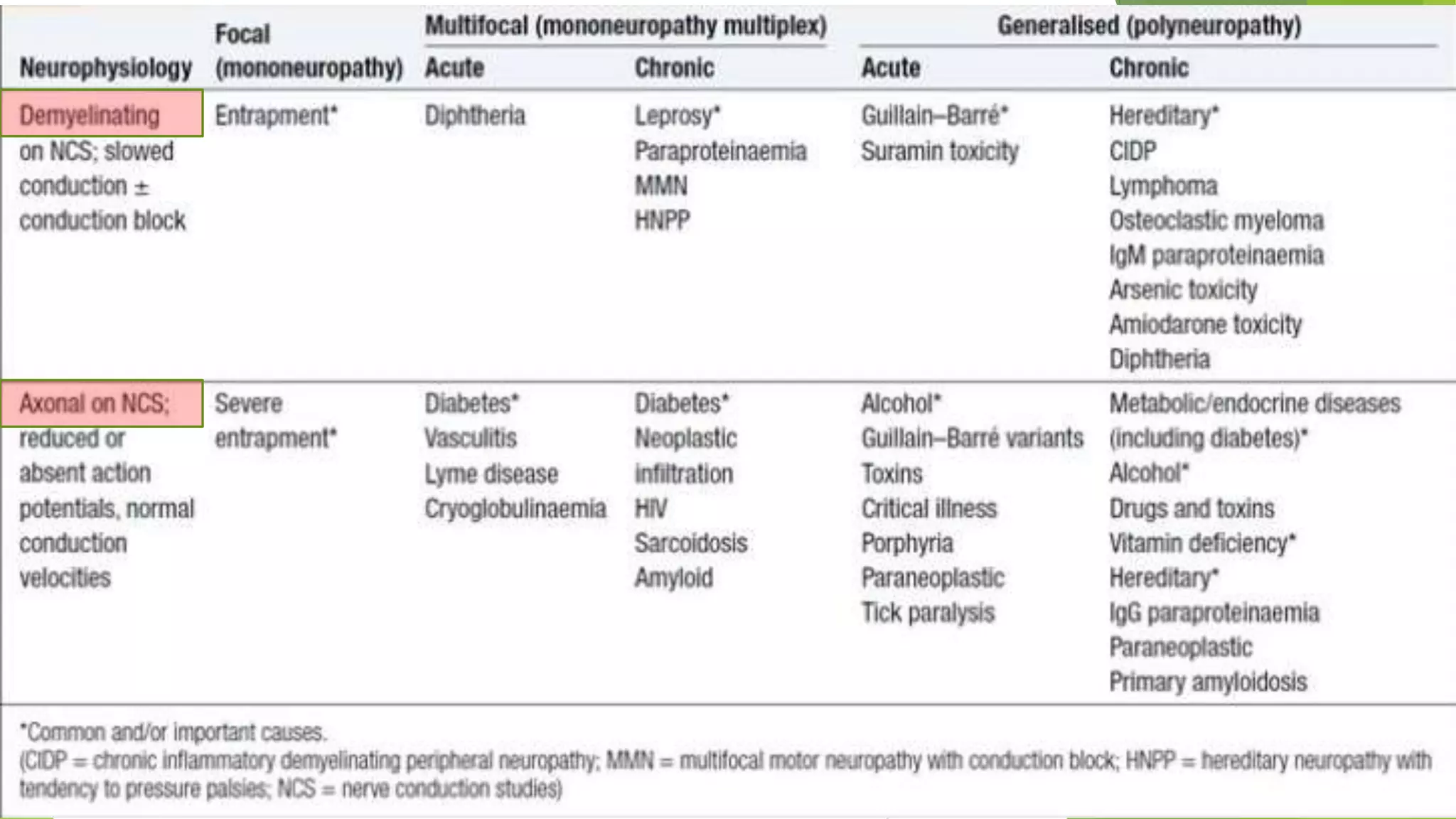
Causes of PN
GBS/ AIDP
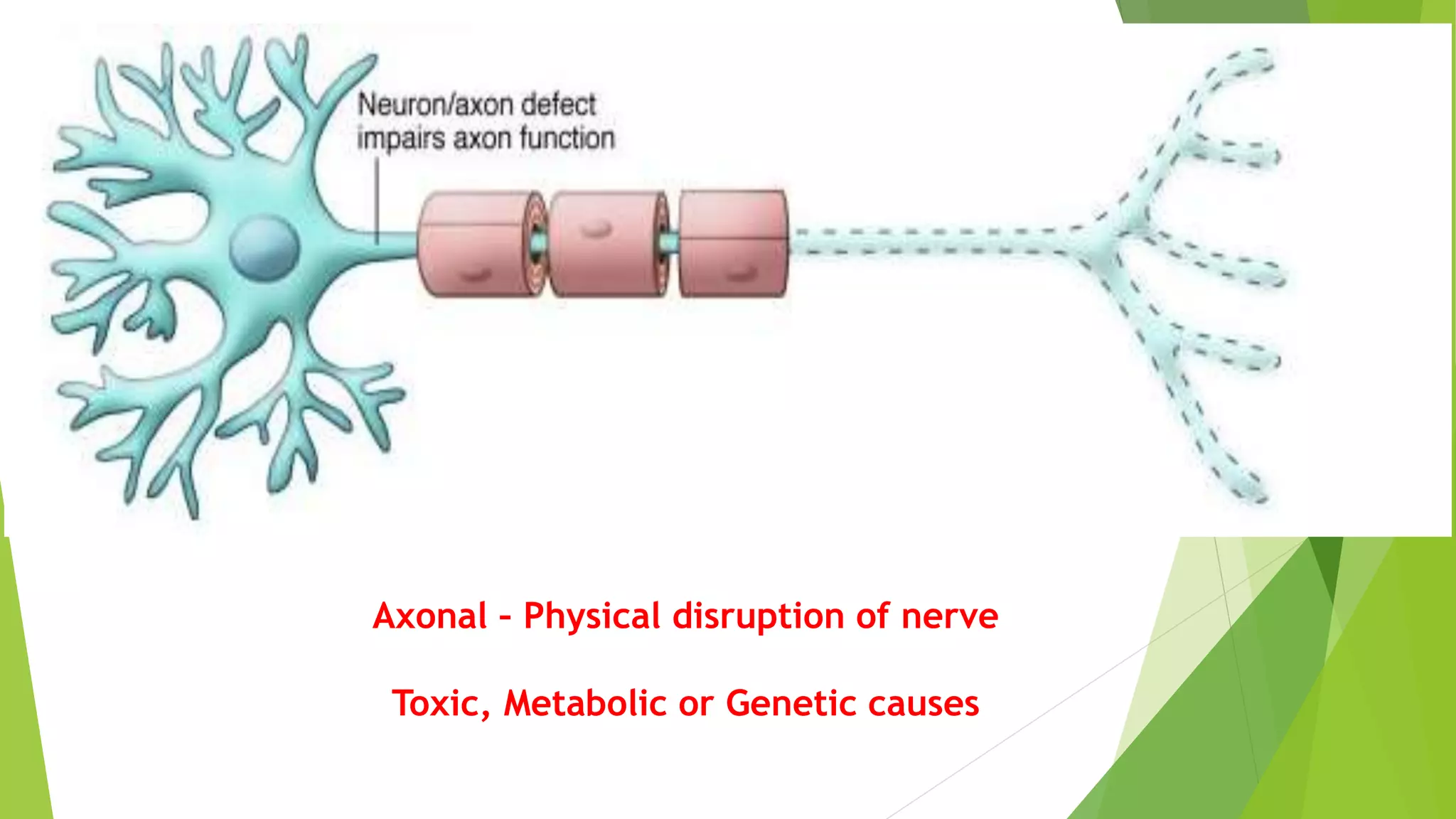
Axonal/ Demyelinating
Axonal – Physical disruption of nerve
Toxic, Metabolic or Genetic causes
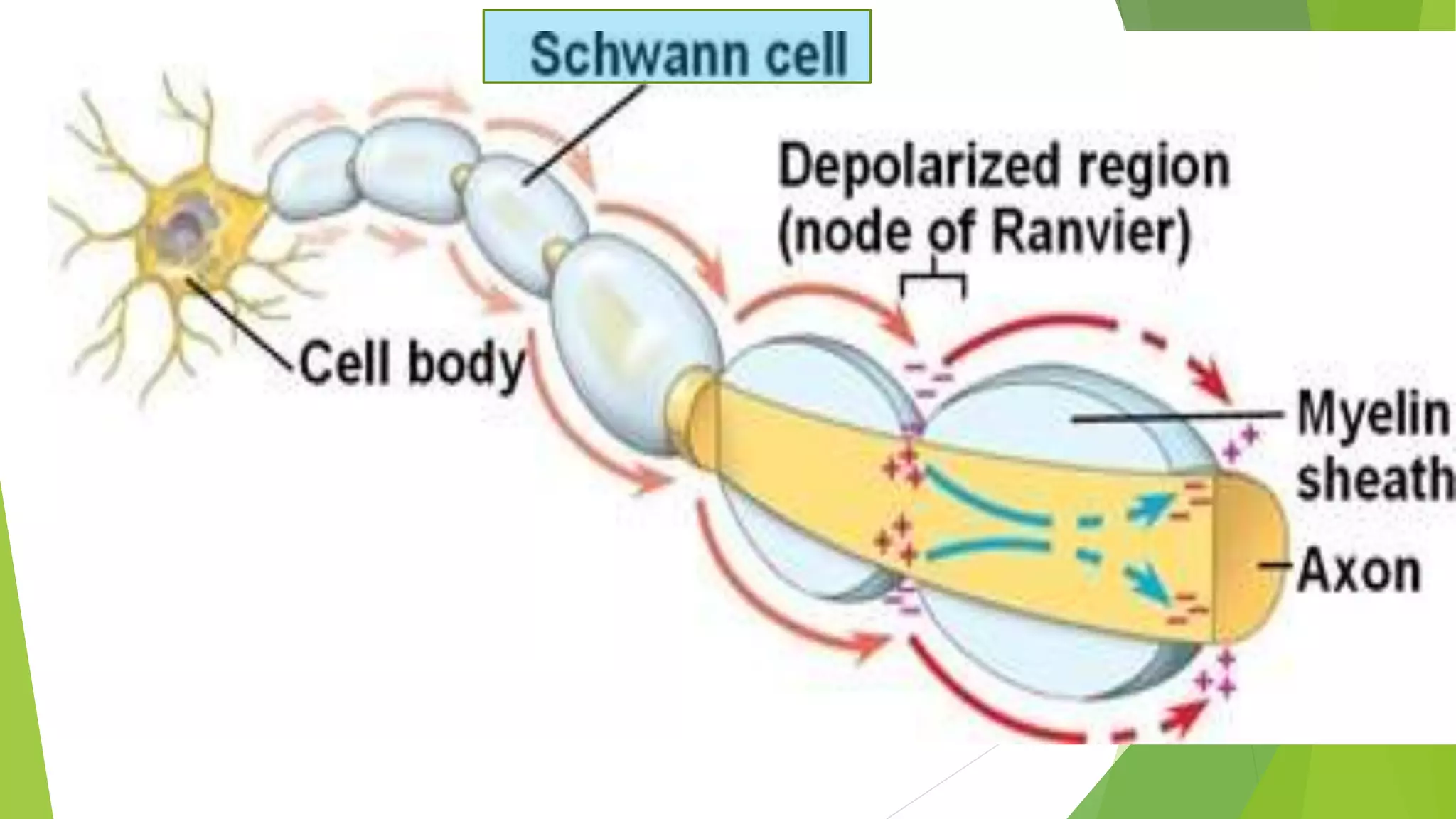
Axonal/ Demyelinating
Demyelination – loss or dysfunction of sheath
1. Entrapment/ compressive
2. Immunological - GBS
3. Toxic – diphtheria
4. Genetic – CMT
DYS-IMMUNE
POLYNEUROPATHY
ACUTE CHRONIC
AIDP
AMAN
AMSAN
Pandysautonomia
Mixed Motor Sensory Misc
- CIDP
- MADSAM
(lewis-sumner)
- MGUS
- WM
(anti-MAG)
MMN – CB CISP
DADS
CANOMAD
• Autoimmune
autonomic
neuropathy
• Vasculitic
neuropathy
1. AIDP
2. CIDP
3. MADSAM – lewis sumner
4. CISP
GBS/ AIDP
Definition
DEFINITION
 Prototypical Immune-mediated, monophasic,
 Poly-radiculo-neuropathy, characterised by
 Acute onset, areflexic, predominantly motor weakness, Progressing in
an ascending manner
*Lehmann HC, zu Horste GM, Kieseier BC, Hartung H-P. Pathogenesis and Treatment of Immune-Mediated Neuropathies.
Therapeutic Advances in Neurological Disorders. 2009;2(4):261-281. doi:10.1177/1756285609104792.
**Dimachkie MM, Barohn RJ. Guillain-Barré Syndrome and Variants. Neurologic clinics. 2013;31(2):491-510.
History
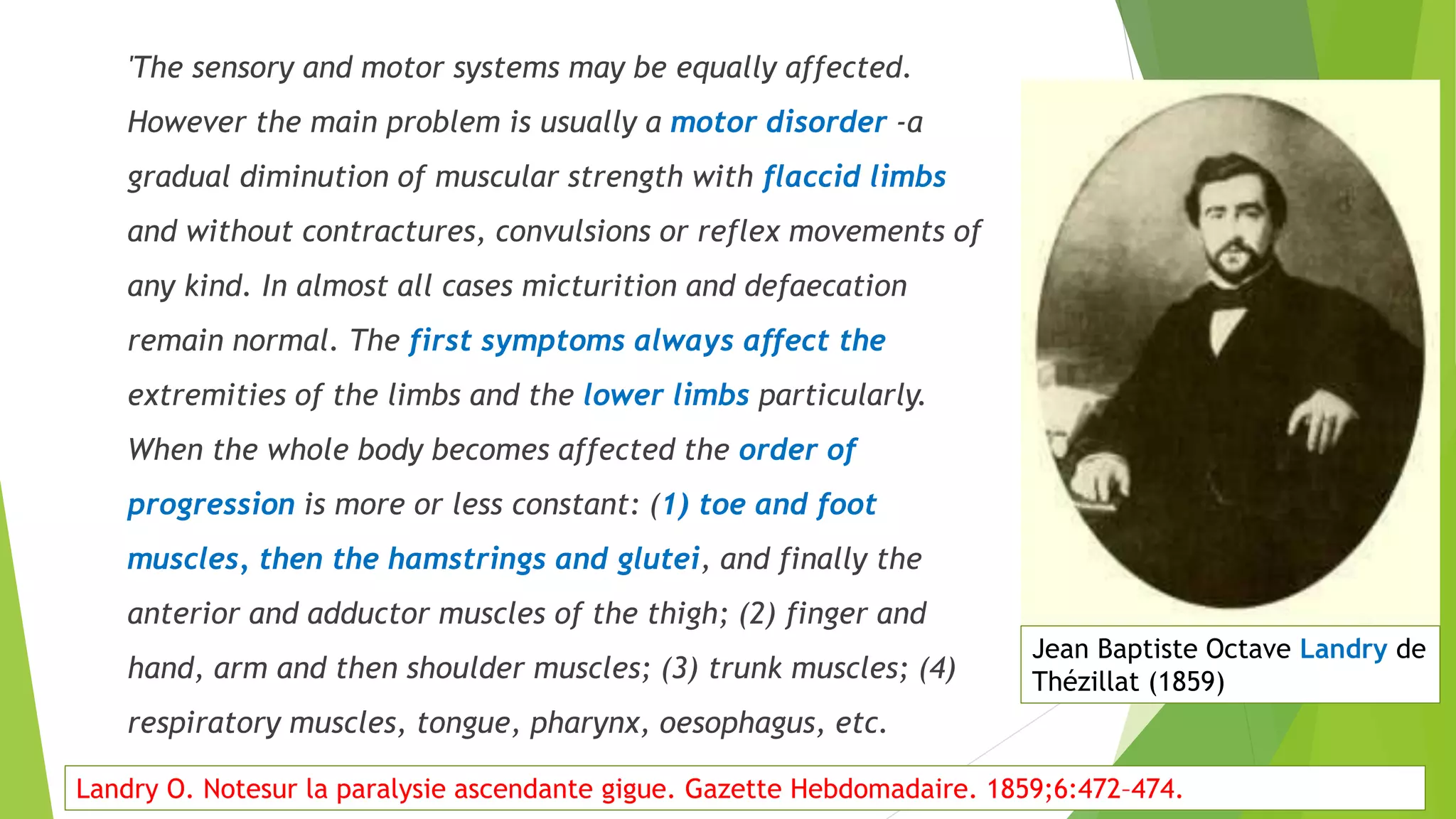
'The sensory and motor systems may be equally affected.
However the main problem is usually a motor disorder -a
gradual diminution of muscular strength with flaccid limbs
and without contractures, convulsions or reflex movements of
any kind. In almost all cases micturition and defaecation
remain normal. The first symptoms always affect the
extremities of the limbs and the lower limbs particularly.
When the whole body becomes affected the order of
progression is more or less constant: (1) toe and foot
muscles, then the hamstrings and glutei, and finally the
anterior and adductor muscles of the thigh; (2) finger and
hand, arm and then shoulder muscles; (3) trunk muscles; (4)
respiratory muscles, tongue, pharynx, oesophagus, etc.
Jean Baptiste Octave Landry de
Thézillat (1859)
Landry O. Notesur la paralysie ascendante gigue. Gazette Hebdomadaire. 1859;6:472–474.
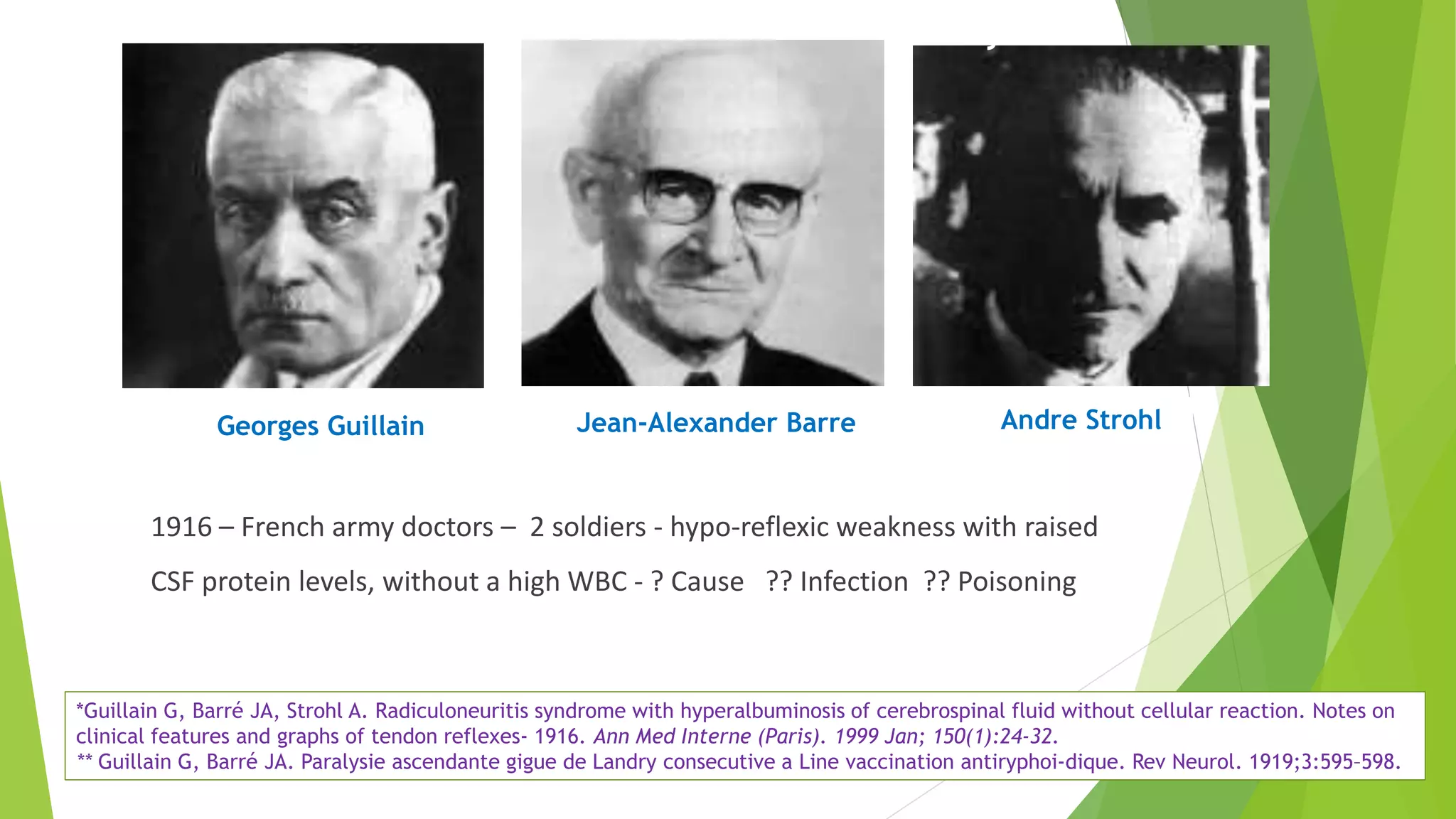
Georges Guillain Jean-Alexander Barre Andre Strohl
1916 – French army doctors – 2 soldiers - hypo-reflexic weakness with raised
CSF protein levels, without a high WBC - ? Cause ?? Infection ?? Poisoning
History
*Guillain G, Barré JA, Strohl A. Radiculoneuritis syndrome with hyperalbuminosis of cerebrospinal fluid without cellular reaction. Notes on
clinical features and graphs of tendon reflexes- 1916. Ann Med Interne (Paris). 1999 Jan; 150(1):24-32.
** Guillain G, Barré JA. Paralysie ascendante gigue de Landry consecutive a Line vaccination antiryphoi-dique. Rev Neurol. 1919;3:595–598.
1949 – landmark description of 50 fatal cases.
Emphasized prominent damage to proximal nerves – at the junction of ventral and dorsal roots.
Unified the findings of Landry, Guillain, Barre and Strohl -- LGBS
History
1927 – Dragonescu and Claudian - GBS
Guillain – never believed the Landry ascending paralysis = GBS
: afebrile
: essential was raised CSF protein
: non- fatal, no respiratory distress in GBS
1958 – Charles Miller Fischer – acute external ophthalmoplegia
1965 – Thomas Munsat : “GBS is easy to diagnose but difficult to define
1969 – Asbury, Aranson, Adams – diagnostic criteria
History
Epidemiology
EPIDIMEOLOGY
 Incidence : 1-4/ 1,00,000 (*AAN)
 MCC of AFP in children
 MC acute NM-disorder seen in ICU
 M: F 1.1-1.7: 1
 Age : 2 months – 95 years
 Childhood GBS – average age 4-8 years
Epidemiology
 MC seen in 3rd – 5th decade
 Most cases in June-july, Sept-October *
 Seasonal variation – winters **
 Males > Females *
 Incidence higher in South-Asia as compared to America/ Europe
* Sharma G, Sood S, Sharma S. Seasonal, Age and Gender variation in GBS in a tertiary care centre in India. Neurosciences
and Medicine. 2013: 4, 23-28.
** Sudulagunta SR, Sodalagunta MB, Sepehrar M, et al. Guillain-Barré syndrome: clinical profile and management. German
Medical Science. 2015;13:Doc16. doi:10.3205/000220.
INDIA
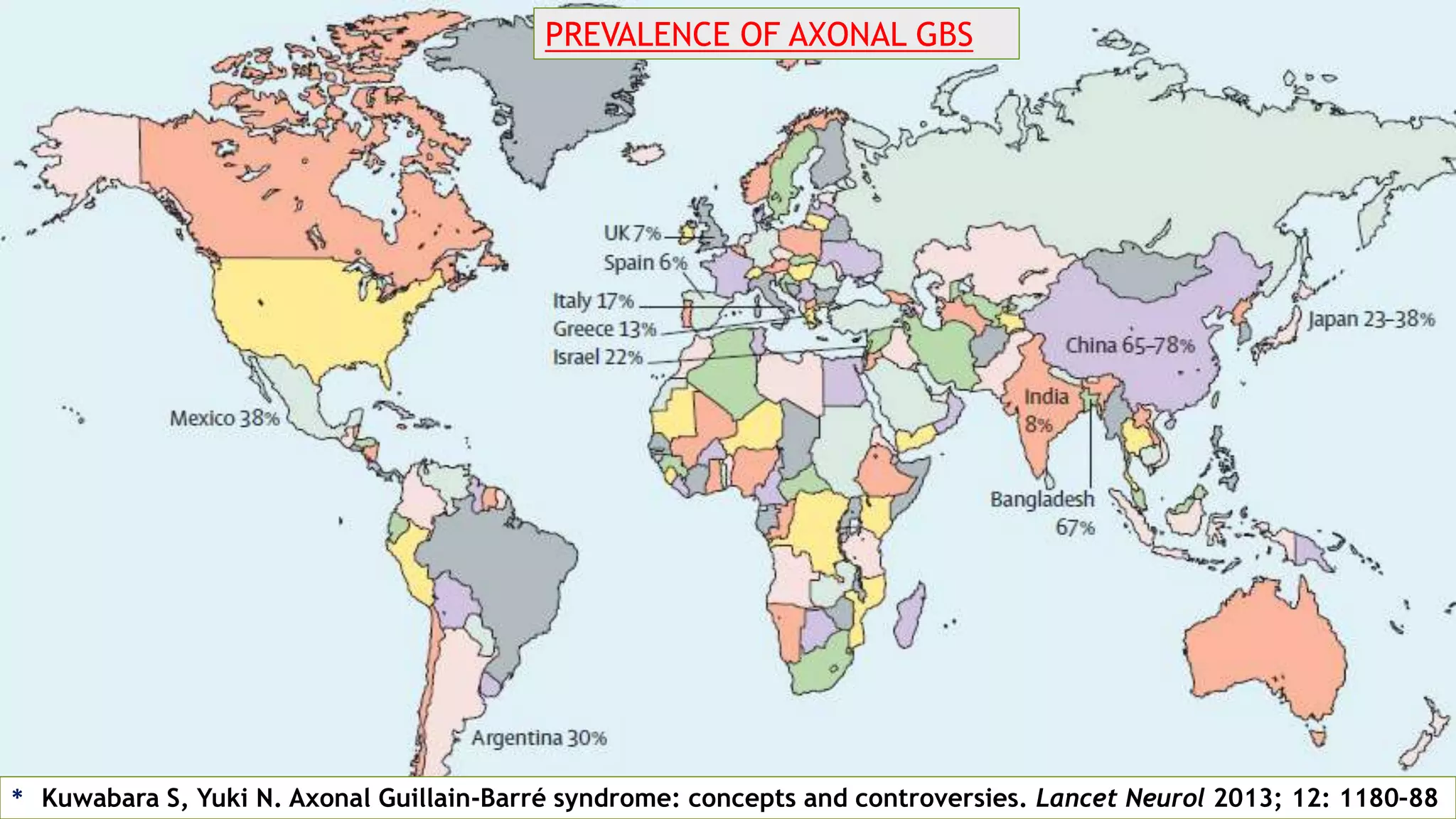
* Kuwabara S, Yuki N. Axonal Guillain-Barré syndrome: concepts and controversies. Lancet Neurol 2013; 12: 1180–88
PREVALENCE OF AXONAL GBS
C. Jejuni GBS :
 pure motor axonal form (AMAN)
 More severe clinical disease,
 Less recovery chances
 More commonly a.w Anti-GM1 antibodies
Anti GM1 GBS
 rapidly progressive, severe neuropathy
 Predominantly distal distribution
 Motor
 No sensory/ cranial nerve disturbances
A Dutch study evaluated the relationship between vaccinations and GBS, more specifically recurrent
GBS. 245 GBS and 76 CIDP patients were studied with 106 GBS patients having received flu
vaccination (n=775). None of them had a recurrence of GBS after vaccination. Thus it was
concluded that flu vaccines are relatively safe. The most common symptoms post GBS and CIDP were
pain and fatigue.
PATHOGENESIS
Pathophysiology
Pathophysiology
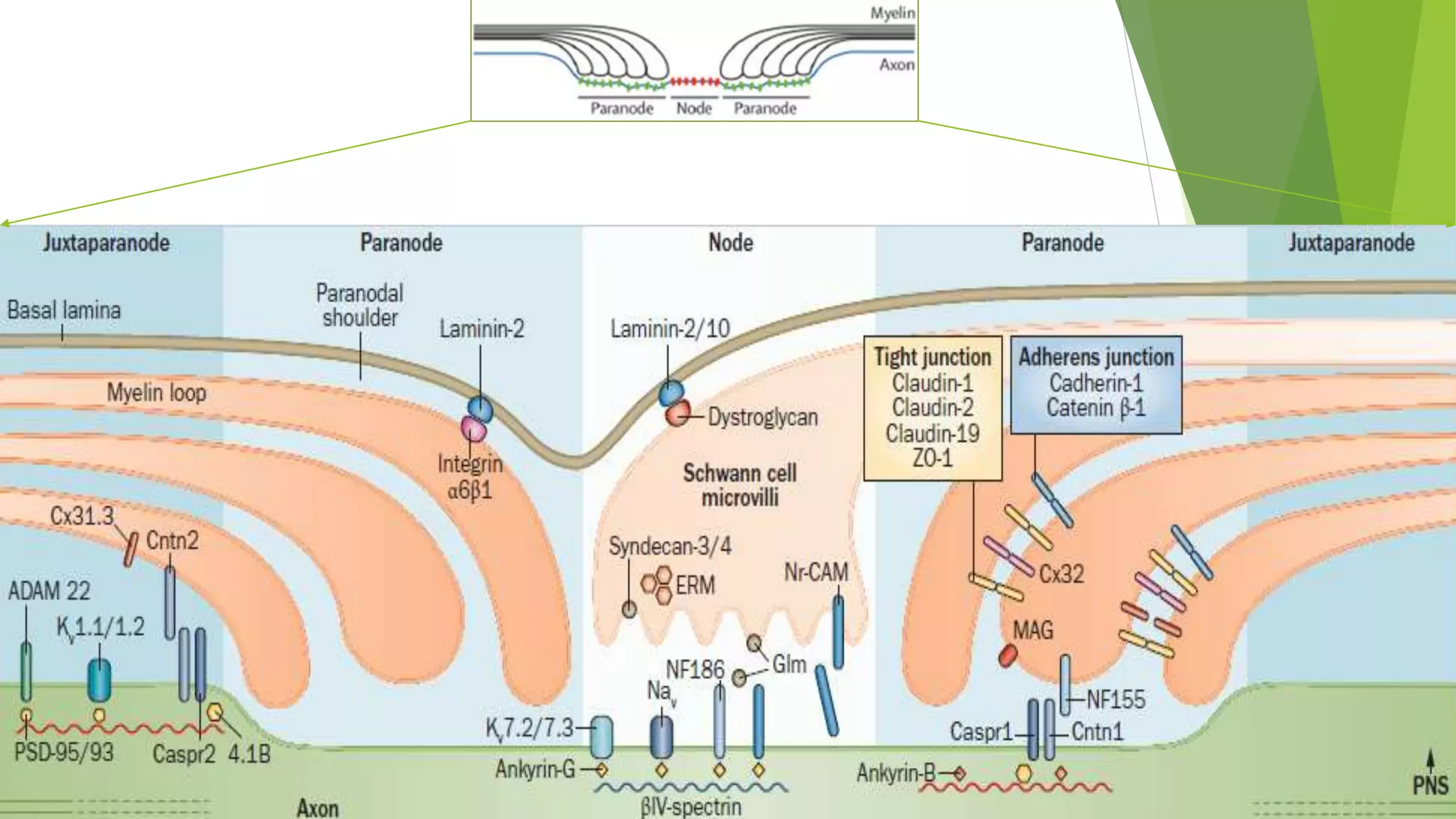
Fehmi J, Scherer SS, Willison HJ, et al. Nodes, paranodes and neuropathies. J Neurol Neurosurg Psychiatry 17 August 2017
Node of Ranvier disruption as a cause of neurological diseases. Susuki K - ASN Neuro (2013)
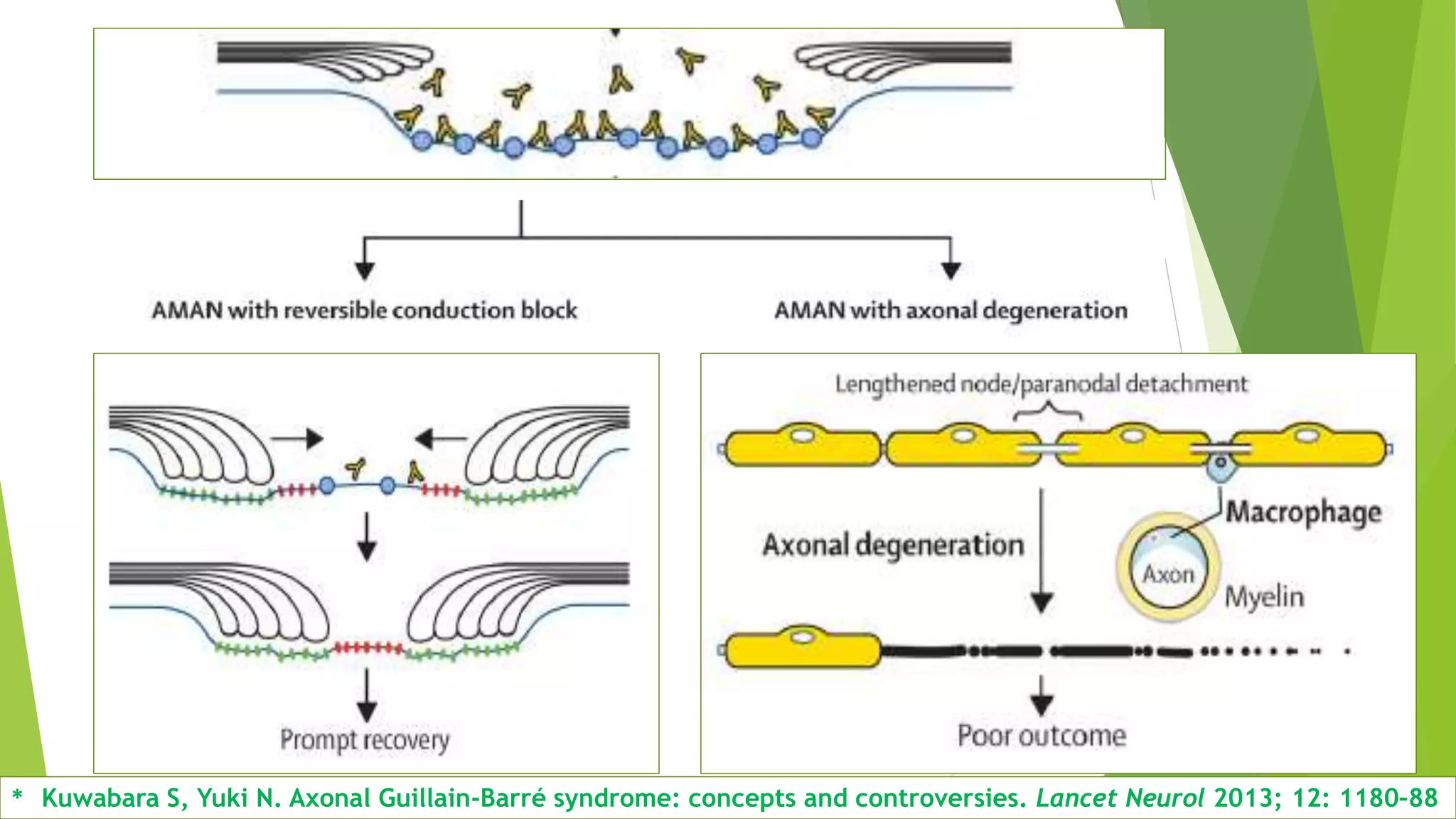
* Kuwabara S, Yuki N. Axonal Guillain-Barré syndrome: concepts and controversies. Lancet Neurol 2013; 12: 1180–88
Presentation
Summary of Pathogenesis
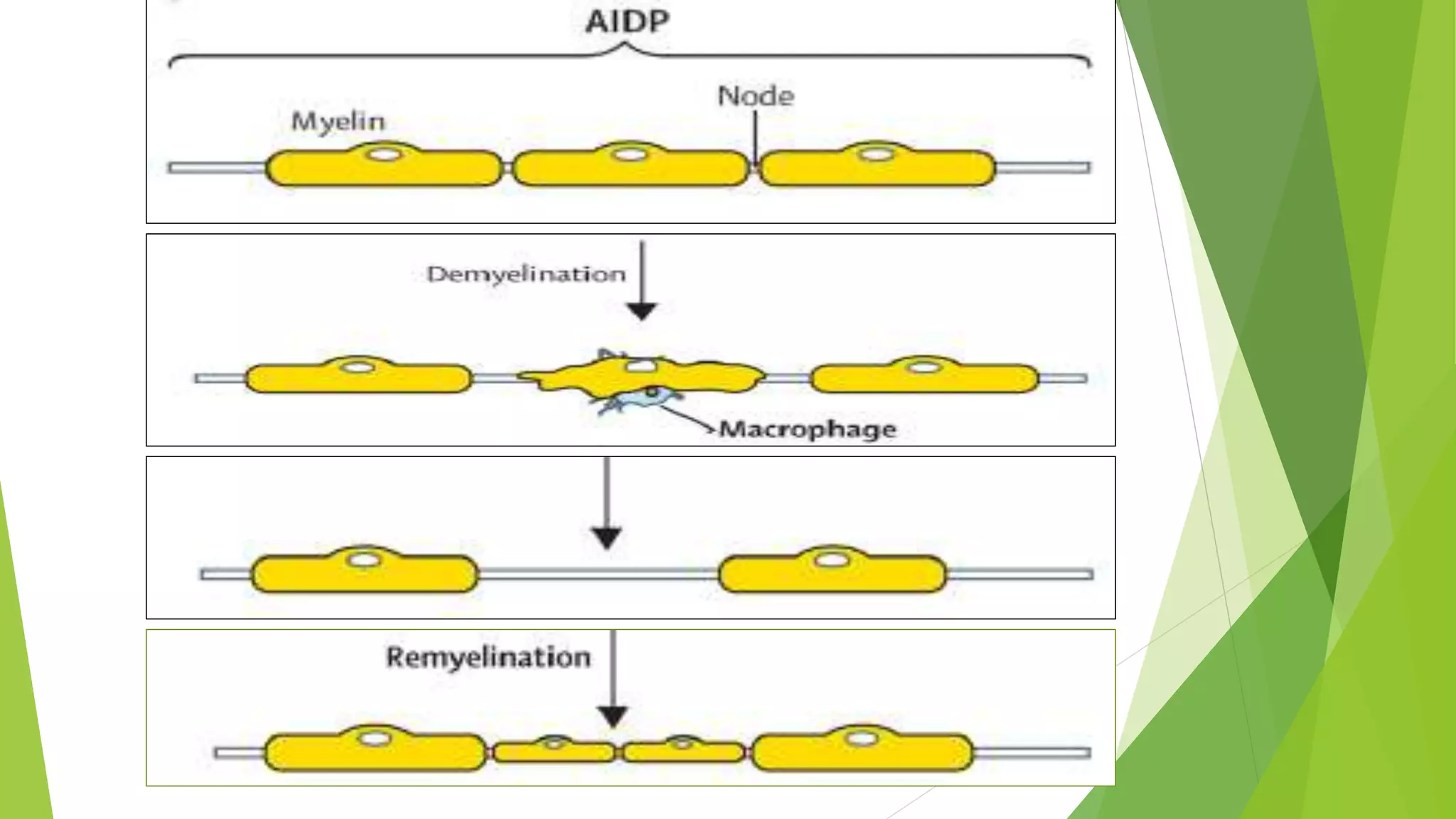
1. AIDP :
Molecular mimicry  leading to lymphocytic mononuclear infiltrate of nerve roots,
peripheral nerves  with macrophage associated segmental demyelination
2. AMAN:
 paucity of lymphocytic infiltration
 sparing of the dorsal nerve roots, DRG, and peripheral sensory nerves.
 lengthening of the node of Ranvier  followed by the recruitment of macrophages
 Lengthening of node is reversible , results in acute conduction block neuropathy
 Late Wallerian degeneration
CLINICAL PRESENTATION
7-10 days prior to onset
of weakness
WEEKS ----
Nadir - 2 weeks – 50%
4 weeks – 90%
Recovery begins 2-3 weeks after
progression stops
WEEKS ----Ropper AH, Wijdicks EFM, Truax BT. In:Guillain-Barré Syndrome,Contemporary Neurology Series. Davis FA, editor. Vol.34. Philadelphia, PA: 1991.
Natural History
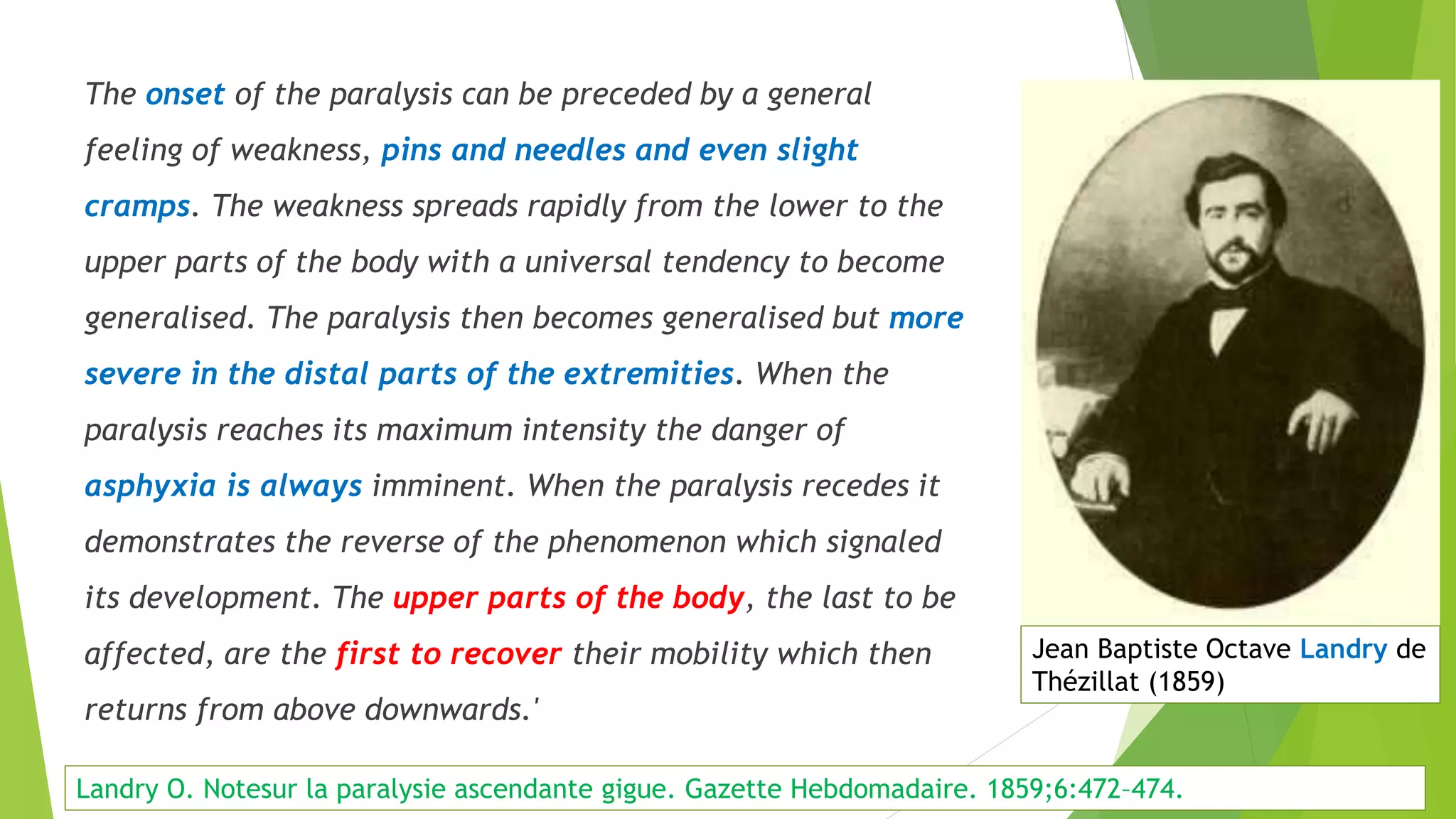
The onset of the paralysis can be preceded by a general
feeling of weakness, pins and needles and even slight
cramps. The weakness spreads rapidly from the lower to the
upper parts of the body with a universal tendency to become
generalised. The paralysis then becomes generalised but more
severe in the distal parts of the extremities. When the
paralysis reaches its maximum intensity the danger of
asphyxia is always imminent. When the paralysis recedes it
demonstrates the reverse of the phenomenon which signaled
its development. The upper parts of the body, the last to be
affected, are the first to recover their mobility which then
returns from above downwards.'
Presentation
Jean Baptiste Octave Landry de
Thézillat (1859)
Landry O. Notesur la paralysie ascendante gigue. Gazette Hebdomadaire. 1859;6:472–474.
Presentation
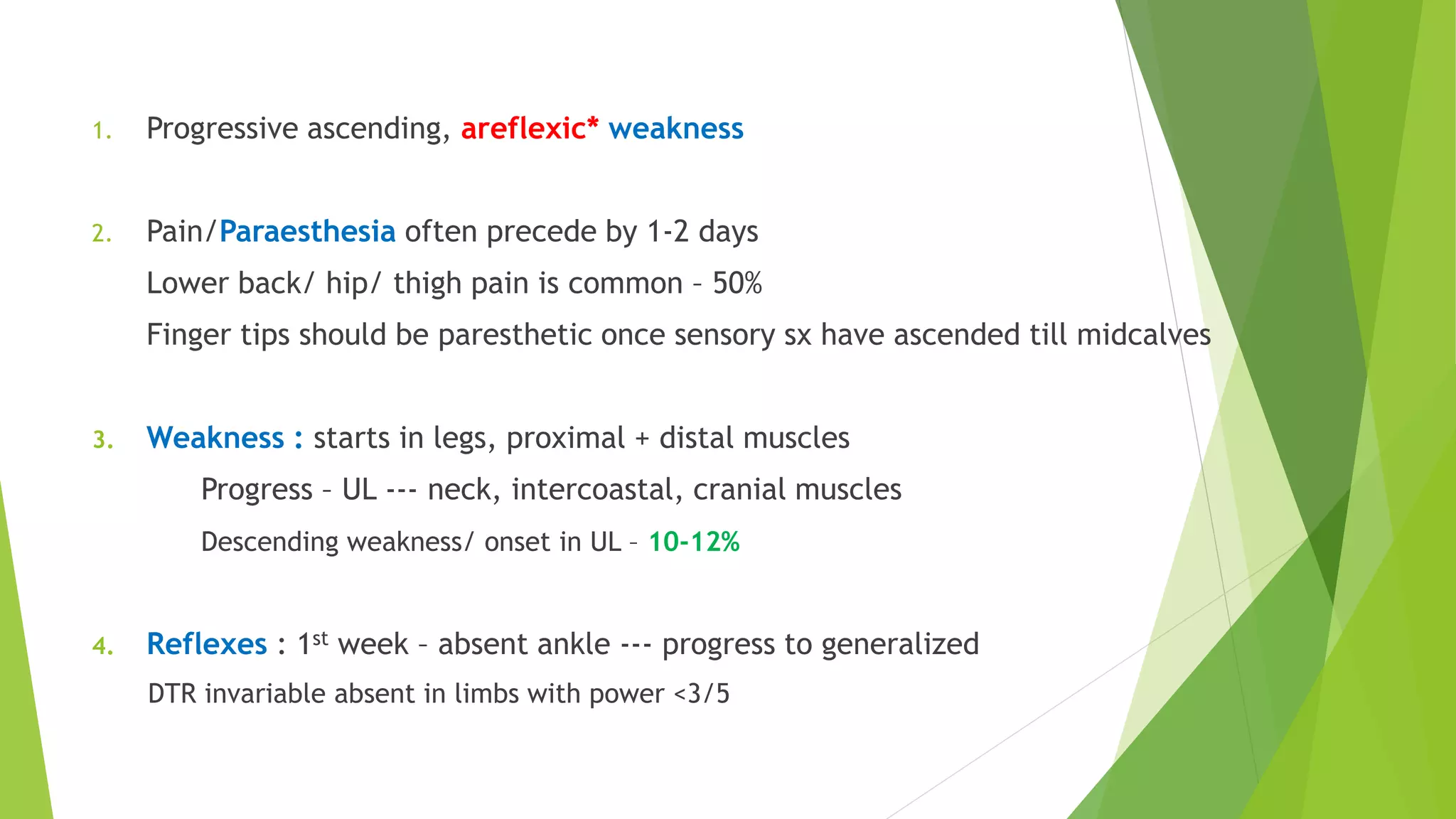
1. Progressive ascending, areflexic* weakness
2. Pain/Paraesthesia often precede by 1-2 days
Lower back/ hip/ thigh pain is common – 50%
Finger tips should be paresthetic once sensory sx have ascended till midcalves
3. Weakness : starts in legs, proximal + distal muscles
Progress – UL --- neck, intercoastal, cranial muscles
Descending weakness/ onset in UL – 10-12%
4. Reflexes : 1st week – absent ankle --- progress to generalized
DTR invariable absent in limbs with power <3/5
Presentation
5. Cranial nerve palsies :
Facial weakness – 40-50% at presentation
Facial diplegia, maybe at onset or sequentially
 Paediatric : 9th 10th common
 Adults : 7th nerve most common
6. Autonomic dysfunction – 2/3rd at onset
MC – sinus tachycardia, less often bradycardia
facial flushing
fluctuating hypo/ hypertension
loss of sweating/ episodic diaphoresis
syncope/ pre-syncope/ retention/ constipation
Presentation
7. Oro-pharyngeal/ respiratory : 40%
1/3rd patients – may require mechanical ventilation
8. Bowel/ bladder/ sphincter disturbances
rare in early course of disease (<10%)
presence should raise a suspicion of myelopathy
9. MFS: Ophthalmoplegia, Ataxia, Areflexia
10. Psychotic – ONEIRIC hallucinations (bizzarre walking dreams)
After weeks of immobilization
AIDP AMAN
1. Infection CMV, EBV Campylobacter jejuni
2. Epidemics None China - children
3. Target Unknown GM1, GD1a
4. Onset – pain Common Absent
5. DTR Absent (preserved/
exaggerated in 5%)
Usually absent (preserved/
exagerrated in 20%)
6. Cranial nerve Common 60% Uncommon 20%
7. Sensory loss Frequent – 70% Absent usually
8.Autonomic involvement Frequent Rare
9. Recovery Relatively uniform 2 patterns – fast and slow
10. Electrophysiology Demyelination Axonal degeneration, CB
Variants
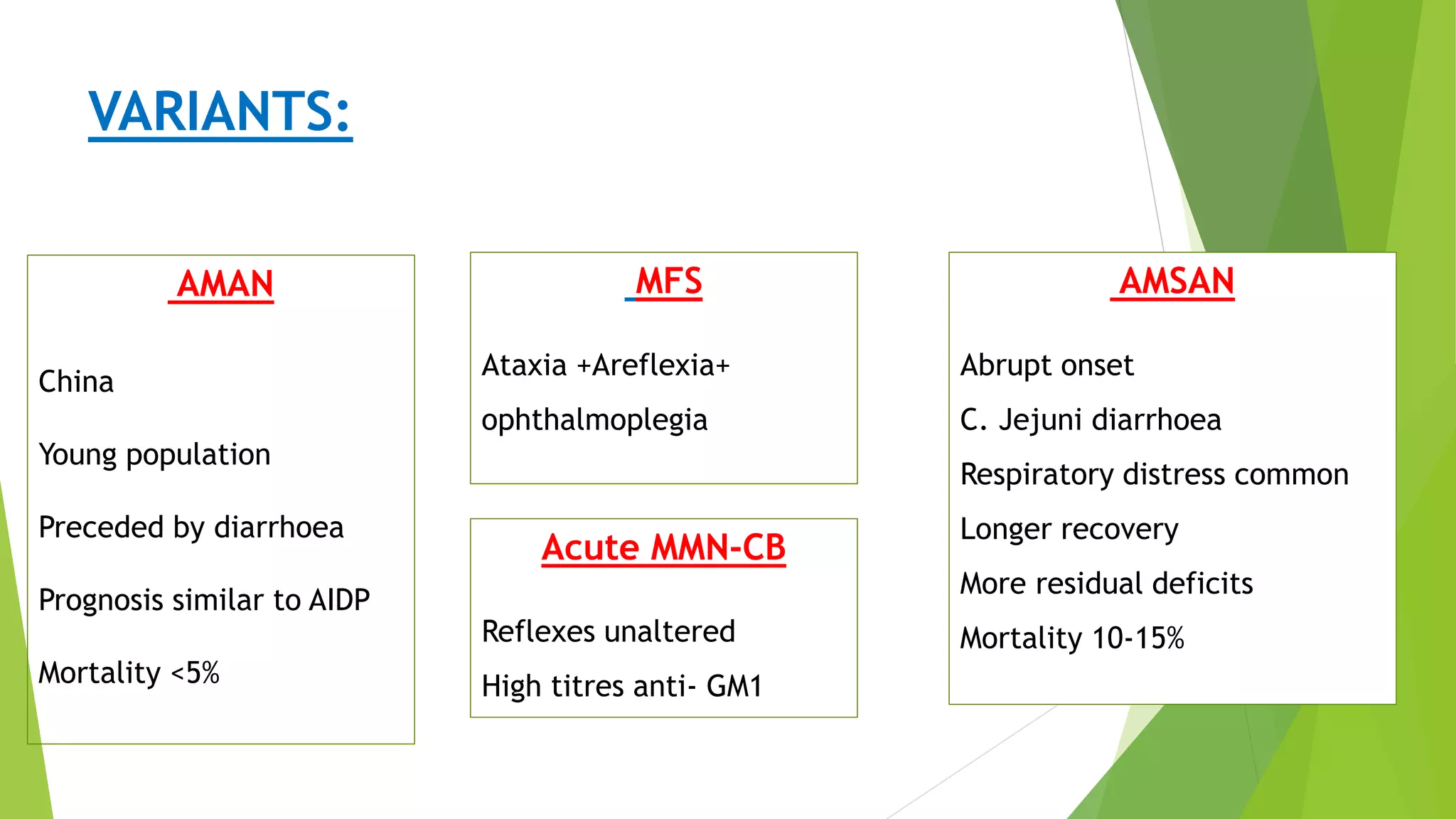
AMAN
China
Young population
Preceded by diarrhoea
Prognosis similar to AIDP
Mortality <5%
AMSAN
Abrupt onset
C. Jejuni diarrhoea
Respiratory distress common
Longer recovery
More residual deficits
Mortality 10-15%
MFS
Ataxia +Areflexia+
ophthalmoplegia
VARIANTS:
Acute MMN-CB
Reflexes unaltered
High titres anti- GM1
Variants
Variants
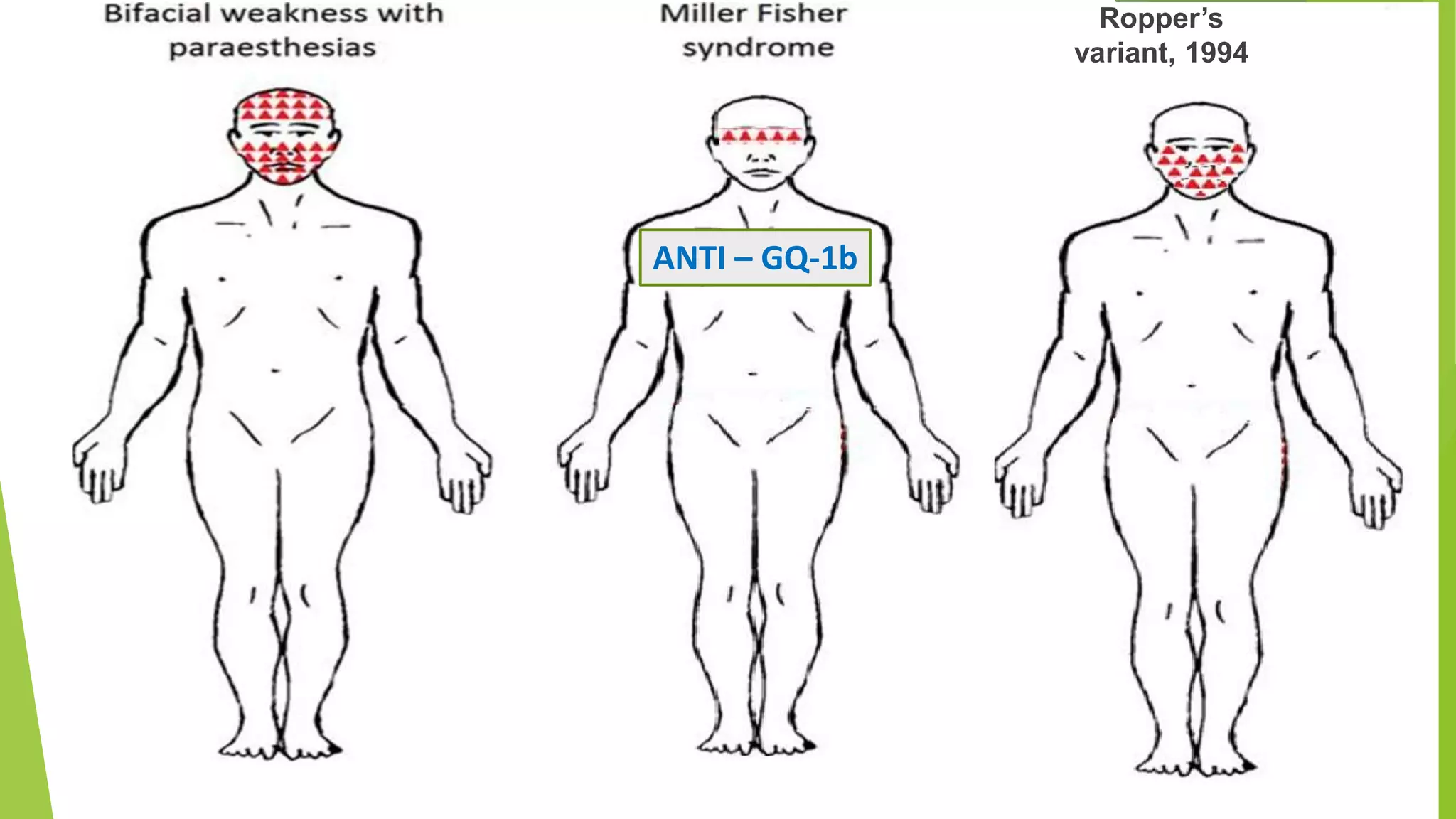
ANTI – GQ-1b
Ropper’s
variant, 1994
Presentation
Bickerstaff Brainstem Encephalitis (BBE)
1. Variant of MFS, Ataxia + Ophthalmoparesis +
2. Altered consciousness + paradoxical hyper-reflexia
3. Antecedent infection – 92%
4. Anti-GQ1b antibody – 66%
5. Elevated CSF protein – 59%
6. MRI abnormalities – 30%
7. Absent H-reflex may be the only finding in 75% MFS/BBE
* Yuki N, Sato S, Tsuji S, Hozumi I, Miyatake T. An immunologic abnormality common to Bickerstaff ’s brain stem encephalitis and Fisher’s
syndrome. J Neurol Sci. 1993;118(1):83–87.
** Ito M, Kuwabara S, Odaka M, et al. Bickerstaff's brainstem encephalitis and Fisher syndrome form a continuous spectrum: clinical
analysis of 581 cases. J Neurol. 2008 May;255(5):674–682.
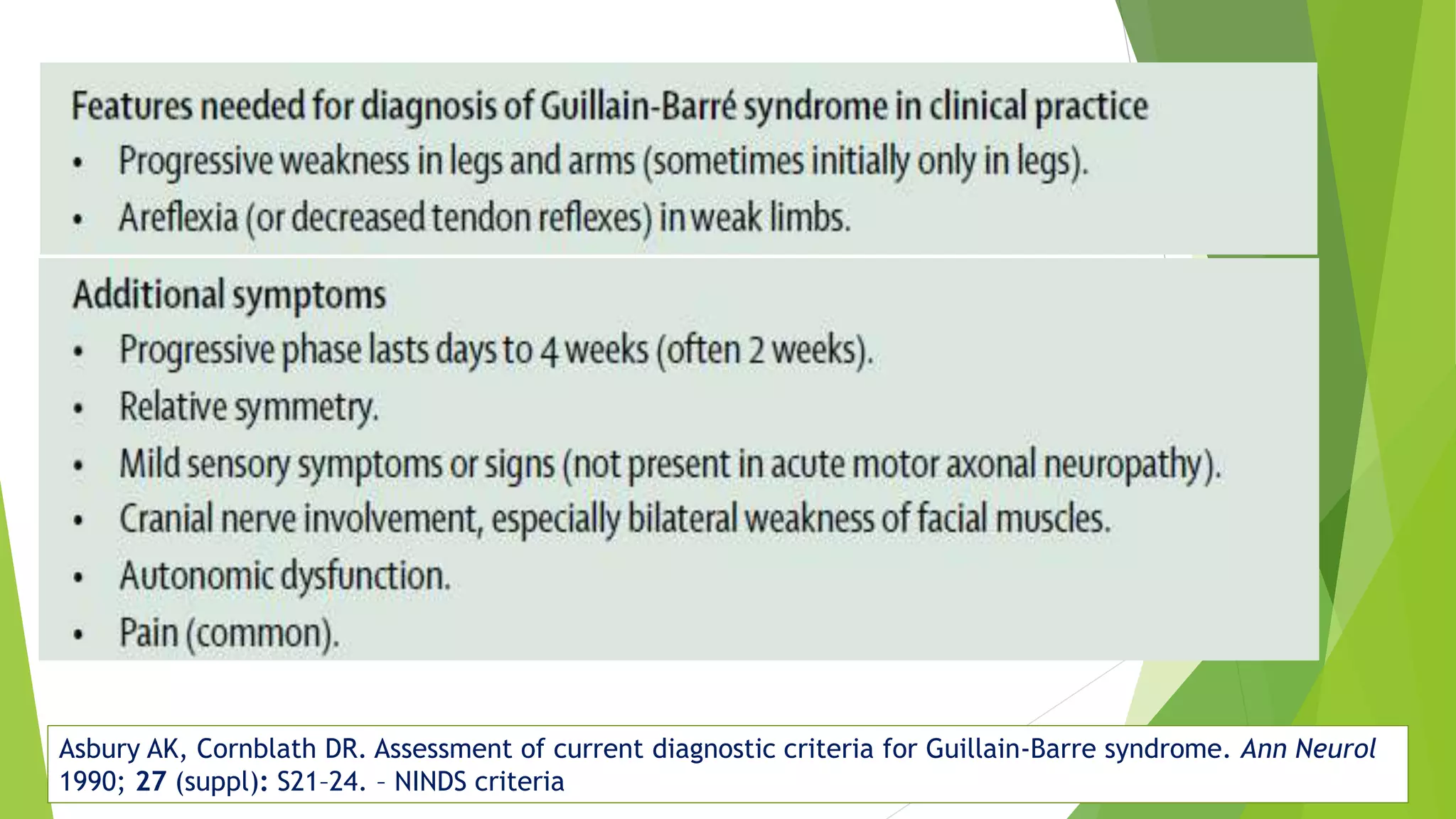
DIAGNOSIS
Asbury AK, Cornblath DR. Assessment of current diagnostic criteria for Guillain-Barre syndrome. Ann Neurol
1990; 27 (suppl): S21–24. – NINDS criteria
Christiaan Fokke, Bianca van den Berg, Judith Drenthen, Christa Walgaard, Pieter Antoon van Doorn, Bart Casper Jacobs; Diagnosis
of Guillain-Barré syndrome and validation of Brighton criteria, Brain, Volume 137, Issue 1, 1 January 2014, Pages 33–43
Presentation
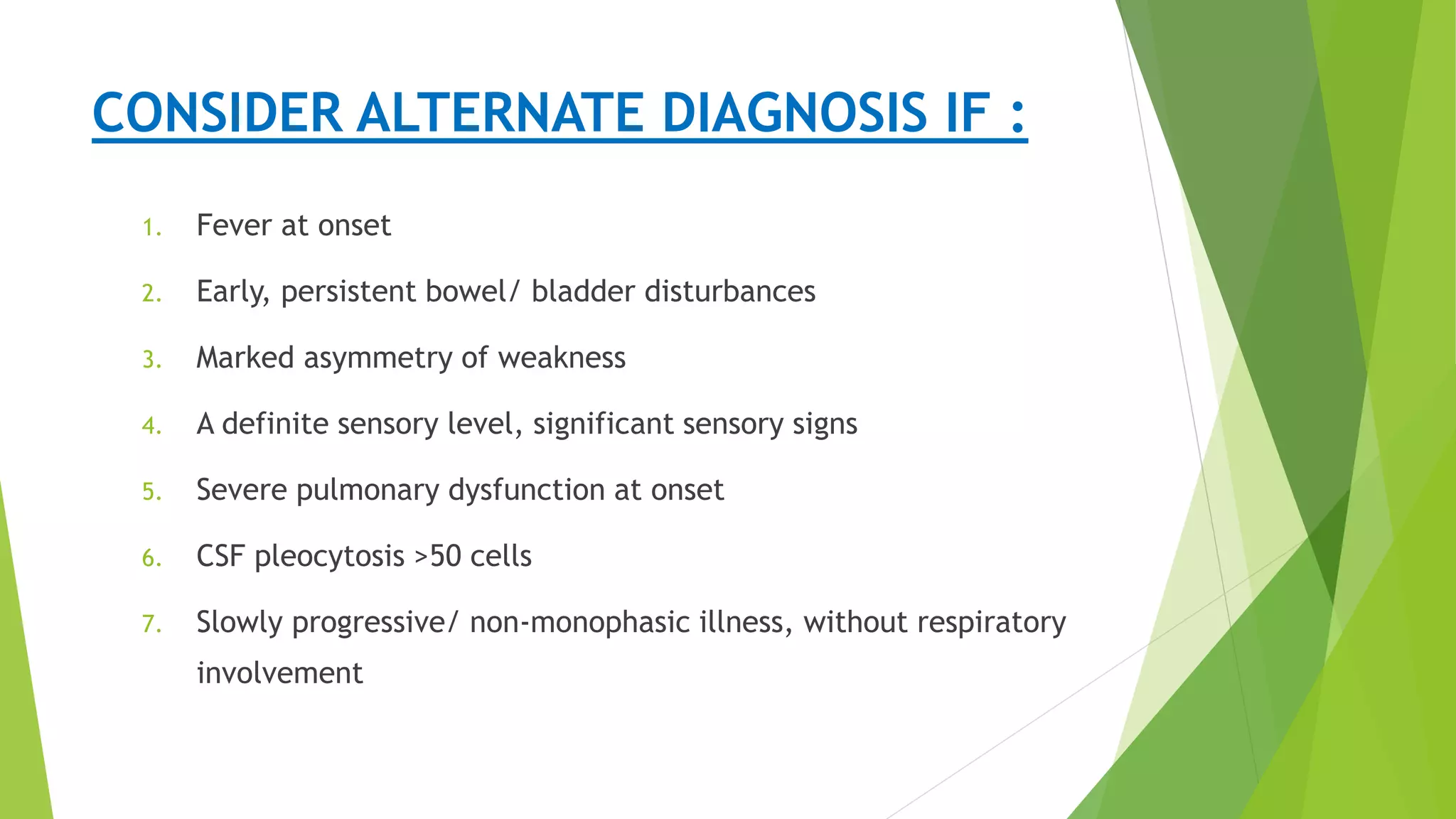
CONSIDER ALTERNATE DIAGNOSIS IF :
1. Fever at onset
2. Early, persistent bowel/ bladder disturbances
3. Marked asymmetry of weakness
4. A definite sensory level, significant sensory signs
5. Severe pulmonary dysfunction at onset
6. CSF pleocytosis >50 cells
7. Slowly progressive/ non-monophasic illness, without respiratory
involvement
Diagnosis
1. Lumbar Puncture: ACD
CSF is characteristically acellular (<10)
Or contain only few lymphocytes (10-50/mm) 80% patients
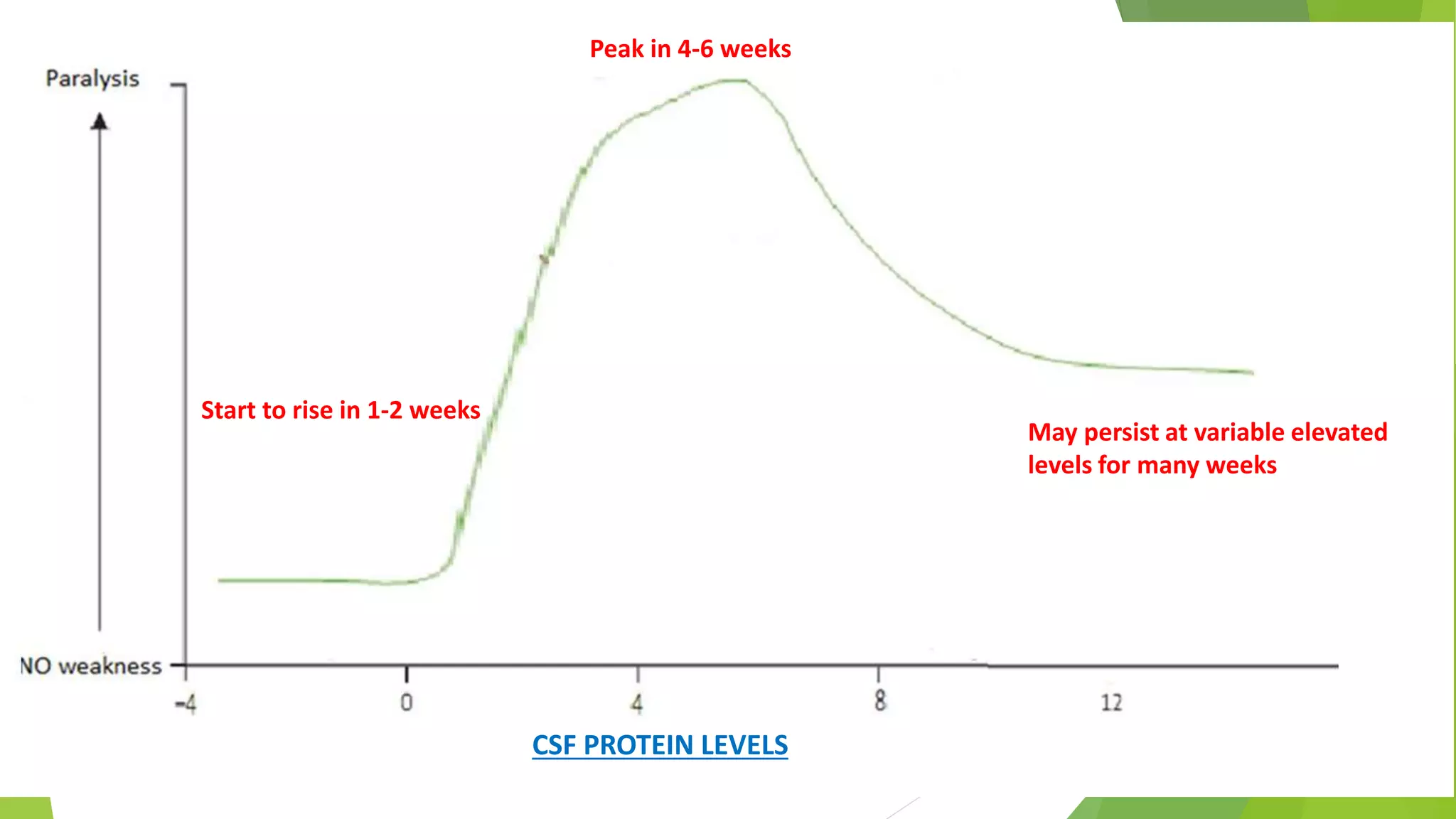
Proteins rise during 2-3 weeks (100-1000 mg)
IF CSF cells > 50 : consider
- HIV, Lymes, Sarcoidosis
- CMV polyradicupathy/ cauda equina syndrome
- Carcinomatous polyradiculitis, Aseptic meningitis
Peak in 4-6 weeks
Start to rise in 1-2 weeks
May persist at variable elevated
levels for many weeks
CSF PROTEIN LEVELS
Other CSF findings
Antibodies in CSF:
• IgG, IgM cerebroside – 38%
• IgG cardiolipin – 50%
• Gangliosides
GM1, GM2, GM3, GD1a, GD1b
• Heat shock proteins
HSP60, HSP70, HSP90
• Αβ- crystallin
Inflammatory mediators:
• Complement
C3a, C5a, C4b, C5-9
• Chemokines
IL17, IL18, IL22, IL37
• IL17, 37 correlate with disability
• Osteopontin levels – AMAN/ AIDP
• AIDP : IL1ra, IL8
• CIDP : CCL2, CCL7, CCL27, CXCL 9,10,12
Other CSF findings
Neuronal and Glial Markers:
• NfH – neuronal filament heavy chain
• NSE – neuron specific enolase
• S100
• 14-3-3 protein
• Glial fibrillary acetic protein, NfH,
S100 correlate with worse prognosis
Proteonomics:
↑ haptoglobin,
↓ transthyretin (usually neuroprotective
↑ cathepsin,
↓ cystatin C
Cerebrospinal fluid findings in Guillain–Barre syndrome and chronic inflammatory demyelinating polyneuropathies. ZSOLT
ILLES1, MORTEN BLAABJERG. Handbook of Clinical Neurology, Vol. 146 (3rd series)
Diagnosis
CSF findings in AMAN
 ACD may be +
 CSF/ SERUM albumin ratio – increased (~ AIDP)
 IgG index {CSF/SERUM IgG ÷ CSF/SERUM albumin} - increased (~ AIDP)
 CSF tau and NfH lvels correlate with poor outcomes
Diagnosis
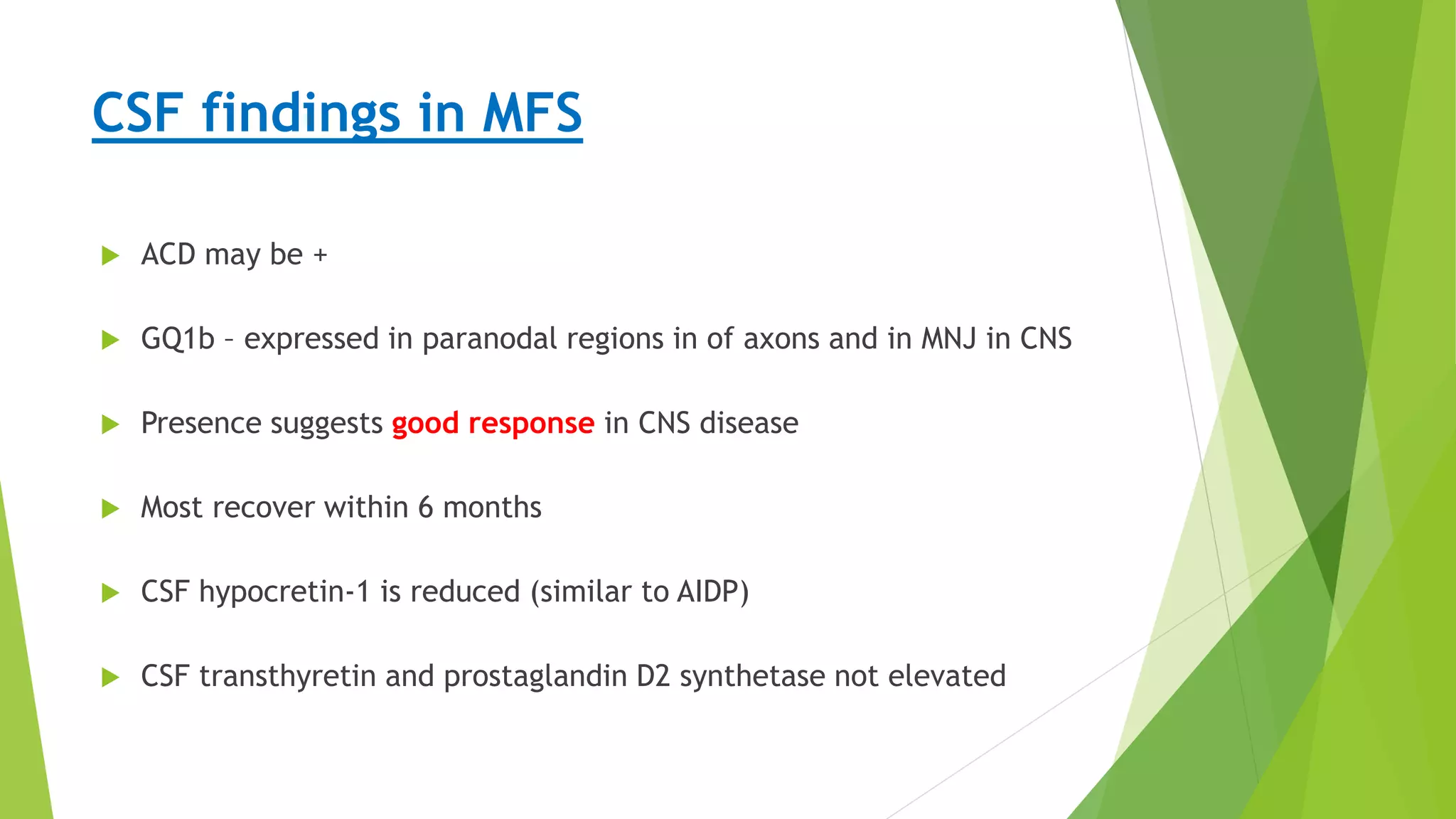
CSF findings in MFS
 ACD may be +
 GQ1b – expressed in paranodal regions in of axons and in MNJ in CNS
 Presence suggests good response in CNS disease
 Most recover within 6 months
 CSF hypocretin-1 is reduced (similar to AIDP)
 CSF transthyretin and prostaglandin D2 synthetase not elevated
Diagnosis
ROOT :
Prolonged or absent F-
response
Delayed or absent H-reflex
Axonal :Reduced CMAP
Prolonged distal latencies
Slowed conduction velocity
Distal conduction blocks
Diagnosis
Diagnosis
Diagnosis
Diagnosis
2. Edx – NCS : “ Sural sparing “
 A normal sural sensory response in the setting of abnormal UL sensory
potentials, more commonly in the later stages
 Differentiates GBS from its mimics (infectious, toxic, metabolic and
spinal cord disorders.
 Specificity – 95%, Sensitivity – 41%, LLR positive – 8.20
* Derksen A, Ritter C, Athar P, et al. Sural sparing pattern discriminates Guillain-Barré
syndrome from its mimics. Muscle & nerve. 2014;50(5):780-784. doi:10.1002/mus.24226.
Diagnosis
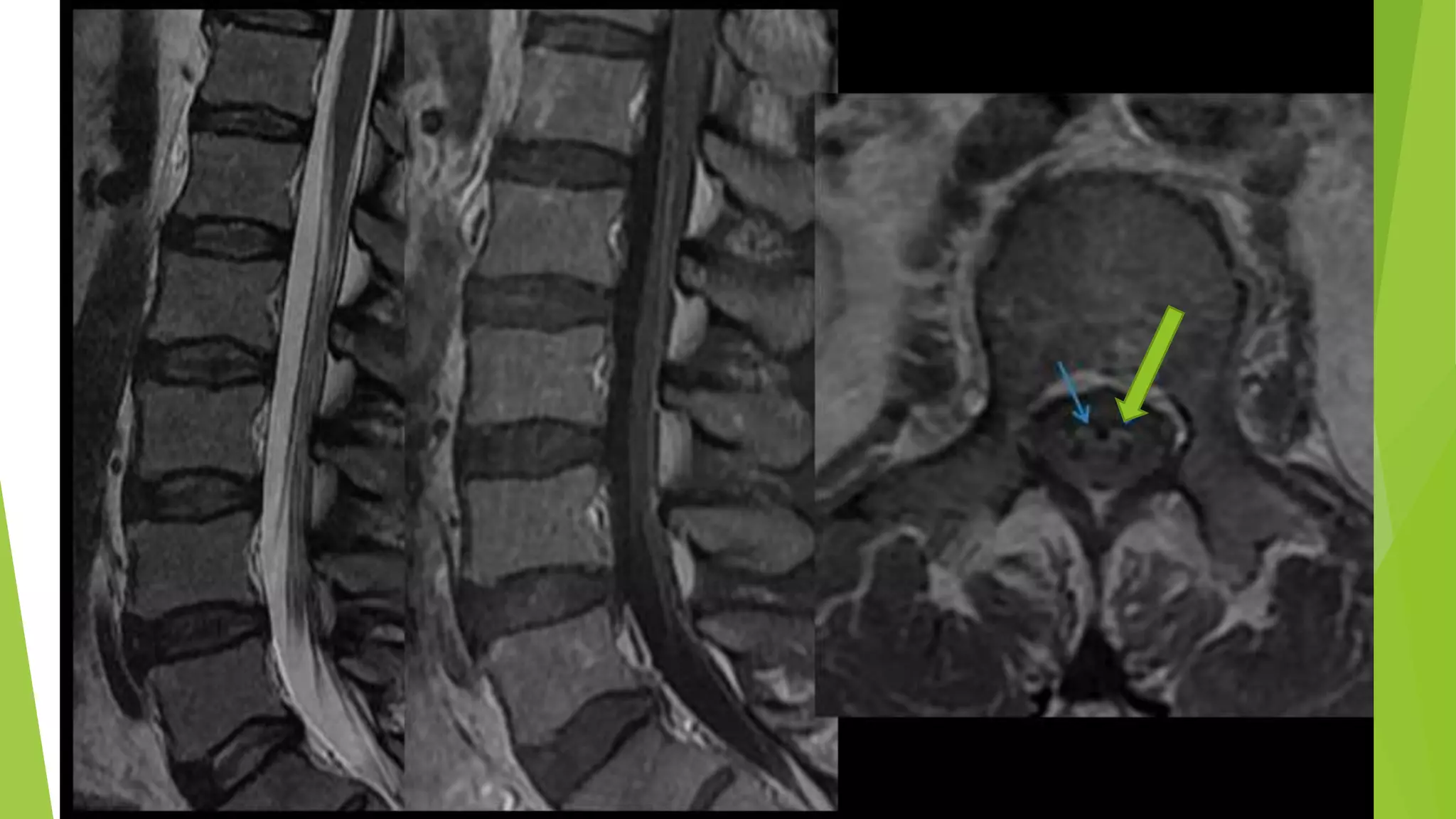
3. MRI Spine (contrast)
 Surface thickening and Contrast Enhancement of
 Conus medullaris and cauda equina nerve roots
 Most common site of enhancement – ventral roots
 Though enhancement of posterior roots also seen
 MRI esp useful in paraparetic GBS to identify site of lesion
• Alkan O, Yildirim T, Tokmak N et-al. Spinal MRI findings of guillain-barré syndrome. J Radiol
Case Rep. 2009;3 (3): 25-8. doi:10.3941/jrcr.v3i3.153
Diagnosis
Diagnosis
5. Metabolic abnormalities
 Raised CPK : in some
 ↑ ESR : infective/ neoplastic/ autoimmune cause
 LFT – abnormal in 10% : recent viral hepatitis – CMV/ EBV
 ↓ Na : SIADH – specially in ventilated patients, excess ANF
 ECG : Non specific ST-T changes may be seen
 Marked vomiting, hair loss, Mee’s line : Indicate Heavy metal toxicity
Differential Diagnosis
D/d:
1. AFP - Polio
2. Hypokalemic periodic paralysis
3. Thyrotoxic Periodic paralysis
4. N-M diseases – MG/ LEMS
5. OP poisoning
6. Botulism
7. Heavy metal toxicity (Lead)
8. Tick paralysis
9. MFS : MS/ VBI/ Encephalitis/ MG
Always Rule out Lymes disease/ HIV/ Syphillis/ metal toxicity
1. GBS
2. Lymes disease
3. CMV radiculitis
4. HIV radiculitis
5. Leptomeningeal
malignancy
D/D ACUTE ONSET LIMB WEAKNESS WITH/WITHOUT RESPIRATORY INVOLVEMENT
1. GBS
2. Toxic
3. Vascuilitic
4. Diphtheria/ Lymes
5. Porphyria
6. Thiamine deficiency
7. Metabolic/ electrolytes
8. HYPO-K/ Mg/ Po4/ glycem
NMJ disorders
1. MG
2. Botulism
3. Intoxications
Muscle disorders
1. Poly/ DM
2. Periodic paralysis
3. Criticle illness
myopathy
4. Rhabdomyolysis
5. Mitochondrial disease
Acute Spinal cord lesion
D/B GBS and TICK PARALYSIS – nearly impossible!!
1. Worldwide USA/ AUSTRALIA
2. Sensory loss may be + No sensory loss
3. CSF protein ↑ Normal
D/B GBS and PORPHYRIA
1. Mild pain Episodic Painful paralytic attacks
2. Predominant motor Sensory - motor
3. CSF protein ↑ Normal
D/B GBS and INFECTIVE (polio, West-Nile, enterovirus)
1. No fever at onset Episodic Painful paralytic attacks
2. More symmetrical Pure motor asymmetrical weakness
3. CSF acellular Pleocytosis
4. No meningitis Meningo-encephalitis syndrome +
D/B GBS and CARCINOMATOUS MENINGITIS with polyradiculopathy
1. Pain at onset + Painless
2. Acute Sub-acute
3. Mildly asymmetrical Fairly symmetrical
4. Proximal + distal Mainly distal, less proximal
5. Facial diplegia in 50% No facial weakness
6. Simultaneous weakness in limbs Sequential weakness in limbs
D/B cranial GBS/MFS and Myasthenia (bulbar)
1. Pain at onset + Painless
2. No diurnal variation Diurnal variation +
3. Mild sensory symptoms Pure motor weakness
4. Ocular muscles – advanced disease Early in disease
5. Mandibular muscles normal Exercised jaw hangs open
6. Areflexic DTR preserved
D/B cranial GBS/MFS and BASILAR ARTERY THROMBOSIS
1. Pain at onset +/- Painless
2. Areflexic Lively reflexes
3. Reactive pupils Sluggish/ locked in state
4. Plantar flexor Babinski +
5. F-wave abnormalities + Absent
D/B cranial GBS/MFS and Botulism
1. Preserved pupils Early Pupillary paralysis
2. Sinus tachycardia in 10% Bradycardia common
3. Ascending Descending paralysis
D/B GBS and CRITICAL ILLNESS NEUROPATHY
1. Acute Acute- subacute
2. Difficulty in weaning from ventilator
3. Sensory-motor Predominantly motor, mild sensory
4. Infections +/- Preceding sepsis/ overwhelming infection
5. Cranial nerve +/- Usually spared
6. Autonomic dysfunction +/- No dysautonomia
7. Demyelinating typically Primary axonal process
ICU patient with weakness and wiped out CMAPs, always consider toxic effects of
drugs, antibiotics and nutritional deficiencies in addition to the above two.
High dose steroids, NM-blocking agents can cause acute quadriplegic myopathy –
differentiated by high levels of CPK and myogenic potentials on EMG.
Treatment
TREATMENT
 GBS – a clinical diagnosis – symmetric
 Early intervention is essential to halt progression
 Immunotherapy is the standard of care
 In addition, supportive therapy
*Chevret S, Hughes RAC, Annane D. Plasma exchange for Guillain-Barré syndrome. Cochrane Database of Systematic Reviews 2017,
Issue 2. Art. No.: CD001798. DOI: 10.1002/14651858.CD001798.pub3.
Treatment
PlEx regimen :
 200 – 250 mL/Kg plasma removed
 In 4-6 treatment cycles, Usually on alternate days.
 Daily cycles can also be given, if no coagulopathy
 Replacement fluid : Saline + 5% albumin
 If FFP used – chances of infections, HIV, hepatitis
 S/E : hypotension, hypo-prothrombinemia, bleeding, arrythmias
* French Cooperative Group on Plasma Exchange in Guillain-Barré syndrome. Appropriate
number of plasma exchanges in Guillain-Barré syndrome. Ann Neurol. 1997;41:298–306.
1. No adequate trials comparing IVIG with placebo in adults (*moderate evidence)
2. In severe disease, IVIG started within 2 weeks, hastens recovery as much as PLEX
3. Adverse events are not significantly more with either treatment
4. But IVIG is significantly more likely to be completed
5. Giving IVIG after PLEX did not confer extra benefit (*moderate evidence)
6. More research is needed in mild patients and in whom treatment starts >2 weeks.
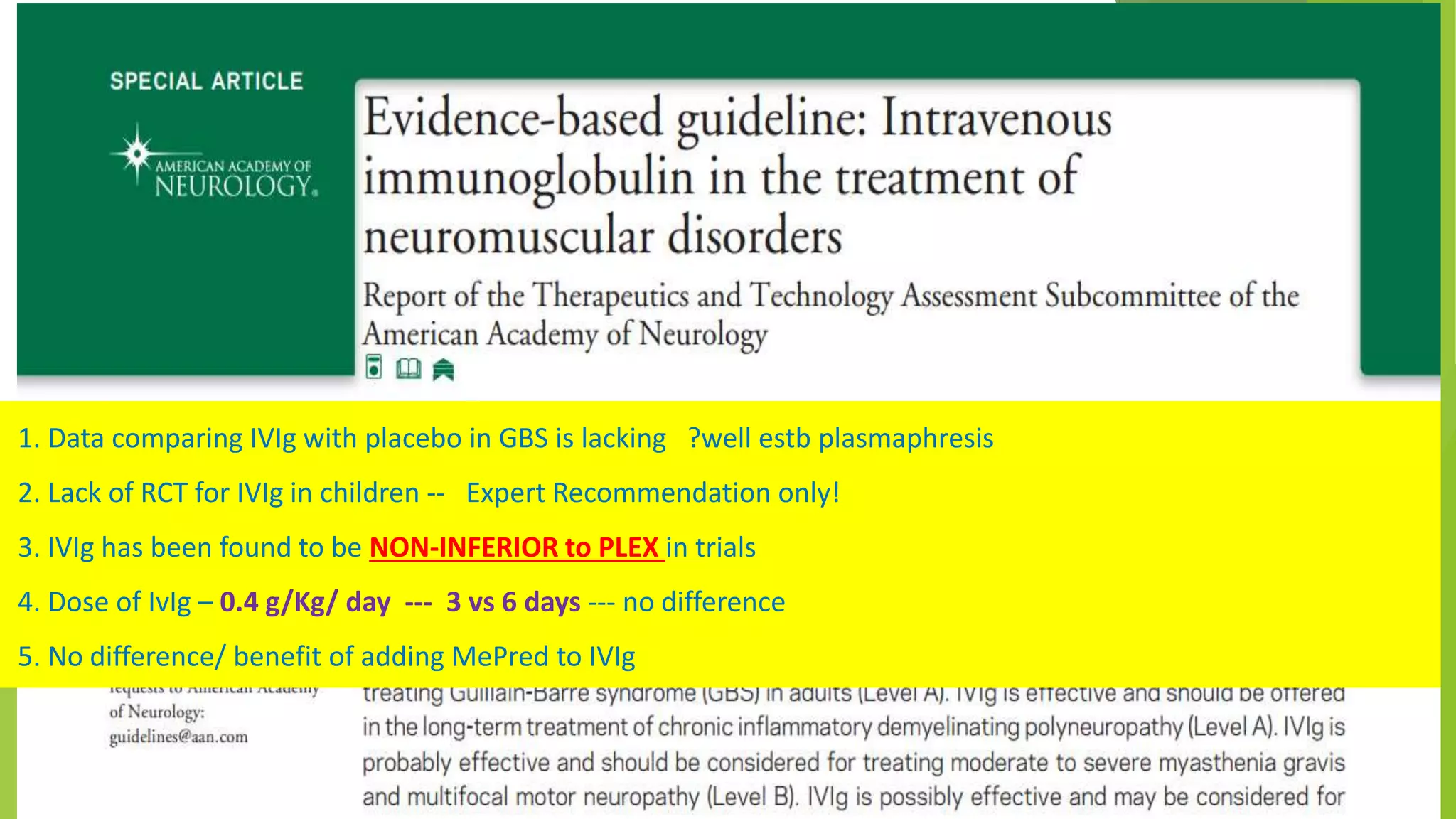
1. Data comparing IVIg with placebo in GBS is lacking ?well estb plasmaphresis
2. Lack of RCT for IVIg in children -- Expert Recommendation only!
3. IVIg has been found to be NON-INFERIOR to PLEX in trials
4. Dose of IvIg – 0.4 g/Kg/ day --- 3 vs 6 days --- no difference
5. No difference/ benefit of adding MePred to IVIg
Treatment
IVIG - MOA:
 Interferes with co-stimulatory molecules involved in APC
 Modulation of auto-antibodies, cytokines, adhesion molecules
 Modulation of the macrophage Fc receptor
 Disrupts complement activation and formation of MAC
 Upregulation of inhibitory Fc receptor – attenuates Ab-initiated inflammation
* Dalakas MC. Intravenous Ig in autoimmune neuromuscular diseases. JAMA. 2004 May 19;291(19): 2367–2375.
Treatment
IVIG - infusion:
 Total of 2g/Kg, Each bottle – 5gm
 Start slow infusion, @ 25-50 mL/ hour
 Watch closely for any reactions
 Every 15-30 minutes, Increase the rate slowly
 Increase the rate @50 mL/hour
 Subsequently, 1 bottle can be given over 4-5 hours
Treatment
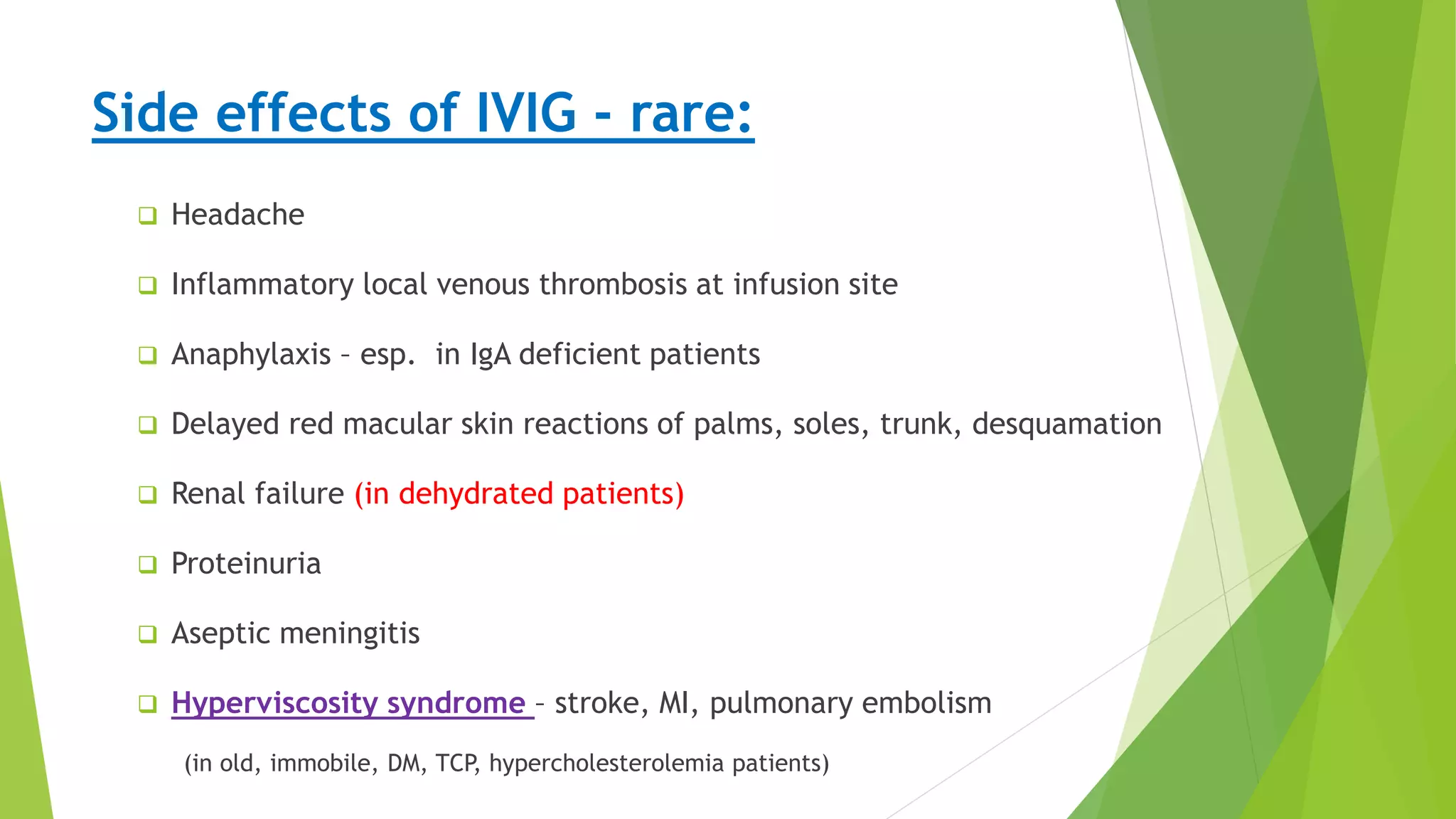
Side effects of IVIG - rare:
 Headache
 Inflammatory local venous thrombosis at infusion site
 Anaphylaxis – esp. in IgA deficient patients
 Delayed red macular skin reactions of palms, soles, trunk, desquamation
 Renal failure (in dehydrated patients)
 Proteinuria
 Aseptic meningitis
 Hyperviscosity syndrome – stroke, MI, pulmonary embolism
(in old, immobile, DM, TCP, hypercholesterolemia patients)
Treatment
Severe Patients not improving: PlEx f/b IVIG
* The Dutch Guillain-Barré Study Group. Treatment of Guillain-Barré syndrome with high-dose immune globulins combined with
methylprednisolone: a pilot study. Ann Neurol. 1994 Jun;35(6):749–752.
Treatment – AAN
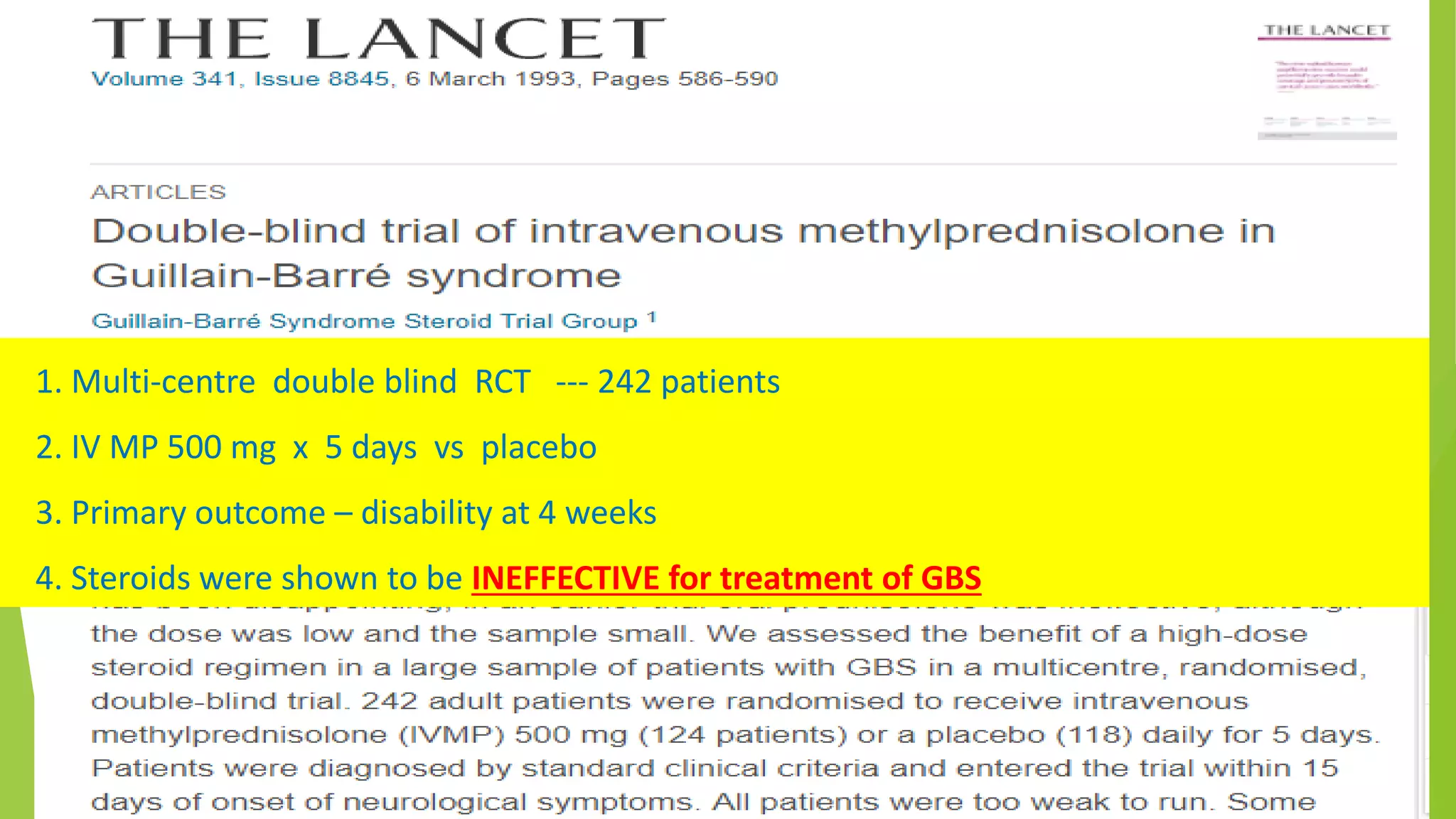
1. Multi-centre double blind RCT --- 242 patients
2. IV MP 500 mg x 5 days vs placebo
3. Primary outcome – disability at 4 weeks
4. Steroids were shown to be INEFFECTIVE for treatment of GBS
*Hughes RAC, Brassington R, Gunn AA, van Doorn PA. Corticosteroids for Guillain-Barré syndrome. Cochrane Database of
Systematic Reviews 2016, Issue 10. Art. No.: CD001446. DOI: 10.1002/14651858.CD001446.pub5.
Moderate quality evidence show CS alone donot significantly hasten recovery from GBS or affect long-
term outcome. According to very low quality evidence, oral CS delay recovery. Diabetes requiring insulin
was more common and hypertension less common with corticosteroids based on high quality evidence.
* Wang, Y.-Z. et al. Action mechanism of corticosteroids to aggravate Guillain-Barré syndrome. Sci. Rep. 5, 13931;
doi: 10.1038/srep13931 (2015).
I-SID-GBS TRIAL – currently data being evaluated – results awaited
Large, prospective, open label, observation trial studying the effect of a second dose of IVIG
given shortly after the first dose.
JET-GBS TRIAL – Japanese Eculizumab Trial - GBS
prospective, multicenter, placebo-controlled, double-blind, randomized phase II
study conducted at 13 tertiary neurology centers, to evaluate
efficacy and safety of ECULIZUMAB (against C5) for GBS treatment.
Treatment
SUPPORTIVE THERAPY :
1. Monitor vitals, SBC, TLC
2. Tachycardia/ brow sweating
3. Pain – opiods/ gabapentin/ CBZ
4. High protein diet
5. Eye protection
6. ?paralytic ileus/ autonomic dysfunction
7. ?Bed sores
8. SIADH – 10-15%
9. DVT prophylaxis
10. Nosocomial infections
Treatment
Monitor Resp Insufficiency on Daily Rounds:
1. Severe impairment of resp. can occur before dyspnoea appears
2. Tachypnoea may indicate incipient resp. failure
3. Strength of neck muscles/ trapezii parallel Diaphragm weakness
4. SBC >20 : indicates Vital Capacity > 1.5 L.
Treatment
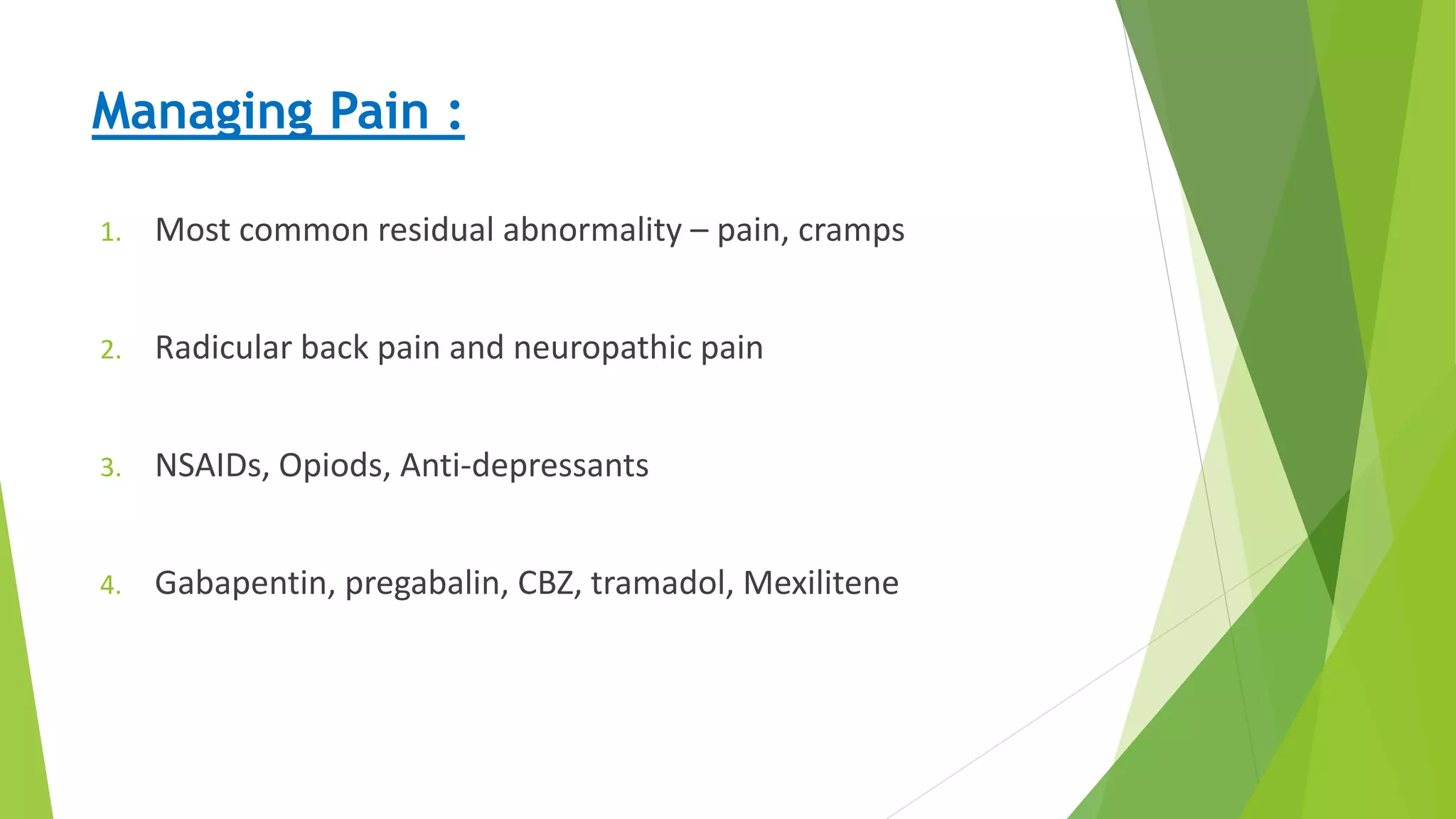
Managing Pain :
1. Most common residual abnormality – pain, cramps
2. Radicular back pain and neuropathic pain
3. NSAIDs, Opiods, Anti-depressants
4. Gabapentin, pregabalin, CBZ, tramadol, Mexilitene
Prognosis:
 Recovery starts – 4 weeks
 Avg period of mechanical vent – 22 days
 Time to walk unaided – 50 days
 Complete recovery – 200 days
 MC residual – pain, fatigue, cramps, depression
 20% patients cannot walk un-aided even after 6 months
 Axonal regeneration may take 6-18 months
 Most improvements happen during 1st year, minimal after that
Prognosis
* Drenthen J, Jacobs BC, Maathuis EM, van Doorn PA, Visser GH, Blok JH. Residual fatigue in Guillain-Barre
syndrome is related to axonal loss. Neurology 2013; 81: 1827–31.
* Merkies IS, Faber CG. Fatigue in immune-mediated neuropathies. Neuromuscul Disord 2012; 22 (suppl 3): S203–07.
Poor Prognostic factors:
x Age > 40
x Preceding diarrhoea (4 weeks), CMV, C. jejuni
x Rapid progression (<7 days)
x More duration of disease
x Higher CSF protein
x Higher anti-GM1 titres
x Severe reduced distal CMAPs (<20% LLN)
x Requirement of mechanical ventilation
x Erasmus GBS outcome score at 2 weeks ≥ 5
AMAN/ AMSAN : though less autonomic/ cranial, rapid muscle atrophy
Prognosis
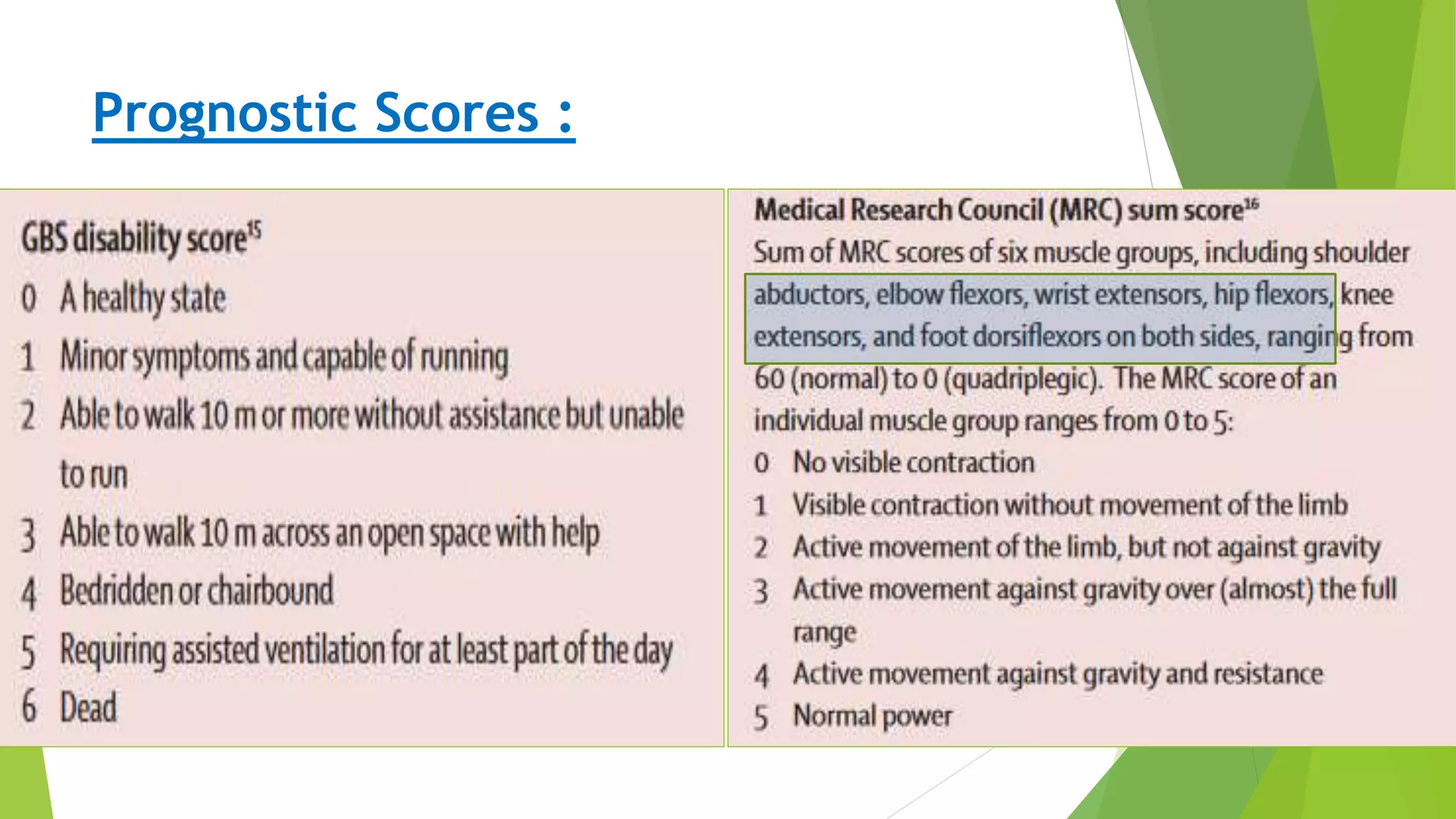
Prognostic Scores :
Prognosis
Prognostic Scores – EGOS:
Prognosis
EGOS scores at 2 weeks and MRC sum
scores at 1 or 2 weeks have the
highest predictive value for
prognosis.
EGOS – simple score, based on 3
parameter, accurately predicts
outcomes
** van Koningsveld R, Steyerberg EW, Hughes RA, Swan AV, van Doorn PA, Jacobs BC. A clinical prognostic scoring
system for Guillain-Barre syndrome. Lancet Neurol 2007; 6: 589–94.
Prognostic Scores – mEGOS:
Prognosis
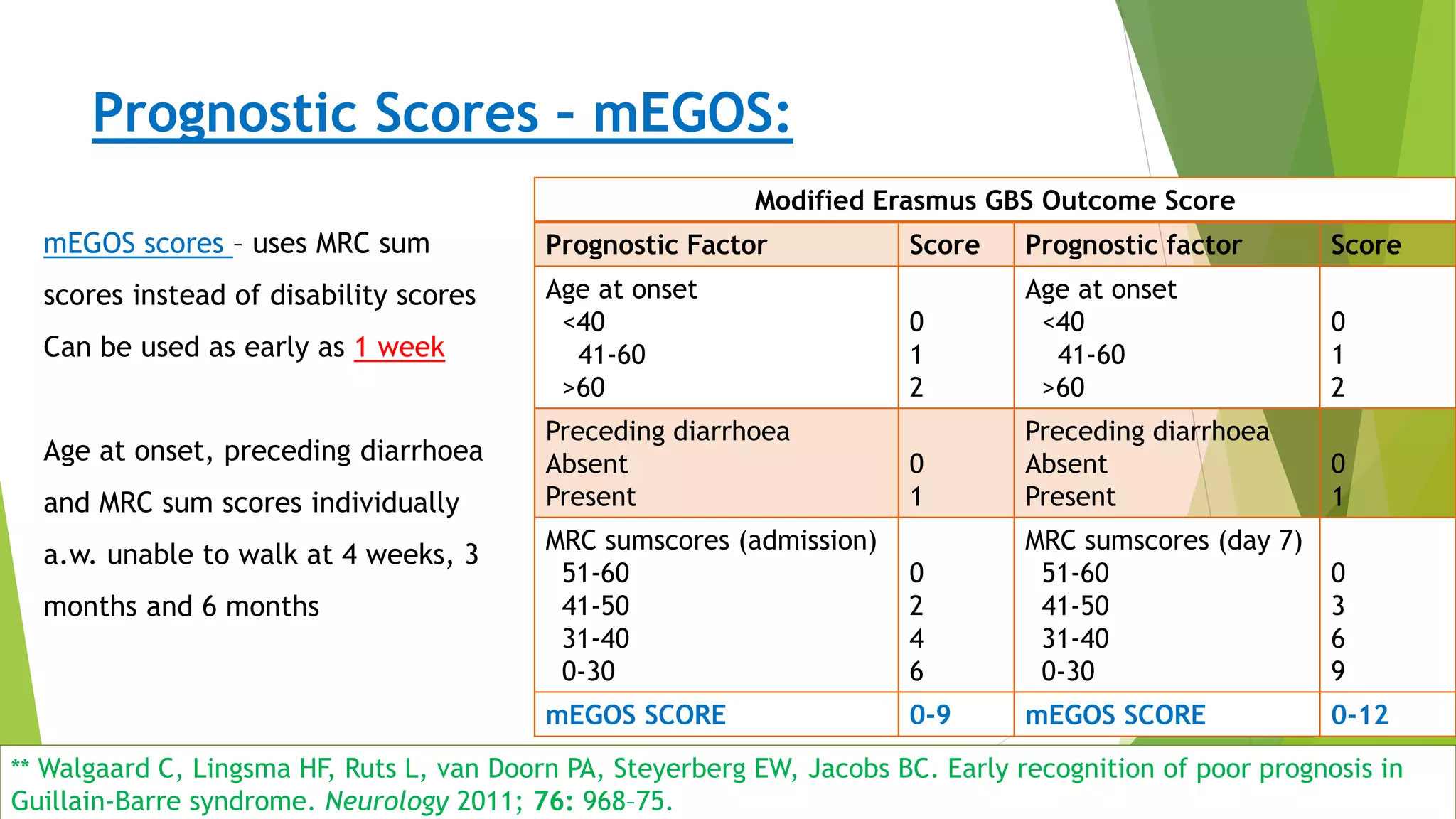
mEGOS scores – uses MRC sum
scores instead of disability scores
Can be used as early as 1 week
Age at onset, preceding diarrhoea
and MRC sum scores individually
a.w. unable to walk at 4 weeks, 3
months and 6 months
** Walgaard C, Lingsma HF, Ruts L, van Doorn PA, Steyerberg EW, Jacobs BC. Early recognition of poor prognosis in
Guillain-Barre syndrome. Neurology 2011; 76: 968–75.
Modified Erasmus GBS Outcome Score
Prognostic Factor Score Prognostic factor Score
Age at onset
<40
41-60
>60
0
1
2
Age at onset
<40
41-60
>60
0
1
2
Preceding diarrhoea
Absent
Present
0
1
Preceding diarrhoea
Absent
Present
0
1
MRC sumscores (admission)
51-60
41-50
31-40
0-30
0
2
4
6
MRC sumscores (day 7)
51-60
41-50
31-40
0-30
0
3
6
9
mEGOS SCORE 0-9 mEGOS SCORE 0-12
Prognostic Scores – EGRIS:
Prognosis
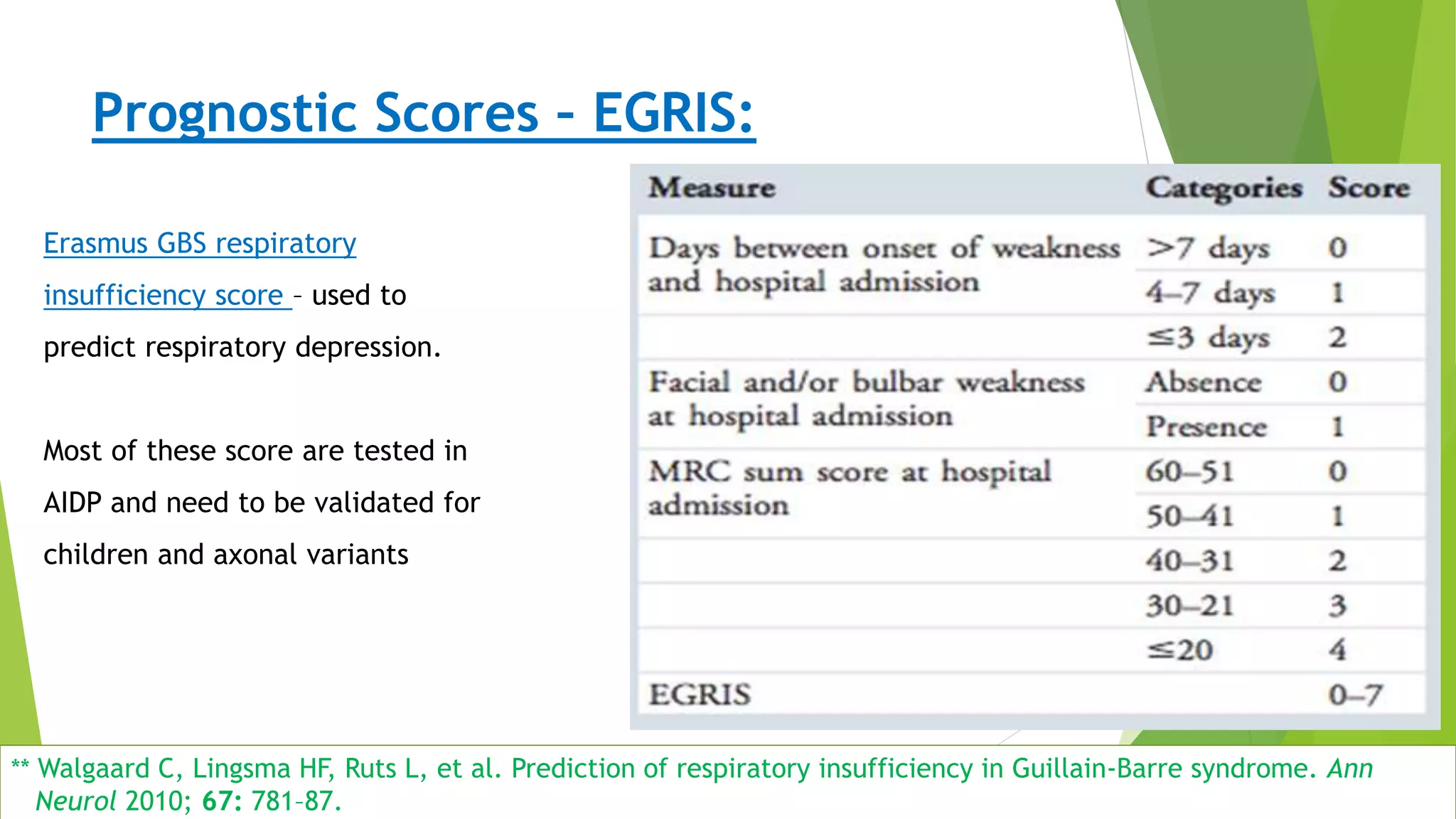
Erasmus GBS respiratory
insufficiency score – used to
predict respiratory depression.
Most of these score are tested in
AIDP and need to be validated for
children and axonal variants
** Walgaard C, Lingsma HF, Ruts L, et al. Prediction of respiratory insufficiency in Guillain-Barre syndrome. Ann
Neurol 2010; 67: 781–87.
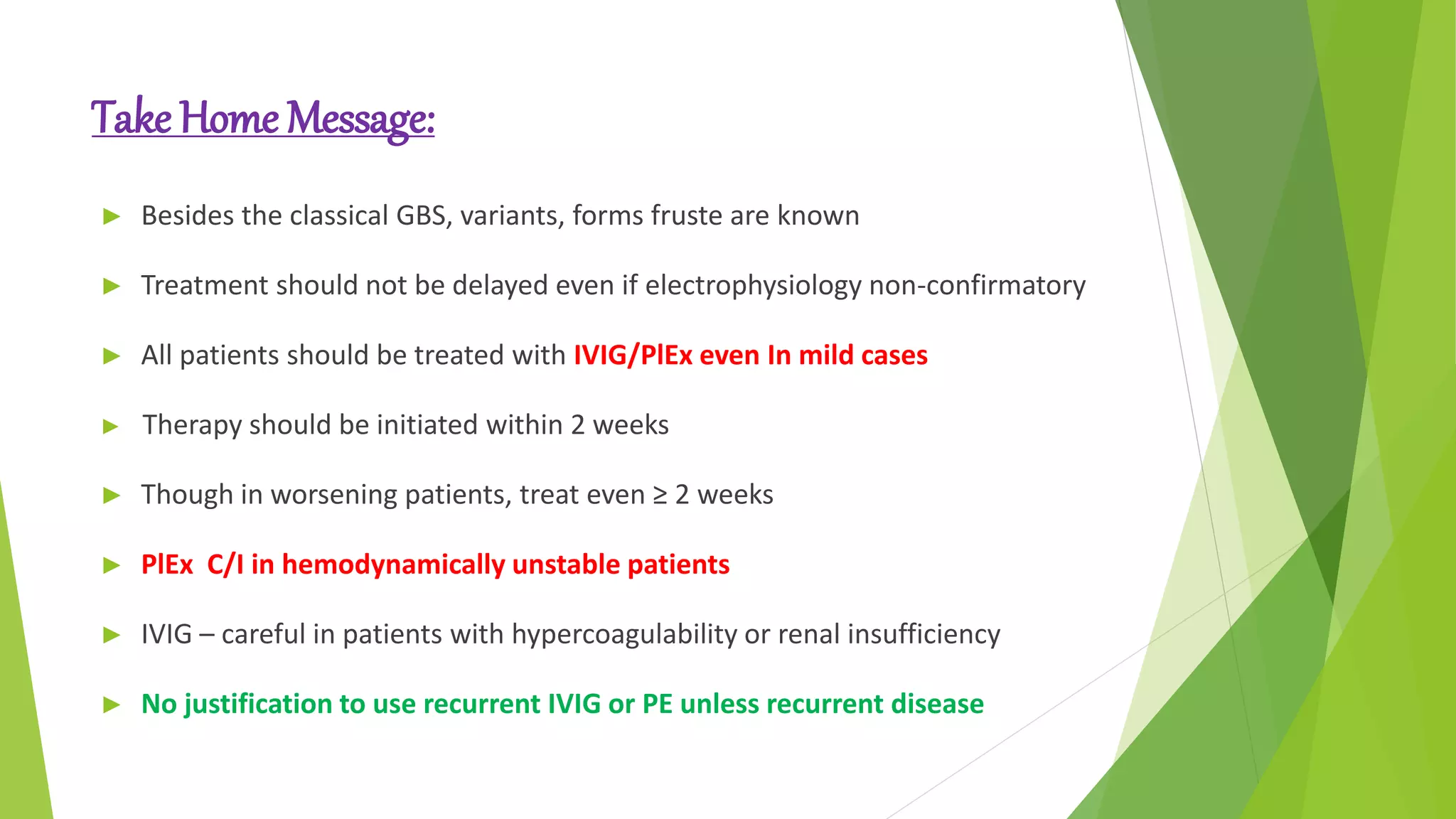
Take Home Message:
► Besides the classical GBS, variants, forms fruste are known
► Treatment should not be delayed even if electrophysiology non-confirmatory
► All patients should be treated with IVIG/PlEx even In mild cases
► Therapy should be initiated within 2 weeks
► Though in worsening patients, treat even ≥ 2 weeks
► PlEx C/I in hemodynamically unstable patients
► IVIG – careful in patients with hypercoagulability or renal insufficiency
► No justification to use recurrent IVIG or PE unless recurrent disease
Prognosis

GBS - Guillian Barre Syndrome

  • 1.
    Immune-mediated Polyneuropathy L-GBS –Guillian Barre Syndrome Dr. Dhananjay Gupta Dept. Of Neurology Ramaiah Medical College, Bangalore
  • 4.
  • 5.
    Axonal/ Demyelinating Axonal –Physical disruption of nerve Toxic, Metabolic or Genetic causes
  • 6.
    Axonal/ Demyelinating Demyelination –loss or dysfunction of sheath 1. Entrapment/ compressive 2. Immunological - GBS 3. Toxic – diphtheria 4. Genetic – CMT
  • 8.
    DYS-IMMUNE POLYNEUROPATHY ACUTE CHRONIC AIDP AMAN AMSAN Pandysautonomia Mixed MotorSensory Misc - CIDP - MADSAM (lewis-sumner) - MGUS - WM (anti-MAG) MMN – CB CISP DADS CANOMAD • Autoimmune autonomic neuropathy • Vasculitic neuropathy
  • 9.
    1. AIDP 2. CIDP 3.MADSAM – lewis sumner 4. CISP
  • 10.
  • 11.
    Definition DEFINITION  Prototypical Immune-mediated,monophasic,  Poly-radiculo-neuropathy, characterised by  Acute onset, areflexic, predominantly motor weakness, Progressing in an ascending manner *Lehmann HC, zu Horste GM, Kieseier BC, Hartung H-P. Pathogenesis and Treatment of Immune-Mediated Neuropathies. Therapeutic Advances in Neurological Disorders. 2009;2(4):261-281. doi:10.1177/1756285609104792. **Dimachkie MM, Barohn RJ. Guillain-Barré Syndrome and Variants. Neurologic clinics. 2013;31(2):491-510.
  • 12.
    History 'The sensory andmotor systems may be equally affected. However the main problem is usually a motor disorder -a gradual diminution of muscular strength with flaccid limbs and without contractures, convulsions or reflex movements of any kind. In almost all cases micturition and defaecation remain normal. The first symptoms always affect the extremities of the limbs and the lower limbs particularly. When the whole body becomes affected the order of progression is more or less constant: (1) toe and foot muscles, then the hamstrings and glutei, and finally the anterior and adductor muscles of the thigh; (2) finger and hand, arm and then shoulder muscles; (3) trunk muscles; (4) respiratory muscles, tongue, pharynx, oesophagus, etc. Jean Baptiste Octave Landry de Thézillat (1859) Landry O. Notesur la paralysie ascendante gigue. Gazette Hebdomadaire. 1859;6:472–474.
  • 13.
    Georges Guillain Jean-AlexanderBarre Andre Strohl 1916 – French army doctors – 2 soldiers - hypo-reflexic weakness with raised CSF protein levels, without a high WBC - ? Cause ?? Infection ?? Poisoning History *Guillain G, Barré JA, Strohl A. Radiculoneuritis syndrome with hyperalbuminosis of cerebrospinal fluid without cellular reaction. Notes on clinical features and graphs of tendon reflexes- 1916. Ann Med Interne (Paris). 1999 Jan; 150(1):24-32. ** Guillain G, Barré JA. Paralysie ascendante gigue de Landry consecutive a Line vaccination antiryphoi-dique. Rev Neurol. 1919;3:595–598.
  • 14.
    1949 – landmarkdescription of 50 fatal cases. Emphasized prominent damage to proximal nerves – at the junction of ventral and dorsal roots. Unified the findings of Landry, Guillain, Barre and Strohl -- LGBS History
  • 15.
    1927 – Dragonescuand Claudian - GBS Guillain – never believed the Landry ascending paralysis = GBS : afebrile : essential was raised CSF protein : non- fatal, no respiratory distress in GBS 1958 – Charles Miller Fischer – acute external ophthalmoplegia 1965 – Thomas Munsat : “GBS is easy to diagnose but difficult to define 1969 – Asbury, Aranson, Adams – diagnostic criteria History
  • 16.
    Epidemiology EPIDIMEOLOGY  Incidence :1-4/ 1,00,000 (*AAN)  MCC of AFP in children  MC acute NM-disorder seen in ICU  M: F 1.1-1.7: 1  Age : 2 months – 95 years  Childhood GBS – average age 4-8 years
  • 17.
    Epidemiology  MC seenin 3rd – 5th decade  Most cases in June-july, Sept-October *  Seasonal variation – winters **  Males > Females *  Incidence higher in South-Asia as compared to America/ Europe * Sharma G, Sood S, Sharma S. Seasonal, Age and Gender variation in GBS in a tertiary care centre in India. Neurosciences and Medicine. 2013: 4, 23-28. ** Sudulagunta SR, Sodalagunta MB, Sepehrar M, et al. Guillain-Barré syndrome: clinical profile and management. German Medical Science. 2015;13:Doc16. doi:10.3205/000220. INDIA
  • 18.
    * Kuwabara S,Yuki N. Axonal Guillain-Barré syndrome: concepts and controversies. Lancet Neurol 2013; 12: 1180–88 PREVALENCE OF AXONAL GBS
  • 21.
    C. Jejuni GBS:  pure motor axonal form (AMAN)  More severe clinical disease,  Less recovery chances  More commonly a.w Anti-GM1 antibodies Anti GM1 GBS  rapidly progressive, severe neuropathy  Predominantly distal distribution  Motor  No sensory/ cranial nerve disturbances
  • 22.
    A Dutch studyevaluated the relationship between vaccinations and GBS, more specifically recurrent GBS. 245 GBS and 76 CIDP patients were studied with 106 GBS patients having received flu vaccination (n=775). None of them had a recurrence of GBS after vaccination. Thus it was concluded that flu vaccines are relatively safe. The most common symptoms post GBS and CIDP were pain and fatigue.
  • 23.
  • 24.
  • 25.
  • 28.
    Fehmi J, SchererSS, Willison HJ, et al. Nodes, paranodes and neuropathies. J Neurol Neurosurg Psychiatry 17 August 2017
  • 29.
    Node of Ranvierdisruption as a cause of neurological diseases. Susuki K - ASN Neuro (2013)
  • 32.
    * Kuwabara S,Yuki N. Axonal Guillain-Barré syndrome: concepts and controversies. Lancet Neurol 2013; 12: 1180–88
  • 33.
    * Kuwabara S,Yuki N. Axonal Guillain-Barré syndrome: concepts and controversies. Lancet Neurol 2013; 12: 1180–88
  • 34.
    Presentation Summary of Pathogenesis 1.AIDP : Molecular mimicry  leading to lymphocytic mononuclear infiltrate of nerve roots, peripheral nerves  with macrophage associated segmental demyelination 2. AMAN:  paucity of lymphocytic infiltration  sparing of the dorsal nerve roots, DRG, and peripheral sensory nerves.  lengthening of the node of Ranvier  followed by the recruitment of macrophages  Lengthening of node is reversible , results in acute conduction block neuropathy  Late Wallerian degeneration
  • 35.
  • 36.
    7-10 days priorto onset of weakness WEEKS ----
  • 37.
    Nadir - 2weeks – 50% 4 weeks – 90% Recovery begins 2-3 weeks after progression stops WEEKS ----Ropper AH, Wijdicks EFM, Truax BT. In:Guillain-Barré Syndrome,Contemporary Neurology Series. Davis FA, editor. Vol.34. Philadelphia, PA: 1991.
  • 38.
  • 39.
    The onset ofthe paralysis can be preceded by a general feeling of weakness, pins and needles and even slight cramps. The weakness spreads rapidly from the lower to the upper parts of the body with a universal tendency to become generalised. The paralysis then becomes generalised but more severe in the distal parts of the extremities. When the paralysis reaches its maximum intensity the danger of asphyxia is always imminent. When the paralysis recedes it demonstrates the reverse of the phenomenon which signaled its development. The upper parts of the body, the last to be affected, are the first to recover their mobility which then returns from above downwards.' Presentation Jean Baptiste Octave Landry de Thézillat (1859) Landry O. Notesur la paralysie ascendante gigue. Gazette Hebdomadaire. 1859;6:472–474.
  • 40.
    Presentation 1. Progressive ascending,areflexic* weakness 2. Pain/Paraesthesia often precede by 1-2 days Lower back/ hip/ thigh pain is common – 50% Finger tips should be paresthetic once sensory sx have ascended till midcalves 3. Weakness : starts in legs, proximal + distal muscles Progress – UL --- neck, intercoastal, cranial muscles Descending weakness/ onset in UL – 10-12% 4. Reflexes : 1st week – absent ankle --- progress to generalized DTR invariable absent in limbs with power <3/5
  • 41.
    Presentation 5. Cranial nervepalsies : Facial weakness – 40-50% at presentation Facial diplegia, maybe at onset or sequentially  Paediatric : 9th 10th common  Adults : 7th nerve most common 6. Autonomic dysfunction – 2/3rd at onset MC – sinus tachycardia, less often bradycardia facial flushing fluctuating hypo/ hypertension loss of sweating/ episodic diaphoresis syncope/ pre-syncope/ retention/ constipation
  • 42.
    Presentation 7. Oro-pharyngeal/ respiratory: 40% 1/3rd patients – may require mechanical ventilation 8. Bowel/ bladder/ sphincter disturbances rare in early course of disease (<10%) presence should raise a suspicion of myelopathy 9. MFS: Ophthalmoplegia, Ataxia, Areflexia 10. Psychotic – ONEIRIC hallucinations (bizzarre walking dreams) After weeks of immobilization
  • 43.
    AIDP AMAN 1. InfectionCMV, EBV Campylobacter jejuni 2. Epidemics None China - children 3. Target Unknown GM1, GD1a 4. Onset – pain Common Absent 5. DTR Absent (preserved/ exaggerated in 5%) Usually absent (preserved/ exagerrated in 20%) 6. Cranial nerve Common 60% Uncommon 20% 7. Sensory loss Frequent – 70% Absent usually 8.Autonomic involvement Frequent Rare 9. Recovery Relatively uniform 2 patterns – fast and slow 10. Electrophysiology Demyelination Axonal degeneration, CB
  • 44.
    Variants AMAN China Young population Preceded bydiarrhoea Prognosis similar to AIDP Mortality <5% AMSAN Abrupt onset C. Jejuni diarrhoea Respiratory distress common Longer recovery More residual deficits Mortality 10-15% MFS Ataxia +Areflexia+ ophthalmoplegia VARIANTS: Acute MMN-CB Reflexes unaltered High titres anti- GM1
  • 45.
  • 46.
  • 47.
    Presentation Bickerstaff Brainstem Encephalitis(BBE) 1. Variant of MFS, Ataxia + Ophthalmoparesis + 2. Altered consciousness + paradoxical hyper-reflexia 3. Antecedent infection – 92% 4. Anti-GQ1b antibody – 66% 5. Elevated CSF protein – 59% 6. MRI abnormalities – 30% 7. Absent H-reflex may be the only finding in 75% MFS/BBE * Yuki N, Sato S, Tsuji S, Hozumi I, Miyatake T. An immunologic abnormality common to Bickerstaff ’s brain stem encephalitis and Fisher’s syndrome. J Neurol Sci. 1993;118(1):83–87. ** Ito M, Kuwabara S, Odaka M, et al. Bickerstaff's brainstem encephalitis and Fisher syndrome form a continuous spectrum: clinical analysis of 581 cases. J Neurol. 2008 May;255(5):674–682.
  • 48.
  • 49.
    Asbury AK, CornblathDR. Assessment of current diagnostic criteria for Guillain-Barre syndrome. Ann Neurol 1990; 27 (suppl): S21–24. – NINDS criteria
  • 50.
    Christiaan Fokke, Biancavan den Berg, Judith Drenthen, Christa Walgaard, Pieter Antoon van Doorn, Bart Casper Jacobs; Diagnosis of Guillain-Barré syndrome and validation of Brighton criteria, Brain, Volume 137, Issue 1, 1 January 2014, Pages 33–43
  • 51.
    Presentation CONSIDER ALTERNATE DIAGNOSISIF : 1. Fever at onset 2. Early, persistent bowel/ bladder disturbances 3. Marked asymmetry of weakness 4. A definite sensory level, significant sensory signs 5. Severe pulmonary dysfunction at onset 6. CSF pleocytosis >50 cells 7. Slowly progressive/ non-monophasic illness, without respiratory involvement
  • 52.
    Diagnosis 1. Lumbar Puncture:ACD CSF is characteristically acellular (<10) Or contain only few lymphocytes (10-50/mm) 80% patients Proteins rise during 2-3 weeks (100-1000 mg) IF CSF cells > 50 : consider - HIV, Lymes, Sarcoidosis - CMV polyradicupathy/ cauda equina syndrome - Carcinomatous polyradiculitis, Aseptic meningitis
  • 53.
    Peak in 4-6weeks Start to rise in 1-2 weeks May persist at variable elevated levels for many weeks CSF PROTEIN LEVELS
  • 54.
    Other CSF findings Antibodiesin CSF: • IgG, IgM cerebroside – 38% • IgG cardiolipin – 50% • Gangliosides GM1, GM2, GM3, GD1a, GD1b • Heat shock proteins HSP60, HSP70, HSP90 • Αβ- crystallin Inflammatory mediators: • Complement C3a, C5a, C4b, C5-9 • Chemokines IL17, IL18, IL22, IL37 • IL17, 37 correlate with disability • Osteopontin levels – AMAN/ AIDP • AIDP : IL1ra, IL8 • CIDP : CCL2, CCL7, CCL27, CXCL 9,10,12
  • 55.
    Other CSF findings Neuronaland Glial Markers: • NfH – neuronal filament heavy chain • NSE – neuron specific enolase • S100 • 14-3-3 protein • Glial fibrillary acetic protein, NfH, S100 correlate with worse prognosis Proteonomics: ↑ haptoglobin, ↓ transthyretin (usually neuroprotective ↑ cathepsin, ↓ cystatin C
  • 56.
    Cerebrospinal fluid findingsin Guillain–Barre syndrome and chronic inflammatory demyelinating polyneuropathies. ZSOLT ILLES1, MORTEN BLAABJERG. Handbook of Clinical Neurology, Vol. 146 (3rd series)
  • 58.
    Diagnosis CSF findings inAMAN  ACD may be +  CSF/ SERUM albumin ratio – increased (~ AIDP)  IgG index {CSF/SERUM IgG ÷ CSF/SERUM albumin} - increased (~ AIDP)  CSF tau and NfH lvels correlate with poor outcomes
  • 59.
    Diagnosis CSF findings inMFS  ACD may be +  GQ1b – expressed in paranodal regions in of axons and in MNJ in CNS  Presence suggests good response in CNS disease  Most recover within 6 months  CSF hypocretin-1 is reduced (similar to AIDP)  CSF transthyretin and prostaglandin D2 synthetase not elevated
  • 60.
  • 61.
    ROOT : Prolonged orabsent F- response Delayed or absent H-reflex Axonal :Reduced CMAP Prolonged distal latencies Slowed conduction velocity Distal conduction blocks
  • 63.
  • 64.
  • 65.
  • 66.
    Diagnosis 2. Edx –NCS : “ Sural sparing “  A normal sural sensory response in the setting of abnormal UL sensory potentials, more commonly in the later stages  Differentiates GBS from its mimics (infectious, toxic, metabolic and spinal cord disorders.  Specificity – 95%, Sensitivity – 41%, LLR positive – 8.20 * Derksen A, Ritter C, Athar P, et al. Sural sparing pattern discriminates Guillain-Barré syndrome from its mimics. Muscle & nerve. 2014;50(5):780-784. doi:10.1002/mus.24226.
  • 68.
    Diagnosis 3. MRI Spine(contrast)  Surface thickening and Contrast Enhancement of  Conus medullaris and cauda equina nerve roots  Most common site of enhancement – ventral roots  Though enhancement of posterior roots also seen  MRI esp useful in paraparetic GBS to identify site of lesion • Alkan O, Yildirim T, Tokmak N et-al. Spinal MRI findings of guillain-barré syndrome. J Radiol Case Rep. 2009;3 (3): 25-8. doi:10.3941/jrcr.v3i3.153
  • 71.
  • 72.
    Diagnosis 5. Metabolic abnormalities Raised CPK : in some  ↑ ESR : infective/ neoplastic/ autoimmune cause  LFT – abnormal in 10% : recent viral hepatitis – CMV/ EBV  ↓ Na : SIADH – specially in ventilated patients, excess ANF  ECG : Non specific ST-T changes may be seen  Marked vomiting, hair loss, Mee’s line : Indicate Heavy metal toxicity
  • 73.
    Differential Diagnosis D/d: 1. AFP- Polio 2. Hypokalemic periodic paralysis 3. Thyrotoxic Periodic paralysis 4. N-M diseases – MG/ LEMS 5. OP poisoning 6. Botulism 7. Heavy metal toxicity (Lead) 8. Tick paralysis 9. MFS : MS/ VBI/ Encephalitis/ MG Always Rule out Lymes disease/ HIV/ Syphillis/ metal toxicity
  • 74.
    1. GBS 2. Lymesdisease 3. CMV radiculitis 4. HIV radiculitis 5. Leptomeningeal malignancy D/D ACUTE ONSET LIMB WEAKNESS WITH/WITHOUT RESPIRATORY INVOLVEMENT 1. GBS 2. Toxic 3. Vascuilitic 4. Diphtheria/ Lymes 5. Porphyria 6. Thiamine deficiency 7. Metabolic/ electrolytes 8. HYPO-K/ Mg/ Po4/ glycem NMJ disorders 1. MG 2. Botulism 3. Intoxications Muscle disorders 1. Poly/ DM 2. Periodic paralysis 3. Criticle illness myopathy 4. Rhabdomyolysis 5. Mitochondrial disease Acute Spinal cord lesion
  • 75.
    D/B GBS andTICK PARALYSIS – nearly impossible!! 1. Worldwide USA/ AUSTRALIA 2. Sensory loss may be + No sensory loss 3. CSF protein ↑ Normal D/B GBS and PORPHYRIA 1. Mild pain Episodic Painful paralytic attacks 2. Predominant motor Sensory - motor 3. CSF protein ↑ Normal D/B GBS and INFECTIVE (polio, West-Nile, enterovirus) 1. No fever at onset Episodic Painful paralytic attacks 2. More symmetrical Pure motor asymmetrical weakness 3. CSF acellular Pleocytosis 4. No meningitis Meningo-encephalitis syndrome +
  • 76.
    D/B GBS andCARCINOMATOUS MENINGITIS with polyradiculopathy 1. Pain at onset + Painless 2. Acute Sub-acute 3. Mildly asymmetrical Fairly symmetrical 4. Proximal + distal Mainly distal, less proximal 5. Facial diplegia in 50% No facial weakness 6. Simultaneous weakness in limbs Sequential weakness in limbs D/B cranial GBS/MFS and Myasthenia (bulbar) 1. Pain at onset + Painless 2. No diurnal variation Diurnal variation + 3. Mild sensory symptoms Pure motor weakness 4. Ocular muscles – advanced disease Early in disease 5. Mandibular muscles normal Exercised jaw hangs open 6. Areflexic DTR preserved
  • 77.
    D/B cranial GBS/MFSand BASILAR ARTERY THROMBOSIS 1. Pain at onset +/- Painless 2. Areflexic Lively reflexes 3. Reactive pupils Sluggish/ locked in state 4. Plantar flexor Babinski + 5. F-wave abnormalities + Absent D/B cranial GBS/MFS and Botulism 1. Preserved pupils Early Pupillary paralysis 2. Sinus tachycardia in 10% Bradycardia common 3. Ascending Descending paralysis
  • 78.
    D/B GBS andCRITICAL ILLNESS NEUROPATHY 1. Acute Acute- subacute 2. Difficulty in weaning from ventilator 3. Sensory-motor Predominantly motor, mild sensory 4. Infections +/- Preceding sepsis/ overwhelming infection 5. Cranial nerve +/- Usually spared 6. Autonomic dysfunction +/- No dysautonomia 7. Demyelinating typically Primary axonal process ICU patient with weakness and wiped out CMAPs, always consider toxic effects of drugs, antibiotics and nutritional deficiencies in addition to the above two. High dose steroids, NM-blocking agents can cause acute quadriplegic myopathy – differentiated by high levels of CPK and myogenic potentials on EMG.
  • 79.
    Treatment TREATMENT  GBS –a clinical diagnosis – symmetric  Early intervention is essential to halt progression  Immunotherapy is the standard of care  In addition, supportive therapy
  • 80.
    *Chevret S, HughesRAC, Annane D. Plasma exchange for Guillain-Barré syndrome. Cochrane Database of Systematic Reviews 2017, Issue 2. Art. No.: CD001798. DOI: 10.1002/14651858.CD001798.pub3.
  • 81.
    Treatment PlEx regimen : 200 – 250 mL/Kg plasma removed  In 4-6 treatment cycles, Usually on alternate days.  Daily cycles can also be given, if no coagulopathy  Replacement fluid : Saline + 5% albumin  If FFP used – chances of infections, HIV, hepatitis  S/E : hypotension, hypo-prothrombinemia, bleeding, arrythmias * French Cooperative Group on Plasma Exchange in Guillain-Barré syndrome. Appropriate number of plasma exchanges in Guillain-Barré syndrome. Ann Neurol. 1997;41:298–306.
  • 82.
    1. No adequatetrials comparing IVIG with placebo in adults (*moderate evidence) 2. In severe disease, IVIG started within 2 weeks, hastens recovery as much as PLEX 3. Adverse events are not significantly more with either treatment 4. But IVIG is significantly more likely to be completed 5. Giving IVIG after PLEX did not confer extra benefit (*moderate evidence) 6. More research is needed in mild patients and in whom treatment starts >2 weeks.
  • 83.
    1. Data comparingIVIg with placebo in GBS is lacking ?well estb plasmaphresis 2. Lack of RCT for IVIg in children -- Expert Recommendation only! 3. IVIg has been found to be NON-INFERIOR to PLEX in trials 4. Dose of IvIg – 0.4 g/Kg/ day --- 3 vs 6 days --- no difference 5. No difference/ benefit of adding MePred to IVIg
  • 84.
    Treatment IVIG - MOA: Interferes with co-stimulatory molecules involved in APC  Modulation of auto-antibodies, cytokines, adhesion molecules  Modulation of the macrophage Fc receptor  Disrupts complement activation and formation of MAC  Upregulation of inhibitory Fc receptor – attenuates Ab-initiated inflammation * Dalakas MC. Intravenous Ig in autoimmune neuromuscular diseases. JAMA. 2004 May 19;291(19): 2367–2375.
  • 85.
    Treatment IVIG - infusion: Total of 2g/Kg, Each bottle – 5gm  Start slow infusion, @ 25-50 mL/ hour  Watch closely for any reactions  Every 15-30 minutes, Increase the rate slowly  Increase the rate @50 mL/hour  Subsequently, 1 bottle can be given over 4-5 hours
  • 86.
    Treatment Side effects ofIVIG - rare:  Headache  Inflammatory local venous thrombosis at infusion site  Anaphylaxis – esp. in IgA deficient patients  Delayed red macular skin reactions of palms, soles, trunk, desquamation  Renal failure (in dehydrated patients)  Proteinuria  Aseptic meningitis  Hyperviscosity syndrome – stroke, MI, pulmonary embolism (in old, immobile, DM, TCP, hypercholesterolemia patients)
  • 87.
    Treatment Severe Patients notimproving: PlEx f/b IVIG * The Dutch Guillain-Barré Study Group. Treatment of Guillain-Barré syndrome with high-dose immune globulins combined with methylprednisolone: a pilot study. Ann Neurol. 1994 Jun;35(6):749–752.
  • 88.
  • 89.
    1. Multi-centre doubleblind RCT --- 242 patients 2. IV MP 500 mg x 5 days vs placebo 3. Primary outcome – disability at 4 weeks 4. Steroids were shown to be INEFFECTIVE for treatment of GBS
  • 90.
    *Hughes RAC, BrassingtonR, Gunn AA, van Doorn PA. Corticosteroids for Guillain-Barré syndrome. Cochrane Database of Systematic Reviews 2016, Issue 10. Art. No.: CD001446. DOI: 10.1002/14651858.CD001446.pub5. Moderate quality evidence show CS alone donot significantly hasten recovery from GBS or affect long- term outcome. According to very low quality evidence, oral CS delay recovery. Diabetes requiring insulin was more common and hypertension less common with corticosteroids based on high quality evidence.
  • 91.
    * Wang, Y.-Z.et al. Action mechanism of corticosteroids to aggravate Guillain-Barré syndrome. Sci. Rep. 5, 13931; doi: 10.1038/srep13931 (2015).
  • 92.
    I-SID-GBS TRIAL –currently data being evaluated – results awaited Large, prospective, open label, observation trial studying the effect of a second dose of IVIG given shortly after the first dose.
  • 93.
    JET-GBS TRIAL –Japanese Eculizumab Trial - GBS prospective, multicenter, placebo-controlled, double-blind, randomized phase II study conducted at 13 tertiary neurology centers, to evaluate efficacy and safety of ECULIZUMAB (against C5) for GBS treatment.
  • 94.
    Treatment SUPPORTIVE THERAPY : 1.Monitor vitals, SBC, TLC 2. Tachycardia/ brow sweating 3. Pain – opiods/ gabapentin/ CBZ 4. High protein diet 5. Eye protection 6. ?paralytic ileus/ autonomic dysfunction 7. ?Bed sores 8. SIADH – 10-15% 9. DVT prophylaxis 10. Nosocomial infections
  • 95.
    Treatment Monitor Resp Insufficiencyon Daily Rounds: 1. Severe impairment of resp. can occur before dyspnoea appears 2. Tachypnoea may indicate incipient resp. failure 3. Strength of neck muscles/ trapezii parallel Diaphragm weakness 4. SBC >20 : indicates Vital Capacity > 1.5 L.
  • 96.
    Treatment Managing Pain : 1.Most common residual abnormality – pain, cramps 2. Radicular back pain and neuropathic pain 3. NSAIDs, Opiods, Anti-depressants 4. Gabapentin, pregabalin, CBZ, tramadol, Mexilitene
  • 97.
    Prognosis:  Recovery starts– 4 weeks  Avg period of mechanical vent – 22 days  Time to walk unaided – 50 days  Complete recovery – 200 days  MC residual – pain, fatigue, cramps, depression  20% patients cannot walk un-aided even after 6 months  Axonal regeneration may take 6-18 months  Most improvements happen during 1st year, minimal after that Prognosis * Drenthen J, Jacobs BC, Maathuis EM, van Doorn PA, Visser GH, Blok JH. Residual fatigue in Guillain-Barre syndrome is related to axonal loss. Neurology 2013; 81: 1827–31. * Merkies IS, Faber CG. Fatigue in immune-mediated neuropathies. Neuromuscul Disord 2012; 22 (suppl 3): S203–07.
  • 98.
    Poor Prognostic factors: xAge > 40 x Preceding diarrhoea (4 weeks), CMV, C. jejuni x Rapid progression (<7 days) x More duration of disease x Higher CSF protein x Higher anti-GM1 titres x Severe reduced distal CMAPs (<20% LLN) x Requirement of mechanical ventilation x Erasmus GBS outcome score at 2 weeks ≥ 5 AMAN/ AMSAN : though less autonomic/ cranial, rapid muscle atrophy Prognosis
  • 99.
  • 100.
    Prognostic Scores –EGOS: Prognosis EGOS scores at 2 weeks and MRC sum scores at 1 or 2 weeks have the highest predictive value for prognosis. EGOS – simple score, based on 3 parameter, accurately predicts outcomes ** van Koningsveld R, Steyerberg EW, Hughes RA, Swan AV, van Doorn PA, Jacobs BC. A clinical prognostic scoring system for Guillain-Barre syndrome. Lancet Neurol 2007; 6: 589–94.
  • 101.
    Prognostic Scores –mEGOS: Prognosis mEGOS scores – uses MRC sum scores instead of disability scores Can be used as early as 1 week Age at onset, preceding diarrhoea and MRC sum scores individually a.w. unable to walk at 4 weeks, 3 months and 6 months ** Walgaard C, Lingsma HF, Ruts L, van Doorn PA, Steyerberg EW, Jacobs BC. Early recognition of poor prognosis in Guillain-Barre syndrome. Neurology 2011; 76: 968–75. Modified Erasmus GBS Outcome Score Prognostic Factor Score Prognostic factor Score Age at onset <40 41-60 >60 0 1 2 Age at onset <40 41-60 >60 0 1 2 Preceding diarrhoea Absent Present 0 1 Preceding diarrhoea Absent Present 0 1 MRC sumscores (admission) 51-60 41-50 31-40 0-30 0 2 4 6 MRC sumscores (day 7) 51-60 41-50 31-40 0-30 0 3 6 9 mEGOS SCORE 0-9 mEGOS SCORE 0-12
  • 102.
    Prognostic Scores –EGRIS: Prognosis Erasmus GBS respiratory insufficiency score – used to predict respiratory depression. Most of these score are tested in AIDP and need to be validated for children and axonal variants ** Walgaard C, Lingsma HF, Ruts L, et al. Prediction of respiratory insufficiency in Guillain-Barre syndrome. Ann Neurol 2010; 67: 781–87.
  • 103.
    Take Home Message: ►Besides the classical GBS, variants, forms fruste are known ► Treatment should not be delayed even if electrophysiology non-confirmatory ► All patients should be treated with IVIG/PlEx even In mild cases ► Therapy should be initiated within 2 weeks ► Though in worsening patients, treat even ≥ 2 weeks ► PlEx C/I in hemodynamically unstable patients ► IVIG – careful in patients with hypercoagulability or renal insufficiency ► No justification to use recurrent IVIG or PE unless recurrent disease Prognosis

Editor's Notes

  • #9 CANOMAD : Chronic Ataxic Neuropathy, Ophthalmoplegia, Monoclonal IgM protein, cold Agglutinins and Disialosyl antibodies. All autoimmune including sle, sjogrens, RA, coeliac ds, amyloidosis
  • #13 Jean Baptiste octave landry described the first case of distal sensory formications followed by ascending motor weakness following a prodrome of fever, who died of respiratory failure
  • #14 Almost half a century after landry published his findings, GBS described a similar condition with 2 distinctive features – 1. better prognosis, 2. unique CSF findings. They described 2 French soldiers with similar condition of AREFLEXIC motor weakness with muscle tenderness and parasthesias with abnormal NCS. Though guillian resisted any similarity to landrys case and even went on to say that landrys case was different as it had poor outcome, whereas HIS disease was benign. Poor old Strohl, being a young fresh graduate in radiology found his name dropped in favour of other eminent senior neurologists.
  • #15 In their landmark paper in 1949, Haymaker and kerhnhohn unified the findings of LGBS and emphasized the pathology is in the proximal nerve roots, and involves nerve edema leading to breakdown of myelin with lymphocytic infilteration occurring late in course of disease
  • #16 As happens with many eponymous diseases.. Difficult to define exactly. 1927 when the term Guillain-Barré syndrome was first used at a presentation by Dragonescu and Claudian. . in 1949 Haymaker and Kernohan suggested a wider definition of the illness, suggesting that Landry's ascending paralysis and Guillain-Barré syndrome were indistinguishable and called the condition Landry-Guillain-Barré syndrome
  • #17 GBS is the most common and most severe acute paralytic neuropathy. Under the umbrella terms of GBS, a number of variants have been described – with 20-30% patients having the generalized disease with resp insufficiency. Although case reports mention all ages, GBS prevalence is presumed to increase with age and is slightly more common in males. Nearly 70-90% cases are AIDP, upto 20% AMAN, less than 5% MFS
  • #18 Typically GBS is a non-seasonal non epidemic disease, though Seasonal variations, presumably due to varying infection rates have been noticed. Incidence rates have been shown to be higher in certain geographical regions, again probably secondary to increased infection rates.
  • #19 Outbreaks of GBS – typically axonal variants have been reported in China after exposure of children to C.jejuni through chicken feces deposited in rice paddies.
  • #20 The classical antecedent infection is a non-descript URTI. Almost every febrile infection and immunization at one point or the other has been linked to GBS, though recent serological studies have shown Campylobacter jejuni is the most prevalent – in 25-50% cases. Trauma and surgeries have also been reported in temporal association with GBS though causality is still to be established.
  • #21 GBS secondary to arboviral diseases like dengue and chickungunya and zika is of interest now as global epidemic spreads
  • #22 The nature of infection is important in terms of clinical phenotype and prognosis. As we said C.jejuni is the most common infection, and commonly it leads to axonal forms. CMV infection leads to more severe illness with cranial neuropathies and higher likelihood of resp failure.
  • #23 Risk of vaccination leading to GBS is a growing concern and is preventing parents from getting children vaccinated. Specifically the Semple rabies and the Influ A vaccines and more recently the H1N1 vaccines have been reported to cause gbs, though the prevalence and incidence rates are barely over the baseline population rates. Also Generally there are no C/I to vaccination except maybe in patients who have had GBS in last 3 months or have a proven vaccination related GBS. Though risk-benefit must be discussed on case to case basis.
  • #25 CMI directed towards myelin sheath, possibly triggered by molecular mimickry b/w epitopes found in CW of microbes.. LPS and gangliosides in schwann cells and axonal memb. .. f/b complememnt mediated destruction of myelin sheath or axon
  • #26 When these antibodies attack axon membrane – damaged – axonopathy – now regeneration of axon takes time and is usually incomplete – so prognosis is relatively poor. Now by the same thought these antibodies may damage myelin sheath causing AIDP. However if we really go into the details.
  • #27 AIDP segmental demyelination and remyelination are seen and macrophages invade the outer surface of the myelin sheath. However the problem with this model of pathogenesis is it does not explain the rapis reversal following PLEX/IVIG as remyelination would take time. Some authors have thus proposed that it is due to removal of blocking effect on saltatory conduction. This is usually due to involvement of nodes of ranvier which contain a large no of ion channels, proteins which can be a target of autoantibodies.
  • #29 So authors have put forward a concept of NODOPARANODOPathy. So the ranvier nodes consist of 3 domains – node, paranode and juxtaparanode. Each has a distinct molecular structure.
  • #30 There are 4 gps of molecules in nodes – 1. ion channels and related proteins, 2. cellular adhesion and ecm associated proteins, 3. signal transduction proteins and 4.cytoskeletal structural proteins. What we can remember is that Na 1.6 isimportant here and Na 1.6 knockout mice have shown decreased conduction velocities.
  • #31 Paranode consists of axo-glial septate like junctions which attach myelin loops to axon
  • #32 Juxtaparanode is located within myelin sheath and separates the internodal space from axon.
  • #33 IgG antibodies are deposited. Autoimmune attack occurs at the nodes first then extends to the paranodes. Clusters of nodal voltage-gated sodium channels and paranodal contactin-associated protein are destroyed. What ultimately happens is that the node elongates and the expression of these nodal proteins is disrupted – causing a block in transmission of signal.
  • #34 With timely intervention, this process is reversible. However ongoing damage ultimately leads to axonal degenration and permanent dysfunction. Cutting long story short, GBS is mainly due to molecular mimickry leading to lymphocytic mononuclear infilterate with macrophage associated segmental demyelintion.
  • #37 Most patients report preceding URT/ Gi infections within last 4 weeks, mostly 7-10 days
  • #38 Symptom progression beyond 4 weeks reflects sub-acute inflammatory polyneuropathy and that beyond 8 weeks indicated CIDP
  • #40 If we go back to the case described by Landry, the typical onset is with sensory symptoms including numbness and parasthesias in toes and fingers. Only in a minority of cases they would be absent throughout. More than half of the patients would c/o accompanying pain and aching discomfort in muscles of hips, thighs and the back. These c/o precede weakness and may be confused for a lumbar disk disease or an orthopaedic disorder.
  • #41 Weakness is classically ascending, starting in distal lower limbs.
  • #42 Weakness is classically ascending, starting in distal lower limbs.
  • #43 Most patients with MFS have 2 of the 3 with a supporting elevated csf protein and autoantibody
  • #44 AMAN is basically a pure motor weakness, though a minority of patients might report pins and needle sensation. There is usually no cranial nerve or autonomic involvement. Easy way to remember is all clinical findings are more in AIDP excpt more rapid progression and early peak in AMAN. DTR are also more preserved in AMAN and patients might develop hyperreflexia at peak of illness or during recovery. The early rapid recovery is due to reversal of CB, late recovery is aw axonal degeneration.
  • #45 Rupperts variant – 6th and 7th nerve Polyneuritis cranialis
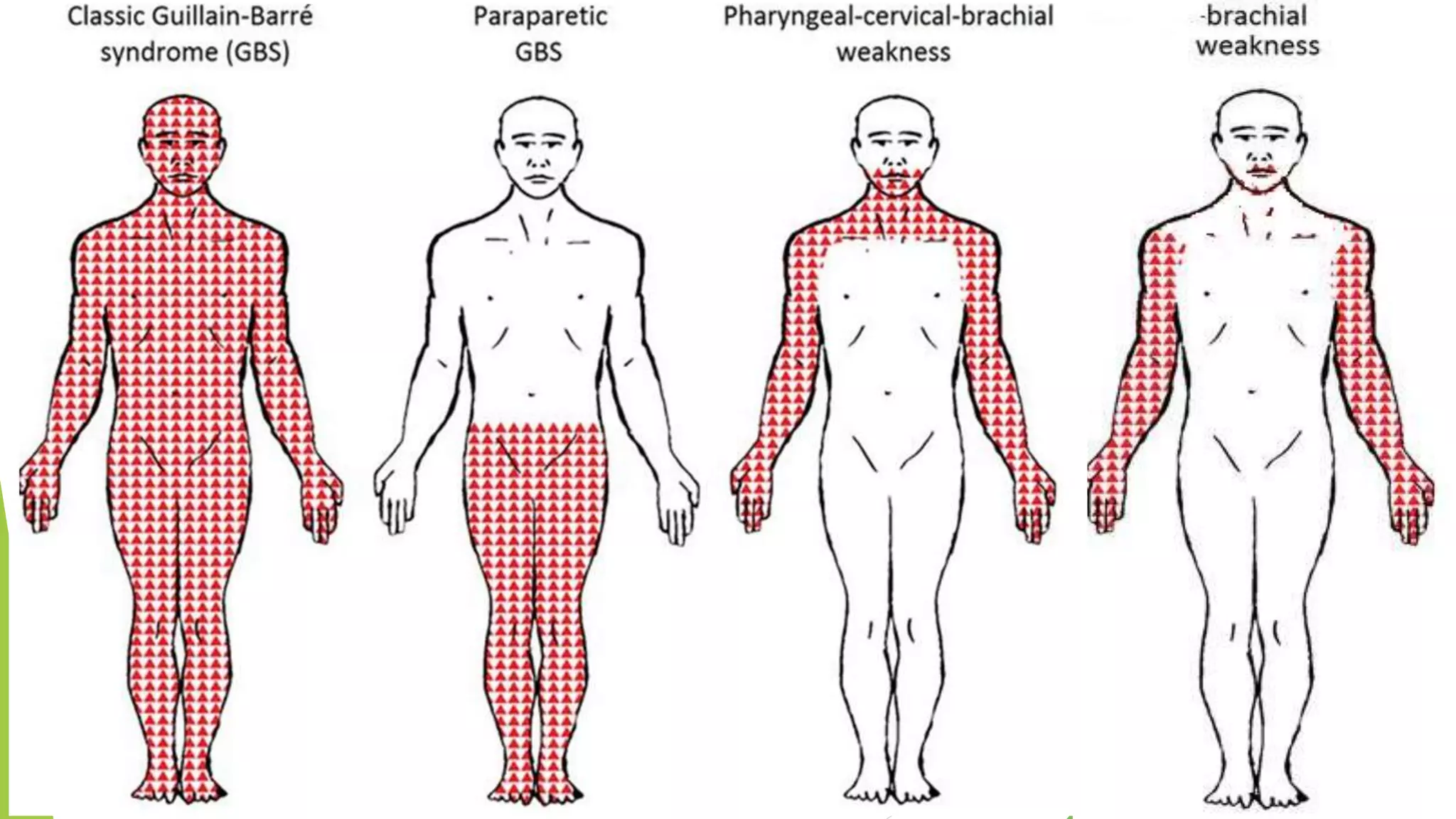
  • #46 Though classically ascending paresis, onset can be with pharyngo-cervico-brachial muscles or this may constitute the entire illness, causing bulbar symptoms and bibrachial paresis. Ptosis, occasionally with ophthalmoplegia may be added to this. Clinically it is imperative to then differentiate with myasthenia, diphtheria, botulism or a brainstem or central cord lesion
  • #47 A syndrome comprising of complete ophthalmoplegia with ataxia and areflexia was described by Fischer – so called the. Opthalmoplegia if present is almost universally a.w. anti GQ1b. Opthalmoplegic variant again needs to d/d with MG, tick paralysis, botulism, diphtheria B/L but asymmetrical facial and abducens palsy coupled with distal parasthesias has also been described by Roppers. Lymes disease and sarcoidosis then become clinically important differentials. Whether isolated Polyneuritis cranialis
  • #49 The diagnosis of GBS is mainly clinical. And it hardly matters if its AIDP, AMAN – from a treatment point of view.
  • #50 Developing a diagnostic criteria for such ds with varied manifestations and presentations is challenging. Absence of clinical biomarkers adds to the difficulty of the task.
  • #51 Brighton collaborative GBS working group definition. Either csf or NCS not consistent – level 2, if both – level 3
  • #53 Routine tests are ususally normal.. Mild inc in cpk. Even if pleocytosis is present, cells decrease in a matter of 2-3 days, however, persistent pleocytosis suggests alternate or additional diagnosis.
  • #54 CSF protein levels are normal in the first few days of illness and reach a peak in 4-5 weeks , then may persist. The increase inprotein reflects a widespread inflammatory disease of the nerve roots, but high values have no correlation with clinical or prognostic significance. In fewer than 10% patient, CSF protein levels may remain normal throughout the illness of the disease
  • #56 Proteonomics have been applied which has shown
  • #59 Routine tests are ususally normal.. Mild inc in cpk
  • #60 Routine tests are ususally normal.. Mild inc in cpk
  • #61 Routine tests are ususally normal.. Mild inc in cpk. Electrodiagnostic tests are early dependable diagnostic indicators of GBS.
  • #62 The most common abnormalities are reduced conduction velocities and prolonged distal latencies – signifying a demyelinating pattern, which may be associated with distal conduction blocks. Reduced CMAPS are frequently associated, signifying axonal pathology.
  • #64 Routine tests are ususally normal.. Mild inc in cpk
  • #65 Routine tests are ususally normal.. Mild inc in cpk
  • #66 Sensitivity of NCS in early GBS may only be about 20%, rising to nearly 90% after 5 weeks of illness. Thus a normal NCS does not rule out GBS in clinically suspected cases. One reason for this may be the involvement of roots which are beyond the reach of NCS and involvement of entrapment sites which are usually excluded.
  • #67 Routine tests are ususally normal.. Mild inc in cpk
  • #68 Serial (SNAP) recordings – ulnar, sural nerves in two patients with (GBS). Patient 1 has normal ulnar and sural sensory recordings - day 3 after onset. Serial studies at day 6 and day 14 - developing “sural nerve sparing pattern” with decreased ulnar SNAP but normal sural SNAP. Patient 2 had already “sural nerve sparing pattern” with inexcitable ulnar sensory nerve fibers on admittance (day 4 after symptom onset). Repeated shows decreasing sural nerve SNAP which became abnormal low at day 10 (dotted line = normal levels).
  • #69 Routine tests are ususally normal.. Mild inc in cpk
  • #72 As discussed the axonal variants are a.w. GM1 and GD1a while ophthalmoplegic and ataxic variants are a.w. GQ1b. The pharyno cervico brachial variant has a tendency to be a.w. GT1a.
  • #73 Routine tests are ususally normal.. Mild inc in cpk
  • #74 The most common clinical mimics of GB causing a flaccid areflexic acute onset paralysis are jypokalemic and thyrotoxic PP. Polio is largely eliminated, so comes down in the list of d/d
  • #75 Acute onset flaccid motor weakness may be caused due to involvement of either root, peripheral nerve, NMJ or the muscles.
  • #76 It is important to d/b GBS from other infective polyneuropathies like,…, which are usually pure motor weakness. Viral neuropathies may also be a.w. meningoencephalitic syndrome, resulting in CSF pleocytosis. Tick paralysis, uncommon in india, may be impossible to differentiate from GBS unless one finds the tick. It may also cause ataxia and ophthalmoplegia in addition to an ascending quadriparesis. An episodic painful mixed sensory-motor presentation with normal CSF and associated systemic symptoms may point towards porphyrias
  • #77 Carcinomatous meningitis with polyradiculopathy may be confused with GBS, however, a relative subacute onset with fairly symm distal distribution may help in diagnosis. There is absence of cranial nerve deficits. Cranial variants of GB including Fishers syndrome need to be d/d from MG, botulism and basilar artery thrombosis in rare cases.
  • #78 Presence of quadriparesis with Opthalmoparesis in GBS may need differentiation from basilar A thrombosis, however a UMN type of weakness with pupillary paralysis and Babinski may support a diagnosis of BAT rather than GB. A descending flaccid weakness a.w. early pupillary paresis may signify Botulism
  • #79 Sepsis. MODS, SIRS As such differentiating critical illness neuropathy from axonal GBS becomes difficult
  • #81 Efficacy of Plex in GBS has been well estb by large RCTs. Plex during initial 2 weeks results in halving of the hosp stay, duration of mech vent and of the time to recover non supportive ambulation. All trials prefer PE in terms of muscle strength recovery at 1 year.
  • #83 While efficacy of Plex is well estb, there is relative paucity of data on IVIG is still
  • #84 Whether IVIG is to be given over 2 or 5 days is debatable but some authors have reported more treatment related fluctuations in children receiving faster IVIG. In view of easy availability, convenience and minor side effects, it has become the preferred treatment. Though cost is a major limiting factor esp in resource poor countries
  • #85 The first study to demonstrate the efficacy of IVIG was dutch GBS cooperative study group in 1992
  • #86 The first study to demonstrate the efficacy of IVIG was dutch GBS cooperative study group in 1992
  • #87 So good practice to pre-medicate with PCM (headache), anti-histamine, steroids (anaphylaxis), fluid challenge, and place IVIG patients on prophylactic ecosprin in at risk individuals
  • #88 Studies have not demonstrated added advantage of a combination therapy over mono-therapy and as such There is no added benefit of giving IVIG after Plex in non responding patients
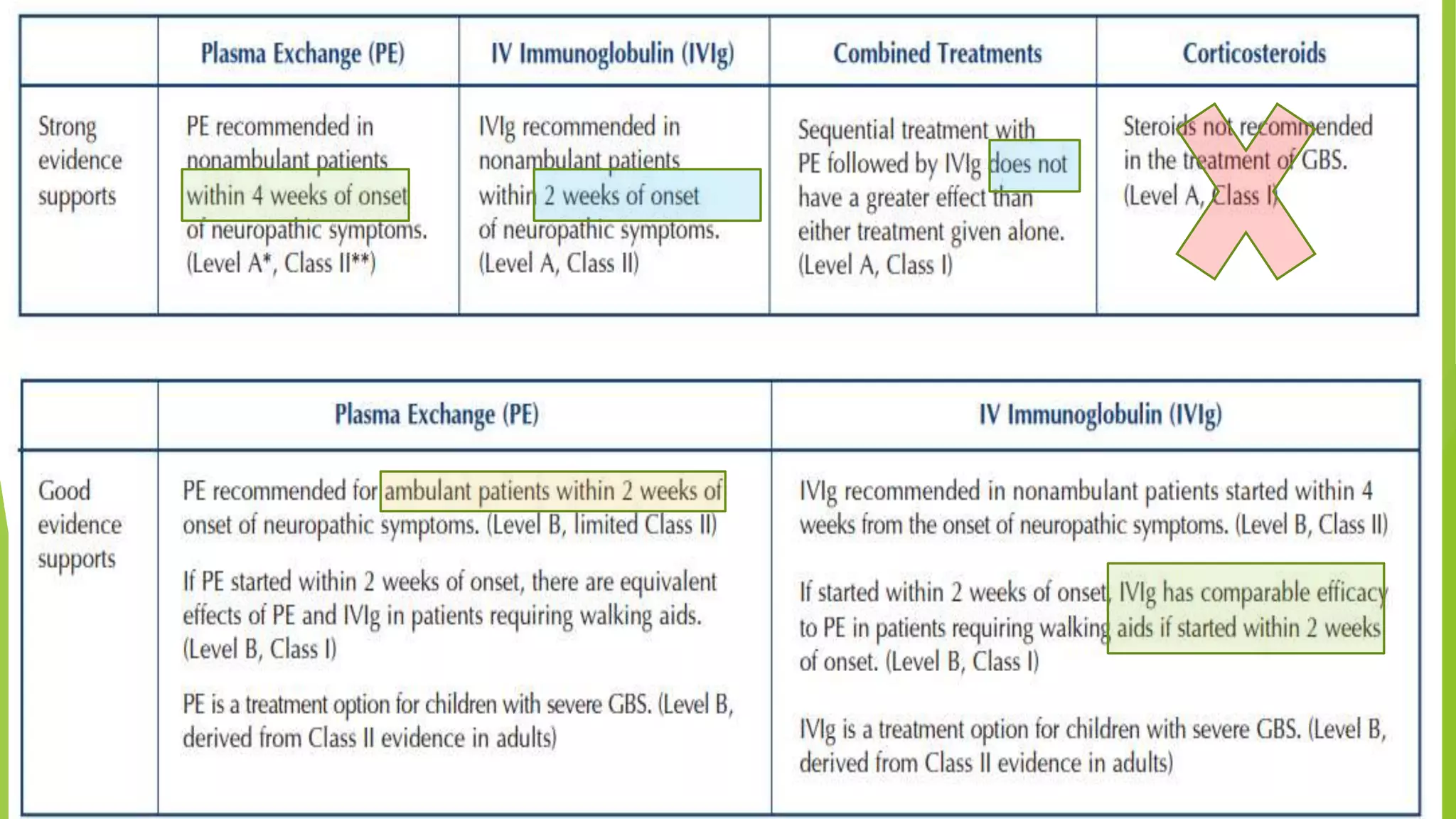
  • #89 Lets look at what the AAN recommendations say. For non ambulant patients within 2 weeks, both PE, IVIG are level A, within 4 weeks, only PE is level A, IVIG is level B
  • #90 The value of steroids in treatment of GBS has been debated for years and though some clinicians have reported efficacy, the same has not been proven.
  • #92 Corticosteroids are the most commonly used drugs worldwide for autoimmune diseases because of its cost effectiveness. However, the application of corticosteroids in the treatment of GBS remains to be disappointing for long time. Macrophages engulf and digest the cellular debris and foreign microbes, being divided into a killing/inhibitory type (M1 macrophage) and a heal/growth promoting type (M2 macrophage)7 . Recruitment of large numbers of macrophages did not occur until the fiber degeneration is underway8 . In AIDP, at the stage of complement deposition and early myelin vesiculation, macrophages were rarely associated with fibers. However, at later times, when myelin disruption was more advanced, macrophages were abundantly recruited3 . It has been demonstrated that high concentration of steroids exerts immunosuppressive effects on macrophages9 and inhibits the accumulation of macrophages into the injury site10. In this study, we observed significantly less macrophage infiltration and higher frequency of axonal degeneration in AMAN rabbits treated with methylprednisolone
  • #96 Same segmental innervation