Chapter 4
                                       Section 3


                                     Mrs. Barnette 2012
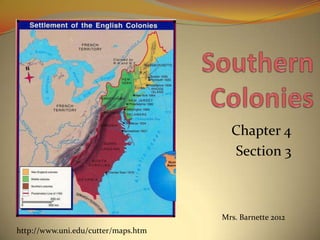
http://www.uni.edu/cutter/maps.htm
Mason-Dixon Line
 Boundary line
  between PA and MD
 Separated Middle
  and Southern
  Colonies
 Named after two
  surveyors who
  marked the 400 mile
  boundary
Maryland

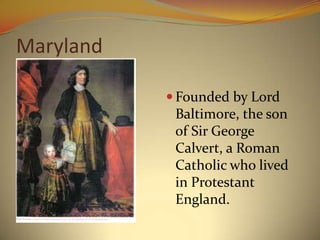
            Founded by Lord
            Baltimore, the son
            of Sir George
            Calvert, a Roman
            Catholic who lived
            in Protestant
            England.
 Charter granted in
  1632
 Settled in 1634
 Baltimore gave large
  land grants to
  people with many
  servants and family
  members
Maryland
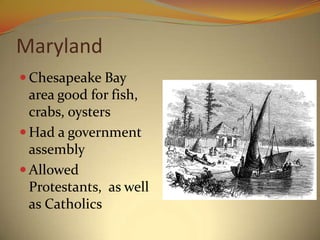
 Chesapeake Bay
  area good for fish,
  crabs, oysters
 Had a government
  assembly
 Allowed
  Protestants, as well
  as Catholics
 ACT OF
 TOLERATION-1649
 allowed freedom of
 religion only for all
 Christians
Virginia
 Began with Jamestown
  1607
 Tobacco was major
  crop
 Westward movement
  was causing problems
  with Natives along the
  frontier
 Colonists asked for
  help, but got none
 Bacon’s Rebellion
  followed
BACON’S REBELLION-
 1676 Nathaniel Bacon, a
    planter, led raids against
    Indians, regardless of
    whether they were friendly
    or not
   led followers to burn
    Jamestown, the capital
   Bacon died; rebellion fell
    apart
   23 of his followers hanged
   English settlers would
    continue to move onto
    frontier                     http://www.nps.gov/jame/historycult
                                 ure/bacons-rebellion.htm
Carolinasnobles
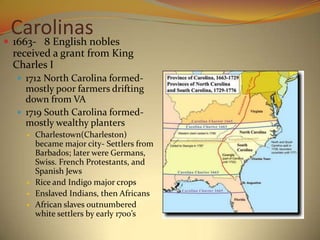
 1663- 8 English
 received a grant from King
 Charles I
   1712 North Carolina formed-
    mostly poor farmers drifting
    down from VA
   1719 South Carolina formed-
    mostly wealthy planters
       Charlestown(Charleston)
        became major city- Settlers from
        Barbados; later were Germans,
        Swiss. French Protestants, and
        Spanish Jews
       Rice and Indigo major crops
       Enslaved Indians, then Africans
       African slaves outnumbered
        white settlers by early 1700’s
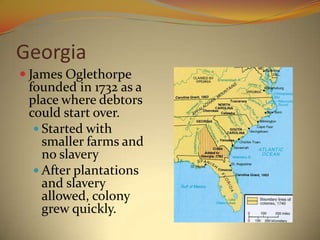
Georgia
 James Oglethorpe
 founded in 1732 as a
 place where debtors
 could start over.
   Started with
    smaller farms and
    no slavery
   After plantations
    and slavery
    allowed, colony
    grew quickly.
Tidewater v. Backcountry Life
       Tidewater

 Large plantations developed along the coast
  and the rivers and creeks of the coastal
  plain.
 Major crops were tobacco and rice.
 Slave labor was used (20-100 on average).
  Africans brought farming skills and the
  ability to make things out of gourds and
  palmetto leaves.
 Shipping ports developed into large cities
  like Charleston and Savannah.
Backcountry
 This was west of the
    Tidewater area.
   The Great Wagon Road
    took settlers to the base of
    the Appalachians.
   People treated each other
    equally
   There were small farms,
    not plantations.
   They were self-sufficient
    farms, with very few slaves,
    growing food crops and
    hunting,.
   Life was harder, simpler,
    and more closely knit.

Southern colonies chapter 4.3

  • 1.
    Chapter 4 Section 3 Mrs. Barnette 2012 http://www.uni.edu/cutter/maps.htm
  • 2.
    Mason-Dixon Line  Boundaryline between PA and MD  Separated Middle and Southern Colonies  Named after two surveyors who marked the 400 mile boundary
  • 3.
    Maryland  Founded by Lord Baltimore, the son of Sir George Calvert, a Roman Catholic who lived in Protestant England.
  • 4.
     Charter grantedin 1632  Settled in 1634  Baltimore gave large land grants to people with many servants and family members
  • 5.
    Maryland  Chesapeake Bay area good for fish, crabs, oysters  Had a government assembly  Allowed Protestants, as well as Catholics
  • 6.
     ACT OF TOLERATION-1649 allowed freedom of religion only for all Christians
  • 7.
    Virginia  Began withJamestown 1607  Tobacco was major crop  Westward movement was causing problems with Natives along the frontier  Colonists asked for help, but got none  Bacon’s Rebellion followed
  • 8.
    BACON’S REBELLION-  1676Nathaniel Bacon, a planter, led raids against Indians, regardless of whether they were friendly or not  led followers to burn Jamestown, the capital  Bacon died; rebellion fell apart  23 of his followers hanged  English settlers would continue to move onto frontier http://www.nps.gov/jame/historycult ure/bacons-rebellion.htm
  • 9.
    Carolinasnobles  1663- 8English received a grant from King Charles I  1712 North Carolina formed- mostly poor farmers drifting down from VA  1719 South Carolina formed- mostly wealthy planters  Charlestown(Charleston) became major city- Settlers from Barbados; later were Germans, Swiss. French Protestants, and Spanish Jews  Rice and Indigo major crops  Enslaved Indians, then Africans  African slaves outnumbered white settlers by early 1700’s
  • 10.
    Georgia  James Oglethorpe founded in 1732 as a place where debtors could start over.  Started with smaller farms and no slavery  After plantations and slavery allowed, colony grew quickly.
  • 11.
    Tidewater v. BackcountryLife Tidewater  Large plantations developed along the coast and the rivers and creeks of the coastal plain.  Major crops were tobacco and rice.  Slave labor was used (20-100 on average). Africans brought farming skills and the ability to make things out of gourds and palmetto leaves.  Shipping ports developed into large cities like Charleston and Savannah.
  • 12.
    Backcountry  This waswest of the Tidewater area.  The Great Wagon Road took settlers to the base of the Appalachians.  People treated each other equally  There were small farms, not plantations.  They were self-sufficient farms, with very few slaves, growing food crops and hunting,.  Life was harder, simpler, and more closely knit.