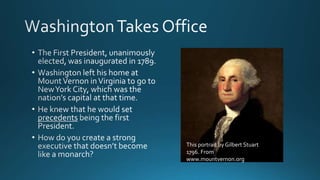
This portrait by Gilbert Stuart
1796. From
www.mountvernon.org
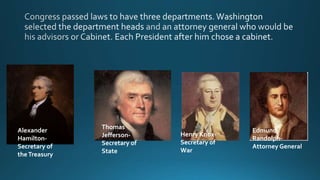
Alexander
HamiltonSecretary of
the Treasury

Thomas
JeffersonSecretary of
State

Henry KnoxSecretary of
War

Edmund
RandolphAttorney General
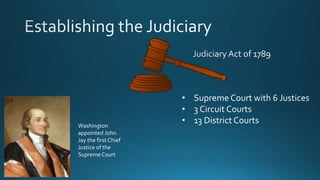
Washington
appointed John
Jay the first Chief
Justice of the
Supreme Court

• Supreme Court with 6 Justices
• 3 Circuit Courts
• 13 District Courts
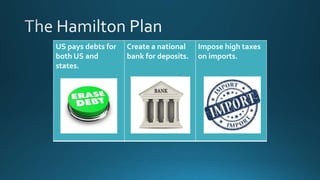
US pays debts for
both US and
states.

Create a national
bank for deposits.

Impose high taxes
on imports.
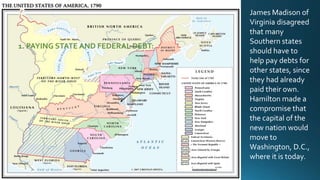
1. PAYING STATE AND FEDERAL DEBT:

James Madison of
Virginia disagreed
that many
Southern states
should have to
help pay debts for
other states, since
they had already
paid their own.
Hamilton made a
compromise that
the capital of the
new nation would
move to
Washington, D.C.,
where it is today.
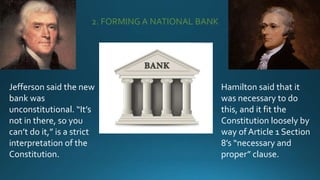
2. FORMING A NATIONAL BANK

Jefferson said the new
bank was
unconstitutional. “It’s
not in there, so you
can’t do it,” is a strict
interpretation of the
Constitution.

Hamilton said that it
was necessary to do
this, and it fit the
Constitution loosely by
way of Article 1 Section
8’s “necessary and
proper” clause.
3. The Tariff
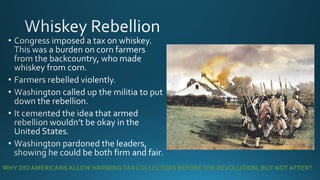
WHY DID AMERICANS ALLOW HARMING TAX COLLECTORS BEFORE THE REVOLUTION, BUT NOT AFTER?

Launching a new nation

  • 2.
    This portrait byGilbert Stuart 1796. From www.mountvernon.org
  • 3.
    Alexander HamiltonSecretary of the Treasury Thomas JeffersonSecretaryof State Henry KnoxSecretary of War Edmund RandolphAttorney General
  • 4.
    Washington appointed John Jay thefirst Chief Justice of the Supreme Court • Supreme Court with 6 Justices • 3 Circuit Courts • 13 District Courts
  • 6.
    US pays debtsfor both US and states. Create a national bank for deposits. Impose high taxes on imports.
  • 8.
    1. PAYING STATEAND FEDERAL DEBT: James Madison of Virginia disagreed that many Southern states should have to help pay debts for other states, since they had already paid their own. Hamilton made a compromise that the capital of the new nation would move to Washington, D.C., where it is today.
  • 9.
    2. FORMING ANATIONAL BANK Jefferson said the new bank was unconstitutional. “It’s not in there, so you can’t do it,” is a strict interpretation of the Constitution. Hamilton said that it was necessary to do this, and it fit the Constitution loosely by way of Article 1 Section 8’s “necessary and proper” clause.
  • 10.
  • 11.
    WHY DID AMERICANSALLOW HARMING TAX COLLECTORS BEFORE THE REVOLUTION, BUT NOT AFTER?