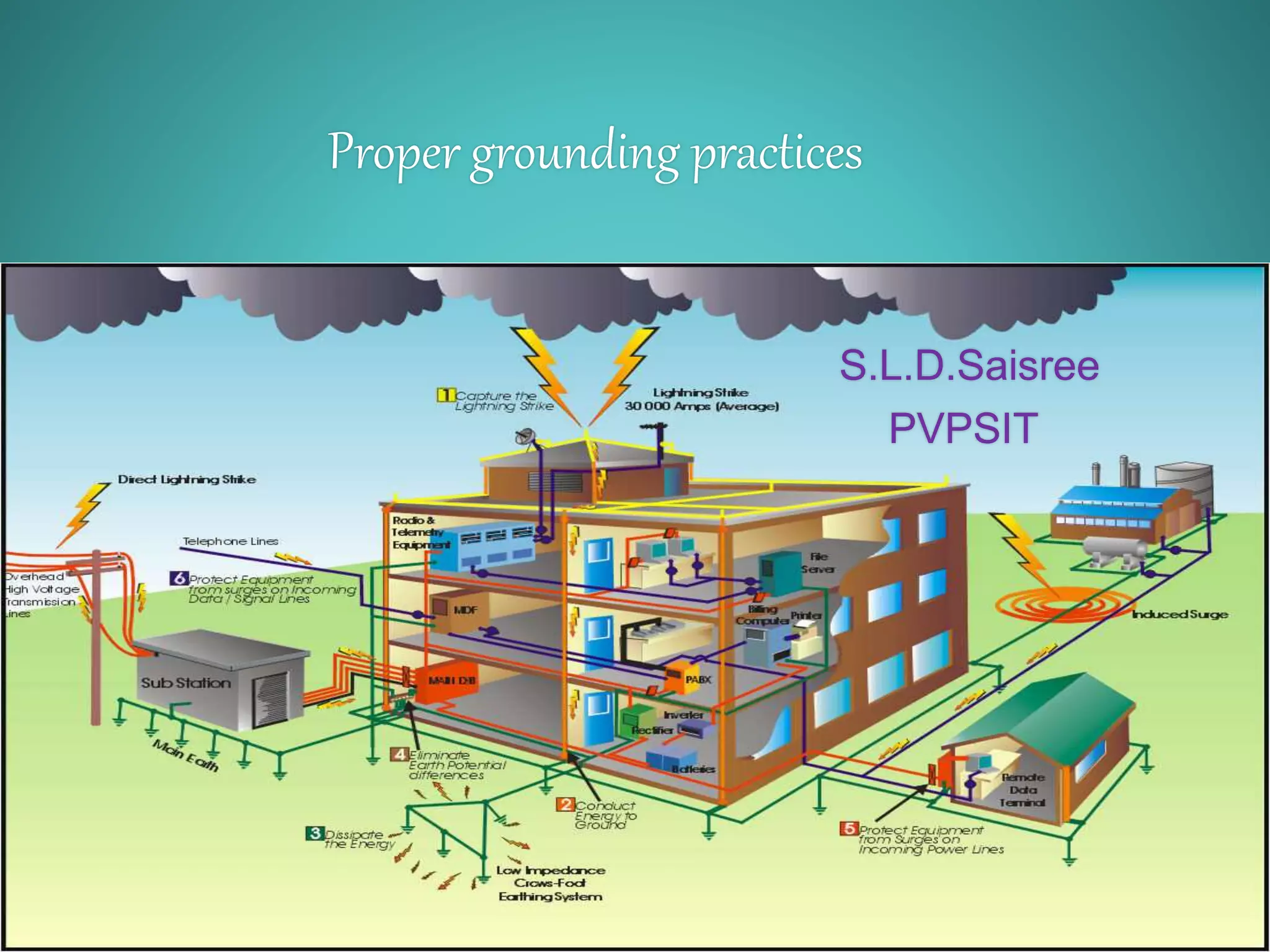
Proper grounding practices
S.L.D.Saisree
PVPSIT
Main Theme
• To provide proper ground connections to electrical
system. It is commonly stated at power quality
conferences and in journals that 80 percent of all the
power quality problems reported by customers are
related to wiring and grounding problems within a facility.
Reasons For grounding
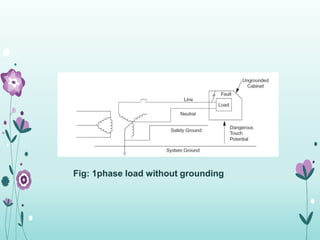
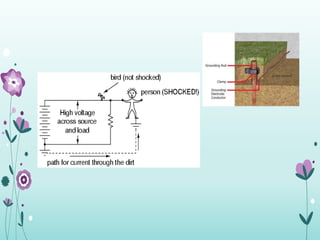
• For personnel safety by avoiding the high touch voltage.
• To avoid noise in the sensitive loads.
• To provide the path for the current to flow to the ground.
• To create an equipotential ground system.
• Sufficiently low impedance to limit the voltage to ground
Fig: 1phase load without grounding
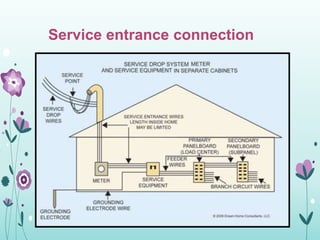
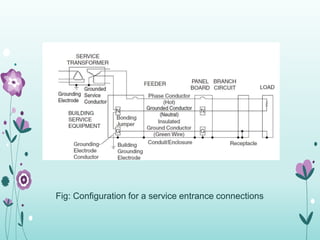
Service entrance connection
The primary components of a properly grounded system are found at
the service entrance. The neutral point of the supply power system is
connected to the grounded conductor (neutral wire) at this point. This
is also the one location in the system (except in the case of a separately
derived system) where the grounded conductor is connected to the
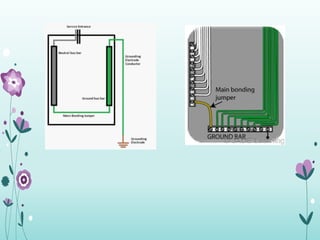
ground conductor (green wire) via the bonding jumper. The ground
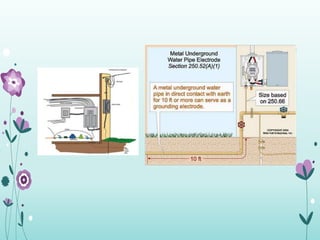
Conductor is also connected to the building grounding electrode via the
grounding-electrode conductor at the service entrance.
Neutral-ground connection.
Fig: Configuration for a service entrance connections
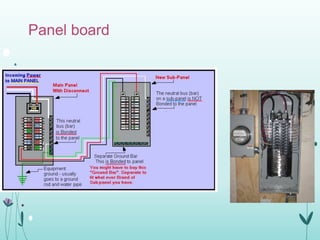
Panel board
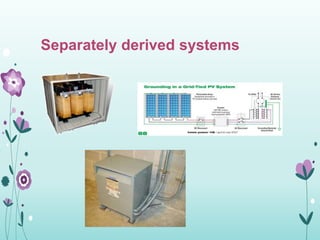
Separately derived systems
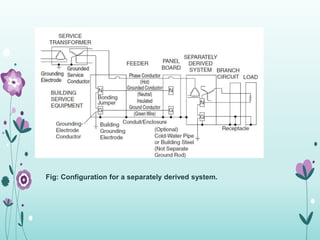
Fig: Configuration for a separately derived system.
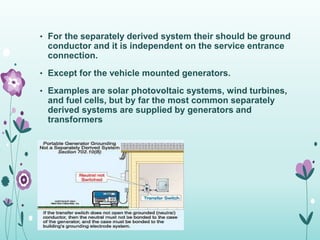
• For the separately derived system their should be ground
conductor and it is independent on the service entrance
connection.
• Except for the vehicle mounted generators.
• Examples are solar photovoltaic systems, wind turbines,
and fuel cells, but by far the most common separately
derived systems are supplied by generators and
transformers
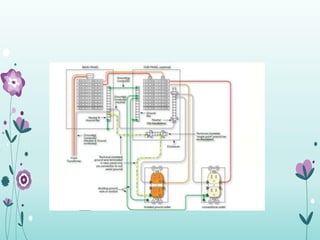
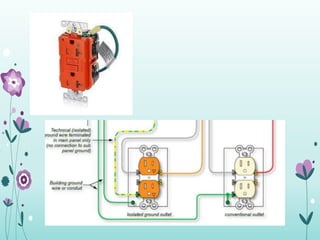
Isolated ground
• For sensitive loads the isolated ground is preferred.
•The noise performance of the supply to sensitive loads can
sometimes be improved by providing an isolated ground to
the load
•A separate conductor can also be used for the safety
ground in addition to the conduit.
•The isolated ground receptacle is orange in color for
identification purposes.
conclusion
Hence by the proper connection of grounding by
avoiding floating panels in the vicinity of the electrical
circuit and by adding least resistance ground conductor
we can avoid the high touch voltages. The equipotential
reference for all devices and locations in the system.

Solutions to wiring and grounding

  • 1.
  • 2.
    Main Theme • Toprovide proper ground connections to electrical system. It is commonly stated at power quality conferences and in journals that 80 percent of all the power quality problems reported by customers are related to wiring and grounding problems within a facility.
  • 3.
    Reasons For grounding •For personnel safety by avoiding the high touch voltage. • To avoid noise in the sensitive loads. • To provide the path for the current to flow to the ground. • To create an equipotential ground system. • Sufficiently low impedance to limit the voltage to ground
  • 4.
    Fig: 1phase loadwithout grounding
  • 6.
  • 7.
    Service entrance connection Theprimary components of a properly grounded system are found at the service entrance. The neutral point of the supply power system is connected to the grounded conductor (neutral wire) at this point. This is also the one location in the system (except in the case of a separately derived system) where the grounded conductor is connected to the ground conductor (green wire) via the bonding jumper. The ground Conductor is also connected to the building grounding electrode via the grounding-electrode conductor at the service entrance. Neutral-ground connection.
  • 8.
    Fig: Configuration fora service entrance connections
  • 10.
  • 12.
  • 13.
    Fig: Configuration fora separately derived system.
  • 14.
    • For theseparately derived system their should be ground conductor and it is independent on the service entrance connection. • Except for the vehicle mounted generators. • Examples are solar photovoltaic systems, wind turbines, and fuel cells, but by far the most common separately derived systems are supplied by generators and transformers
  • 15.
    Isolated ground • Forsensitive loads the isolated ground is preferred. •The noise performance of the supply to sensitive loads can sometimes be improved by providing an isolated ground to the load •A separate conductor can also be used for the safety ground in addition to the conduit. •The isolated ground receptacle is orange in color for identification purposes.
  • 18.
    conclusion Hence by theproper connection of grounding by avoiding floating panels in the vicinity of the electrical circuit and by adding least resistance ground conductor we can avoid the high touch voltages. The equipotential reference for all devices and locations in the system.