
1
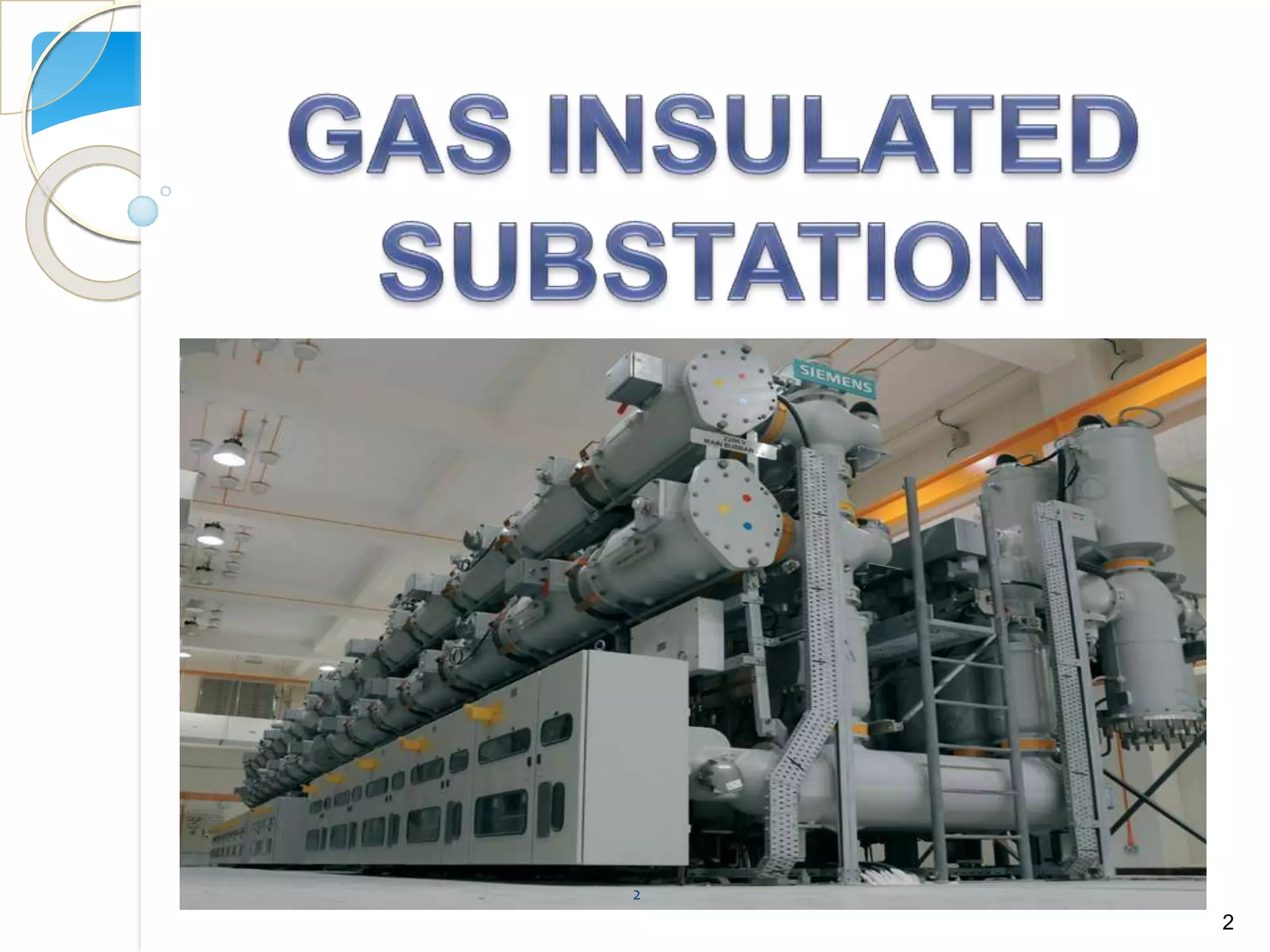
GAS INSULATED SUBSTATION
1
By:
AGGELASUNEELKUMAR
2
2
3
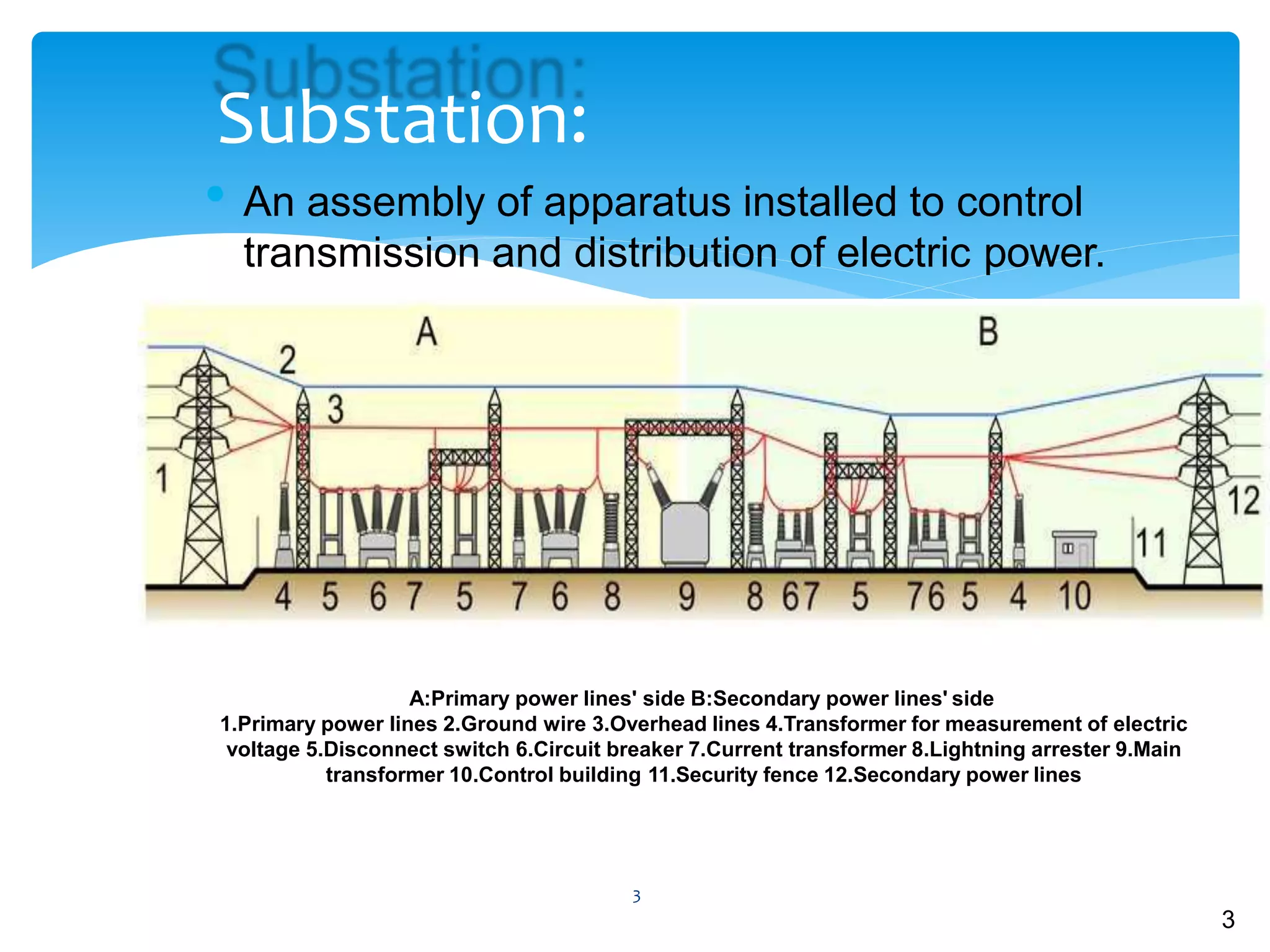
Substation:
• An assembly of apparatus installed to control
transmission and distribution of electric power.
A:Primary power lines' side B:Secondary power lines' side
1.Primary power lines 2.Ground wire 3.Overhead lines 4.Transformer for measurement of electric
voltage 5.Disconnect switch 6.Circuit breaker 7.Current transformer 8.Lightning arrester 9.Main
transformer 10.Control building 11.Security fence 12.Secondary power lines
3
4
Air Insulated
Substation(AIS):
4
Air used as a dielectric.
Normally used for outdoor substations.
In very few cases used for indoor substations.
Easy to expand (in case that space is not an issue)
Excellent overview, simple handling and easy
access.
5
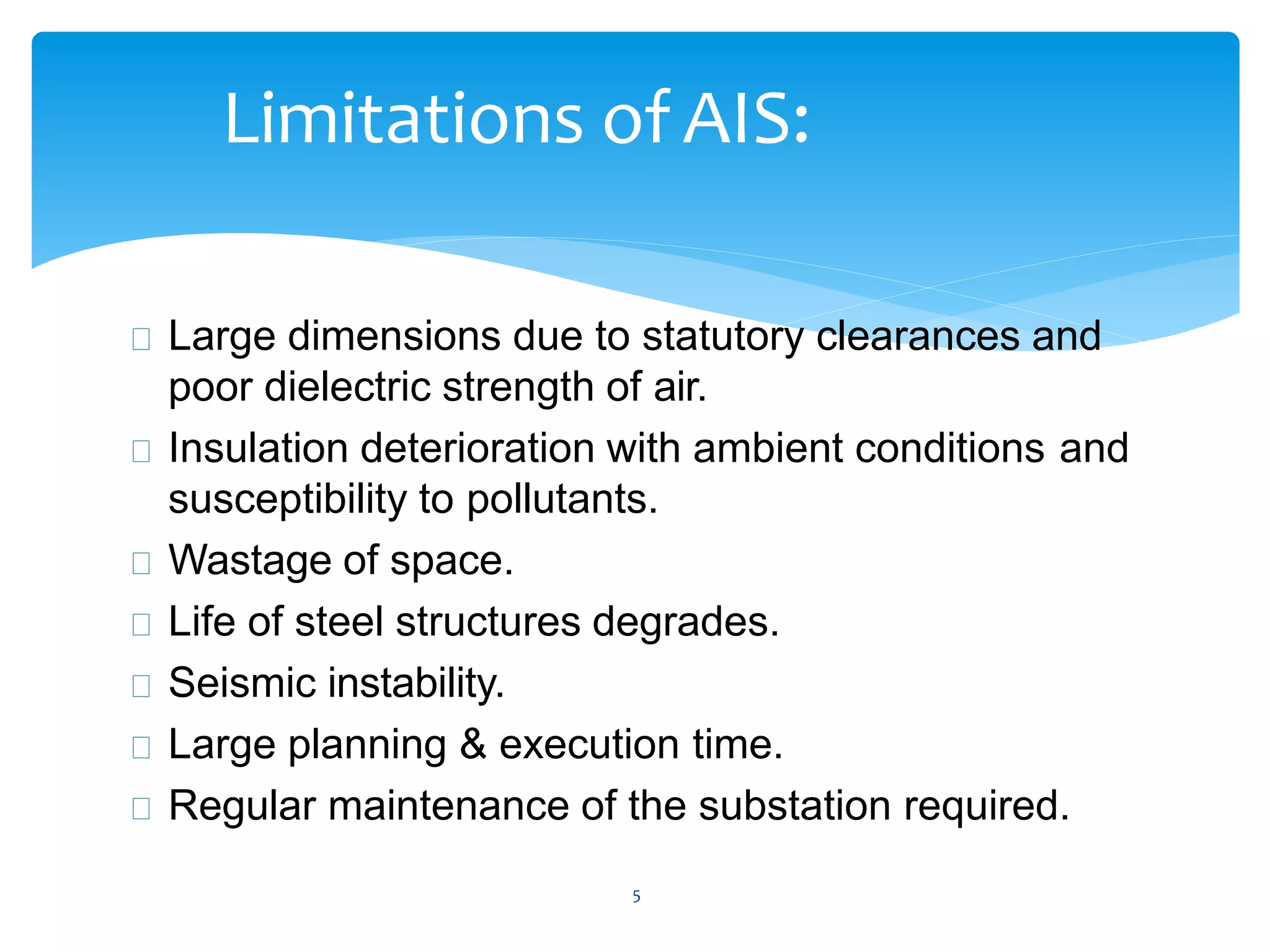
Limitations of AIS:
Large dimensions due to statutory clearances and
poor dielectric strength of air.
Insulation deterioration with ambient conditions and
susceptibility to pollutants.
Wastage of space.
Life of steel structures degrades.
Seismic instability.
Large planning & execution time.
Regular maintenance of the substation required.
6
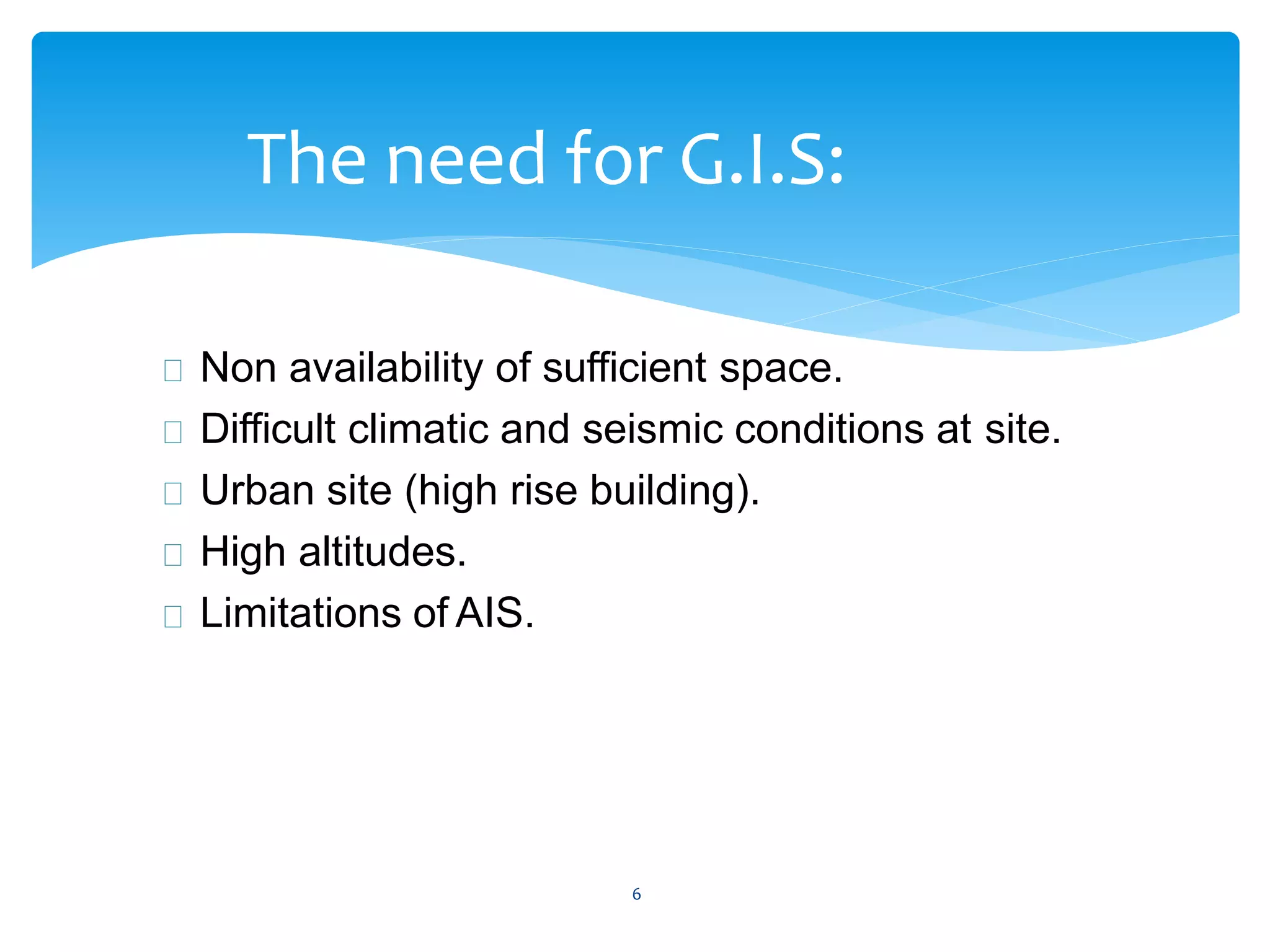
The need for G.I.S:
Non availability of sufficient space.
Difficult climatic and seismic conditions at site.
Urban site (high rise building).
High altitudes.
Limitations of AIS.
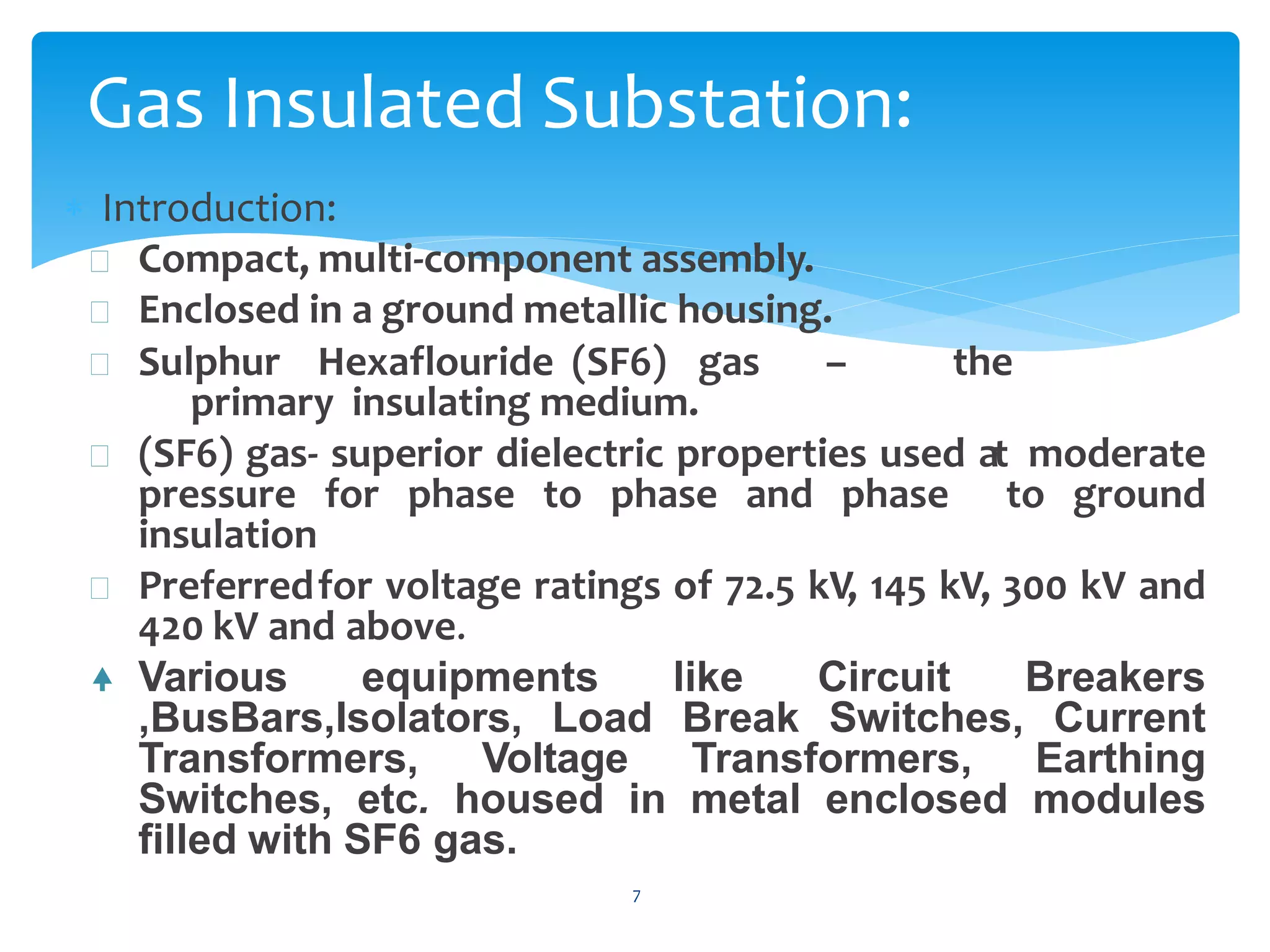
 Introduction:
 Compact, multi-component assembly.
 Enclosed in a ground metallic housing.
 Sulphur Hexaflouride (SF6) gas – the
primary insulating medium.
 (SF6) gas- superior dielectric properties used at moderate
pressure for phase to phase and phase to ground
insulation
 Preferredfor voltage ratings of 72.5 kV, 145 kV, 300 kV and
420 kV and above.
 Various equipments like Circuit Breakers
,BusBars,Isolators, Load Break Switches, Current
Transformers, Voltage Transformers, Earthing
Switches, etc. housed in metal enclosed modules
filled with SF6 gas.
7
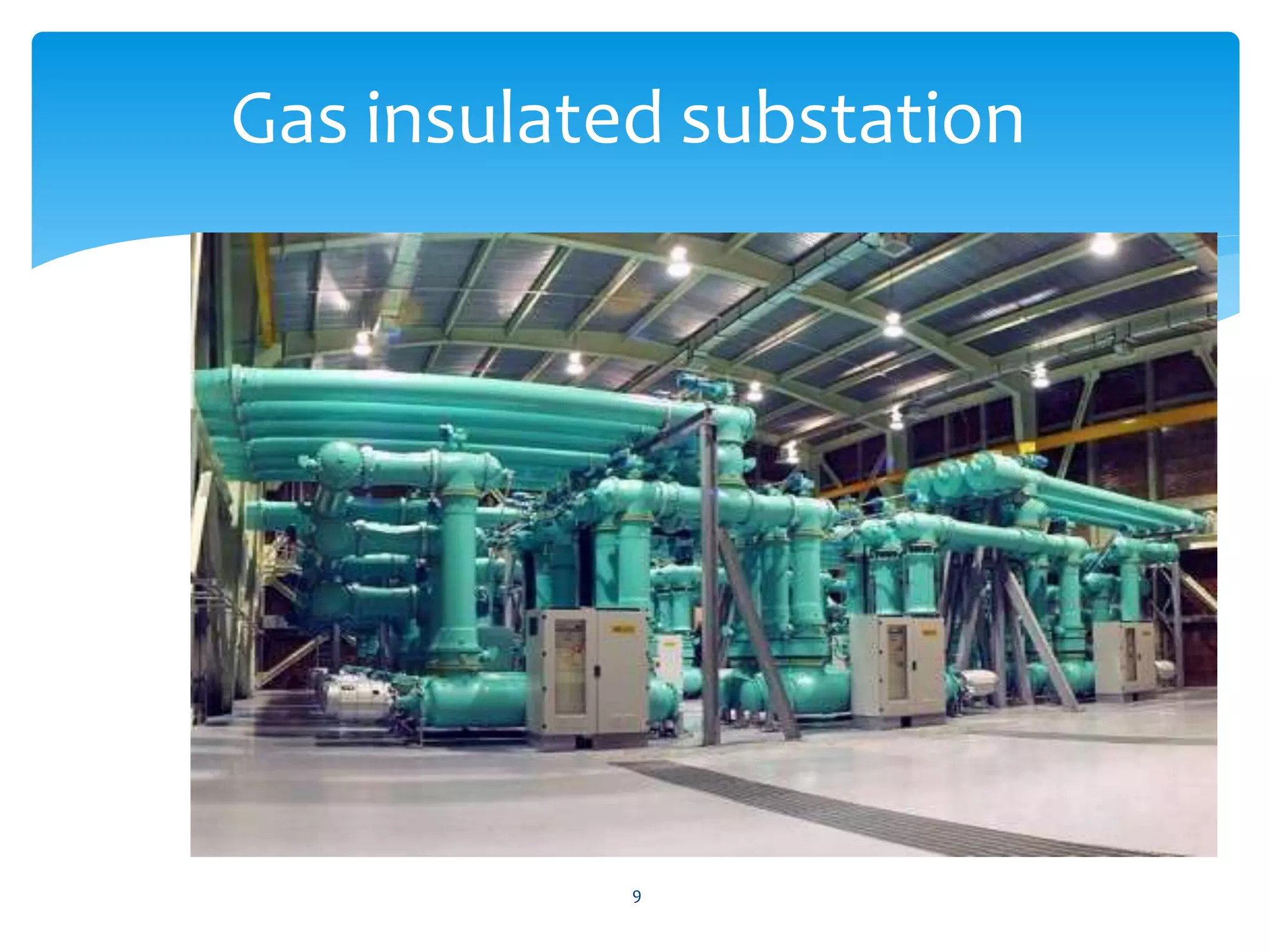
Gas Insulated Substation:
8
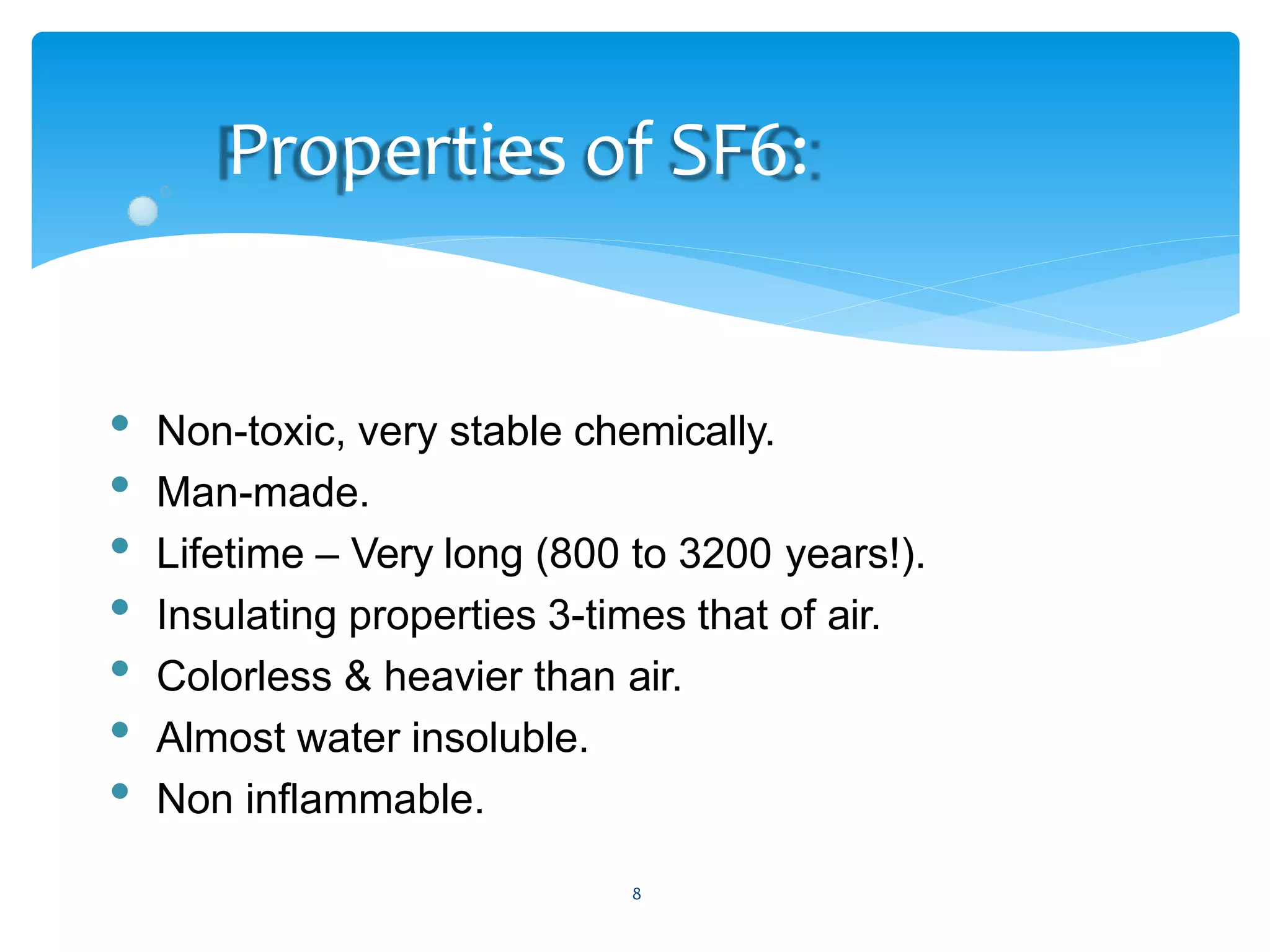
Properties of SF6:
• Non-toxic, very stable chemically.
• Man-made.
• Lifetime – Very long (800 to 3200 years!).
• Insulating properties 3-times that of air.
• Colorless & heavier than air.
• Almost water insoluble.
• Non inflammable.
Gas insulated substation
9
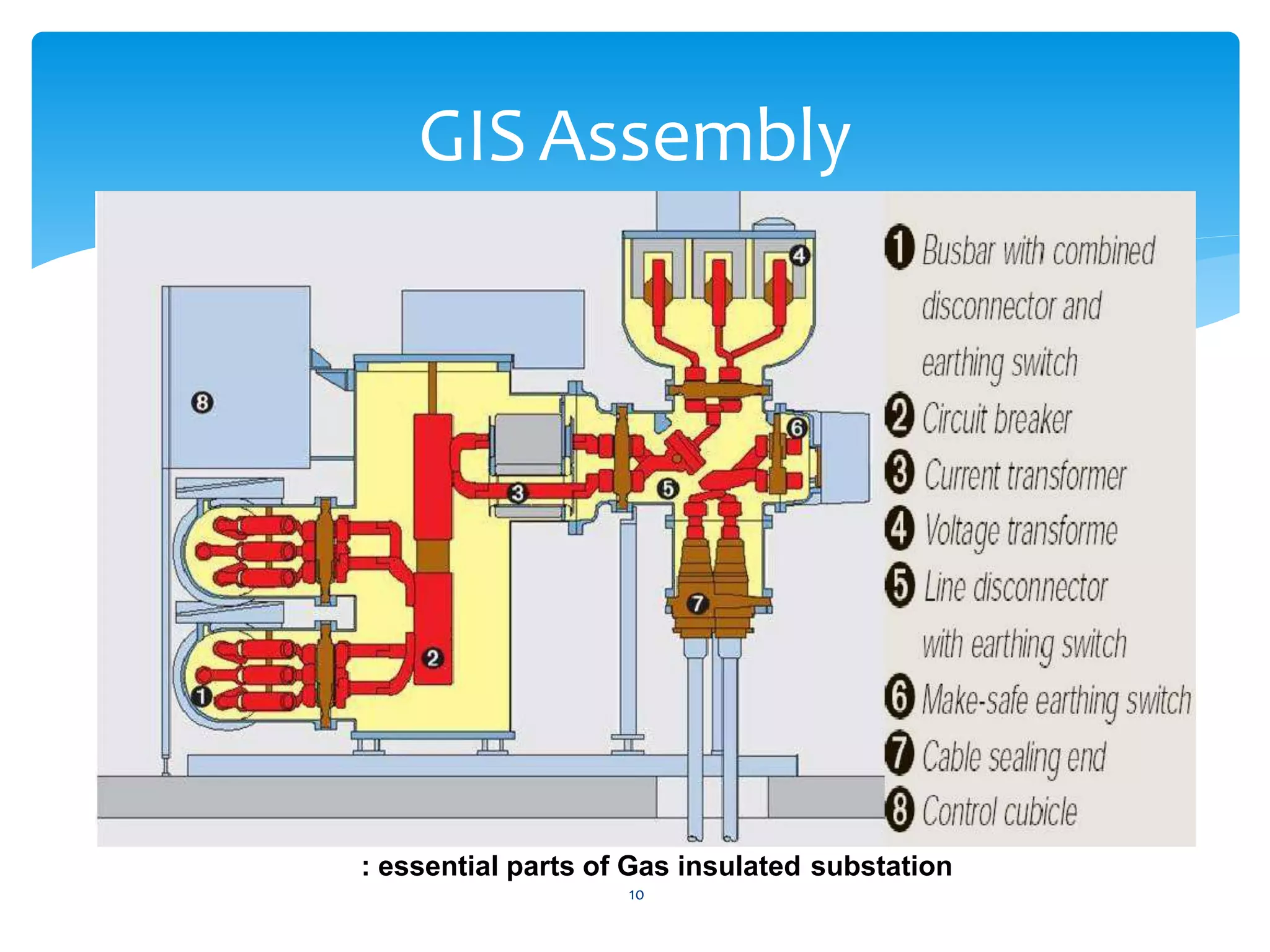
: essential parts of Gas insulated substation
GISAssembly
10
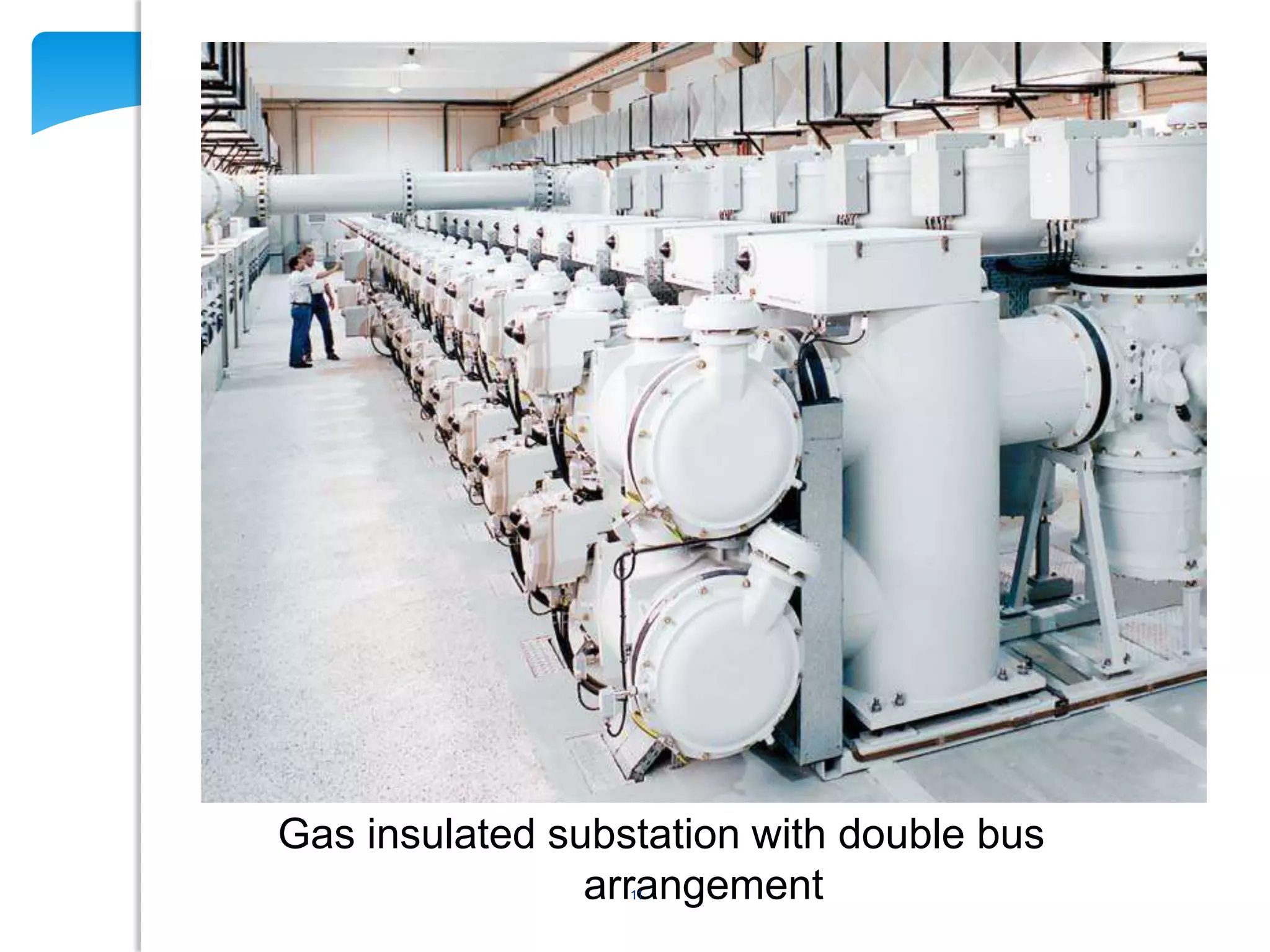
Gas insulated substation with double bus
arrangement11
12
Advantages :
Occupies very less space (1/10th) compared to
ordinary substations.
Hence, most preferred where area for substation is
small (eg: Cities)
Most reliable compared to Air Insulated
Substations.
Number of outages due to the fault is less
Maintenance Free.
Can be assembled at workshop and modules can
be commissioned in the plant easily.
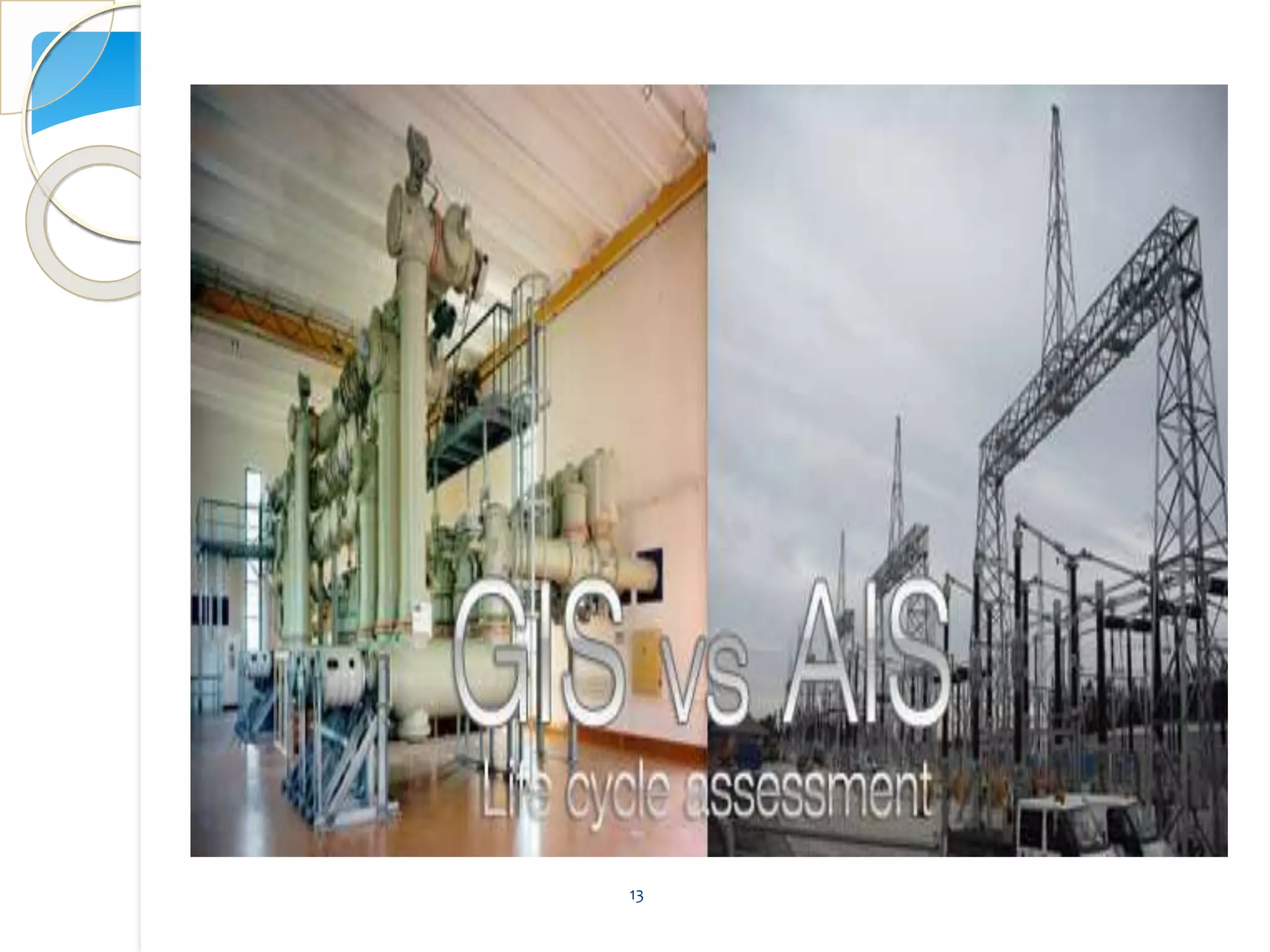
13
14
Main Drawbacks:
• High cost compared to conventional
substation(AIS).
• Excessive damage in case of internal fault.
• Diagnosis of internal fault and rectifying takes
very long time (high outage time).
• SF6 gas pressure must be monitored in each
compartment.
• Reduction in the pressure of the SF6 gas in any
module results in flash over and faults.
• SF6 causes ozone depletion and global warming.
17
SF6 – Environmental
Concerns:
• Currently, 80% used by Electrical Power industry.
• Other Uses – micro-electronics; Al & Mg
production.
• 7000 metric tons/yr in 1993.
• Reached 10,000 metric tons/yr by 2010.
• Two areas of Health and Environmental impact:
I. Through its normal use in a work place – Arcing
byproducts.
II. Global Environmental impact - Ozone depletion
and Global warming.
16
Future trends:
• Compact design of switch gear by using three
phase modules.
• Use of vacuum circuit breaker cells in the medium
high voltage GIS.
• Optimization of GIS design to allow easier
maintenance.
• Development of DC GIS for incorporating into
expanding national/international HVDC systems.
• Search for replacement gases for SF6.
• The most promising - an 80%/20% N2/SF6
mixture.
• Replacement of existing AIS by GIS will accelerate
especially near urban centers.
17
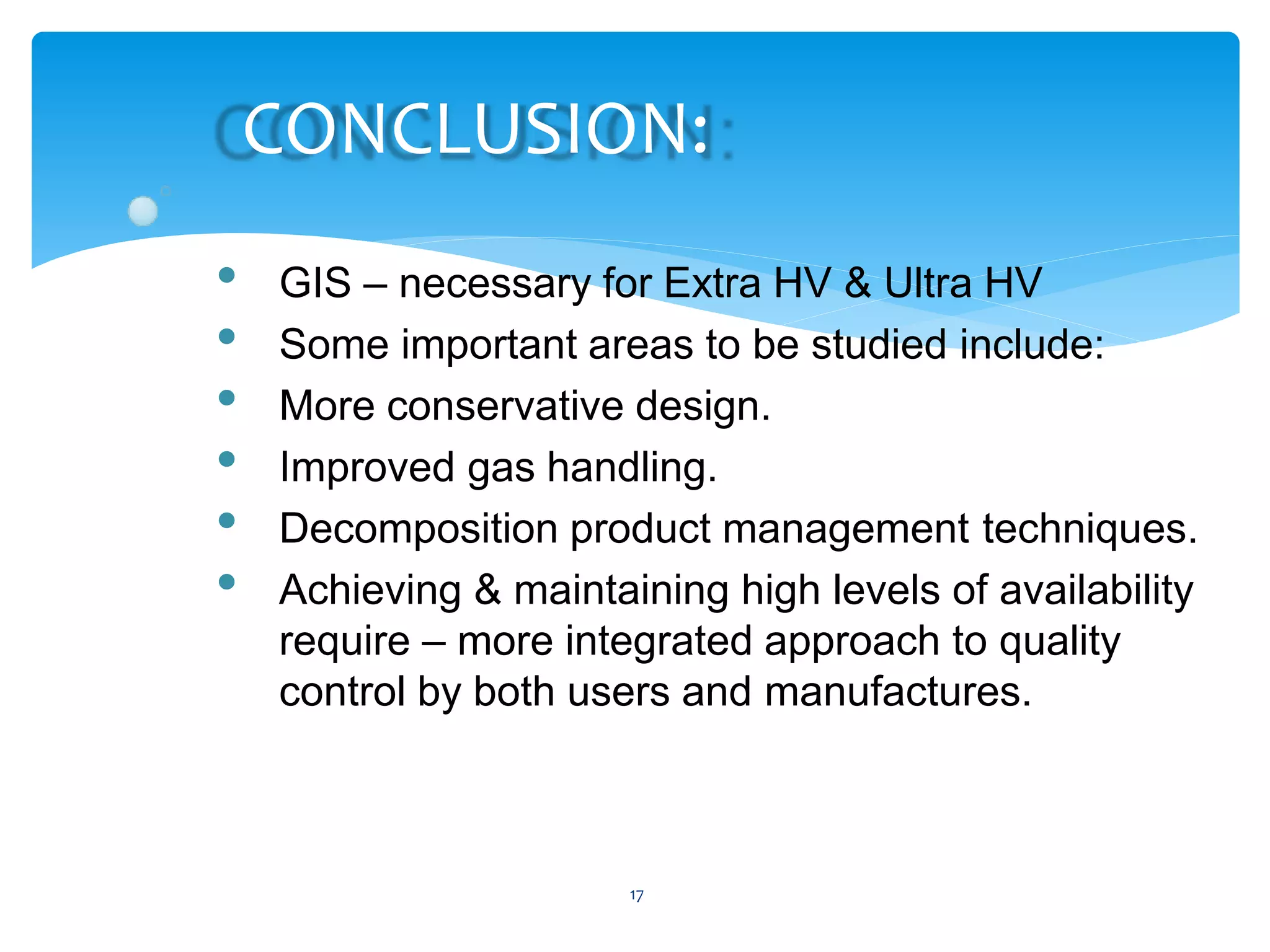
CONCLUSION:
• GIS – necessary for Extra HV & Ultra HV
• Some important areas to be studied include:
• More conservative design.
• Improved gas handling.
• Decomposition product management techniques.
• Achieving & maintaining high levels of availability
require – more integrated approach to quality
control by both users and manufactures.
18

GIS(GAS INSULATED SUBSTATION)

  • 1.
  • 2.
  • 3.
    3 Substation: • An assemblyof apparatus installed to control transmission and distribution of electric power. A:Primary power lines' side B:Secondary power lines' side 1.Primary power lines 2.Ground wire 3.Overhead lines 4.Transformer for measurement of electric voltage 5.Disconnect switch 6.Circuit breaker 7.Current transformer 8.Lightning arrester 9.Main transformer 10.Control building 11.Security fence 12.Secondary power lines 3
  • 4.
    4 Air Insulated Substation(AIS): 4 Air usedas a dielectric. Normally used for outdoor substations. In very few cases used for indoor substations. Easy to expand (in case that space is not an issue) Excellent overview, simple handling and easy access.
  • 5.
    5 Limitations of AIS: Largedimensions due to statutory clearances and poor dielectric strength of air. Insulation deterioration with ambient conditions and susceptibility to pollutants. Wastage of space. Life of steel structures degrades. Seismic instability. Large planning & execution time. Regular maintenance of the substation required.
  • 6.
    6 The need forG.I.S: Non availability of sufficient space. Difficult climatic and seismic conditions at site. Urban site (high rise building). High altitudes. Limitations of AIS.
  • 7.
     Introduction:  Compact,multi-component assembly.  Enclosed in a ground metallic housing.  Sulphur Hexaflouride (SF6) gas – the primary insulating medium.  (SF6) gas- superior dielectric properties used at moderate pressure for phase to phase and phase to ground insulation  Preferredfor voltage ratings of 72.5 kV, 145 kV, 300 kV and 420 kV and above.  Various equipments like Circuit Breakers ,BusBars,Isolators, Load Break Switches, Current Transformers, Voltage Transformers, Earthing Switches, etc. housed in metal enclosed modules filled with SF6 gas. 7 Gas Insulated Substation:
  • 8.
    8 Properties of SF6: •Non-toxic, very stable chemically. • Man-made. • Lifetime – Very long (800 to 3200 years!). • Insulating properties 3-times that of air. • Colorless & heavier than air. • Almost water insoluble. • Non inflammable.
  • 9.
  • 10.
    : essential partsof Gas insulated substation GISAssembly 10
  • 11.
    Gas insulated substationwith double bus arrangement11
  • 12.
    12 Advantages : Occupies veryless space (1/10th) compared to ordinary substations. Hence, most preferred where area for substation is small (eg: Cities) Most reliable compared to Air Insulated Substations. Number of outages due to the fault is less Maintenance Free. Can be assembled at workshop and modules can be commissioned in the plant easily.
  • 13.
  • 14.
    14 Main Drawbacks: • Highcost compared to conventional substation(AIS). • Excessive damage in case of internal fault. • Diagnosis of internal fault and rectifying takes very long time (high outage time). • SF6 gas pressure must be monitored in each compartment. • Reduction in the pressure of the SF6 gas in any module results in flash over and faults. • SF6 causes ozone depletion and global warming.
  • 15.
    17 SF6 – Environmental Concerns: •Currently, 80% used by Electrical Power industry. • Other Uses – micro-electronics; Al & Mg production. • 7000 metric tons/yr in 1993. • Reached 10,000 metric tons/yr by 2010. • Two areas of Health and Environmental impact: I. Through its normal use in a work place – Arcing byproducts. II. Global Environmental impact - Ozone depletion and Global warming.
  • 16.
    16 Future trends: • Compactdesign of switch gear by using three phase modules. • Use of vacuum circuit breaker cells in the medium high voltage GIS. • Optimization of GIS design to allow easier maintenance. • Development of DC GIS for incorporating into expanding national/international HVDC systems. • Search for replacement gases for SF6. • The most promising - an 80%/20% N2/SF6 mixture. • Replacement of existing AIS by GIS will accelerate especially near urban centers.
  • 17.
    17 CONCLUSION: • GIS –necessary for Extra HV & Ultra HV • Some important areas to be studied include: • More conservative design. • Improved gas handling. • Decomposition product management techniques. • Achieving & maintaining high levels of availability require – more integrated approach to quality control by both users and manufactures.
  • 18.