Presented by: Wasif Jami Khan
Prepared for: Dr. Ashikur Rahman
Environmental Science (ENV 107.10)
Date : August 7th 2014
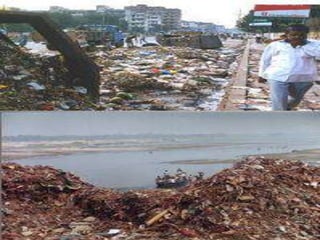
 In Simple Words The term solid waste
means: material such as household garbage
(includes recycling), food wastes, yard wastes, and
demolition or construction debris. It also includes
discarded items like household appliances,
furniture, scrap metal, machinery, car parts and
abandoned or junk vehicles.
 Waste management is the "generation,
prevention, characterization, monitoring,
treatment, handling, reuse and residual disposition
of solid wastes". There are various types of solid
waste including municipal (residential, institutional,
commercial), agricultural, and special (health
care, household hazardous wastes, sewage
sludge)
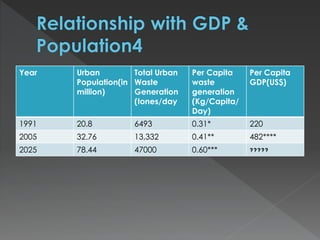
Year Urban
Population(in
million)
Total Urban
Waste
Generation
(tones/day
Per Capita
waste
generation
(Kg/Capita/
Day)
Per Capita
GDP(US$)
1991 20.8 6493 0.31* 220
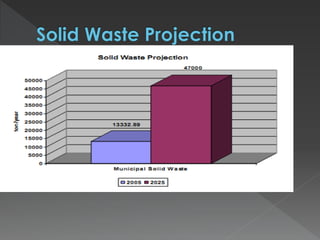
2005 32.76 13,332 0.41** 482****
2025 78.44 47000 0.60*** ?????
 Waste Hierarchy –It refers to the 3Rs
reduce, reuse and recycle
 Polluter Pays Principle-It is a principle
where the polluting party pays for the
impact caused to the environment.
 National 3R Strategies: The national 3R
goal for waste management is to
achieve higher levels of waste reduction,
reuse, and recycling
Objectives of the National 3R Strategy:
 Address the key issues of waste
management
 Define the roles of various actors
 Guide the creation of enabling
conditions for success
 Priority Sector for 3R:
 Municipal solid waste
 Industrial waste
 Biomedical waste
 Agricultural waste
 Policies-Adopted 6 policies (1998-2008)
 Acts -Enactment of 2 acts (1995-2006)
 Rules Strategies-•Adopted 4 rules (1997-
2010)
 Strategies -Promotion of 3 strategies
(2005)
 Action Plans-Promoted 3 action plans
(1995-2005)
 Source Separation of Waste at Uttara
Model Town (Sector 5)
 Community Based Urban Solid Waste
Management in Bangladesh
 Composting of Waste in Slums
 School Composting Program of
American International School Dhaka
(AISD)
 Medium and Large Scale Commercial
Composting using CDM
 Plastic Waste Recycling in Dhaka by
Informal Sector
 Battery Buy Back for Recycling by
Rahimafrooz
 Agricultural Waste Used for Biogas
Generation and Improved Cook Stoves
 Biomass/Poultry Waste Used for
Commercial Power Generation
 Biomedical Waste Collection and
Disposal in Dhaka
 The owners, operators, and/or
occupants of any premises are
responsible for the satisfactory and legal
disposal of all solid waste generated or
accumulated on the property.
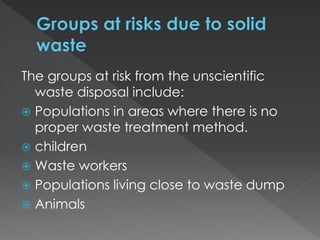
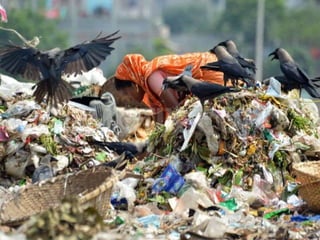
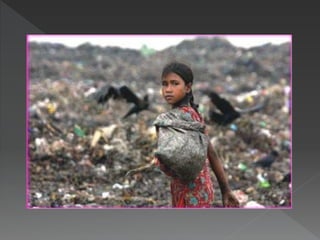
The groups at risk from the unscientific
waste disposal include:
 Populations in areas where there is no
proper waste treatment method.
 children
 Waste workers
 Populations living close to waste dump
 Animals
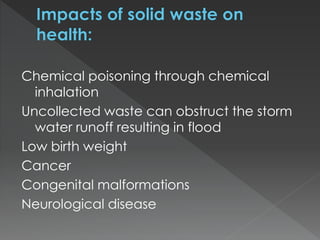
Chemical poisoning through chemical
inhalation
Uncollected waste can obstruct the storm
water runoff resulting in flood
Low birth weight
Cancer
Congenital malformations
Neurological disease
 Proper management of solid waste
 Involving public in plans for waste
treatment and disposal
 Provide the public accurate, useful
information about the whole projects,
including the risks and maintain formal
communication with public
 Educate people on different ways of
handling waste.
Thank You
solid waste management in bangladesh

solid waste management in bangladesh

  • 1.
    Presented by: WasifJami Khan Prepared for: Dr. Ashikur Rahman Environmental Science (ENV 107.10) Date : August 7th 2014
  • 3.
     In SimpleWords The term solid waste means: material such as household garbage (includes recycling), food wastes, yard wastes, and demolition or construction debris. It also includes discarded items like household appliances, furniture, scrap metal, machinery, car parts and abandoned or junk vehicles.
  • 4.
     Waste managementis the "generation, prevention, characterization, monitoring, treatment, handling, reuse and residual disposition of solid wastes". There are various types of solid waste including municipal (residential, institutional, commercial), agricultural, and special (health care, household hazardous wastes, sewage sludge)
  • 5.
    Year Urban Population(in million) Total Urban Waste Generation (tones/day PerCapita waste generation (Kg/Capita/ Day) Per Capita GDP(US$) 1991 20.8 6493 0.31* 220 2005 32.76 13,332 0.41** 482**** 2025 78.44 47000 0.60*** ?????
  • 10.
     Waste Hierarchy–It refers to the 3Rs reduce, reuse and recycle  Polluter Pays Principle-It is a principle where the polluting party pays for the impact caused to the environment.
  • 11.
     National 3RStrategies: The national 3R goal for waste management is to achieve higher levels of waste reduction, reuse, and recycling Objectives of the National 3R Strategy:  Address the key issues of waste management  Define the roles of various actors  Guide the creation of enabling conditions for success
  • 12.
     Priority Sectorfor 3R:  Municipal solid waste  Industrial waste  Biomedical waste  Agricultural waste
  • 13.
     Policies-Adopted 6policies (1998-2008)  Acts -Enactment of 2 acts (1995-2006)  Rules Strategies-•Adopted 4 rules (1997- 2010)  Strategies -Promotion of 3 strategies (2005)  Action Plans-Promoted 3 action plans (1995-2005)
  • 14.
     Source Separationof Waste at Uttara Model Town (Sector 5)  Community Based Urban Solid Waste Management in Bangladesh  Composting of Waste in Slums  School Composting Program of American International School Dhaka (AISD)  Medium and Large Scale Commercial Composting using CDM
  • 15.
     Plastic WasteRecycling in Dhaka by Informal Sector  Battery Buy Back for Recycling by Rahimafrooz  Agricultural Waste Used for Biogas Generation and Improved Cook Stoves  Biomass/Poultry Waste Used for Commercial Power Generation  Biomedical Waste Collection and Disposal in Dhaka
  • 16.
     The owners,operators, and/or occupants of any premises are responsible for the satisfactory and legal disposal of all solid waste generated or accumulated on the property.
  • 17.
    The groups atrisk from the unscientific waste disposal include:  Populations in areas where there is no proper waste treatment method.  children  Waste workers  Populations living close to waste dump  Animals
  • 20.
    Chemical poisoning throughchemical inhalation Uncollected waste can obstruct the storm water runoff resulting in flood Low birth weight Cancer Congenital malformations Neurological disease
  • 21.
     Proper managementof solid waste  Involving public in plans for waste treatment and disposal  Provide the public accurate, useful information about the whole projects, including the risks and maintain formal communication with public  Educate people on different ways of handling waste.
  • 23.

Editor's Notes

  • #6 In 2015 its 61369 ton