Discover, recycle and reuse
Solid waste management 
“It involves the collection, transport , processing , 
recycling or disposing and monitoring of solid waste 
material”
Improper management 
 Improper disposal Threats public health .Waste 
enhances insects growth act as vectors of diseases 
(transmit pathogens). 
 It leads to terrestrial and aquatic ,air pollution and 
water pollution . 
 it causes Technical and environmental difficulties , 
economic and social problems
Objective for SWM (solid waste 
management) 
 Reducing the quantity of toxic and hazardous 
chemicals and materials acquired, used, or disposed 
off by the agency 
 Increasing diversion of solid waste as required. 
 Maintaining waste recycling programs . 
 To Provide efficient and economical way of reuse of 
collections through recycling. 
 To provide Source for Energy generation 
 To Reuse and Recover the materials from waste.
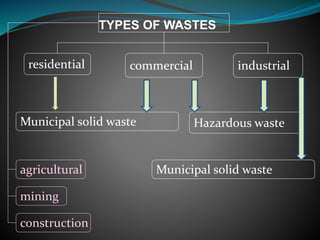
TYPES OF WASTES 
residential commercial industrial 
Municipal solid waste Hazardous waste 
agricultural 
mining 
construction 
Municipal solid waste
Methods of SWM 
 Composting 
 Incineration or combustion 
 Landfilling
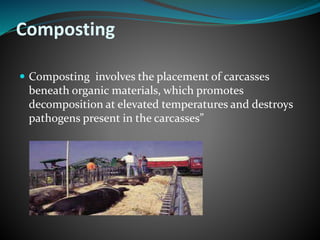
Composting 
 Composting involves the placement of carcasses 
beneath organic materials, which promotes 
decomposition at elevated temperatures and destroys 
pathogens present in the carcasses”
Indoor composting 
 It has been widely used by the poultry industry for bird 
mortalities. 
 Indoor composting is less affected by weather events, 
ambient temperatures and seasonality and more 
protected from wind, scavengers.
Outdoor composting 
 It involves placement of carcasses in compost piles that 
are long, narrow windrows or trapezoidal shaped and 
above ground. 
 May affected by weather events, ambient temperatures 
and seasonality
Procedure: 
 Place the carcass (or carcasses) on the bulking agent. If 
you’re composting calves or other smaller animals, place 
them starting at the back in a single layer, at least six inches 
apart. 
 Cover the carcass with another 12 inches of bulking agent. 
If the bulking agent does not feel moist, add water before 
covering the carcass 
 Record the species, weight, date, and amount of bulking 
material used 
 When the first bin is full or the pile is as tall as you can 
work with, start a second bin/pile if you have more 
mortalities.
Incineration 
 Waste treatment that involves combustion of 
disposible substances at high temperature results in 
ash, gases & heat. 
 Chemical process :Combustible part is 
combined with O2  CO2 + H2O (oxidation)
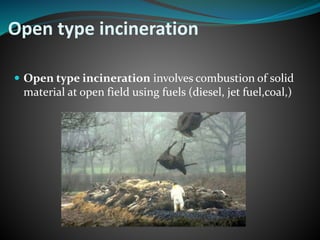
Open type incineration 
 Open type incineration involves combustion of solid 
material at open field using fuels (diesel, jet fuel,coal,)
Close type incineration 
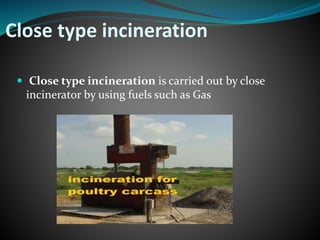
 Close type incineration is carried out by close 
incinerator by using fuels such as Gas
Landfill method 
 Ritual act of placing a dead person or animal, and/or 
objects into the ground. This is accomplished by 
excavating a pit or trench. 
 Hazards and toxic substance can be dumped into soil 
by landfill method in order to prevents spreading
Precautions while selecting site for 
landfilling 
 Not floody area 
 500 feet from residences, livestock facilities and 
adjacent pastures owned or leased by another person. 
 300 feet from a road.
thanks 
Conducted by Ali saqlain from Pakistan 
As_saqlain@yahoo.com

Solid waste management

  • 1.
  • 2.
    Solid waste management “It involves the collection, transport , processing , recycling or disposing and monitoring of solid waste material”
  • 3.
    Improper management Improper disposal Threats public health .Waste enhances insects growth act as vectors of diseases (transmit pathogens).  It leads to terrestrial and aquatic ,air pollution and water pollution .  it causes Technical and environmental difficulties , economic and social problems
  • 4.
    Objective for SWM(solid waste management)  Reducing the quantity of toxic and hazardous chemicals and materials acquired, used, or disposed off by the agency  Increasing diversion of solid waste as required.  Maintaining waste recycling programs .  To Provide efficient and economical way of reuse of collections through recycling.  To provide Source for Energy generation  To Reuse and Recover the materials from waste.
  • 5.
    TYPES OF WASTES residential commercial industrial Municipal solid waste Hazardous waste agricultural mining construction Municipal solid waste
  • 6.
    Methods of SWM  Composting  Incineration or combustion  Landfilling
  • 7.
    Composting  Compostinginvolves the placement of carcasses beneath organic materials, which promotes decomposition at elevated temperatures and destroys pathogens present in the carcasses”
  • 8.
    Indoor composting It has been widely used by the poultry industry for bird mortalities.  Indoor composting is less affected by weather events, ambient temperatures and seasonality and more protected from wind, scavengers.
  • 9.
    Outdoor composting It involves placement of carcasses in compost piles that are long, narrow windrows or trapezoidal shaped and above ground.  May affected by weather events, ambient temperatures and seasonality
  • 10.
    Procedure:  Placethe carcass (or carcasses) on the bulking agent. If you’re composting calves or other smaller animals, place them starting at the back in a single layer, at least six inches apart.  Cover the carcass with another 12 inches of bulking agent. If the bulking agent does not feel moist, add water before covering the carcass  Record the species, weight, date, and amount of bulking material used  When the first bin is full or the pile is as tall as you can work with, start a second bin/pile if you have more mortalities.
  • 11.
    Incineration  Wastetreatment that involves combustion of disposible substances at high temperature results in ash, gases & heat.  Chemical process :Combustible part is combined with O2  CO2 + H2O (oxidation)
  • 12.
    Open type incineration  Open type incineration involves combustion of solid material at open field using fuels (diesel, jet fuel,coal,)
  • 13.
    Close type incineration  Close type incineration is carried out by close incinerator by using fuels such as Gas
  • 14.
    Landfill method Ritual act of placing a dead person or animal, and/or objects into the ground. This is accomplished by excavating a pit or trench.  Hazards and toxic substance can be dumped into soil by landfill method in order to prevents spreading
  • 15.
    Precautions while selectingsite for landfilling  Not floody area  500 feet from residences, livestock facilities and adjacent pastures owned or leased by another person.  300 feet from a road.
  • 16.
    thanks Conducted byAli saqlain from Pakistan As_saqlain@yahoo.com