Presented by
s.Hari prasanna rao
 Introduction to Solid Waste Management
 Solid waste definition
 Classification of solid waste
 Composition of Refuse
 Collection of Refuse
 Effects of solid waste
 Solid waste management
3R’s
Reduction
Reuse
Recycle
 Method of disposal of Solid waste
 Recommendation
 Legal Provision for handling and management of Solid
waste
 Solid waste management is a term that is
used to refer to the process of collecting and
treating Solid waste. It also offers solutions
for recycling items that do not belong
to garbage or trash. As long as people have
been living in settlements and residential
areas, garbage or solid waste has been an
issue.
 It is defined as
“ non liquid, non-soluble materials ranging
from municipal garbage to industrial wastes that
contain complex & sometimes hazardous
substances”
 Solid waste also include
 Garbage
 Rubbish
 Demolition products
 Sewage treatment residue
 Dead animals
 Manure and other discarded material.
-- Per capita solid waste out put 0.25-2.5 Kg/day
Based on origin
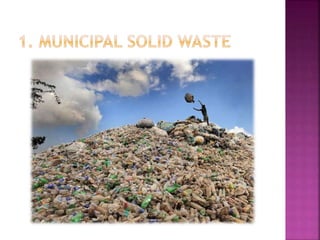
 Domestic or Municipal
 Hospital or Clinical
 Commercial
 Constructional
 Agricultural
 Industrial
 Nuclear
Based on Properties
 Organic
 Inorganic
 Inert
 Toxic
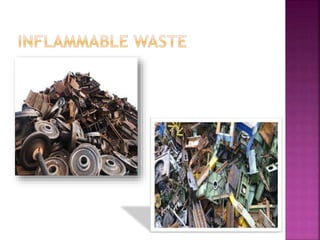
 Inflammable
 hazardous
 Garbage
 Ashes
 Rubbish
 Dead animals
 Street Sweepings
 Industrial solid waste
 Garbage
 Ashes
 Rubbish
 Dead animals
 Street Sweepings
 Industrial solid waste
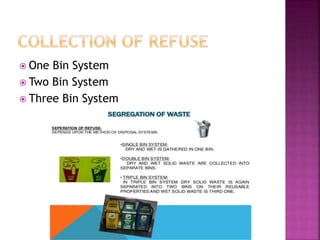
 One Bin System
 Two Bin System
 Three Bin System
 Spoilage of land waste
 Pollution
 Health hazards
 Effect on soil
 Effect on aquatic life
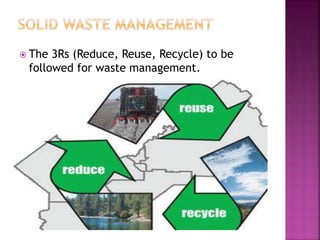
 The 3Rs (Reduce, Reuse, Recycle) to be
followed for waste management.
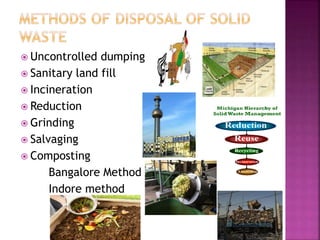
 Uncontrolled dumping
 Sanitary land fill
 Incineration
 Reduction
 Grinding
 Salvaging
 Composting
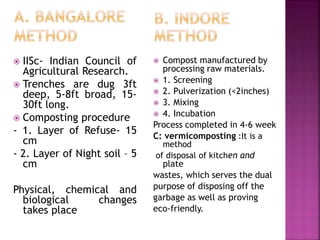
Bangalore Method
Indore method
 IISc- Indian Council of
Agricultural Research.
 Trenches are dug 3ft
deep, 5-8ft broad, 15-
30ft long.
 Composting procedure
- 1. Layer of Refuse- 15
cm
- 2. Layer of Night soil – 5
cm
Physical, chemical and
biological changes
takes place
 Compost manufactured by
processing raw materials.
 1. Screening
 2. Pulverization (<2inches)
 3. Mixing
 4. Incubation
Process completed in 4-6 week
C: vermicomposting :It is a
method
of disposal of kitchen and
plate
wastes, which serves the dual
purpose of disposing off the
garbage as well as proving
eco-friendly.
 The improvement of people and private
sector through NGOs could improve the
efficiency of solid waste management.
 Public awareness should be created
especially at primary level.
 Littering of solid waste should prohibited in
cities towns and urban areas.
 More over house to house collecting solid
waste should be .
 Environment protection act, 1986
 Hazardous waste rule 1989
 Bio-medical waste rule 1998
 Municipal solid waste rule 2000
 Waste management act 1996
 Solid waste policy in India 2006
Solid waste management

Solid waste management

  • 1.
  • 2.
     Introduction toSolid Waste Management  Solid waste definition  Classification of solid waste  Composition of Refuse  Collection of Refuse  Effects of solid waste  Solid waste management 3R’s Reduction Reuse Recycle  Method of disposal of Solid waste  Recommendation  Legal Provision for handling and management of Solid waste
  • 3.
     Solid wastemanagement is a term that is used to refer to the process of collecting and treating Solid waste. It also offers solutions for recycling items that do not belong to garbage or trash. As long as people have been living in settlements and residential areas, garbage or solid waste has been an issue.
  • 4.
     It isdefined as “ non liquid, non-soluble materials ranging from municipal garbage to industrial wastes that contain complex & sometimes hazardous substances”  Solid waste also include  Garbage  Rubbish  Demolition products  Sewage treatment residue  Dead animals  Manure and other discarded material. -- Per capita solid waste out put 0.25-2.5 Kg/day
  • 5.
    Based on origin Domestic or Municipal  Hospital or Clinical  Commercial  Constructional  Agricultural  Industrial  Nuclear
  • 13.
    Based on Properties Organic  Inorganic  Inert  Toxic  Inflammable  hazardous
  • 20.
     Garbage  Ashes Rubbish  Dead animals  Street Sweepings  Industrial solid waste
  • 21.
     Garbage  Ashes Rubbish  Dead animals  Street Sweepings  Industrial solid waste
  • 22.
     One BinSystem  Two Bin System  Three Bin System
  • 23.
     Spoilage ofland waste  Pollution  Health hazards  Effect on soil  Effect on aquatic life
  • 24.
     The 3Rs(Reduce, Reuse, Recycle) to be followed for waste management.
  • 25.
     Uncontrolled dumping Sanitary land fill  Incineration  Reduction  Grinding  Salvaging  Composting Bangalore Method Indore method
  • 26.
     IISc- IndianCouncil of Agricultural Research.  Trenches are dug 3ft deep, 5-8ft broad, 15- 30ft long.  Composting procedure - 1. Layer of Refuse- 15 cm - 2. Layer of Night soil – 5 cm Physical, chemical and biological changes takes place  Compost manufactured by processing raw materials.  1. Screening  2. Pulverization (<2inches)  3. Mixing  4. Incubation Process completed in 4-6 week C: vermicomposting :It is a method of disposal of kitchen and plate wastes, which serves the dual purpose of disposing off the garbage as well as proving eco-friendly.
  • 28.
     The improvementof people and private sector through NGOs could improve the efficiency of solid waste management.  Public awareness should be created especially at primary level.  Littering of solid waste should prohibited in cities towns and urban areas.  More over house to house collecting solid waste should be .
  • 29.
     Environment protectionact, 1986  Hazardous waste rule 1989  Bio-medical waste rule 1998  Municipal solid waste rule 2000  Waste management act 1996  Solid waste policy in India 2006