Solar cell
Contents
• Introduction
• Principle of Solar Cell
• Construction of Solar Cell
• Working of Solar Cell
• Types of Solar Cell
• Generation of Solar Cell
• Advantages & Disadvantages of Solar Cell
• Applications of Solar Energy
Introduction
• Solar cell is the photovoltaic device that convert the light energy
(which come from sun) into electrical energy.
• This device work on the principle of photovoltaic effect.
• Photovoltaic Device:- The generation of voltage across the PN
junction in a semiconductor due to the absorption of light radiation is
called photovoltaic effect. The Devices based on this effect is called
photovoltaic device.
Principle of Solar Cell
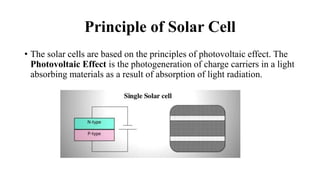
• The solar cells are based on the principles of photovoltaic effect. The
Photovoltaic Effect is the photogeneration of charge carriers in a light
absorbing materials as a result of absorption of light radiation.
Construction of Solar Cell
• Solar cell (crystalline Silicon) consists of a n-type semiconductor
(emitter) layer and p-type semiconductor layer (base). The two
layers are sandwiched and hence there is formation or p-n junction.
• The surface is coated with anti-refection coating to avoid the loss of
incident light energy due to reflection.
• A proper metal contacts are made on the n-type and p-type side of the
semiconductor tar electrical connection.
Working of Solar Cell
Working
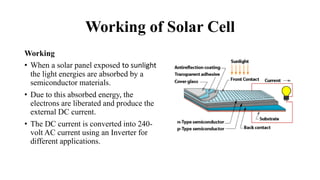
• When a solar panel exposed to sunlight
the light energies are absorbed by a
semiconductor materials.
• Due to this absorbed energy, the
electrons are liberated and produce the
external DC current.
• The DC current is converted into 240-
volt AC current using an Inverter for
different applications.
Comparison of Types of solar cell
Material Efficiency (%)
Monocrystalline silicon 14-17
Polycrystalline silicon 13-15
Amorphous silicon 5-7
Generation of Solar Cell
First Generation-single Junction Silicon Cells
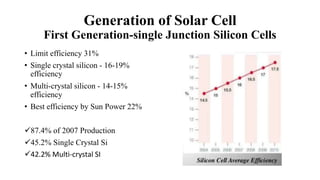
• Limit efficiency 31%
• Single crystal silicon - 16-19%
efficiency
• Multi-crystal silicon - 14-15%
efficiency
• Best efficiency by Sun Power 22%
87.4% of 2007 Production
45.2% Single Crystal Si
42.2% Multi-crystal SI
Second Generation- Thin Film cells
• New materials and processes to improve
efficiency and reduce cost.
• Thin film cells use about 1% of the expensive
semiconductors compared to First Generation
cells.
• Single Crystal Si 4.7% & multi Crystal Si 0.5%
of 2007 Production
• Single Crystal Si has 8-11% efficiency.
• Multi Crystal Si has 7-11%
efficiency.
Third Generation— Multi-junction Cells
• Enhance poor electrical performance while maintaining very low production costs.
• Current research is targeting conversion efficiencies of 30-60% while retaining low cost materials
and manufacturing techniques.
• Multi-junction cells — 30% efficiency (4043% demonstrated)
Types of Solar Cell
 Based on the types of crystal used, soar cells can be classified as,
1. Monocrystalline silicon cells
2. Polycrystalline silicon cells
3. Amorphous silicon cells.
1. The Monocrystalline silicon cell is produced from pure silicon (single crystal). Since the
Monocrystalline silicon is pure and defect free, the efficiency of cell will be higher.
2. In polycrystalline solar cell, liquid silicon is used as raw material and polycrystalline silicon
was obtained followed by solidification process. The materials contain various crystalline sizes.
Hence, the efficiency of this type of cell is less then Monocrystalline cell.
3. Amorphous silicon was obtained by depositing silicon film on the
substrate like glass plate.
The layer thickness amounts to less then 1µm-the thickness of a
human hair for comparison is 50-100 gm.
The efficiency of amorphous cells is much lower then that other two
call types.
As a result, they are used mainly in low power equipment, such as
watches and pocket calculators, or as façade elements.
Advantages of solar cell
• It is clean and non-polluting.
• It is a renewable energy.
• Solar cells do not produce noise and they are totally silent.
• They require very little maintenance.
• They have long life time.
• There are no fuel costs or fuel supply problems.
Disadvantages
• Soar cells (or) solar panels are very expensive.
• Energy has not be stored in batteries.
• Air pollution and whether can affect the production of electricity.
• They need large are of land to produce more efficient power supply.
• Sun does not shine consistently.
• Less efficient and costly equipment.
• Reliability Depends On Location.
Applications of solar energy
• Domestic power supply.
• Electric power generation in space.
• Drying Agricultural Products.
• Solar pumps are used for water supply.
• Water Heating.
• Generating Electrical Power.
• To providing electrical power to satellites.

Solar cell.pptx

  • 1.
  • 2.
    Contents • Introduction • Principleof Solar Cell • Construction of Solar Cell • Working of Solar Cell • Types of Solar Cell • Generation of Solar Cell • Advantages & Disadvantages of Solar Cell • Applications of Solar Energy
  • 3.
    Introduction • Solar cellis the photovoltaic device that convert the light energy (which come from sun) into electrical energy. • This device work on the principle of photovoltaic effect. • Photovoltaic Device:- The generation of voltage across the PN junction in a semiconductor due to the absorption of light radiation is called photovoltaic effect. The Devices based on this effect is called photovoltaic device.
  • 4.
    Principle of SolarCell • The solar cells are based on the principles of photovoltaic effect. The Photovoltaic Effect is the photogeneration of charge carriers in a light absorbing materials as a result of absorption of light radiation.
  • 5.
    Construction of SolarCell • Solar cell (crystalline Silicon) consists of a n-type semiconductor (emitter) layer and p-type semiconductor layer (base). The two layers are sandwiched and hence there is formation or p-n junction. • The surface is coated with anti-refection coating to avoid the loss of incident light energy due to reflection. • A proper metal contacts are made on the n-type and p-type side of the semiconductor tar electrical connection.
  • 6.
    Working of SolarCell Working • When a solar panel exposed to sunlight the light energies are absorbed by a semiconductor materials. • Due to this absorbed energy, the electrons are liberated and produce the external DC current. • The DC current is converted into 240- volt AC current using an Inverter for different applications.
  • 7.
    Comparison of Typesof solar cell Material Efficiency (%) Monocrystalline silicon 14-17 Polycrystalline silicon 13-15 Amorphous silicon 5-7
  • 8.
    Generation of SolarCell First Generation-single Junction Silicon Cells • Limit efficiency 31% • Single crystal silicon - 16-19% efficiency • Multi-crystal silicon - 14-15% efficiency • Best efficiency by Sun Power 22% 87.4% of 2007 Production 45.2% Single Crystal Si 42.2% Multi-crystal SI
  • 9.
    Second Generation- ThinFilm cells • New materials and processes to improve efficiency and reduce cost. • Thin film cells use about 1% of the expensive semiconductors compared to First Generation cells. • Single Crystal Si 4.7% & multi Crystal Si 0.5% of 2007 Production • Single Crystal Si has 8-11% efficiency. • Multi Crystal Si has 7-11% efficiency.
  • 10.
    Third Generation— Multi-junctionCells • Enhance poor electrical performance while maintaining very low production costs. • Current research is targeting conversion efficiencies of 30-60% while retaining low cost materials and manufacturing techniques. • Multi-junction cells — 30% efficiency (4043% demonstrated)
  • 11.
    Types of SolarCell  Based on the types of crystal used, soar cells can be classified as, 1. Monocrystalline silicon cells 2. Polycrystalline silicon cells 3. Amorphous silicon cells. 1. The Monocrystalline silicon cell is produced from pure silicon (single crystal). Since the Monocrystalline silicon is pure and defect free, the efficiency of cell will be higher. 2. In polycrystalline solar cell, liquid silicon is used as raw material and polycrystalline silicon was obtained followed by solidification process. The materials contain various crystalline sizes. Hence, the efficiency of this type of cell is less then Monocrystalline cell.
  • 12.
    3. Amorphous siliconwas obtained by depositing silicon film on the substrate like glass plate. The layer thickness amounts to less then 1µm-the thickness of a human hair for comparison is 50-100 gm. The efficiency of amorphous cells is much lower then that other two call types. As a result, they are used mainly in low power equipment, such as watches and pocket calculators, or as façade elements.
  • 13.
    Advantages of solarcell • It is clean and non-polluting. • It is a renewable energy. • Solar cells do not produce noise and they are totally silent. • They require very little maintenance. • They have long life time. • There are no fuel costs or fuel supply problems.
  • 14.
    Disadvantages • Soar cells(or) solar panels are very expensive. • Energy has not be stored in batteries. • Air pollution and whether can affect the production of electricity. • They need large are of land to produce more efficient power supply. • Sun does not shine consistently. • Less efficient and costly equipment. • Reliability Depends On Location.
  • 15.
    Applications of solarenergy • Domestic power supply. • Electric power generation in space. • Drying Agricultural Products. • Solar pumps are used for water supply. • Water Heating. • Generating Electrical Power. • To providing electrical power to satellites.