INTRODUCTION  TO  SOCIOLOGY
Sociology : Latin word – socius means   “ companion”  or “associate”  Logos –a greek word for “study”.
Definition: It is the study of  association,  group,  society and  social interaction.
cultural  Anthropology Anthropology – the study of all aspects of human life and culture. Anthropology examines such topics as how people live,  what they think
What they produce,  and how they interact with their environments.  Anthropologists try to understand the full range of human diversity as well as what all people share in common.
Anthropologists  asks such basic questions as: When, where, and how did humans evolve?
How do people adapt to different environments?
How have societies developed and changed from the ancient past to the present?
Answers to these questions can help us understand what it means to be human. They can also help us to learn ways to meet the present-day needs of people all over the world and to plan how we might live in the future.
Essential characteristics of sociology 1.  Neutral - ethically neutral and maintains a value-free position.
2. It is concerned with the study of human social life.
3. It is a science A  systematic study of anything that can be examined, tested, and verified.  DEFINE THE PROBLEM FORMULATE HYPOTHESIS PLAN AND DESIGN THE METHOD IMPLEMENT THE METHOD GATHERING OF DATA ANALYSIS OF THE DATA GATHERED MAKING OF  A CONCLUSION PUBLISH THE RESULTS OF THE STUDY
The word  science  is derived from the Latin word  scire , meaning “to know.” From its early beginnings, science has developed into one of the greatest and most influential fields of human endeavor. Today different branches of science investigate almost everything that can be observed or detected, and science as a whole shapes the way we understand the universe, our planet, ourselves, and other living
Importance of sociology 1. Factual information from research will better understand our society and other societies. -understanding Broad-minded Tolerant 2. Learn the application of scientific methods and techniques to our daily life problems. 3. It enables us to see the connection between our personal experiences and the social forces in the bigger social world daily which influences life.
4 .  It furnishes interested people and specialized sciences with principles and scientific data which they can use in their work. 5. It provides insights into the interrelationship of human beings within the group  so that we may live in harmony with others. 6. The results of sociological investigations provide a better background for meeting and solving problems.
7. The results of inquiry can help dispel popular myths, superstitions and stereotypes with accurate knowledge about human behavior and human societies. 8. It broadens our experience as we learn to discard our prejudices and biases as we become more understanding and tolerant of the customs of other people. 9. Results of sociological investigations are useful to government officials, community leaders, entrepreneurs, businessmen, etc.
AREAS OF SOCIOLOGY SOCIAL ORGANIZATION  2. SOCIAL PSYCHOLOGY 3. SOCIAL CHANGE 4. HUMAN ECOLOGY 5. POPULATION STUDIES 6. SOCIOLOGICAL THEORY AND RESEARCH APPLIED SOCIOLOGY
SOCIAL ORGANIZATION * SOCIAL GROUPS * SOCIAL INSTITUTIONS * SOCIAL STRATIFICATIONS    DIVISION OF SOCIETY INTO LEVELS    BASED ON WEALTH OR POWER
* MOBILITY  1. the ability to move about, especially to do work or take exercise  2. change to another social group: the ability of somebody to change from one social group or class to another. * ETHNIC RELATIONS
BUREAUCRACY The term is used mostly in referring to government administration, especially regarding officials in the federal government and civil service. It is often used derogatorily to suggest waste, inefficiency, and red tape.
Pioneers/forerunners of sociology 1.  WROTE HIS IDEAS ABOUT  SOCIETY BASED ON THE       ASSUMPTION THAT THE      LAW OF HUMAN    BEHAVIOR COULD BE  DETERMINED IN THE  MANNER THAT THE LAW OF NATURE HAD BEEN  ARRIVED AT BY NATURAL SCIENTIST. HENRI SAINT-SIMON (1760-1825)
2. A FRENCH PHILOSOPHER WHO ADVOCATED THE IDEA OF “POSITIVISM”   OR THE USE OF EMPIRICAL INVESTIGATION TO  UNDERSTAND SOCIETY AND SOCIAL PHENOMENON. AUGUSTE COMTE (1798-1857)
3. BRITISH PHILOSOPHER-SCIENTIST WHO ARGUED THE IDEA OF “POSITIVISM OR THE USE OF EMPIRICAL INVESTIGATION TO UNDERSTAND SOCIETY AND  SOCIAL  PHENOMENON . HERBERT SPENCER – (1830-1903)
4. A GERMAN PHILOSOPHER WHO BELIEVED THAT THE MISERY AND EXPLOITATION OF THE WORKING LOWER  CLASSES IN SOCIETY  WAS CAUSED BY  CAPITALISM-THE  EXISTING INDUSTRIAL ORDER. KARL MARX (1818-1883 )
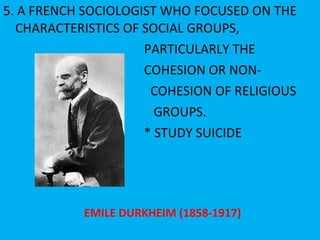
5. A FRENCH SOCIOLOGIST WHO FOCUSED ON THE CHARACTERISTICS OF SOCIAL GROUPS, PARTICULARLY THE  COHESION OR NON- COHESION OF RELIGIOUS GROUPS. * STUDY SUICIDE EMILE DURKHEIM (1858-1917)
6. A GERMAN ECONOMIST-LAWYER WHOSE WORKS DWELT ON THE SIGNIFICANCE OF SUBJECTIVE MEANINGS PEOPLE GIVE TO THEIR  MAX WEBER (1864-1920)
RELATIONSHIP OF SOCIOLOGY TO THE OTHER SCIENCES 1. SOCIOLOGY AND ECONOMICS. A GREAT DEAL OF HUMAN SOCIAL BEHAVIOR IS ECONOMICALLY MOTIVATED. THE DESIRE FOE ECONOMIC GAINS AND POSSESSION OF MATERIAL WEALTH ARE STRONG MOTIVATING FORCES FOR HUMAN BEHAVIOR.
SOCIOLOGY AND ANTHROPOLOGY ANTHROPOLOGY IS THE SCIENCE  WHICH STUDIES MAN BOTH ANIMAL AND AS LIVING IN SOCIETY, HIS ORIGINS, DEVELOPMENT, DISTRIBUTION SOCIAL HABITS AND CULTURES .
SOCIOLOGY AND HISTORY SOCIOLOGY MAKES USE OF DATA AND PIECES OF INFORMATION THAT ARE PROVIDED BY HISTORIANS IN ORDER TO FORM CERTAIN GENERALIZATIONS ABOUT SOCIETY AND SOCIAL  INTERACTIONS.
SOCIOLOGY AND PSYCHOLOGY PSYCHOLOGY IS INTERESTED IN THE STUDY OF WHAT GOES ON “WITHIN” THE INDIVIDUAL, HIS INNER NEEDS, DRIVES, INTERESTS, INTELLIGENCE, MOTIVES, HOPES AND FEARS. SOCIOLOGY IS CONCERNED WITH THE STUDY OF “WHAT GOES ON AMONG AND BETWEEN” PEOPLE, HIS SOCIAL INTERACTIONS , SOCIAL STRUCTURE, VALUES, CUSTOMS, LAWS, MORALS, ETC.
SOCIOLOGY AND POLITICAL SCIENCE SOCIOLOGISTS ARE INTERESTED IN THE STUDY OF THE SOCIAL INTERACTIONS INVOLVED IN HUMAN POLITICAL ACTIVITIES, THE DISTRIBUTION OF POWER IN THE SOCIETY, THE FORMATION OF POLITICAL DYNASTIES, AND THE ROLE OF WOMEN AND ETHNIC GROUPS IN POLITICAL EVENTS.
Angeliqu ea [email_address] Assignment Answer Questions in page 12 letter B from 1-7 exclude #3.

Sociology[1]

  • 1.
    INTRODUCTION TO SOCIOLOGY
  • 2.
    Sociology : Latinword – socius means “ companion” or “associate” Logos –a greek word for “study”.
  • 3.
    Definition: It isthe study of association, group, society and social interaction.
  • 4.
    cultural AnthropologyAnthropology – the study of all aspects of human life and culture. Anthropology examines such topics as how people live, what they think
  • 5.
    What they produce, and how they interact with their environments. Anthropologists try to understand the full range of human diversity as well as what all people share in common.
  • 6.
    Anthropologists askssuch basic questions as: When, where, and how did humans evolve?
  • 7.
    How do peopleadapt to different environments?
  • 8.
    How have societiesdeveloped and changed from the ancient past to the present?
  • 9.
    Answers to thesequestions can help us understand what it means to be human. They can also help us to learn ways to meet the present-day needs of people all over the world and to plan how we might live in the future.
  • 10.
    Essential characteristics ofsociology 1. Neutral - ethically neutral and maintains a value-free position.
  • 11.
    2. It isconcerned with the study of human social life.
  • 12.
    3. It isa science A  systematic study of anything that can be examined, tested, and verified. DEFINE THE PROBLEM FORMULATE HYPOTHESIS PLAN AND DESIGN THE METHOD IMPLEMENT THE METHOD GATHERING OF DATA ANALYSIS OF THE DATA GATHERED MAKING OF A CONCLUSION PUBLISH THE RESULTS OF THE STUDY
  • 13.
    The word science is derived from the Latin word scire , meaning “to know.” From its early beginnings, science has developed into one of the greatest and most influential fields of human endeavor. Today different branches of science investigate almost everything that can be observed or detected, and science as a whole shapes the way we understand the universe, our planet, ourselves, and other living
  • 14.
    Importance of sociology1. Factual information from research will better understand our society and other societies. -understanding Broad-minded Tolerant 2. Learn the application of scientific methods and techniques to our daily life problems. 3. It enables us to see the connection between our personal experiences and the social forces in the bigger social world daily which influences life.
  • 15.
    4 . It furnishes interested people and specialized sciences with principles and scientific data which they can use in their work. 5. It provides insights into the interrelationship of human beings within the group so that we may live in harmony with others. 6. The results of sociological investigations provide a better background for meeting and solving problems.
  • 16.
    7. The resultsof inquiry can help dispel popular myths, superstitions and stereotypes with accurate knowledge about human behavior and human societies. 8. It broadens our experience as we learn to discard our prejudices and biases as we become more understanding and tolerant of the customs of other people. 9. Results of sociological investigations are useful to government officials, community leaders, entrepreneurs, businessmen, etc.
  • 17.
    AREAS OF SOCIOLOGYSOCIAL ORGANIZATION 2. SOCIAL PSYCHOLOGY 3. SOCIAL CHANGE 4. HUMAN ECOLOGY 5. POPULATION STUDIES 6. SOCIOLOGICAL THEORY AND RESEARCH APPLIED SOCIOLOGY
  • 18.
    SOCIAL ORGANIZATION *SOCIAL GROUPS * SOCIAL INSTITUTIONS * SOCIAL STRATIFICATIONS DIVISION OF SOCIETY INTO LEVELS BASED ON WEALTH OR POWER
  • 19.
    * MOBILITY 1. the ability to move about, especially to do work or take exercise 2. change to another social group: the ability of somebody to change from one social group or class to another. * ETHNIC RELATIONS
  • 20.
    BUREAUCRACY The termis used mostly in referring to government administration, especially regarding officials in the federal government and civil service. It is often used derogatorily to suggest waste, inefficiency, and red tape.
  • 21.
    Pioneers/forerunners of sociology1. WROTE HIS IDEAS ABOUT SOCIETY BASED ON THE ASSUMPTION THAT THE LAW OF HUMAN BEHAVIOR COULD BE DETERMINED IN THE MANNER THAT THE LAW OF NATURE HAD BEEN ARRIVED AT BY NATURAL SCIENTIST. HENRI SAINT-SIMON (1760-1825)
  • 22.
    2. A FRENCHPHILOSOPHER WHO ADVOCATED THE IDEA OF “POSITIVISM” OR THE USE OF EMPIRICAL INVESTIGATION TO UNDERSTAND SOCIETY AND SOCIAL PHENOMENON. AUGUSTE COMTE (1798-1857)
  • 23.
    3. BRITISH PHILOSOPHER-SCIENTISTWHO ARGUED THE IDEA OF “POSITIVISM OR THE USE OF EMPIRICAL INVESTIGATION TO UNDERSTAND SOCIETY AND SOCIAL PHENOMENON . HERBERT SPENCER – (1830-1903)
  • 24.
    4. A GERMANPHILOSOPHER WHO BELIEVED THAT THE MISERY AND EXPLOITATION OF THE WORKING LOWER CLASSES IN SOCIETY WAS CAUSED BY CAPITALISM-THE EXISTING INDUSTRIAL ORDER. KARL MARX (1818-1883 )
  • 25.
    5. A FRENCHSOCIOLOGIST WHO FOCUSED ON THE CHARACTERISTICS OF SOCIAL GROUPS, PARTICULARLY THE COHESION OR NON- COHESION OF RELIGIOUS GROUPS. * STUDY SUICIDE EMILE DURKHEIM (1858-1917)
  • 26.
    6. A GERMANECONOMIST-LAWYER WHOSE WORKS DWELT ON THE SIGNIFICANCE OF SUBJECTIVE MEANINGS PEOPLE GIVE TO THEIR MAX WEBER (1864-1920)
  • 27.
    RELATIONSHIP OF SOCIOLOGYTO THE OTHER SCIENCES 1. SOCIOLOGY AND ECONOMICS. A GREAT DEAL OF HUMAN SOCIAL BEHAVIOR IS ECONOMICALLY MOTIVATED. THE DESIRE FOE ECONOMIC GAINS AND POSSESSION OF MATERIAL WEALTH ARE STRONG MOTIVATING FORCES FOR HUMAN BEHAVIOR.
  • 28.
    SOCIOLOGY AND ANTHROPOLOGYANTHROPOLOGY IS THE SCIENCE WHICH STUDIES MAN BOTH ANIMAL AND AS LIVING IN SOCIETY, HIS ORIGINS, DEVELOPMENT, DISTRIBUTION SOCIAL HABITS AND CULTURES .
  • 29.
    SOCIOLOGY AND HISTORYSOCIOLOGY MAKES USE OF DATA AND PIECES OF INFORMATION THAT ARE PROVIDED BY HISTORIANS IN ORDER TO FORM CERTAIN GENERALIZATIONS ABOUT SOCIETY AND SOCIAL INTERACTIONS.
  • 30.
    SOCIOLOGY AND PSYCHOLOGYPSYCHOLOGY IS INTERESTED IN THE STUDY OF WHAT GOES ON “WITHIN” THE INDIVIDUAL, HIS INNER NEEDS, DRIVES, INTERESTS, INTELLIGENCE, MOTIVES, HOPES AND FEARS. SOCIOLOGY IS CONCERNED WITH THE STUDY OF “WHAT GOES ON AMONG AND BETWEEN” PEOPLE, HIS SOCIAL INTERACTIONS , SOCIAL STRUCTURE, VALUES, CUSTOMS, LAWS, MORALS, ETC.
  • 31.
    SOCIOLOGY AND POLITICALSCIENCE SOCIOLOGISTS ARE INTERESTED IN THE STUDY OF THE SOCIAL INTERACTIONS INVOLVED IN HUMAN POLITICAL ACTIVITIES, THE DISTRIBUTION OF POWER IN THE SOCIETY, THE FORMATION OF POLITICAL DYNASTIES, AND THE ROLE OF WOMEN AND ETHNIC GROUPS IN POLITICAL EVENTS.
  • 32.
    Angeliqu ea [email_address]Assignment Answer Questions in page 12 letter B from 1-7 exclude #3.