Social Statusduring Spanish Colonization
Principalia- nobility class was the social and educated class in the towns of colonial Philippines composed of the Gobernadorcillo (Town Mayor), or the Cabeza de Barangay (Chief of the Barangay) who governed the districts and the awardees of the medal of Civil Merit.Exempted from forced labor during the colonial period
Were allowed to vote, be elected to public office and be addressed by the title: Don or Doña
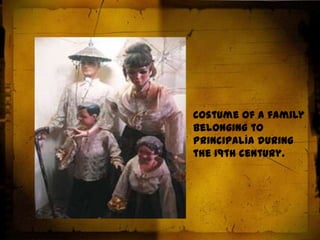
Given certain roles in the Church, such as assisting the priest in pastoral and religious activitiesCostume of a family belonging to Principalía during the 19th century.
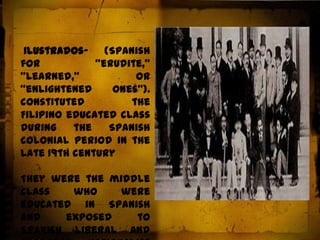
Ilustrados- (Spanish for "erudite," "learned," or "enlightened ones"). constituted the Filipino educated class during the Spanish colonial period in the late 19th centuryThey were the middle class who were educated in Spanish and exposed to Spanish liberal and European nationalist ideals.
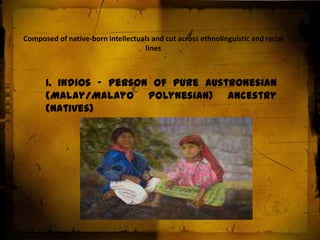
Composed of native-born intellectuals and cut across ethnolinguistic and racial lines1. Indios - person of pure Austronesian (Malay/Malayo Polynesian) ancestry (natives)
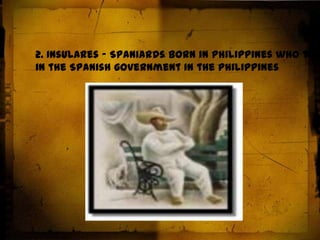
2. Insulares - Spaniards born in Philippines who took important positions in the Spanish government in the Philippines.
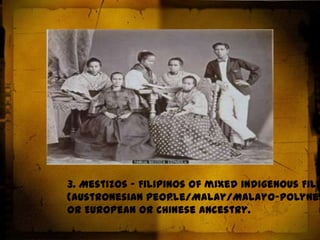
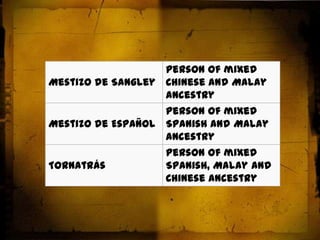
3. Mestizos - Filipinos of mixed indigenous Filipino (Austronesian people/Malay/Malayo-Polynesian), or European or Chinese ancestry.
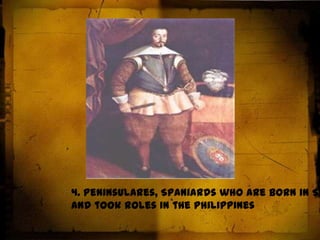
4. Peninsulares, Spaniards who are born in Spain and took roles in the Philippines
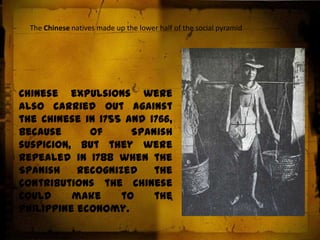
The Chinese natives made up the lower half of the social pyramidChinese expulsions were also carried out against the Chinese in 1755 and 1766, because of Spanish suspicion, but they were repealed in 1788 when the Spanish recognized the contributions the Chinese could make to the Philippine economy. 
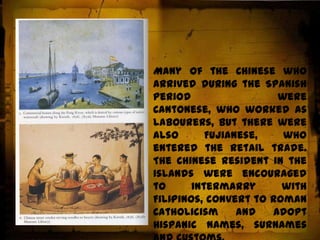
Many of the Chinese who arrived during the Spanish period were Cantonese, who worked as labourers, but there were also Fujianese, who entered the retail trade. The Chinese resident in the islands were encouraged to intermarry with Filipinos, convert to Roman Catholicism and adopt Hispanic names, surnames and customs.
Social TransformationAdoption of Hispanic NamesBased on compiled names of saints, indigenous and Chinese patronymics, flora and fauna, geographical names, and the arts
Filipinos were obligated to adopt surnames like Rizal, Del Pilar or Luna althugh some ndigenous surnames like Mabini, Malantic, Dandan and Paganiban, were retained
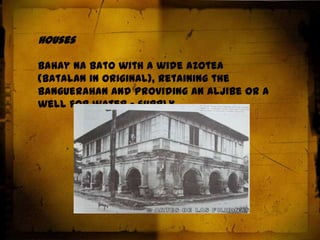
Catagalogoalfabetico de apellidos contained some derogatory names like “Utut”, “Ung-goy”, and even “Casillas”Housesbahaynabato with a wide azotea (batalan in original), retaining the banguerahan and providing an aljibe or a well for water – supply
Foreign CuisinesSpanish indigenized dishes like adobo, menudo, sarciado, puchero or mechado and the Chinise – derived noodle preparations Filipinized into pancitmalabon and pancitluglog
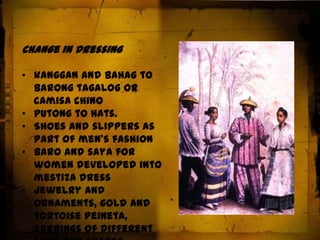
Change in Dressingkangganand bahag to barong tagalog or camisachino

Social status

  • 1.
  • 2.
    Principalia- nobility classwas the social and educated class in the towns of colonial Philippines composed of the Gobernadorcillo (Town Mayor), or the Cabeza de Barangay (Chief of the Barangay) who governed the districts and the awardees of the medal of Civil Merit.Exempted from forced labor during the colonial period
  • 3.
    Were allowed tovote, be elected to public office and be addressed by the title: Don or Doña
  • 4.
    Given certain rolesin the Church, such as assisting the priest in pastoral and religious activitiesCostume of a family belonging to Principalía during the 19th century.
  • 5.
    Ilustrados- (Spanish for"erudite," "learned," or "enlightened ones"). constituted the Filipino educated class during the Spanish colonial period in the late 19th centuryThey were the middle class who were educated in Spanish and exposed to Spanish liberal and European nationalist ideals.
  • 6.
    Composed of native-bornintellectuals and cut across ethnolinguistic and racial lines1. Indios - person of pure Austronesian (Malay/Malayo Polynesian) ancestry (natives)
  • 7.
    2. Insulares -Spaniards born in Philippines who took important positions in the Spanish government in the Philippines.
  • 8.
    3. Mestizos -Filipinos of mixed indigenous Filipino (Austronesian people/Malay/Malayo-Polynesian), or European or Chinese ancestry.
  • 10.
    4. Peninsulares, Spaniardswho are born in Spain and took roles in the Philippines
  • 11.
    The Chinese nativesmade up the lower half of the social pyramidChinese expulsions were also carried out against the Chinese in 1755 and 1766, because of Spanish suspicion, but they were repealed in 1788 when the Spanish recognized the contributions the Chinese could make to the Philippine economy. 
  • 12.
    Many of theChinese who arrived during the Spanish period were Cantonese, who worked as labourers, but there were also Fujianese, who entered the retail trade. The Chinese resident in the islands were encouraged to intermarry with Filipinos, convert to Roman Catholicism and adopt Hispanic names, surnames and customs.
  • 13.
    Social TransformationAdoption ofHispanic NamesBased on compiled names of saints, indigenous and Chinese patronymics, flora and fauna, geographical names, and the arts
  • 14.
    Filipinos were obligatedto adopt surnames like Rizal, Del Pilar or Luna althugh some ndigenous surnames like Mabini, Malantic, Dandan and Paganiban, were retained
  • 15.
    Catagalogoalfabetico de apellidoscontained some derogatory names like “Utut”, “Ung-goy”, and even “Casillas”Housesbahaynabato with a wide azotea (batalan in original), retaining the banguerahan and providing an aljibe or a well for water – supply
  • 16.
    Foreign CuisinesSpanish indigenizeddishes like adobo, menudo, sarciado, puchero or mechado and the Chinise – derived noodle preparations Filipinized into pancitmalabon and pancitluglog
  • 17.
    Change in Dressingkangganandbahag to barong tagalog or camisachino