Charmaine Escolano
Marinel Santiago
Zyraville Cañelas
Gladys Joy Garcia
Anne Rhea Barrera
Anna Marie Magalang

Lorilie Pineda
Genie Vitor

Dhulce Torcuator
Jonalyn Santos
Diana Vergaño
Jessica Soriano
Charmaine
Escolano

Cultural
Changes and
Identity (16001800)
 Culture and the many changes in the are

played a crucial role in maintaining Spanish
rule in the Philippines. Spanish influence made
its impact on the indigenous culture. Change in
Filipino names, Intermarriage, The plaza
complex, Fiestas and other religious rituals,
Forms of amusement, Attire, Ornaments,
House styles, Paintings, Education Spanish
cultural influence kept the Indio's generally
submissive. Spanish Influence The Spanish way
of life was introduced: their cooking, clothing,
eating habits, forms of amusement, Spanish
words, Christianity The new culture which was
Spanish and Filipino in origin, has now become
recognizable Filipino.
Marinel
Santiago

Changes in
Filipino
Name
 Before the coming of Spaniards, Filipinos had

no surnames.
 The Spaniards, at first, made little changes in
the names of the Filipinos.
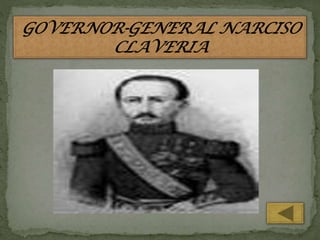
 To put an end to this confusion, GOVERNORGENERAL NARCISO CLAVERIA issued a
decree in 1849 allowing the Filipinos to change
their name.
 A few Filipinos, however, continued to use
their Filipino names although they adopted
Christian names.
Zyraville
Cañelas

Intermarriage
& Social Life
• Intermarriage
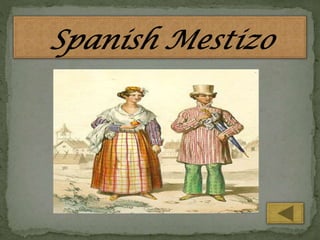
• There were very few record marriages between a

Filipino male and a Spanish female. The child of the
marriage of a Filipino and a Spaniard was called

Spanish Mestizo.

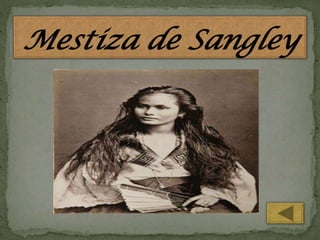
• Toward the end of the Spanish period, the word

“Mestizo” was also used to refer to children of a
male Chinese and a native woman, as in Mestiza de

Sangley.’

• During the end of the nineteenth century, the term

“Mestizo” referred to Spanish Mestizo or Mestiza.
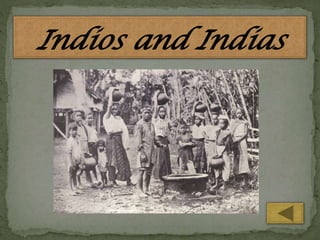
• Those who belonged to the pure indigenous stock
were called “Indios” or “Indias”
 Social Life
 During the Spanish times, the social

community revolved around the Church.
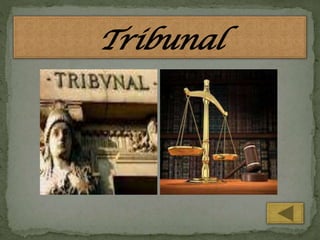
 Beside the church was the Municipal
building called tribunal where the
Gobernadorcillo or captain held office.
 The Pista or Fiesta gave the Filipinos a
day or so of relaxation from their toils in
the farm.
 Committees created by the captain with
the consent of the friar-curate , were
charged with preparing the program of
activities: the staging of plays called

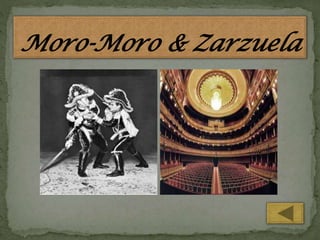
Moro-Moro or Comedia and Zarzuela.
Mestiza de Sangley
Indios and Indias
Tribunal
Moro-Moro & Zarzuela
Gladys Joy
Garcia
Amusement
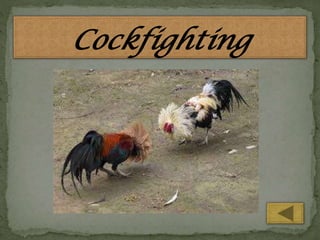
 Cockfighting

-was the principal form of entertainment of
the Filipino men
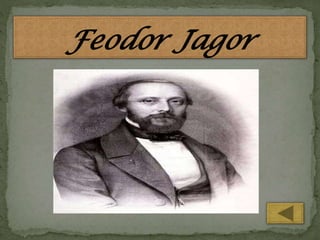
 Feodor

Jagor

- is a German Scientist
- the Filipino used cockfighting as
amusement and as form of gambling
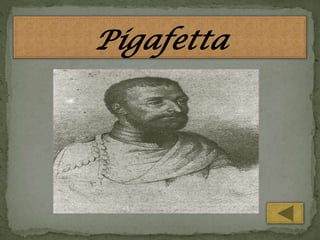
 Pigafetta

-the chronicler of the Magellan expedition
Cockfighting
Feodor Jagor
Pigafetta
 Soltada

llamado
• Kareo
• Ruweda
 These games included

panggingge
• Monte
• Tres siete
•

sentiyador
pusta
dihado
 Lottery

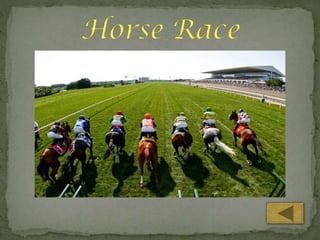
 Horse race

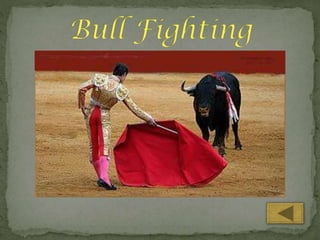
 Bullfighting

 Bullfights-were held in what is now Claro

M. Recto near the Cinerama Theater , then
in Paco and finally in Pasay
 Juego de Prenda -held with mourners
playing cards
 Duplo -ninth day after the death of a
person
 Bellaco - called between two men or

between a man

•

Bellaca - called a woman
Anne Rhea
Barrera

Changes in
Clothing


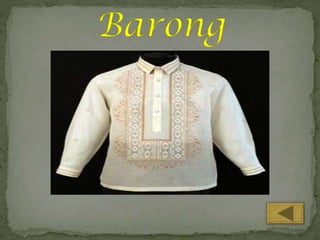
Barong
∞ or popularly called barong Tagalog.

∞ began to be worn at this time by the ordinary
menfolk.
∞ unlike the European and Spanish shirt that
was tucked in, the barong was loosely worn to
distinguish the natives from the foreigners.


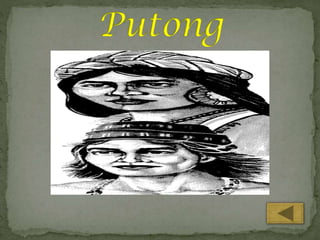
Putong

∞ is the indigenous counterpart for male
headgear or hat, consisting of a cloth wrapped on
one’s head or a round or rectangular shaped hat.
∞ the Filipino male learned to wear putong or
hats.
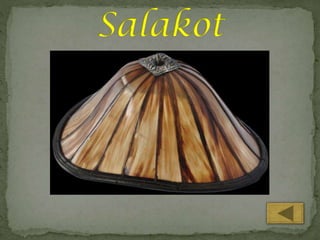
 The Capitan or Gobernadorcillo wear a

salakot with a silvertop.
∞ he also wore a coat over a long shirt, and
carried a gold-hilted cane.
∞ this was a symbol of authority as Capitan.
 Filipinos wore slipper or shoes, but the poor
people went about barefooted.
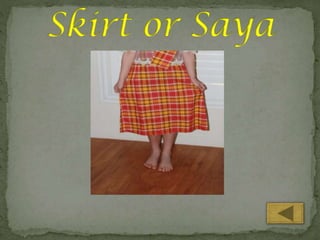
 Women wore skirt or saya, tapis, and the
patadyong.
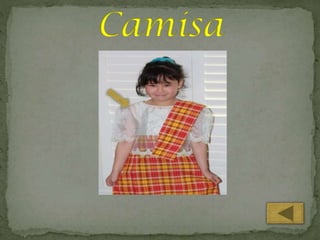
∞ they learned to wear a camisa in a spanish
way.
∞ Camisa was made of fine material such as
husi or pinya.
∞ they also learned to wear shoes and
slippers.
Anna Marie
Magalang

The
Mestiza
Dress
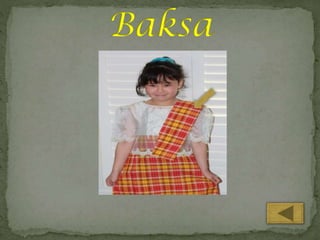
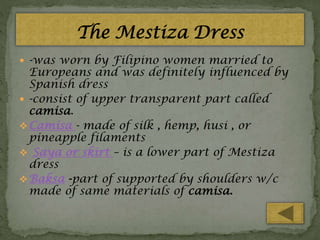
 -was worn by Filipino women married to

Europeans and was definitely influenced by
Spanish dress
 -consist of upper transparent part called
camisa.
 Camisa - made of silk , hemp, husi , or
pineapple filaments
 Saya or skirt – is a lower part of Mestiza
dress
 Baksa -part of supported by shoulders w/c
made of same materials of camisa.
Lorilie Pineda
The
Antillean
Houses
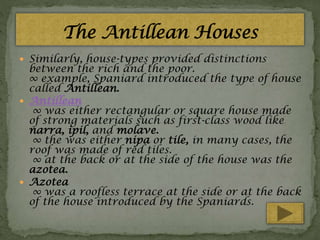
 Similarly, house-types provided distinctions

between the rich and the poor.
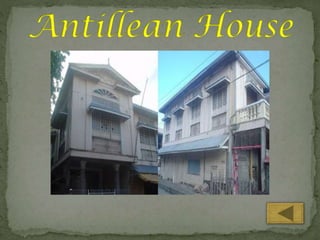
∞ example, Spaniard introduced the type of house
called Antillean.
 Antillean
∞ was either rectangular or square house made
of strong materials such as first-class wood like
narra, ipil, and molave.
∞ the was either nipa or tile, in many cases, the
roof was made of red tiles.
∞ at the back or at the side of the house was the
azotea.
 Azotea
∞ was a roofless terrace at the side or at the back
of the house introduced by the Spaniards.
 The ordinary Filipino house during the

Spanish period had a banggera (probably
from the Spanish banquera or frame), on
which clean plates, cups, and other things
were placed.
∞ then the ladder was improved and the
stairs were, in some cases, made of wood.
∞ of course, bamboo ladder continued to be
in use.
∞ another improvement was the addition of
the balcon, which was a sort of gallery where
members of the family could sit and look at
the people passing by.
Genie Vitor
The position
of women
 The Position of Women Men and women were

treated equally, before the Spanish conquest. But
during Spanish times the women existed as
dependents of men. They could not sell the
property they inherited from their parents before
their marriage without the consent of their
husbands. The friar-curates taught the Filipino
women to be very obedient to their husbands,
even if their husbands were cruel and immortal.
Taught how to be independent, how to help the
husbands in earning more for the family. During
the Spanish period, the women lived to raise
children
Dhulce
Torcuator

A common
religion and
Geographical
identity
A common religion and Geographical
identity
Jonalyn
Santos

The influence of
the Spaniards
Language &
Printing and
Engraving
The influence of the Spaniards Language
& Printing and Engraving
 THE INFLUENCE OF THE SPANISH LANGUAGE
• Spanish words

∞ Silla
∞ mesa
∞ cama
 Languages incorporated into the Philippines
∞ Hilagaynon
∞ Bicolano
∞ Ilocano
∞ Sugbuhanon
∞ Tagalog
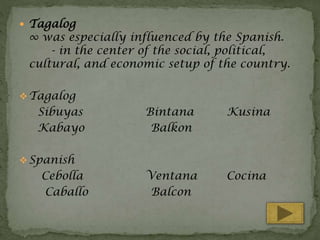
 Tagalog

∞ was especially influenced by the Spanish.
- in the center of the social, political,
cultural, and economic setup of the country.

 Tagalog

Sibuyas
Kabayo

Bintana
Balkon

Kusina

Ventana
Balcon

Cocina

 Spanish

Cebolla
Caballo
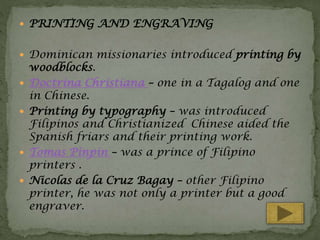
 PRINTING AND ENGRAVING
 Dominican missionaries introduced printing by







woodblocks.
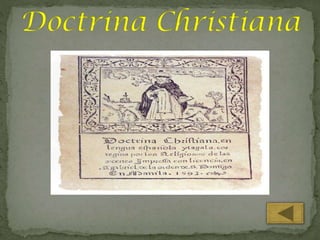
Doctrina Christiana – one in a Tagalog and one
in Chinese.
Printing by typography – was introduced
Filipinos and Christianized Chinese aided the
Spanish friars and their printing work.
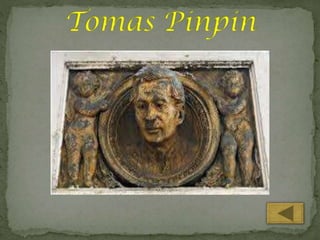
Tomas Pinpin – was a prince of Filipino
printers .
Nicolas de la Cruz Bagay – other Filipino
printer, he was not only a printer but a good
engraver.
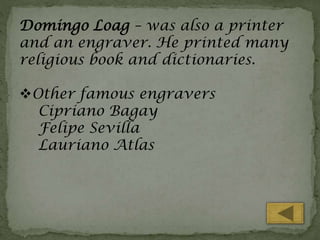
Domingo Loag – was also a printer
and an engraver. He printed many
religious book and dictionaries.
Other famous engravers
Cipriano Bagay
Felipe Sevilla
Lauriano Atlas
Diana
Vergaño
Education
Education
● During the early period of Spanish rule, education
was not available to the majority of Filipinos.
∞ But on the second half op the 19th century, primary
and secondary schools were opened to Filipinos.
∞ Despite of this, many children are afraid to go to
school because the teachers were often times brutal.
∞ With the rise of middle class, many Filipinos were
able to go colleges like San Juan De Letran, San Jose ,
and Ateneo Municipal.
∞ Later these Filipinos were admitted to University
of Sto. Tomas where they finished courses in law
medicine, pharmacy and surveying.
Jessica
Soriano

Impact of
Cultural
Changes
Impact of Cultural Changes
 The overall impact or effects of the cultural

changes brought by Spain in Philippines may
be described as both positive and enriching,
as well as negative and divisive.
Chapter 7 powerpoint

Chapter 7 powerpoint

  • 2.
    Charmaine Escolano Marinel Santiago ZyravilleCañelas Gladys Joy Garcia Anne Rhea Barrera Anna Marie Magalang Lorilie Pineda Genie Vitor Dhulce Torcuator Jonalyn Santos Diana Vergaño Jessica Soriano
  • 3.
  • 4.
     Culture andthe many changes in the are played a crucial role in maintaining Spanish rule in the Philippines. Spanish influence made its impact on the indigenous culture. Change in Filipino names, Intermarriage, The plaza complex, Fiestas and other religious rituals, Forms of amusement, Attire, Ornaments, House styles, Paintings, Education Spanish cultural influence kept the Indio's generally submissive. Spanish Influence The Spanish way of life was introduced: their cooking, clothing, eating habits, forms of amusement, Spanish words, Christianity The new culture which was Spanish and Filipino in origin, has now become recognizable Filipino.
  • 5.
  • 6.
     Before thecoming of Spaniards, Filipinos had no surnames.  The Spaniards, at first, made little changes in the names of the Filipinos.  To put an end to this confusion, GOVERNORGENERAL NARCISO CLAVERIA issued a decree in 1849 allowing the Filipinos to change their name.  A few Filipinos, however, continued to use their Filipino names although they adopted Christian names.
  • 8.
  • 9.
    • Intermarriage • Therewere very few record marriages between a Filipino male and a Spanish female. The child of the marriage of a Filipino and a Spaniard was called Spanish Mestizo. • Toward the end of the Spanish period, the word “Mestizo” was also used to refer to children of a male Chinese and a native woman, as in Mestiza de Sangley.’ • During the end of the nineteenth century, the term “Mestizo” referred to Spanish Mestizo or Mestiza. • Those who belonged to the pure indigenous stock were called “Indios” or “Indias”
  • 10.
     Social Life During the Spanish times, the social community revolved around the Church.  Beside the church was the Municipal building called tribunal where the Gobernadorcillo or captain held office.  The Pista or Fiesta gave the Filipinos a day or so of relaxation from their toils in the farm.  Committees created by the captain with the consent of the friar-curate , were charged with preparing the program of activities: the staging of plays called Moro-Moro or Comedia and Zarzuela.
  • 12.
  • 13.
  • 14.
  • 15.
  • 16.
  • 17.
     Cockfighting -was theprincipal form of entertainment of the Filipino men  Feodor Jagor - is a German Scientist - the Filipino used cockfighting as amusement and as form of gambling  Pigafetta -the chronicler of the Magellan expedition
  • 18.
  • 19.
  • 20.
  • 21.
     Soltada llamado • Kareo •Ruweda  These games included panggingge • Monte • Tres siete • sentiyador pusta dihado
  • 22.
     Lottery  Horserace  Bullfighting  Bullfights-were held in what is now Claro M. Recto near the Cinerama Theater , then in Paco and finally in Pasay  Juego de Prenda -held with mourners playing cards  Duplo -ninth day after the death of a person
  • 26.
     Bellaco -called between two men or between a man • Bellaca - called a woman
  • 27.
  • 28.
     Barong ∞ or popularlycalled barong Tagalog. ∞ began to be worn at this time by the ordinary menfolk. ∞ unlike the European and Spanish shirt that was tucked in, the barong was loosely worn to distinguish the natives from the foreigners.  Putong ∞ is the indigenous counterpart for male headgear or hat, consisting of a cloth wrapped on one’s head or a round or rectangular shaped hat. ∞ the Filipino male learned to wear putong or hats.
  • 29.
     The Capitanor Gobernadorcillo wear a salakot with a silvertop. ∞ he also wore a coat over a long shirt, and carried a gold-hilted cane. ∞ this was a symbol of authority as Capitan.  Filipinos wore slipper or shoes, but the poor people went about barefooted.  Women wore skirt or saya, tapis, and the patadyong. ∞ they learned to wear a camisa in a spanish way. ∞ Camisa was made of fine material such as husi or pinya. ∞ they also learned to wear shoes and slippers.
  • 33.
  • 34.
     -was wornby Filipino women married to Europeans and was definitely influenced by Spanish dress  -consist of upper transparent part called camisa.  Camisa - made of silk , hemp, husi , or pineapple filaments  Saya or skirt – is a lower part of Mestiza dress  Baksa -part of supported by shoulders w/c made of same materials of camisa.
  • 38.
  • 39.
     Similarly, house-typesprovided distinctions between the rich and the poor. ∞ example, Spaniard introduced the type of house called Antillean.  Antillean ∞ was either rectangular or square house made of strong materials such as first-class wood like narra, ipil, and molave. ∞ the was either nipa or tile, in many cases, the roof was made of red tiles. ∞ at the back or at the side of the house was the azotea.  Azotea ∞ was a roofless terrace at the side or at the back of the house introduced by the Spaniards.
  • 41.
     The ordinaryFilipino house during the Spanish period had a banggera (probably from the Spanish banquera or frame), on which clean plates, cups, and other things were placed. ∞ then the ladder was improved and the stairs were, in some cases, made of wood. ∞ of course, bamboo ladder continued to be in use. ∞ another improvement was the addition of the balcon, which was a sort of gallery where members of the family could sit and look at the people passing by.
  • 42.
  • 43.
     The Positionof Women Men and women were treated equally, before the Spanish conquest. But during Spanish times the women existed as dependents of men. They could not sell the property they inherited from their parents before their marriage without the consent of their husbands. The friar-curates taught the Filipino women to be very obedient to their husbands, even if their husbands were cruel and immortal. Taught how to be independent, how to help the husbands in earning more for the family. During the Spanish period, the women lived to raise children
  • 44.
  • 45.
    A common religionand Geographical identity
  • 46.
    Jonalyn Santos The influence of theSpaniards Language & Printing and Engraving
  • 47.
    The influence ofthe Spaniards Language & Printing and Engraving  THE INFLUENCE OF THE SPANISH LANGUAGE • Spanish words ∞ Silla ∞ mesa ∞ cama  Languages incorporated into the Philippines ∞ Hilagaynon ∞ Bicolano ∞ Ilocano ∞ Sugbuhanon ∞ Tagalog
  • 48.
     Tagalog ∞ wasespecially influenced by the Spanish. - in the center of the social, political, cultural, and economic setup of the country.  Tagalog Sibuyas Kabayo Bintana Balkon Kusina Ventana Balcon Cocina  Spanish Cebolla Caballo
  • 49.
     PRINTING ANDENGRAVING  Dominican missionaries introduced printing by     woodblocks. Doctrina Christiana – one in a Tagalog and one in Chinese. Printing by typography – was introduced Filipinos and Christianized Chinese aided the Spanish friars and their printing work. Tomas Pinpin – was a prince of Filipino printers . Nicolas de la Cruz Bagay – other Filipino printer, he was not only a printer but a good engraver.
  • 50.
    Domingo Loag –was also a printer and an engraver. He printed many religious book and dictionaries. Other famous engravers Cipriano Bagay Felipe Sevilla Lauriano Atlas
  • 53.
  • 54.
    Education ● During theearly period of Spanish rule, education was not available to the majority of Filipinos. ∞ But on the second half op the 19th century, primary and secondary schools were opened to Filipinos. ∞ Despite of this, many children are afraid to go to school because the teachers were often times brutal. ∞ With the rise of middle class, many Filipinos were able to go colleges like San Juan De Letran, San Jose , and Ateneo Municipal. ∞ Later these Filipinos were admitted to University of Sto. Tomas where they finished courses in law medicine, pharmacy and surveying.

  • 55.
  • 56.
    Impact of CulturalChanges  The overall impact or effects of the cultural changes brought by Spain in Philippines may be described as both positive and enriching, as well as negative and divisive.