Topic -III
UNIT-II
Social Mobility
 Change in social status
 Characteristics of industrial or urban
society
Definition
 Social mobility refers to movements up and
down in social status (Hartone and Hunt)
 Social status – any change in social position.
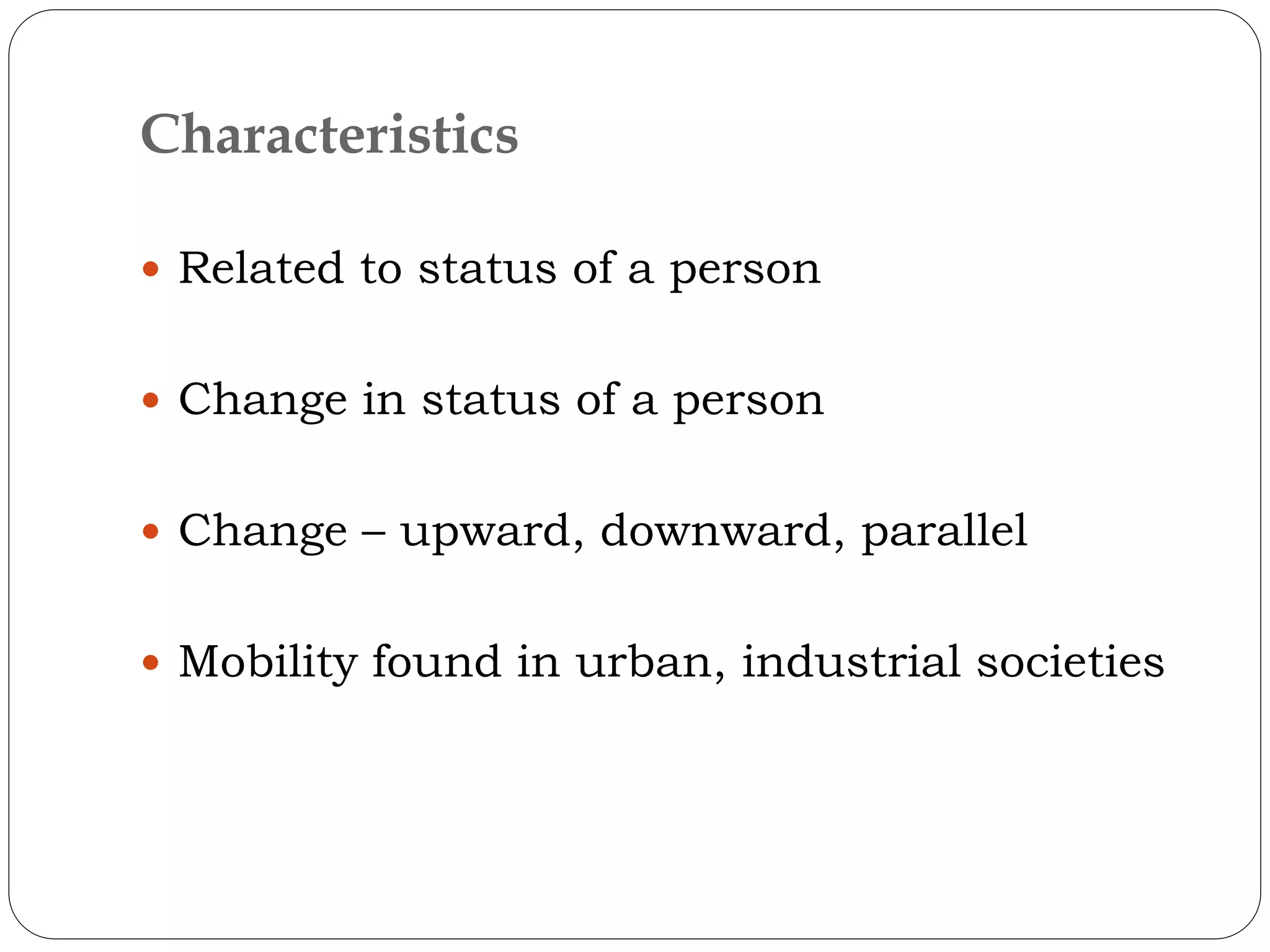
Characteristics
 Related to status of a person
 Change in status of a person
 Change – upward, downward, parallel
 Mobility found in urban, industrial societies
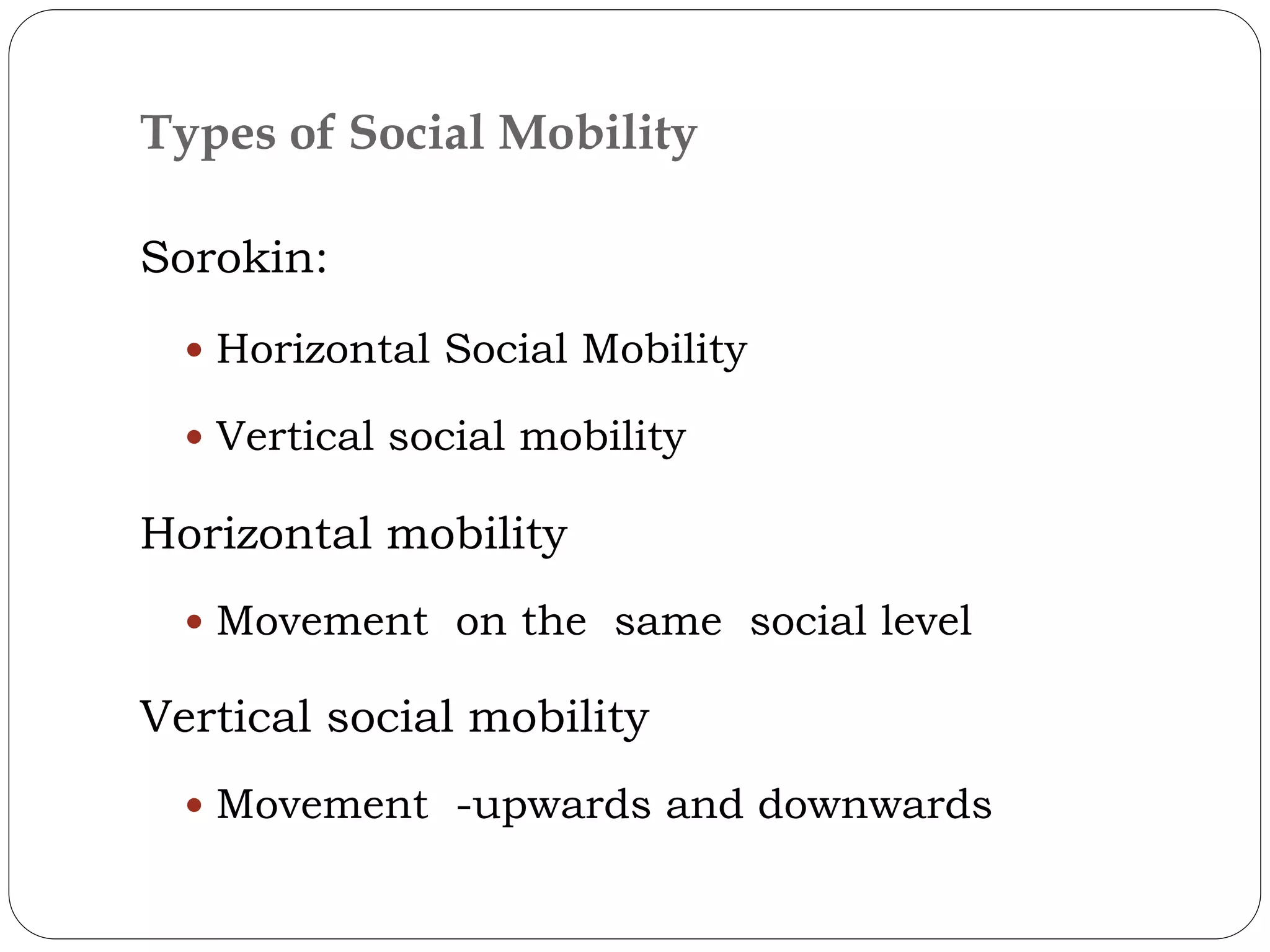
Sorokin:
 Horizontal Social Mobility
 Vertical social mobility
Horizontal mobility
 Movement on the same social level
Vertical social mobility
 Movement -upwards and downwards
Types of Social Mobility
 Intra Religious Mobility
 Inter State Mobility
 Inter Occupational Mobility
 Ascending
 Descending
Types of Horizontal Social Mobility
Types of Vertical Social Mobility
 Change in status and role- leads to change
in class position
 Army
 Religious institutions
 Schools
 Political institutions
 Wealth making organization
 family
Meaning of Vertical Mobility
Sources of Vertical Social Mobility - Sorokin
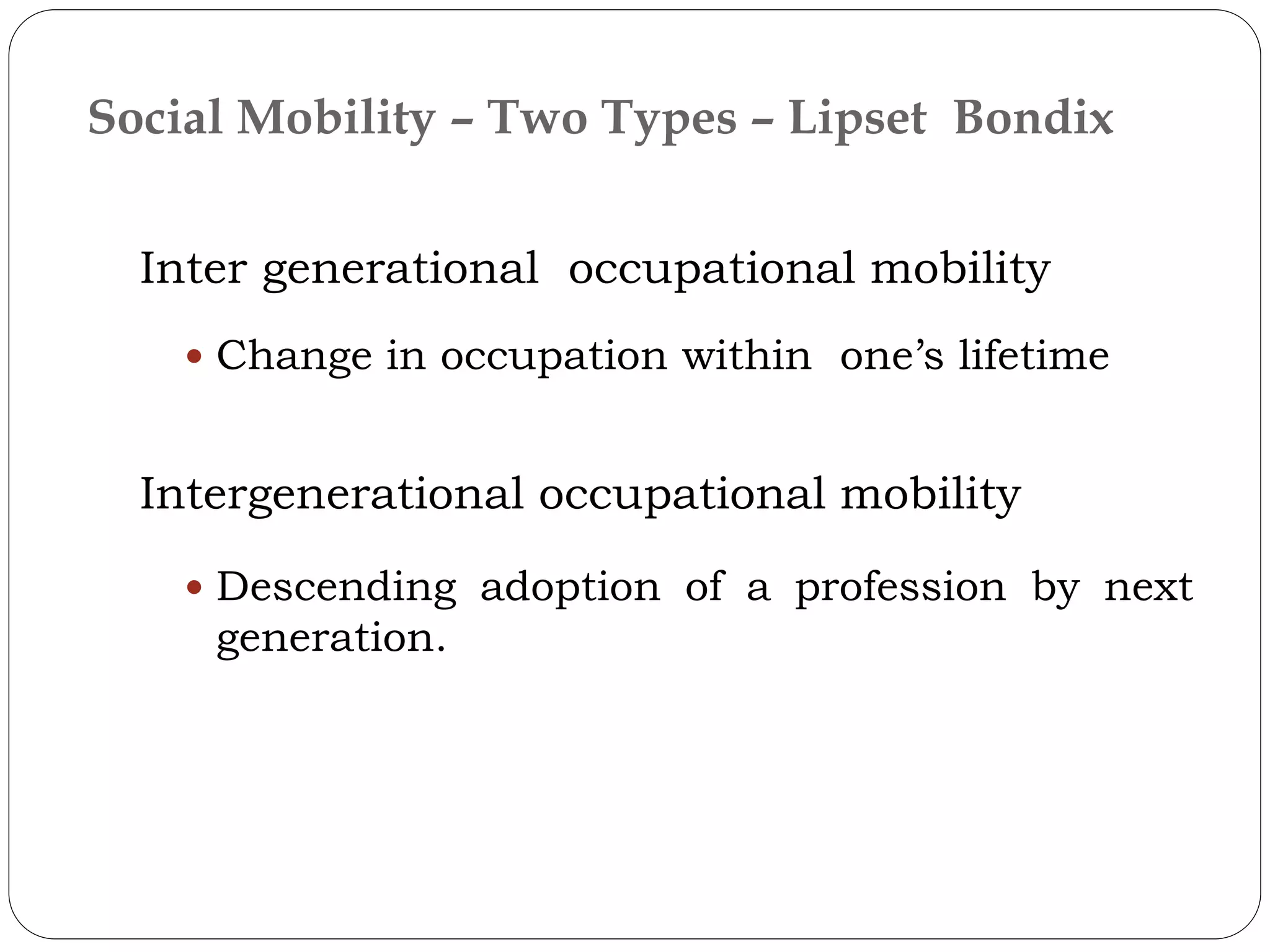
Inter generational occupational mobility
 Change in occupation within one’s lifetime
Intergenerational occupational mobility
 Descending adoption of a profession by next
generation.
Social Mobility – Two Types – Lipset Bondix
 Productive Mobility
 Migratory Mobility
 Technical Mobility
Division into Three Types – J.H. Kohl
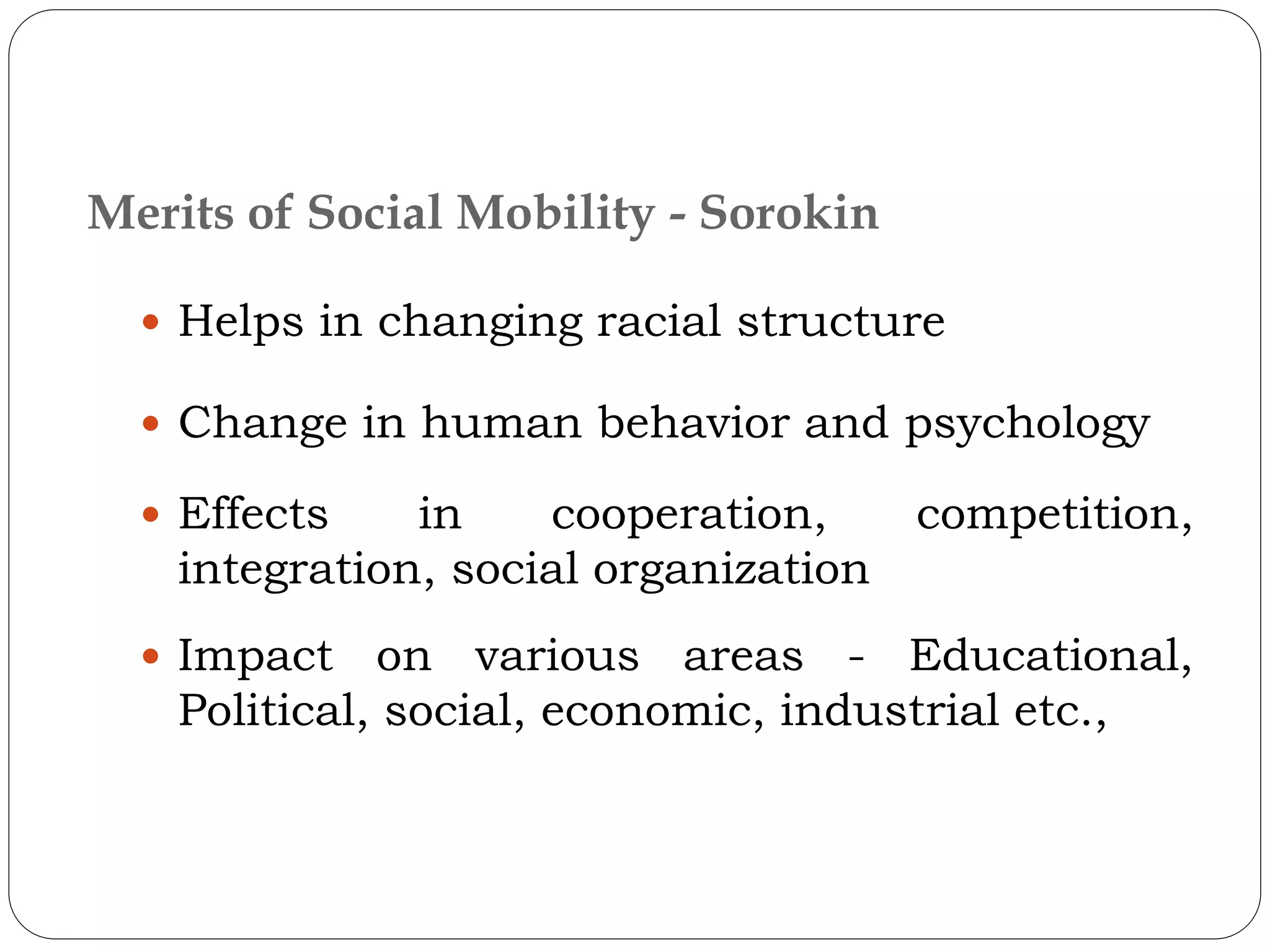
 Helps in changing racial structure
 Change in human behavior and psychology
 Effects in cooperation, competition,
integration, social organization
 Impact on various areas - Educational,
Political, social, economic, industrial etc.,
Merits of Social Mobility - Sorokin

Social mobility (Sociology)

  • 1.
  • 2.
    Social Mobility  Changein social status  Characteristics of industrial or urban society
  • 3.
    Definition  Social mobilityrefers to movements up and down in social status (Hartone and Hunt)  Social status – any change in social position.
  • 4.
    Characteristics  Related tostatus of a person  Change in status of a person  Change – upward, downward, parallel  Mobility found in urban, industrial societies
  • 5.
    Sorokin:  Horizontal SocialMobility  Vertical social mobility Horizontal mobility  Movement on the same social level Vertical social mobility  Movement -upwards and downwards Types of Social Mobility
  • 6.
     Intra ReligiousMobility  Inter State Mobility  Inter Occupational Mobility  Ascending  Descending Types of Horizontal Social Mobility Types of Vertical Social Mobility
  • 7.
     Change instatus and role- leads to change in class position  Army  Religious institutions  Schools  Political institutions  Wealth making organization  family Meaning of Vertical Mobility Sources of Vertical Social Mobility - Sorokin
  • 8.
    Inter generational occupationalmobility  Change in occupation within one’s lifetime Intergenerational occupational mobility  Descending adoption of a profession by next generation. Social Mobility – Two Types – Lipset Bondix
  • 9.
     Productive Mobility Migratory Mobility  Technical Mobility Division into Three Types – J.H. Kohl
  • 10.
     Helps inchanging racial structure  Change in human behavior and psychology  Effects in cooperation, competition, integration, social organization  Impact on various areas - Educational, Political, social, economic, industrial etc., Merits of Social Mobility - Sorokin