Downloaded 10 times
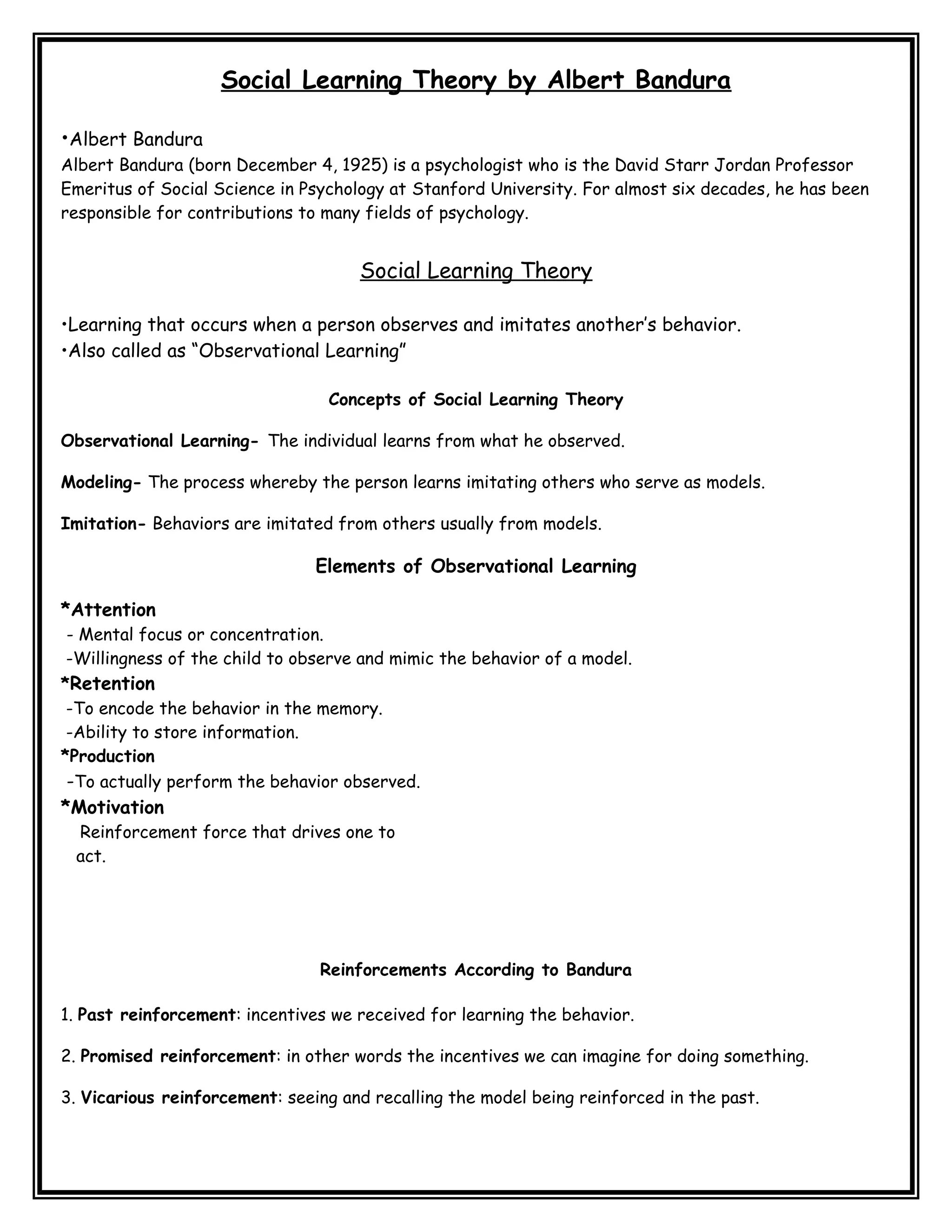


Albert Bandura's social learning theory posits that individuals learn behaviors through observation and imitation, supported by concepts such as attention, retention, production, and motivation. His Bobo doll experiment demonstrated that children's aggression levels varied based on whether they saw a model being rewarded, punished, or neither for aggressive behavior. The theory also emphasizes reciprocal determinism, suggesting behavior is influenced by the environment, the individual, and the behaviors themselves.


