Downloaded 28 times




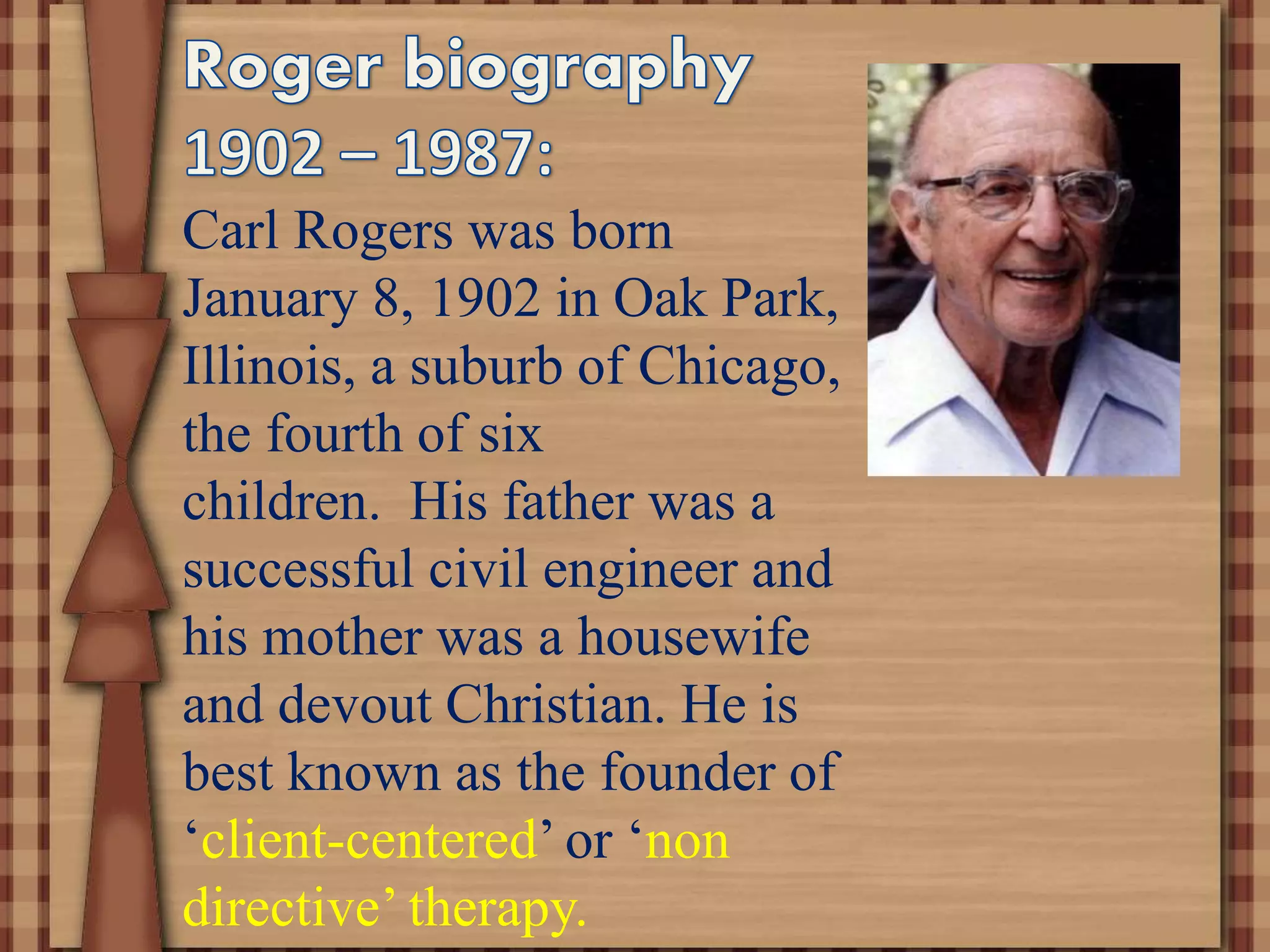

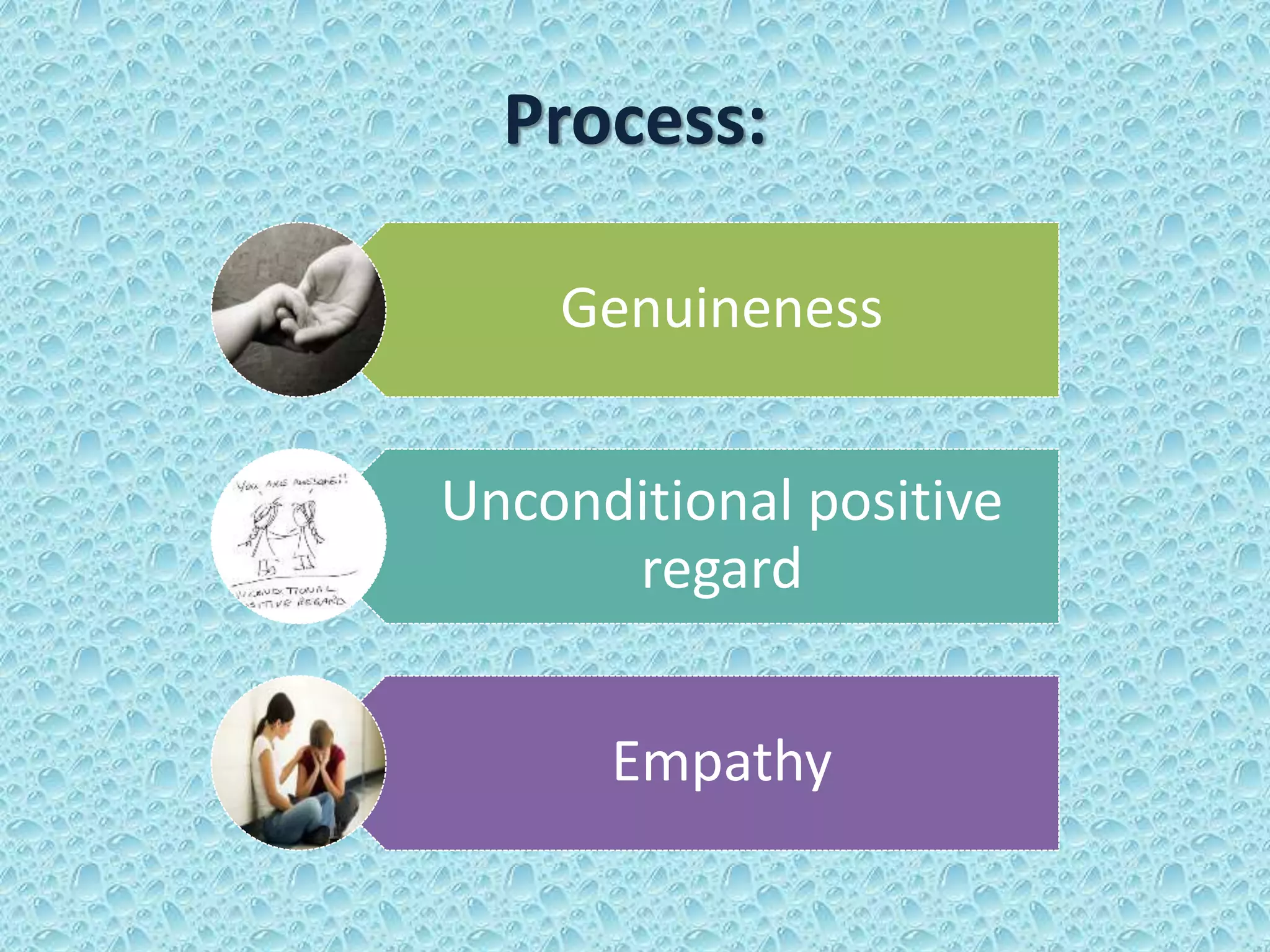






Carl Rogers developed client-centered (also known as person-centered) therapy in the 1930s. In this approach, the therapist takes a nondirective role and aims to foster a supportive relationship where the client can discuss their life in a safe, confidential environment. The therapist's role is to listen attentively and help the client improve problems through clarifying questions. The goal is for clients to develop increased self-esteem, openness to new experiences, and the ability to better cope with life's difficulties.


