This Is Gaurav Singh
 An Independent researcher in social engineering attack.
 Getting into network penetration testing.
 Diploma final year student.
 A Self made Hacker.
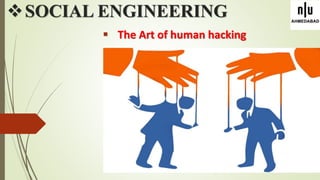
SOCIAL ENGINEERING
 The Art of human hacking
 Introduction to social engineering
 Social Engineering is an act of stealing information from humans.
As it does not have any interaction with target system or network,
it is considered as a non-technical attack.
 Social Engineering is considered as the art of convincing the target
to reveal information. It may be physically one-to-one interaction
with the target or convincing the target on any platform such as
social media is a popular platform for social engineering.
 This is the fact that people are careless, or unaware of the valuable
information they possess.
 Vulnerability to social engineering attacks
 One of the major vulnerability which leads to this of
attack is Trust. The user trust another user and does not
secure their credentials from them. This may lead to an
attack by the user, to the second person may reveal the
information to the third one.
 Ignorance.
 Greed.
 Fear.
 Moral obligation.
 What puts companies on risk of social engineering ?
 Insufficient training to employees.
 Lack of control.
 Technical control.
 Administrative control.
 Physical control.
 Huge in size (many number of Employees).
 Lack of policy.
 Phases of social engineering
 Four basic phases in social engineering.
 Research Target Company (Dumpsters, websites, employees of
target company).
 Choose victim (Identify frustrated employees of target
company).
 Build Relationship (Develop relationship with target employees).
 Exploit relationship (collect sensitive information & current
technologies).
 Social Engineering Techniques
 Types of Social Engineering
 Human-based social engineering
 Impersonation
 Eavesdropping and Shoulder Surfing
 Dumpster Diving
 Reverse Social Engineering
 Piggybacking and Tailgating
 Computer-based Social Engineering
 Phishing
 Spear Phishing
 Mobile-based Social Engineering
 Publishing Malicious Apps
 Repacking Legitimate Apps
 Fake Security Apps
 Impersonation on social networking site
 Impersonation on social networking site is very popular , easy, and
interesting. The malicious user gathers personal information of
target from different source mostly from social networking sites.
 Gathered information includes full name, recent profile picture,
date of birth, residential address, email address, contact details,
professional details, education details as much as he/she can.
 After gathering the information about target, the target, the
attacker creates an account that is exactly the same with the
account on the social networking site. This fake account is then
introduced to friends and groups joined by the target.
 Usually, people do not investigate too much when they get a friend
request, and when they find accurate information, they will
definitely accept the request.
 Once the attacker joined the social media group where a user
shares his personal and organization information, he will get
updates from group. An attacker can also communicate with the
friends of the target user to convince them to reveal information.
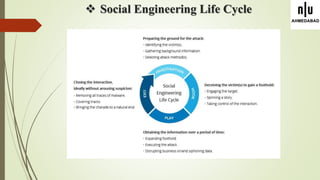
 Social Engineering Life Cycle
 Risk of Social Networking in a Corporate
Networks
 A Social networking site is not secured enough as a corporate
network secures the authenticate, identification, and authorization
of an employee accessing the resource.
 The major risk of social networking is its vulnerability in the
authentication. An attacker may easily manipulate the security
authentication and create a fake account to access the information.
 Any employee may accidentally, and intentionally reveal the
information which may be helpful for the one he is communication
with, or the third person monitoring his conversation. It requires a
need for a strong policy against data leakage.
 Identity Theft
Identity theft Overview
 Identity theft is stealing the identification information of
someone. Identity theft is popularly used for frauds.
 Anyone with malicious intent may steal your identification
by gathering document such as utility bills, personal
information and other relevant information and create a
new ID card to impersonate someone.
 It is not all about and ID card. He may use this information
to prove the fake identity and take advantage.
 The Process of Identity Theft
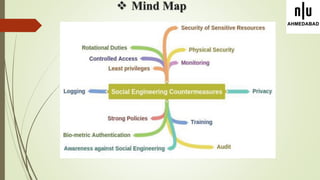
 Social engineering countermeasures
 Configuring strong password.
 Securing passwords.
 Keep them secret.
 Keep monitoring social networking platform.
 Separation of duties.
 CIA.
 Control Access.
 Least privilege.
 Logging and Auditing.
 Policies.
 Archive & Backup
 Mind Map
THANK YOU……
 NULL AHMEDABAD/__i_am_root__
/gaurav-singh-a48048162
/_i_am_root_

Social engineering

  • 1.
    This Is GauravSingh  An Independent researcher in social engineering attack.  Getting into network penetration testing.  Diploma final year student.  A Self made Hacker.
  • 2.
    SOCIAL ENGINEERING  TheArt of human hacking
  • 3.
     Introduction tosocial engineering  Social Engineering is an act of stealing information from humans. As it does not have any interaction with target system or network, it is considered as a non-technical attack.  Social Engineering is considered as the art of convincing the target to reveal information. It may be physically one-to-one interaction with the target or convincing the target on any platform such as social media is a popular platform for social engineering.  This is the fact that people are careless, or unaware of the valuable information they possess.
  • 4.
     Vulnerability tosocial engineering attacks  One of the major vulnerability which leads to this of attack is Trust. The user trust another user and does not secure their credentials from them. This may lead to an attack by the user, to the second person may reveal the information to the third one.  Ignorance.  Greed.  Fear.  Moral obligation.
  • 5.
     What putscompanies on risk of social engineering ?  Insufficient training to employees.  Lack of control.  Technical control.  Administrative control.  Physical control.  Huge in size (many number of Employees).  Lack of policy.
  • 6.
     Phases ofsocial engineering  Four basic phases in social engineering.  Research Target Company (Dumpsters, websites, employees of target company).  Choose victim (Identify frustrated employees of target company).  Build Relationship (Develop relationship with target employees).  Exploit relationship (collect sensitive information & current technologies).
  • 7.
     Social EngineeringTechniques  Types of Social Engineering  Human-based social engineering  Impersonation  Eavesdropping and Shoulder Surfing  Dumpster Diving  Reverse Social Engineering  Piggybacking and Tailgating
  • 8.
     Computer-based SocialEngineering  Phishing  Spear Phishing  Mobile-based Social Engineering  Publishing Malicious Apps  Repacking Legitimate Apps  Fake Security Apps
  • 9.
     Impersonation onsocial networking site  Impersonation on social networking site is very popular , easy, and interesting. The malicious user gathers personal information of target from different source mostly from social networking sites.  Gathered information includes full name, recent profile picture, date of birth, residential address, email address, contact details, professional details, education details as much as he/she can.  After gathering the information about target, the target, the attacker creates an account that is exactly the same with the account on the social networking site. This fake account is then introduced to friends and groups joined by the target.
  • 10.
     Usually, peopledo not investigate too much when they get a friend request, and when they find accurate information, they will definitely accept the request.  Once the attacker joined the social media group where a user shares his personal and organization information, he will get updates from group. An attacker can also communicate with the friends of the target user to convince them to reveal information.
  • 11.
  • 12.
     Risk ofSocial Networking in a Corporate Networks  A Social networking site is not secured enough as a corporate network secures the authenticate, identification, and authorization of an employee accessing the resource.  The major risk of social networking is its vulnerability in the authentication. An attacker may easily manipulate the security authentication and create a fake account to access the information.  Any employee may accidentally, and intentionally reveal the information which may be helpful for the one he is communication with, or the third person monitoring his conversation. It requires a need for a strong policy against data leakage.
  • 13.
     Identity Theft Identitytheft Overview  Identity theft is stealing the identification information of someone. Identity theft is popularly used for frauds.  Anyone with malicious intent may steal your identification by gathering document such as utility bills, personal information and other relevant information and create a new ID card to impersonate someone.  It is not all about and ID card. He may use this information to prove the fake identity and take advantage.
  • 14.
     The Processof Identity Theft
  • 15.
     Social engineeringcountermeasures  Configuring strong password.  Securing passwords.  Keep them secret.  Keep monitoring social networking platform.  Separation of duties.  CIA.  Control Access.  Least privilege.  Logging and Auditing.  Policies.  Archive & Backup
  • 16.
  • 17.
    THANK YOU……  NULLAHMEDABAD/__i_am_root__ /gaurav-singh-a48048162 /_i_am_root_