SPANISH EXPLORERS
and
Life in the Spanish
Colonies
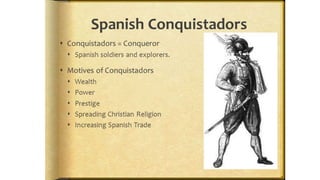
1. Conquistador – a Spanish explorer
2. Mission – a religious community
3. Presidio – a military fort
4. Encomienda – the Spanish government’s policy to “give” Native Americans as
laborers to certain colonists
5. Plantation – a large estate
6. Smallpox – an acute, contagious, viral disease
7. Indigenous – originating naturally in a place; native; associated with a land by
birth
PRESIDIO
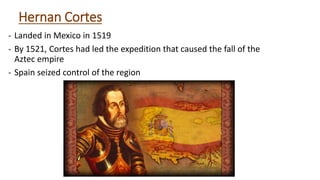
Hernan Cortes
- Landed in Mexico in 1519
- By 1521, Cortes had led the expedition that caused the fall of the
Aztec empire
- Spain seized control of the region
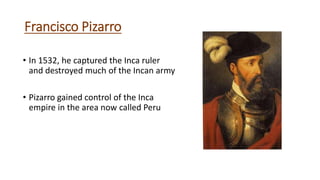
Francisco Pizarro
• In 1532, he captured the Inca ruler
and destroyed much of the Incan army
• Pizarro gained control of the Inca
empire in the area now called Peru
*By the 1600s, The Europeans had
unknowingly brought diseases such
as smallpox to the Americas
*The Native Americans had no
immunity to these illnesses
*Epidemics weakened the
Native Americans against resistance
to the Europeans
Juan Ponce de Leon
• In 1508, he was sent by Spain to explore the island of Puerto Rico
• In 1513 he left Puerto Rico in search of gold and the fabled “Fountain
of Youth”
• He landed on the East Coast of Florida, not realizing that he had
reached North America
• de Leon called the land “Florida” because of its lush plant life
Hernando de Soto
• Led an expedition to Florida
and lands to the west
• During their three year journey,
de Soto and his men demanded food
and supplies from the Native people,
and often took a Native chief hostage
• In 1541, de Soto became the first
European to cross the Mississippi River
Francisco de Coronado
• Searched for the “Seven Cities of Cibola” (aka “Seven Cities of Gold”)
• He found no gold on his expedition; however, in 1540 his team discovered the
Grand Canyon
SPAIN IN AMERICA
• Spanish law demanded three types of settlements in the Americas:
• Pueblos – towns which were the centers of trade
• Missions – religious communities which included a town,
farmland, and a church
• Presidios – military settlements often built near a mission
• A class system developed:
- Peninsulares were the upper class. These people were Spanish-born.
They owned land, served in the church, and ran the government
- Creoles were born in the Americas to Spanish-born parents
- Mestizos were of Spanish and Native American heritage
- The Native Americans were kept in poverty, and were taxed and
enslaved by the Spanish settlers
- Enslaved Africans were the lowest social class. Spain had held slaves
since 1501, and had brought them across the Atlantic
• Each conquistador was granted an encomienda
• This gave them the right to demand taxes or labor from the Native Americans
living on the land
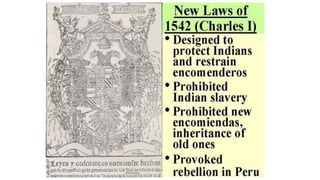
• Bartolome de las Casas, a Spanish priest,
condemned the cruel treatment of the
Native Americans
• He worked against the oppression
of indigenous people
• In 1542, the Spanish Government passed
the New Laws, which forbade the Spanish
settlers to make slaves of the Native Americans
• Some Spanish settlers developed a plantation system
• They grew crops of tobacco and sugarcane on their large estates, and
exported them to Spain
• They had used the Native Americans to work on the plantations
• After the New Laws were passed, the Native Americans were replaced with
African slaves
• By the late 1500s, slave labor on the plantations was a major part of the
economy in the Spanish colonies
Soc studies #6 spanish explorers

Soc studies #6 spanish explorers

  • 1.
    SPANISH EXPLORERS and Life inthe Spanish Colonies
  • 2.
    1. Conquistador –a Spanish explorer 2. Mission – a religious community 3. Presidio – a military fort 4. Encomienda – the Spanish government’s policy to “give” Native Americans as laborers to certain colonists 5. Plantation – a large estate 6. Smallpox – an acute, contagious, viral disease 7. Indigenous – originating naturally in a place; native; associated with a land by birth
  • 3.
  • 5.
    Hernan Cortes - Landedin Mexico in 1519 - By 1521, Cortes had led the expedition that caused the fall of the Aztec empire - Spain seized control of the region
  • 6.
    Francisco Pizarro • In1532, he captured the Inca ruler and destroyed much of the Incan army • Pizarro gained control of the Inca empire in the area now called Peru
  • 7.
    *By the 1600s,The Europeans had unknowingly brought diseases such as smallpox to the Americas *The Native Americans had no immunity to these illnesses *Epidemics weakened the Native Americans against resistance to the Europeans
  • 8.
    Juan Ponce deLeon • In 1508, he was sent by Spain to explore the island of Puerto Rico • In 1513 he left Puerto Rico in search of gold and the fabled “Fountain of Youth” • He landed on the East Coast of Florida, not realizing that he had reached North America • de Leon called the land “Florida” because of its lush plant life
  • 10.
    Hernando de Soto •Led an expedition to Florida and lands to the west • During their three year journey, de Soto and his men demanded food and supplies from the Native people, and often took a Native chief hostage • In 1541, de Soto became the first European to cross the Mississippi River
  • 11.
    Francisco de Coronado •Searched for the “Seven Cities of Cibola” (aka “Seven Cities of Gold”) • He found no gold on his expedition; however, in 1540 his team discovered the Grand Canyon
  • 12.
    SPAIN IN AMERICA •Spanish law demanded three types of settlements in the Americas: • Pueblos – towns which were the centers of trade • Missions – religious communities which included a town, farmland, and a church • Presidios – military settlements often built near a mission
  • 13.
    • A classsystem developed: - Peninsulares were the upper class. These people were Spanish-born. They owned land, served in the church, and ran the government - Creoles were born in the Americas to Spanish-born parents - Mestizos were of Spanish and Native American heritage - The Native Americans were kept in poverty, and were taxed and enslaved by the Spanish settlers - Enslaved Africans were the lowest social class. Spain had held slaves since 1501, and had brought them across the Atlantic
  • 14.
    • Each conquistadorwas granted an encomienda • This gave them the right to demand taxes or labor from the Native Americans living on the land
  • 16.
    • Bartolome delas Casas, a Spanish priest, condemned the cruel treatment of the Native Americans • He worked against the oppression of indigenous people • In 1542, the Spanish Government passed the New Laws, which forbade the Spanish settlers to make slaves of the Native Americans
  • 18.
    • Some Spanishsettlers developed a plantation system • They grew crops of tobacco and sugarcane on their large estates, and exported them to Spain • They had used the Native Americans to work on the plantations • After the New Laws were passed, the Native Americans were replaced with African slaves • By the late 1500s, slave labor on the plantations was a major part of the economy in the Spanish colonies