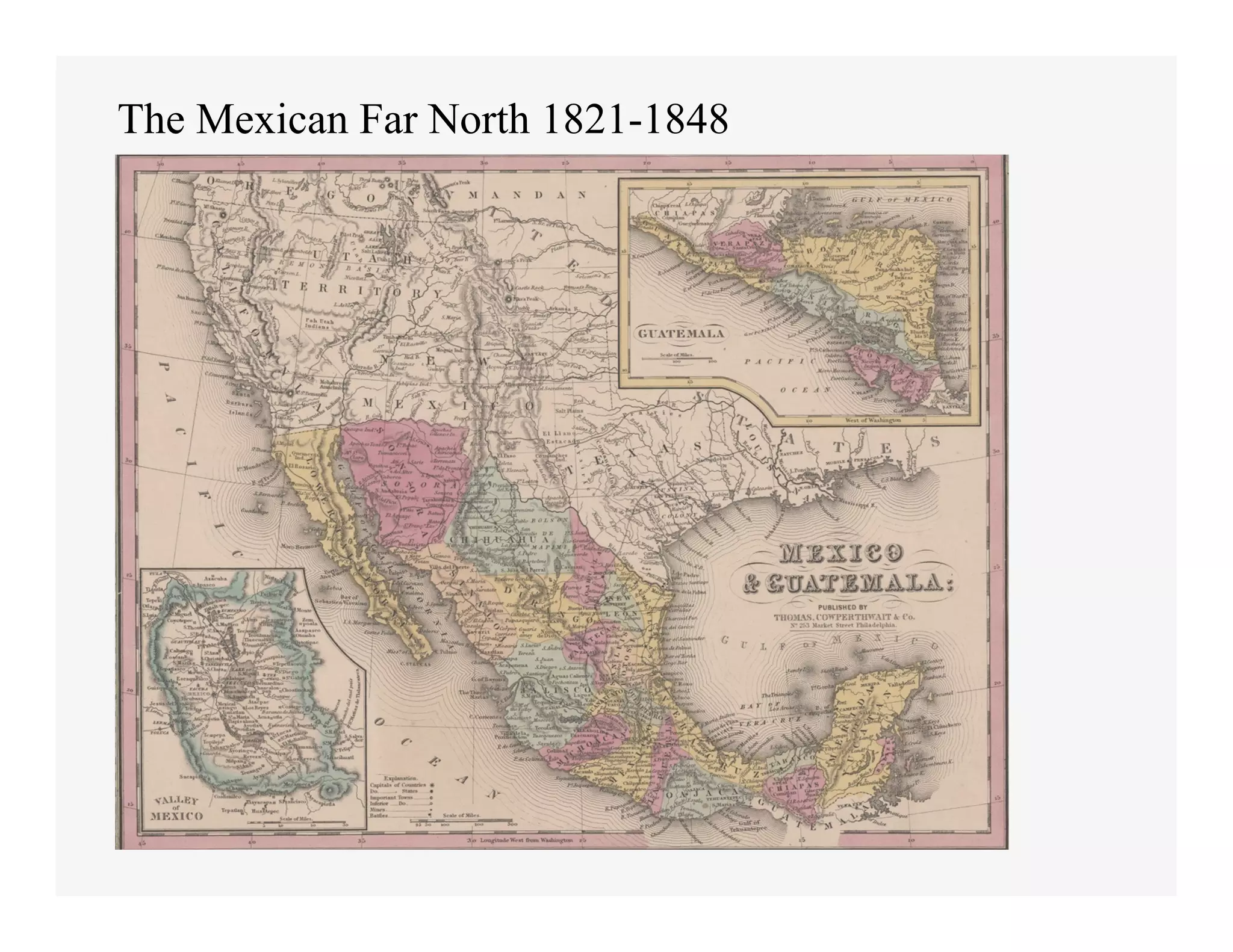
The Mexican Far North 1821-1848
The Eve of Mexican Independence


•  Was there at the eve of the Mexican Revolution of 1810 a national identity?


•  Three hundred years of mercantilism had left Mexico without its own
   commercial or manufacturing infrastructure.


•  The Church owned between one-quarter and one-half of the land and
   controlled most schools, hospitals, and charitable institutions.
The Eve of Mexican Independence


•  Criollo and Mestizo discontent towards “peninsulares” or “gachupines”

•  Interest for independence increased with the successful revolt of the
   English colonist to the north

•  Haiti’s & the French revolution

•  1807-1808 French under the command of Napoleon occupy the Iberian
   peninsula
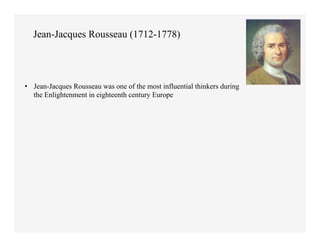
Jean-Jacques Rousseau (1712-1778)


•  Jean-Jacques Rousseau was one of the most influential thinkers during
   the Enlightenment in eighteenth century Europe
Political Ideologies During the 19th Century
                              	
  
       Liberals                           Conservatives

•  Influenced by the the French        •  Or aka Royalist wanted to remain
   Revolution, wanted to end              royal to the interest of the Spanish
   privileges and secularize Mexico.      Crown.

•  Anti-clericalism was a central      •  The clergy saw Liberalism as
   tenet                                  “God less” ideology.

•  Criollos, and Mestizos tended to    •  Peninsulares, or clergy tended to
   fall under this category               fall under this category


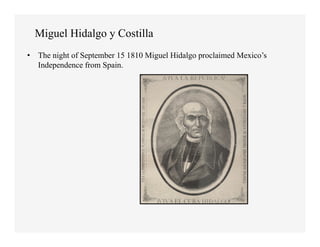
Miguel Hidalgo y Costilla
•  The night of September 15 1810 Miguel Hidalgo proclaimed Mexico’s
   Independence from Spain.
Post-independence Mexico and the Rise of Caudillos


•  Between 1833 and August 1855 the presidency in Mexico changed
   hands thirty-six times, the average term being about seven and a half
   months.


•  The first caudillos were often generals who, leading private armies, used
     their military might to achieve power in the newly independent states.


•  The borderlands would see a resurgence of the Indian threat due to the
   lack of military presence in the region. 	
  
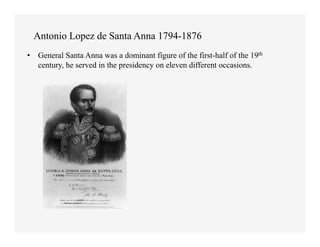
Antonio Lopez de Santa Anna 1794-1876
•  General Santa Anna was a dominant figure of the first-half of the 19th
   century, he served in the presidency on eleven different occasions.
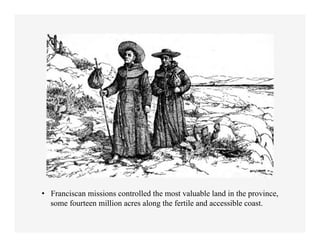
•  Franciscan missions controlled the most valuable land in the province,
   some fourteen million acres along the fertile and accessible coast.
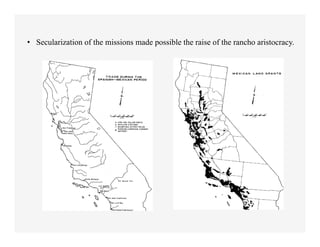
•  Secularization of the missions made possible the raise of the rancho aristocracy.
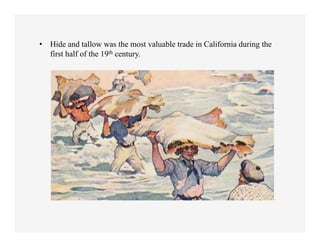
•  Hide and tallow was the most valuable trade in California during the
   first half of the 19th century.
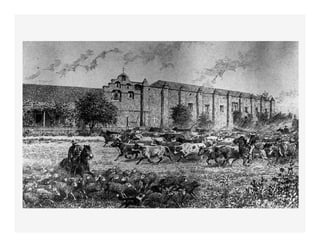
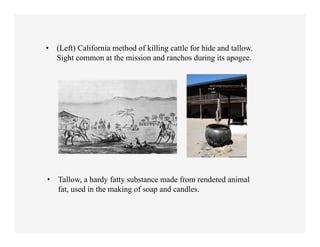
•  (Left) California method of killing cattle for hide and tallow.
   Sight common at the mission and ranchos during its apogee.


   •  Tallow, a hardy fatty substance made from rendered animal
      fat, used in the making of soap and candles.
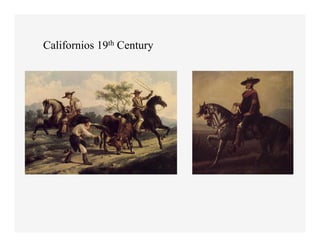
Californios 19th Century
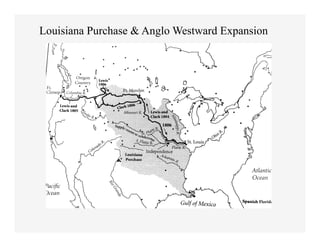
Louisiana Purchase & Anglo Westward Expansion
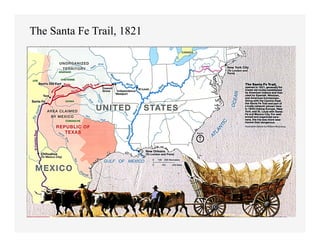
The Santa Fe Trail, 1821
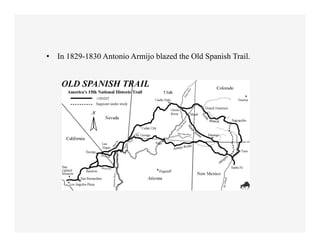
•  In 1829-1830 Antonio Armijo blazed the Old Spanish Trail.
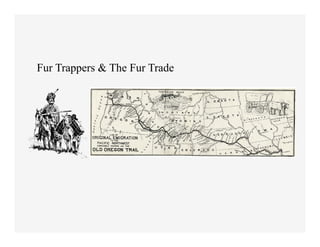
Fur Trappers & The Fur Trade
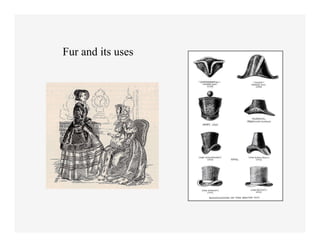
Fur and its uses
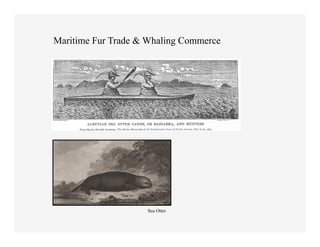
Maritime Fur Trade & Whaling Commerce


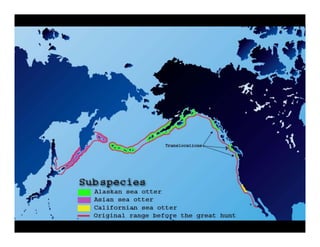
                    Sea Otter	
  
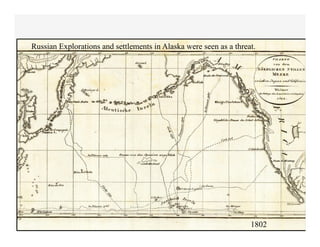
Russian Explorations and settlements in Alaska were seen as a threat.


                                                                   1802
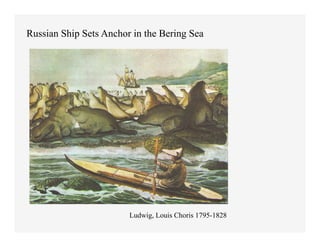
Russian Ship Sets Anchor in the Bering Sea


                        Ludwig, Louis Choris 1795-1828
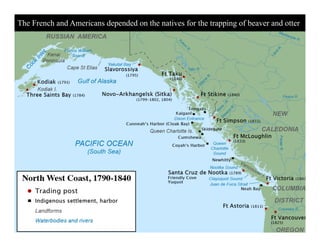
The French and Americans depended on the natives for the trapping of beaver and otter
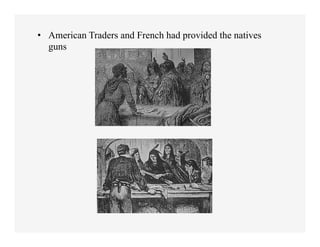
•  American Traders and French had provided the natives
   guns
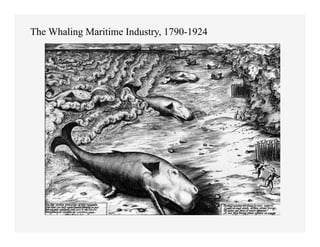
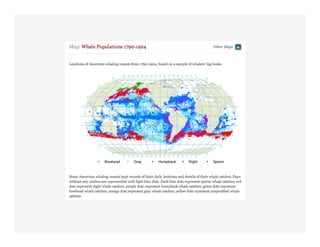
The Whaling Maritime Industry, 1790-1924
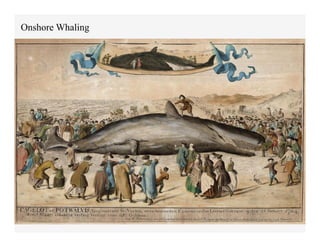
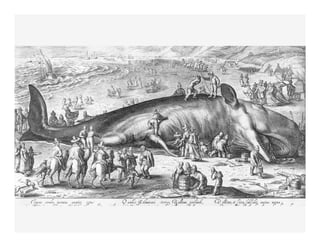
Onshore Whaling	
  
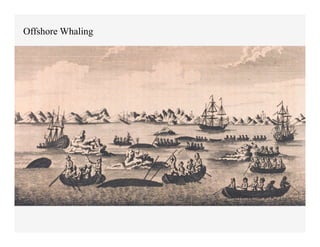
Offshore Whaling
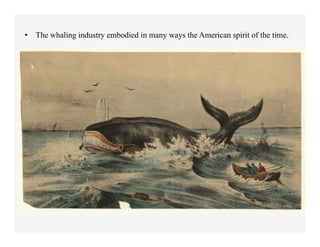
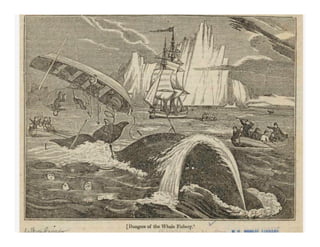
•  The whaling industry embodied in many ways the American spirit of the time.
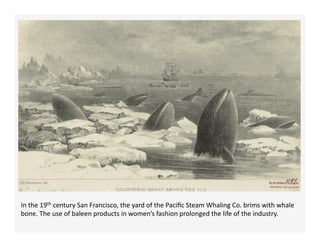
In	
  the	
  19th	
  century	
  San	
  Francisco,	
  the	
  yard	
  of	
  the	
  Pacific	
  Steam	
  Whaling	
  Co.	
  brims	
  with	
  whale	
  
bone.	
  The	
  use	
  of	
  baleen	
  products	
  in	
  women’s	
  fashion	
  prolonged	
  the	
  life	
  of	
  the	
  industry.	
  	
  
American presence in the Frontier

•  The	
  hide	
  and	
  tallow	
  trade	
  
•  Fur	
  trade	
  
•  Pioneers,	
  farmers	
  who	
  followed	
  overland	
  trails	
  blazed	
  by	
  mountain	
  men.	
  	
  
Natural Resources & Their Role Shaping History


•  Economic trade between California and New England was to help lay
   the foundation for its later political incorporation into the U.S. and
   formal integration as a semi-peripheral and then core zone of the
   capitalist world economy.” (63) Gonzales citing Almaguer

The Mexican Far North 1821-1848

  • 1.
    The Mexican FarNorth 1821-1848
  • 2.
    The Eve ofMexican Independence   •  Was there at the eve of the Mexican Revolution of 1810 a national identity? •  Three hundred years of mercantilism had left Mexico without its own commercial or manufacturing infrastructure. •  The Church owned between one-quarter and one-half of the land and controlled most schools, hospitals, and charitable institutions.
  • 3.
    The Eve ofMexican Independence •  Criollo and Mestizo discontent towards “peninsulares” or “gachupines” •  Interest for independence increased with the successful revolt of the English colonist to the north •  Haiti’s & the French revolution •  1807-1808 French under the command of Napoleon occupy the Iberian peninsula
  • 4.
    Jean-Jacques Rousseau (1712-1778) • Jean-Jacques Rousseau was one of the most influential thinkers during the Enlightenment in eighteenth century Europe
  • 5.
    Political Ideologies Duringthe 19th Century   Liberals Conservatives •  Influenced by the the French •  Or aka Royalist wanted to remain Revolution, wanted to end royal to the interest of the Spanish privileges and secularize Mexico. Crown. •  Anti-clericalism was a central •  The clergy saw Liberalism as tenet “God less” ideology. •  Criollos, and Mestizos tended to •  Peninsulares, or clergy tended to fall under this category fall under this category  
  • 6.
    Miguel Hidalgo yCostilla •  The night of September 15 1810 Miguel Hidalgo proclaimed Mexico’s Independence from Spain.
  • 8.
    Post-independence Mexico andthe Rise of Caudillos •  Between 1833 and August 1855 the presidency in Mexico changed hands thirty-six times, the average term being about seven and a half months.   •  The first caudillos were often generals who, leading private armies, used their military might to achieve power in the newly independent states. •  The borderlands would see a resurgence of the Indian threat due to the lack of military presence in the region.  
  • 9.
    Antonio Lopez deSanta Anna 1794-1876 •  General Santa Anna was a dominant figure of the first-half of the 19th century, he served in the presidency on eleven different occasions.
  • 10.
    •  Franciscan missionscontrolled the most valuable land in the province, some fourteen million acres along the fertile and accessible coast.
  • 11.
    •  Secularization ofthe missions made possible the raise of the rancho aristocracy.
  • 13.
    •  Hide andtallow was the most valuable trade in California during the first half of the 19th century.
  • 14.
    •  (Left) Californiamethod of killing cattle for hide and tallow. Sight common at the mission and ranchos during its apogee.   •  Tallow, a hardy fatty substance made from rendered animal fat, used in the making of soap and candles.
  • 15.
  • 16.
    Louisiana Purchase &Anglo Westward Expansion
  • 17.
    The Santa FeTrail, 1821
  • 18.
    •  In 1829-1830Antonio Armijo blazed the Old Spanish Trail.
  • 19.
    Fur Trappers &The Fur Trade
  • 20.
  • 21.
    Maritime Fur Trade& Whaling Commerce Sea Otter  
  • 22.
    Russian Explorations andsettlements in Alaska were seen as a threat. 1802
  • 23.
    Russian Ship SetsAnchor in the Bering Sea Ludwig, Louis Choris 1795-1828
  • 25.
    The French andAmericans depended on the natives for the trapping of beaver and otter
  • 26.
    •  American Tradersand French had provided the natives guns
  • 27.
    The Whaling MaritimeIndustry, 1790-1924
  • 28.
  • 30.
  • 31.
    •  The whalingindustry embodied in many ways the American spirit of the time.
  • 33.
    In  the  19th  century  San  Francisco,  the  yard  of  the  Pacific  Steam  Whaling  Co.  brims  with  whale   bone.  The  use  of  baleen  products  in  women’s  fashion  prolonged  the  life  of  the  industry.    
  • 35.
    American presence inthe Frontier •  The  hide  and  tallow  trade   •  Fur  trade   •  Pioneers,  farmers  who  followed  overland  trails  blazed  by  mountain  men.    
  • 36.
    Natural Resources &Their Role Shaping History •  Economic trade between California and New England was to help lay the foundation for its later political incorporation into the U.S. and formal integration as a semi-peripheral and then core zone of the capitalist world economy.” (63) Gonzales citing Almaguer