SINUS AND ATRIAL
ARRHYTHMIAS
Name :
Matrix number :
OBJECTIVE
• To know the cardiac arrythmias and their
classification clearly.
• To explain sinus and atrial arrhythmias clearly
• To list the mechanism regarding to sinus and
atrial arrthymias
• To relate the sinus and atrial arrhythmias to the
electrocardiogram
WHAT IS CARDIAC ARRYTHMIAS ?
• Disorder to rythmicity property of heart (rhythm
abnormality) – DYSRRHYTHMIA
• Electrical impulses that coordinate your
heartbeats don't work properly, causing your
heart to beat too fast, too slow or irregularly.
• CLASSIFICATION………
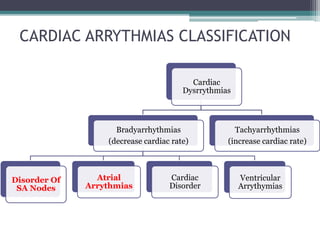
Cardiac
Dysrrythmias
Bradyarrhythmias
(decrease cardiac rate)
Disorder Of
SA Nodes
Atrial
Arrythmias
Cardiac
Disorder
Ventricular
Arrythymias
Tachyarrhythmias
(increase cardiac rate)
CARDIAC ARRYTHMIAS CLASSIFICATION
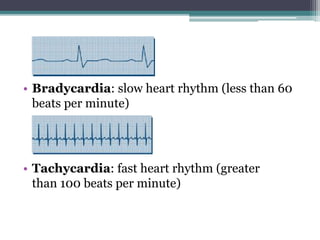
• Bradycardia: slow heart rhythm (less than 60
beats per minute)
• Tachycardia: fast heart rhythm (greater
than 100 beats per minute)
INTRODUCTION (sinus arrythmias)
• Normal physiological phenomeneon
• Do not experience cardiovascular symptoms
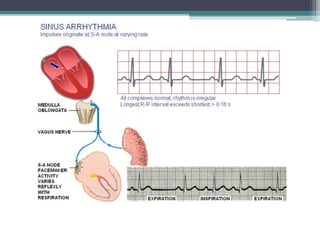
• Alteration heart rate in respiratory cycle hence
called respiratory sinus arrythmias
• Heart rate increase (inspiration) heart rate
decreased (expiration)
• Common in young adults and child
SINUS ARRYTHMIAS
• The sinus node rate can change with
inspiration/expiration, especially in younger
people. The heart rate speeds up with inspiration
(since it inhibits your vagal nerve) and decreases
with expiration (stimulates your vagal nerve).
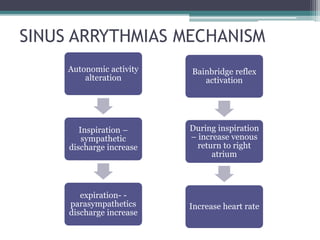
SINUS ARRYTHMIAS MECHANISM
Autonomic activity
alteration
Inspiration –
sympathetic
discharge increase
expiration- -
parasympathetics
discharge increase
Bainbridge reflex
activation
During inspiration
– increase venous
return to right
atrium
Increase heart rate
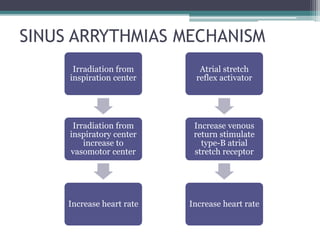
SINUS ARRYTHMIAS MECHANISM
Irradiation from
inspiration center
Irradiation from
inspiratory center
increase to
vasomotor center
Increase heart rate
Atrial stretch
reflex activator
Increase venous
return stimulate
type-B atrial
stretch receptor
Increase heart rate
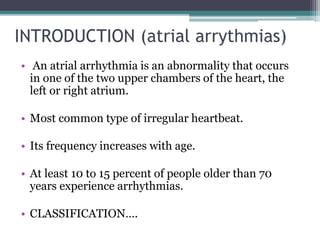
INTRODUCTION (atrial arrythmias)
• An atrial arrhythmia is an abnormality that occurs
in one of the two upper chambers of the heart, the
left or right atrium.
• Most common type of irregular heartbeat.
• Its frequency increases with age.
• At least 10 to 15 percent of people older than 70
years experience arrhythmias.
• CLASSIFICATION….
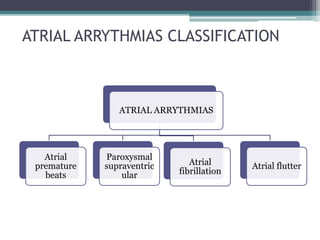
ATRIAL ARRYTHMIAS CLASSIFICATION
ATRIAL ARRYTHMIAS
Atrial
premature
beats
Paroxysmal
supraventric
ular
Atrial
fibrillation
Atrial flutter
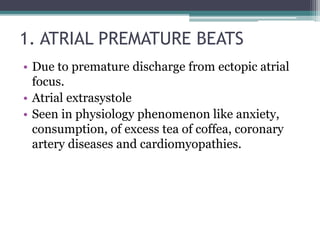
1. ATRIAL PREMATURE BEATS
• Due to premature discharge from ectopic atrial
focus.
• Atrial extrasystole
• Seen in physiology phenomenon like anxiety,
consumption, of excess tea of coffea, coronary
artery diseases and cardiomyopathies.
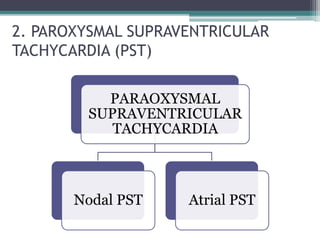
2. PAROXYSMAL SUPRAVENTRICULAR
TACHYCARDIA (PST)
PARAOXYSMAL
SUPRAVENTRICULAR
TACHYCARDIA
Nodal PST Atrial PST
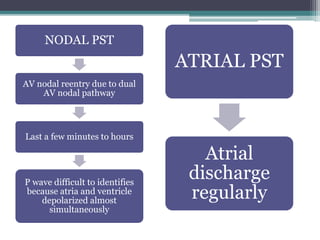
NODAL PST
AV nodal reentry due to dual
AV nodal pathway
Last a few minutes to hours
P wave difficult to identifies
because atria and ventricle
depolarized almost
simultaneously
ATRIAL PST
Atrial
discharge
regularly
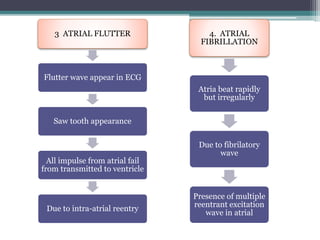
3 ATRIAL FLUTTER
Flutter wave appear in ECG
Saw tooth appearance
All impulse from atrial fail
from transmitted to ventricle
Due to intra-atrial reentry
4. ATRIAL
FIBRILLATION
Atria beat rapidly
but irregularly
Due to fibrilatory
wave
Presence of multiple
reentrant excitation
wave in atrial
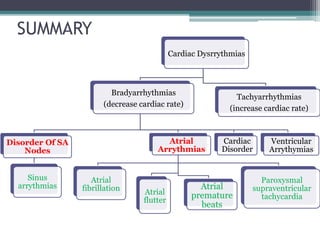
SUMMARY
Cardiac Dysrrythmias
Bradyarrhythmias
(decrease cardiac rate)
Disorder Of SA
Nodes
Sinus
arrythmias
Atrial
Arrythmias
Atrial
fibrillation Atrial
flutter
Atrial
premature
beats
Paroxysmal
supraventricular
tachycardia
Cardiac
Disorder
Ventricular
Arrythymias
Tachyarrhythmias
(increase cardiac rate)
REFERENCE
• GK Pal, textbook of physiology
Sinus and atrial arrhythmias

Sinus and atrial arrhythmias

  • 1.
  • 2.
    OBJECTIVE • To knowthe cardiac arrythmias and their classification clearly. • To explain sinus and atrial arrhythmias clearly • To list the mechanism regarding to sinus and atrial arrthymias • To relate the sinus and atrial arrhythmias to the electrocardiogram
  • 3.
    WHAT IS CARDIACARRYTHMIAS ? • Disorder to rythmicity property of heart (rhythm abnormality) – DYSRRHYTHMIA • Electrical impulses that coordinate your heartbeats don't work properly, causing your heart to beat too fast, too slow or irregularly. • CLASSIFICATION………
  • 4.
    Cardiac Dysrrythmias Bradyarrhythmias (decrease cardiac rate) DisorderOf SA Nodes Atrial Arrythmias Cardiac Disorder Ventricular Arrythymias Tachyarrhythmias (increase cardiac rate) CARDIAC ARRYTHMIAS CLASSIFICATION
  • 5.
    • Bradycardia: slowheart rhythm (less than 60 beats per minute) • Tachycardia: fast heart rhythm (greater than 100 beats per minute)
  • 6.
    INTRODUCTION (sinus arrythmias) •Normal physiological phenomeneon • Do not experience cardiovascular symptoms • Alteration heart rate in respiratory cycle hence called respiratory sinus arrythmias • Heart rate increase (inspiration) heart rate decreased (expiration) • Common in young adults and child
  • 8.
    SINUS ARRYTHMIAS • Thesinus node rate can change with inspiration/expiration, especially in younger people. The heart rate speeds up with inspiration (since it inhibits your vagal nerve) and decreases with expiration (stimulates your vagal nerve).
  • 9.
    SINUS ARRYTHMIAS MECHANISM Autonomicactivity alteration Inspiration – sympathetic discharge increase expiration- - parasympathetics discharge increase Bainbridge reflex activation During inspiration – increase venous return to right atrium Increase heart rate
  • 10.
    SINUS ARRYTHMIAS MECHANISM Irradiationfrom inspiration center Irradiation from inspiratory center increase to vasomotor center Increase heart rate Atrial stretch reflex activator Increase venous return stimulate type-B atrial stretch receptor Increase heart rate
  • 11.
    INTRODUCTION (atrial arrythmias) •An atrial arrhythmia is an abnormality that occurs in one of the two upper chambers of the heart, the left or right atrium. • Most common type of irregular heartbeat. • Its frequency increases with age. • At least 10 to 15 percent of people older than 70 years experience arrhythmias. • CLASSIFICATION….
  • 12.
    ATRIAL ARRYTHMIAS CLASSIFICATION ATRIALARRYTHMIAS Atrial premature beats Paroxysmal supraventric ular Atrial fibrillation Atrial flutter
  • 13.
    1. ATRIAL PREMATUREBEATS • Due to premature discharge from ectopic atrial focus. • Atrial extrasystole • Seen in physiology phenomenon like anxiety, consumption, of excess tea of coffea, coronary artery diseases and cardiomyopathies.
  • 14.
    2. PAROXYSMAL SUPRAVENTRICULAR TACHYCARDIA(PST) PARAOXYSMAL SUPRAVENTRICULAR TACHYCARDIA Nodal PST Atrial PST
  • 15.
    NODAL PST AV nodalreentry due to dual AV nodal pathway Last a few minutes to hours P wave difficult to identifies because atria and ventricle depolarized almost simultaneously ATRIAL PST Atrial discharge regularly
  • 16.
    3 ATRIAL FLUTTER Flutterwave appear in ECG Saw tooth appearance All impulse from atrial fail from transmitted to ventricle Due to intra-atrial reentry 4. ATRIAL FIBRILLATION Atria beat rapidly but irregularly Due to fibrilatory wave Presence of multiple reentrant excitation wave in atrial
  • 17.
    SUMMARY Cardiac Dysrrythmias Bradyarrhythmias (decrease cardiacrate) Disorder Of SA Nodes Sinus arrythmias Atrial Arrythmias Atrial fibrillation Atrial flutter Atrial premature beats Paroxysmal supraventricular tachycardia Cardiac Disorder Ventricular Arrythymias Tachyarrhythmias (increase cardiac rate)
  • 18.
    REFERENCE • GK Pal,textbook of physiology