Types of Single
Gene Disorders:
‱Inheritance Patterns: We can
explore the basics of dominant,
recessive, and X-linked inheritance,
using examples like Huntington's
disease (dominant), cystic fibrosis
(recessive), and hemophilia (X-
linked).
‱Types of Mutations: We can delve
into missense, nonsense, deletions,
insertions, and frameshift
mutations, explaining how each
affects gene expression and
protein function.
single gene disorder
specific Examples:
1. Cystic Fibrosis: We can discuss
the CFTR gene mutation, its
impact on mucus production,
and available treatments like
CFTR modulators and lung
transplantation.
2. Sickle Cell Anemia: We can
explore the hemoglobin S
mutation, its effect on red
blood cell shape and function,
and potential therapies like
stem cell transplantation and
gene editing.
3. Tay-Sachs Disease: We can
break down the HEXA gene
mutation, its impact on lipid
metabolism, and the
single gene disorder
Genetic Mechanisms:
‱Gene Expression: We can explore how DNA is
transcribed into RNA and then translated into
proteins, highlighting how mutations can disrupt
this process.
‱Phenotype Development: We can discuss how
gene interactions, environmental factors, and
modifier genes contribute to the diverse range of
phenotypes seen in single gene disorders.
single gene disorder
Diagnosis and Testing:
1. Prenatal Screening: We can explore non-invasive and
invasive methods like amniocentesis and chorionic villus
sampling used to detect genetic abnormalities before birth.
2. Newborn Screening: We can discuss how routine blood
tests in newborns identify conditions like cystic fibrosis and
phenylketonuria for early intervention.
3. Genetic Testing for Adults: We can break down carrier
testing, diagnostic testing, and predictive testing,
emphasizing the importance of genetic counseling
alongside these procedures.
single gene disorder
treatment and Management:
1. Gene Therapy: We can discuss the
exciting potential of gene therapy for
correcting specific mutations and
replacing nonfunctional genes.
2. Enzyme Replacement Therapy: We
can explore how replacing deficient
enzymes, like in Gaucher's disease,
can alleviate symptoms and improve
quality of life.
3. Other Supportive Therapies: We can
talk about medication, surgery, diet,
and physical therapy as essential
components of managing various
single gene disorders
single gene disorder
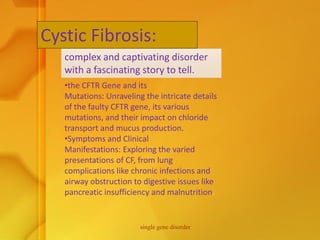
Cystic Fibrosis:
complex and captivating disorder
with a fascinating story to tell.
‱the CFTR Gene and its
Mutations: Unraveling the intricate details
of the faulty CFTR gene, its various
mutations, and their impact on chloride
transport and mucus production.
‱Symptoms and Clinical
Manifestations: Exploring the varied
presentations of CF, from lung
complications like chronic infections and
airway obstruction to digestive issues like
pancreatic insufficiency and malnutrition.
single gene disorder
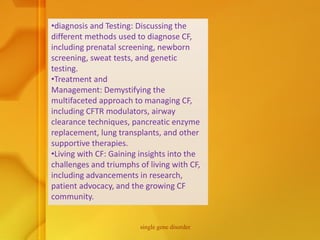
‱diagnosis and Testing: Discussing the
different methods used to diagnose CF,
including prenatal screening, newborn
screening, sweat tests, and genetic
testing.
‱Treatment and
Management: Demystifying the
multifaceted approach to managing CF,
including CFTR modulators, airway
clearance techniques, pancreatic enzyme
replacement, lung transplants, and other
supportive therapies.
‱Living with CF: Gaining insights into the
challenges and triumphs of living with CF,
including advancements in research,
patient advocacy, and the growing CF
community.
single gene disorder
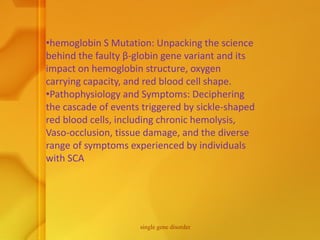
‱hemoglobin S Mutation: Unpacking the science
behind the faulty ÎČ-globin gene variant and its
impact on hemoglobin structure, oxygen
carrying capacity, and red blood cell shape.
‱Pathophysiology and Symptoms: Deciphering
the cascade of events triggered by sickle-shaped
red blood cells, including chronic hemolysis,
Vaso-occlusion, tissue damage, and the diverse
range of symptoms experienced by individuals
with SCA
single gene disorder
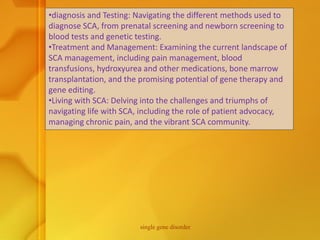
‱diagnosis and Testing: Navigating the different methods used to
diagnose SCA, from prenatal screening and newborn screening to
blood tests and genetic testing.
‱Treatment and Management: Examining the current landscape of
SCA management, including pain management, blood
transfusions, hydroxyurea and other medications, bone marrow
transplantation, and the promising potential of gene therapy and
gene editing.
‱Living with SCA: Delving into the challenges and triumphs of
navigating life with SCA, including the role of patient advocacy,
managing chronic pain, and the vibrant SCA community.
single gene disorder
Tay-Sachs disease is a rare
inherited condition that
mainly affects babies and
young children. It stops the
nerves working properly and
is usually fatal. It used to be
most common in people of
Ashkenazi Jewish descent
(most Jewish people in the
UK), but many cases now
occur in people from other
ethnic backgrounds.
single gene disorder
Tay Sachs disease (TSD) is a
progressive, lethal
neurodegenerative disorder caused
by a deficiency of enzyme
hexosaminidase-A resulting in the
accumulation of GM2 gangliosides.
Based on the presentation age, the
disease is classified into infantile,
juvenile, and adult forms
single gene disorder
symptoms start to show up at
about 3 to 6 months of age. As the
disease progresses, development
slows and muscles begin to
weaken. Over time, this leads to
seizures, vision and hearing loss,
paralysis, and other major issues.
Children with this form of Tay-
Sachs disease typically live only a
few years
single gene disorder
Infantile form
In the most common and severe form, called
infantile form, an infant typically begins
showing signs and symptoms by about 3 to 6
months of age. Survival is usually only a few
years. Signs and symptoms can include:
‱Exaggerated startle response when the baby
hears loud noises
1. "Cherry-red" spots in the eyes
2. Loss of motor skills, including turning over,
crawling and sitting up
3. Muscle weakness, progressing to paralysis
4. Movement problems
5. Seizures
6. Vision loss and blindness
7. Hearing loss and deafness
8. Problems swallowing
9. Loss of mental functions and a lack of
response to surroundings
10. Growth in head size (progressive
macrocephaly) single gene disorder
uvenile form
The juvenile form of Tay-Sachs
disease is less common. Signs and
symptoms vary in severity and
begin in childhood. Survival is
typically into the teen years. Signs
and symptoms can include:
‱Behavior problems
‱Gradual loss of skills and
movement control
1. Frequent respiratory infections
2. Slow loss of vision and speech
3. Decline in mental function and
responsiveness
4. Seizures
single gene disorder
last onset/adult form
This is a rare and less severe form with
signs and symptoms beginning in late
childhood to adulthood. Severity of
symptoms varies greatly, and this form
does not always impact life expectancy.
Signs and symptoms progress slowly and
can include:
‱Muscle weakness
‱Clumsiness and loss of coordination
1. Tremors and muscle spasms
2. Loss of the ability to walk
3. Problems speaking and swallowing
4. Psychiatric disorders
5. Sometimes loss of mental function
single gene disorder

single gene. disorders

  • 1.
    Types of Single GeneDisorders: ‱Inheritance Patterns: We can explore the basics of dominant, recessive, and X-linked inheritance, using examples like Huntington's disease (dominant), cystic fibrosis (recessive), and hemophilia (X- linked). ‱Types of Mutations: We can delve into missense, nonsense, deletions, insertions, and frameshift mutations, explaining how each affects gene expression and protein function. single gene disorder
  • 2.
    specific Examples: 1. CysticFibrosis: We can discuss the CFTR gene mutation, its impact on mucus production, and available treatments like CFTR modulators and lung transplantation. 2. Sickle Cell Anemia: We can explore the hemoglobin S mutation, its effect on red blood cell shape and function, and potential therapies like stem cell transplantation and gene editing. 3. Tay-Sachs Disease: We can break down the HEXA gene mutation, its impact on lipid metabolism, and the single gene disorder
  • 3.
    Genetic Mechanisms: ‱Gene Expression:We can explore how DNA is transcribed into RNA and then translated into proteins, highlighting how mutations can disrupt this process. ‱Phenotype Development: We can discuss how gene interactions, environmental factors, and modifier genes contribute to the diverse range of phenotypes seen in single gene disorders. single gene disorder
  • 4.
    Diagnosis and Testing: 1.Prenatal Screening: We can explore non-invasive and invasive methods like amniocentesis and chorionic villus sampling used to detect genetic abnormalities before birth. 2. Newborn Screening: We can discuss how routine blood tests in newborns identify conditions like cystic fibrosis and phenylketonuria for early intervention. 3. Genetic Testing for Adults: We can break down carrier testing, diagnostic testing, and predictive testing, emphasizing the importance of genetic counseling alongside these procedures. single gene disorder
  • 5.
    treatment and Management: 1.Gene Therapy: We can discuss the exciting potential of gene therapy for correcting specific mutations and replacing nonfunctional genes. 2. Enzyme Replacement Therapy: We can explore how replacing deficient enzymes, like in Gaucher's disease, can alleviate symptoms and improve quality of life. 3. Other Supportive Therapies: We can talk about medication, surgery, diet, and physical therapy as essential components of managing various single gene disorders single gene disorder
  • 6.
    Cystic Fibrosis: complex andcaptivating disorder with a fascinating story to tell. ‱the CFTR Gene and its Mutations: Unraveling the intricate details of the faulty CFTR gene, its various mutations, and their impact on chloride transport and mucus production. ‱Symptoms and Clinical Manifestations: Exploring the varied presentations of CF, from lung complications like chronic infections and airway obstruction to digestive issues like pancreatic insufficiency and malnutrition. single gene disorder
  • 7.
    ‱diagnosis and Testing:Discussing the different methods used to diagnose CF, including prenatal screening, newborn screening, sweat tests, and genetic testing. ‱Treatment and Management: Demystifying the multifaceted approach to managing CF, including CFTR modulators, airway clearance techniques, pancreatic enzyme replacement, lung transplants, and other supportive therapies. ‱Living with CF: Gaining insights into the challenges and triumphs of living with CF, including advancements in research, patient advocacy, and the growing CF community. single gene disorder
  • 8.
    ‱hemoglobin S Mutation:Unpacking the science behind the faulty ÎČ-globin gene variant and its impact on hemoglobin structure, oxygen carrying capacity, and red blood cell shape. ‱Pathophysiology and Symptoms: Deciphering the cascade of events triggered by sickle-shaped red blood cells, including chronic hemolysis, Vaso-occlusion, tissue damage, and the diverse range of symptoms experienced by individuals with SCA single gene disorder
  • 9.
    ‱diagnosis and Testing:Navigating the different methods used to diagnose SCA, from prenatal screening and newborn screening to blood tests and genetic testing. ‱Treatment and Management: Examining the current landscape of SCA management, including pain management, blood transfusions, hydroxyurea and other medications, bone marrow transplantation, and the promising potential of gene therapy and gene editing. ‱Living with SCA: Delving into the challenges and triumphs of navigating life with SCA, including the role of patient advocacy, managing chronic pain, and the vibrant SCA community. single gene disorder
  • 10.
    Tay-Sachs disease isa rare inherited condition that mainly affects babies and young children. It stops the nerves working properly and is usually fatal. It used to be most common in people of Ashkenazi Jewish descent (most Jewish people in the UK), but many cases now occur in people from other ethnic backgrounds. single gene disorder
  • 11.
    Tay Sachs disease(TSD) is a progressive, lethal neurodegenerative disorder caused by a deficiency of enzyme hexosaminidase-A resulting in the accumulation of GM2 gangliosides. Based on the presentation age, the disease is classified into infantile, juvenile, and adult forms single gene disorder
  • 12.
    symptoms start toshow up at about 3 to 6 months of age. As the disease progresses, development slows and muscles begin to weaken. Over time, this leads to seizures, vision and hearing loss, paralysis, and other major issues. Children with this form of Tay- Sachs disease typically live only a few years single gene disorder
  • 13.
    Infantile form In themost common and severe form, called infantile form, an infant typically begins showing signs and symptoms by about 3 to 6 months of age. Survival is usually only a few years. Signs and symptoms can include: ‱Exaggerated startle response when the baby hears loud noises 1. "Cherry-red" spots in the eyes 2. Loss of motor skills, including turning over, crawling and sitting up 3. Muscle weakness, progressing to paralysis 4. Movement problems 5. Seizures 6. Vision loss and blindness 7. Hearing loss and deafness 8. Problems swallowing 9. Loss of mental functions and a lack of response to surroundings 10. Growth in head size (progressive macrocephaly) single gene disorder
  • 14.
    uvenile form The juvenileform of Tay-Sachs disease is less common. Signs and symptoms vary in severity and begin in childhood. Survival is typically into the teen years. Signs and symptoms can include: ‱Behavior problems ‱Gradual loss of skills and movement control 1. Frequent respiratory infections 2. Slow loss of vision and speech 3. Decline in mental function and responsiveness 4. Seizures single gene disorder
  • 15.
    last onset/adult form Thisis a rare and less severe form with signs and symptoms beginning in late childhood to adulthood. Severity of symptoms varies greatly, and this form does not always impact life expectancy. Signs and symptoms progress slowly and can include: ‱Muscle weakness ‱Clumsiness and loss of coordination 1. Tremors and muscle spasms 2. Loss of the ability to walk 3. Problems speaking and swallowing 4. Psychiatric disorders 5. Sometimes loss of mental function single gene disorder