Simulation of single phase PWM inverter
AIM:- To implement a single phase pwm inverter with Unipolar and Bipolar pwm
techniques
THEORY:- In Bi-polar switching, the diagonally opposite switches are turned on or
turned off at the same time. The output of leg A is equal and opposite to the output of
leg B. The output voltage is determined by comparing the control signal , Vr and the
triangular signal, Vc.
In Unipolar Switching, the devices in one leg are turned on or off based on the
comparison of the modulation signal Vr with a high frequency triangular wave. The
devices in the other leg are turned on or off by the comparison of the modulation
signal -Vr with the same high frequency triangular wave.
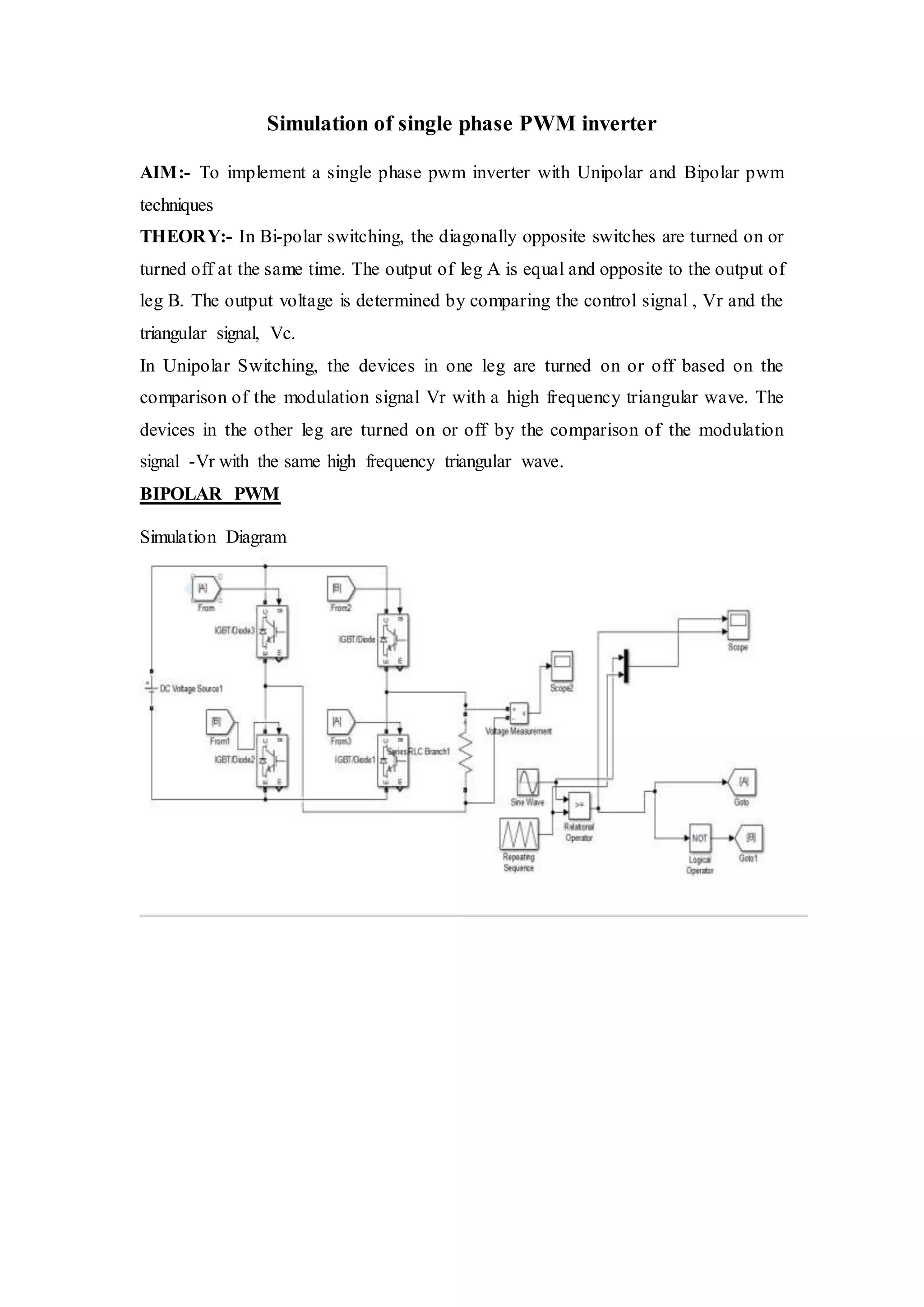
BIPOLAR PWM
Simulation Diagram
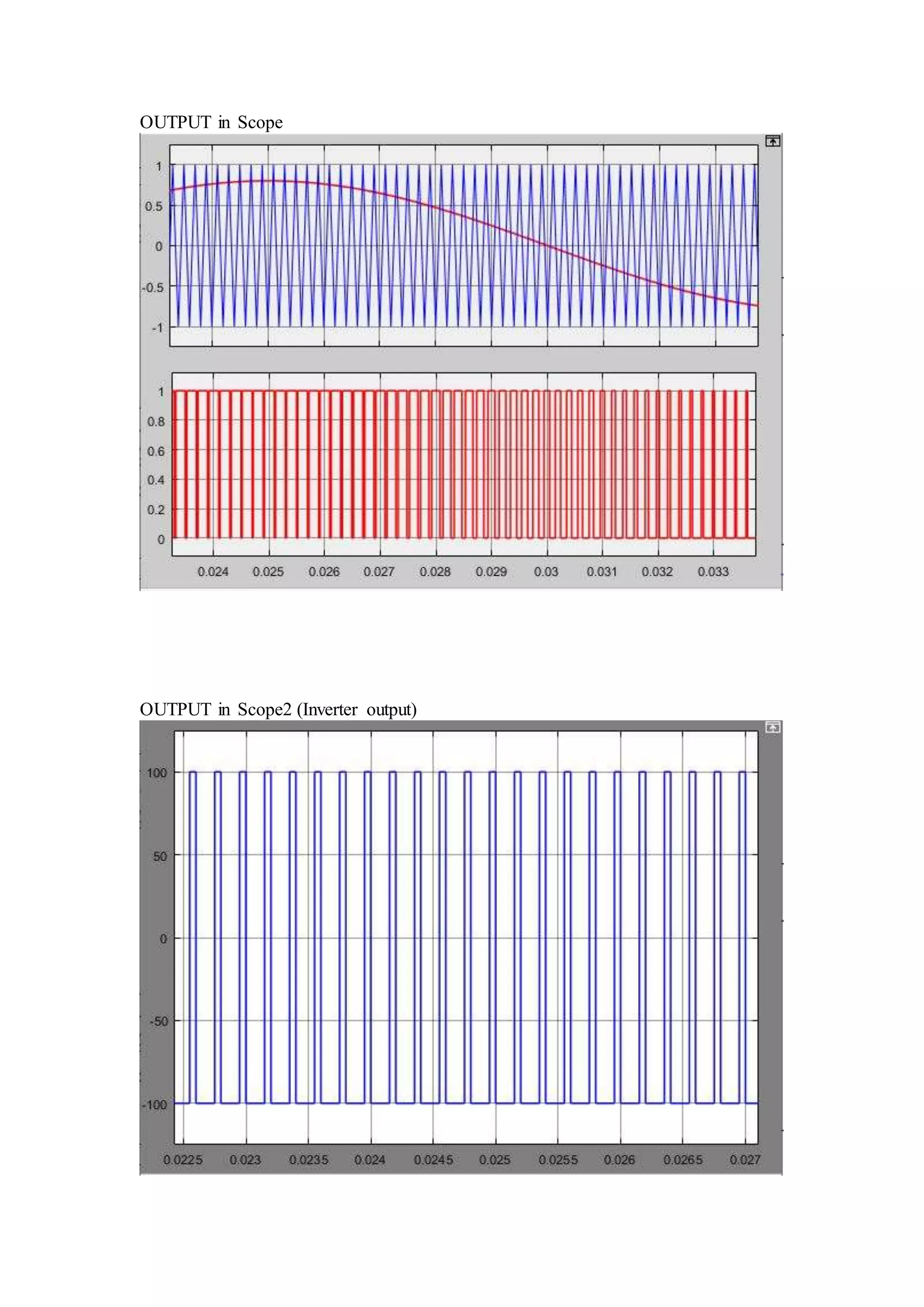
OUTPUT in Scope
OUTPUT in Scope2 (Inverter output)
UNIPOLAR PWM
Simulation Diagram
OUTPUT in Scope
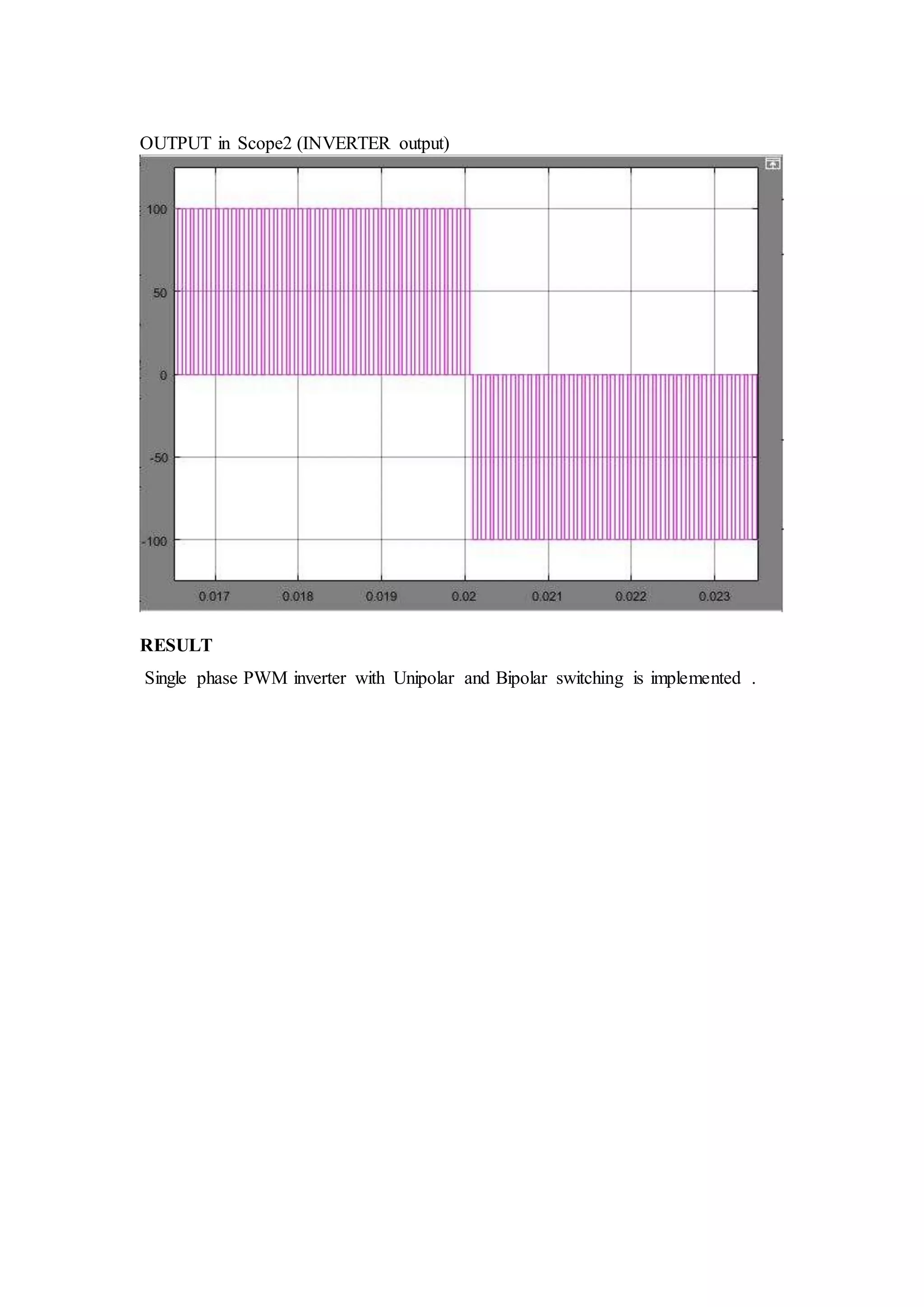
OUTPUT in Scope2 (INVERTER output)
RESULT
Single phase PWM inverter with Unipolar and Bipolar switching is implemented .

Simulation of single phase pwm inverter

  • 1.
    Simulation of singlephase PWM inverter AIM:- To implement a single phase pwm inverter with Unipolar and Bipolar pwm techniques THEORY:- In Bi-polar switching, the diagonally opposite switches are turned on or turned off at the same time. The output of leg A is equal and opposite to the output of leg B. The output voltage is determined by comparing the control signal , Vr and the triangular signal, Vc. In Unipolar Switching, the devices in one leg are turned on or off based on the comparison of the modulation signal Vr with a high frequency triangular wave. The devices in the other leg are turned on or off by the comparison of the modulation signal -Vr with the same high frequency triangular wave. BIPOLAR PWM Simulation Diagram
  • 2.
    OUTPUT in Scope OUTPUTin Scope2 (Inverter output)
  • 3.
  • 4.
    OUTPUT in Scope2(INVERTER output) RESULT Single phase PWM inverter with Unipolar and Bipolar switching is implemented .