SIMPLE PRESENT TENSE
- See more at: http://learnenglish.britishcouncil.org/es/english-grammar/verbs/present-tense#sthash.HgvNO0iH.dpuf 
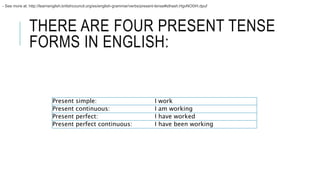
THERE ARE FOUR PRESENT TENSE 
FORMS IN ENGLISH: 
Present simple: I work 
Present continuous: I am working 
Present perfect: I have worked 
Present perfect continuous: I have been working
WE WORK AT A CALL CENTER
HE WORKS AT THE HOSPITAL
I DON’T PLAY CANDY CRUSH
SHE DOESN’T EAT MEAT
DO YOU BELIEVE IN GHOSTS?
DOES HE LIKE BROCCOLI?
SIMPLE PRESENT 
We use the present tense to talk about: 
• Something that is true in the present: 
I’m nineteen years old. 
He lives in London. 
I’m a student. 
• Something that happens again and again in the present: 
I play football every weekend. 
• Something that is always true: 
The adult human body contains 206 bones. 
Light travels at almost 300,000 kilometres per second. 
• Something that is fixed in the future. 
The school term starts next week. 
The train leaves at 19:45 this evening. 
We fly to Paris next week. 
We use words 
like sometimes, often. always, 
and never (adverbs of frequency) 
with the present tense: 
I sometimes go to the cinema. 
She never plays football.
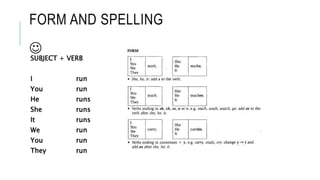
FORM AND SPELLING 
 
SUBJECT + VERB 
I run 
You run 
He runs 
She runs 
It runs 
We run 
You run 
They run
FORM AND SPELLING 
 
SUBJECT + DON`T + VERB 
OR 
SUBJECT + DOESN`T + VERB 
I don’t run 
You don’t run 
He doesn’t run 
She doesn’t run 
It doesn’t run 
We don’t run 
You don’t run 
They don’t run 
don’t = do not 
doesn’t = does not 
The “doesn’t” replaces the “s” in 3rd 
person.
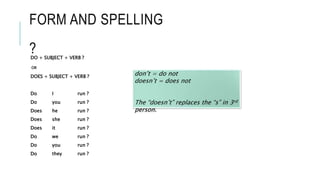
FORM AND SPELLING 
?D 
O + SUBJECT + VERB ? 
OR 
DOES + SUBJECT + VERB ? 
Do I run ? 
Do you run ? 
Does he run ? 
Does she run ? 
Does it run ? 
Do we run ? 
Do you run ? 
Do they run ? 
don’t = do not 
doesn’t = does not 
The “doesn’t” replaces the “s” in 3rd 
person.
QUESTIONS 
Look at these questions: 
Do you play the piano? Where do you live? 
Does Jack play football? Where does he come from? 
Do Rita and Angela live in 
Where do they work? 
Manchester? 
With the present tense, we use do and does to make 
questions. 
We use does for the third person (she/he/it) and we 
use do for the others. 
We use do and does with question words 
like where, what and why
But look at these questions with who: 
 Who lives in London? 
 Who plays football at the weekend? 
 Who works at Liverpool City Hospital?
NEGATIVES 
Look at these sentences: 
 I like tennis, but I don’t like football. (don’t = do not) 
 I don’t live in London now. 
 I don’t play the piano, but I play the guitar. 
 They don’t work at the weekend. 
 John doesn’t live in Manchester. (doesn’t = does not) 
 Angela doesn’t drive to work. She goes by bus. 
With the present tense we 
use do and does to make negatives. 
We use does not (doesn’t) for the 
third person (she/he/it) and we use 
do not (don’t) for the others.
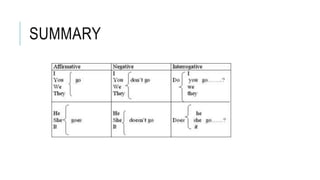
SUMMARY
VERB TO BE 
The verb “To be” in simple present is not used in its base form, it has 
three forms: 
Am 
Is 
Are
AFFIRMATIVE 
FULL FORM CONTRACTED 
I am a student. 
He is a teacher. 
She is a journalist. 
It is a book. 
We are mechanics. 
You are pilots. 
They are policemen. 
FORM 
I’m a student. 
He’s a teacher. 
She’s a journalist. 
It’s a book. 
We`re mechanics. 
You’r 
e 
pilots. 
They’r 
e 
policemen.
NEGATIVE 
FULL FORM CONTRACTED 
I am not a singer. 
He is not a receptionist. 
She is not a nurse. 
It is not my book. 
We are not not musicians. 
You are not a shop assistant. 
They are not taxi drivers. 
FORM 
I'm not a singer. 
He isn't a receptionist. 
She isn't a nurse. 
It isn't my book. 
We aren't not musicians. 
You aren't a shop assistant. 
They aren't taxi drivers.
QUESTIONS 
Am I right? 
Is he here? 
Is she a nurse? 
Is it 
second-hand? 
Are we wrong? 
Are you 
Alan 
Parker? 
Are they American?
QUIZ 
http://www.usingenglish.com/quizzes/65.html

Simple present tense presentation

  • 1.
  • 2.
    - See moreat: http://learnenglish.britishcouncil.org/es/english-grammar/verbs/present-tense#sthash.HgvNO0iH.dpuf THERE ARE FOUR PRESENT TENSE FORMS IN ENGLISH: Present simple: I work Present continuous: I am working Present perfect: I have worked Present perfect continuous: I have been working
  • 3.
    WE WORK ATA CALL CENTER
  • 4.
    HE WORKS ATTHE HOSPITAL
  • 5.
    I DON’T PLAYCANDY CRUSH
  • 6.
  • 7.
    DO YOU BELIEVEIN GHOSTS?
  • 8.
    DOES HE LIKEBROCCOLI?
  • 9.
    SIMPLE PRESENT Weuse the present tense to talk about: • Something that is true in the present: I’m nineteen years old. He lives in London. I’m a student. • Something that happens again and again in the present: I play football every weekend. • Something that is always true: The adult human body contains 206 bones. Light travels at almost 300,000 kilometres per second. • Something that is fixed in the future. The school term starts next week. The train leaves at 19:45 this evening. We fly to Paris next week. We use words like sometimes, often. always, and never (adverbs of frequency) with the present tense: I sometimes go to the cinema. She never plays football.
  • 10.
    FORM AND SPELLING  SUBJECT + VERB I run You run He runs She runs It runs We run You run They run
  • 11.
    FORM AND SPELLING  SUBJECT + DON`T + VERB OR SUBJECT + DOESN`T + VERB I don’t run You don’t run He doesn’t run She doesn’t run It doesn’t run We don’t run You don’t run They don’t run don’t = do not doesn’t = does not The “doesn’t” replaces the “s” in 3rd person.
  • 12.
    FORM AND SPELLING ?D O + SUBJECT + VERB ? OR DOES + SUBJECT + VERB ? Do I run ? Do you run ? Does he run ? Does she run ? Does it run ? Do we run ? Do you run ? Do they run ? don’t = do not doesn’t = does not The “doesn’t” replaces the “s” in 3rd person.
  • 13.
    QUESTIONS Look atthese questions: Do you play the piano? Where do you live? Does Jack play football? Where does he come from? Do Rita and Angela live in Where do they work? Manchester? With the present tense, we use do and does to make questions. We use does for the third person (she/he/it) and we use do for the others. We use do and does with question words like where, what and why
  • 14.
    But look atthese questions with who:  Who lives in London?  Who plays football at the weekend?  Who works at Liverpool City Hospital?
  • 15.
    NEGATIVES Look atthese sentences:  I like tennis, but I don’t like football. (don’t = do not)  I don’t live in London now.  I don’t play the piano, but I play the guitar.  They don’t work at the weekend.  John doesn’t live in Manchester. (doesn’t = does not)  Angela doesn’t drive to work. She goes by bus. With the present tense we use do and does to make negatives. We use does not (doesn’t) for the third person (she/he/it) and we use do not (don’t) for the others.
  • 16.
  • 17.
    VERB TO BE The verb “To be” in simple present is not used in its base form, it has three forms: Am Is Are
  • 18.
    AFFIRMATIVE FULL FORMCONTRACTED I am a student. He is a teacher. She is a journalist. It is a book. We are mechanics. You are pilots. They are policemen. FORM I’m a student. He’s a teacher. She’s a journalist. It’s a book. We`re mechanics. You’r e pilots. They’r e policemen.
  • 19.
    NEGATIVE FULL FORMCONTRACTED I am not a singer. He is not a receptionist. She is not a nurse. It is not my book. We are not not musicians. You are not a shop assistant. They are not taxi drivers. FORM I'm not a singer. He isn't a receptionist. She isn't a nurse. It isn't my book. We aren't not musicians. You aren't a shop assistant. They aren't taxi drivers.
  • 20.
    QUESTIONS Am Iright? Is he here? Is she a nurse? Is it second-hand? Are we wrong? Are you Alan Parker? Are they American?
  • 21.