Optimize Customer
Experiences with
Design Thinking
J U L Y 2 9 , 2 0 2 0
AGENDA
Housekeeping
• This webinar is being recorded and the slides will be shared at the conclusion of the
presentation.
• If you have questions, please submit them via the “chat” function on the GoToWebinar toolbar –
Our presenters will answer them at the end. If we should run out of time to answer all, we’ll get
back with you separately.
• You will be prompted to take a brief 10-second survey at the end. Your feedback helps us
develop future content.
Today’s Speakers:
Candace Collins
Signavio
Presentation time:
45
Paul Lima
Lima Consulting
Nicole Ostrander
Signavio
3
1. Design thinking overview
2. Leading remote design
thinking workshops
3. Use case
Today’s Agenda
4
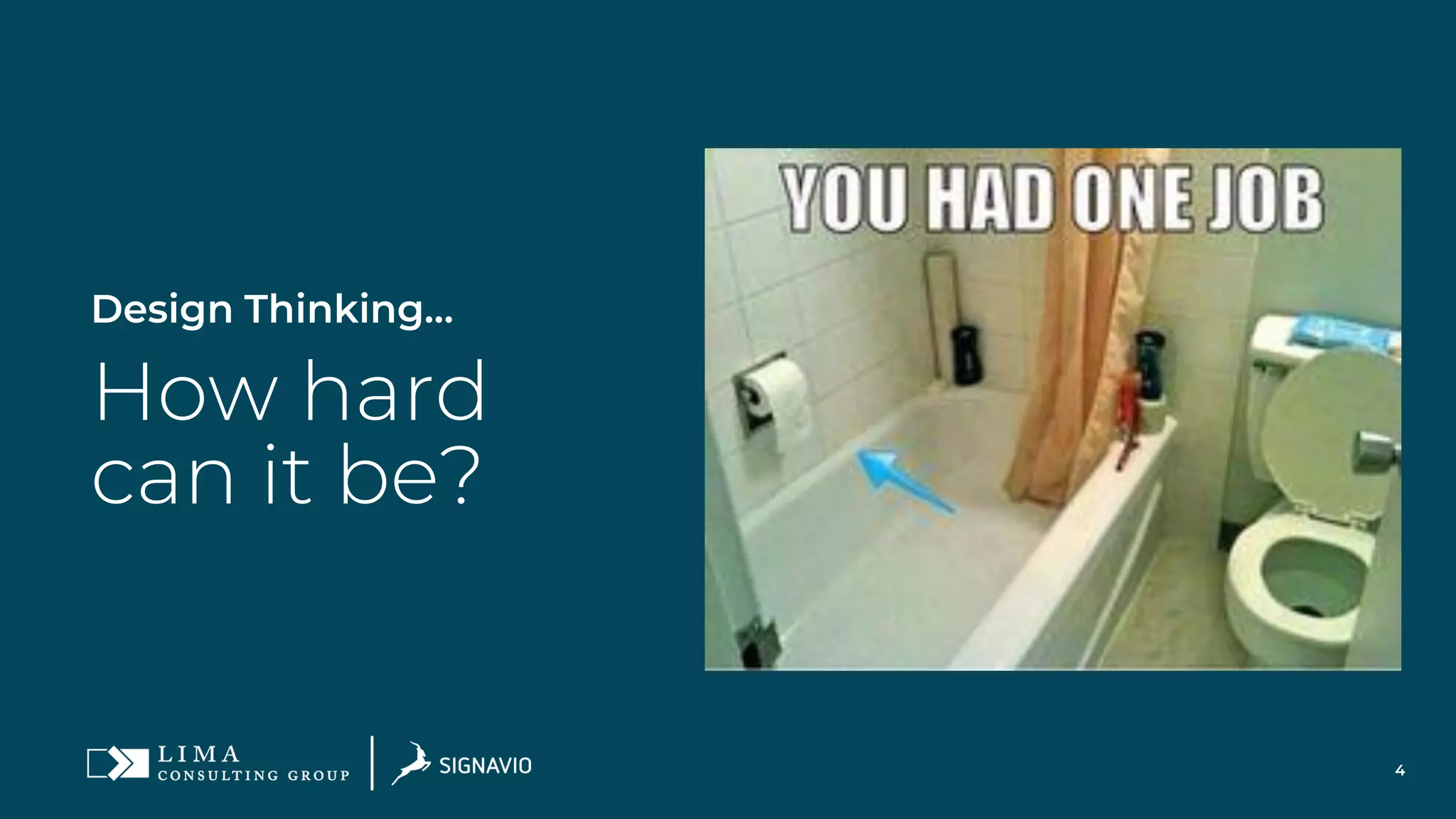
Design Thinking…
How hard
can it be?
5
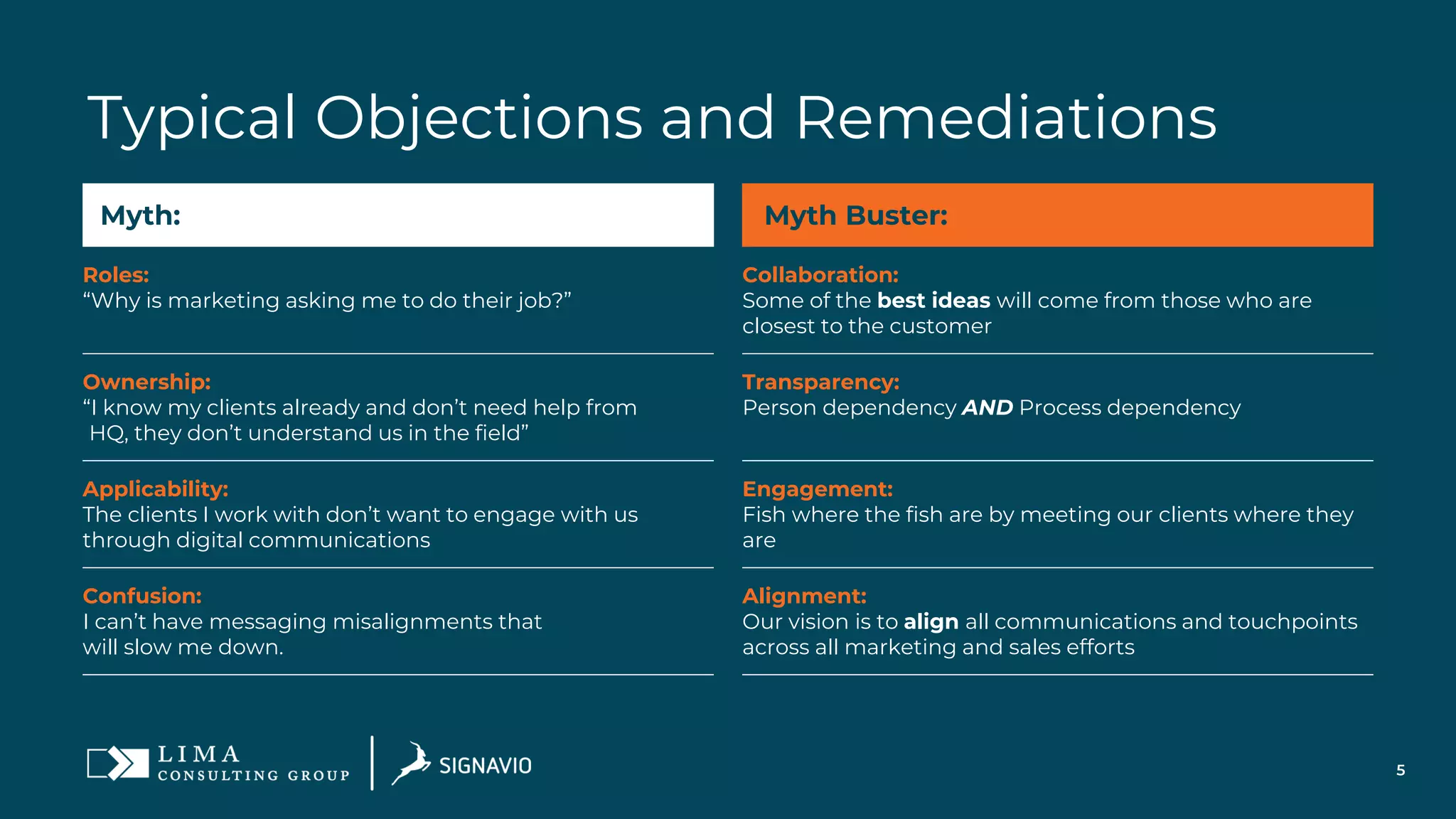
Myth: Myth Buster:
Roles:
“Why is marketing asking me to do their job?”
Collaboration:
Some of the best ideas will come from those who are
closest to the customer
Ownership:
“I know my clients already and don’t need help from
HQ, they don’t understand us in the field”
Transparency:
Person dependency AND Process dependency
Applicability:
The clients I work with don’t want to engage with us
through digital communications
Engagement:
Fish where the fish are by meeting our clients where they
are
Confusion:
I can’t have messaging misalignments that
will slow me down.
Alignment:
Our vision is to align all communications and touchpoints
across all marketing and sales efforts
Typical Objections and Remediations
6
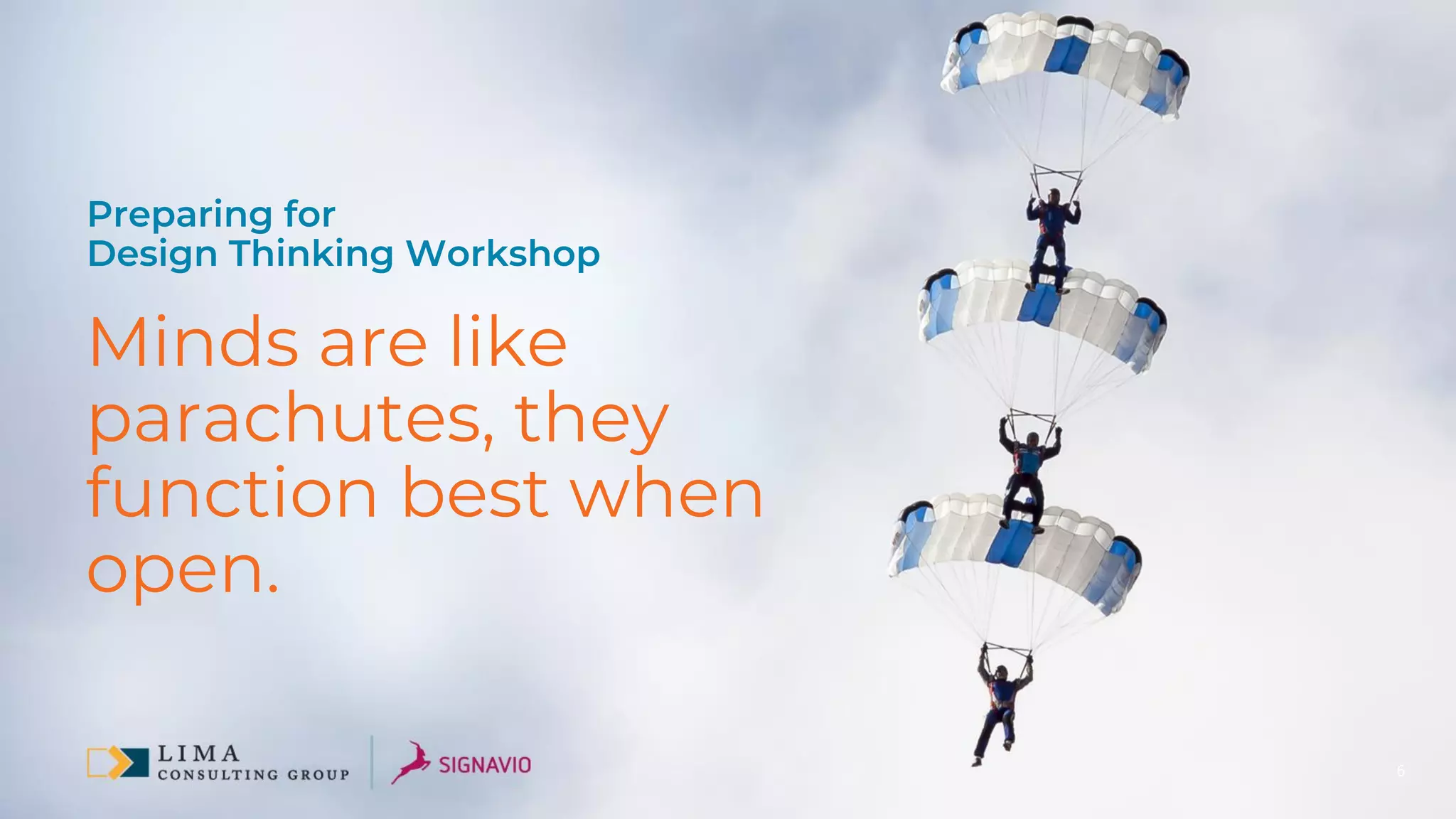
Preparing for
Design Thinking Workshop
Minds are like
parachutes, they
function best when
open.
7
What is Design Thinking?
A Human Centered,
Collaborative approach
to innovation that is
Creative,
Iterative, &
Practical.
8
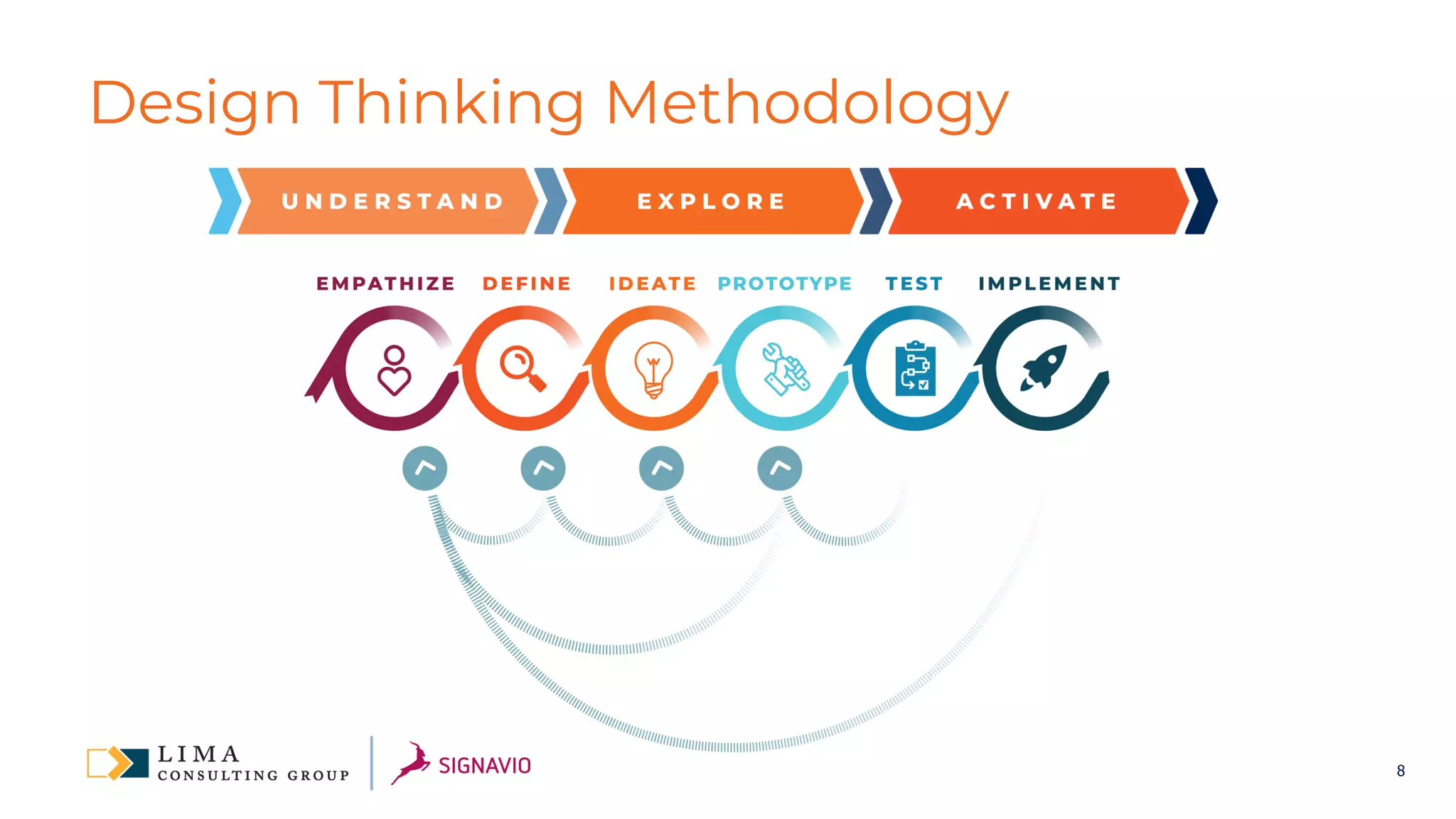
Design Thinking Methodology
9
When should we consider doing a
DT Workshop?
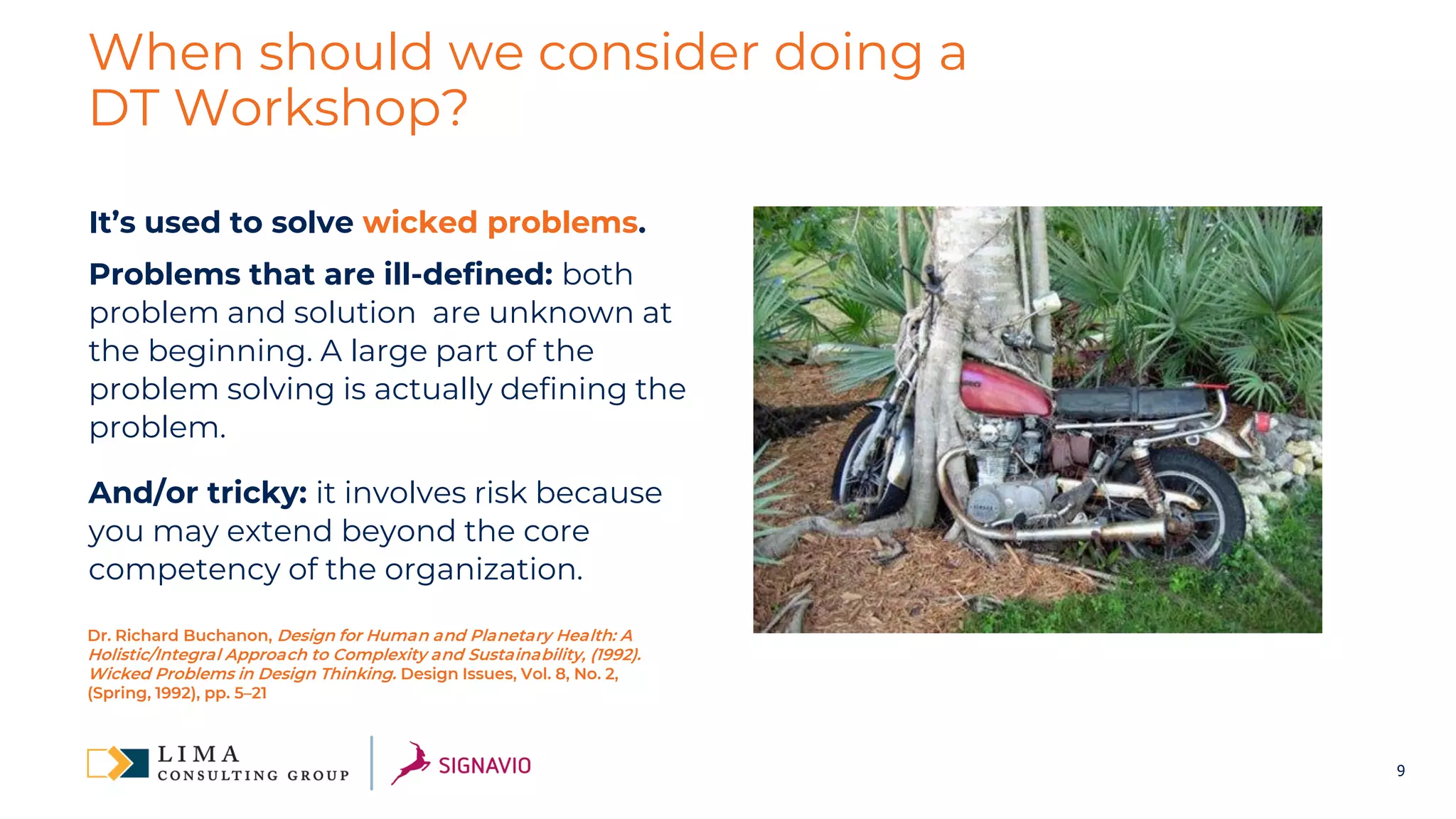
It’s used to solve wicked problems.
Problems that are ill-defined: both
problem and solution are unknown at
the beginning. A large part of the
problem solving is actually defining the
problem.
And/or tricky: it involves risk because
you may extend beyond the core
competency of the organization.
Dr. Richard Buchanon, Design for Human and Planetary Health: A
Holistic/Integral Approach to Complexity and Sustainability, (1992).
Wicked Problems in Design Thinking. Design Issues, Vol. 8, No. 2,
(Spring, 1992), pp. 5–21
10
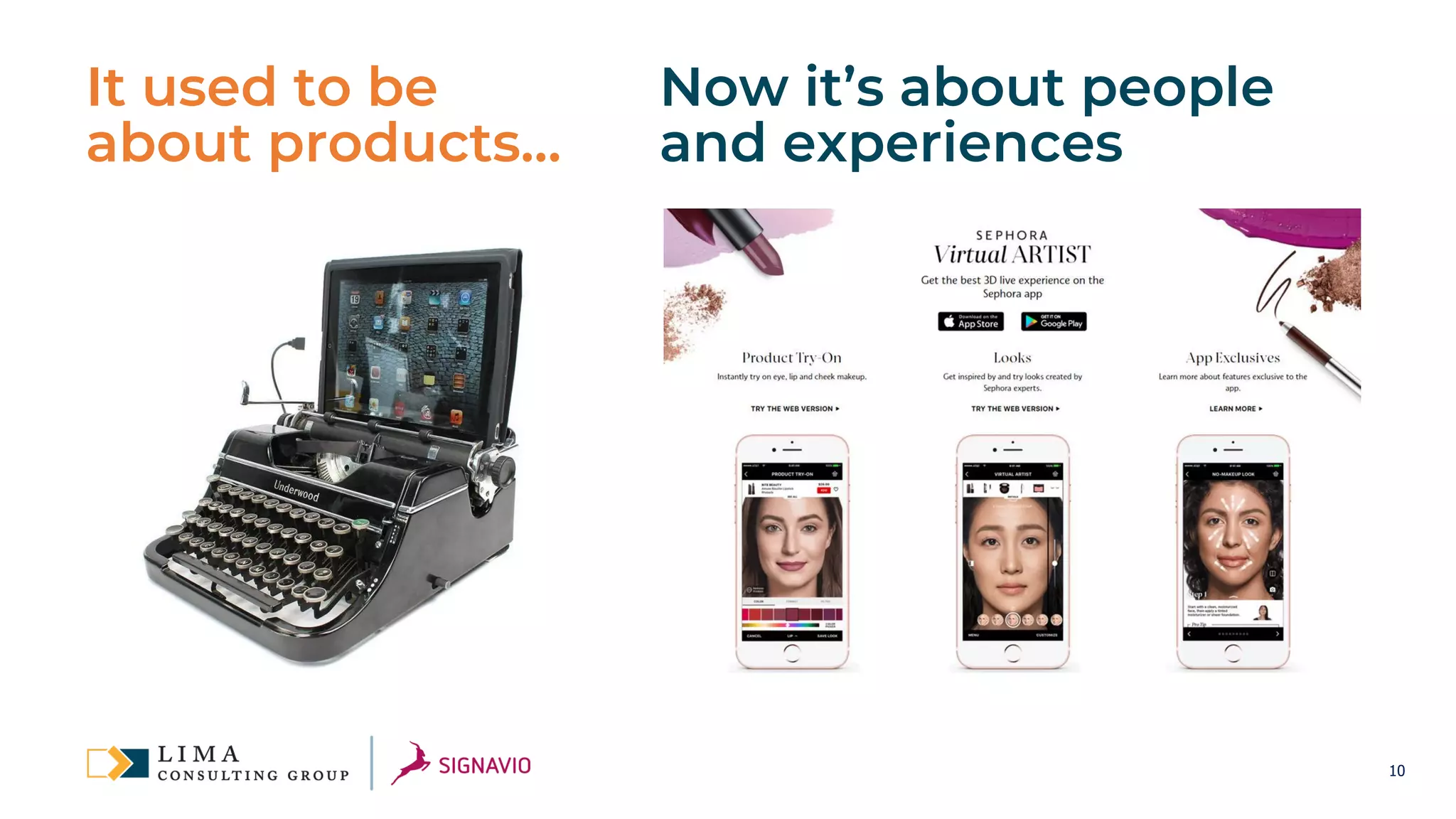
It used to be
about products…
Now it’s about people
and experiences
11
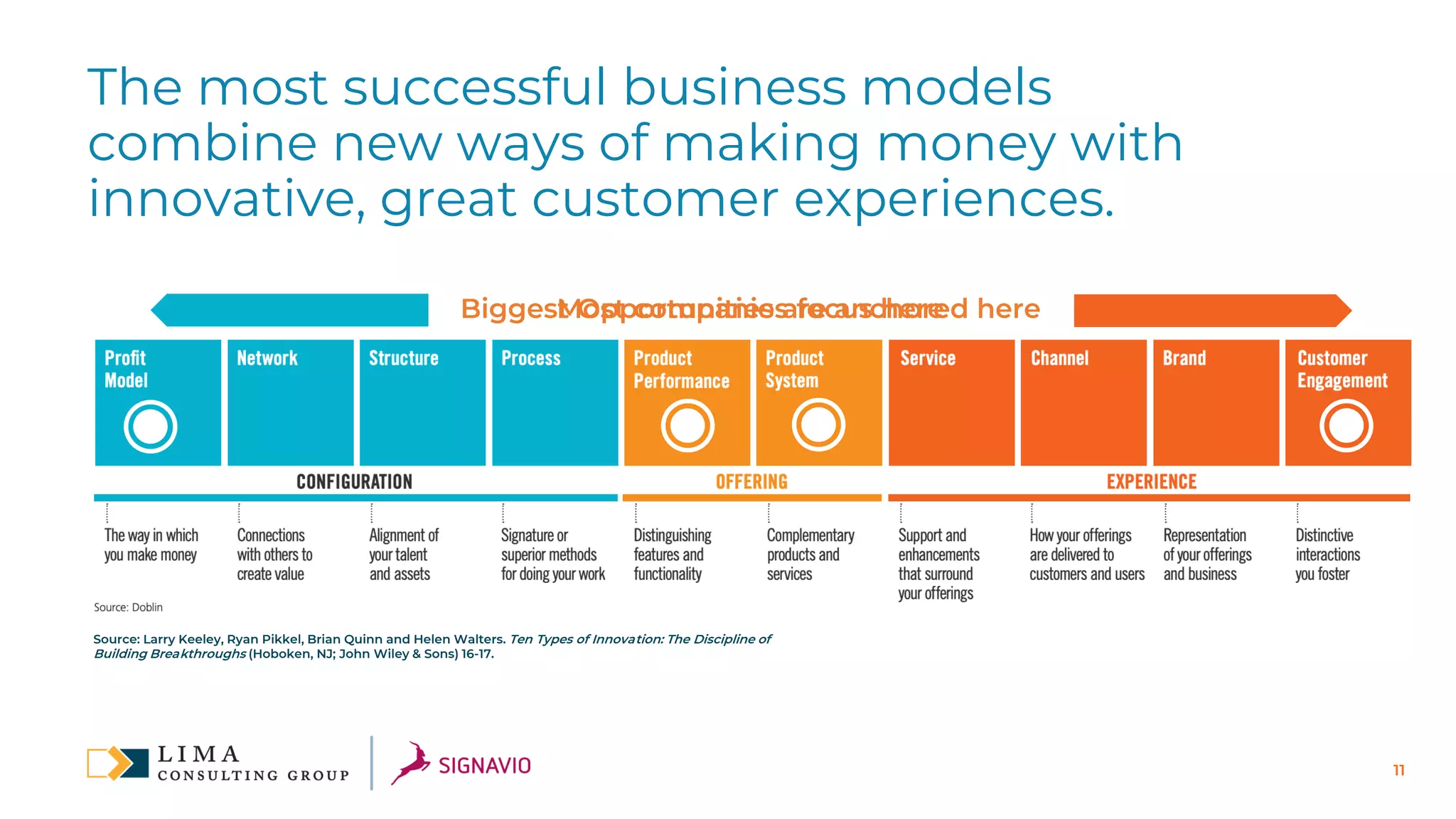
The most successful business models
combine new ways of making money with
innovative, great customer experiences.
Source: Larry Keeley, Ryan Pikkel, Brian Quinn and Helen Walters. Ten Types of Innovation: The Discipline of
Building Breakthroughs (Hoboken, NJ; John Wiley & Sons) 16-17.
Most companies focus hereBiggest Opportunities are anchored here
12
13
What is Design Thinking?
A Human Centered,
Collaborative approach
to innovation that is
Creative,
Iterative, &
Practical.
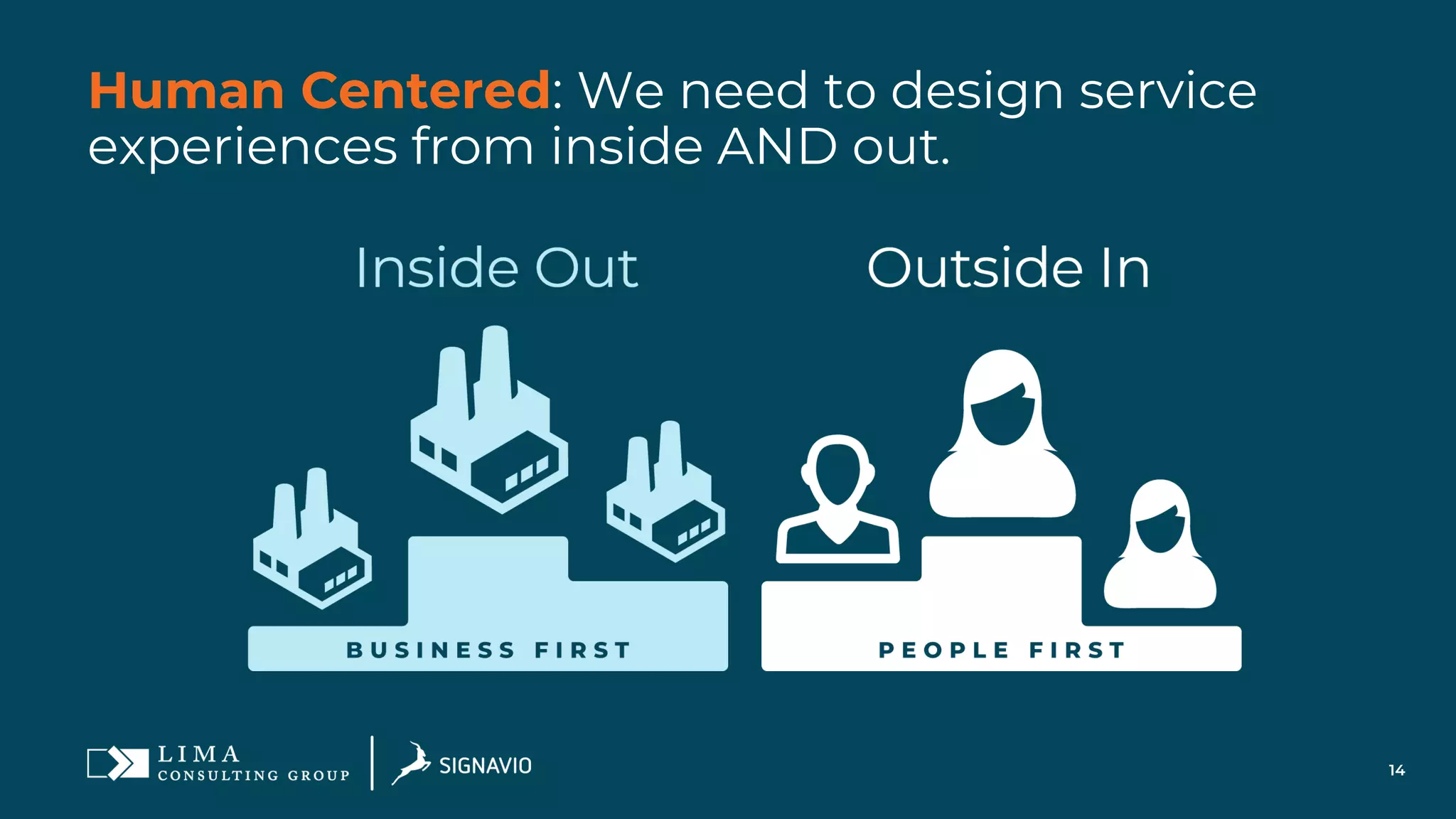
14
Human Centered: We need to design service
experiences from inside AND out.
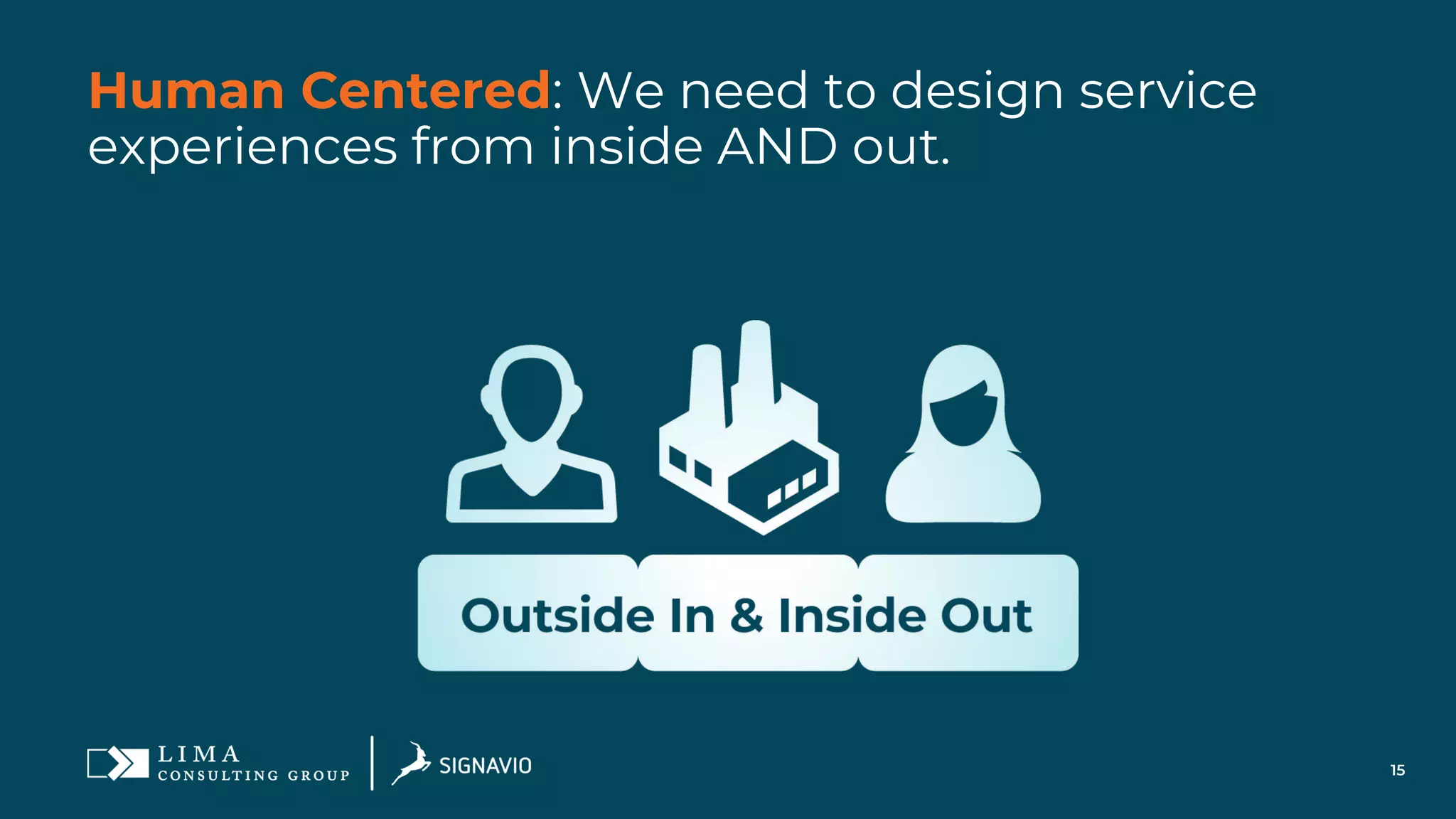
15
Human Centered: We need to design service
experiences from inside AND out.
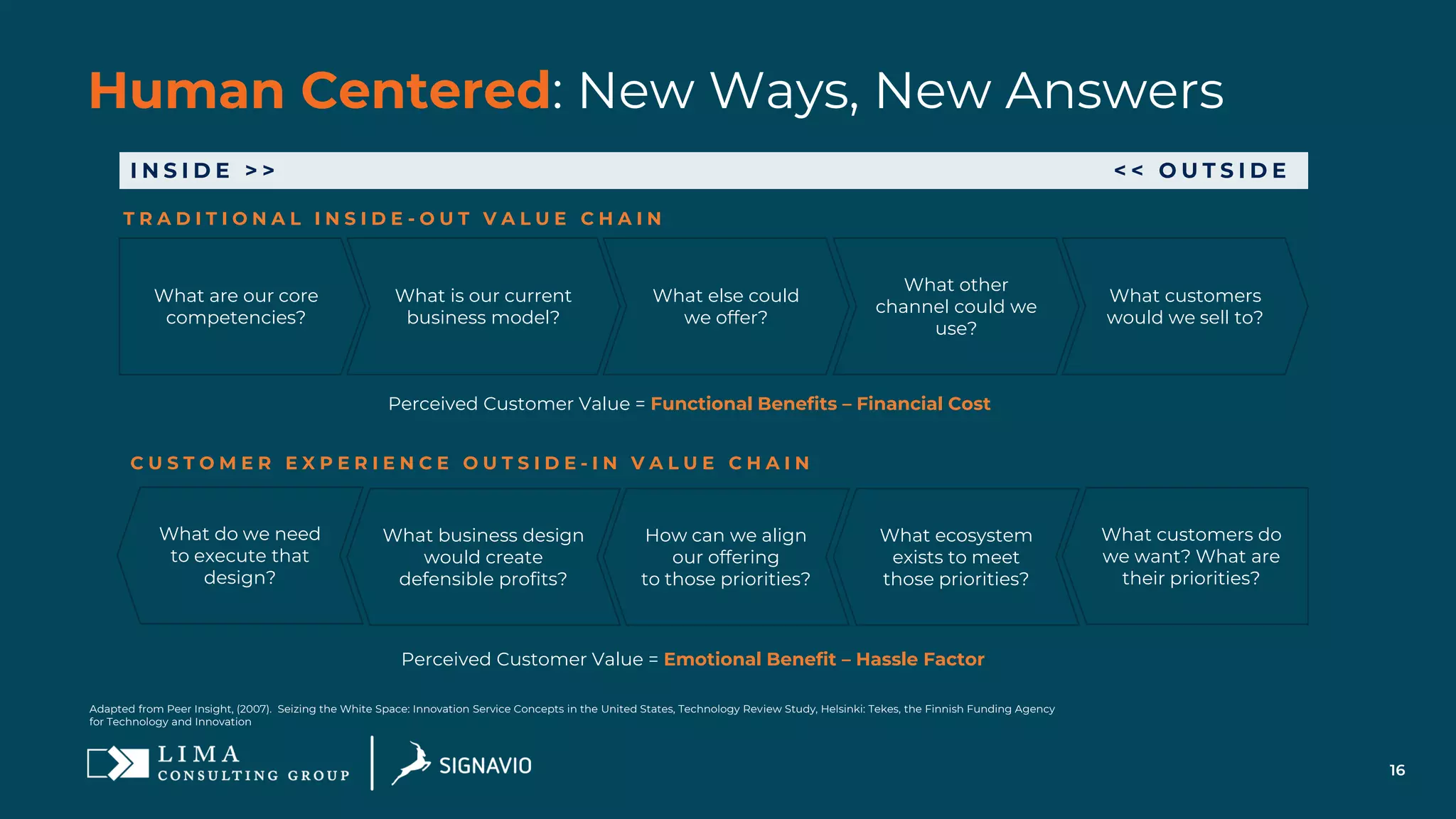
16
Human Centered: New Ways, New Answers
I N S I D E > > < < O U T S I D E
What are our core
competencies?
What is our current
business model?
What else could
we offer?
What other
channel could we
use?
What customers
would we sell to?
Perceived Customer Value = Functional Benefits – Financial Cost
T R A D I T I O N A L I N S I D E - O U T V A L U E C H A I N
Perceived Customer Value = Emotional Benefit – Hassle Factor
What customers do
we want? What are
their priorities?
What business design
would create
defensible profits?
How can we align
our offering
to those priorities?
What ecosystem
exists to meet
those priorities?
What do we need
to execute that
design?
C U S T O M E R E X P E R I E N C E O U T S I D E - I N V A L U E C H A I N
Adapted from Peer Insight, (2007). Seizing the White Space: Innovation Service Concepts in the United States, Technology Review Study, Helsinki: Tekes, the Finnish Funding Agency
for Technology and Innovation
17
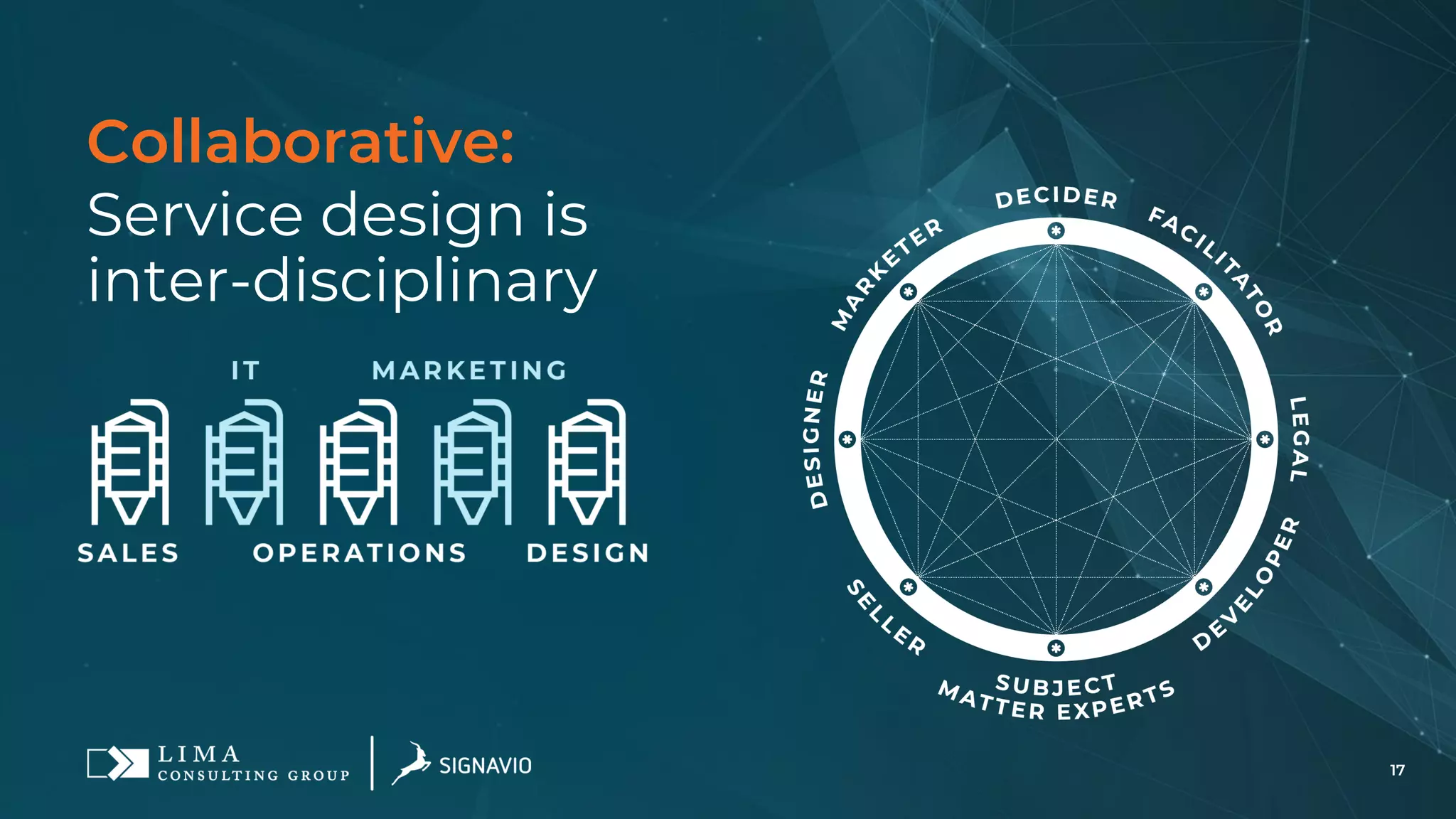
Collaborative:
Service design is
inter-disciplinary
18
Every discipline has its language.
19
Service design thinking
is a common language.
20
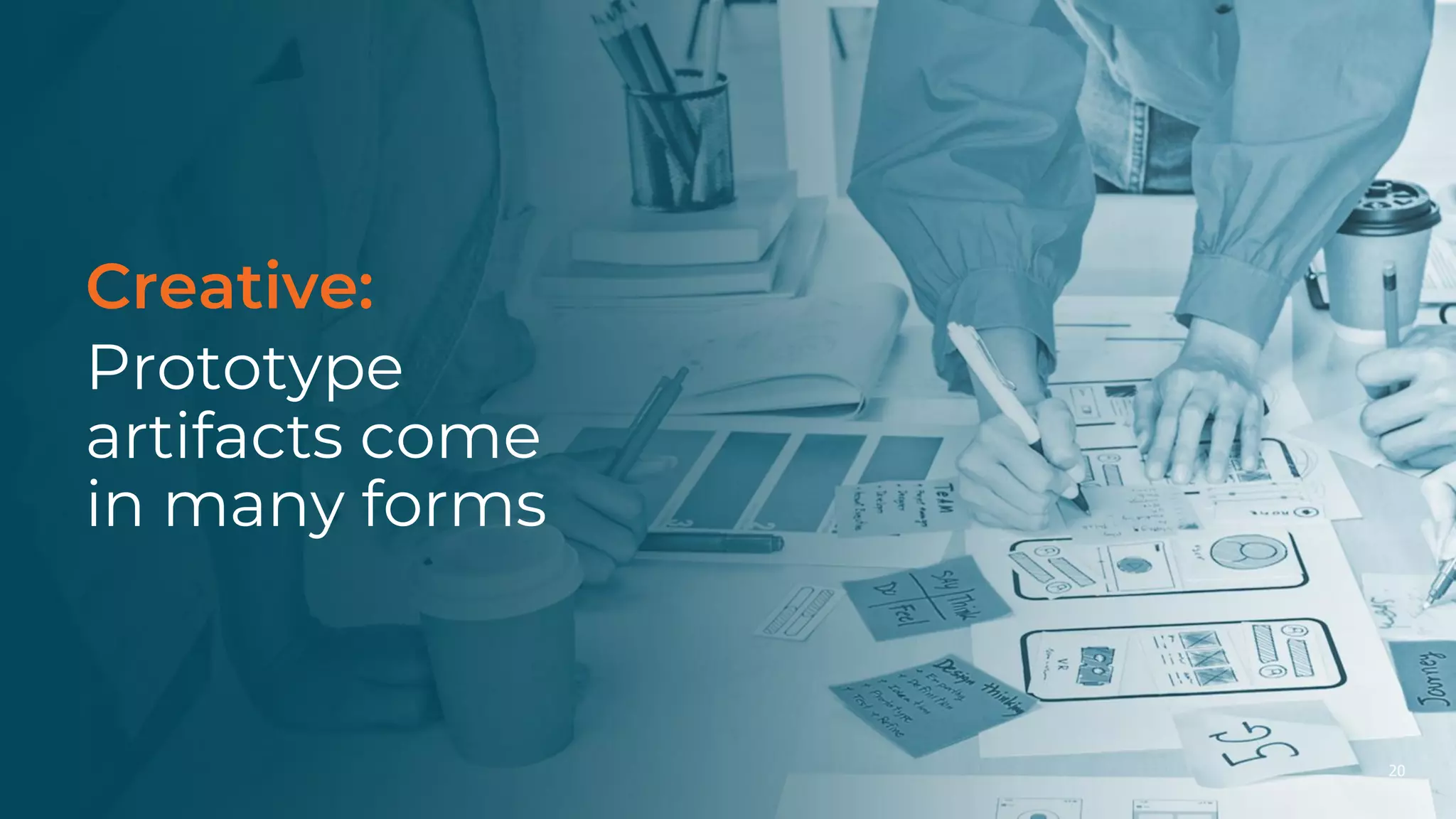
Creative:
Prototype
artifacts come
in many forms
21
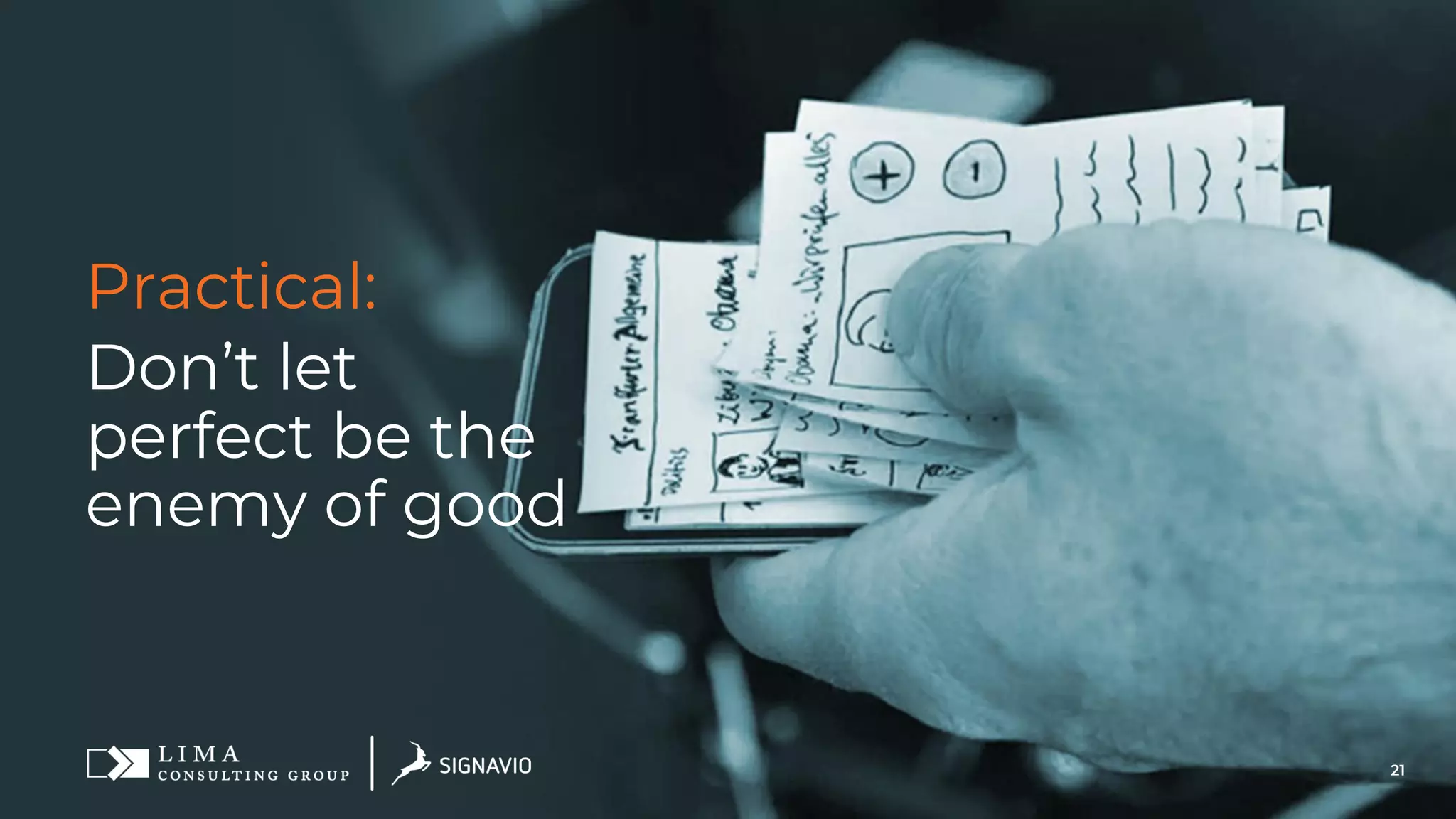
Practical:
Don’t let
perfect be the
enemy of good
22
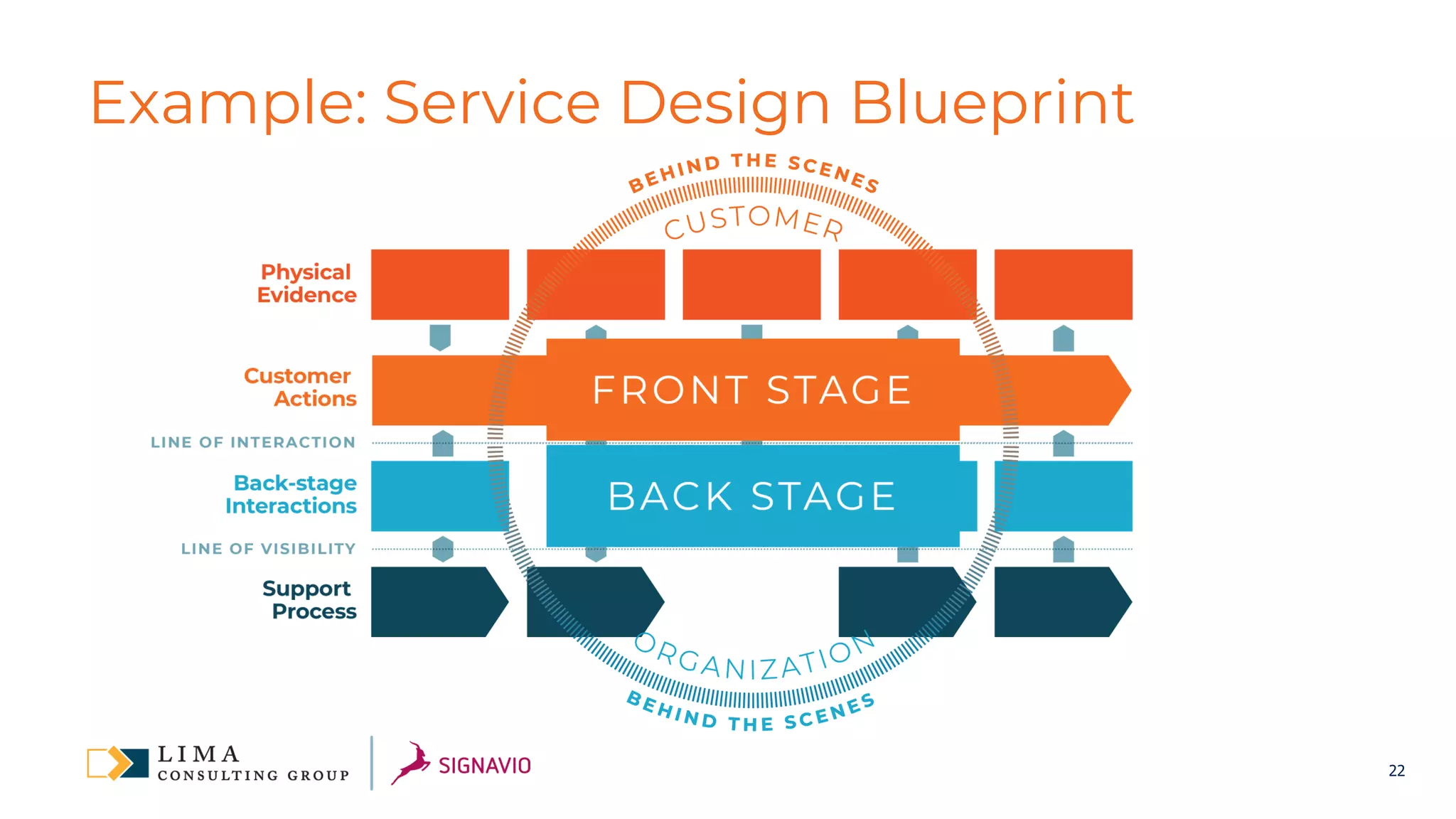
Example: Service Design Blueprint
23
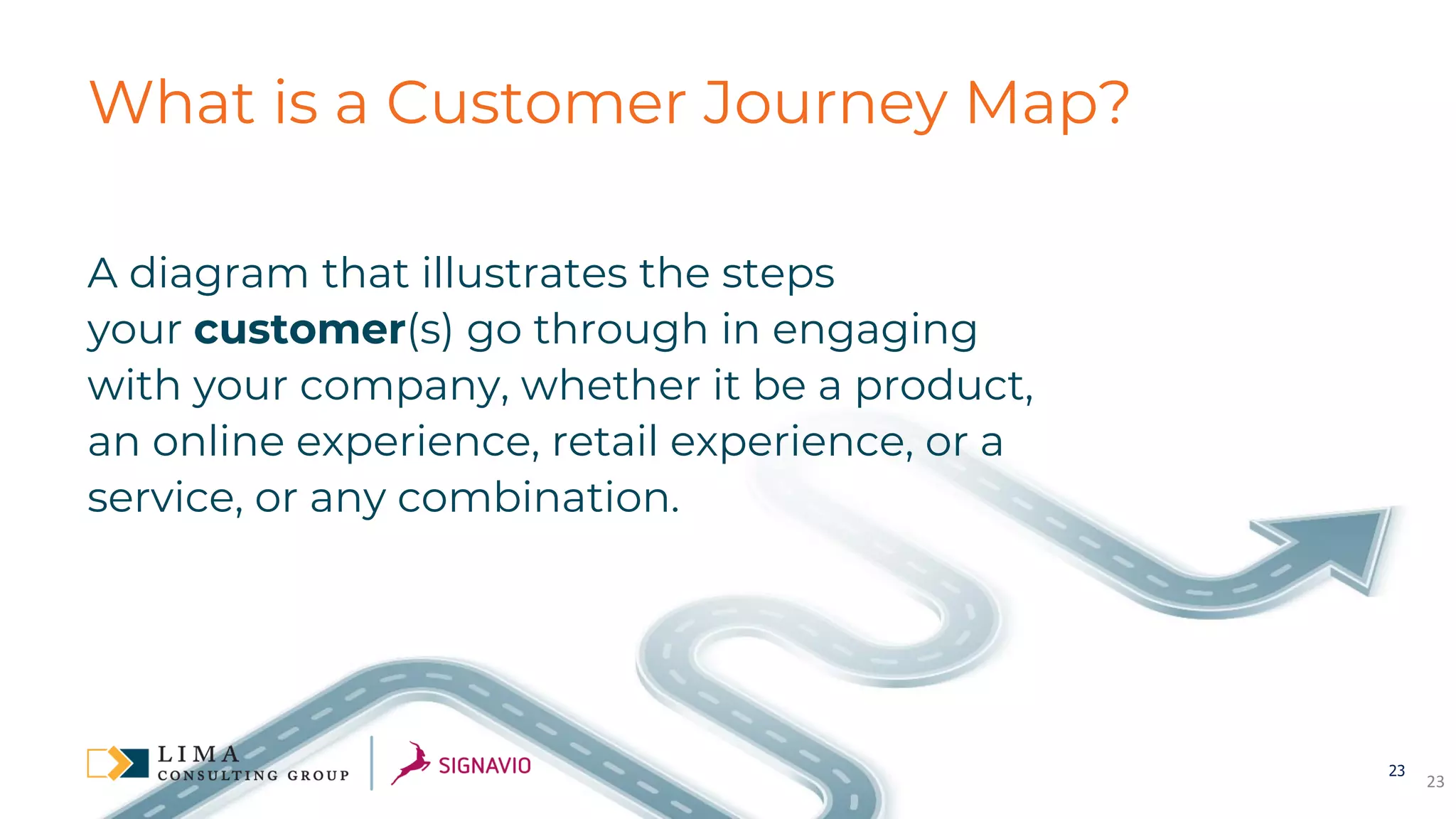
What is a Customer Journey Map?
A diagram that illustrates the steps
your customer(s) go through in engaging
with your company, whether it be a product,
an online experience, retail experience, or a
service, or any combination.
23
24
What is a Persona?
Like a composite character in a movie,
a persona is a fictional character that
marketers and designers define to represent
a user including all their preferences, feelings,
desires, and characteristics. Personas
include demographics, psychographics,
firmographics, typical quotes, etc.
24
25
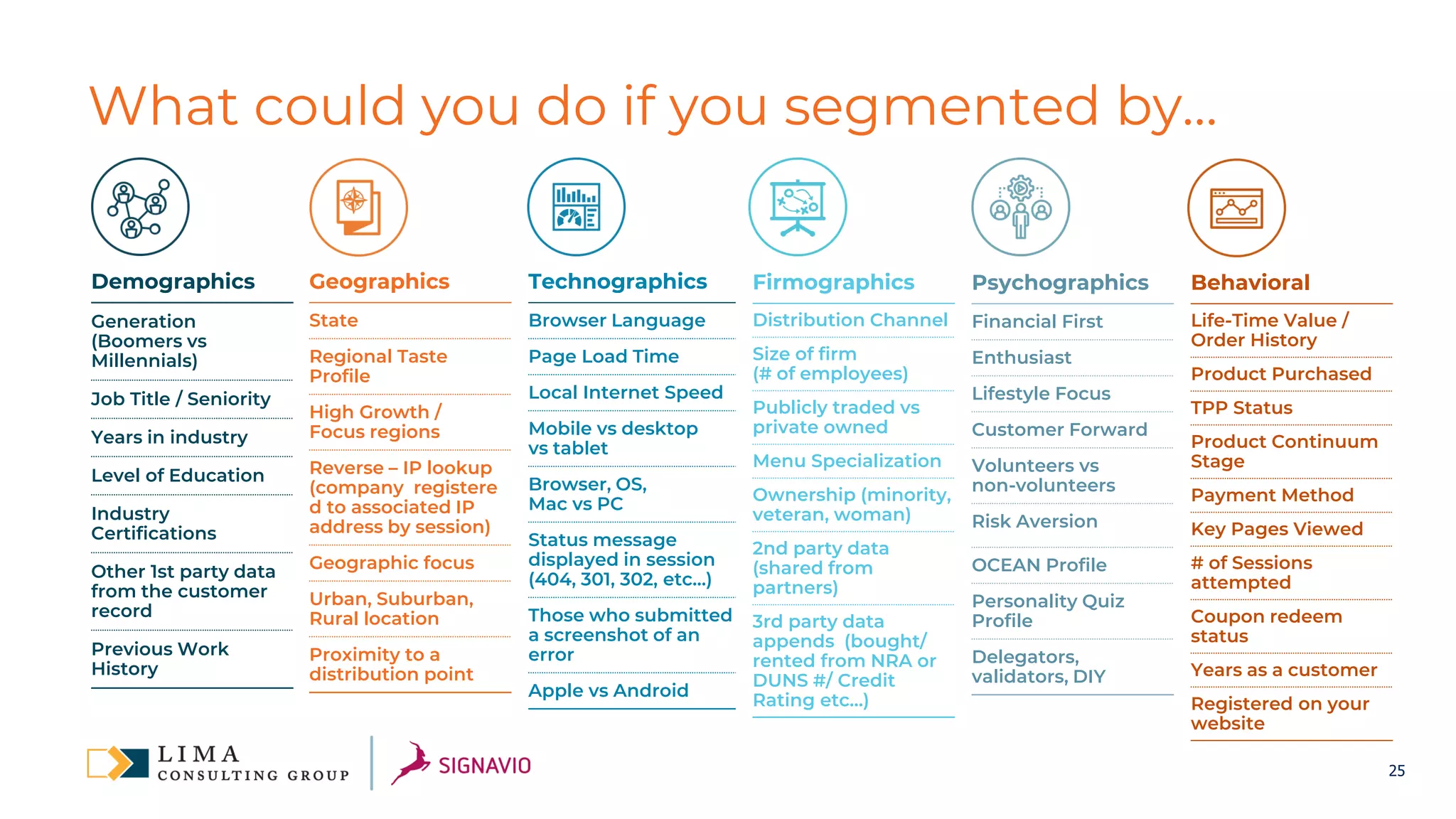
What could you do if you segmented by…
Demographics
Generation
(Boomers vs
Millennials)
Job Title / Seniority
Years in industry
Level of Education
Industry
Certifications
Other 1st party data
from the customer
record
Previous Work
History
Geographics
State
Regional Taste
Profile
High Growth /
Focus regions
Reverse – IP lookup
(company registere
d to associated IP
address by session)
Geographic focus
Urban, Suburban,
Rural location
Proximity to a
distribution point
Technographics
Browser Language
Page Load Time
Local Internet Speed
Mobile vs desktop
vs tablet
Browser, OS,
Mac vs PC
Status message
displayed in session
(404, 301, 302, etc…)
Those who submitted
a screenshot of an
error
Apple vs Android
Firmographics
Distribution Channel
Size of firm
(# of employees)
Publicly traded vs
private owned
Menu Specialization
Ownership (minority,
veteran, woman)
2nd party data
(shared from
partners)
3rd party data
appends (bought/
rented from NRA or
DUNS #/ Credit
Rating etc…)
Behavioral
Life-Time Value /
Order History
Product Purchased
TPP Status
Product Continuum
Stage
Payment Method
Key Pages Viewed
# of Sessions
attempted
Coupon redeem
status
Years as a customer
Registered on your
website
Psychographics
Financial First
Enthusiast
Lifestyle Focus
Customer Forward
Volunteers vs
non-volunteers
Risk Aversion
OCEAN Profile
Personality Quiz
Profile
Delegators,
validators, DIY
26
Use Case:
Customer Journey
Map in Signavio
27
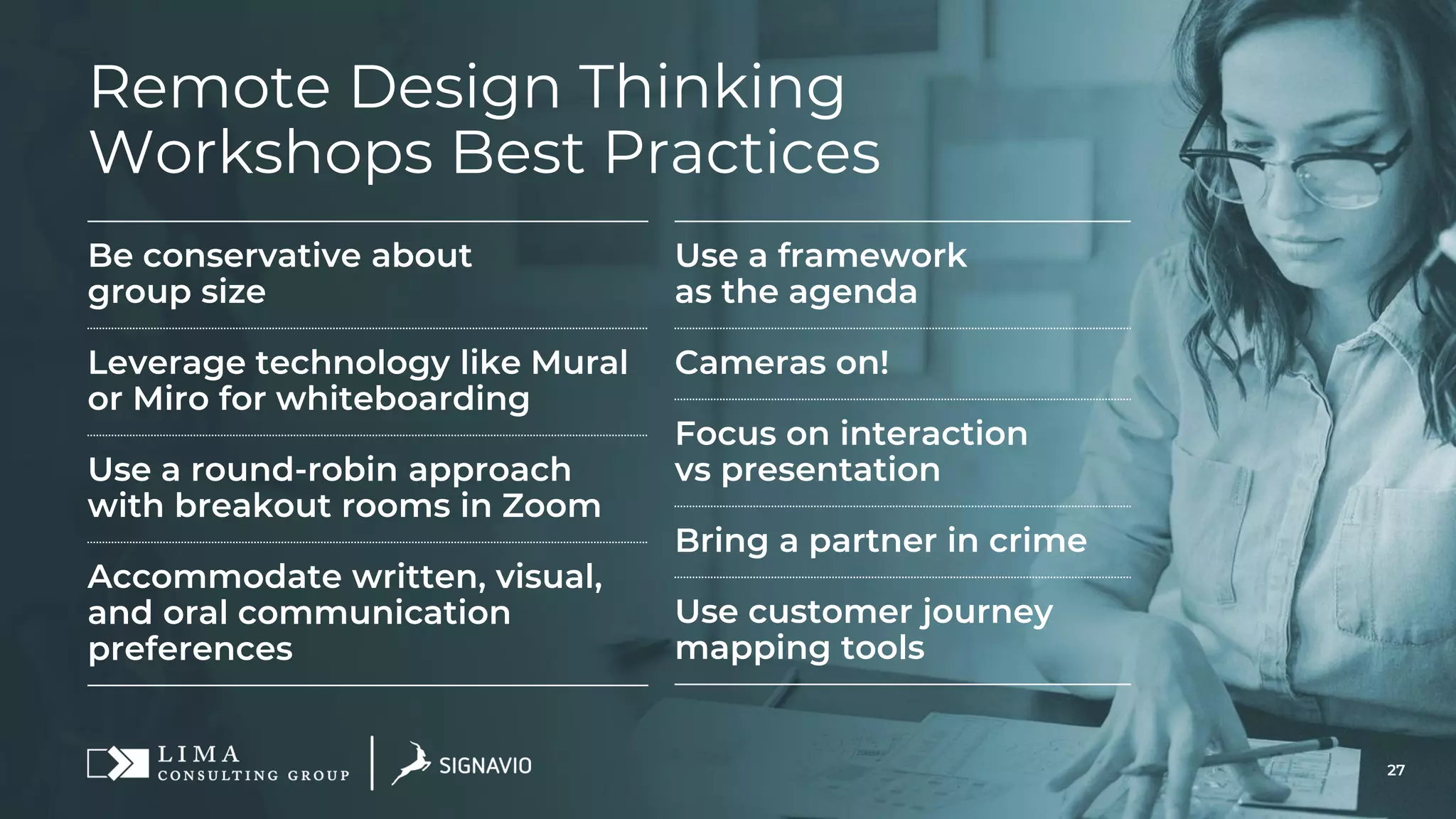
Remote Design Thinking
Workshops Best Practices
Be conservative about
group size
Leverage technology like Mural
or Miro for whiteboarding
Use a round-robin approach
with breakout rooms in Zoom
Accommodate written, visual,
and oral communication
preferences
Use a framework
as the agenda
Cameras on!
Focus on interaction
vs presentation
Bring a partner in crime
Use customer journey
mapping tools
28
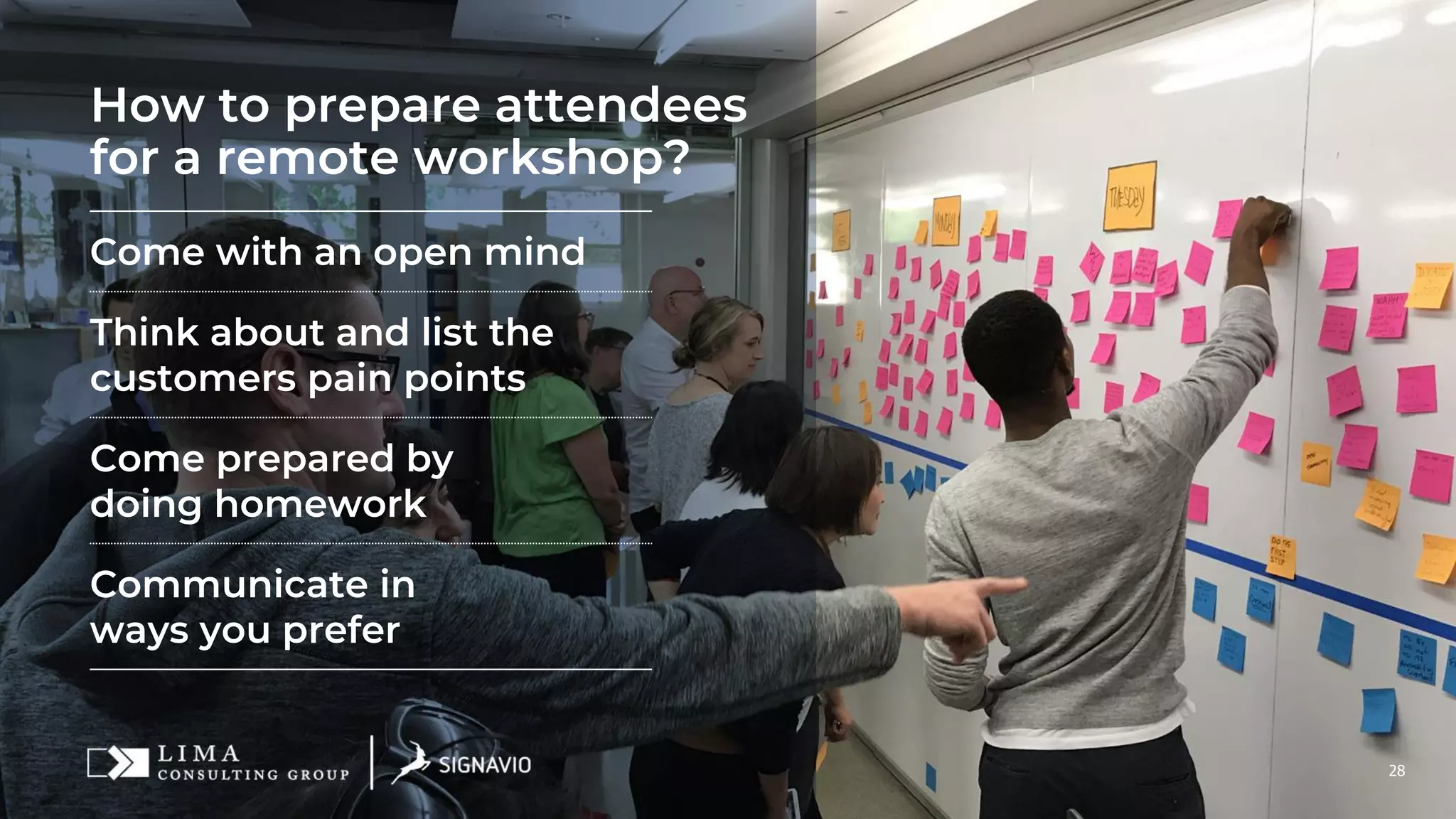
How to prepare attendees
for a remote workshop?
Come with an open mind
Think about and list the
customers pain points
Come prepared by
doing homework
Communicate in
ways you prefer
29
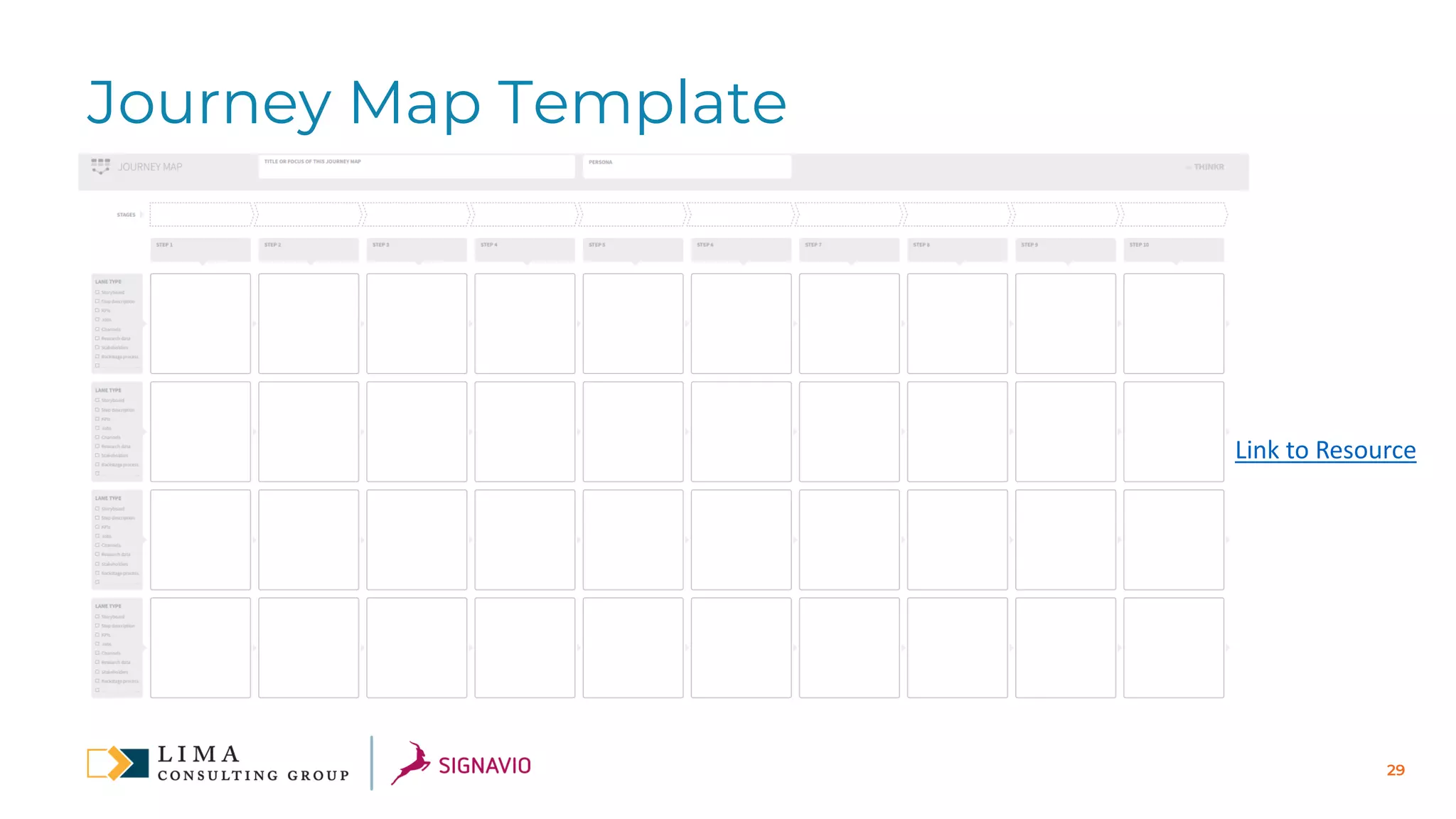
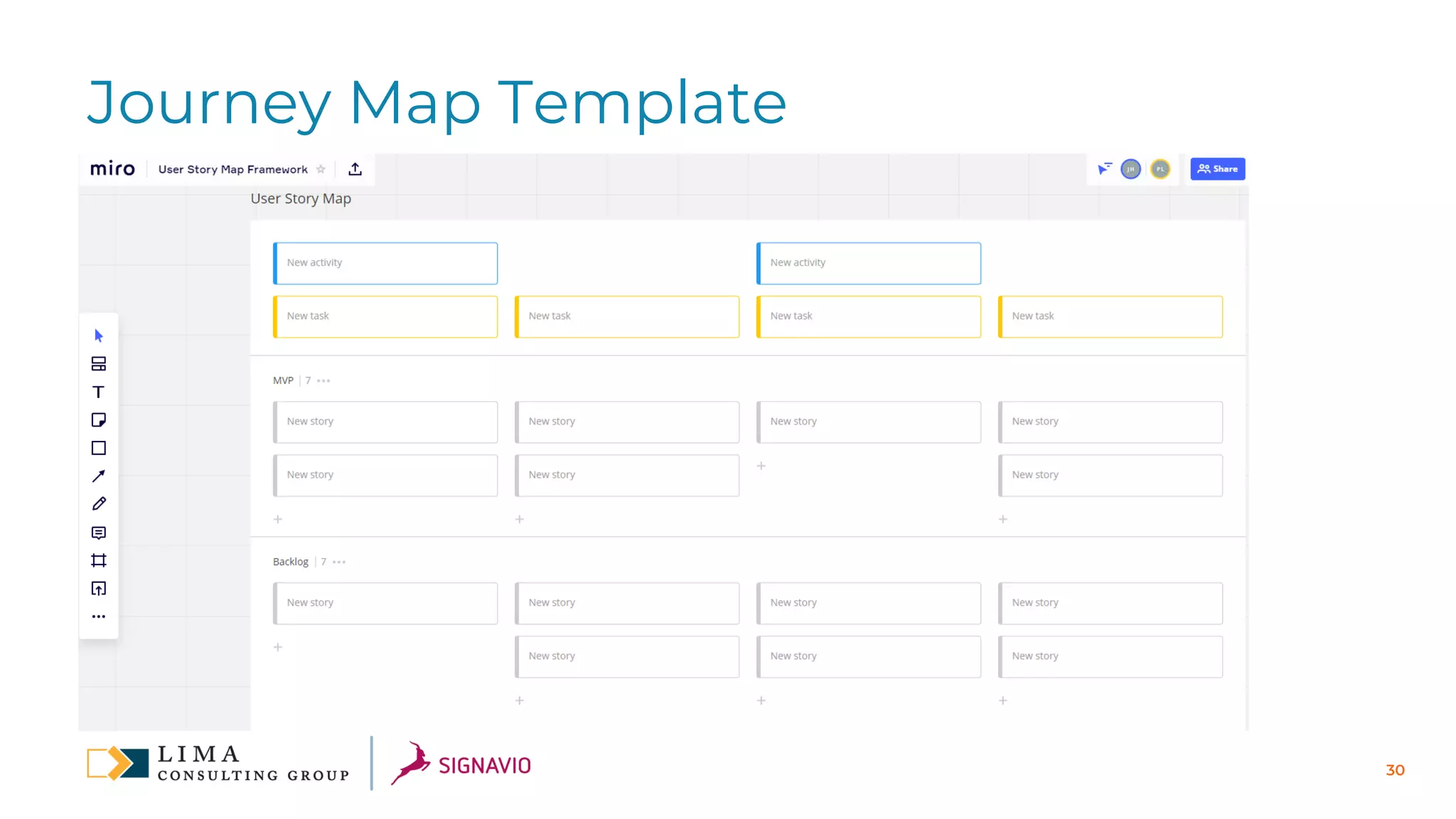
Journey Map Template
Link to Resource
30
Journey Map Template
31
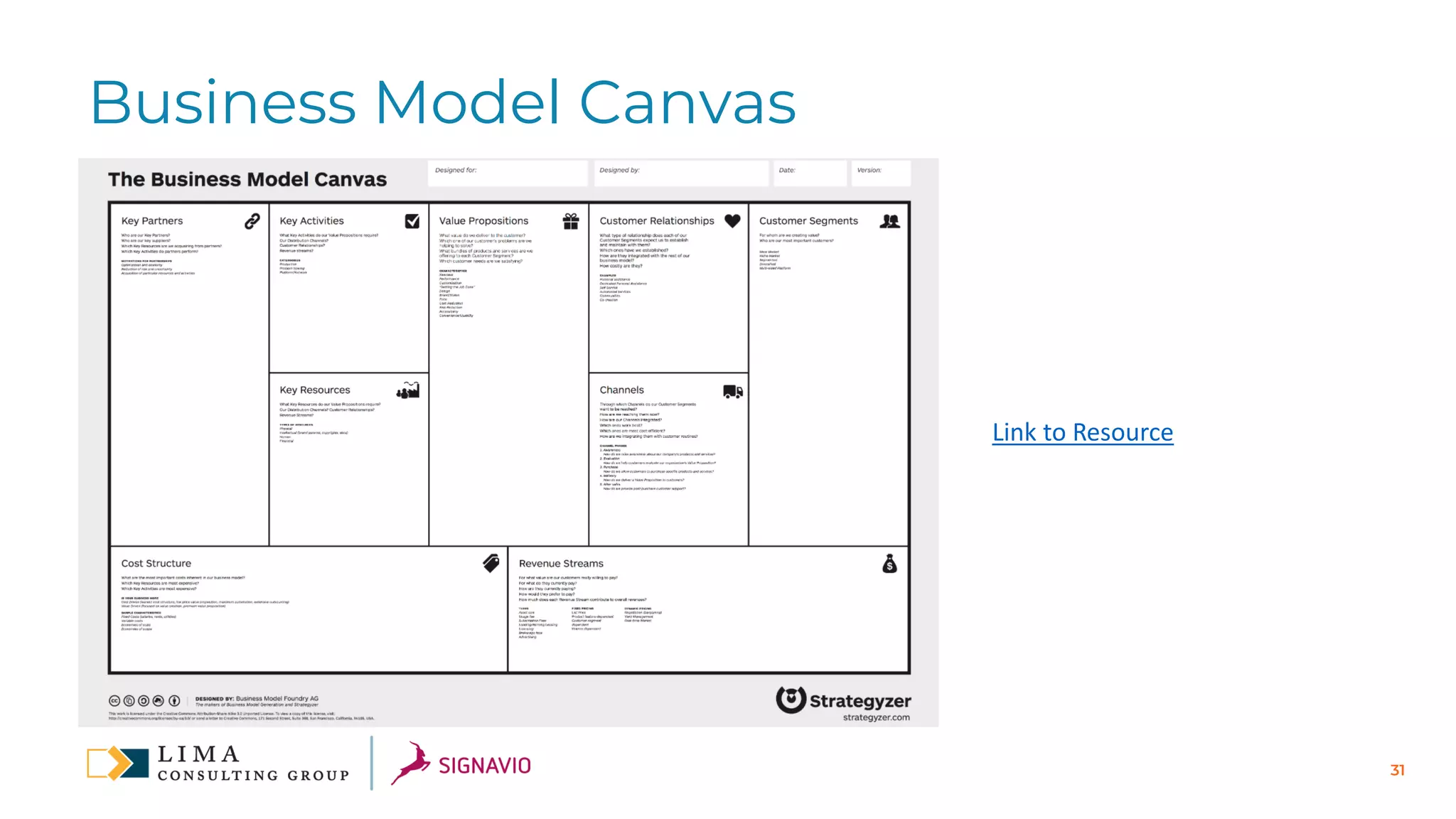
Business Model Canvas
Link to Resource
32
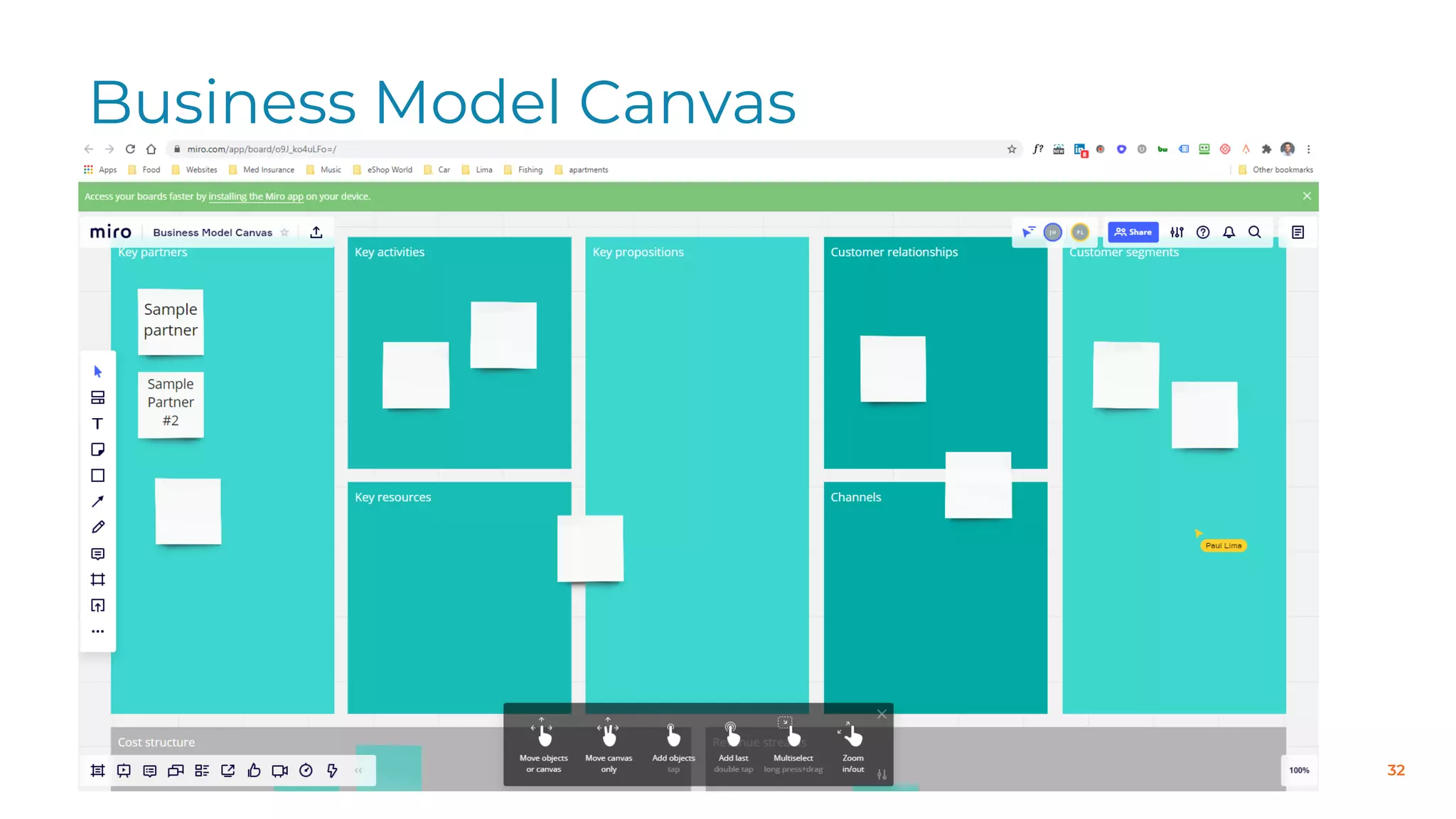
Business Model Canvas
33
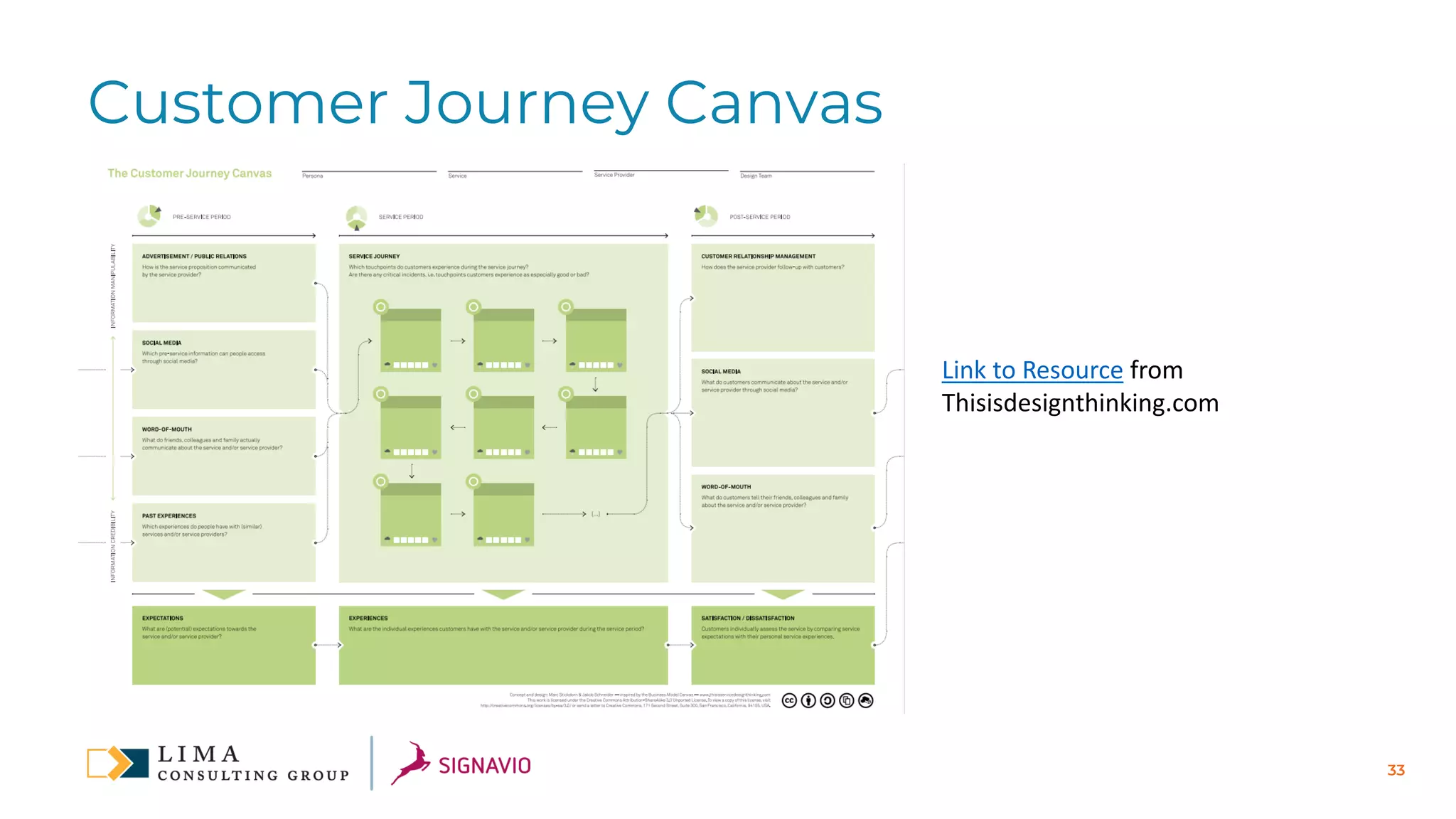
Customer Journey Canvas
Link to Resource from
Thisisdesignthinking.com
34
We cannot solve our problems with the
same thinking we used when we created them.

Optimize Customer Experiences with Design Thinking

  • 1.
    Optimize Customer Experiences with DesignThinking J U L Y 2 9 , 2 0 2 0
  • 2.
    AGENDA Housekeeping • This webinaris being recorded and the slides will be shared at the conclusion of the presentation. • If you have questions, please submit them via the “chat” function on the GoToWebinar toolbar – Our presenters will answer them at the end. If we should run out of time to answer all, we’ll get back with you separately. • You will be prompted to take a brief 10-second survey at the end. Your feedback helps us develop future content. Today’s Speakers: Candace Collins Signavio Presentation time: 45 Paul Lima Lima Consulting Nicole Ostrander Signavio
  • 3.
    3 1. Design thinkingoverview 2. Leading remote design thinking workshops 3. Use case Today’s Agenda
  • 4.
  • 5.
    5 Myth: Myth Buster: Roles: “Whyis marketing asking me to do their job?” Collaboration: Some of the best ideas will come from those who are closest to the customer Ownership: “I know my clients already and don’t need help from HQ, they don’t understand us in the field” Transparency: Person dependency AND Process dependency Applicability: The clients I work with don’t want to engage with us through digital communications Engagement: Fish where the fish are by meeting our clients where they are Confusion: I can’t have messaging misalignments that will slow me down. Alignment: Our vision is to align all communications and touchpoints across all marketing and sales efforts Typical Objections and Remediations
  • 6.
    6 Preparing for Design ThinkingWorkshop Minds are like parachutes, they function best when open.
  • 7.
    7 What is DesignThinking? A Human Centered, Collaborative approach to innovation that is Creative, Iterative, & Practical.
  • 8.
  • 9.
    9 When should weconsider doing a DT Workshop? It’s used to solve wicked problems. Problems that are ill-defined: both problem and solution are unknown at the beginning. A large part of the problem solving is actually defining the problem. And/or tricky: it involves risk because you may extend beyond the core competency of the organization. Dr. Richard Buchanon, Design for Human and Planetary Health: A Holistic/Integral Approach to Complexity and Sustainability, (1992). Wicked Problems in Design Thinking. Design Issues, Vol. 8, No. 2, (Spring, 1992), pp. 5–21
  • 10.
    10 It used tobe about products… Now it’s about people and experiences
  • 11.
    11 The most successfulbusiness models combine new ways of making money with innovative, great customer experiences. Source: Larry Keeley, Ryan Pikkel, Brian Quinn and Helen Walters. Ten Types of Innovation: The Discipline of Building Breakthroughs (Hoboken, NJ; John Wiley & Sons) 16-17. Most companies focus hereBiggest Opportunities are anchored here
  • 12.
  • 13.
    13 What is DesignThinking? A Human Centered, Collaborative approach to innovation that is Creative, Iterative, & Practical.
  • 14.
    14 Human Centered: Weneed to design service experiences from inside AND out.
  • 15.
    15 Human Centered: Weneed to design service experiences from inside AND out.
  • 16.
    16 Human Centered: NewWays, New Answers I N S I D E > > < < O U T S I D E What are our core competencies? What is our current business model? What else could we offer? What other channel could we use? What customers would we sell to? Perceived Customer Value = Functional Benefits – Financial Cost T R A D I T I O N A L I N S I D E - O U T V A L U E C H A I N Perceived Customer Value = Emotional Benefit – Hassle Factor What customers do we want? What are their priorities? What business design would create defensible profits? How can we align our offering to those priorities? What ecosystem exists to meet those priorities? What do we need to execute that design? C U S T O M E R E X P E R I E N C E O U T S I D E - I N V A L U E C H A I N Adapted from Peer Insight, (2007). Seizing the White Space: Innovation Service Concepts in the United States, Technology Review Study, Helsinki: Tekes, the Finnish Funding Agency for Technology and Innovation
  • 17.
  • 18.
  • 19.
  • 20.
  • 21.
  • 22.
  • 23.
    23 What is aCustomer Journey Map? A diagram that illustrates the steps your customer(s) go through in engaging with your company, whether it be a product, an online experience, retail experience, or a service, or any combination. 23
  • 24.
    24 What is aPersona? Like a composite character in a movie, a persona is a fictional character that marketers and designers define to represent a user including all their preferences, feelings, desires, and characteristics. Personas include demographics, psychographics, firmographics, typical quotes, etc. 24
  • 25.
    25 What could youdo if you segmented by… Demographics Generation (Boomers vs Millennials) Job Title / Seniority Years in industry Level of Education Industry Certifications Other 1st party data from the customer record Previous Work History Geographics State Regional Taste Profile High Growth / Focus regions Reverse – IP lookup (company registere d to associated IP address by session) Geographic focus Urban, Suburban, Rural location Proximity to a distribution point Technographics Browser Language Page Load Time Local Internet Speed Mobile vs desktop vs tablet Browser, OS, Mac vs PC Status message displayed in session (404, 301, 302, etc…) Those who submitted a screenshot of an error Apple vs Android Firmographics Distribution Channel Size of firm (# of employees) Publicly traded vs private owned Menu Specialization Ownership (minority, veteran, woman) 2nd party data (shared from partners) 3rd party data appends (bought/ rented from NRA or DUNS #/ Credit Rating etc…) Behavioral Life-Time Value / Order History Product Purchased TPP Status Product Continuum Stage Payment Method Key Pages Viewed # of Sessions attempted Coupon redeem status Years as a customer Registered on your website Psychographics Financial First Enthusiast Lifestyle Focus Customer Forward Volunteers vs non-volunteers Risk Aversion OCEAN Profile Personality Quiz Profile Delegators, validators, DIY
  • 26.
  • 27.
    27 Remote Design Thinking WorkshopsBest Practices Be conservative about group size Leverage technology like Mural or Miro for whiteboarding Use a round-robin approach with breakout rooms in Zoom Accommodate written, visual, and oral communication preferences Use a framework as the agenda Cameras on! Focus on interaction vs presentation Bring a partner in crime Use customer journey mapping tools
  • 28.
    28 How to prepareattendees for a remote workshop? Come with an open mind Think about and list the customers pain points Come prepared by doing homework Communicate in ways you prefer
  • 29.
  • 30.
  • 31.
  • 32.
  • 33.
    33 Customer Journey Canvas Linkto Resource from Thisisdesignthinking.com
  • 34.
    34 We cannot solveour problems with the same thinking we used when we created them.