Camera Angles
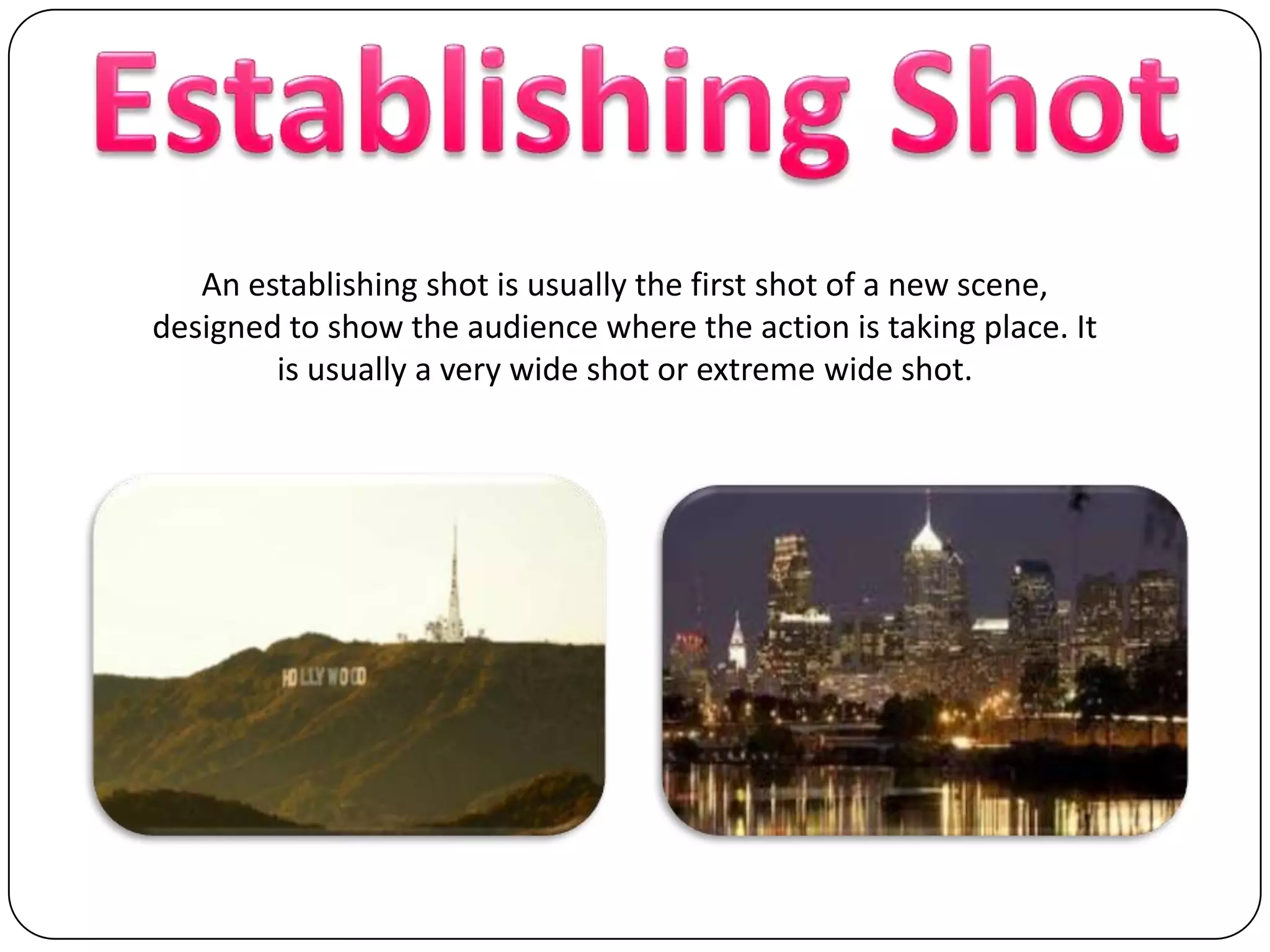
Establishing ShotAn establishing shot is usually the first shot of a new scene, designed to show the audience where the action is taking place. It is usually a very wide shot or extreme wide shot.
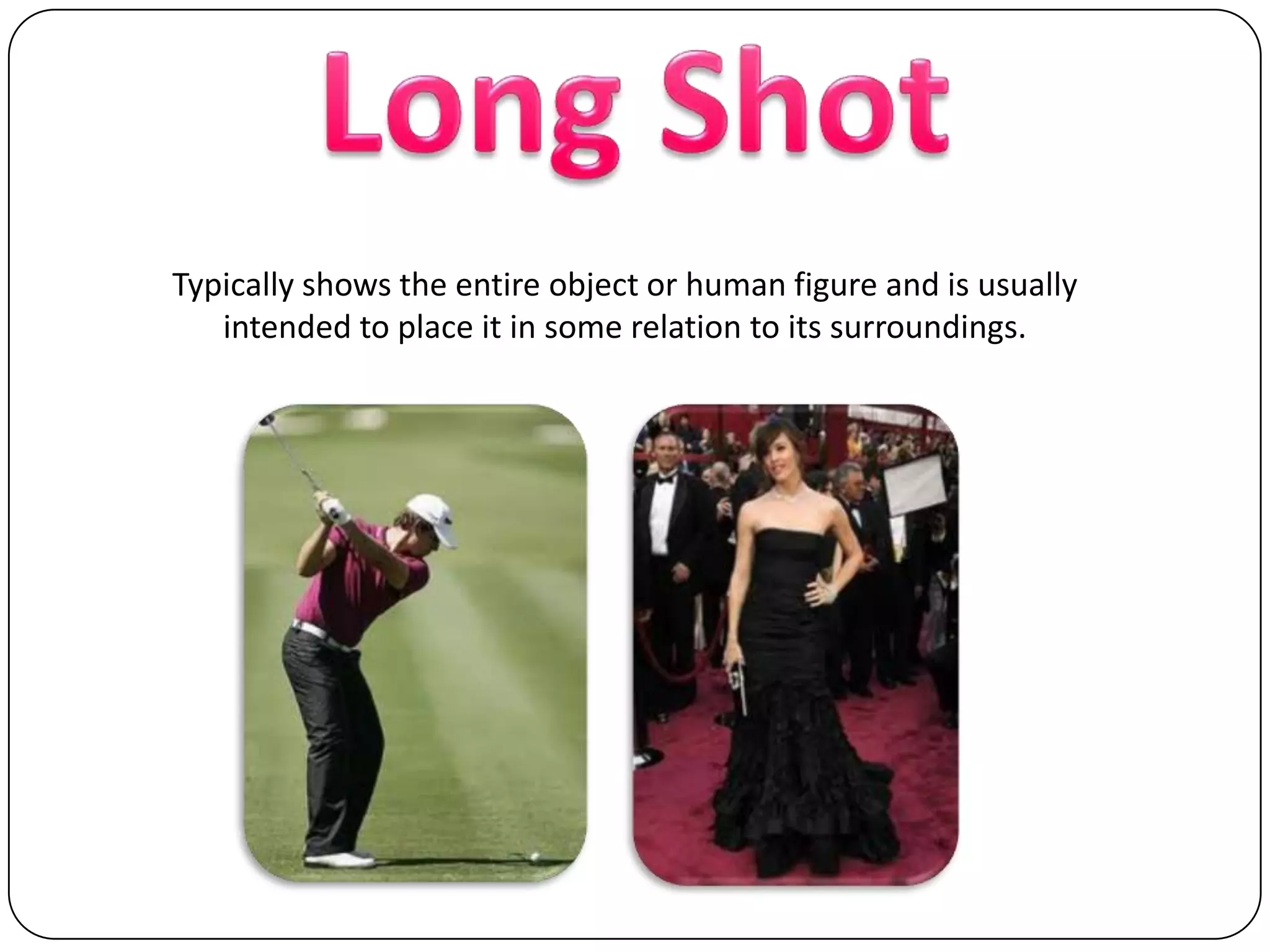
Long ShotTypically shows the entire object or human figure and is usually intended to place it in some relation to its surroundings.
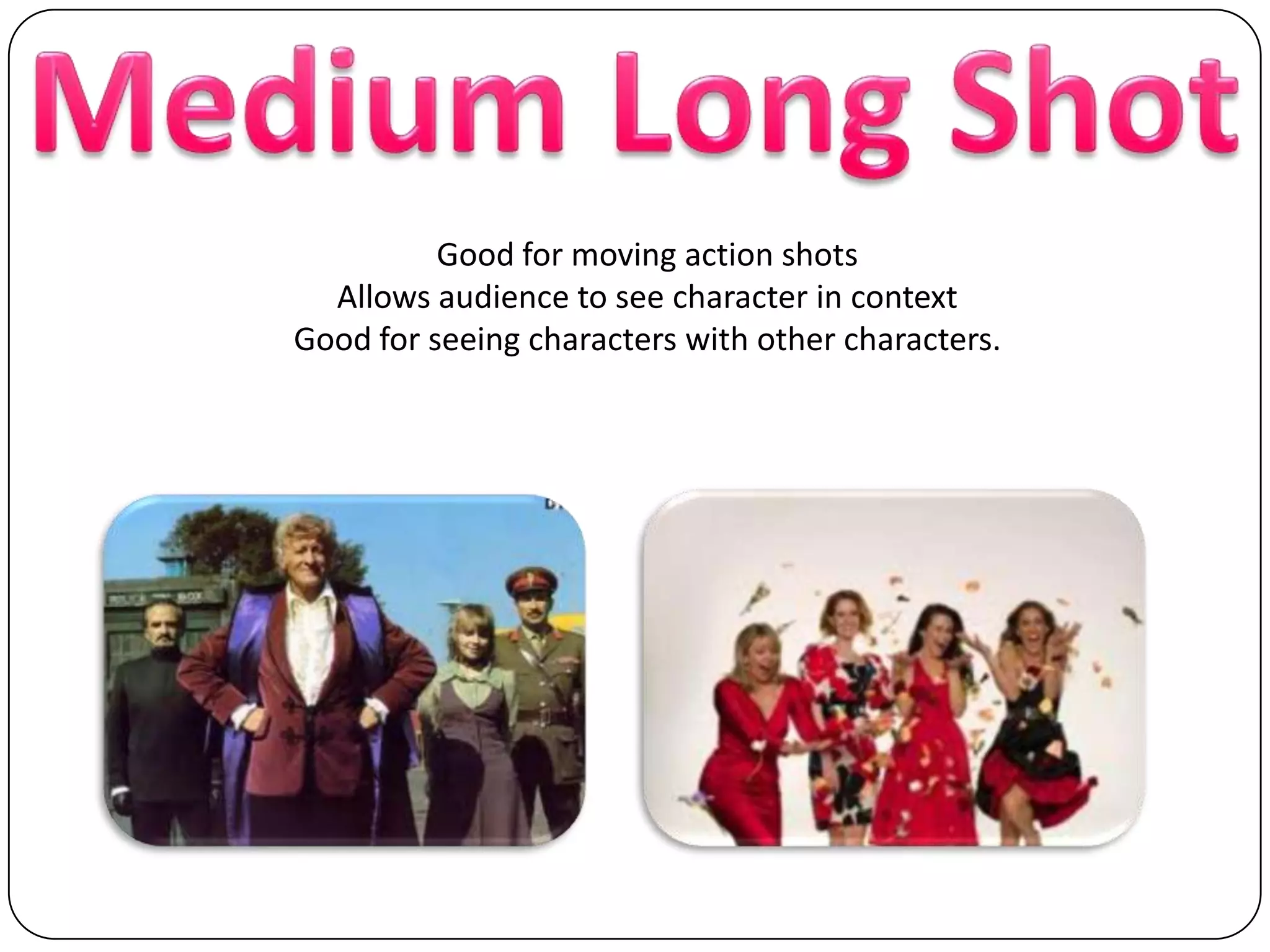
Medium Long ShotGood for moving action shotsAllows audience to see character in contextGood for seeing characters with other characters.
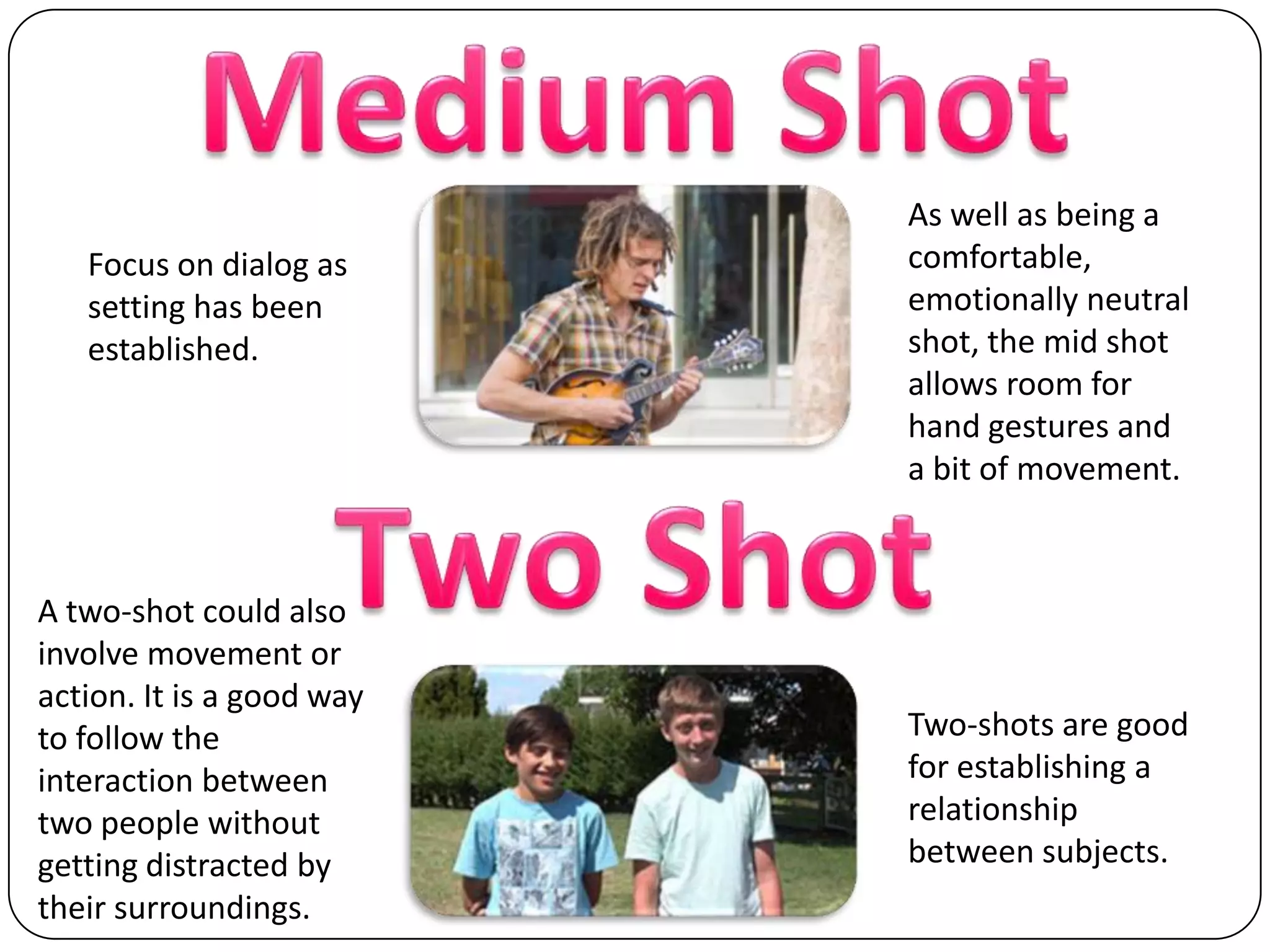
Medium ShotAs well as being a comfortable, emotionally neutral shot, the mid shot allows room for hand gestures and a bit of movement.Focus on dialog as setting has been established.Two ShotA two-shot could also involve movement or action. It is a good way to follow the interaction between two people without getting distracted by their surroundings.Two-shots are good for establishing a relationship between subjects.
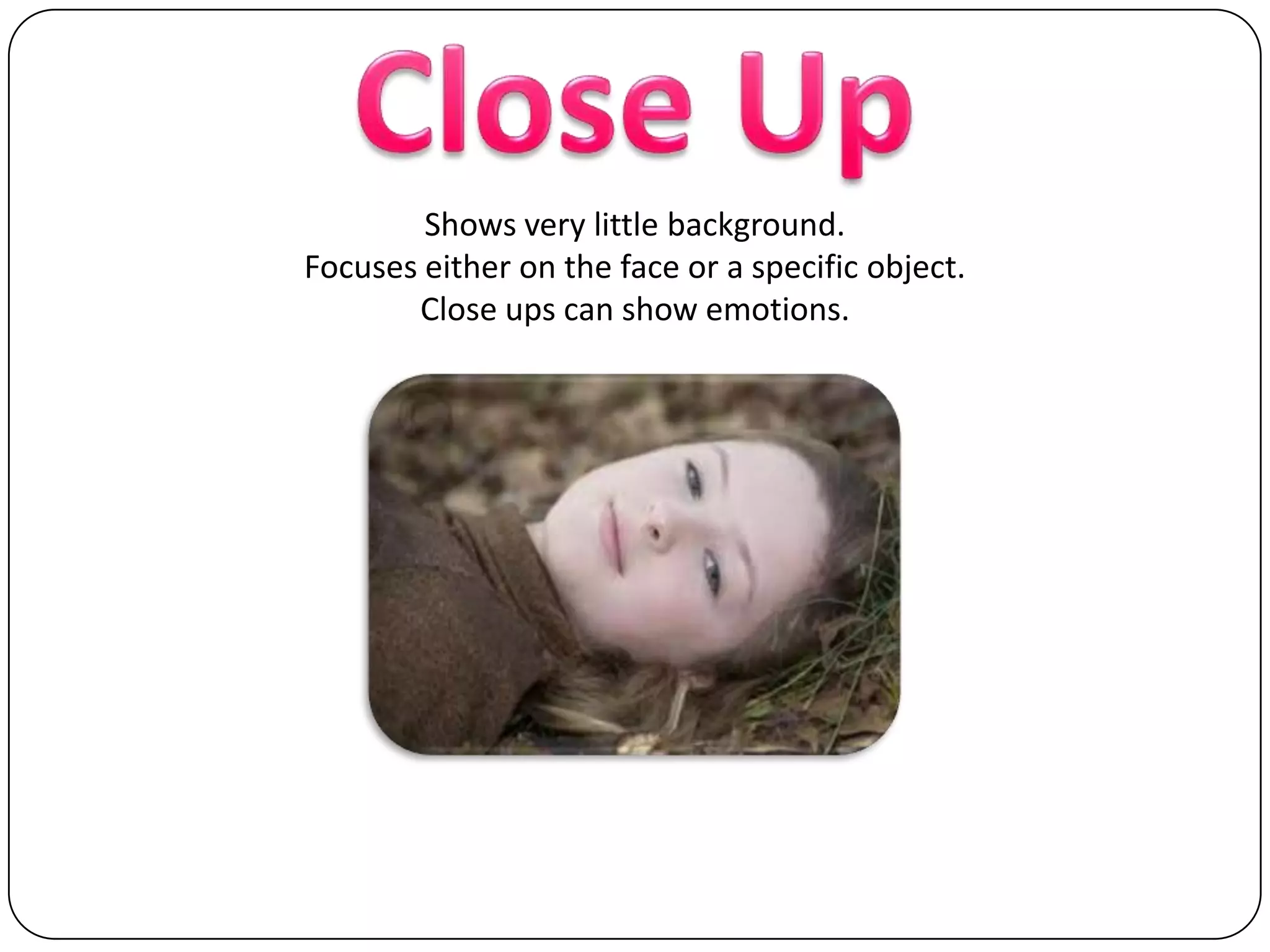
Close UpShows very little background.Focuses either on the face or a specific object.Close ups can show emotions.
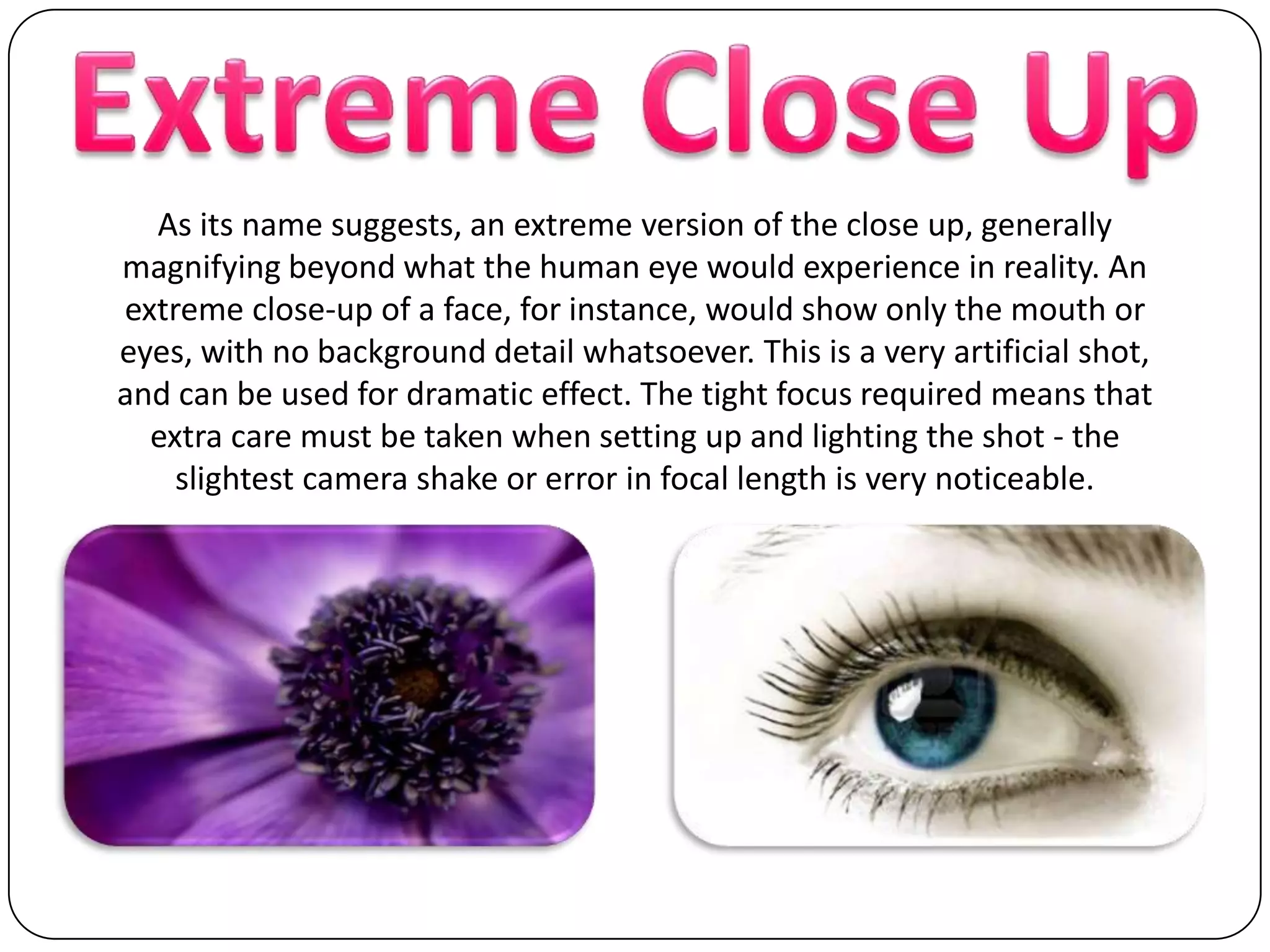
Extreme Close UpAs its name suggests, an extreme version of the close up, generally magnifying beyond what the human eye would experience in reality. An extreme close-up of a face, for instance, would show only the mouth or eyes, with no background detail whatsoever. This is a very artificial shot, and can be used for dramatic effect. The tight focus required means that extra care must be taken when setting up and lighting the shot - the slightest camera shake or error in focal length is very noticeable.
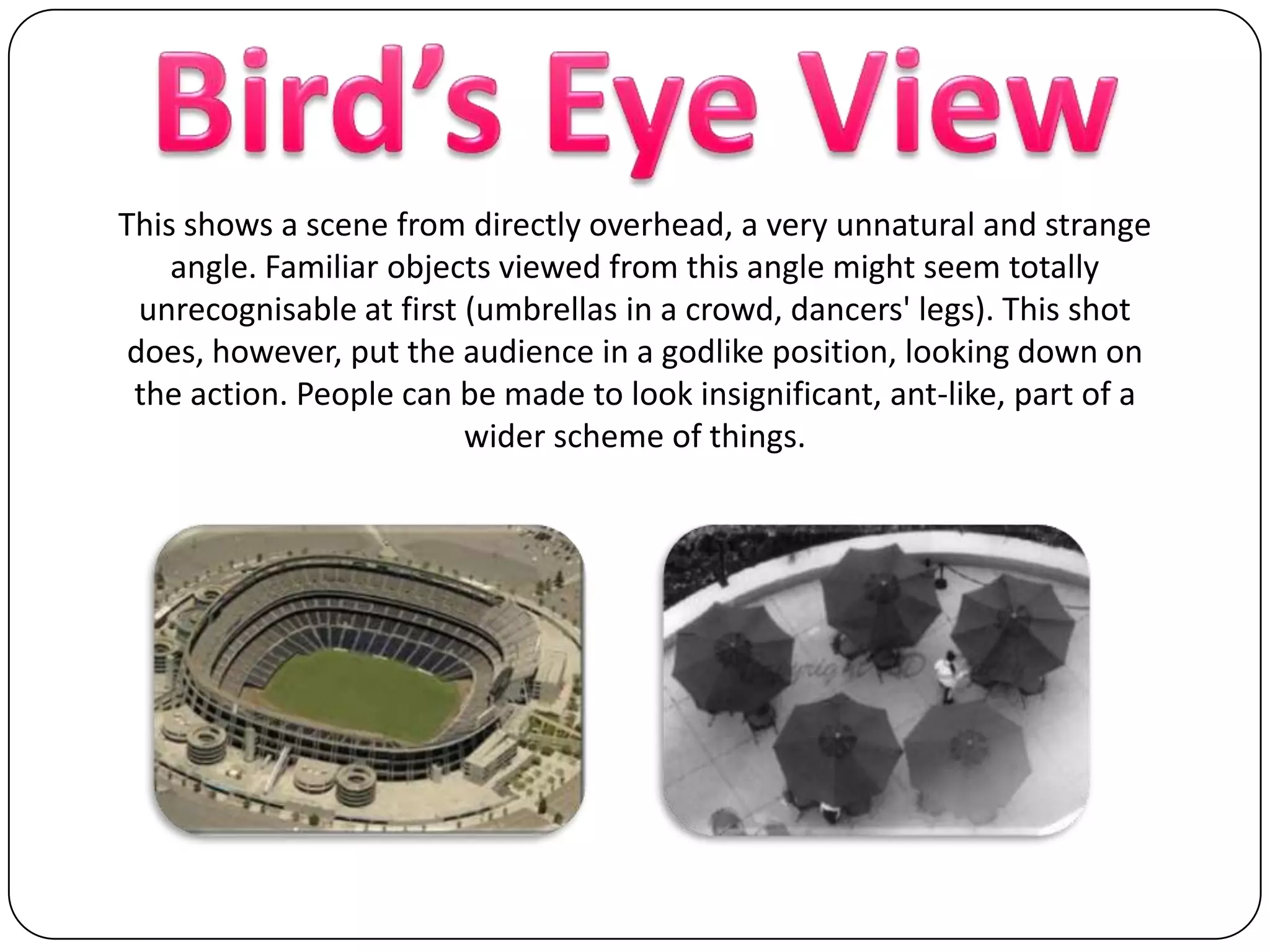
Bird’s Eye ViewThis shows a scene from directly overhead, a very unnatural and strange angle. Familiar objects viewed from this angle might seem totally unrecognisable at first (umbrellas in a crowd, dancers' legs). This shot does, however, put the audience in a godlike position, looking down on the action. People can be made to look insignificant, ant-like, part of a wider scheme of things.
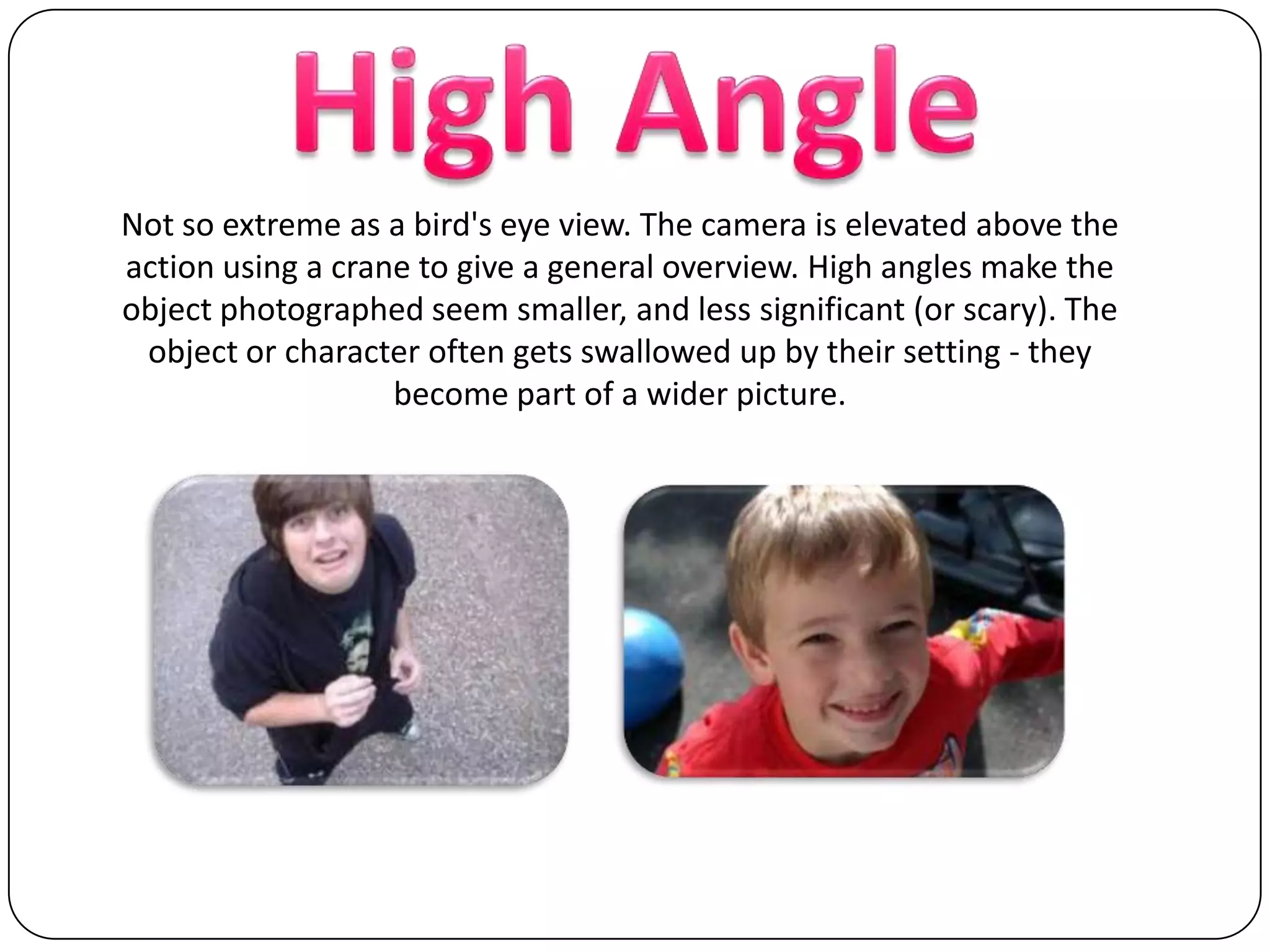
High AngleNot so extreme as a bird's eye view. The camera is elevated above the action using a crane to give a general overview. High angles make the object photographed seem smaller, and less significant (or scary). The object or character often gets swallowed up by their setting - they become part of a wider picture.
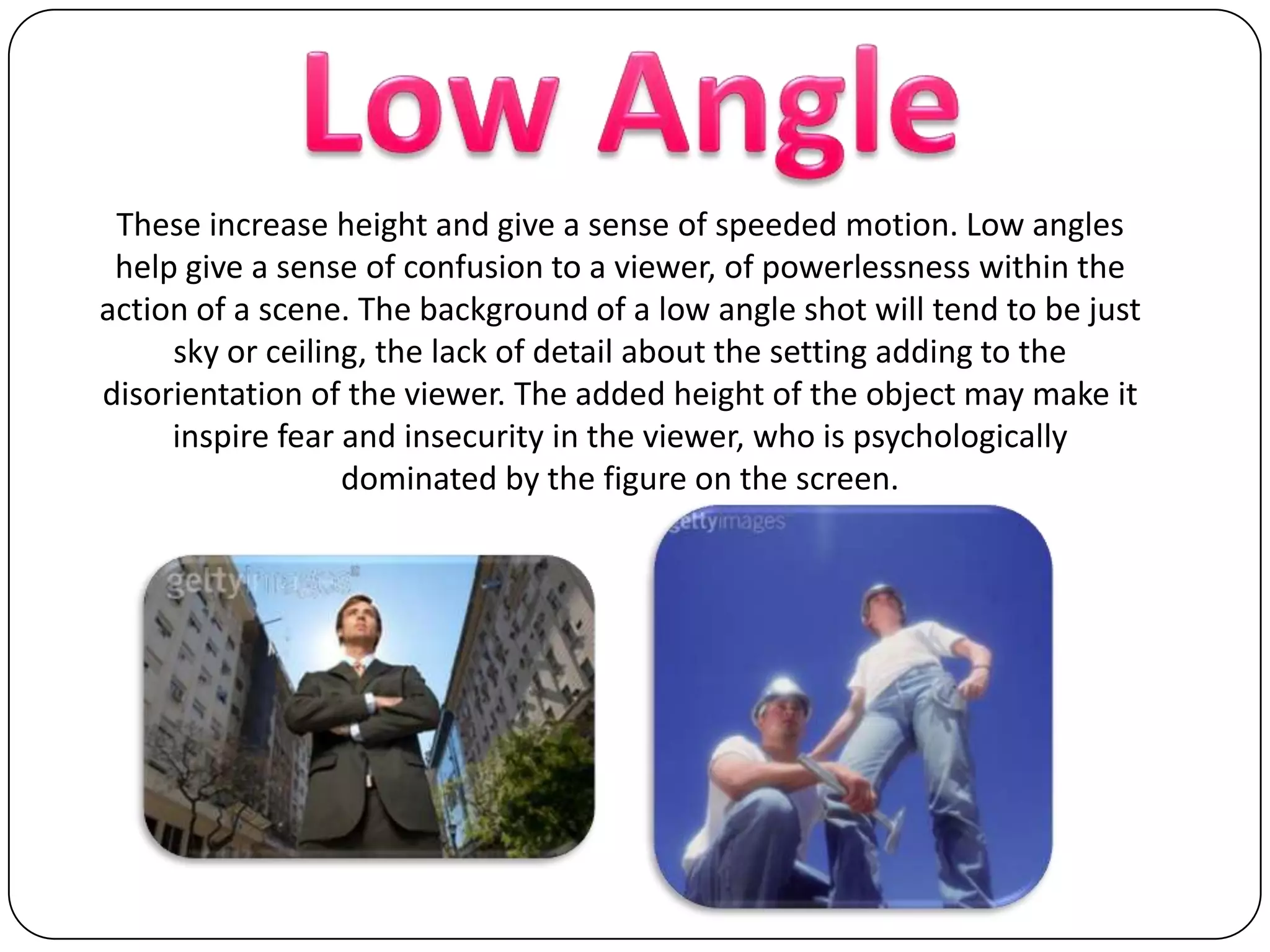
Low AngleThese increase height and give a sense of speeded motion. Low angles help give a sense of confusion to a viewer, of powerlessness within the action of a scene. The background of a low angle shot will tend to be just sky or ceiling, the lack of detail about the setting adding to the disorientation of the viewer. The added height of the object may make it inspire fear and insecurity in the viewer, who is psychologically dominated by the figure on the screen.
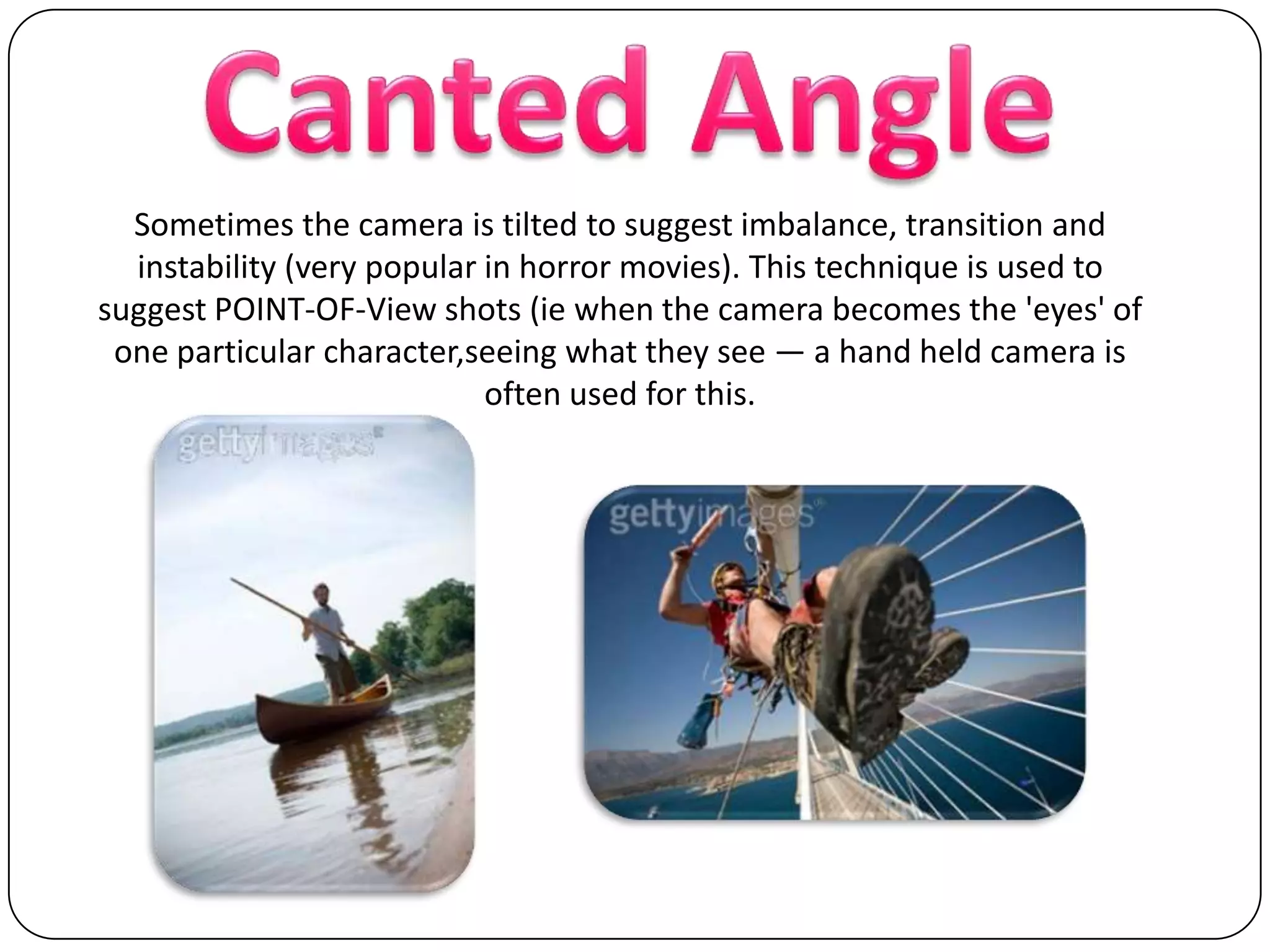
Canted AngleSometimes the camera is tilted to suggest imbalance, transition and instability (very popular in horror movies). This technique is used to suggest POINT-OF-View shots (ie when the camera becomes the 'eyes' of one particular character,seeing what they see — a hand held camera is often used for this.
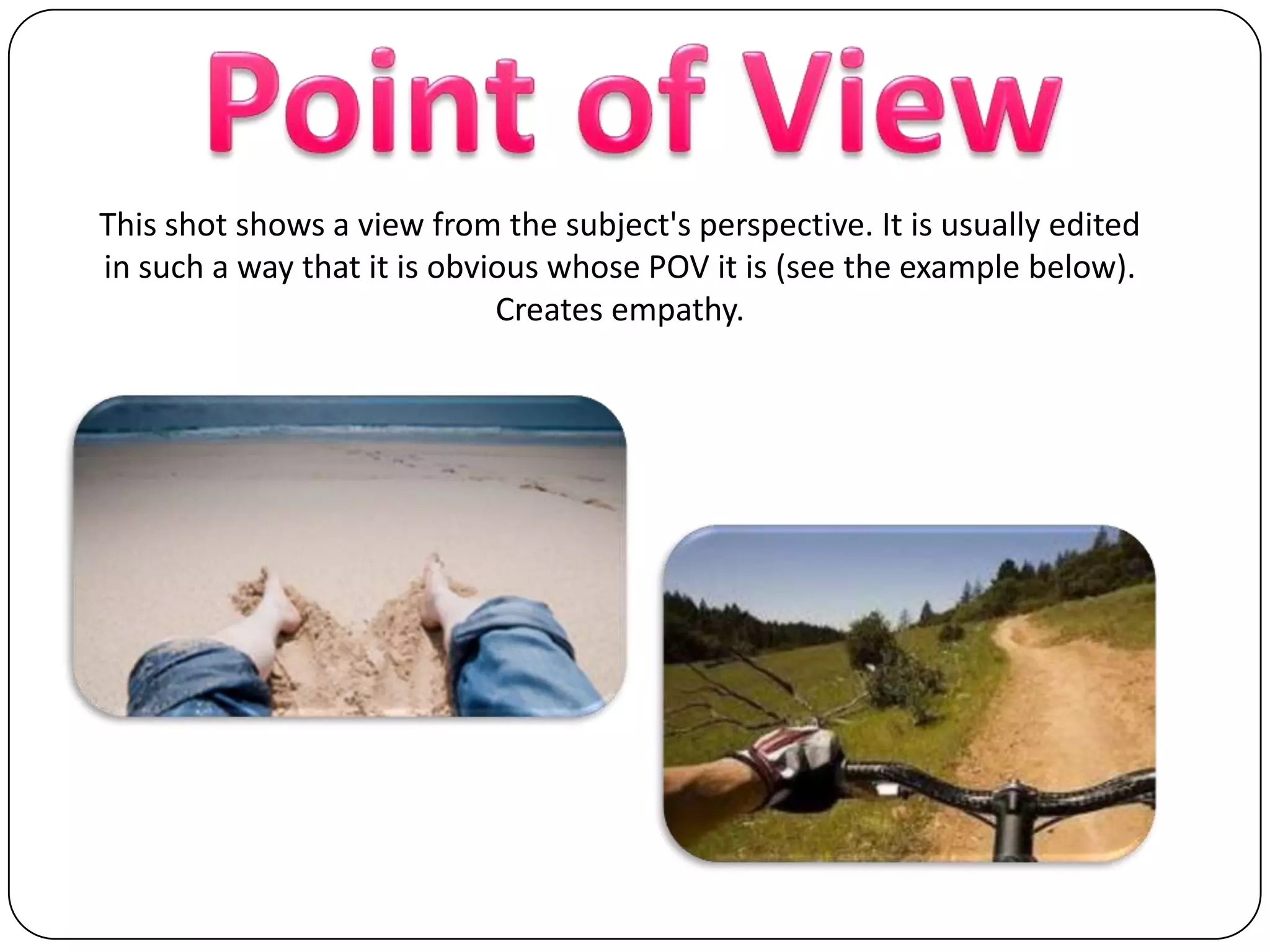
Point of ViewThis shot shows a view from the subject's perspective. It is usually edited in such a way that it is obvious whose POV it is (see the example below). Creates empathy.
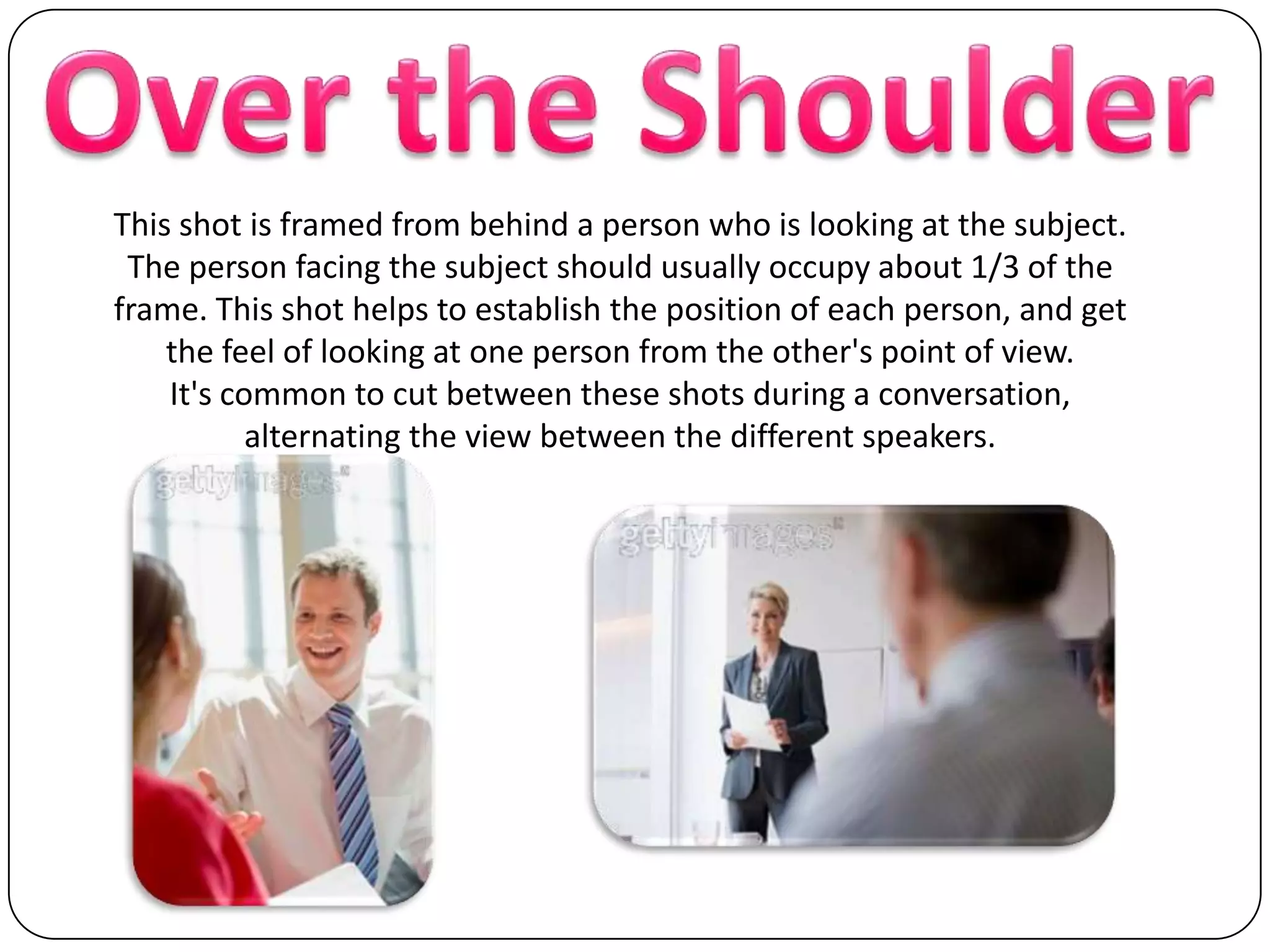
Over the ShoulderThis shot is framed from behind a person who is looking at the subject. The person facing the subject should usually occupy about 1/3 of the frame. This shot helps to establish the position of each person, and get the feel of looking at one person from the other's point of view. It's common to cut between these shots during a conversation, alternating the view between the different speakers.

Camera Angles

  • 1.
  • 2.
    Establishing ShotAn establishingshot is usually the first shot of a new scene, designed to show the audience where the action is taking place. It is usually a very wide shot or extreme wide shot.
  • 3.
    Long ShotTypically showsthe entire object or human figure and is usually intended to place it in some relation to its surroundings.
  • 4.
    Medium Long ShotGoodfor moving action shotsAllows audience to see character in contextGood for seeing characters with other characters.
  • 5.
    Medium ShotAs wellas being a comfortable, emotionally neutral shot, the mid shot allows room for hand gestures and a bit of movement.Focus on dialog as setting has been established.Two ShotA two-shot could also involve movement or action. It is a good way to follow the interaction between two people without getting distracted by their surroundings.Two-shots are good for establishing a relationship between subjects.
  • 6.
    Close UpShows verylittle background.Focuses either on the face or a specific object.Close ups can show emotions.
  • 7.
    Extreme Close UpAsits name suggests, an extreme version of the close up, generally magnifying beyond what the human eye would experience in reality. An extreme close-up of a face, for instance, would show only the mouth or eyes, with no background detail whatsoever. This is a very artificial shot, and can be used for dramatic effect. The tight focus required means that extra care must be taken when setting up and lighting the shot - the slightest camera shake or error in focal length is very noticeable.
  • 8.
    Bird’s Eye ViewThisshows a scene from directly overhead, a very unnatural and strange angle. Familiar objects viewed from this angle might seem totally unrecognisable at first (umbrellas in a crowd, dancers' legs). This shot does, however, put the audience in a godlike position, looking down on the action. People can be made to look insignificant, ant-like, part of a wider scheme of things.
  • 9.
    High AngleNot soextreme as a bird's eye view. The camera is elevated above the action using a crane to give a general overview. High angles make the object photographed seem smaller, and less significant (or scary). The object or character often gets swallowed up by their setting - they become part of a wider picture.
  • 10.
    Low AngleThese increaseheight and give a sense of speeded motion. Low angles help give a sense of confusion to a viewer, of powerlessness within the action of a scene. The background of a low angle shot will tend to be just sky or ceiling, the lack of detail about the setting adding to the disorientation of the viewer. The added height of the object may make it inspire fear and insecurity in the viewer, who is psychologically dominated by the figure on the screen.
  • 11.
    Canted AngleSometimes thecamera is tilted to suggest imbalance, transition and instability (very popular in horror movies). This technique is used to suggest POINT-OF-View shots (ie when the camera becomes the 'eyes' of one particular character,seeing what they see — a hand held camera is often used for this.
  • 12.
    Point of ViewThisshot shows a view from the subject's perspective. It is usually edited in such a way that it is obvious whose POV it is (see the example below). Creates empathy.
  • 13.
    Over the ShoulderThisshot is framed from behind a person who is looking at the subject. The person facing the subject should usually occupy about 1/3 of the frame. This shot helps to establish the position of each person, and get the feel of looking at one person from the other's point of view. It's common to cut between these shots during a conversation, alternating the view between the different speakers.