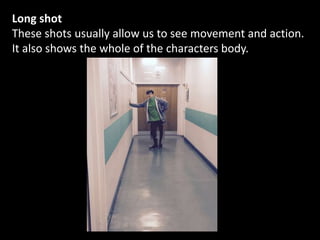
Long shot
These shots usually allow us to see movement and action.
It also shows the whole of the characters body.
Panoramic shot
These show a wider location, usually a large long
image of a place or destination. Often used as an
establishing shot, to introduce a new location.
Mid shot
These shots are usually used when 2 or a group of people
are having a conversation, they are usually still and easy to
do mise en scene of clothing and characters.
Close up
These shots are a close up usually on someone's face, you can see
their facial expression, mood and attitude just by looking at this type
of shot. Its showing that the person is important at that moment.
Extreme close up
These are usually focused on an object or a feature
on someone’s face like their eye colour or lips.
Establishing shot
This is the first shot you see to establish location, this is
usually a panoramic or long shot.
2 shot
This is a shot of 2 people in the frame.
Point of view (POV) shot
This shot positions the audience as if they was in the
television programme or film. This emphasises the
characters point of view. It helps the audience empathise
with the character and their situation.
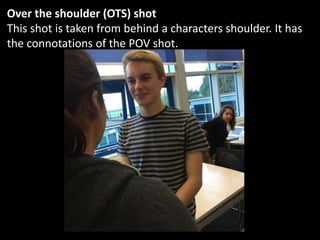
Over the shoulder (OTS) shot
This shot is taken from behind a characters shoulder. It has
the connotations of the POV shot.
High angle
This is a shot looking down on the character and it makes
them look smaller, less powerful, weak, vulnerable and it is
most likely to be a shot of a female.
Birds eye view
This shot is taken from a height, and has the same
connotations as the high angle shot.
low angle
This shot is taken from below the character,. It
makes them look powerful and strong.
Canted angle
This shot is taken on an angle, it connotes strangeness and
that something is wrong or that people are confused.
Worms eye view
This is taken from the ground and has the same
connotations as a low angle shot.
Panning
This is where the camera is turning on the spot in a
horizontal motion. Panning a camera results in a
motion similar to that of someone shaking their
head from side to side.
Tilt
This is where the camera is moving up and down, it
is uses for following vertical movement.
Tracking
This is where the camera is moving with the
character, it involves the audience in the action. This
camera movement can also be called a dolly shot.
Crane shot
This shot moves up and down like a tilt shot but its
used for much bigger objects like buildings and sky
scrapers.

Camera Work

  • 1.
    Long shot These shotsusually allow us to see movement and action. It also shows the whole of the characters body.
  • 2.
    Panoramic shot These showa wider location, usually a large long image of a place or destination. Often used as an establishing shot, to introduce a new location.
  • 3.
    Mid shot These shotsare usually used when 2 or a group of people are having a conversation, they are usually still and easy to do mise en scene of clothing and characters.
  • 4.
    Close up These shotsare a close up usually on someone's face, you can see their facial expression, mood and attitude just by looking at this type of shot. Its showing that the person is important at that moment.
  • 5.
    Extreme close up Theseare usually focused on an object or a feature on someone’s face like their eye colour or lips.
  • 6.
    Establishing shot This isthe first shot you see to establish location, this is usually a panoramic or long shot.
  • 7.
    2 shot This isa shot of 2 people in the frame.
  • 8.
    Point of view(POV) shot This shot positions the audience as if they was in the television programme or film. This emphasises the characters point of view. It helps the audience empathise with the character and their situation.
  • 9.
    Over the shoulder(OTS) shot This shot is taken from behind a characters shoulder. It has the connotations of the POV shot.
  • 10.
    High angle This isa shot looking down on the character and it makes them look smaller, less powerful, weak, vulnerable and it is most likely to be a shot of a female.
  • 11.
    Birds eye view Thisshot is taken from a height, and has the same connotations as the high angle shot.
  • 12.
    low angle This shotis taken from below the character,. It makes them look powerful and strong.
  • 13.
    Canted angle This shotis taken on an angle, it connotes strangeness and that something is wrong or that people are confused.
  • 14.
    Worms eye view Thisis taken from the ground and has the same connotations as a low angle shot.
  • 15.
    Panning This is wherethe camera is turning on the spot in a horizontal motion. Panning a camera results in a motion similar to that of someone shaking their head from side to side.
  • 16.
    Tilt This is wherethe camera is moving up and down, it is uses for following vertical movement.
  • 17.
    Tracking This is wherethe camera is moving with the character, it involves the audience in the action. This camera movement can also be called a dolly shot.
  • 18.
    Crane shot This shotmoves up and down like a tilt shot but its used for much bigger objects like buildings and sky scrapers.