Shoplifting
Shoplifting  is a form of   external theft that involves stealing merchandise from a business . Shoplifting is becoming one of the fastest- growing crimes in the country. Shoplifting from retail stores costs the American public around $20-30 billion every year.
It is estimated that 1/3 of inventory lost is due to shoplifting; however, shoplifting losses vary by store type. The FBI says that about 15 percent of all thefts in the US involve shoplifting. Most shoplifters are amateurs; however, they do have some shoplifters that do it for a living. Amateurs can be highly skilled and some do it everyday. Shoplifting is usually done by hiding items in a bag, pocket or purse. They have several other methods including grab-and-run. Some of the pros even work in teams.
1.  You must see the person approach the merchandise. 2.  You must see the person take possession of the    merchandise. 3.  You must see where the person conceals it. 4.  You must maintain an uninterrupted surveillance to    ensure that the person doesn't dispose of the    merchandise. 5.  You must see the person fails to pay for the    merchandise. 6.  You should approach the person outside . Shoplifting expert Charles A. Sennewald says that there is a right way and a wrong way to detain a shoplifter. Six steps required before stopping or detaining a person suspicious of shoplifting:
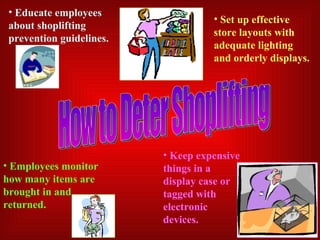
How to Deter Shoplifting Educate employees about shoplifting prevention guidelines. Set up effective store layouts with adequate lighting and orderly displays. Employees monitor how many items are brought in and returned. Keep expensive things in a display case or tagged with electronic devices.
Stopping shoplifters can be dangerous. Physical contact is sometimes necessary to detain a shoplifter, and can result in injury. Retailers also have the risk of being sued for falsely accusing someone of shoplifting. Customers in America become outraged when they feel that they are being watched or they are questioned about a suspicious transaction.

Shoplifting

  • 1.
  • 2.
    Shoplifting isa form of external theft that involves stealing merchandise from a business . Shoplifting is becoming one of the fastest- growing crimes in the country. Shoplifting from retail stores costs the American public around $20-30 billion every year.
  • 3.
    It is estimatedthat 1/3 of inventory lost is due to shoplifting; however, shoplifting losses vary by store type. The FBI says that about 15 percent of all thefts in the US involve shoplifting. Most shoplifters are amateurs; however, they do have some shoplifters that do it for a living. Amateurs can be highly skilled and some do it everyday. Shoplifting is usually done by hiding items in a bag, pocket or purse. They have several other methods including grab-and-run. Some of the pros even work in teams.
  • 4.
    1. Youmust see the person approach the merchandise. 2. You must see the person take possession of the merchandise. 3. You must see where the person conceals it. 4. You must maintain an uninterrupted surveillance to ensure that the person doesn't dispose of the merchandise. 5. You must see the person fails to pay for the merchandise. 6. You should approach the person outside . Shoplifting expert Charles A. Sennewald says that there is a right way and a wrong way to detain a shoplifter. Six steps required before stopping or detaining a person suspicious of shoplifting:
  • 5.
    How to DeterShoplifting Educate employees about shoplifting prevention guidelines. Set up effective store layouts with adequate lighting and orderly displays. Employees monitor how many items are brought in and returned. Keep expensive things in a display case or tagged with electronic devices.
  • 6.
    Stopping shoplifters canbe dangerous. Physical contact is sometimes necessary to detain a shoplifter, and can result in injury. Retailers also have the risk of being sued for falsely accusing someone of shoplifting. Customers in America become outraged when they feel that they are being watched or they are questioned about a suspicious transaction.