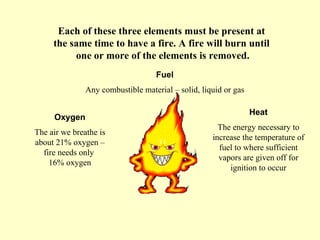
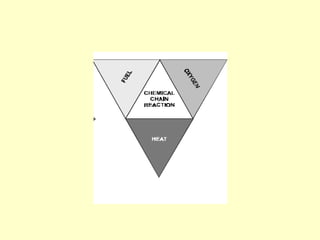
Each of these three elements must be present at
     the same time to have a fire. A fire will burn until
          one or more of the elements is removed.
                                   Fuel
               Any combustible material – solid, liquid or gas

                                                                 Heat
     Oxygen
                                                      The energy necessary to
The air we breathe is
                                                    increase the temperature of
about 21% oxygen –
                                                      fuel to where sufficient
  fire needs only
                                                      vapors are given off for
    16% oxygen
                                                         ignition to occur
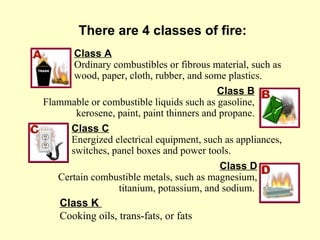
There are 4 classes of fire:
       Class A
       Ordinary combustibles or fibrous material, such as
       wood, paper, cloth, rubber, and some plastics.
                                         Class B
Flammable or combustible liquids such as gasoline,
      kerosene, paint, paint thinners and propane.
      Class C
      Energized electrical equipment, such as appliances,
      switches, panel boxes and power tools.
                                         Class D
   Certain combustible metals, such as magnesium,
                 titanium, potassium, and sodium.
   Class K
   Cooking oils, trans-fats, or fats
To Prevent Fires

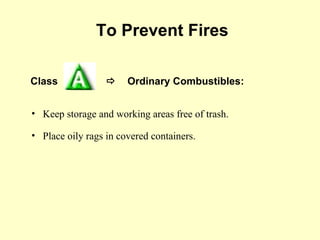
Class                 Ordinary Combustibles:


• Keep storage and working areas free of trash.

• Place oily rags in covered containers.
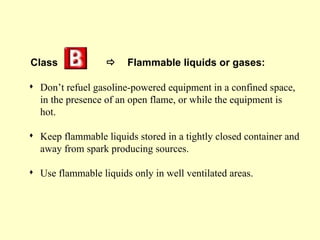
Class                 Flammable liquids or gases:

 Don’t refuel gasoline-powered equipment in a confined space,
  in the presence of an open flame, or while the equipment is
  hot.

 Keep flammable liquids stored in a tightly closed container and
  away from spark producing sources.

 Use flammable liquids only in well ventilated areas.
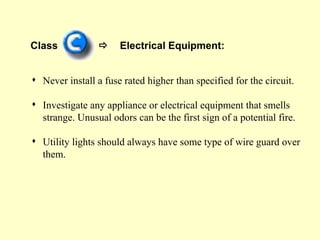
Class                Electrical Equipment:


 Never install a fuse rated higher than specified for the circuit.

 Investigate any appliance or electrical equipment that smells
  strange. Unusual odors can be the first sign of a potential fire.

 Utility lights should always have some type of wire guard over
  them.
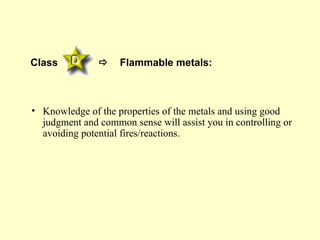
Class              Flammable metals:


• Knowledge of the properties of the metals and using good
  judgment and common sense will assist you in controlling or
  avoiding potential fires/reactions.
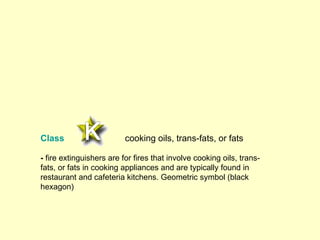
Class                     cooking oils, trans-fats, or fats

- fire extinguishers are for fires that involve cooking oils, trans-
fats, or fats in cooking appliances and are typically found in
restaurant and cafeteria kitchens. Geometric symbol (black
hexagon)
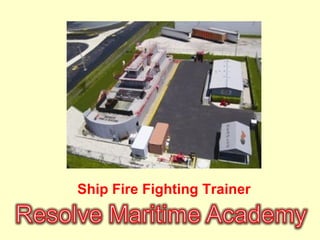
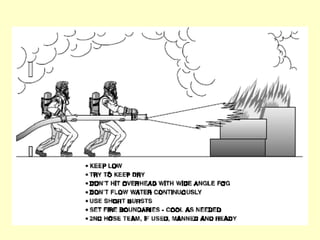
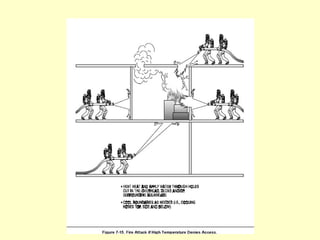
Ship Fire Fighting Trainer
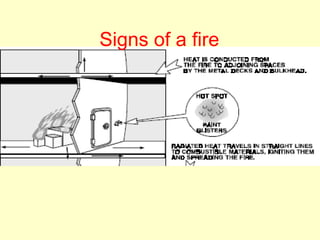
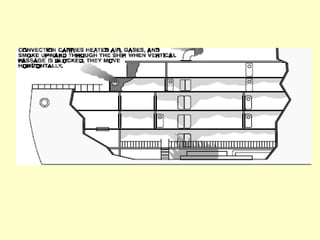
Signs of a fire
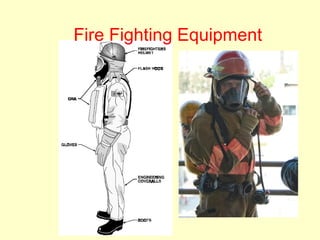
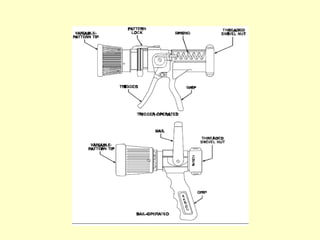
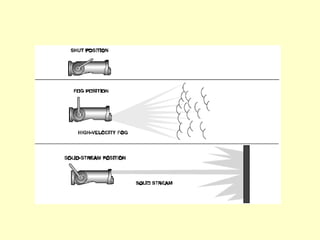
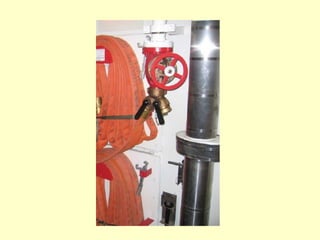
Fire Fighting Equipment
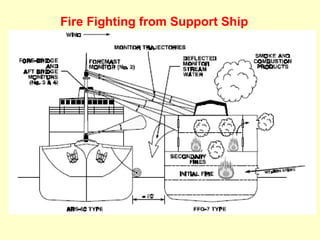
Fire Fighting from Support Ship
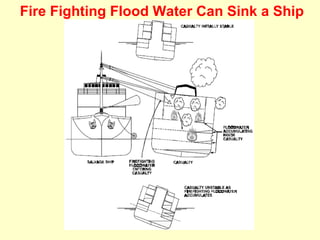
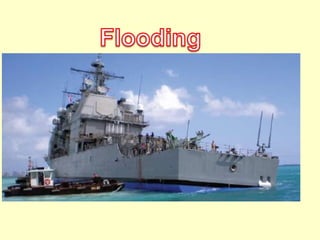
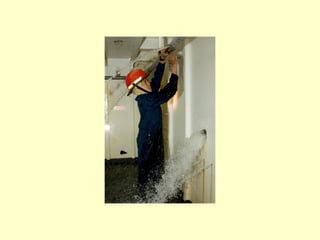
Fire Fighting Flood Water Can Sink a Ship
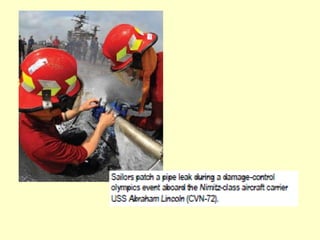
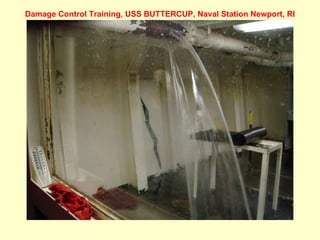
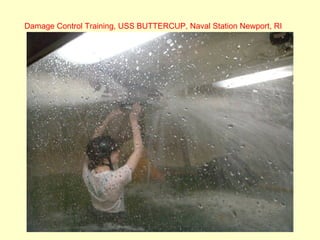
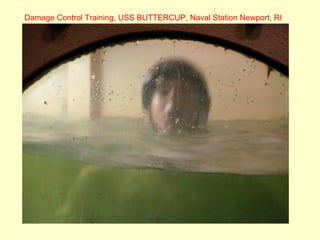
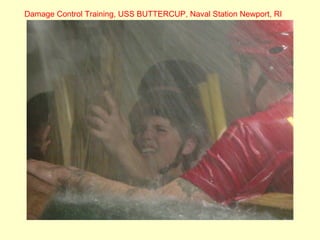
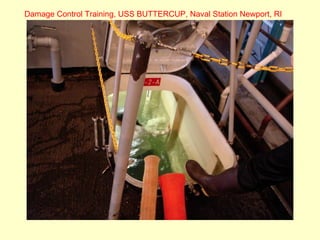
Damage Control Training, USS BUTTERCUP, Naval Station Newport, RI
Ship board fire_and_flood_training_-_damage_control[1]

Ship board fire_and_flood_training_-_damage_control[1]

  • 2.
    Each of thesethree elements must be present at the same time to have a fire. A fire will burn until one or more of the elements is removed. Fuel Any combustible material – solid, liquid or gas Heat Oxygen The energy necessary to The air we breathe is increase the temperature of about 21% oxygen – fuel to where sufficient fire needs only vapors are given off for 16% oxygen ignition to occur
  • 4.
    There are 4classes of fire: Class A Ordinary combustibles or fibrous material, such as wood, paper, cloth, rubber, and some plastics. Class B Flammable or combustible liquids such as gasoline, kerosene, paint, paint thinners and propane. Class C Energized electrical equipment, such as appliances, switches, panel boxes and power tools. Class D Certain combustible metals, such as magnesium, titanium, potassium, and sodium. Class K Cooking oils, trans-fats, or fats
  • 5.
    To Prevent Fires Class  Ordinary Combustibles: • Keep storage and working areas free of trash. • Place oily rags in covered containers.
  • 6.
    Class  Flammable liquids or gases:  Don’t refuel gasoline-powered equipment in a confined space, in the presence of an open flame, or while the equipment is hot.  Keep flammable liquids stored in a tightly closed container and away from spark producing sources.  Use flammable liquids only in well ventilated areas.
  • 7.
    Class  Electrical Equipment:  Never install a fuse rated higher than specified for the circuit.  Investigate any appliance or electrical equipment that smells strange. Unusual odors can be the first sign of a potential fire.  Utility lights should always have some type of wire guard over them.
  • 8.
    Class  Flammable metals: • Knowledge of the properties of the metals and using good judgment and common sense will assist you in controlling or avoiding potential fires/reactions.
  • 9.
    Class cooking oils, trans-fats, or fats - fire extinguishers are for fires that involve cooking oils, trans- fats, or fats in cooking appliances and are typically found in restaurant and cafeteria kitchens. Geometric symbol (black hexagon)
  • 11.
  • 12.
  • 14.
  • 18.
    Fire Fighting fromSupport Ship
  • 19.
    Fire Fighting FloodWater Can Sink a Ship
  • 31.
    Damage Control Training,USS BUTTERCUP, Naval Station Newport, RI
  • 32.
    Damage Control Training,USS BUTTERCUP, Naval Station Newport, RI
  • 33.
    Damage Control Training,USS BUTTERCUP, Naval Station Newport, RI
  • 34.
    Damage Control Training,USS BUTTERCUP, Naval Station Newport, RI
  • 35.
    Damage Control Training,USS BUTTERCUP, Naval Station Newport, RI