fire  safety
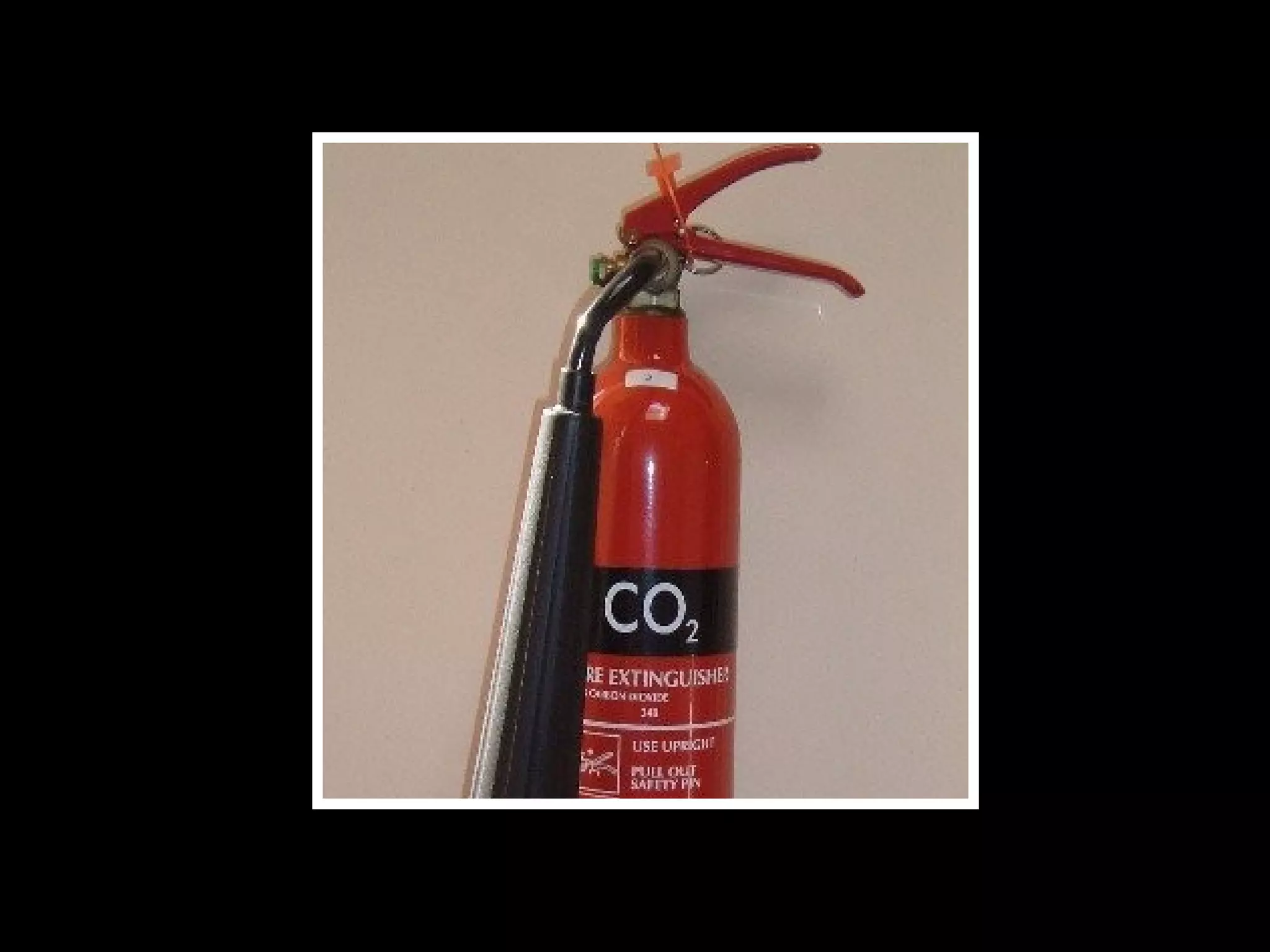
it’s very  basic …. to give you an understanding of :  the nature of fire fire hazards and risk fire prevention our fire procedures how to select and use a portable fire extinguisher safely
what is  fire …. fire [ ˈ fi(-ə)r  ]   noun    1. fire is a rapid oxidation process that creates light, heat, and smoke, and varies in intensity. it is commonly used to describe either a fuel in a state of combustion (e.g., a campfire, or a lit fireplace or stove) or a violent, destructive and uncontrolled burning (e.g., in buildings)
sources of  ignition ….
 
smoking and naked flames electrical faults heaters contractors tools and equipment arson
fuels ….
paper & boxes etc. expanded polystyrene beads plastics solvents carpets furniture waste materials
fire  prevention ….
be mindful of fire safety don’t block fire exits, call points or extinguishers no smoking policy don’t wedge fire doors open
fire  procedure ….
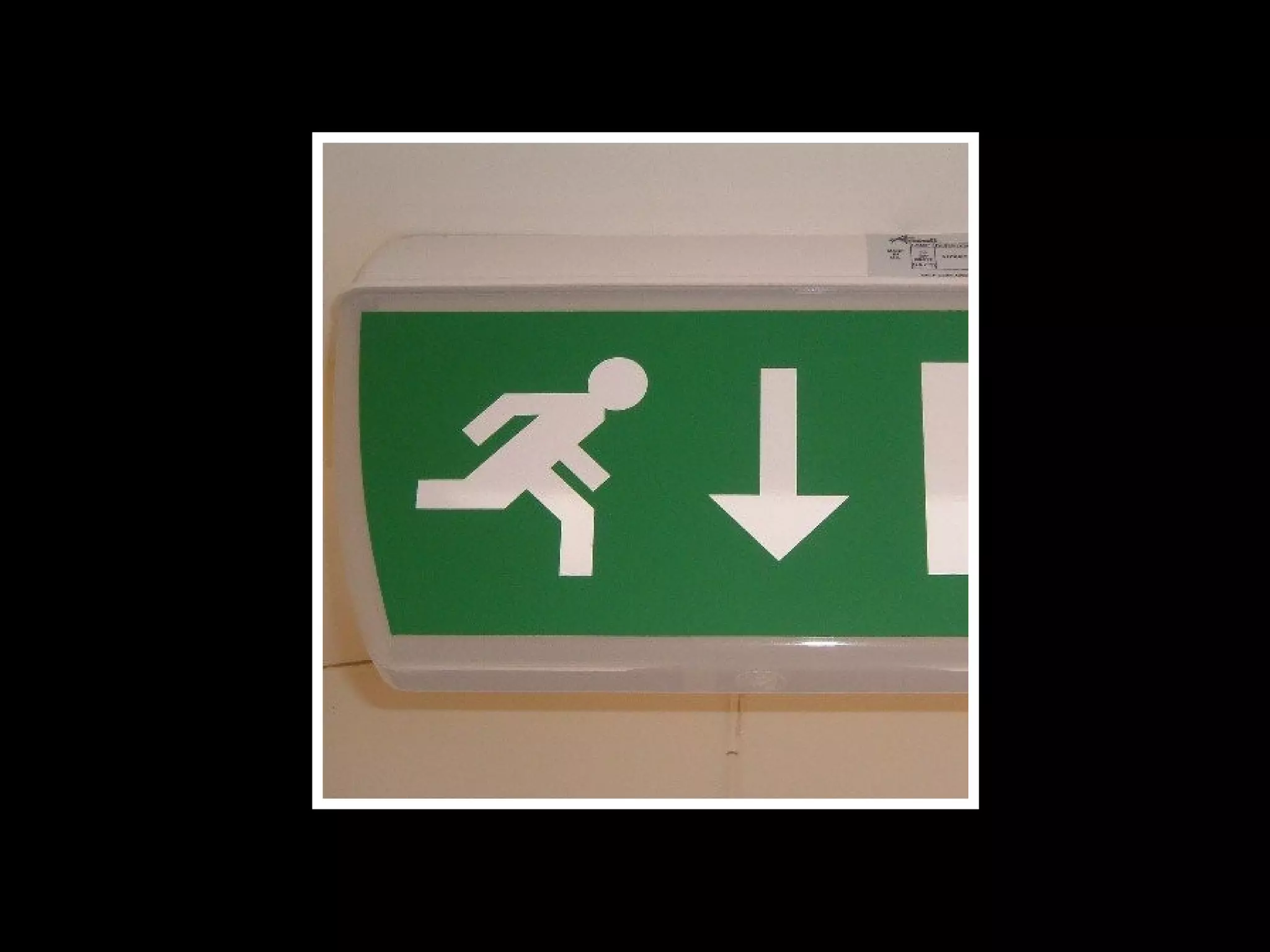
on hearing  alarm …. leave the building immediately (or find refuge area) use the nearest exit walk quickly but don’t run.  close doors behind you do not delay your exit to collect your belongings attend the fire assembly point and report to CVS fire officers do not return until told to do so


on finding a  fire …. sound the fire alarm fight the fire if you are competent and you consider it safe to do so evacuate as per normal fire procedure inform the fire officers fire officers are… Matthew Langhorn, John Stevens and Kenny Lieske or reception (if no fire officers on site)
on finding a fire…. sound the fire alarm fight the fire if you are competent and you consider it safe to do so evacuate as per normal fire procedure inform the fire officers fire officers are… Matthew Langhorn, John Stevens and Kenny Lieske or reception (if no fire officers on site)
 
 
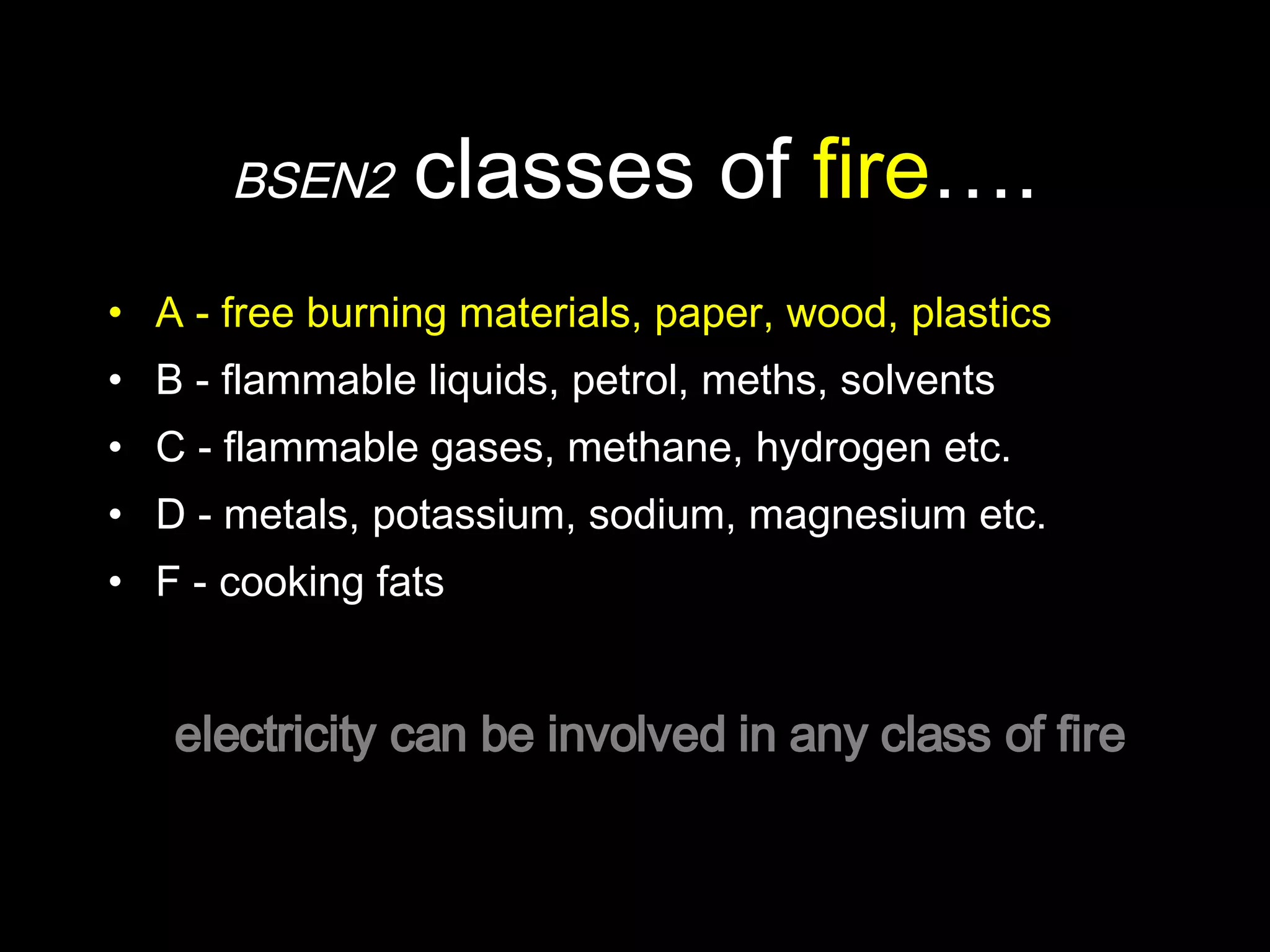
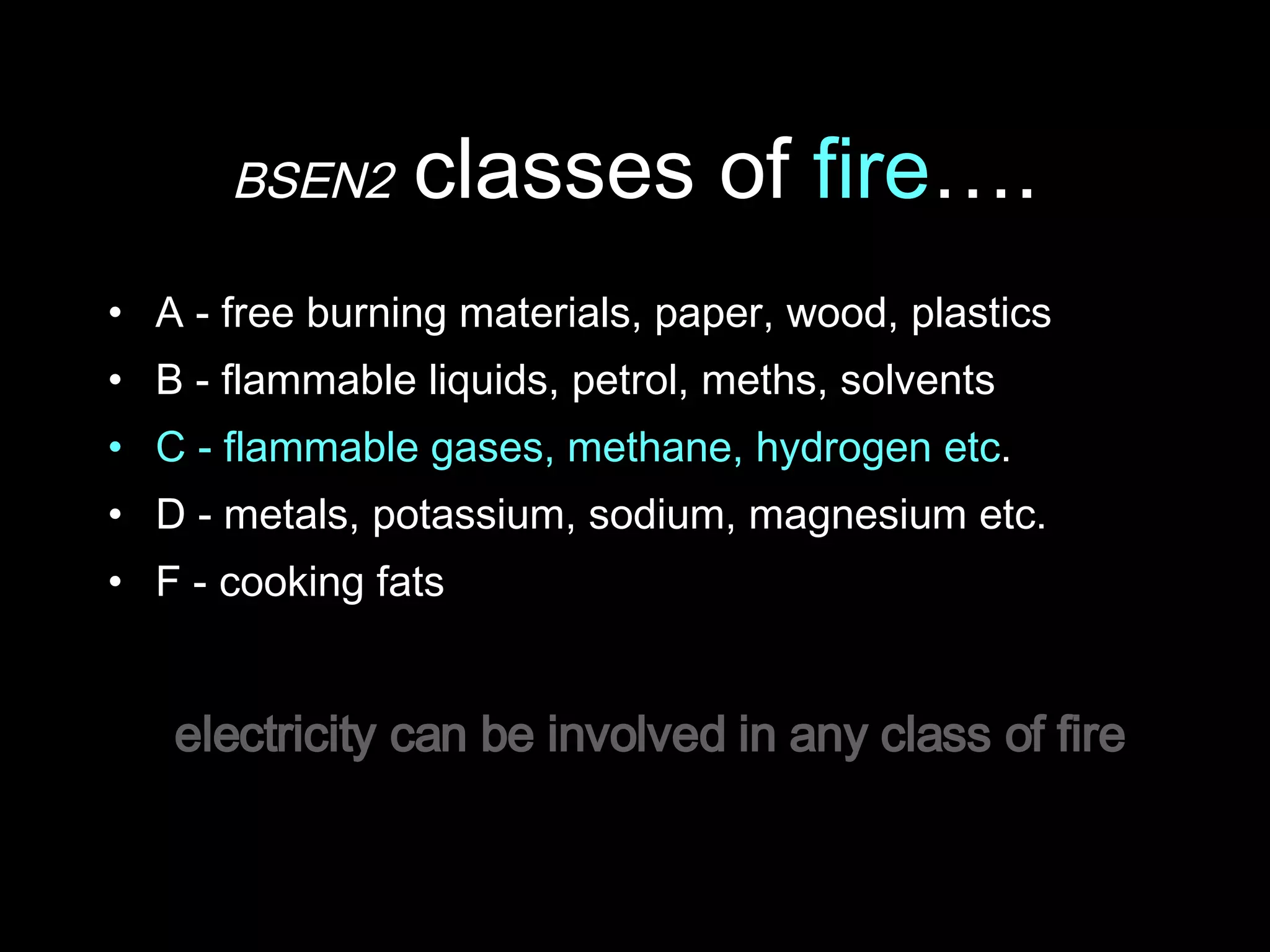
BSEN2  classes of fire…. A - free burning materials, paper, wood, plastics B - flammable liquids, petrol, meths, solvents  C - flammable gases, methane, hydrogen etc. D - metals, potassium, sodium, magnesium etc. F - cooking fats electricity can be involved in any class of fire
BSEN2  classes of  fire …. A - free burning materials, paper, wood, plastics B - flammable liquids, petrol, meths, solvents  C - flammable gases, methane, hydrogen etc. D - metals, potassium, sodium, magnesium etc. F - cooking fats electricity can be involved in any class of fire
BSEN2  classes of  fire …. A - free burning materials, paper, wood, plastics B - flammable liquids, petrol, meths, solvents  C - flammable gases, methane, hydrogen etc . D - metals, potassium, sodium, magnesium etc. F - cooking fats electricity can be involved in any class of fire
BSEN2  classes of  fire …. A - free burning materials, paper, wood, plastics B - flammable liquids, petrol, meths, solvents  C - flammable gases, methane, hydrogen etc. D - metals, potassium, sodium, magnesium etc. F - cooking fats electricity can be involved in any class of fire
BSEN2  classes of fire…. A - free burning materials, paper, wood, plastics B - flammable liquids, petrol, meths, solvents  C - flammable gases, methane, hydrogen etc. D - metals, potassium, sodium, magnesium etc. F - cooking fats electricity can be involved in any class of fire


do  not  fight a fire…. it is bigger than a waste paper bin one extinguisher is not enough smoke is affecting your breathing you cannot see the way out gas cylinders or chemicals are involved your efforts are not reducing the size of the fire
more  information …. useful documents www.priorystreetcentre.org.uk/fireevacuationplan.doc www.priorystreetcentre.org.uk/riskassessment.doc www.priorystreetcentre.org.uk/hands07.doc slidecast available at www.slideshare.net

Fire Safety Training

  • 1.
  • 2.
    it’s very basic …. to give you an understanding of : the nature of fire fire hazards and risk fire prevention our fire procedures how to select and use a portable fire extinguisher safely
  • 3.
    what is fire …. fire [ ˈ fi(-ə)r ] noun   1. fire is a rapid oxidation process that creates light, heat, and smoke, and varies in intensity. it is commonly used to describe either a fuel in a state of combustion (e.g., a campfire, or a lit fireplace or stove) or a violent, destructive and uncontrolled burning (e.g., in buildings)
  • 4.
    sources of ignition ….
  • 5.
  • 6.
    smoking and nakedflames electrical faults heaters contractors tools and equipment arson
  • 7.
  • 8.
    paper & boxesetc. expanded polystyrene beads plastics solvents carpets furniture waste materials
  • 9.
  • 10.
    be mindful offire safety don’t block fire exits, call points or extinguishers no smoking policy don’t wedge fire doors open
  • 11.
  • 12.
    on hearing alarm …. leave the building immediately (or find refuge area) use the nearest exit walk quickly but don’t run. close doors behind you do not delay your exit to collect your belongings attend the fire assembly point and report to CVS fire officers do not return until told to do so
  • 13.
  • 14.
  • 15.
  • 16.
  • 17.
    on finding a fire …. sound the fire alarm fight the fire if you are competent and you consider it safe to do so evacuate as per normal fire procedure inform the fire officers fire officers are… Matthew Langhorn, John Stevens and Kenny Lieske or reception (if no fire officers on site)
  • 18.
    on finding afire…. sound the fire alarm fight the fire if you are competent and you consider it safe to do so evacuate as per normal fire procedure inform the fire officers fire officers are… Matthew Langhorn, John Stevens and Kenny Lieske or reception (if no fire officers on site)
  • 19.
  • 20.
  • 21.
    BSEN2 classesof fire…. A - free burning materials, paper, wood, plastics B - flammable liquids, petrol, meths, solvents C - flammable gases, methane, hydrogen etc. D - metals, potassium, sodium, magnesium etc. F - cooking fats electricity can be involved in any class of fire
  • 22.
    BSEN2 classesof fire …. A - free burning materials, paper, wood, plastics B - flammable liquids, petrol, meths, solvents C - flammable gases, methane, hydrogen etc. D - metals, potassium, sodium, magnesium etc. F - cooking fats electricity can be involved in any class of fire
  • 23.
    BSEN2 classesof fire …. A - free burning materials, paper, wood, plastics B - flammable liquids, petrol, meths, solvents C - flammable gases, methane, hydrogen etc. D - metals, potassium, sodium, magnesium etc. F - cooking fats electricity can be involved in any class of fire
  • 24.
    BSEN2 classesof fire …. A - free burning materials, paper, wood, plastics B - flammable liquids, petrol, meths, solvents C - flammable gases, methane, hydrogen etc . D - metals, potassium, sodium, magnesium etc. F - cooking fats electricity can be involved in any class of fire
  • 25.
    BSEN2 classesof fire …. A - free burning materials, paper, wood, plastics B - flammable liquids, petrol, meths, solvents C - flammable gases, methane, hydrogen etc. D - metals, potassium, sodium, magnesium etc. F - cooking fats electricity can be involved in any class of fire
  • 26.
    BSEN2 classesof fire …. A - free burning materials, paper, wood, plastics B - flammable liquids, petrol, meths, solvents C - flammable gases, methane, hydrogen etc. D - metals, potassium, sodium, magnesium etc. F - cooking fats electricity can be involved in any class of fire
  • 27.
    BSEN2 classesof fire…. A - free burning materials, paper, wood, plastics B - flammable liquids, petrol, meths, solvents C - flammable gases, methane, hydrogen etc. D - metals, potassium, sodium, magnesium etc. F - cooking fats electricity can be involved in any class of fire
  • 28.
  • 29.
  • 30.
  • 31.
  • 32.
  • 33.
  • 34.
  • 35.
    do not fight a fire…. it is bigger than a waste paper bin one extinguisher is not enough smoke is affecting your breathing you cannot see the way out gas cylinders or chemicals are involved your efforts are not reducing the size of the fire
  • 36.
    more information…. useful documents www.priorystreetcentre.org.uk/fireevacuationplan.doc www.priorystreetcentre.org.uk/riskassessment.doc www.priorystreetcentre.org.uk/hands07.doc slidecast available at www.slideshare.net