PREPARED BY:
Nicole Ann Sabayton
Rebecca Solayao
Ma. Jenessa Cajefe &
Charmaine Dela peña
FIRE HAZARD
• Condition that favor the development or growth of fire
with a oxygen, fuel and heat.
• A Fire Hazard is any condition or situation that
increases the likelihood of fire starting or poses a
significant risk in the event of a fire.
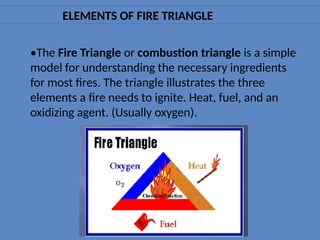
ELEMENTS OF FIRE TRIANGLE
•The Fire Triangle or combustion triangle is a simple
model for understanding the necessary ingredients
for most fires. The triangle illustrates the three
elements a fire needs to ignite. Heat, fuel, and an
oxidizing agent. (Usually oxygen).
TYPES OF FIRE HAZARDS
1. ELECTRICAL HAZARDS
2. PROCESS AND OPERATIONS HAZARDS
3. HOUSE HAZARDS
4. STORAGE HAZARDS
5. SMOKING HAZARDS
6. FRICTION HAZARDS
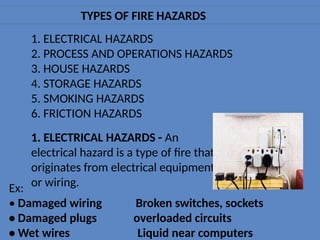
1. ELECTRICAL HAZARDS - An
electrical hazard is a type of fire that
originates from electrical equipment
or wiring.
Ex:
• Damaged wiring Broken switches, sockets
• Damaged plugs overloaded circuits
• Wet wires Liquid near computers
2. PROCESS AND OPERATION RELATED
HAZARDS - Cutting and wedding
operations which use open flame and
produce spark.
3. HOUSE HAZARDS
• Dry leaves are burn by the sunlight
• If gas burner not turn off then there is
possibility of explosion.
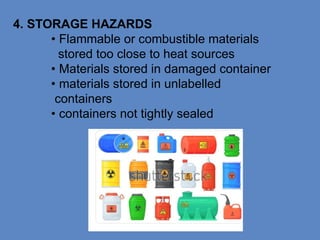
4. STORAGE HAZARDS
• Flammable or combustible materials
stored too close to heat sources
• Materials stored in damaged container
• materials stored in unlabelled
containers
• containers not tightly sealed
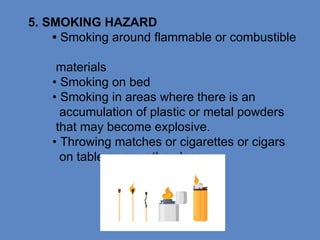
5. SMOKING HAZARD
• Smoking around flammable or combustible
materials
• Smoking on bed
• Smoking in areas where there is an
accumulation of plastic or metal powders
that may become explosive.
• Throwing matches or cigarettes or cigars
on table or any othe place
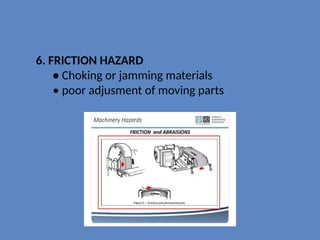
6. FRICTION HAZARD
• Choking or jamming materials
• poor adjusment of moving parts
CLASSIFICATION OF FIRE
There are 5 classes of fires:
1. Class A
2. Class B
3. Class C
4. Class D
5. Class K
1. Class A fire - Are fires that
involve ordinary combustible
materials such as cloth,
wood, paper, robber, and
many plastics.
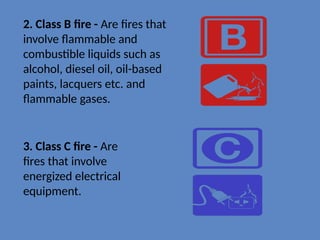
2. Class B fire - Are fires that
involve flammable and
combustible liquids such as
alcohol, diesel oil, oil-based
paints, lacquers etc. and
flammable gases.
3. Class C fire - Are
fires that involve
energized electrical
equipment.
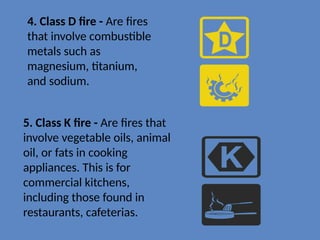
4. Class D fire - Are fires
that involve combustible
metals such as
magnesium, titanium,
and sodium.
5. Class K fire - Are fires that
involve vegetable oils, animal
oil, or fats in cooking
appliances. This is for
commercial kitchens,
including those found in
restaurants, cafeterias.
FIRE EXTINGUISHER
Fire can be extinguished by:
• COOLING - The fuel by removing heat by applying
water.
• SMOTHERING - By cutting off oxygen supply (e.g. by
application foam, carbon dioxide).
• STARVING - The fire by removing the fuel (e.g. stopping
gas flow during a pipeline fire).
• INHIBITION - By stopping the chain reaction (e.g by
applying dry chemical powder).
TYPES OF FIRE EXTINGUISHERS
1. WATER EXTINGUISHER
2. DRY CHEMICAL/ POWDER EXTINGUISHER OR FOAM
EXTINGUISHER
3. CARBON DIOXIDE EXTINGUISHER
4. DRY POWDERS (special) EXTINGUISHER
5. WET CHEMICAL EXTINGUISHER
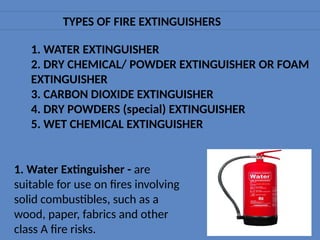
1. Water Extinguisher - are
suitable for use on fires involving
solid combustibles, such as a
wood, paper, fabrics and other
class A fire risks.
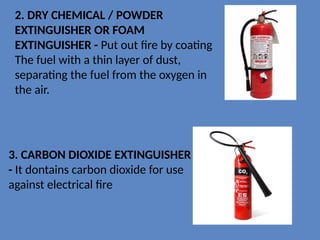
3. CARBON DIOXIDE EXTINGUISHER
- It dontains carbon dioxide for use
against electrical fire
2. DRY CHEMICAL / POWDER
EXTINGUISHER OR FOAM
EXTINGUISHER - Put out fire by coating
The fuel with a thin layer of dust,
separating the fuel from the oxygen in
the air.
4. DRY POWDER (special) EXTINGUISHER
- Spray dry powders on combustible
metals like magnesium, titanium, sodium,
potassium and Al.
5. WET CHEMICAL EXTINGUISHER
- Use a wet, potassium acetate-
based, low pH agent to put out
"working" fires in which there are
animal or vegetable oils and fats.
Below are some other common causes of fire:
• Kitchen Stoves
• Faulty wiring
• Smoking in bed
• Lighting
• Flammable liquids
• Candles
• Children

fire hazardreport on DRRR powerpoint sample

  • 1.
    PREPARED BY: Nicole AnnSabayton Rebecca Solayao Ma. Jenessa Cajefe & Charmaine Dela peña
  • 2.
    FIRE HAZARD • Conditionthat favor the development or growth of fire with a oxygen, fuel and heat. • A Fire Hazard is any condition or situation that increases the likelihood of fire starting or poses a significant risk in the event of a fire.
  • 3.
    ELEMENTS OF FIRETRIANGLE •The Fire Triangle or combustion triangle is a simple model for understanding the necessary ingredients for most fires. The triangle illustrates the three elements a fire needs to ignite. Heat, fuel, and an oxidizing agent. (Usually oxygen).
  • 4.
    TYPES OF FIREHAZARDS 1. ELECTRICAL HAZARDS 2. PROCESS AND OPERATIONS HAZARDS 3. HOUSE HAZARDS 4. STORAGE HAZARDS 5. SMOKING HAZARDS 6. FRICTION HAZARDS 1. ELECTRICAL HAZARDS - An electrical hazard is a type of fire that originates from electrical equipment or wiring. Ex: • Damaged wiring Broken switches, sockets • Damaged plugs overloaded circuits • Wet wires Liquid near computers
  • 5.
    2. PROCESS ANDOPERATION RELATED HAZARDS - Cutting and wedding operations which use open flame and produce spark. 3. HOUSE HAZARDS • Dry leaves are burn by the sunlight • If gas burner not turn off then there is possibility of explosion.
  • 6.
    4. STORAGE HAZARDS •Flammable or combustible materials stored too close to heat sources • Materials stored in damaged container • materials stored in unlabelled containers • containers not tightly sealed
  • 7.
    5. SMOKING HAZARD •Smoking around flammable or combustible materials • Smoking on bed • Smoking in areas where there is an accumulation of plastic or metal powders that may become explosive. • Throwing matches or cigarettes or cigars on table or any othe place
  • 8.
    6. FRICTION HAZARD •Choking or jamming materials • poor adjusment of moving parts
  • 9.
    CLASSIFICATION OF FIRE Thereare 5 classes of fires: 1. Class A 2. Class B 3. Class C 4. Class D 5. Class K 1. Class A fire - Are fires that involve ordinary combustible materials such as cloth, wood, paper, robber, and many plastics.
  • 10.
    2. Class Bfire - Are fires that involve flammable and combustible liquids such as alcohol, diesel oil, oil-based paints, lacquers etc. and flammable gases. 3. Class C fire - Are fires that involve energized electrical equipment.
  • 11.
    4. Class Dfire - Are fires that involve combustible metals such as magnesium, titanium, and sodium. 5. Class K fire - Are fires that involve vegetable oils, animal oil, or fats in cooking appliances. This is for commercial kitchens, including those found in restaurants, cafeterias.
  • 12.
    FIRE EXTINGUISHER Fire canbe extinguished by: • COOLING - The fuel by removing heat by applying water. • SMOTHERING - By cutting off oxygen supply (e.g. by application foam, carbon dioxide). • STARVING - The fire by removing the fuel (e.g. stopping gas flow during a pipeline fire). • INHIBITION - By stopping the chain reaction (e.g by applying dry chemical powder).
  • 13.
    TYPES OF FIREEXTINGUISHERS 1. WATER EXTINGUISHER 2. DRY CHEMICAL/ POWDER EXTINGUISHER OR FOAM EXTINGUISHER 3. CARBON DIOXIDE EXTINGUISHER 4. DRY POWDERS (special) EXTINGUISHER 5. WET CHEMICAL EXTINGUISHER 1. Water Extinguisher - are suitable for use on fires involving solid combustibles, such as a wood, paper, fabrics and other class A fire risks.
  • 14.
    3. CARBON DIOXIDEEXTINGUISHER - It dontains carbon dioxide for use against electrical fire 2. DRY CHEMICAL / POWDER EXTINGUISHER OR FOAM EXTINGUISHER - Put out fire by coating The fuel with a thin layer of dust, separating the fuel from the oxygen in the air.
  • 15.
    4. DRY POWDER(special) EXTINGUISHER - Spray dry powders on combustible metals like magnesium, titanium, sodium, potassium and Al. 5. WET CHEMICAL EXTINGUISHER - Use a wet, potassium acetate- based, low pH agent to put out "working" fires in which there are animal or vegetable oils and fats.
  • 16.
    Below are someother common causes of fire: • Kitchen Stoves • Faulty wiring • Smoking in bed • Lighting • Flammable liquids • Candles • Children