William 
Shakespeare 
1564-1616
William Shakespeare 
Early years 
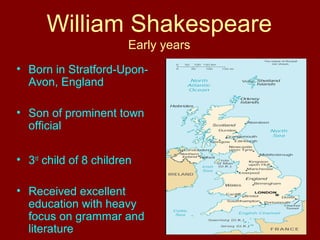
• Born in Stratford-Upon- 
Avon, England 
• Son of prominent town 
official 
• 3rd child of 8 children 
• Received excellent 
education with heavy 
focus on grammar and 
literature
William Shakespeare 
Marriage and Family 
• Married at age 18 to Anne Hathaway (she 
was 26) who was pregnant with his child 
• 1st child was daughter, Susanna-born in 
1583 
• Twins, Hamnet and Judith born in 1585 
• Hamnet dies at age 11
William Shakespeare 
“Lost Years” 
The period between 1585 and 1592 is 
known as the “Lost Years” because 
there are no documentary records of 
Shakespeare’s activities
William Shakespeare 
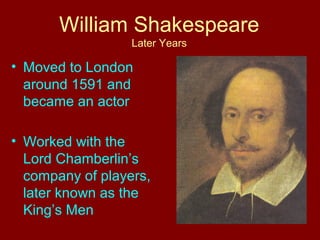
Later Years 
• Moved to London 
around 1591 and 
became an actor 
• Worked with the 
Lord Chamberlin’s 
company of players, 
later known as the 
King’s Men
William Shakespeare 
Works of Literature 
• Along with acting, he also wrote some of 
the most renowned and studied literature 
written in the English language 
• Poems-famous for his sonnets 
• Plays-Comedies, Tragedies, and Histories
William Shakespeare 
Comedies 
• All’s Well that Ends Well 
• As You Like It 
• Comedy of Errors 
• Measure for Measure 
• Midsummer Night’s Dream 
• Taming of the Shrew 
• Much Ado About Nothing 
• Twelfth Night 
• Merchant of Venice
William Shakespeare 
Tragedies 
• Julius Caesar 
• Hamlet 
• Macbeth 
• Othello 
• Romeo and 
Juliet 
• King Lear
William Shakespeare 
Histories 
• King Henry V 
• King John 
• Richard II 
• Richard III
William Shakespeare 
Works of Literature 
• He wrote 37 very successful plays 
• His vocabulary was HUGE-somewhere 
between 17,000 and 34,000 words! 
• The estimated vocabulary of an educated 
person today is around 15,000 words
William Shakespeare 
Works of Literature 
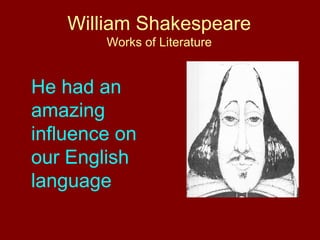
He had an 
amazing 
influence on 
our English 
language
William Shakespeare 
Have you heard these phrases? 
• I couldn’t sleep a wink. 
• He was dead as a doornail. 
• She’s a tower of strength. 
• They hoodwinked us. 
• We’d better lie low for awhile. 
• I am constant as the Northern Star. 
• It’s all Greek to me.
More words that first appeared in 
his plays 
• Accommodation lonely 
• Assassination gloomy 
• Dexterously fretful 
• Dislocate suspicious 
• Obscene hurry 
• Reliance 
• Premeditate
William Shakespeare 
Later Years 
• Returned to Stratford around 1610 where 
he lived as a country gentleman 
• Wealthy-Owned one of the largest homes 
in town 
• Died in Stratford in 1616 at the age of 52. 
His death was a mystery. It is rumored 
that he drank too much and contracted a 
fever or that he died from a cerebral 
hemorrhage.
Elizabethan Age 
• Shakespeare lived and wrote during what 
is known as the English Renaissance, 
which lasted from about 1485 through the 
1660s 
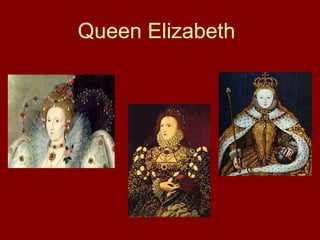
• Period is also known as Elizabethan Age, 
named after Queen Elizabeth who ruled 
England from 1558-1603
Queen Elizabeth
Elizabethan Age 
• During the Queen’s reign, society 
celebrated poets 
• Elizabethans would be surprised to learn 
that their age would become best known 
for its theater, as most considered drama 
a less distinguished form of lit. than poetry
Elizabethan Age 
• England was flourishing and London was becoming 
one of largest cities in Europe; however life was not 
easy for everyone 
• Catholics experiences religious persecution 
• Women were subject to many restrictions 
• Most English people endured crowded living 
conditions and an unsatisfactory diet
Elizabethan Age 
• Rich and poor alike were defenseless 
against bubonic plague 
• In 1564, the year Shakespeare was born, 
nearly one-third of his hometown died of 
the plague (lost many siblings to 
plague/son)
Globe Theater 
• Shakespeare and the Lord Chamberlain’s 
Men performed at Burbage’s theater until 
1599, when they built their own 
playhouse, the Globe 
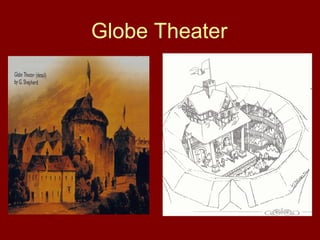
• Shakespeare referred to the Globe as 
“this wooden O,” a term that led scholars 
to believe it was a circular building
Globe Theater
Globe Theater 
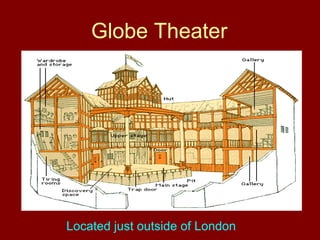
Located just outside of London
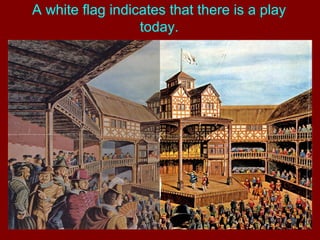
A white flag indicates that there is a play 
today.
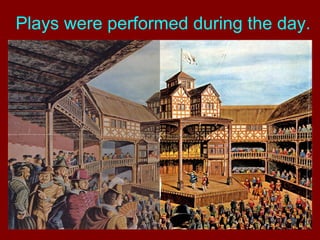
Plays were performed . during the day.
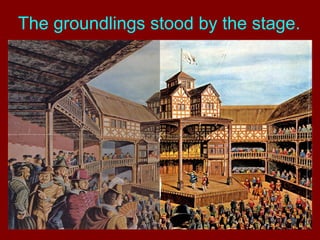
The groundlings stood by the stage.
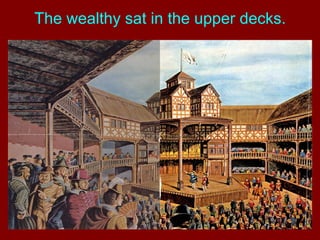
The wealthy sat in the upper decks.
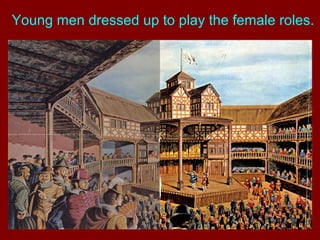
Young men dressed up to play the female roles.
Globe Theater 
• Attending Shakespeare’s theater was 
quite different from attending theater 
today, which is thought of as very quiet 
and austere 
• In Elizabethan England it was a noisy, 
popular gathering place for people of all 
ages and from all walks of life
Globe Theater 
• Drinking and eating were permitted in the 
pit, which often became very noisy 
• If a spectator did not like a particular 
character or scene, he or she would feel 
free to hiss or boo of throw anything he or 
she might have on hand
Globe Theater 
• It is possible that Shakespeare had this in 
mind when he included the phrase “with 
patient ears attend” in the Prologue of 
Romeo and Juliet 
• The rowdy atmosphere of the pit also 
accounted for the exaggerated acting that 
was common at the time
Globe Theater 
• To compensate for lines that the audience could not 
hear, the actors used exaggerated gestures and 
facial expressions, unlike the natural method of 
acting that is used today 
• Nature of the crowd contributed to haste with which 
the lines were spoken 
• Today, Shakespeare play takes almost 3 hours. 
Then, a play would have taken two hours or less! 
(“the two hours’ traffic of our stage”)
Globe Theater 
• The original theater was destroyed by a 
fire in 1613 
• It was rebuilt in 1614, closed in 1642, and 
demolished in 1644 
• A modern reconstruction of the original 
Globe, named “Shakespeare’s Globe 
Theatre” opened in 1997
Globe Theater 
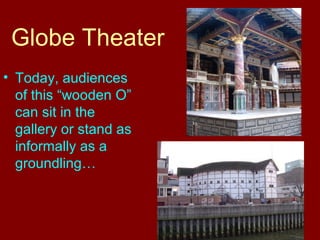
• Today, audiences 
of this “wooden O” 
can sit in the 
gallery or stand as 
informally as a 
groundling…
Globe Theater 
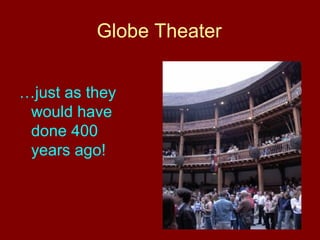
…just as they 
would have 
done 400 
years ago!

Shakespeare background

  • 1.
  • 2.
    William Shakespeare Earlyyears • Born in Stratford-Upon- Avon, England • Son of prominent town official • 3rd child of 8 children • Received excellent education with heavy focus on grammar and literature
  • 3.
    William Shakespeare Marriageand Family • Married at age 18 to Anne Hathaway (she was 26) who was pregnant with his child • 1st child was daughter, Susanna-born in 1583 • Twins, Hamnet and Judith born in 1585 • Hamnet dies at age 11
  • 4.
    William Shakespeare “LostYears” The period between 1585 and 1592 is known as the “Lost Years” because there are no documentary records of Shakespeare’s activities
  • 5.
    William Shakespeare LaterYears • Moved to London around 1591 and became an actor • Worked with the Lord Chamberlin’s company of players, later known as the King’s Men
  • 6.
    William Shakespeare Worksof Literature • Along with acting, he also wrote some of the most renowned and studied literature written in the English language • Poems-famous for his sonnets • Plays-Comedies, Tragedies, and Histories
  • 7.
    William Shakespeare Comedies • All’s Well that Ends Well • As You Like It • Comedy of Errors • Measure for Measure • Midsummer Night’s Dream • Taming of the Shrew • Much Ado About Nothing • Twelfth Night • Merchant of Venice
  • 8.
    William Shakespeare Tragedies • Julius Caesar • Hamlet • Macbeth • Othello • Romeo and Juliet • King Lear
  • 9.
    William Shakespeare Histories • King Henry V • King John • Richard II • Richard III
  • 10.
    William Shakespeare Worksof Literature • He wrote 37 very successful plays • His vocabulary was HUGE-somewhere between 17,000 and 34,000 words! • The estimated vocabulary of an educated person today is around 15,000 words
  • 11.
    William Shakespeare Worksof Literature He had an amazing influence on our English language
  • 12.
    William Shakespeare Haveyou heard these phrases? • I couldn’t sleep a wink. • He was dead as a doornail. • She’s a tower of strength. • They hoodwinked us. • We’d better lie low for awhile. • I am constant as the Northern Star. • It’s all Greek to me.
  • 13.
    More words thatfirst appeared in his plays • Accommodation lonely • Assassination gloomy • Dexterously fretful • Dislocate suspicious • Obscene hurry • Reliance • Premeditate
  • 14.
    William Shakespeare LaterYears • Returned to Stratford around 1610 where he lived as a country gentleman • Wealthy-Owned one of the largest homes in town • Died in Stratford in 1616 at the age of 52. His death was a mystery. It is rumored that he drank too much and contracted a fever or that he died from a cerebral hemorrhage.
  • 15.
    Elizabethan Age •Shakespeare lived and wrote during what is known as the English Renaissance, which lasted from about 1485 through the 1660s • Period is also known as Elizabethan Age, named after Queen Elizabeth who ruled England from 1558-1603
  • 16.
  • 17.
    Elizabethan Age •During the Queen’s reign, society celebrated poets • Elizabethans would be surprised to learn that their age would become best known for its theater, as most considered drama a less distinguished form of lit. than poetry
  • 18.
    Elizabethan Age •England was flourishing and London was becoming one of largest cities in Europe; however life was not easy for everyone • Catholics experiences religious persecution • Women were subject to many restrictions • Most English people endured crowded living conditions and an unsatisfactory diet
  • 19.
    Elizabethan Age •Rich and poor alike were defenseless against bubonic plague • In 1564, the year Shakespeare was born, nearly one-third of his hometown died of the plague (lost many siblings to plague/son)
  • 20.
    Globe Theater •Shakespeare and the Lord Chamberlain’s Men performed at Burbage’s theater until 1599, when they built their own playhouse, the Globe • Shakespeare referred to the Globe as “this wooden O,” a term that led scholars to believe it was a circular building
  • 21.
  • 22.
    Globe Theater Locatedjust outside of London
  • 23.
    A white flagindicates that there is a play today.
  • 24.
    Plays were performed. during the day.
  • 25.
    The groundlings stoodby the stage.
  • 26.
    The wealthy satin the upper decks.
  • 27.
    Young men dressedup to play the female roles.
  • 28.
    Globe Theater •Attending Shakespeare’s theater was quite different from attending theater today, which is thought of as very quiet and austere • In Elizabethan England it was a noisy, popular gathering place for people of all ages and from all walks of life
  • 29.
    Globe Theater •Drinking and eating were permitted in the pit, which often became very noisy • If a spectator did not like a particular character or scene, he or she would feel free to hiss or boo of throw anything he or she might have on hand
  • 30.
    Globe Theater •It is possible that Shakespeare had this in mind when he included the phrase “with patient ears attend” in the Prologue of Romeo and Juliet • The rowdy atmosphere of the pit also accounted for the exaggerated acting that was common at the time
  • 31.
    Globe Theater •To compensate for lines that the audience could not hear, the actors used exaggerated gestures and facial expressions, unlike the natural method of acting that is used today • Nature of the crowd contributed to haste with which the lines were spoken • Today, Shakespeare play takes almost 3 hours. Then, a play would have taken two hours or less! (“the two hours’ traffic of our stage”)
  • 32.
    Globe Theater •The original theater was destroyed by a fire in 1613 • It was rebuilt in 1614, closed in 1642, and demolished in 1644 • A modern reconstruction of the original Globe, named “Shakespeare’s Globe Theatre” opened in 1997
  • 33.
    Globe Theater •Today, audiences of this “wooden O” can sit in the gallery or stand as informally as a groundling…
  • 34.
    Globe Theater …justas they would have done 400 years ago!